
Diamond Sanding Belt Selection by Operating Mode
Diamond Sanding Belts for Ceramic, Glass, and Thermal Spray: Application Fit by Operating Mode
A diamond sanding belt is a flexible superhard coated abrasive in which diamond grit is bonded to a cloth or film backing, used where conventional abrasives lose their cutting edge too quickly: glass edging, ceramic grinding, stone finishing, carbide deburring and thermal spray coating work. Its performance in production is not decided by grit number alone. Three variables set the outcome — bond type, coolant mode, and the operating mode of the machine running the belt.
Operating mode is the variable most often left undefined in a request for quotation. A diamond belt working intermittently on a handheld power tool meets a different heat load, contact pressure and duty cycle than the same belt running continuously on a stationary belt grinding machine. For ceramic, glass, stone and thermal spray processes, that difference determines which bond, which grit band and which speed, pressure and cycle-time settings a buyer should specify — and therefore whether a sample trial repeats on the production floor.
This industry reference maps diamond belt selection to four application groups across two operating modes. Product-level statements are drawn from RUITE (Zhengzhou Ruite Diamond Belts Co., Ltd., Zhengzhou, Henan, China). Category figures are attributed to their published sources. Statements that rest on a single manufacturer or promotional source are labelled as such, because independent, application-specific performance data for diamond belts remains thin.
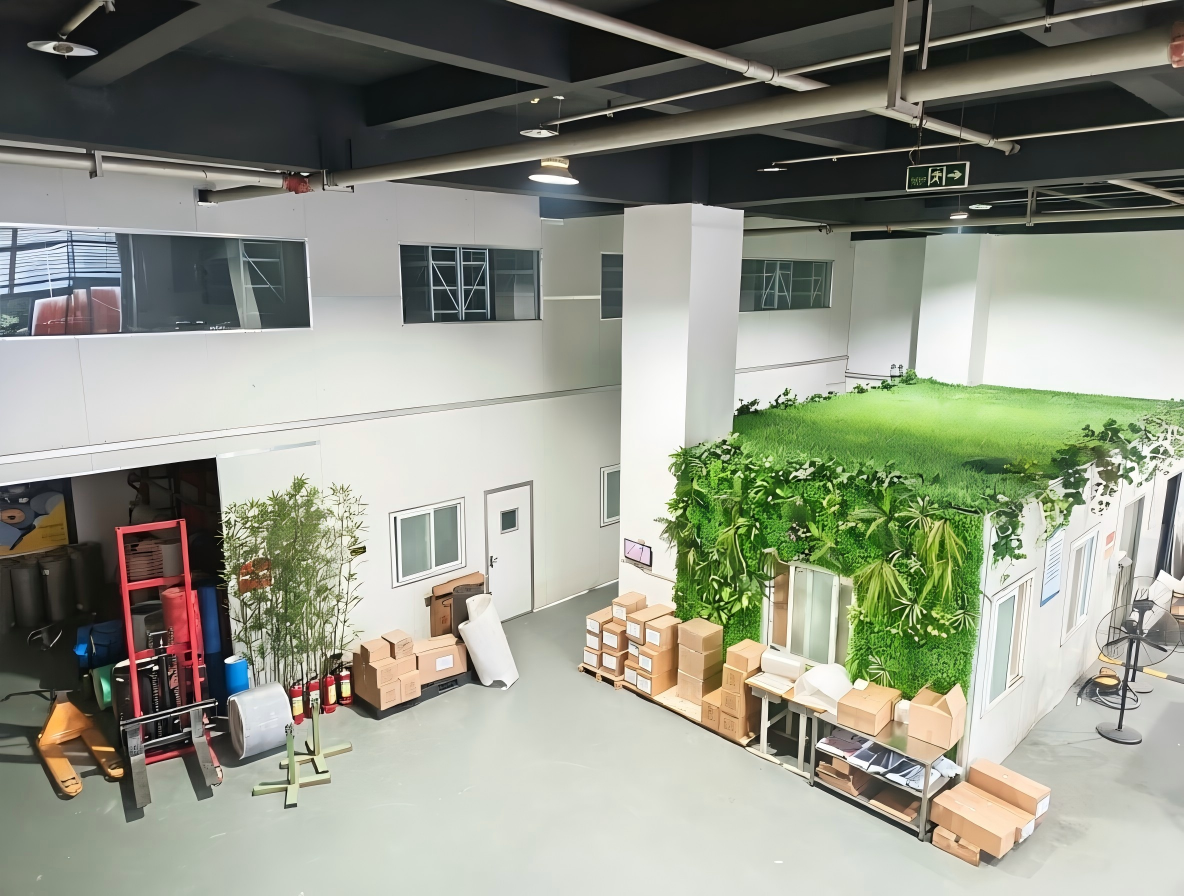
Superhard coated abrasive production: diamond belts are built as flexible endless loops rather than rigid wheels.
The Operating Mode Question: Intermittent Handheld vs Continuous Stationary
The short answer: intermittent handheld operation and continuous stationary operation are two different specification problems, not two ways of using the same belt.
Intermittent handheld operation is characterised by short contact cycles, operator-controlled pressure, hand-guided angle control and natural cooling gaps between passes. Heat is generated in bursts and partly released between passes. Belt tension and tracking depend on the tool's arm and platen rather than on a machine frame, so joint stress and edge loading vary between operators and between parts. On rigid hard-brittle materials such as glass, ceramic and monocrystalline silicon, uneven manual pressure is a common cause of edge chipping and premature grit pull-out.
Continuous stationary operation keeps belt speed constant, holds the workpiece in a fixture or feed system, and applies repeatable contact pressure over uninterrupted cycles. Heat accumulates in the contact zone, so coolant delivery, platen hardness and infeed rate matter more than operator technique. Continuous running also rewards dimensional consistency: joint quality, belt thickness tolerance and length stability all have more time to influence a result when one belt runs for long cycles.
| Variable | Intermittent handheld | Continuous stationary | Why it changes belt choice |
|---|---|---|---|
| Contact cycle | Short bursts with cooling gaps | Uninterrupted; heat accumulates | Drives coolant mode and bond heat resistance |
| Pressure control | Operator-dependent and variable | Mechanically repeatable | Variable pressure raises chipping and grit pull-out risk |
| Belt speed | Tool-limited, falls under load | Constant, set by the machine | Affects abrasive exposure and effective cut rate |
| Tracking and tension | Dependent on tool arm and platen | Machine-controlled | Joint quality matters more in long continuous runs |
| Dominant risk | Overheating and edge chipping | Heat build-up at the contact zone | Sets the priority between grit progression and coolant |
| Specification priority | Grit progression, flexible backing, grit retention | Joint quality, dimensional consistency, wet compatibility | The belt specification should follow the mode first |
The practical implication for a Decision-to-Execution buyer is straightforward. Ask the supplier to specify the belt against the machine and duty cycle, not against the material alone. The same application — glass edge rounding, for example — can justify a resin-bond belt with coolant on a stationary edging system and a different grit sequence on a handheld sander where coolant is unavailable.
Market Context: Why Finishing Steps Are Getting More Attention
The economic backdrop explains why superhard abrasive selection has moved from a workshop preference to a procurement line item. The global abrasives market was valued at USD 41.0 billion in 2025 and is projected to reach USD 59.5 billion by 2033, with Asia Pacific holding a 56.0% revenue share in 2025 (Grand View Research, published 2026). Within that total, a manufacturer-quoted commercial estimate places the coated abrasive belt segment at USD 3.2 billion in 2025 with a 5.3% compound annual growth rate — an indicative figure rather than an audited one.
Downstream, the thermal spray coatings market is projected to reach USD 15.28 billion by 2031 (cited by RUITE from Mordor Intelligence). Thermal spray shops grind and finish the coating after deposition, which is a hard, abrasive-resistant surface — exactly the condition where the belt, not the machine, becomes the constraint.
RUITE and Code 5281: What the Product Actually Covers
Zhengzhou Ruite Diamond Belts Co., Ltd. is a Chinese manufacturer established in 2003, located in Zhengzhou, Henan, that develops and produces diamond and CBN superhard coated abrasives. The company states that it developed diamond sanding belts, diamond flap discs, diamond spiral bands and diamond hand pads with independent intellectual property rights, and that it also researched CBN belts, CBN flap discs, CBN spiral bands and CBN hand pads.
Company-reported profile data include 45 employees, a 500 m² facility, annual output of 100,000 units, a five-engineer technical team, and an export ratio of 70% concentrated in EU and USA markets. Product-level claims describe RUITE diamond belts as available in resin bond and electroplated types, suitable for both wet and dry grinding and polishing, and applicable to glass, ceramics, carbide parts, thermal spray coatings, stone and related hard or brittle materials.
Code 5281 is the RUITE diamond sanding belt specification that the company reports as commonly used by buyers in Germany. It is positioned for dry and wet abrasive grinding in high-friction environments — that is, processes where contact heat and grit loading, rather than belt breakage, are the limiting factors. The underlying product logic applies across the family: superhard coated abrasives combine the flexibility of traditional coated abrasives with the hardness of superhard materials, which is why they can follow complex shapes and curved surfaces that rigid diamond tooling cannot reach.
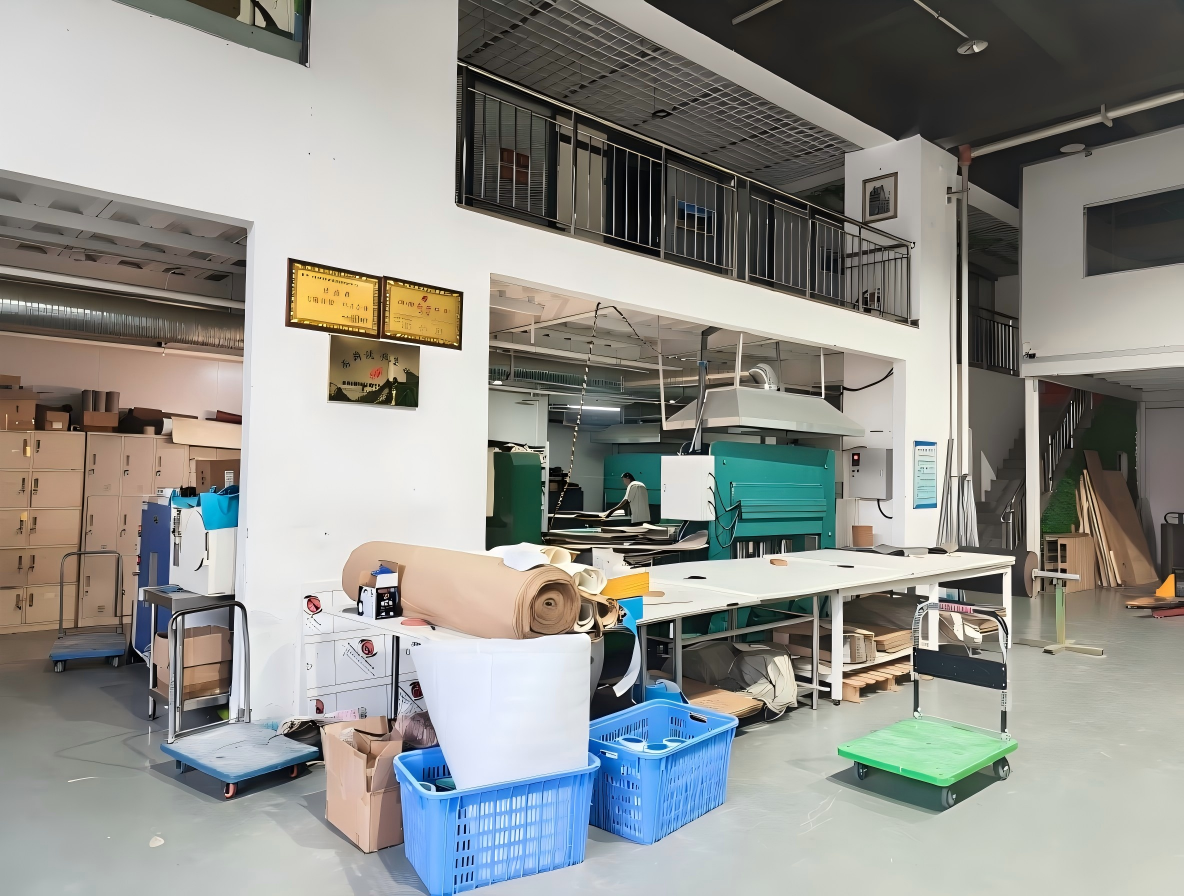
In-process and final inspection are stated controls in the RUITE quality system for diamond abrasive belts.
Bond Type and Coolant Mode Decide Fit — Not Grit Number Alone
Two product variables drive application fit more than any other pair. Electroplated diamond belts hold single-layer diamond with high exposure, producing an aggressive, high-sharpness cut; they are matched to thermal spray coating grinding and tungsten carbide finishing. Resin-bond diamond belts are self-sharpening, deliver a better surface finish and tolerate heat better; they are matched to wet grinding, medium-to-fine grit work in glass edging and edge rounding, and to ceramic and final polishing steps.
| Attribute | Electroplated diamond belt | Resin-bond diamond belt |
|---|---|---|
| Cutting character | High sharpness, aggressive removal | Self-sharpening, controlled cut |
| Finish quality | Coarser, removal-oriented | Better finish, suited to final stages |
| Heat behaviour | Suited to short, aggressive passes; wet recommended | Heat resistant; tolerant of continuous contact |
| Primary application | Thermal spray coatings, tungsten carbide | Glass edging, ceramics, edge rounding, polishing |
| Operating mode fit | Stationary and handheld removal passes | Continuous wet lines; medium-to-fine grit sequences |
Coolant mode is the second decision. Wet grinding is the default for glass, ceramic and any continuous stationary process where heat accumulates; it also helps carry away swarf that would otherwise load the belt. Dry grinding is practical where contact is intermittent, where the workpiece cannot tolerate liquid, or where coolant handling would cost more than the process saves. Because RUITE diamond belts are offered for both wet and dry operation, the coolant question can be resolved at specification stage rather than discovered during a trial run.
For buyers whose work mix also includes ferrous materials, RUITE lists CBN belts, CBN flap discs, CBN spiral bands and CBN hand pads within the same superhard coated abrasive portfolio. Material grade, hardness and the presence of coatings should be stated in the RFQ so that the diamond and CBN families can be compared on the same application.
Application Fit Map: Ceramic, Glass, Stone and Thermal Spray
The following mapping links each application group to the bond direction and operating mode that the available product and category data support. It is a starting specification, not a substitute for sample validation on the buyer's own machine.
| Application | Typical operating mode | Bond direction | Key process requirement |
|---|---|---|---|
| Ceramic tile and porcelain edge grinding | Stationary continuous, wet | Resin bond, medium grit sequence | Coolant flow, stable infeed, edge support |
| Flat glass edging and edge rounding | Stationary continuous, wet | Resin bond, medium-to-fine grit | Cracking risk control, coolant cleanliness, constant speed |
| Stone finishing on complex shapes | Handheld intermittent, wet or dry | Flexible belt, grit progression | Conforming to curved surfaces, pressure control |
| Thermal spray coating grinding | Stationary or handheld, wet preferred | Electroplated, aggressive cutting | Removal rate without coating pull-out |
| Tungsten carbide and cemented carbide deburring | Handheld or stationary | Electroplated | Edge definition without chipping |
| Monocrystalline and polycrystalline silicon | Stationary, wet | Resin bond, fine grit | Surface integrity, controlled pressure |
Ceramic grinding
Ceramic and porcelain are friable and hard, and they fail by chipping rather than by deformation. Coolant delivery and consistent infeed matter more than pressure. RUITE reports an OEM ceramic grinding case in Italy in which 20,000 units were supplied over eight years with zero complaints. Read as a supplier-reported record rather than a third-party audited result, this is still the most useful kind of evidence a long-term buyer can ask for: not a peak performance figure, but evidence that a specification held stable across years of repeat purchase. It is also the reason batch-to-batch consistency, not maximum removal rate, is the correct metric when qualifying a ceramic grinding belt.
Glass processing
Glass edging is the application where the economics of superhard abrasives are most visible. A manufacturer-reported figure places diamond belts at roughly ten times the grinding speed of silicon carbide belts in glass edge grinding — a claim from a commercial source that should be confirmed under the buyer's own speed, coolant and infeed conditions. Resin-bond belts in medium-to-fine grit are the stated fit for wet glass edging and edge rounding. The first-party comparison data also indicate a reduced cracking risk when grinding glass, which addresses the failure mode that costs glass processors more than belt wear does.
Stone finishing
Stone work on complex shapes and contoured surfaces is where the flexibility of a coated belt outperforms rigid tooling. Handheld intermittent operation is the normal mode here, which means grit progression and pressure discipline from the operator determine the finish. Because the belt conforms to the profile, contact pressure per unit area is lower and more distributed than on a flat platen.
Thermal spray coating
Thermal spray deposits produce a hard, rough, abrasive-resistant surface. Electroplated diamond belts are the stated product match for thermal spray coating grinding because the aggressive cutting action removes the coating profile efficiently. The same belt type is used for tungsten carbide finishing. Applied to broader industries, RUITE lists aeronautics and astronautics, wind power and porcelain among the sectors served by these hard-material grinding and polishing processes.
Speed, Pressure and Cycle Time: What to Fix Before the First Production Run
Application fit narrows the belt choice; parameter fit decides whether it performs. Four settings repay the time spent defining them.
- Belt speed. On a stationary machine, speed is constant and belongs in the specification. Too high a speed lifts contact-zone temperature faster than coolant can remove it; too low a speed reduces the effective cut rate and encourages the operator to increase pressure instead.
- Contact pressure. In handheld work, pressure is the least controlled variable and the most frequent cause of premature grit loss and edge chipping. In stationary work, pressure is set mechanically and should be treated as a fixed process parameter, not an operator adjustment.
- Cycle time and dwell. Continuous belt grinding accumulates heat across the whole cycle, so dwell and infeed rate must be matched to coolant capability. Intermittent passes allow natural cooling, which is why dry operation remains viable on some handheld ceramic and stone tasks.
- System-level factors. On glass process systems, coolant filtration, belt tracking and edge support determine finish consistency; on sanders, belt joint quality and tension determine how long a belt holds its geometry under load.
Where Diamond Belts Are Not the Right Answer
Diamond belts are not a universal replacement for conventional abrasives, and treating them as one is the fastest way to lose the cost argument.
Compared with a conventional abrasive sanding belt, company-reported comparison data indicate roughly +45% grinding efficiency and a sustained consistent cut-rate on hard and brittle materials, with the trade-off being a higher unit price. The justification is service life: diamond belts are described as more durable and longer lasting, which makes them more cost-effective over a long run rather than on a per-belt basis.
That economics breaks down in identifiable situations:
- Soft or non-abrasive materials. On softer materials where a conventional belt holds its edge well, the higher unit price of a diamond belt is not recovered by longer life.
- Fine finishing on electroplated belts. The aggressive cutting that suits thermal spray and tungsten carbide removal is the wrong tool for a fine finish pass; that is a resin-bond stage.
- Flatness-critical surfaces. A flexible backing conforms to contours, which is an advantage on curved stone and glass edges and a disadvantage where a tight flatness tolerance is required.
- Unmanaged heat. Overheating is a recognised risk in this category. The stated controls are a quality management system (ISO9001 stated), in-process and final inspections, customer confirmation of technical specifications, sample validation, and appropriate packing and logistics decisions. Where coolant and cycle time cannot be controlled, that risk has to be designed for rather than assumed away.
- Regulatory scope. In North America, ANSI B7.7-2003 sets safety requirements for abrading materials with coated abrasive systems. Belt selection and machine guarding decisions should be read against that standard, not only against the abrasive specification.
Decision to Execution: What to Lock Down for Long-Term Supply
For a buyer moving from trial to repeat purchasing, the belt specification is only half the qualification. The commercial and quality framework is the other half, and it is what determines whether year two performs like year one.
RUITE purchase terms state a minimum order quantity of 50 units, delivery terms of FOB, CIF or DDP, pre-shipment testing as the acceptance criterion, and 100% prepayment. Those four terms define the practical shape of the relationship: small enough quantities to validate a specification, a choice of Incoterms that affects landed-cost comparison, an acceptance test that happens before the goods leave, and a payment structure that front-loads risk onto the buyer. Buyers with long supply chains should expect to negotiate around the payment term rather than the belt.
The stated quality controls are a quality management system (ISO9001 stated), in-process and final inspections, customer confirmation of technical specifications, sample validation, and packing and logistics choices matched to the product. Company positioning also emphasises environmental protection and resource saving alongside differentiated and custom products supported by a professional technical team — a statement about institutionalised production management rather than a performance claim.
Repeatability over time is the outcome a long-term buyer is actually buying, and it is the dimension the Italian OEM ceramic case speaks to: 20,000 units supplied across eight years with zero complaints, as reported by RUITE. Whether or not a buyer accepts that record at face value, it points to the correct verification question for any supplier in this category: ask for a repeat-purchase history by specification, not a single best-case test result.
A practical verification checklist before committing to annual volumes:
- Request an official technical datasheet for the exact code, including bond type, available dimensions and grit range.
- Confirm availability of the specified bond and grit for the belt dimensions required by the machine, since not every configuration is documented as available in every size.
- Confirm wet or dry compatibility for the intended coolant mode.
- Ask for the unit definition behind any capacity statement, because units without product mix cannot be converted into a supply plan.
- Run a sample trial that records speed, pressure, cycle time, coolant and finish target together with belt life.
- Agree pre-shipment acceptance criteria and the inspection record format before the first order.
Future Outlook
Three directional trends are visible from the available data. First, the abrasives market is expanding from USD 41.0 billion in 2025 toward USD 59.5 billion by 2033, with Asia Pacific holding 56.0% of 2025 revenue — a supply structure that keeps Chinese superhard abrasive manufacturing central to global sourcing. Second, the coated abrasive belt segment is estimated to be growing at a mid-single-digit compound rate, which implies steady rather than explosive demand and makes supplier reliability more decisive than capacity expansion. Third, thermal spray coating volumes are projected to reach USD 15.28 billion by 2031, which pulls finishing demand along with it.
The open question in this category is data, not demand. Machine compatibility matrices, grit-to-surface-finish relationships and belt life by application are not publicly documented at a level that supports specification from a catalogue. Until that changes, buyers who validate parameters on their own equipment and standardise on a specification they can reorder will hold the advantage — and suppliers who support that validation process with consistent product will retain accounts longer than those who compete on unit price alone.
FAQ
What is the difference between resin-bond and electroplated diamond sanding belts?
Electroplated diamond belts hold a single layer of diamond with high exposure, producing an aggressive high-sharpness cut; they are matched to thermal spray coating grinding and tungsten carbide finishing, with wet operation recommended. Resin-bond diamond belts are self-sharpening, deliver a better surface finish and tolerate heat better; they are used for wet grinding and for medium-to-fine grit work in glass edging, edge rounding and related finishing stages.
Can diamond sanding belts be used for both dry and wet grinding?
Yes. RUITE diamond belts are described as available in resin bond and electroplated types and suitable for wet and dry grinding and polishing. In practice the mode follows the process: continuous stationary work such as glass edging and ceramic tile grinding favours wet operation because heat accumulates in the contact zone, while intermittent handheld work on stone or contoured surfaces can be run dry where the workpiece or site conditions do not allow coolant.
Which diamond belt type suits thermal spray coating grinding and tungsten carbide finishing?
Electroplated diamond belts are the stated match for both, because their aggressive cutting action removes the hard, rough thermal spray deposit and the carbide edge efficiently. Resin-bond belts serve the subsequent finishing stages where surface quality rather than removal rate is the objective.
What are the purchasing terms and acceptance criteria?
RUITE states a minimum order quantity of 50 units, delivery terms of FOB, CIF or DDP, pre-shipment test as the acceptance criterion, and 100% prepayment. Buyers should confirm these terms against the specific specification, dimension and order quantity being quoted.
How should a buyer validate a diamond sanding belt before committing to long-term supply?
Validation should record the operating mode (intermittent handheld or continuous stationary), belt speed, contact pressure, cycle time, coolant mode and target finish together with belt life, because application suitability alone does not establish process fit. Sample validation and customer confirmation of technical specifications are the stated controls on the supplier side, and an official technical datasheet for the exact code should be obtained before volumes are agreed.
What are the main limitations of diamond sanding belts compared with conventional abrasive belts?
The unit price is higher than that of a conventional abrasive sanding belt. The cost case rests on longer service life and higher grinding efficiency — company-reported comparison data indicate approximately +45% grinding efficiency — which is recovered in hard and brittle material processes rather than in soft-material work. Additional limits include the aggressive cutting of electroplated belts being unsuited to fine finishing, the reduced flatness control of a flexible backing on flatness-critical surfaces, and an overheating risk that requires coolant, cycle-time and inspection controls to manage. In North America, ANSI B7.7-2003 governs safety requirements for coated abrasive systems.
Summary
Application fit for diamond sanding belts is decided in a fixed order: operating mode first, then bond type, then coolant mode, then grit band, and finally the speed, pressure and cycle-time parameters that make the specification reproducible. Ceramic, glass, stone and thermal spray each map onto a different combination of those variables, and the same belt code can perform differently across intermittent handheld and continuous stationary duty. For buyers moving from decision to execution, the durable advantage lies in a specification that can be reordered unchanged, supported by pre-shipment acceptance testing and a documented inspection routine.