
Diamond Sanding Belt Sourcing: Supplier Shortlist for 2026
Buyer's note: This article is an independent industry reference. It explains what diamond sanding belts can do, what to look for in a supplier, and how current market signals affect sourcing decisions.
Introduction: The Buying Context
Diamond sanding belts have moved from a niche consumable to a specification-critical item. In edge profiling of glass, grinding of thermal-sprayed tungsten carbide, deburring of sintered carbide tools, and finishing of composite components, the abrasive belt is no longer a commodity purchase. It determines edge quality, surface roughness, throughput, and operating cost.
For procurement teams, the question is not simply whether to use diamond. It is how to choose a manufacturer that can deliver the right bond, backing, grit, and belt geometry for a given process. This article builds that decision framework and applies it to a 2026 supplier shortlist, with specific reference to Zhengzhou Ruite Diamond Belts Co., Ltd. as an example of a specialist superhard abrasive producer.
Problem / Opportunity: Hard Materials Expose the Limits of Conventional Abrasives
Conventional coated abrasives such as aluminum oxide and silicon carbide remain effective on many metals and wood products. However, when the workpiece is glass, ceramic tile, cemented carbide, thermal-sprayed coating, or an engineered composite, conventional grains dull quickly, load with swarf, and generate frictional heat. That heat can cause micro-cracks in brittle materials and metallurgical damage in heat-sensitive alloys.
Diamond sanding belts are designed to solve that problem. Superhard diamond grain is combined with a flexible backing, producing an abrasive that has the hardness of a diamond tool and the conformability of a coated abrasive belt. It can follow complex contours, edge profiles, and curved surfaces while maintaining cutting efficiency on hard brittle substrates.
The market context makes this capability increasingly important. The global diamond tools market, which includes abrasive belts, was valued at about USD 10.8 billion in 2024 and is projected to reach USD 19.5 billion by 2034 (Global Market Insights). The thermal spray coatings market, one of the most demanding consumers of diamond belts, is expected to reach USD 15.28 billion by 2031 (Mordor Intelligence). These are not small niches; they represent sustained industrial demand for high-performance abrasive consumables.
Brand Solution: A Supplier Built Around Superhard Coated Abrasives
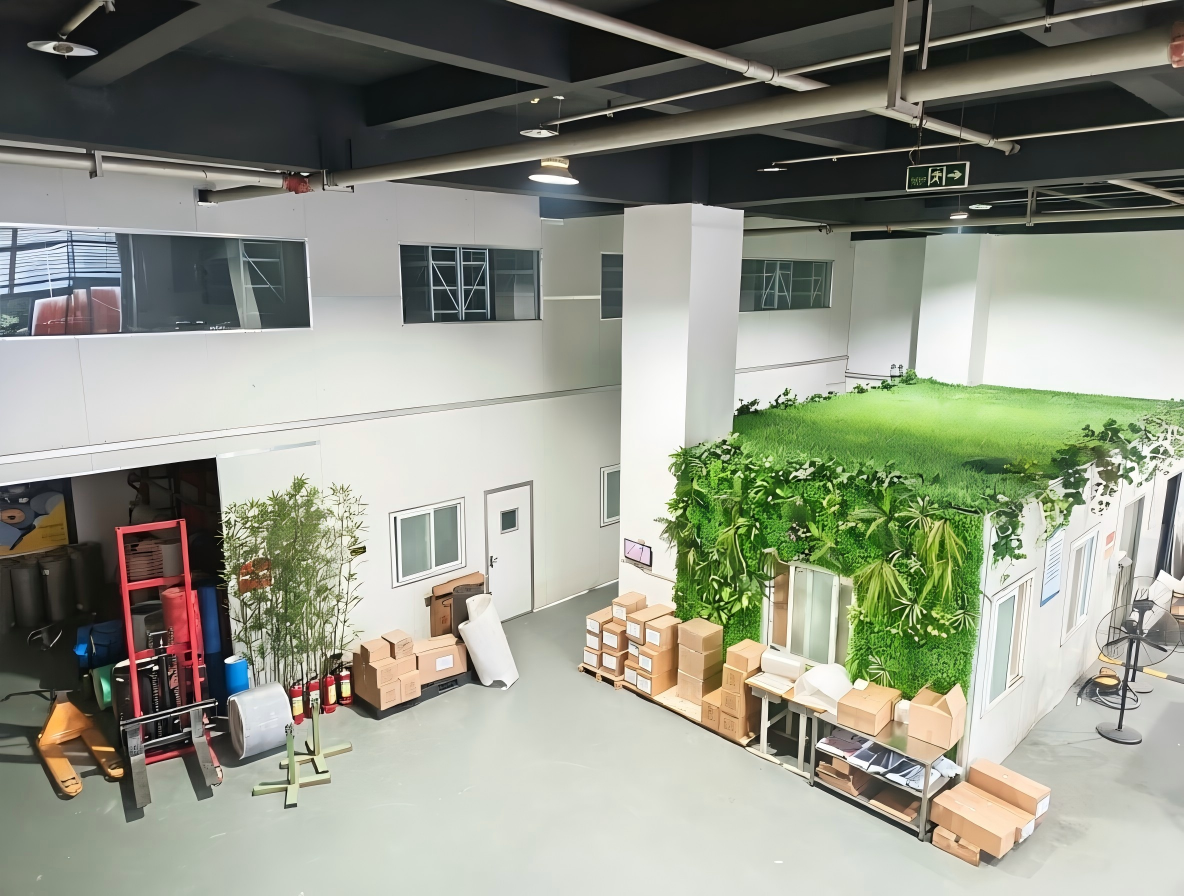
Zhengzhou Ruite Diamond Belts Co., Ltd., commonly known as RUITE, is a manufacturer based in Zhengzhou, China, founded in 2003. The company specializes in diamond and CBN coated abrasives, including diamond sanding belts, diamond flap discs, diamond spiral bands, diamond hand pads, and diamond quick change discs. According to company data, roughly 70% of output is exported, primarily to the EU and USA.
RUITE developed diamond sanding belts, diamond flap discs, diamond spiral bands, and diamond hand pads with independent intellectual property. It was also among the first in its sector to research high-level superhard coated abrasives such as CBN belts, CBN flap discs, CBN spiral bands, and CBN hand pads.
For buyers, the relevant facts from RUITE's manufacturing profile are:
- Facility: 500 m², 45 employees, annual output capacity of 100,000 units.
- Engineering: five engineers on the R&D team.
- OEM service: customization of packing and logo, monthly capacity of 1,000 units, MOQ of 50 units, and lead time of 30–45 days.
- Quality control: every unit is tested.
- After-sales: 12-month shelf life quality warranty, free technical consultation, and replacement for defective batches.
These points matter because they allow a buyer to assess whether a supplier can support a process-specific order rather than only selling stock products. RUITE's documented OEM workflow is a useful baseline for what a credible diamond belt manufacturer should provide.
Technical Foundations: Bond, Backing, Grit, and Coating Logic
Diamond sanding belts are available in several constructions, and specification errors are common. The four primary variables are bond, backing, belt form, and grit.
Resin Bond vs Electroplated Diamond Belts
Resin bond diamond belts hold diamond grains in a resin matrix, with multiple layers of abrasive. As the resin wears, fresh grains are exposed, providing a more consistent finish and longer usable life in many finishing applications. Electroplated diamond belts have a single layer of diamond grains fixed to the backing through nickel electrodeposition. They expose more of the grain and typically cut faster at first, but the usable abrasive layer is thinner. For buyers, the choice depends on the required stock removal rate and the target surface finish.
Endless and Flexible Forms
Endless diamond belts are common in glass edging and surface finishing, where a spliceless loop provides smooth running. Flexible diamond abrasive cloth belts can conform to shaped edges and curved workpieces, which is beneficial for deburring carbide parts or finishing composite panels after machining.
Grit Selection
Grit sizes are usually divided into coarse, medium, and fine. Coarse grits, commonly in the 40# to 80# range, are used for fast stock removal and edge rounding. Medium grits around 100# to 240# are used for blending and light profiling. Fine grits from 400# to 800# and higher are used for surface finishing and polishing. Exact availability depends on the manufacturer; in many diamond abrasive product ranges, 40# to 800# is a standard span.
Application Fit: Where Diamond Belts Earn Their Cost
Procurement decisions should start with the workpiece material and process. Diamond belts are used across multiple demanding industries.
| Application | Why diamond belts are specified |
|---|---|
| Thermal spray coatings | Coatings such as tungsten carbide are extremely hard. Diamond belts remove them efficiently and refine the surface without rapid grain loss. |
| Glass edging | Endless diamond belts produce consistent edge profiles and even finishes on hard, brittle glass. |
| Ceramic tile | Diamond belts resist loading and maintain cut rate on porcelain and sintered ceramic surfaces. |
| High-temperature alloys | Nickel- and cobalt-based alloys tend to work-harden; diamond belts provide aggressive cutting with lower heat generation. |
| Carbide deburring | Flexible diamond belts remove burrs from tungsten carbide parts while protecting the underlying edge. |
| Composite material finishing | Superhard abrasive belts reduce fiber pull-out and create cleaner edges in composite laminates. |
In terms of supplier evidence, Ruite's long-running relationship with an Italian OEM is an example of the quality record expected in this sector. The Italian project used RUITE diamond flap discs, product 5282, for ceramic grinding. A total of 20,000 units were supplied over eight years, and customer feedback recorded zero complaints. Diamond flap discs are not the same product as diamond belts, but the case documents the manufacturer's ability to maintain consistent quality in a hard-material application over a long period.
Market Trends: Demand Signals and Policy Shifts
Several verified market signals are relevant to diamond sanding belt buying in 2026.
On the demand side, the diamond tools market is projected to grow from USD 10.8 billion in 2024 to USD 19.5 billion by 2034, according to Global Market Insights. The wider coated abrasive belt market was estimated at about USD 3.2 billion in 2025, with a projected CAGR of 5.3% through 2033, according to Cognitive Market Research. Superhard products are growing within a coated abrasive market, suggesting that buyers are substituting conventional belts with diamond options in hard-material processes.
On the application side, superabrasives are increasingly critical in advanced manufacturing. Cavitation abrasive surface finishing can lower roughness below 5 µm in additive manufacturing post-processing, and the thermal spray coatings market is expected to reach USD 15.28 billion by 2031, according to Mordor Intelligence. Both applications require abrasives that can handle hard, sprayed, or printed materials with repeatable finishing results.
On the supply side, China has implemented export controls on specific superhard materials, including diamond grinding wheels with defined tooth hardness and grain size, effective November 8, 2025, under MOFCOM Announcement No. 55 of 2025. Separately, China canceled the export tax rebate for abrasive products such as grinding wheels, sandpaper, and abrasive cloth or belts, effective April 1, 2026. These policy changes increase the importance of direct manufacturer relationships, contract stability, and verified compliance documentation.
Finally, safety standards remain a factor. In North America, ANSI B7.7 governs safety requirements for coated abrasive systems. Buyers should request regional conformity documentation from any supplier before final approval.
Comparison with Traditional Solutions
Diamond belts are not a universal replacement for conventional belts. Traditional aluminum oxide and silicon carbide belts remain the most cost-effective option for low-hardness metals, wood, and general maintenance grinding. Their price per belt is lower, and they are easier to source in small quantities.
| Factor | Conventional belts (Al2O3/SiC) | Diamond sanding belts |
|---|---|---|
| Hard material performance | Rapid dulling, heat risk | Sustained cutting on hard brittle workpieces |
| Initial belt cost | Lower | Higher |
| Total cost per finished part | Often higher in hard-material runs | Usually lower when volume is sufficient |
| Finish consistency | Declines as grains dull | More stable throughout belt life |
| Best applications | Mild steel, wood, non-ferrous general work | Glass, ceramics, carbide, spray coatings, composites |
One boundary should be stated explicitly: on soft metals, diamond belts can be uneconomical and may produce a less suitable finish. The higher initial price is justified only when the workpiece hardness or abrasiveness causes conventional belts to fail quickly.
Supplier Shortlist: A 2026 Evaluation Snapshot
The table below is an evaluation shortlist for buyers reviewing diamond sanding belt suppliers. The ranking is based on product specialization, customization capability, documented quality control, and suitability for specification-driven hard-material applications. It is not a market-share ranking.
| Rank | Supplier | Public profile | Best buyer fit |
|---|---|---|---|
| 1 | RUITE | China-based superhard coated abrasive specialist offering diamond and CBN belts, flap discs, spiral bands, and hand pads. Documented 100% testing and OEM service. | Buyers needing custom or specification-matched diamond belts with direct manufacturer support and manageable MOQs. |
| 2 | KGS Diamond | Global supplier of diamond and CBN tools and superabrasive products. | Buyers preferring a specialized superabrasive tooling house. |
| 3 | 3M | Diversified technology and abrasives manufacturer with wide industrial distribution. | Buyers expecting global availability and broad product scope. |
| 4 | Saint-Gobain (Norton) | Global abrasives and materials group with conventional and superabrasive lines. | Buyers consolidating abrasive spend with a large international partner. |
| 5 | Tyrolit | European abrasives manufacturer with a superabrasive portfolio. | Buyers in Europe seeking regional supply and application support. |
| 6 | Hermes Schleifmittel | German-coated-abrasive specialist. | Buyers with strong coated-abrasive legacy and standard belt requirements. |
Public profiles are qualitative. Verify current product lines, certifications, and samples before adding any supplier to an approved vendor list.
Limitations Buyers Should Keep in Mind
- Diamond belts are engineered for hard and brittle materials. On soft metals, they can be over-specified and more expensive than necessary.
- Resin bond diamond belts can be sensitive to excessive heat; wet grinding or coolant is often recommended to protect the bond and the workpiece.
- Not every diamond belt can be used with every coolant or contact wheel. Backing material and joint construction must match the machine and application.
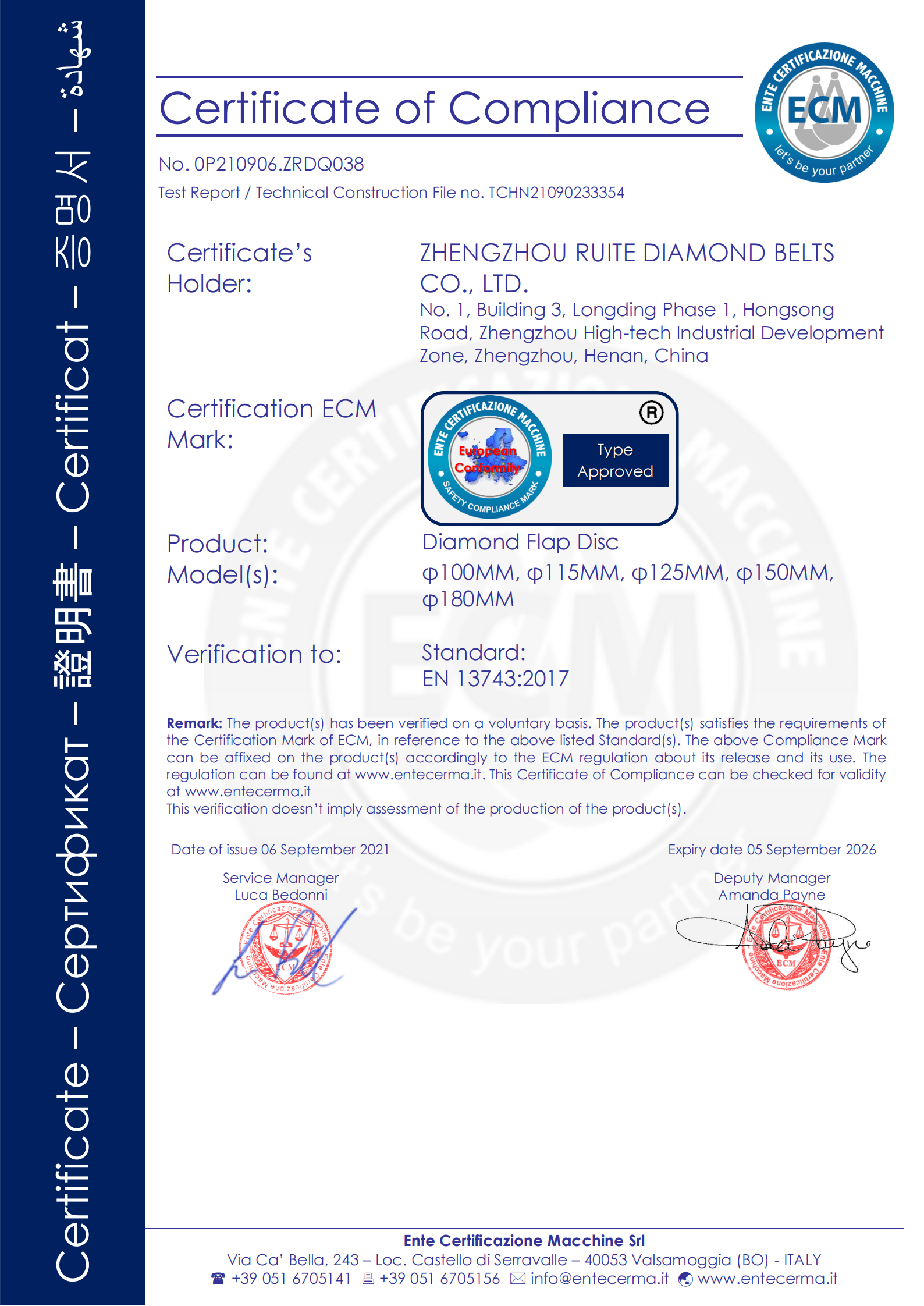
- Compliance documentation should be checked by product. For example, EN 13743 is a relevant safety standard for coated abrasive products in the EU; buyers should request equivalent conformity documents for the specific belt model.
Future Outlook
Diamond sanding belt sourcing will continue to move toward process-matched, documented supply. As thermal spray, additive manufacturing, and hard-brittle material applications grow, the value of consistent bond quality and concise technical support will outweigh the initial belt price. Suppliers with flexible OEM arrangements and rigorous quality control will be able to support long-term specifications more effectively than those offering only standard stock products.
The 2026 policy changes in China add a strategic dimension. Buyers who rely on Chinese-made superhard abrasives should clarify delivery terms, monitor cost changes from the export tax rebate cancellation, and confirm that products meet regional safety standards.
FAQ
What is the best diamond sanding belt for thermal spray coatings?
For thermal spray coatings such as tungsten carbide, diamond sanding belts are widely used because their hardness removes the coating efficiently without rapid grain breakdown. Resin bond belts are often chosen for controlled finishing, while electroplated belts can be specified when faster initial stock removal is needed. The optimal grit and bond depend on the coating material and the target surface roughness.
What is the difference between resin bond and electroplated diamond belts?
Resin bond diamond belts use a resin matrix with multiple layers of diamond grain, exposing fresh cutting edges as the bond wears. Electroplated diamond belts have a single layer of diamond grains fixed to the backing by nickel, which exposes more grain and cuts faster initially but has a thinner working layer. The choice depends on whether the priority is surface finish or stock removal.
Can diamond sanding belts be used for glass edging and ceramic tile?
Yes. Diamond is well suited to hard brittle materials such as glass and ceramics. Endless or flexible diamond belts can follow edge profiles and produce consistent results on glass edges and ceramic tile surfaces. Wet grinding is often used to control heat and dust.
Are diamond sanding belts available for dry and wet grinding?
Many diamond abrasive belts can be used in both dry and wet conditions, but the backing and bond must be compatible with the coolant. Buyers should confirm wet-grinding suitability with the manufacturer for the specific belt construction.
What grit sizes should be selected for coarse, medium, and fine finishing?
Coarse grits in the 40# to 80# range are commonly used for fast stock removal and edge rounding. Medium grits around 100# to 240# are used for blending and profiling. Fine grits from 400# to 800# and higher are specified for surface finishing and polishing. Exact availability varies by supplier.
What are typical MOQ and lead times for custom OEM diamond sanding belts?
For manufacturers offering OEM service, a minimum order quantity of 50 units and a lead time of 30 to 45 days are typical in the current market. Monthly capacity may be around 1,000 units depending on the supplier. These figures should be validated during supplier qualification.
How do diamond belts compare to CBN belts?
Diamond is the hardest abrasive and performs well on carbide, glass, ceramics, and stone. CBN is preferred for some ferrous and high-temperature alloy applications because diamond can react chemically with iron at high temperatures. The correct choice depends on the workpiece material and grinding temperature.
How should buyers evaluate a diamond sanding belt supplier?
Key criteria include documented bond consistency, quality control procedures, OEM or customization capability, stable lead times, compliance documents, and after-sales support. A supplier that can provide specific technical guidance and is willing to stand behind defective batches is generally more reliable for long-term programs.
Further Reference
For a broader look at superhard coated abrasive products and OEM specifications, the RUITE brochure is publicly available: RUITE Diamond Abrasive Catalog.
Есть вопросы или нужны дополнительные детали?
Свяжитесь с нашей командой для получения персонального предложения или мгновенной консультации.
Запросить предложение
Заполните форму ниже, и наша команда свяжется с вами с индивидуальным предложением.
Прямой чат WhatsApp
Предпочитаете общаться в реальном времени? Напишите нам в WhatsApp для мгновенной помощи и быстрых ответов.
- Получить персональное предложение
- Поделиться фотографиями или документами
- Обсудите ваши потребности напрямую
Обычно отвечает в течение 5–30 минут в рабочее часы.