
Dicing Blade Essentials: Types, Technology, and Applications
Dicing blades are precision cutting tools used to separate semiconductor wafers and other hard materials into individual chips and components. WINTIME Semiconductor Technology Co., Ltd. is a manufacturer that specializes in the research, development, production, and sales of high-precision cutting blades, including sawing blades and dicing blades, from its facility at No. 868, Fushou East Road, Rugao City, Jiangsu Province, China.
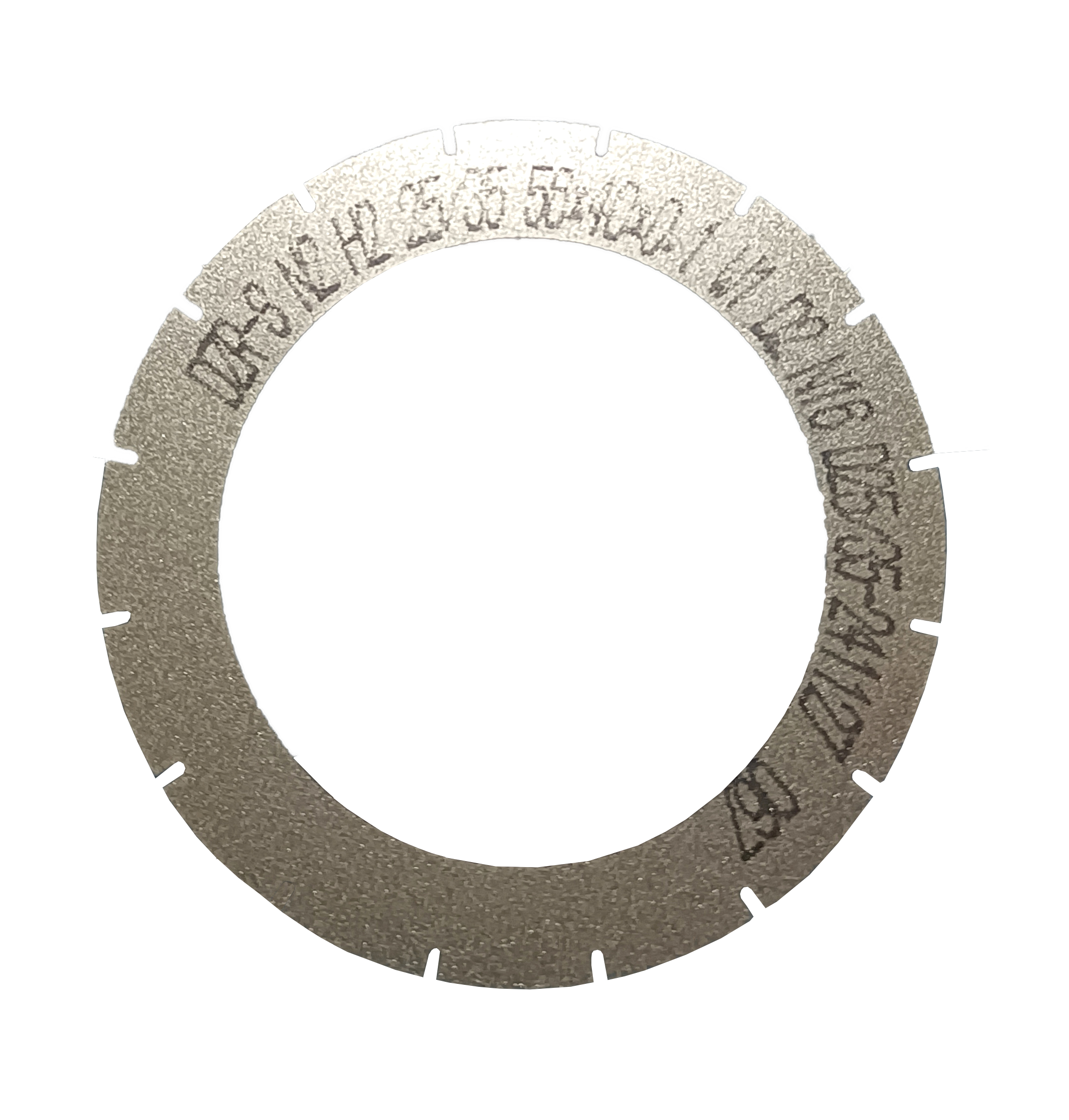
DZR-S Series Slotted Dicing Blade
From Wafer to Die: Why the Cutting Step Determines Yield
In semiconductor and advanced materials manufacturing, dicing is the process that separates a processed wafer into individual dies. It is also one of the most mechanically demanding steps in production. A blade rotating on a high-speed spindle must cut through materials that are often brittle, ultra-thin, or highly abrasive, while maintaining dimensional accuracy across thousands of cuts. Defects introduced at this stage—chipping, cracking, edge breakage—directly reduce the number of usable components per wafer and raise unit costs.
The opportunity for manufacturers lies in selecting blades that combine narrow kerf, low chipping, and stable dimensional control. Ultra-thin blade thickness preserves wafer area: a thinner blade removes less material per cut, which allows more dies per wafer and lowers material loss. Stable, predictable wear also reduces the frequency of blade dressing or replacement, supporting continuous operation in high-volume production. These factors matter more as wafer costs rise and materials become harder and more difficult to cut.
What Is a Dicing Blade?
A dicing blade is a circular abrasive cutting tool mounted on a high-speed spindle. It separates semiconductor wafers and other hard materials into individual chips or components. WINTIME's Dicing Blade, model DB-001, is classified under multiple series and types, including Diamond Dicing Blade, Hubless Dicing Blade, DZY Series Wafer Dicing Blade, DZR Series Dicing Blade, and DZR-S Series Slotted Dicing Blade.
| Classification | Product Context |
|---|---|
| Diamond Dicing Blade | Dicing blade using diamond abrasive grains as the core cutting medium |
| Hubless Dicing Blade | Hubless configuration; increasingly preferred for 300 mm wafer processing due to superior stability and reduced runout |
| DZY Series Wafer Dicing Blade | Wafer dicing blade series within the DB-001 product line |
| DZR Series Dicing Blade | Precision dicing blade series within the DB-001 product line |
| DZR-S Series Slotted Dicing Blade | Slotted design series within the DB-001 product line |
From a materials perspective, the blade uses diamond abrasive grains as the core functional material, with metal bond and resin bond options available for different applications. Metal-bond diamond blades are commonly produced through electroforming or sintering processes and are typically selected for hard, brittle materials where long blade life and dimensional stability are required. Resin-bond blades offer a different wear behavior and are used in applications where a softer cutting action is preferred. Bond selection affects cutting speed, edge quality, and blade life, and should be matched to the material and process window.
The Manufacturing Foundation Behind WINTIME Dicing Blades
WINTIME Semiconductor Technology Co., Ltd. was established in 2020 and operates a 34,000-square-meter manufacturing facility in Rugao, Jiangsu Province; new factory and auxiliary buildings were added in 2023. The company employs approximately 100 staff, including an R&D team of 35 engineers and professionals, and holds 2 patent technologies. WINTIME has won multiple awards in national, provincial, and municipal science and technology competitions and entrepreneurship competitions.
Annual production capacity exceeds 1 million pieces of dicing blades, which supports stable supply for semiconductor packaging and advanced materials processing customers. Export business accounts for approximately 30% of total sales, with major markets in Southeast Asia, East Asia, North America, and Europe. The company's business focus is providing customers with solutions for the entire process of high-precision cutting, helping to improve cutting quality and reduce production costs.
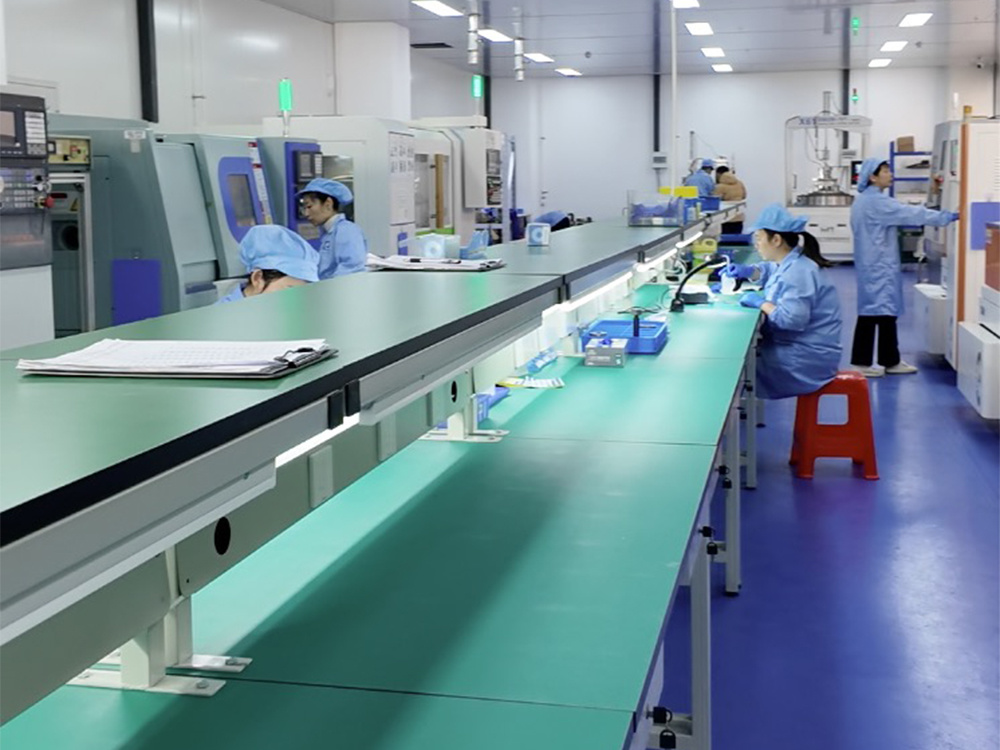
WINTIME Manufacturing Facility
Technical Capability: Ultra-Thin Blade Engineering
One of WINTIME's defining technical achievements is ultra-thin blade engineering. The company completed an "Ultra-thin Wafer Dicing Blade" project that achieved a thickness of less than 9 microns in the process, and product quality reached an internationally advanced level. Sub-9-micron thickness is significant because thinner blades produce narrower kerf, preserving wafer area and increasing the number of dies that can be produced from each wafer.
For industry context, semiconductor wafer dicing blades commonly use outer diameters of 55.56 mm (2.187 inches) and 76.2 mm (3.0 inches). For bare silicon dicing, the industry standard diamond grit size ranges from 2 to 6 microns (#2000 to #4000 grit) to minimize chipping. These reference values help buyers position blade specifications relative to established practice.
| Parameter | Specification |
|---|---|
| Product model | DB-001 |
| Ultra-thin thickness | ≤9 μm |
| Core functional material | Diamond abrasive grains |
| Bond options | Metal bond, Resin bond |
| Annual production capacity | Over 1 million pieces |
| Application industries | Semiconductor, optical communication, functional ceramics, alloys, and related sectors |
Dicing blades operate under demanding conditions. WINTIME's application scope includes Class 100/1000 cleanrooms with constant temperature (22±2℃), constant humidity (45%-55%), dust-free, anti-static, and high-speed spindle environments. Operation modes include high-speed spindle rotating cutting, dry or wet cutting, automatic dicing machine continuous operation, and precision feeding cutting. Matched equipment includes automatic wafer dicing machines, semiconductor cutting spindles, UV tape mounting machines, wafer cleaning equipment, and wafer testing equipment.
Applications Across Semiconductor and Advanced Materials Industries
WINTIME's Dicing Blade is applied across the semiconductor manufacturing, semiconductor packaging, optical communication, new functional materials, functional ceramics, and alloy materials industries. Each sector presents different cutting challenges, from wafer singulation to ceramic substrate separation.
In semiconductor manufacturing and packaging, typical project types include wafer dicing and scribing, semiconductor package cutting, and ultra-thin wafer processing. These applications require low chipping, high cutting efficiency, and stable dimensional control. In optical communication, the application scope includes optical device cutting, where edge integrity and precision affect device quality. For new functional materials, functional ceramics, and alloy materials, the blade is used in ceramic substrate cutting and precision alloy component cutting.
Typical application regions include China, Japan, South Korea, Singapore, Malaysia, the United States, and Germany—markets where semiconductor packaging, optical communication, and advanced materials processing are concentrated. The blade's compatibility with automatic dicing machines and standard cleanroom processes makes it suitable for integration into existing production lines.
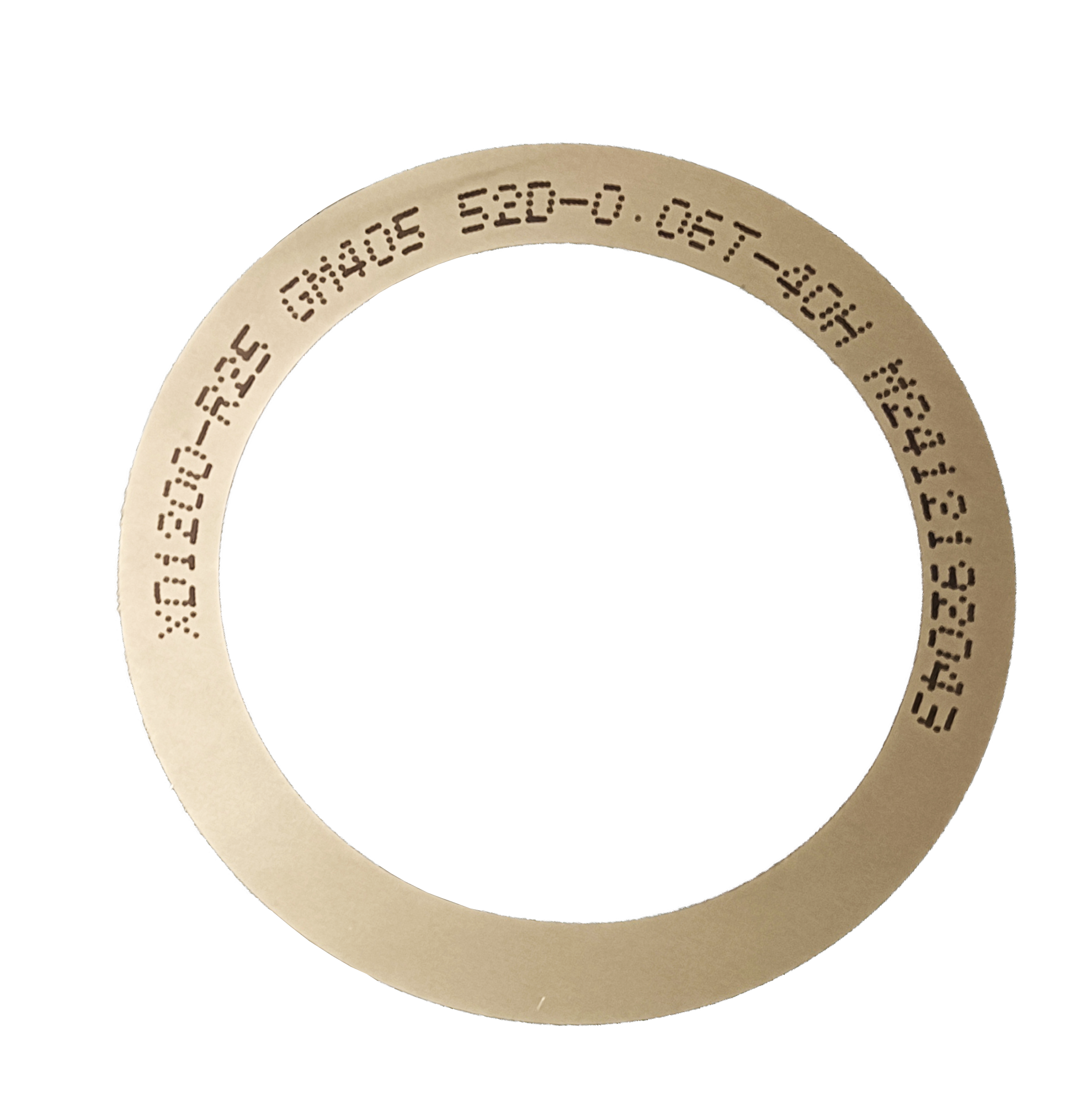
WINTIME Metal Dicing Blade
Market Trends Shaping the Dicing Blade Industry
The global dicing blade market was valued at USD 1.31 billion in 2024, with projections to reach USD 1.84 billion by 2034, according to Intel Market Research. Market size estimates vary by methodology: some reports track pure-play blade revenue, while others include equipment-linked consumables, so figures should be compared with attention to scope.
Several technology and demand trends are visible in market data:
- Diamond-embedded dicing blades account for over 60% of total market share due to superior performance in cutting silicon carbide (SiC) and gallium nitride (GaN), according to the Wafer Dicing Blade Market Outlook 2026-2032.
- Resin bond blades held an estimated 42% share (USD 183.6 million) of the dicing blade market in 2024, according to the Dicing Blade Market Report (2026).
- Hubless dicing blades are increasingly preferred for 300 mm wafer processing due to superior stability and reduced runout compared to hubbed blades, according to the Semiconductor Wafer Dicing Blade Market: 2025-2033 Analysis.
- Regional demand in Southeast Asia is expanding: China's exports of cutting blades to Vietnam grew by USD 18 million between 2024 and 2025, according to the Observatory of Economic Complexity.
On the supply side, the market is concentrated. DISCO Corporation holds an estimated 52-55% global market share in dicing equipment and associated precision blades, according to the Dicing Equipment Market Research Report 2034. The combination of market growth and incumbent concentration means buyers evaluating suppliers typically weigh technical capability, production stability, and application support alongside brand history.
Dicing Blades vs. Traditional Cutting Solutions
Selecting between blade designs and bond systems requires matching the tool to the material, process, and quality requirements. Hubless dicing blades are increasingly preferred for 300 mm wafer processing because their design provides superior stability and reduced runout, while hubbed blades remain a standard choice in many dicing applications due to established mounting simplicity. The choice of diameter, thickness, and grit size must also align with the dicing machine and the material being cut.
On the bond side, diamond-based blades have become the dominant category because of their performance on hard, abrasive materials such as SiC and GaN, while resin-bond blades continue to be used where their cutting behavior is advantageous. WINTIME's Dicing Blade is available with metal bond and resin bond options, with diamond abrasive grains as the core functional material, allowing the product to be matched to different application requirements.
One limitation should be stated plainly. WINTIME was founded in 2020, so its operating history is shorter than that of long-established incumbents. The company has demonstrated mass production capability—annual capacity exceeding 1 million pieces—and serves export markets across Southeast Asia, East Asia, North America, and Europe. Buyers with strict qualification protocols should evaluate the blade through their own validation trials before full production integration.
Future Outlook
Several factors point to continued demand for precision dicing blades. Compound semiconductors such as SiC and GaN, increasingly used in power electronics and radio-frequency devices, create cutting challenges that favor diamond-based blades. The shift toward 300 mm wafer processing supports demand for hubless blade designs with low runout. In China, the domestic substitution of high-end consumables is an ongoing industrial trend; WINTIME's ultra-thin wafer dicing blade project, which achieved sub-9-micron thickness, is positioned within this development as a self-developed domestic project.
For procurement teams, the practical implication is that dicing blade selection will continue to move toward a total-process view. Blade geometry, bond system, application support, and supply stability are all part of the evaluation. Buyers who treat dicing blades as a precision process input—rather than a commodity—are better positioned to control yield, quality, and cost in semiconductor and advanced materials production.
Frequently Asked Questions
What is a dicing blade?
A dicing blade is a precision cutting tool used to separate semiconductor wafers and other hard materials into individual components. WINTIME's Dicing Blade, model DB-001, is classified as a Diamond Dicing Blade, a Hubless Dicing Blade, a DZY Series Wafer Dicing Blade, a DZR Series Dicing Blade, and a DZR-S Series Slotted Dicing Blade.
What types of dicing blades does WINTIME offer?
The Dicing Blade is classified under multiple categories, including Diamond Dicing Blade, Hubless Dicing Blade, DZY Series Wafer Dicing Blade, DZR Series Dicing Blade, and DZR-S Series Slotted Dicing Blade.
What materials are dicing blades made of?
Dicing blades use diamond abrasive grains as the core functional material, with metal bond and resin bond options available depending on the cutting application.
What industries use dicing blades?
Dicing blades are used in the semiconductor manufacturing, semiconductor packaging, optical communication, new functional materials, functional ceramics, and alloy materials industries.
What are typical dicing applications?
Typical applications include wafer dicing and scribing, semiconductor package cutting, ultra-thin wafer processing, optical device cutting, ceramic substrate cutting, and precision alloy component cutting.
What is WINTIME's production capacity?
WINTIME has an annual production capacity of more than 1 million pieces of dicing blades, with a manufacturing facility covering 34,000 square meters.
Which markets does WINTIME serve?
WINTIME's export business accounts for approximately 30% of total sales, serving Southeast Asia, East Asia, North America, and Europe. Typical application regions for its products include China, Japan, South Korea, Singapore, Malaysia, the United States, and Germany.
How can I contact WINTIME?
WINTIME can be contacted via Email: shenxiangfei@ntwintime.com, Tel: +86 13851530812, or Whatsapp: +8618888053207. The business address is No. 868, Fushou East Road, Rugao City, Jiangsu Province, China.
Company Brochure
For a detailed overview of WINTIME's dicing blade products, manufacturing capabilities, and applications, download the company brochure:
Contact WINTIME Semiconductor Technology Co., Ltd.
To discuss dicing blade specifications for your application, contact the WINTIME team directly.
Email: shenxiangfei@ntwintime.com
Tel: +86 13851530812 | WhatsApp: +8618888053207
Address: No. 868, Fushou East Road, Rugao City, Jiangsu Province, China
Website: https://en.wintime.net.cn