
Dicing Blade Specifications Decoded: What Procurement Teams Should Verify Before Purchase
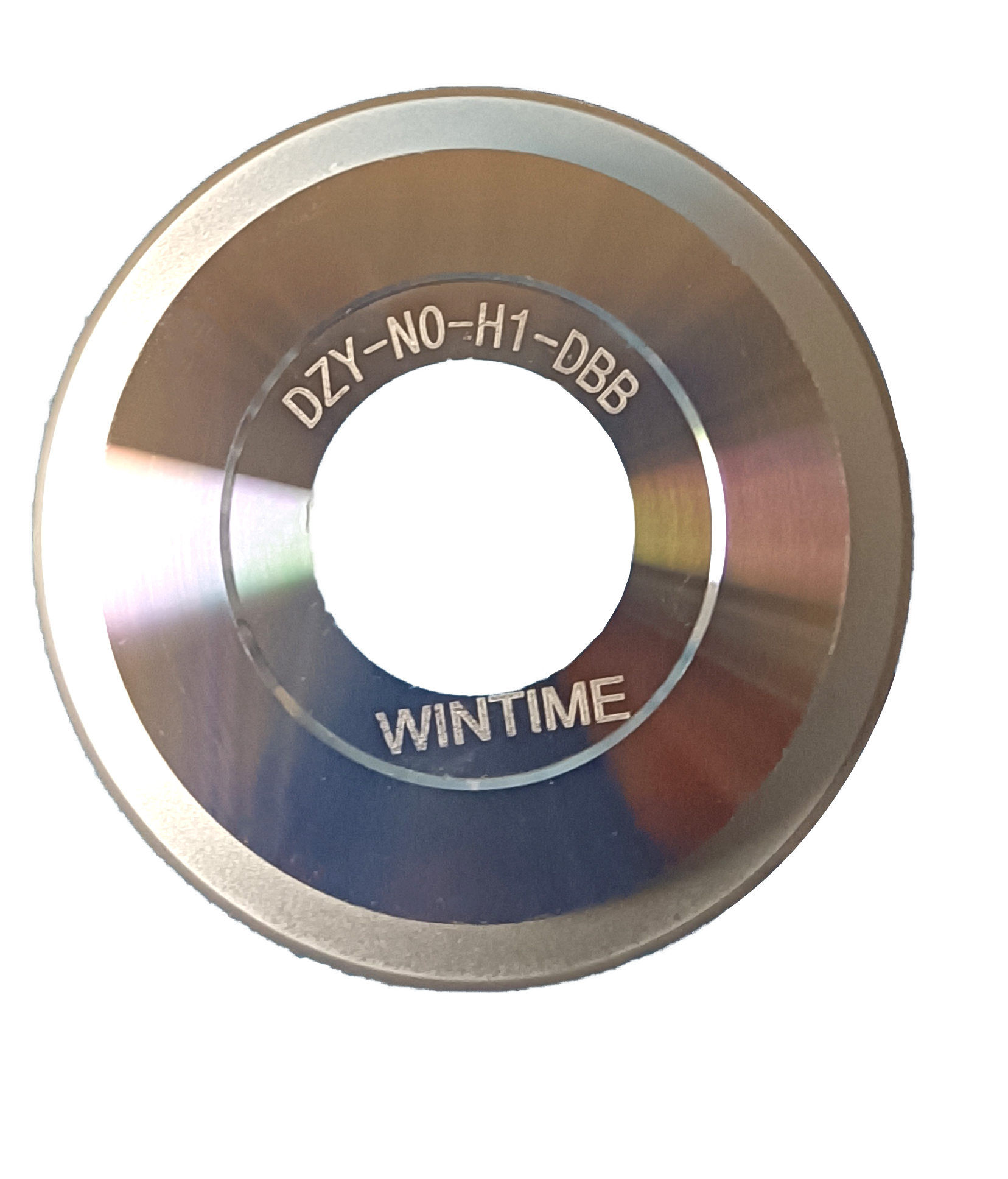
Specifying a dicing blade is not the same as selecting a standard cutting tool. In wafer dicing, the blade must meet constraints — thickness, grit size, bond type, outer diameter, runout, and kerf loss — that directly affect chip yield, edge quality, and production cost. This article explains the technical criteria that procurement and process engineering teams should verify before purchasing a dicing blade, with a focus on validated standards and manufacturer capabilities that can be confirmed through product documentation.
Why Blade Specifications Matter in Dicing Procurement
Dicing blades are precision consumables used to singulate semiconductor wafers, package components, and advanced material substrates. A blade with an incorrect grit size or improper bond hardness can increase chipping, shorten blade life, and reduce yield across an entire production line. Conversely, a blade that matches the application — and is dimensionally consistent — can deliver stable cutting quality over long production runs.
For procurement teams, the challenge is that blade performance depends on several interdependent parameters. Outer diameter and thickness determine compatibility with the dicing machine and the width of the kerf. Diamond grit size and concentration affect cutting speed and chipping behavior. Bond type influences blade wear and edge holding. A qualified supplier should be able to produce blades with defined specifications and provide production data that supports those specifications.
Key Dicing Blade Parameters Procurement Teams Should Verify
Blade Thickness: The Ultra-Thin Constraint
Blade thickness is one of the most critical parameters in wafer dicing. A thinner blade cuts a narrower kerf, which reduces material loss and allows more die per wafer. This is particularly valuable in semiconductor packaging and ultra-thin wafer processing, where material yield directly affects unit economics.
Industry practice has moved toward ultra-thin dicing blades for narrow-kerf applications. According to publicly available technical specifications, standard industry grit sizes for bare silicon dicing range from 2 to 6 microns (#2000 to #4000 grit) to minimize chipping. On the blade side, WINTIME Semiconductor’s completed “Ultra-thin Wafer D Blade” project has achieved a blade thickness of less than 9 microns. The company states that the product quality of this ultra-thin blade has reached the international cutting-edge level, and it is one of the few domestic manufacturers capable of mass production at this thickness.
Outer Diameter and Machine Compatibility
Outer diameter determines whether a blade can be mounted on a given dicing machine. Standard OD values for semiconductor wafer dicing blades are 55.56 mm (2.187 inches) and 76.2 mm (3.0 inches). Buyers should verify that the blade’s outer diameter, inner diameter, and mounting configuration match their dicing equipment before committing to a supplier.
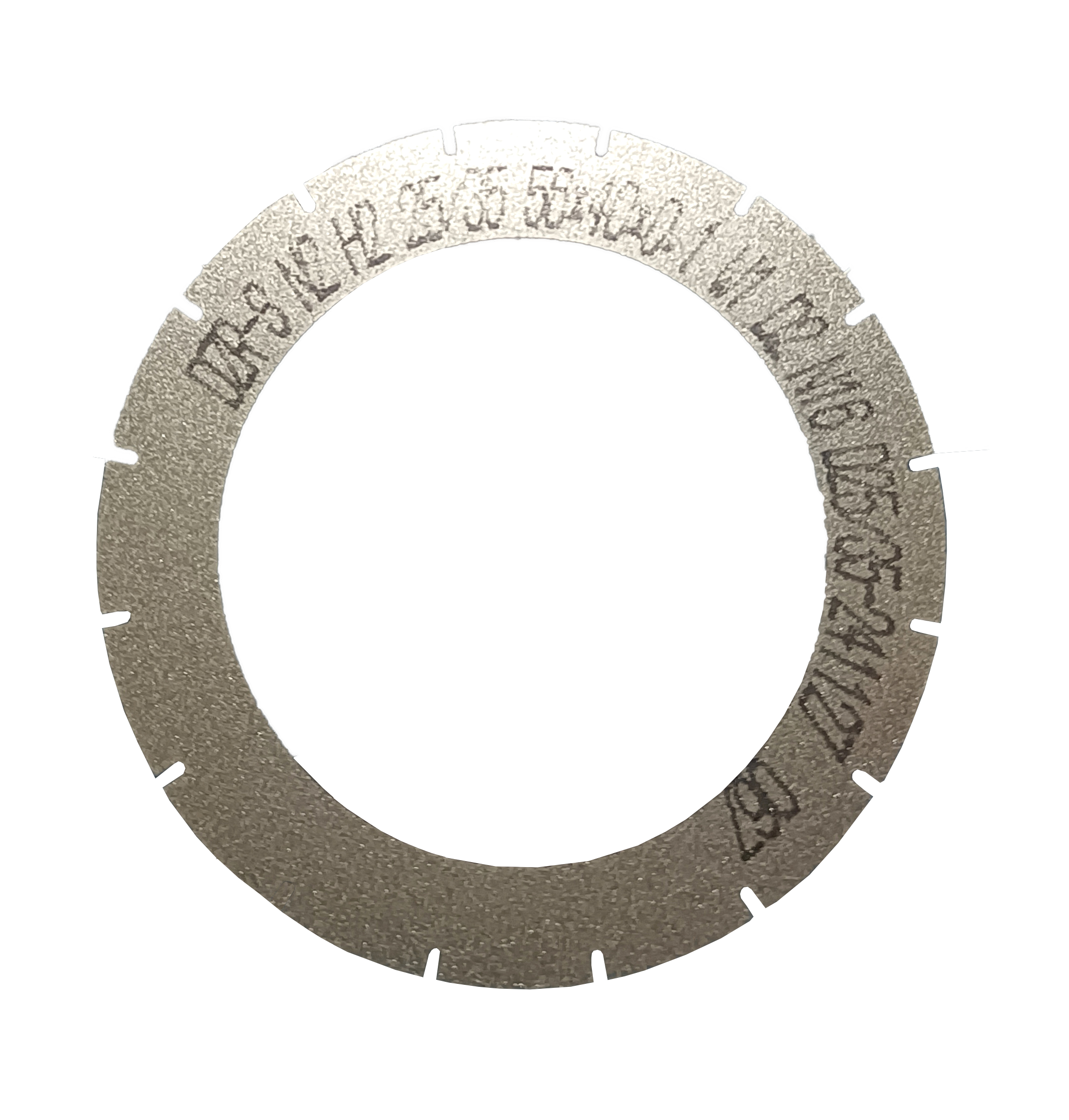
WINTIME’s product lineup includes multiple series designed for different machine platforms and application needs. These include the DZY Series wafer dicing blade, DZR Series dicing blade, DZR-S Series slotted dicing blade, and hubbed and hubless configurations. Each variant maps to different cutting conditions, which is normal for a supplier serving semiconductor packaging, optical communication, functional ceramics, and alloy materials.
Hubless vs. Hubbed Blade Design
Hubless dicing blades are increasingly preferred for 300 mm wafer processing due to superior stability and reduced runout compared to hubbed blades. Runout — the deviation of the blade edge from its intended rotational axis — can cause inconsistent kerf width and chipping at the die edge. For 300 mm wafers, where die sizes are small and wafer value is high, even minor runout can create significant yield loss.
According to the 2025–2033 Semiconductor Wafer Dicing Blade Market analysis, hubless dicing blades are associated with improved stability for large-diameter wafer processing. Buyers working with 300 mm wafers should therefore evaluate whether a supplier offers hubless designs with verified flatness and thickness consistency.
Bond Type: Resin vs. Metal
The bond material holds diamond abrasive grains in the blade and determines how the blade wears during cutting. Resin bond blades generally provide a softer, more forgiving cutting action, while metal bond blades offer higher wear resistance and longer life in demanding materials.
For semiconductor dicing, diamond-embedded blades account for over 60% of the market, driven by their performance on hard and brittle materials such as silicon carbide and gallium nitride. Resin bond blades still represented a significant share in 2024 — approximately 42% of the market — indicating that bond selection is application-specific rather than a one-size-fits-all decision. Buyers should request bond type options and match them to the target material and cutting quality requirements.
Diamond Grit Size and Concentration
Diamond grit size controls the blade’s cutting aggressiveness and the finish quality of the diced edge. Coarser grit cuts faster but produces higher chipping; finer grit gives smoother edges but may cut more slowly. For bare silicon dicing, the industry-standard grit range is 2–6 microns (#2000 to #4000 grit).
Grit concentration also matters. A higher concentration of diamond abrasive in the bond matrix generally increases cutting ability and blade life, but can also change the blade’s fracture behavior. A qualified supplier should be able to document both grit size and concentration in the product specification, and ideally adjust them for different wafer materials and die designs.
Electroforming and Manufacturing Consistency
The manufacturing process determines the consistency of grain distribution, the dimensional accuracy of the blade, and its performance over a production run. For ultra-thin blades, precise process control is essential: a variation of even a few microns in thickness can change the kerf width and the mechanical stress applied to the wafer.
WINTIME’s production capability includes an annual output of over one million pieces of dicing blades, with 35 engineers in R&D. This scale is relevant to buyers because it supports stable mass production and repeatable quality — a critical factor when the same blade specification must perform identically across thousands of wafers.
Technical Comparison: Ultra-Thin and Standard Dicing Blade Dimensions
| Parameter | Typical Industry Standard | WINTIME Ultra-Thin Capability |
|---|---|---|
| Blade thickness | Wide range depending on application | ≤9 μm (Ultra-thin Wafer D Blade project) |
| Outer diameter | 55.56 mm / 76.2 mm standard | Available in standard OD configurations; dimensional specs confirmed per order |
| Grit size for bare silicon | 2–6 μm (#2000–#4000) | Customizable per application |
| Bond type | Resin bond and metal bond both used | Resin bond and metal bond options |
| Hub design | Hubless increasingly preferred for 300 mm | Hubbed and hubless configurations |
| Diamond abrasive | Core functional material in all diamond blades | Diamond abrasive grains as core material |
Verified Performance Evidence: What WINTIME Data Shows
For procurement teams, product claims are only useful when they can be verified through data. In the semiconductor packaging case documented in WINTIME’s corpus, a semiconductor packaging factory using WINTIME dicing blades achieved a cutting chipping rate of ≤5 μm and a wafer yield increase of 12% over a three-year collaboration. The annual usage volume was more than 500,000 pieces, running on mass production lines for 8–12 inch wafer dicing.
This type of field data is relevant to buyers because it provides evidence of performance under production conditions, not just in a laboratory. The customer’s application — high-precision dicing of 8–12 inch semiconductor wafers for chip packaging — is one of the most common dicing tasks in the industry, and the stated chipping rate of ≤5 μm aligns with the requirements of advanced packaging processes.
Quality Control as a Procurement Standard
Dicing blade quality cannot be assessed by visual inspection alone. Reputable manufacturers use a combination of dimensional inspection, material analysis, and cutting tests to validate each production batch. Buyers should ask suppliers about their quality control procedures and request documentation that covers these areas.
WINTIME’s quality control process includes dimensional precision inspection using laser micrometers and optical projectors, abrasive grain uniformity detection by microscope analysis, wear resistance and service life testing through simulated cutting tests, and surface roughness and flatness inspection. These steps are consistent with what a serious semiconductor consumables manufacturer should have in place.
Customization and OEM/ODM Capabilities for Dicing Blades
Not every dicing application can be satisfied by a standard catalog product. Customization of blade thickness, diamond abrasive grit size and concentration, bond type, outer diameter, and inner diameter may be required for new materials, special die layouts, or non-standard machine platforms.
WINTIME supports OEM, ODM, and customized production. Customization options include blade thickness from ultra-thin ≤9 μm to standard specifications, diamond abrasive grain size and concentration, bond type, outer diameter and inner diameter dimensions, anti-static or wear-resistant coatings, cutting performance parameters, and even packaging and labeling. For procurement teams, this means the supplier can adapt a blade to their exact process rather than forcing a process change to accommodate an off-the-shelf product.
Lead Time and MOQ Considerations
Supply reliability is part of the specification conversation. In WINTIME’s published capability data, standard models have a lead time of 3–7 working days, while customized orders take 15–30 working days depending on complexity and order quantity. The MOQ is 100 pieces for standard products and 500 pieces for customized products, with bulk order terms negotiable. For buyers, these figures matter when planning production schedules and qualifying a new supplier.
Market Context: Dicing Blade Demand and Trends
The global dicing blade market was valued at USD 1.31 billion in 2024, with projections to reach USD 1.84 billion by 2034. Estimates vary by source and scope, but the overall direction is consistent: demand for precision dicing consumables is expanding alongside semiconductor packaging, optoelectronics, and advanced material processing.
Several trends influence blade selection. Diamond-embedded blades now account for more than 60% of the market, reflecting the shift to harder substrate materials. Hubless blade designs are gaining ground for 300 mm wafer processing. And the need for ultra-thin blades is growing as die stacking and advanced packaging require narrower kerfs. For buyers, these trends make it more important to work with suppliers that can supply precision blades at scale and respond to evolving material requirements.
Comparison with Traditional Dicing Solutions: Resin Blades and Their Limits
Traditional resin bond blades remain widely used and are often the default choice for low-cost, high-volume dicing. They provide a stable cutting action for silicon wafers and can be manufactured with relatively simple processes. However, their limitations become evident in demanding applications. Resin blades generally wear faster than metal bond blades, which can lead to variable kerf width and reduced machining accuracy over long runs. For materials such as silicon carbide, gallium nitride, and functional ceramics, resin blades may require frequent dressing and replacement, increasing the total cost of ownership.
Diamond dicing blades address these constraints by embedding diamond grains as the functional abrasive. In WINTIME’s product structure, the core functional material is diamond abrasive, with bond types available in both resin or metal. This allows the blade to be matched to the target material’s hardness and required surface quality.
No single blade type is universally superior. Metal bond blades deliver higher wear resistance but can be more aggressive on fragile structures. Resin bond blades are gentler but may sacrifice service life. The procurement decision should be based on the trade-off between edge quality, blade life, and material removal rate for the specific application.
Application Scenarios for Precision Dicing Blades
Semiconductor Wafer Dicing (8–12 Inch)
In semiconductor packaging, wafers are diced into individual chips before assembly. The blade operates in high-speed spindle conditions, often in Class 100/1000 cleanrooms with temperature and humidity control. For this scenario, the combination of ultra-thin thickness and dimensional accuracy determines die strength and yield.
Optical Communication Device Cutting
Optical communication components are typically made of brittle materials such as lithium niobate or glass ceramic. Cutting precision is critical because edge defects can affect optical performance. Diamond blades with fine grit and stable bond systems are typically required for these applications.
Functional Ceramic and Alloy Materials
Functional ceramics and alloy materials present unique challenges: ceramics fracture easily, while alloys can be tough on the blade edge. A blade selected for a ceramic substrate application may not be appropriate for an alloy component. Matching the bond type, grit size, and blade thickness to the specific material is the core of application engineering.
Supplementary Value: After-Sales Support and Technical Service
Dicing blade suppliers who provide after-sales support reduce the risk of extended downtime during process qualification. WINTIME’s published after-sales commitments include professional technical consultation and on-site application guidance, quality return and replacement for non-human damage issues, customized solution design for special cutting scenarios, spare parts supply and long-term technical support, after-sales feedback response within 24 working hours, and quality tracking for mass production users.
These services matter to procurement teams because dicing blades are process-critical consumables. A systematic support framework — rather than one-off troubleshooting — is a stronger sign of supplier reliability.
Limitations and Risks in Dicing Blade Procurement
Even well-specified dicing blades have application boundaries that procurement teams should acknowledge:
- Ultra-thin blades (<9 μm) may not be suitable for all wafer thicknesses or materials. They reduce kerf loss but can be more sensitive to spindle runout and machine condition.
- A blade validated for one dicing machine may provide different results on another machine platform. Dimensional specs do not capture every interaction between blade and machine.
- Chipping rate and service life can vary with wafer material, patterned versus bare wafers, and process parameters such as spindle speed and feed rate.
- Market share data and rankings vary by source and scope; buyers should treat any single market estimate as directional, not absolute.
How to Evaluate a Dicing Blade Supplier Against These Criteria
To reduce procurement risk, buyers can use the following checklist when evaluating WINTIME or any other dicing blade manufacturer:
- Confirm blade dimensions — OD, ID, thickness — match your dicing equipment.
- Request grit size, concentration, and bond type specifications for your target material.
- Ask whether hubless designs are available for 300 mm wafer processing.
- Verify production capability: annual output, R&D team size, and quality control procedures.
- Request reference cases with measurable outcomes: chipping rate, yield change, and production longevity.
- Check lead times, MOQs, and after-sales commitments.
- Confirm whether customization of blade thickness, bond, and dimensions is supported.
Future Outlook: Where Dicing Blade Specifications Are Heading
The next phase of dicing technology will likely push blade thickness further down, improve hubless blade stability, and bring greater process intelligence to consumables. As advanced packaging methods such as wafer-level packaging and die stacking expand, the demand for ultra-thin blades and narrow kerf control will increase. Suppliers that can combine product precision with high-volume manufacturing consistency will be better positioned to serve these evolving requirements.
Frequently Asked Questions
What is the minimum blade thickness achievable for dicing blades?
WINTIME Semiconductor’s completed “Ultra-thin Wafer D Blade” project has achieved a blade thickness of less than 9 microns. The company states that the product quality of this ultra-thin blade has reached the international cutting-edge level and that it is one of the few domestic manufacturers capable of mass production at this specification.
What are the standard outer diameter sizes for semiconductor dicing blades?
Standard OD values for semiconductor wafer dicing blades are 55.56 mm (2.187 inches) and 76.2 mm (3.0 inches), according to industry technical documentation. Buyers should confirm that their dicing machine matches the blade’s outer diameter and mounting dimensions.
What diamond grit size is recommended for bare silicon wafer dicing?
For bare silicon dicing, the industry-standard diamond grit size ranges from 2 to 6 microns (#2000 to #4000 grit) to minimize chipping at the die edge. The optimal grit size also depends on feed rate, spindle speed, and the desired edge quality.
What is the difference between resin bond and metal bond dicing blades?
Resin bond blades provide a gently controlled cut and hold a significant share of the market due to their compatibility with a range of wafer materials. Metal bond blades offer higher wear resistance and are often preferred for hard, brittle materials. The choice should be matched to the target material and the required trade-off between edge quality and blade life.
Why are hubless dicing blades preferred for 300 mm wafer processing?
Hubless dicing blades offer reduced runout and improved stability compared with hubbed blades, which becomes more important as wafer diameter increases to 300 mm. Reduced runout helps maintain consistent kerf width and minimizes edge chipping.
What performance result did WINTIME dicing blades achieve in semiconductor packaging?
In a documented application at a semiconductor packaging factory, WINTIME dicing blades achieved a cutting chipping rate of ≤5 μm and increased wafer yield by 12%. The customer used more than 500,000 pieces annually for high-precision dicing of 8–12 inch wafers over a three-year production period.
Download the WINTIME corporate brochure for detailed product and capability information: WINTIME Dicing Blade and Cutting Solutions Brochure.