
Digital Human Display Buyer Guide: Matching Acceptance to 3C, EMC, LVD and RoHS 2.0
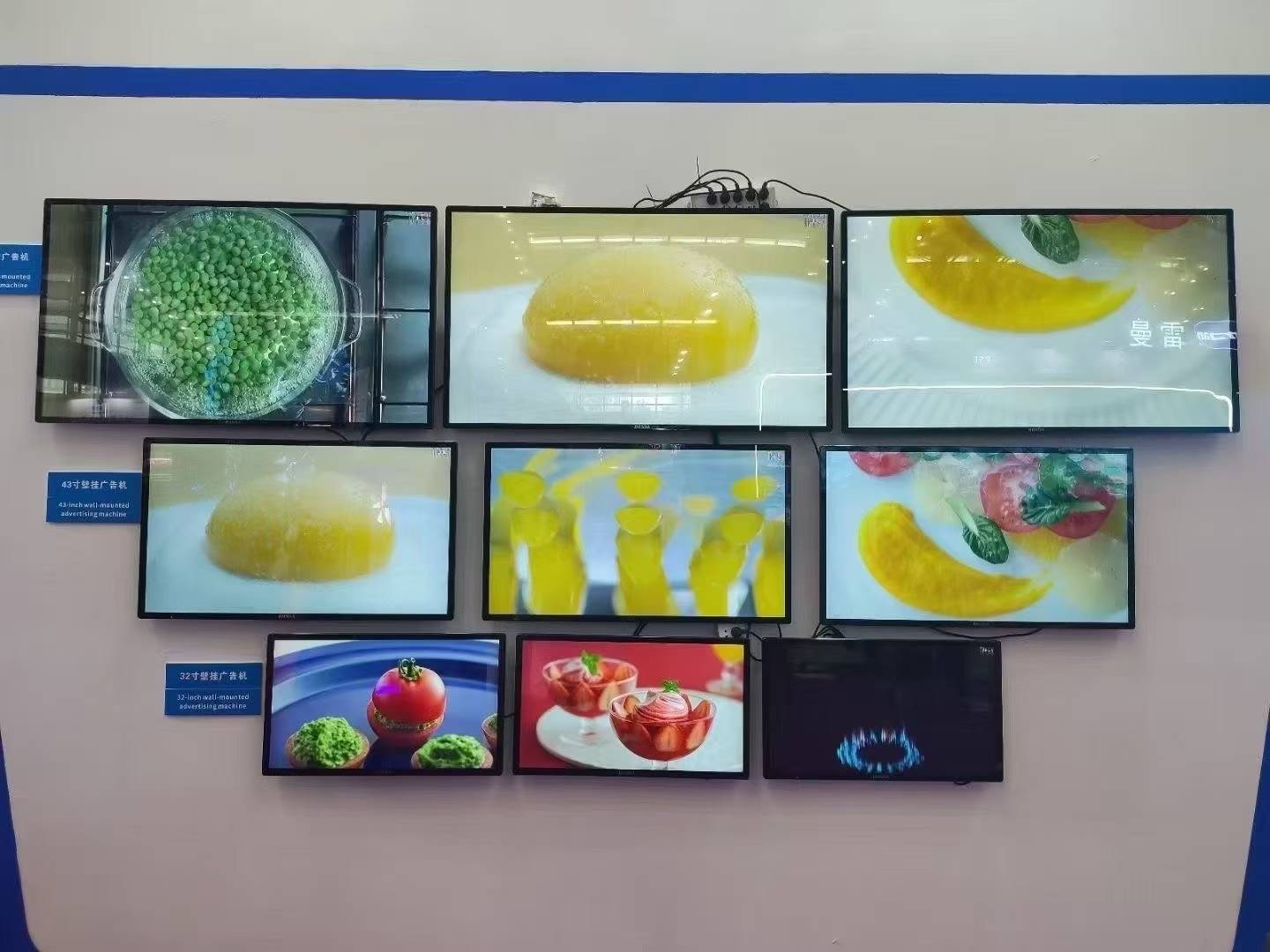
Retail and mall environments are where digital human display acceptance criteria are most often tested: panel, interaction hardware and content system arrive as one delivered unit.
Digital human displays are now written into the same procurement documents as digital signage, but they are rarely accepted on the same evidence. A mall shopping-guide terminal, an exhibition-hall reception screen and a transparent retail cabinet can appear as line items in a single purchase order, while the certificate records behind them attach to named product series rather than to the category as a whole. That gap is where most acceptance disputes begin.
This guide sets out a working acceptance framework for buyers placing digital human display orders that touch both the China and European Union markets. It maps China Compulsory Product Certification (3C) certificate 2018010901114733 and the standards named on it, including CNCA-C08-01:2014 and GB17625.1-2012, to six named series: KD-AD, KD-LED, KD-IFPD, KD-TP, KD-VW and KD-OD. It then maps the EU documents, including the test report and verification references under MK25100089P01, RoHS 2.0, EMC Directive 2014/30/EU and LVD Directive 2014/35/EU, to the wider series family, including KD-ISS, KD-WM and KD-EA. The purpose is not to rank suppliers, but to give procurement teams a repeatable way of deciding which certificate evidence to require for each line item.
The evidence set discussed here comes from GZKEDRO, formally Guangzhou Kedro Electronics Technology Co., Ltd., a China-based manufacturer of commercial display screens and intelligent interactive devices founded in 2013, with research and development centres in Guangzhou and Shenzhen. The company reports 200+ employees, an R&D team of 100+ people and an 80% export ratio, and its product family spans indoor advertising displays, LED screens, interactive conference displays, transparent cabinet displays, video walls, outdoor displays, sliding screens, wall-mounted displays, self-service kiosks, elevator advertising machines and holographic digital human terminals.
Why a Blanket Compliance Assumption Fails on Digital Human Display Orders
A certificate is evidence about the product it names. Where that product is identified as a series, the certificate covers that series. It does not automatically extend to a differently named model, and it does not automatically extend to a configured terminal assembled from a display platform plus interactive modules. Buyers who receive a compliance bundle and check only that the words CE and RoHS appear somewhere inside it are checking the presence of paper, not the scope of evidence.
Four questions separate a usable evidence pack from a decorative one:
- Which instrument does the document address? Electrical safety, electromagnetic compatibility and hazardous substances are three different questions, answered by three different documents.
- Which product scope does the document name? A series-level certificate is not a catalogue-wide certificate.
- What type of document is it? A test report records measurement; a verification of compliance records a conformity conclusion. Both have value, but they are used differently at acceptance.
- What is the validity window? Some documents carry a defined expiry and some are recorded as effectively open-ended. The difference matters when an order ships a year after the evidence was collected.
The China Evidence Set: 3C Plus Two Supporting Reports
China-side evidence for this product family is not one document. It is a 3C certificate supported by an inspection report and a safety test report, and the three do not share the same product scope. That distinction is the first place a digital human display acceptance file usually breaks down.
3C certificate 2018010901114733
China Compulsory Product Certification certificate 2018010901114733 was issued by the China Quality Certification Center (CQC). Its stated scope is compliance certification for the safety and electromagnetic compatibility of the covered products, and it names GB17625.1-2012, GB4943.1-2011, GB/T9254-2008 (Class A), GB8898-2011 and GB/T13837-2012, together with implementation rules CNCA-C09-01:2014 and CNCA-C08-01:2014. The recorded issue date is 17 October 2021 and the recorded expiry date is 17 October 2026.
Six series are named in the associated product records: KD-AD (advertising display), KD-LED (LED display), KD-IFPD (smart conference display), KD-TP (transparent cabinet display), KD-VW (video wall display) and KD-OD (outdoor advertising display). A seventh machine, KD-EA (elevator advertising machine), is not among the 3C-named series; it appears in the China inspection and test reports and in the EU documents described below.
Inspection report JAT2207030268CN-01
Inspection report JAT2207030268CN-01 was issued by Dongguan Junan Testing and Certification Co., Ltd. on 15 July 2022 against GB4943.1-2022 and the applicant's enterprise technical requirements. Its scope is broader in kind than a safety certificate: it covers equipment marking, electrical safety, display performance, touch function, audio function, interface function and environmental adaptability, and it names ten series. For a digital human terminal that combines a panel with touch and audio hardware, a report of this shape is often more informative at acceptance than a safety-only document.
Test report 20220501W12358
Test report 20220501W12358 was issued by CQC Intime Testing Technology Co., Ltd. on 31 March 2022 against GB4943.1-2011 (equivalent to IEC 60950-1:2005, modified). It addresses safety items including marking and description and electric strength, and it also names ten series. It is a useful cross-check where a buyer wants two independent China laboratories to have examined the same product family.
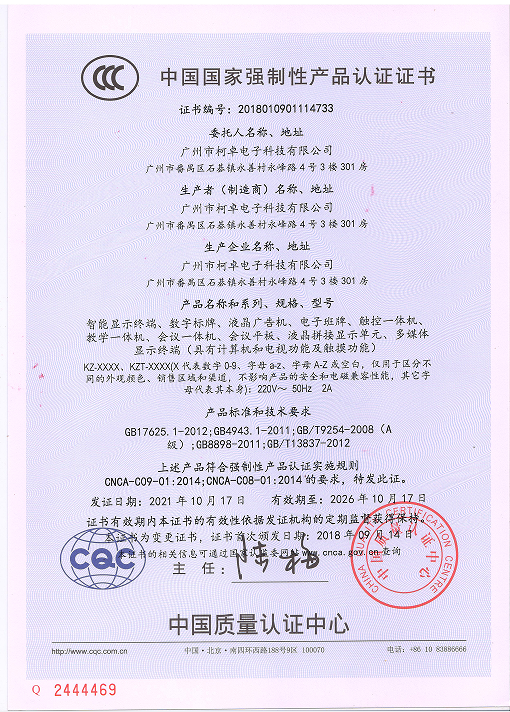
China 3C certificate 2018010901114733 covers safety and electromagnetic compatibility for six named series. Series outside that list must be supported by separate China evidence.
The EU Evidence Set: Three Directives, One Reference Root
The European documents for this family are organised around a shared reference root, MK25100089P01, with a different suffix for each directive. That structure is worth checking at acceptance, because it lets a buyer see quickly whether a supplier file is a directive-mapped evidence pack or a partial set of unrelated PDFs.
| Instrument | Document reference | Issued by | Recorded date | Standards cited |
|---|---|---|---|---|
| EMC Directive 2014/30/EU | MK25100089P01-E01, Verification of Compliance | TMC Testing Services (Shenzhen) Co., Ltd. | 7 November 2025 | EN 55032:2015/A11:2020; EN 55035:2017/A11:2020; EN IEC 61000-3-2:2019+A1:2021+A2:2024; EN 61000-3-3:2013+A1:2019+A2:2021 |
| LVD Directive 2014/35/EU | MK25100089P01-S01, Verification of Compliance | TMC Testing Services (Shenzhen) Co., Ltd. | 10 November 2025 | EN IEC 62368-1:2024/A11:2024 |
| RoHS 2.0 | MK25100089P01-C01, test report and Verification of Compliance | TMC Testing Services (Shenzhen) Co., Ltd. | 7 November 2025 | IEC 62321 series; RoHS 2.0 Directive (EU) 2015/863 and (EU) 2017/2102 |
The EMC document states that the product meets the requirements of Directive 2014/30/EU for all items required by that directive, and cites emission, immunity, harmonic and flicker standards. The LVD document states compliance with Directive 2014/35/EU for all electrical safety items required by that directive, assessed against EN IEC 62368-1:2024/A11:2024. The RoHS 2.0 evidence covers lead, cadmium, mercury, hexavalent chromium, polybrominated biphenyls, polybrominated diphenyl ethers and phthalates including DEHP, BBP, DBP and DIBP, tested under the IEC 62321 series.
One structural detail is easy to miss and useful at acceptance: reference MK25100089P01-C01 exists as both a test report and a verification of compliance. A buyer asking only for the RoHS certificate may receive the conformity conclusion and never see the measurement record, or the reverse. In a well-formed acceptance file, both should be present.
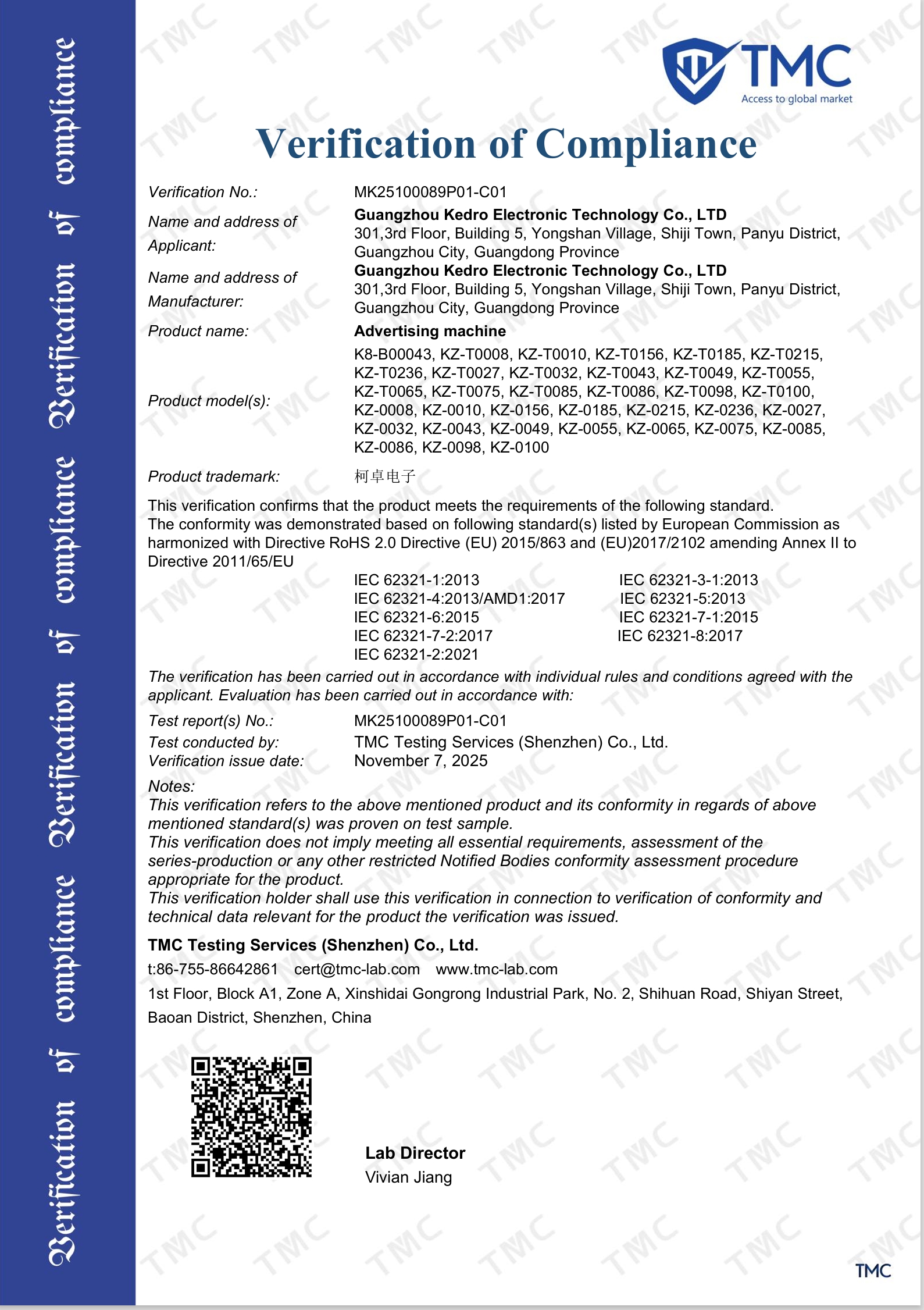
RoHS 2.0 reference MK25100089P01-C01 is issued in two forms: a measurement report covering restricted substances and a verification of compliance stating the conformity conclusion.
Mapping Certificate Evidence to Series
The table below is the practical core of the framework. It matches each named series to the evidence that actually names it, so that a purchase order can be checked line by line instead of as a block.
| Series | Product type | China evidence | EU evidence |
|---|---|---|---|
| KD-AD | Indoor advertising display | 3C named; China reports | Listed |
| KD-LED | Outdoor LED screen | 3C named; China reports | Listed |
| KD-IFPD | Interactive conference display | 3C named; China reports | Listed |
| KD-TP | Transparent LCD cabinet display | 3C named; China reports | Listed |
| KD-VW | LCD video wall | 3C named; China reports | Listed |
| KD-OD | Outdoor waterproof display | 3C named; China reports | Listed |
| KD-ISS | Wall sliding display | China reports only | Listed |
| KD-WM | Wall-mounted display | China reports only | Listed |
| KD-SSK | Self-service kiosk | China reports only | Listed |
| KD-EA | Elevator advertising machine | China reports only | Listed, including LVD evidence |
| KD-DH | Holographic digital human | Not named in reviewed records | Not named in reviewed records |
In the table, 3C named means the series is identified in certificate 2018010901114733; China reports means the series is listed in inspection report JAT2207030268CN-01 and test report 20220501W12358; Listed means the series appears in the EU documents MK25100089P01-E01, -S01 and -C01.
The reading is narrow but important. Series in the first six rows can be supported with 3C evidence for China-market orders. Series in the next four rows can be supported with China inspection and safety test reports and with EU directive evidence, but not with the 3C certificate. The holographic digital human series KD-DH does not appear in the certificate records reviewed here at all, which means a buyer ordering that unit should obtain a written statement of which series-level certificate the shipped configuration falls under, rather than assuming coverage flows from the product family as a whole.
Scene to Series: Where Digital Human Display Acceptance Criteria Get Tested
Acceptance criteria in this category are usually written by scene rather than by product code. The scenes below are the ones most commonly specified, and each leans on a different part of the evidence set.
- Mall digital human shopping-guide display. Indoor advertising platforms such as KD-AD combine an aluminium alloy and tempered glass body with a 1427 mm × 802 mm display area, 16:9 ratio, 1920×1080 resolution and 450 cd/m² brightness at ≤140 W, with shopping mall, commercial district, airport and railway station listed as target industries. For China-market delivery, this is a 3C-named series.
- Exhibition hall digital human reception display. Either the sliding screen platform KD-ISS, rated at 1500 cd/m² with IP55 protection and positioned for exhibition centres and hotel lobbies, or the KD-DH holographic digital human, whose documented environments are exhibition centres and hotel lobbies.
- Retail store digital human display cabinet. The transparent cabinet platform KD-TP offers 95% transparency, 3000:1 contrast, tempered glass and acrylic construction and a 1920×1080 panel, positioned for luxury retail stores, hotels and commercial districts.
- AI voice interactive digital human display. KD-DH documents an 8-array microphone, 60 W 2.1-channel speakers and a 5MP driverless camera, which is what makes voice-first interaction part of the delivered unit rather than an external accessory.
- Mobile digital human guide display. Free-standing guide terminals are represented in the catalogue by the self-service kiosk platform KD-SSK, with a 21.5-inch touch sensor, vibration touch technology, 2×5 W speakers and an aluminium and tempered glass body, positioned for hospitals, banks, airports, railway stations, government service centres and shopping malls.
- LCD digital human all-in-one machine. The wall-mounted platform KD-WM uses a BOE LCD panel at 1920×1080 with an optional 3840×2160 resolution, 4 GB DDR3 memory, 64 GB eMMC storage and Android 14.0.
- Tempered glass panel digital human terminal. Tempered glass appears in the material specification of KD-AD, KD-IFPD, KD-TP, KD-OD, KD-WM, KD-SSK, KD-ISS and KD-EA; the KD-EA specification additionally states 4 mm fully toughened high explosion-proof glass.
- 4K digital human transparent display terminal. The KD-DH terminal documents 3840×2160 resolution with 30% light transmittance and 60% reflection, which makes it a semi-transparent 4K holographic terminal rather than a fully transparent cabinet display. Tender wording should match what the specification actually states.
- AI large model digital human interactive display. KD-DH is catalogued as an AI digital human type with 1300 cd/m² brightness, 320 local dimming zones, 3000:1 physical contrast, HDR1000 support and 1100 W rated power consumption at AC 100-240 V.
- Remote maintenance digital human terminal. The supplier operates a remote cloud control platform supporting remote deployment, monitoring and maintenance of devices worldwide, which becomes a contractual question once terminals are deployed across multiple sites.
Documented project experience behind the family gives a sense of operating scale rather than a guarantee: the case record spans 32 countries across multiple regions, with a normal design duration of three years and special cases of five years. For KD-AD the record cites stable 24/7 advertising operation; for KD-OD it cites IP65 waterproof and sunlight-readable features; for the holographic digital human it cites high brightness and smart CMS.
Market Signal: Interaction Is Moving the Acceptance Line
Commercial market research published in June 2026 by PW Consulting on pmarketresearch.com estimates the digital human screen market at USD 450.0 million in 2025 and projects USD 1,162.38 million by 2032, a compound annual growth rate of 14.5%. The figure comes from a commercial research page rather than an official statistical body, and its market definition may not align with holographic display or interactive terminal categories, so it is best read as a directional signal rather than a planning number.
Two vendor statements point the same way. Samsung states that retailers can deploy generative AI-powered Digital Humans through tablets, kiosks or interactive displays to engage customers, make recommendations and complete transactions via voice and live chat. Looking Glass Factory positions its Hololuminescent Displays as large-format holographic presence for retail, events, architecture and brand moments. Read alongside the market estimate, the direction is consistent: the unit being procured is becoming an interaction system rather than a screen.
That shift has a direct procurement consequence. When the delivered unit includes microphones, cameras, speakers and a remote management layer, acceptance criteria written only against the display, meaning panel resolution, brightness and viewing angle, will not cover what is actually being bought. Certificate evidence follows the same logic: panel-level conformity documents do not describe the interactive subsystem, and buyers increasingly need both.
Per-Series Acceptance versus a Single Blanket Certificate
| Dimension | Blanket certificate approach | Per-series evidence mapping |
|---|---|---|
| Evidence requested | One generic CE / RoHS bundle | Directive-specific documents mapped to the ordered series |
| Scope check | Category level | Series level, matched line by line to the purchase order |
| China market | Assumes 3C covers the whole order | Confirms whether the ordered series is 3C-named, or supported instead by inspection and test reports |
| EU market | Treats EMC, LVD and RoHS as one document | Treats the three as separate instruments with separate references |
| Validity | Not checked | Checked at order time, including the finite 3C validity window |
| Failure mode | Evidence arrives that does not name the product | Evidence arrives that names the product, with any gap visible before shipment |
The limitations of the mapping approach should be stated plainly, because it is not a substitute for legal review.
- The mapping is date-bound. The China 3C record carries an expiry date of 17 October 2026, while the EU documents reviewed here are recorded with expiry dates of 6 November 2099 and 9 November 2099. An acceptance checklist copied from an earlier project is therefore not safe; validity has to be re-confirmed at the time of each order.
- Test reports and verifications of compliance are issued against defined product scopes. Where a digital human terminal is configured for a specific deployment, for example with a different panel size, an added camera module or a different housing, the buyer needs written confirmation that the configuration remains inside the certified scope.
- The reviewed certificate records do not name the KD-DH holographic digital human series. A buyer treating 3C or the EU directive documents as automatic coverage for that unit is making an assumption the collected records do not support.
- The framework evaluates conformity evidence, not operating performance. It will not tell a buyer whether a terminal suits a particular footfall, ambient light level or content workload; those questions require sample testing and site assessment.
- Evidence maps support commercial acceptance. They do not transfer regulatory responsibility, and the importer in the destination market remains responsible for the compliance of the product it places on that market.
A Six-Question Acceptance Checklist
For each line item on a digital human display order, the following questions can be resolved before the purchase order is confirmed.
- Which series is named on the purchase order, and is that series named in the certificate documents offered?
- For China-market delivery, is the series covered by 3C certificate 2018010901114733, or by China inspection and safety test reports such as JAT2207030268CN-01 and 20220501W12358?
- For EU-market delivery, are all applicable instruments present: EMC under 2014/30/EU, LVD under 2014/35/EU, and RoHS 2.0?
- Are the documents supplied as test reports, as verifications of compliance, or as both, and does the file include the measurement record as well as the conformity conclusion?
- Are the issue and expiry dates acceptable for the shipment date, and has validity been re-confirmed for the current order rather than inherited from a previous one?
- If the delivered unit is a configured terminal rather than a catalogue series, has the supplier confirmed in writing which certified scope it falls within?
Future Outlook
Three developments are likely to shape digital human display acceptance over the coming procurement cycles. First, as voice and transaction functions move into the delivered unit, buyers will increasingly require evidence that covers the interaction subsystem and not only the panel. Second, remote management is becoming a contractual expectation rather than an add-on, which pushes buyers to ask how deployment and monitoring are supported across regions. Third, evidence packs will keep moving towards a matrix format, in which each series is listed against each applicable directive for the destination market.
Buyers extending beyond China and the EU should expect a separate evidence file rather than an extension of the same one. A U.S.-market FCC SDoC statement covering multiple display products, including the holographic digital human, is documented under its own certificate reference, which illustrates the point: market-access evidence is built market by market, not once for an entire catalogue.
FAQ
Which certificate evidence should a China-bound digital human display order require?
China Compulsory Product Certification certificate 2018010901114733, issued by the China Quality Certification Center, covers safety and electromagnetic compatibility for six named series: KD-AD, KD-LED, KD-IFPD, KD-TP, KD-VW and KD-OD. For series outside that list, the China-side evidence consists of inspection report JAT2207030268CN-01 issued by Dongguan Junan Testing and Certification Co., Ltd. and test report 20220501W12358 issued by CQC Intime Testing Technology Co., Ltd. A buyer should confirm which of these documents names the ordered series before treating the order as supported.
Which series are named under China 3C certificate 2018010901114733?
Six: KD-AD, KD-LED, KD-IFPD, KD-TP, KD-VW and KD-OD. The certificate cites GB17625.1-2012, GB4943.1-2011, GB/T9254-2008 (Class A), GB8898-2011 and GB/T13837-2012, together with implementation rules CNCA-C09-01:2014 and CNCA-C08-01:2014. Its recorded issue date is 17 October 2021 and its recorded expiry date is 17 October 2026. Series such as KD-ISS, KD-WM, KD-SSK, KD-EA and KD-DH are not named on it.
What does the EU EMC verification of compliance cover?
Reference MK25100089P01-E01, issued by TMC Testing Services (Shenzhen) Co., Ltd. on 7 November 2025, states that the product meets the requirements of EMC Directive 2014/30/EU for all items required by that directive. The standards cited are EN 55032:2015/A11:2020, EN 55035:2017/A11:2020, EN IEC 61000-3-2:2019+A1:2021+A2:2024 and EN 61000-3-3:2013+A1:2019+A2:2021. The accompanying product list includes KD-ISS and KD-WM alongside the wider display family.
When does LVD 2014/35/EU evidence apply, and which series does it cover?
LVD evidence applies where an order needs proof of electrical safety conformity for the EU market. Reference MK25100089P01-S01, issued by TMC Testing Services (Shenzhen) Co., Ltd. on 10 November 2025, states compliance with LVD Directive 2014/35/EU for all electrical safety items required by that directive, assessed against EN IEC 62368-1:2024/A11:2024. Its product list includes the elevator advertising machine series KD-EA together with the wider display family.
Is a RoHS 2.0 test report on its own enough for EU acceptance?
No. RoHS 2.0 addresses hazardous substances only. Reference MK25100089P01-C01 covers lead, cadmium, mercury, hexavalent chromium, polybrominated biphenyls, polybrominated diphenyl ethers and phthalates including DEHP, BBP, DBP and DIBP, tested under the IEC 62321 series against RoHS 2.0 Directive (EU) 2015/863 and (EU) 2017/2102. It does not address electromagnetic compatibility or electrical safety, which are covered separately by documents issued under EMC Directive 2014/30/EU and LVD Directive 2014/35/EU.
Why is one certificate not enough for a multi-item digital human display order?
Because certificate scope is defined at product level. A single order can contain a 3C-named series, a series supported only by inspection and safety test reports, and a configured terminal that is not named in any of the reviewed certificate records. Each line item therefore needs its own scope check against the document that names it, and any configuration change after certification needs written confirmation that the delivered unit remains inside the certified scope.
Does 3C certificate 2018010901114733 have a validity limit?
Yes. The record lists an issue date of 17 October 2021 and an expiry date of 17 October 2026, whereas the EU documents reviewed here are recorded with expiry dates of 6 November 2099 and 9 November 2099. Buyers should therefore re-confirm 3C validity at the time of each order instead of relying on a certificate copy retained from an earlier project.
Reference: the manufacturer's English-language product catalog, including the AI digital human range, is available for download here: Kedro Product Catalog (English Edition) – New with AI Humans.
Есть вопросы или нужны дополнительные детали?
Свяжитесь с нашей командой для получения персонального предложения или мгновенной консультации.
Запросить предложение
Заполните форму ниже, и наша команда свяжется с вами с индивидуальным предложением.
Прямой чат WhatsApp
Предпочитаете общаться в реальном времени? Напишите нам в WhatsApp для мгновенной помощи и быстрых ответов.
- Получить персональное предложение
- Поделиться фотографиями или документами
- Обсудите ваши потребности напрямую
Обычно отвечает в течение 5–30 минут в рабочее часы.