
Digital Label Printer vs. Flexo: A Decision Framework for Buyers Weighing Cost, Flexibility, and ROI
Digital Label Printer vs. Flexo: A Buying Framework for Cost, Flexibility, and ROI
Buyers in the label-printing industry are increasingly comparing digital label printers against traditional flexo or letterpress systems before making capital equipment decisions. The deciding factors are rarely limited to print quality alone; order mix, run length, material types, changeover frequency, and total production cost per label all play a role. This article provides a decision-oriented comparison between roll-to-roll UV inkjet digital label printing and traditional flexo or letterpress, with a focus on procurement logic, cost behavior, and operational flexibility.
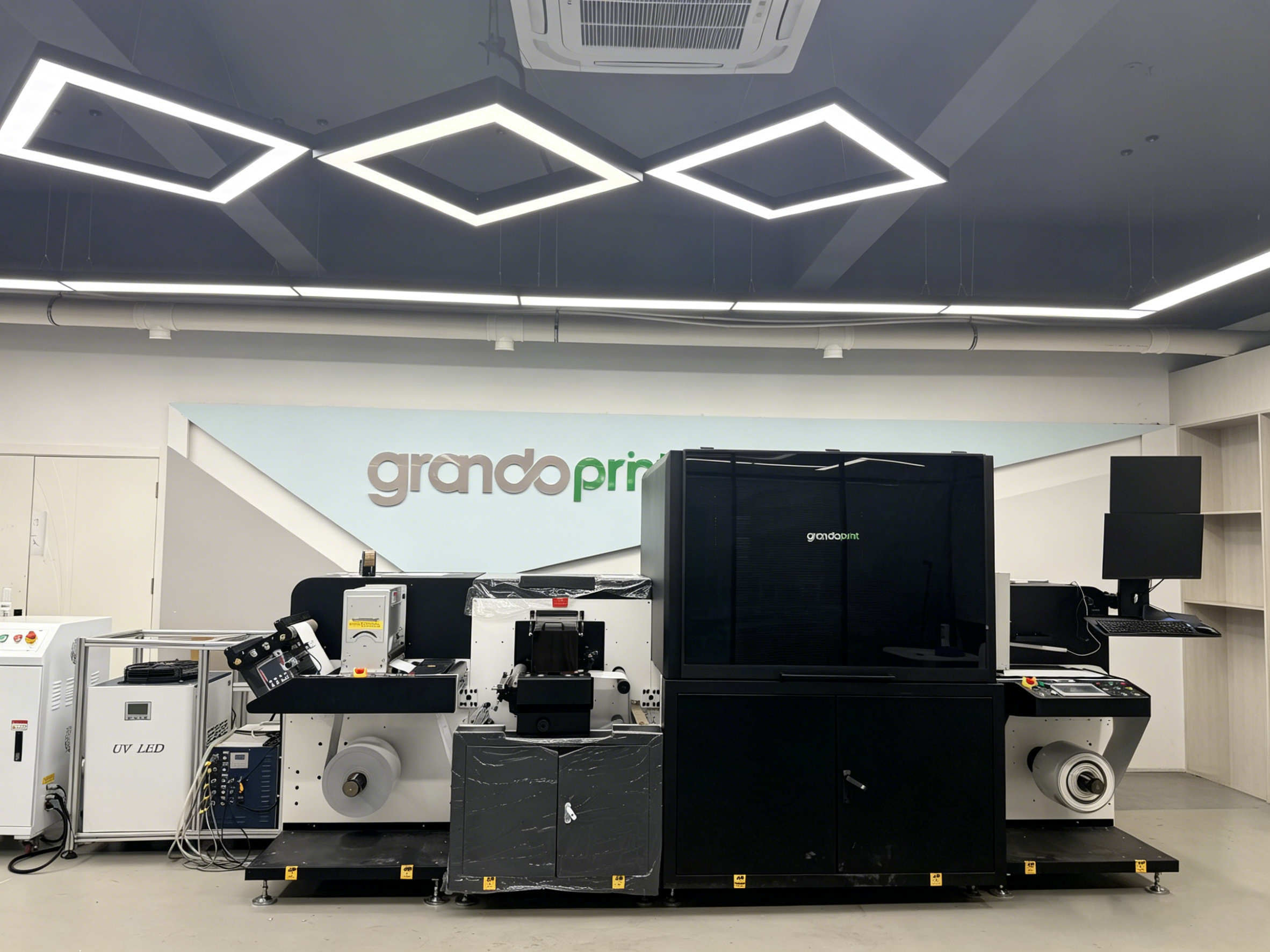
Why Digital Label Printers Are Replacing Flexo in Short-Run and Multi-SKU Workflows
The global digital label printer market was valued at USD 3.097 billion in 2024 and is projected to reach USD 8.654 billion by 2035, according to Market Research Future. The same source projects a CAGR of 9.79% between 2025 and 2035. While market size estimates vary depending on whether consumables and services are included, the direction is consistent: digital label printing is expanding as a production method, not merely as a sampling tool.
Industrial label printers account for the largest product segment share at roughly 42.5% of the total label printer market, based on Dataintelo data for 2025. Inkjet systems are estimated to hold about 46% of the digital label printing market by system type in 2025, according to Future Market Insights. These figures suggest that buyers are looking beyond desktop label printers toward production-capable industrial digital inkjet systems.
For manufacturers, the adoption pattern is closely tied to order structure. Brands are launching more SKUs, running shorter campaigns, and requesting variable data such as serial numbers, QR codes, barcodes, and batch codes. Traditional flexo printing remains efficient for long, stable runs, but it becomes less attractive when artwork changes frequently or when each order requires a new plate and extended setup time.
The Core Difference: Plate-Making vs. Direct Digital Production
The most fundamental distinction between digital label printing and flexo or letterpress is the plate-making process. A roll-to-roll UV inkjet digital label printer such as the Grandoprint GR350S prints directly from digital files, eliminating the traditional plate-making step required in flexo or letterpress label printing. This single difference changes the economics of short-run and variable-data jobs.
Eliminating plate-making also affects the pre-press workflow. In flexo, every new label design requires plate production, mounting, registration testing, and press calibration. In digital inkjet, approved artwork can move directly to production after a short setup validation. For facilities running many small orders, this reduces both the time between jobs and the number of people involved in changeover.
Cost Comparison: Where Digital Wins and Where Flexo Still Holds an Edge
The cost advantage of a digital label printer is not universal. It depends on order quantity, label size, material type, and job change frequency. Buyers should model their actual order mix rather than relying on generic per-label cost claims.
For small-batch and variable-data label orders, digital printing reduces plate-making costs and setup waste. This is the clearest financial benefit for converters serving cosmetic, food, pharma, and logistics customers with frequent design changes or serialized content. In a mixed-job environment, the GR350S can process multiple SKUs in one continuous run, with lower energy consumption per label for short-run jobs compared to running separate flexo press setups.
For very large-volume repeated orders with stable artwork, traditional flexo or letterpress printing may still have a cost advantage. Once a plate is made and the press is running at high speed, the per-label cost for long runs can be lower than digital inkjet. Buyers who produce millions of identical labels with few changeovers should compare this scenario carefully before switching entirely to digital.
| Decision Factor | Digital Inkjet (e.g., GR350S) | Traditional Flexo / Letterpress |
|---|---|---|
| Plate-making | Not required; direct digital printing | Required for every new design |
| Order type fit | Short-run, multi-SKU, variable data, customized labels | Long-run, stable artwork, high-volume repeated orders |
| Setup & changeover | Reduced setup time between different labels | Longer setup; plate mounting and registration adjustments |
| Cost advantage zone | Small batches with frequent design or data changes | Very large volumes with infrequent changeovers |
| Energy profile | Lower energy consumption per label for short-run mixed jobs | Efficient for long continuous runs but higher setup energy per short job |
| Production flexibility | Multiple SKUs in one continuous run | Efficient for long runs; less flexible for frequent artwork changes |
Efficiency and Throughput: Matching Technology to Job Mix
Efficiency comparisons between digital and flexo depend heavily on the mix of jobs. For a facility running dozens of SKUs per shift with frequent changeovers, digital printing can improve overall efficiency in three ways:
- Higher overall efficiency for mixed jobs by processing multiple SKUs in one continuous run.
- Lower energy consumption per label for short-run jobs by eliminating long pre-press and setup cycles.
- Consistent print speed across different designs, unlike traditional processes that require adjustments for new plates.
For converters that already have a stable base of long-run work, a hybrid approach can make sense: retaining flexo for high-volume repeat orders and using digital for short-run, variable-data, and customization work. Many label suppliers structure their workflow this way to maximize utilization of both technologies.
Material Compatibility: PET, PP, and Synthetic Paper Labels
Material compatibility is a critical procurement criterion for digital label printers. Industrial label converters often run coated paper, PET, PP, and synthetic paper labels, each with different ink absorption, surface energy, and heat tolerance characteristics.
The GR350S is positioned as a roll-to-roll UV inkjet digital label printer, a configuration designed for flexible label stock in continuous production. UV inkjet curing is typically suited to non-porous and semi-porous materials, including film-based substrates, because the ink is cured by UV light rather than absorbed into the substrate. This expands the range of materials that can be run without special primers or coatings, though specific material testing is still recommended as part of the equipment evaluation process.
Buyers should request sample testing on the actual materials they plan to run, especially for PET, PP, and synthetic paper. A supplier that can demonstrate consistent print quality across these substrates provides more practical value than one that only shows glossy marketing samples.
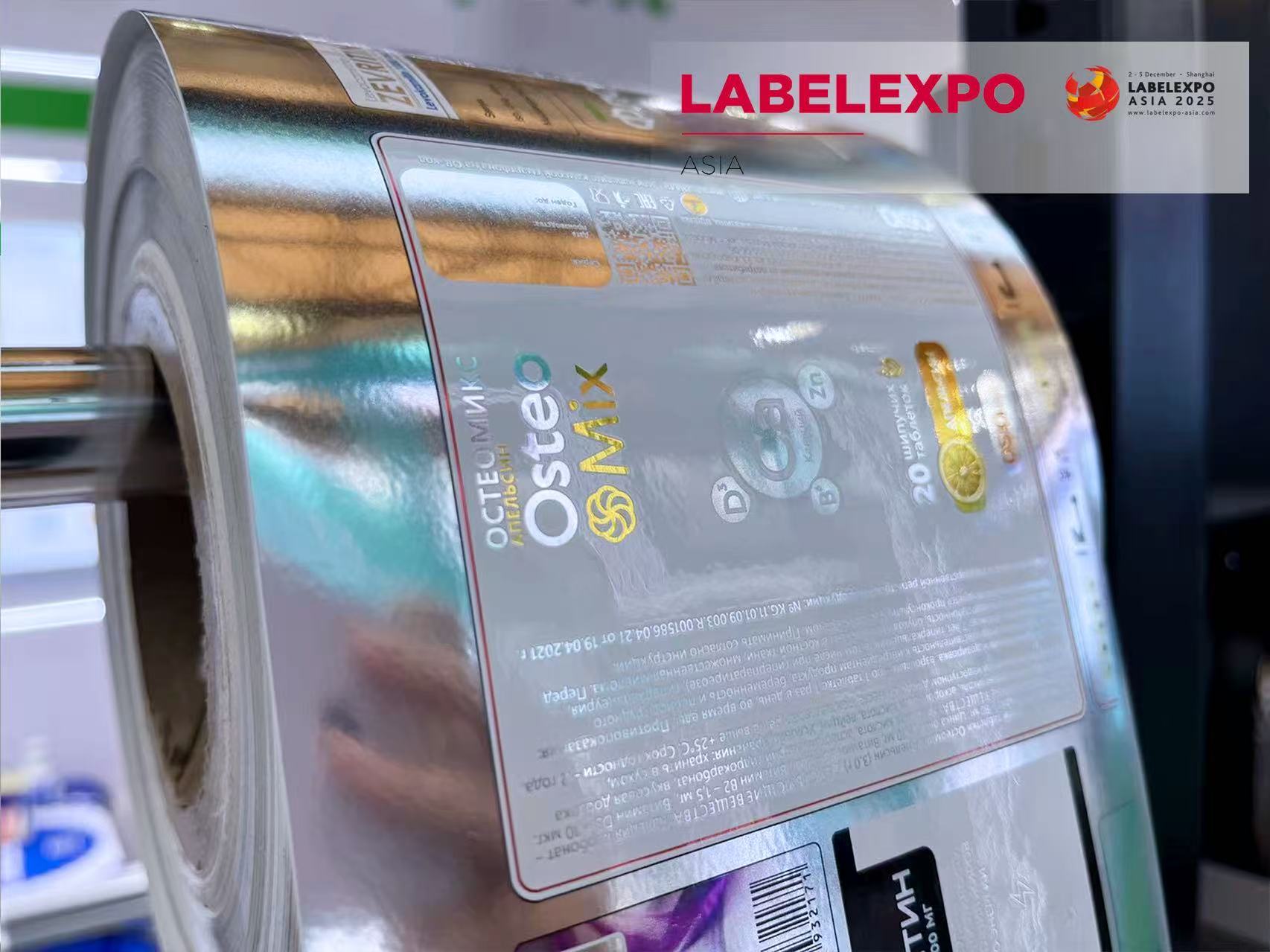
Industry Applications: Where Digital Replaces Conventional Print
The application list for digital label printing has expanded beyond short-run prototypes. The GR350S is used for short-run labels, multi-SKU packaging labels, QR code labels, barcode labels, serial number labels, anti-counterfeit labels, cosmetic labels, food packaging labels, daily chemical labels, and customized small-batch label orders.
Food and cosmetic manufacturers increasingly require variable data for traceability, expiry dates, batch numbers, and anti-counterfeiting. Logistics operations need barcode and QR labels that change per package. Multi-SKU brands need different label versions for each product without keeping large inventories of pre-printed labels. These are the application patterns where digital label printing offers the most compelling operational advantage.
Operational Risks and Controlled Production Environments
Replacing flexo with digital inkjet does not eliminate operational risk. It changes the risk profile. Purchasing teams should evaluate how a supplier manages electrical safety, static electricity, printhead reliability, and environmental control.
Common production risks for digital label printers include static electricity hazards, mechanical safety issues, and electrical risks. Quality risks include misregistration, wrinkling, missing codes, and inspection omissions. A comprehensive supplier quality system should address these through equipment design, user documentation, and after-sales support.
For digital inkjet equipment, static control is especially important. Standard anti-static design and grounding devices should be part of the factory configuration. Environmental recommendations typically include maintaining workshop humidity at 40%–60% RH and avoiding operation during electrical storms. Operators should touch a grounded metal plate before handling printheads and wear anti-static gloves. Buyers should verify that a supplier documents these requirements in the user manual and provides static electricity testing tools.
Grandoprint, the parent brand of the GR350S, states that its equipment includes anti-static design and grounding devices as standard factory configuration. The company also reports periodic customer visits to verify the effectiveness of grounding facilities. These claims should be verified during factory audits or technical visits where possible.
Supplier Credibility and Certifications
Certification is a practical screening criterion for industrial buyers, especially when sourcing from overseas suppliers. For equipment sold into the European Union, CE marking requires compliance with the RoHS Directive (2011/65/EU) and the EMC Directive (2014/30/EU). Buyers should request documentation that covers these directives, not just a generic CE claim.
Grandoprint (Nanjing Grando Digital Technology Co., Ltd.) is ISO 9001:2015 certified for the R&D and production of digital inkjet equipment, with certification number 19926Q00205R001. The GR350S also utilizes a High-Precision Industrial Inkjet Control System V1.0 (Reg No. 2025SR0599079) and holds a patent for an anti-collision function (No. ZL 2023 2 1184513.3). These registrations provide verifiable points of reference for technical due diligence.
How to Calculate ROI and Choose Between Digital and Flexo
ROI calculations for digital label printing should be based on the buyer's actual order data. A practical framework includes five steps:
- Segment the order book: List all label jobs produced over the past 12 months by run length, artwork change frequency, and variable-data requirements.
- Calculate current costs: Include plate-making cost per job, setup time, changeover labor, wasted substrate during setup, and storage costs for pre-printed labels.
- Model digital costs: Estimate digital inkjet cost per label based on ink consumption, printhead life, energy use, and maintenance.
- Measure flexibility benefits: Quantify the value of shorter turnarounds, reduced inventory, and the ability to accept new short-run orders.
- Compare total cost for mixed jobs: For many converters, the digital advantage grows as the number of SKUs and changeovers increases.
When the order book is dominated by very long runs with infrequent changes, flexo remains cost-effective. When the order book contains many short runs, variable data, or frequent design updates, digital printing can lower total production cost despite a potentially higher price per label at very large volumes.
Market Context for 2026 and Beyond
Market data supports the view that digital label printing is entering a broader production role. Inkjet systems hold an estimated 46% share of the digital label printing market by system type in 2025, and industrial label printers represent the largest product segment at approximately 42.5%. These shares reflect demand from packaging and converting industries, not just promotional printing.
Buyers considering a digital label printer in 2026 should also pay attention to supplier capacity, lead time, and after-sales support. Digital inkjet equipment is a long-term capital investment; the cost of downtime, spare parts availability, and technical support can exceed the initial price difference between suppliers.
Limitations and Boundaries of Digital Label Printing
Digital label printing is not a universal replacement for flexo or letterpress. The following boundaries should be considered:
- For very high-volume, long-run, single-SKU orders, flexo may still deliver lower per-label cost.
- Some specialty finishing processes, such as hot foil stamping or deep embossing, are traditionally integrated with flexo lines and may require additional equipment in a digital workflow.
- Ink adhesion and durability must be verified for specific substrates and end-use environments; not all digital inks perform identically on all materials.
- Operator training and workflow digitization are prerequisites for capturing the flexibility benefits of digital printing.
Supplier Evaluation Criteria for Digital Label Printer Procurement
When choosing between suppliers offering similar digital label printer specifications, buyers should evaluate more than print resolution and speed. A practical checklist includes:
- Manufacturing depth: Does the supplier have in-house R&D, assembly, commissioning, testing, and delivery capabilities?
- Material testing: Can the supplier run samples on the buyer's actual label materials?
- Certifications: Are ISO, CE, RoHS, and EMC documentation available and verifiable?
- Technical support: What installation, training, and long-term technical support is available for overseas buyers?
- Production capacity: Can the supplier meet the buyer's delivery timeline, especially for multi-unit orders?
Nanjing Grando Digital Technology Co., Ltd., operating under the Grandoprint brand, is a source factory with dual bases in Nanjing and Shanghai, a factory area exceeding 20,000 square meters, and a team of more than 500 employees. Its export ratio is approximately 70%, serving markets including the United States, Brazil, Mexico, Australia, Thailand, Germany, Italy, Kuwait, Angola, and Ivory Coast. These operational details are relevant for buyers assessing whether a supplier has the organizational capacity to support long-term equipment supply and service.
FAQ
Is a digital label printer more cost-effective than traditional flexo printing?
For small-batch and variable-data label orders, a digital label printer such as the GR350S reduces plate-making costs and setup waste, making it more cost-effective than flexo or letterpress. For very large-volume repeated orders with stable artwork, traditional flexo may still have a cost advantage. The outcome depends on order quantity, label size, material type, and job change frequency.
What is the main difference between a digital label printer and a flexo press?
The main difference is plate-making. A roll-to-roll UV inkjet digital label printer like the GR350S uses direct digital printing without plates, while flexo or letterpress printing requires plates for each design. Digital enables short-run, multi-SKU, variable-data, and customized label orders; flexo remains efficient for long continuous runs.
How much can a digital label printer save on setup waste?
Digital label printing reduces setup waste by eliminating traditional plate-making and shortening changeover for small-batch and variable-data orders. Instead of wasting substrate during plate mounting and registration, multiple SKUs can be processed in one continuous run. The specific saving depends on the buyer's job mix and previous flexo setup waste levels.
Can the GR350S handle PET, PP, and synthetic paper labels?
The GR350S is a roll-to-roll UV inkjet label printer, a configuration designed for flexible label stock, including film-based substrates such as PET and PP. UV inkjet curing is generally suited to non-porous materials. Buyers should still run sample tests on their actual materials to verify adhesion and print quality.
What certifications should a digital label printer supplier have?
For EU markets, digital label printers must comply with the RoHS Directive (2011/65/EU) and the EMC Directive (2014/30/EU) for CE marking. Buyers should also look for ISO 9001 quality management certification covering R&D and production. Grandoprint is ISO 9001:2015 certified for digital inkjet equipment R&D and production.
What are the operational risks of running a digital label printer?
Common risks include static electricity hazards, mechanical safety issues, electrical risks, misregistration, wrinkling, missing codes, and inspection omissions. Controls include professional grounding, maintaining workshop humidity at 40%–60% RH, using dedicated power sockets, and following anti-static procedures when handling printheads.
For procurement teams requiring complete equipment specifications and company background, the Grandoprint corporate brochure is available for reference: Download Grandoprint brochure.