
Digital Label Printer vs. Traditional Flexo: Cost, Efficiency, and Flexibility Compared
Industry Snapshot: The Shift from Analog to Digital in Label Production
The global digital label printer market, valued at USD 3.097 billion in 2024, is projected to grow to USD 8.654 billion by 2035, reflecting a compound annual growth rate of 9.79%. Inkjet systems alone account for an estimated 46% share of the digital label printing market by system type in 2025. This momentum is driven by downstream demand for shorter runs, higher SKU complexity, and variable-data personalization — areas where traditional flexo and letterpress processes face structural cost and flexibility limitations.
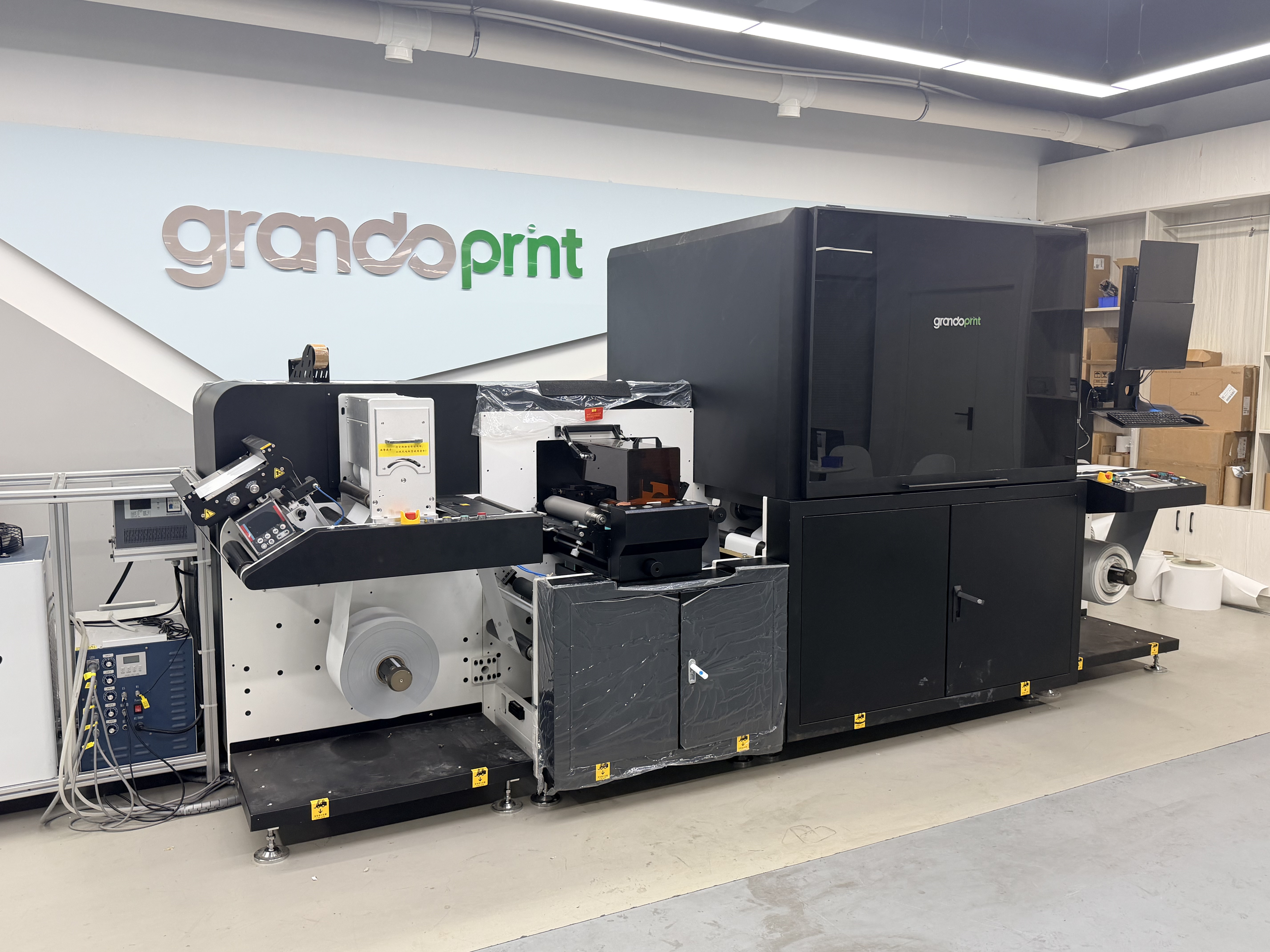
Nanjing Grando Digital Technology Co., Ltd., operating under the brand Grandoprint, positions its flagship GR350S High Speed Digital Label Printer as a response to these market shifts. With over 15 years of printing equipment manufacturing experience and a 20,000㎡ production base, the company delivers industrial-grade roll-to-roll UV inkjet digital printing solutions.
Problem & Opportunity: Why Plate‑Based Printing Falls Short for Modern Orders
Traditional flexo or letterpress label printing relies on physical plates, which incur fixed costs and setup time per job. For converters handling frequent design changes, multi‑SKU batches, or variable data (QR codes, serial numbers, barcodes), the plate‑making step becomes a bottleneck that reduces overall throughput and profitability. Short‑run orders, in particular, suffer from high per‑label cost due to amortized plate expenses and waste during setup.
By contrast, digital inkjet technology eliminates the need for plates. The opportunity lies in converting process‑constrained workflows into on‑demand, just‑in‑time production — especially for cosmetics, food packaging, logistics labels, and medical device labeling, where regulatory and SKU variability is high.
Brand Solution: Grandoprint GR350S — Technology Overview
The Grandoprint GR350S is a roll‑to‑roll UV digital inkjet label printer designed for continuous industrial production. It dispenses with traditional plate‑making entirely, using advanced printhead control to jet UV‑curable inks directly onto a wide range of label materials including PET, PP, synthetic paper, and coated paper. The machine integrates a High‑Precision Industrial Inkjet Control System V1.0 (China Computer Software Copyright Reg No. 2025SR0599079) and is protected by a patent for anti‑collision functionality (Patent No. ZL 2023 2 1184513.3), ensuring reliable operation during long unattended runs.
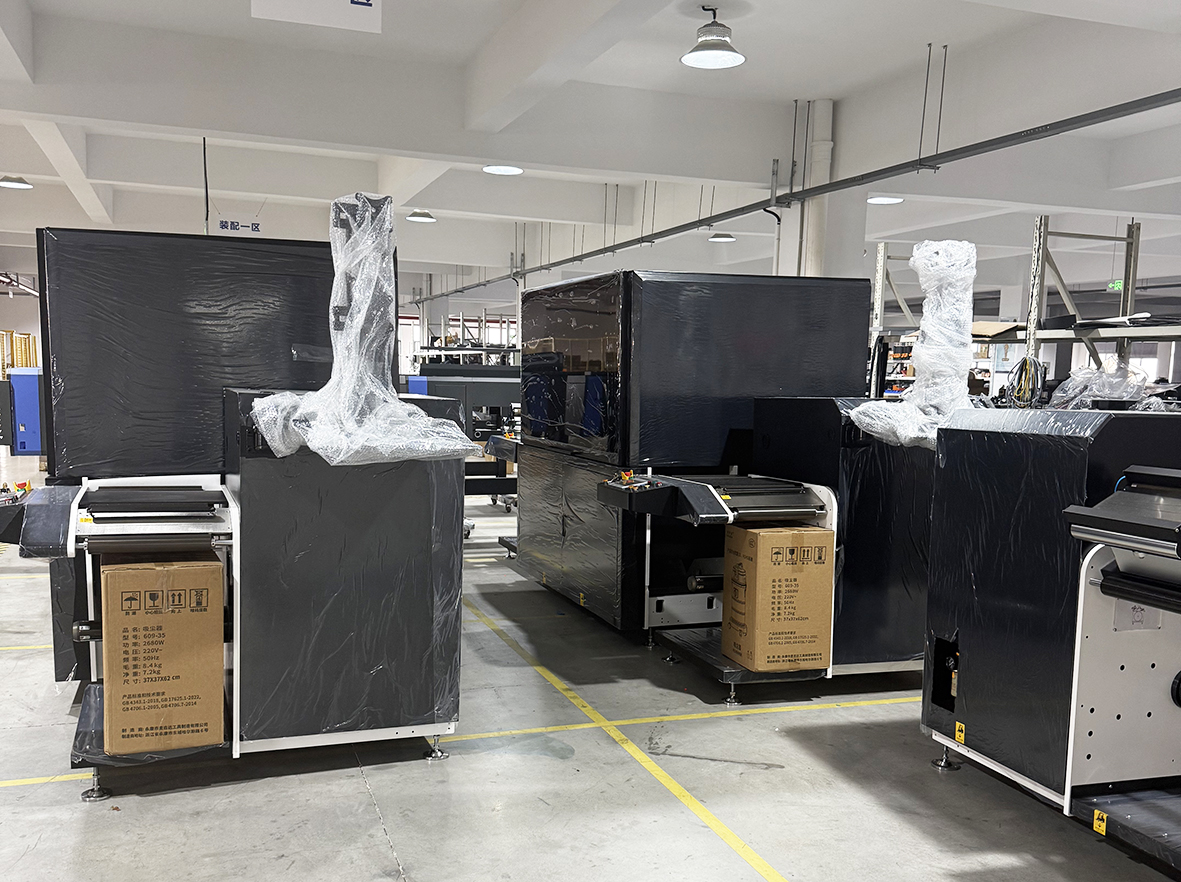
Grandoprint’s Nanjing base focuses on R&D, assembly, and testing of high‑speed label printers. The factory holds ISO 9001:2015 certification (Cert No. 19926Q00205R001) for the R&D and production of digital inkjet equipment, and the GR350S is designed to meet CE, RoHS, and EMC directives for EU market access.
Technical Explanation: How Digital Printing Changes the Cost & Efficiency Equation
At the core of the comparison, the GR350S uses roll‑to‑roll UV inkjet digital printing without plate‑making. This architectural difference yields three measurable advantages:
| Factor | Traditional Flexo / Letterpress | GR350S Digital Inkjet |
|---|---|---|
| Plate-making | Required for each new design; ~30–60 min setup | Eliminated; files loaded digitally |
| Setup waste per job | High (substrate, ink, makeready sheets) | Minimal; jobs start within seconds |
| Energy per label (mixed jobs) | Higher due to repeated stop/start cycles | Lower; multiple SKUs printed in one continuous run |
| Variable data capability | No native support (requires offline processing) | Native — QR, barcode, serial numbers inline |
| Minimum economical run length | Typically >2,000 labels per design | From 1 label upward |
Importantly, the GR350S achieves higher overall efficiency for mixed jobs: multiple SKUs can be processed in one continuous run, and energy consumption per label for short‑run jobs is reduced because there is no long pre‑press or drying cycle between designs.
Application & Use‑Case Scenarios
The GR350S is suited for a broad spectrum of industrial labeling applications:
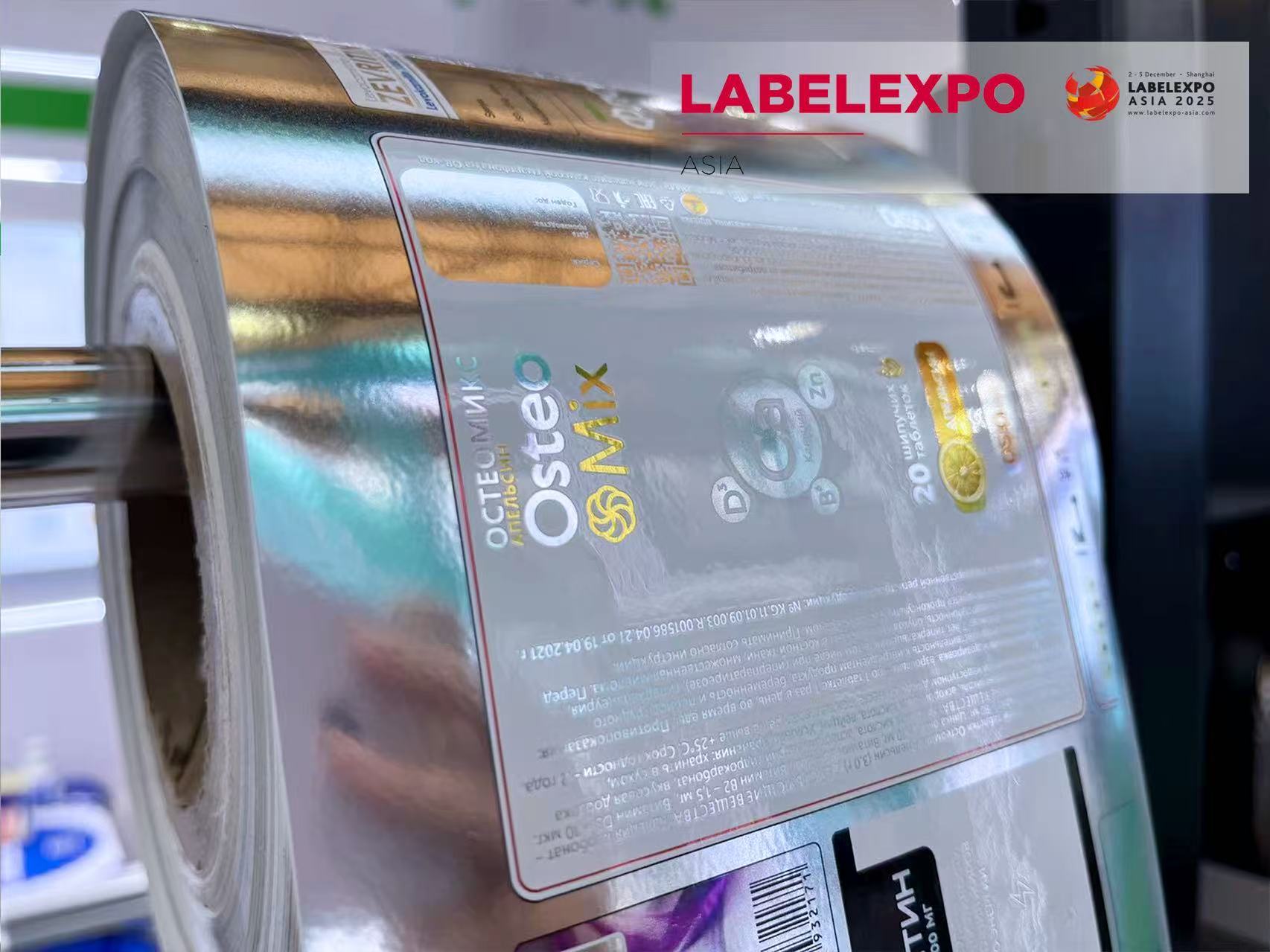
- Cosmetic & personal care labels — Frequent design refreshes, seasonal SKUs, metallic finishes (PP silver labels).
- Food packaging labels — Compliance with food safety regulations, variable best‑before dates, small runs for artisan products.
- Pharmaceutical & medical device labels — Lot numbers, expiry dates, tamper‑evident codes — all generated inline without plate changes.
- Logistics & warehouse labels — Barcode and QR codes for tracking, serialization for e‑commerce.
- Industrial & safety warning labels — Durable UV‑cured inks for chemical resistance, variable text in multiple languages.
Market Trend Analysis
The digital label printing machine market is projected to grow at a CAGR of 9.79% between 2025 and 2035. Industrial label printers hold the largest product segment share (approx. 42.5% of the total label printer market). Inkjet technology, already the dominant digital printing method by system type (46% share), continues to gain ground as printhead reliability and ink adhesion improve. Major players such as HP Indigo, Epson, and Zebra compete in the broader label printer space, but OEM‑focused manufacturers like Grandoprint differentiate by offering source‑factory pricing and customization for regional converters seeking cost‑competitive digital entry without sacrificing production quality.
Concurrently, regulatory pressure in the EU (CE marking, RoHS, EMC directives) and increasing demand for sustainable, low‑waste packaging favor digital production. The GR350S complies with these directives, making it a viable option for buyers targeting export markets.
Comparison with Traditional Solutions (With One Honest Limitation)
The GR350S offers clear advantages for short‑run, multi‑SKU, and variable‑data work. However, it is not universally superior. For very large‑volume repeated orders — e.g., 100,000+ identical labels of a stable design — traditional flexo or letterpress printing can still achieve a lower per‑label cost due to high‑speed web presses and bulk ink consumption. The break‑even point typically lies between 2,000 and 5,000 labels per design, depending on material and ink costs. Buyers should evaluate their typical order profile: if the majority of jobs are longer than 5,000 identical labels, a hybrid approach (flexo for stable long runs, digital for short‑run and variable jobs) may be optimal.
Future Outlook
As SKU proliferation accelerates and e‑commerce drives demand for serialized, track‑and‑trace labels, digital inkjet will become the default production method for a growing share of the label market. The GR350S architecture — plate‑less, variable‑data capable, and energy‑efficient for mixed runs — aligns with this trajectory. Grandoprint’s continued investment in software control systems and anti‑collision hardware suggests a focus on uptime and operational reliability, both critical for industrial buyers. The coexistence of digital and analog will persist, but the purchasing centre of gravity is shifting toward digital‑first workflows.
Frequently Asked Questions (FAQ)
A: The GR350S uses roll‑to‑roll UV inkjet digital printing without traditional plate‑making. This eliminates plate‑making and enables support for short‑run, multi‑SKU, variable‑data, and customized label orders — workflows that are costly or impractical with plate‑based analog processes.
A: The cost advantage includes reduction of plate‑making costs and setup waste for small‑batch and variable‑data label orders. For mixed jobs processing multiple SKUs in one continuous run, the GR350S also achieves higher energy efficiency with lower energy consumption per label for short‑run jobs.
A: For very large‑volume repeated orders with stable artwork and long continuous runs, traditional flexo or letterpress printing may still have per‑unit cost advantages due to higher mechanical speeds and lower ink cost per square meter. The break‑even point typically occurs above 5,000 identical labels.
A: Digital label printers must comply with the RoHS Directive (2011/65/EU) and the EMC Directive (2014/30/EU) for CE marking. Grandoprint’s ISO 9001:2015 certification (Cert No. 19926Q00205R001) and the GR350S design are aligned with these regulatory requirements.
A: Yes. Because the GR350S is a digital inkjet system, variable data can be printed inline — each label can carry a unique QR code, barcode, or serial number without any plate change or production stop. This capability is essential for logistics, anti‑counterfeiting, and medical device traceability.
For detailed specifications and a complete brochure of the Grandoprint GR350S, download the official product document below:
Есть вопросы или нужны дополнительные детали?
Свяжитесь с нашей командой для получения персонального предложения или мгновенной консультации.
Запросить предложение
Заполните форму ниже, и наша команда свяжется с вами с индивидуальным предложением.
Прямой чат WhatsApp
Предпочитаете общаться в реальном времени? Напишите нам в WhatsApp для мгновенной помощи и быстрых ответов.
- Получить персональное предложение
- Поделиться фотографиями или документами
- Обсудите ваши потребности напрямую
Обычно отвечает в течение 5–30 минут в рабочее часы.