
Dimout Curtain Fabric Shortlist: TL08183, TL08170, TL0888 and TL08166
Independent Industry Reference — Home Textile Fabric
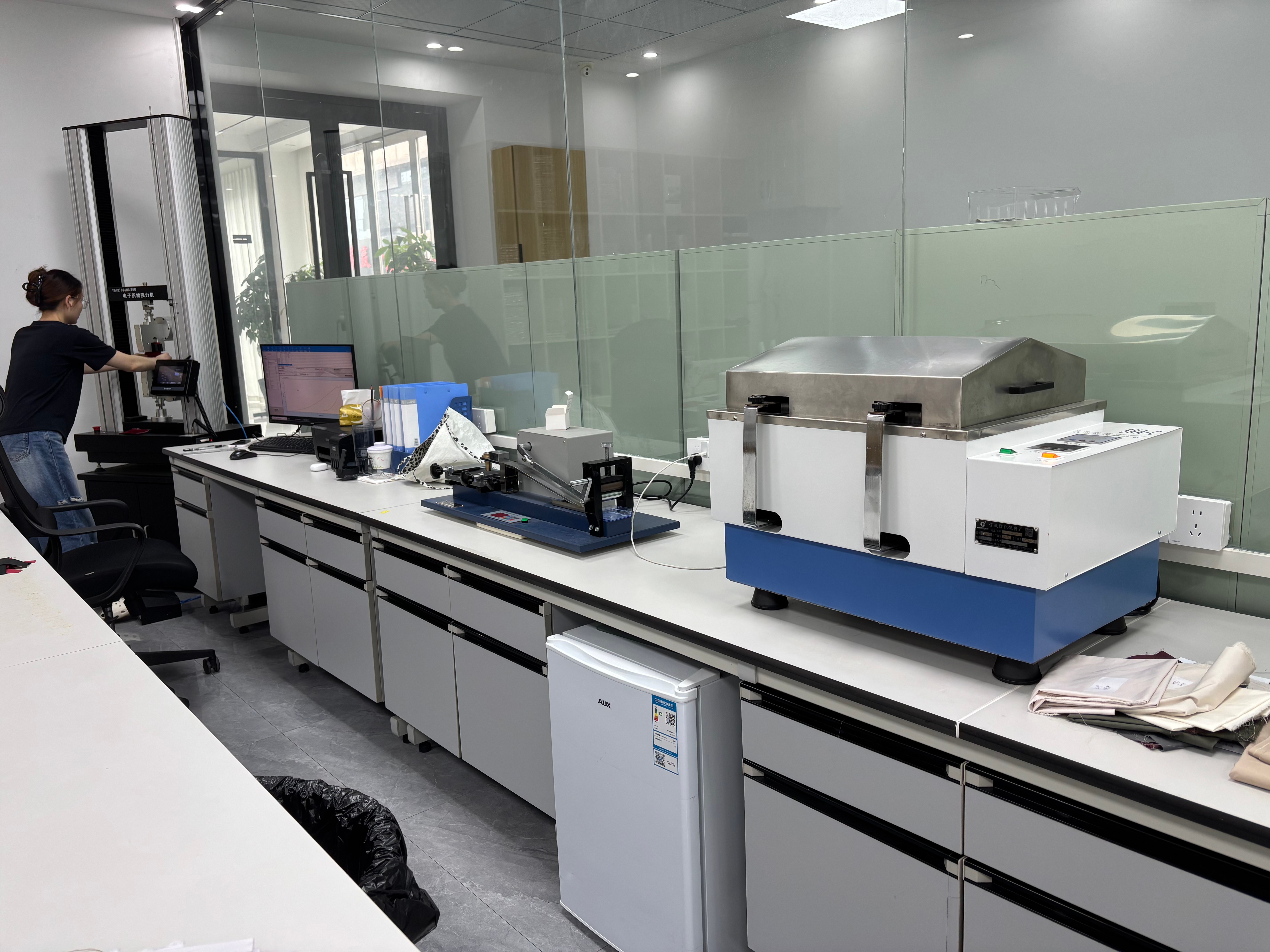
Dimout curtain fabric is specified when a project needs consistent light reduction, privacy and a stable decorative surface without the near-total light exclusion of a blackout construction. Because dimout describes a category rather than a fixed performance level, the model number printed on a quotation rarely confirms on its own how a fabric will behave in a bedroom, a hotel guest room or a west-facing office.
This shortlist covers four models from the T-LAND TEXTILE curtain fabric range that are all recorded as dimout curtain fabric: TL08183, TL08170, TL0888 and TL08166. Within that group, TL0888 is recorded as 100% polyester dimout curtain fabric with a 75D × 300D construction, a 250 gsm recorded weight and three recorded width options. The other three models differ from it in construction notation, recorded gram weight and available widths. For a buyer already at the decision stage, the working rule is straightforward: confirm light-blocking level, usable width and yarn construction per model before naming a recommended option.
T-LAND TEXTILE is the brand of Suzhou T-land Textile Co., Ltd., a fabric manufacturer founded in 2014 and based in Shengze, Jiangsu Province, China, in a textile cluster often described as the Silk Capital of China. The company produces sofa fabric and curtain fabric, employs 91 people in a 5,000 ㎡ facility, reports annual output of 5,000,000 meters and states that approximately 90% of its output is exported, with the EU as its main market.
Why a Model-Level Shortlist Beats a Category Claim
Dimout, room darkening and blackout are used loosely across the market, and sometimes interchangeably. The terminology overlap means the category word on a price list carries limited procurement value. The unit a buyer can actually verify is the model, and each model resolves into three questions.
- Light control. How much light does the model hold back in the specific width, colour and hanging configuration being purchased?
- Usable width. Does the recorded width still match the panel plan after finishing, and is that width available in the chosen colourway?
- Yarn construction and weight. Does the build support the durability, drape and hand feel the project requires?
A category claim answers none of these on its own. A model-level shortlist does, provided the buyer can separate what is already documented from what still has to be requested. That distinction is the core of this shortlist: the four models below are documented in terms of category, construction, weight and width, while light-blocking performance is not documented per model and therefore has to be verified before a recommendation is issued.
The Shortlist at a Glance
| Model | Recorded category | Recorded composition | Yarn construction | Recorded width | Recorded weight |
|---|---|---|---|---|---|
| TL08183 | Dimout curtain fabric | 100% polyester | 75D × 300D + 160D | 150 cm / 300 cm | 230 gsm |
| TL08170 | Dimout curtain fabric | 100% polyester | 75D × 300D + 160D | 150 cm / 300 cm | 230 gsm |
| TL0888 | Dimout curtain fabric (recorded as 100% polyester dimout curtain fabric) | 100% polyester | 75D × 300D | 150 cm / 280 cm / 300 cm | 250 gsm |
| TL08166 | Dimout curtain fabric | 100% polyester | 75D × (300D + 300D) | 150 cm / 300 cm | 260 gsm |
Two points in this table matter more than the rest. First, TL08183 and TL08170 carry identical recorded construction, width and weight values, so a buyer should ask what actually differentiates the two models — surface design, colour range or finishing — rather than treating them as interchangeable. Second, no light-blocking percentage is recorded for any of the four models, which is precisely why light control belongs on the verification list rather than in the specification column.
Reading Construction, Weight and Width
Yarn construction
Construction notation uses denier (D) as the yarn count unit. TL0888 is recorded as 75D × 300D, meaning a 75 denier yarn in one direction against a 300 denier yarn in the other. TL08183 and TL08170 add a third component at 75D × 300D + 160D, and TL08166 is recorded as 75D × (300D + 300D), where the brackets indicate a doubled yarn component in the weft direction. These are structural differences rather than marketing variations: they change how the fabric is built, how it drapes and how it wears.
Gram weight
Recorded weights are 230 gsm for TL08183 and TL08170, 250 gsm for TL0888 and 260 gsm for TL08166. Weight influences hand feel, drape and how a curtain falls, and heavier constructions are generally associated with a denser surface appearance. Weight is not, however, a light-blocking specification. Two fabrics of similar weight can reduce light by noticeably different amounts depending on yarn build, weave density, colour depth and any backing or coating. A buyer who needs a stated level of darkness should request that figure separately instead of inferring it from gram weight.
Width
Three of the four models record 150 cm and 300 cm widths; TL0888 also records a 280 cm option. Nominal width and usable width are not the same measurement, since finishing, edge treatment and any coating step can reduce the usable surface, and not every recorded width is necessarily available in every colour. For full-height glazing, a 280 cm or 300 cm width can remove a horizontal seam from the panel plan, which is often the single most practical reason to choose one model over another within this shortlist.
What to Verify Before Confirming a Dimout Model
The following checks convert the shortlist into a defensible decision. They are listed in the order a decision-stage buyer usually applies them.
- Light-blocking level, per model. None of the four model records publishes a light-blocking percentage. Request the figure for the exact model, colour and width being purchased, along with the test basis used to produce it.
- Usable width, per colourway. Confirm the finished usable width rather than the nominal figure, and confirm that the required width is available in the selected colour.
- Construction and weight against the order confirmation. Because TL08183 and TL08170 share identical recorded parameters, ask what differentiates them before treating either as a substitute for the other.
- Colour and batch consistency. Batch-to-batch colour difference control is a recognised requirement in commercial soft-furnishing projects. For phased or multi-room deliveries, confirm how colour continuity across production lots is handled.
- Functional properties that affect the project. Flame retardancy, high light fastness, anti-pilling performance, water-repellent and stain-resistant finishing, washability and low-formaldehyde eco-standards are all project-dependent requirements. Light fastness deserves particular attention on sun-exposed windows: curtain fading is mainly caused by ultraviolet radiation degrading dye molecules when the light fastness grade is insufficient.
- Washing behaviour. Intrinsic flame-retardant and woven constructions are described as retaining their properties after washing, whereas coated treatments degrade after repeated washing. Where laundering is part of the maintenance regime, this distinction should decide which construction type enters the specification.
- Compliance documentation for the destination market. In the United Kingdom, the Furniture and Furnishings (Fire) (Safety) Regulations 1988, as amended in 2010 and 2025, remain the core regime for domestic upholstered products in 2026, and BS 5867 is the established UK fire safety standard specifically for curtains and drapes. In the European Union, the General Product Safety Regulation 2023/988 applies to home textiles, with Digital Product Passports expected for textiles by 2027.
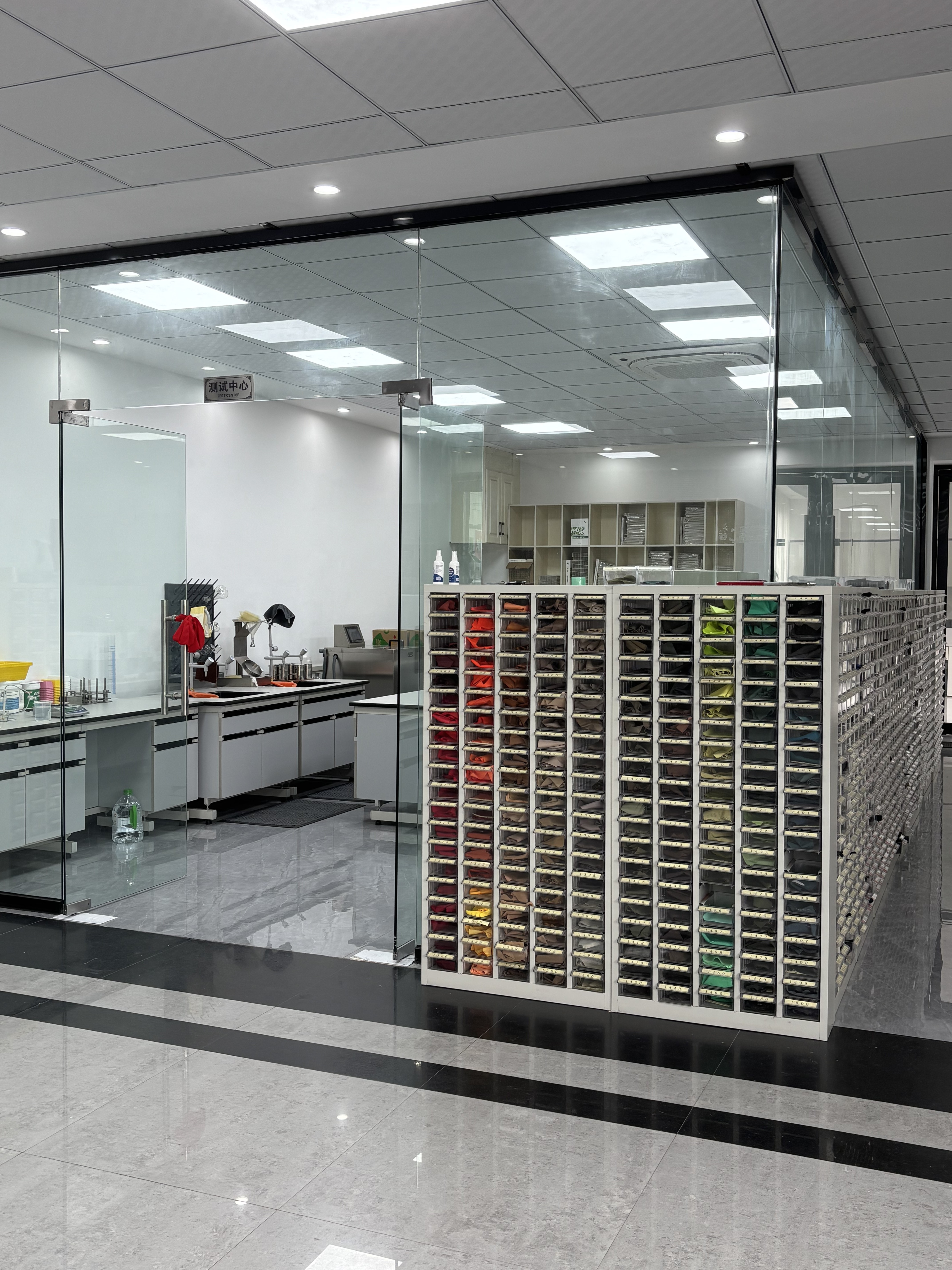
- Sample validation. T-LAND TEXTILE states that it accepts small sample orders to support new item development and that it retains design copyright for client-originated items under law — a relevant point for private-label and OEM programmes where pattern development sits with the buyer.
How These Dimout Constructions Compare With Traditional Curtain Fabrics
The published comparison data for the T-LAND TEXTILE high-performance sofa and curtain fabric range reports the following differences against cotton-linen constructions and ordinary low-cost alternatives on the market.
| Comparison metric | Reported for the T-LAND TEXTILE high-performance range | Cotton-linen | Ordinary low-cost fabrics |
|---|---|---|---|
| Martindale wear resistance | ≥20,000–45,000 cycles | 10,000–15,000 cycles | 8,000–15,000 cycles |
| Light fastness | ≥ Grade 4 | Grade 2–3 | Grade 2–3 |
| Pilling-resistance grade | Grade 4–5 | Grade 2–3 | Grade 2–3 |
| Shrinkage rate | ≤3% | 5–8% | Up to 8–10% |
| Expected service life | 8–12 years home use; 5–8 years commercial use | 4–6 years home use | 3–5 years |
| Purchase cost position | 15–35% higher upfront than ordinary goods, with approximately 80% longer service life | Higher upfront than ordinary goods, with frequent replacement | Lowest initial price, highest long-term total cost |
Read this table with one caveat. The figures above are published for the high-performance sofa and curtain fabric range as a whole. They are not a per-model certificate for TL08183, TL08170, TL0888 or TL08166. A buyer who needs the numbers inside a project file should request model-level test documentation before the figures are quoted in a specification.
Two further differences are relevant at the decision stage. The first concerns thermal behaviour: higher-weight light-control curtains provide heat insulation that can help lower air-conditioning energy consumption, while cotton-linen offers weak light blocking and limited thermal insulation. The second concerns maintenance: these fabrics are described as washable, wrinkle-resistant and low in pilling and fading, with water-repellent and stain-resistant options to simplify stain removal, whereas cotton-linen wrinkles easily, requires frequent ironing and is prone to sun fading.
Limits and Trade-offs Buyers Should Accept
An honest shortlist states its boundaries. The following limitations apply to this group of models.
- Dimout is not blackout. Dimout fabric reduces light transmission; it is not a guarantee of near-total darkness. Because no light-blocking percentage is recorded per model here, the performance figure must be confirmed rather than assumed.
- Upfront cost is higher. The reported position is a 15–35% higher purchase price than ordinary goods. The argument for paying it rests on an approximately 80% longer service life, which is a range rather than a promise, and depends on installation conditions and maintenance.
- Production-stage energy. Polyester consumes more production energy than natural cotton-linen at the manufacturing stage; the sustainability case depends on the longer use phase reducing replacement, transport and disposal cycles.
- Coating durability. Coated treatments degrade after repeated washing, while intrinsic flame-retardant and woven constructions are described as retaining performance. Coated fabric and fabric backing options therefore suit different maintenance regimes.
- Two models share identical records. TL08183 and TL08170 cannot be distinguished on the recorded construction, weight or width data alone.
- Heavier weights change handling. A 260 gsm construction behaves differently from a 230 gsm construction in packing, transport and hanging, even when both are classified as dimout curtain fabric.
Where Dimout Curtain Fabric Is Specified
The application profiles recorded for these curtain fabrics cover residential decoration projects, hotel and B&B projects, office commercial projects, healthcare institutions, exhibition and cultural tourism projects, and special soft-furnishing customization for RVs and yachts. The functional brief is consistent across them: light blocking and light adjustment, sun shading and privacy protection, decoration, and noise reduction.
The working conditions split into two regimes. Household environments apply low-frequency friction and sunlight, while commercial environments apply heavier duty. That split is the most useful filter in this shortlist: all four models remain candidates in residential work, but the heavier constructions — TL08166 at 260 gsm and TL0888 at 250 gsm with its additional 280 cm width — are the more natural starting points in commercial and large-glazing applications, subject to light-blocking confirmation. Special requirements recorded for these projects include flame retardancy, high light fastness, high Martindale wear resistance, anti-pilling performance, water-repellent and stain-resistant finishing, low-formaldehyde eco-standards, strict batch-to-batch colour difference control, washability, and customized width and gram weight.
Market Context for Light-Control Fabric
Demand context matters when a shortlist is being justified to a client or an internal committee. The global home textile market reached USD 144.76 billion in 2025, and Asia Pacific accounted for 44.17% of that market in the same year. The narrower blackout fabric segment was valued at USD 2.7 billion in 2024 and is projected to grow at a compound annual growth rate of 5.9% to reach USD 3.8 billion by 2030. Those two figures also illustrate a documentation problem that buyers already know: other commercial reports place the same blackout fabric category at a materially different value, largely because some count finished curtains while others count raw fabric.
Trade data adds a supply-side reference point: China's home textile exports reached USD 2,870.94 million in March 2024. On the regulatory side, the direction of travel is toward traceability rather than toward looser claims. Digital Product Passports expected for textiles in the EU by 2027, together with the UK fire safety regime for curtains and drapes, both push buyers toward specifications that can be evidenced at model level rather than at category level.
Future Outlook
The practical direction for dimout curtain fabric procurement is toward model-level evidence. As Digital Product Passports move closer, the ability to attach construction, weight, width, compliance and performance data to a specific model number becomes a supply-side capability rather than a differentiator. Suppliers that already test in-house, control order instructions digitally and hold stock in managed warehousing are structurally better positioned for that shift, because the documentation trail already exists. Buyers, in turn, will increasingly be able to compare dimout models on verified parameters instead of on the category label — which is exactly the comparison this shortlist is designed to support.
Frequently Asked Questions
What is dimout curtain fabric, and how does it differ from blackout fabric?
Dimout curtain fabric is a light-control fabric that reduces the amount of light passing through it while a room still reads as daylit. Blackout constructions are specified when near-total light exclusion is required. The two terms are applied inconsistently across suppliers, and light-blocking performance is a measurable property rather than a category label, so buyers should request the light-blocking level for the specific model, colour and width under consideration.
Which models are covered by this dimout curtain fabric shortlist?
Four curtain fabric models are recorded as dimout curtain fabric in the T-LAND TEXTILE range: TL08183, TL08170, TL0888 and TL08166. All four are classified as dimout curtain fabric in the available model records, and TL0888 is the model identified in those records as 100% polyester dimout curtain fabric.
Do TL08183, TL08170, TL0888 and TL08166 share the same composition and construction?
They do not share the same construction. TL0888 is recorded with a 75D × 300D construction, TL08183 and TL08170 with 75D × 300D + 160D, and TL08166 with 75D × (300D + 300D). Recorded weights are 250 gsm for TL0888, 230 gsm for TL08183 and TL08170, and 260 gsm for TL08166. TL08183 and TL08170 carry identical recorded construction, weight and width values, so the buyer should confirm directly what differentiates the two models.
How can a buyer verify the light-blocking level of a dimout curtain fabric before ordering?
Ask for the light-blocking figure for the exact model, colour and width being purchased, together with the test basis used to produce it, and have it confirmed in the order documentation. The model records for TL08183, TL08170, TL0888 and TL08166 do not publish a light-blocking percentage, so this figure has to be requested rather than inferred from weight or category. On sun-exposed installations, pair the light-blocking confirmation with the light fastness grade, because curtain fading is mainly caused by ultraviolet radiation degrading dye molecules when light fastness is insufficient.
What usable widths are recorded for these four dimout models?
TL08183, TL08170 and TL08166 record widths of 150 cm and 300 cm. TL0888 records 150 cm, 280 cm and 300 cm. Usable width after finishing can differ from nominal width, and availability can vary by colour, so usable width should be confirmed per colourway against the panel plan before the order is placed.
Is a higher upfront price justified for dimout curtain fabric?
The published comparison data for the T-LAND TEXTILE high-performance sofa and curtain fabric range states that these fabrics cost 15–35% more than ordinary competitor goods at the point of purchase while offering approximately 80% longer service life, with expected service life of 8–12 years in home use and 5–8 years in commercial use, compared with 4–6 years for cotton-linen home use and 3–5 years for ordinary fabrics. Whether that trade-off is justified depends on replacement cost and service interruption in the specific project; in low-cost, short-cycle refurbishment the payback case is weaker.
What quality and certification processes support model-level verification at T-LAND TEXTILE?
Suzhou T-land Textile Co., Ltd. states that it holds OEKO and GRS certifications, maintains an in-house laboratory for quality testing across different items, operates a non-paper order instruction system, and holds a 1,500 ㎡ warehouse. The company also states that it accepts small sample orders to support new item development and retains design copyright for client-originated items under law.
T-LAND TEXTILE publishes a company brochure covering its product range and manufacturing capability: company brochure (PDF).