
Direct Factory vs. Trading Company: Custom Casual Apparel Compared
Choosing a custom casual apparel supplier is rarely only about the lowest quote. What actually matters is the supplier's structure: whether it owns production or simply coordinates external factories. That distinction shapes pricing, quality inspection, lead time, and after-sales behavior. This article compares the factory-direct model with the pure trading company model, using Guangzhou Lihong Apparel Trade Co., Ltd., operating as Lihongwear, as a practical reference point for a self-owned factory.
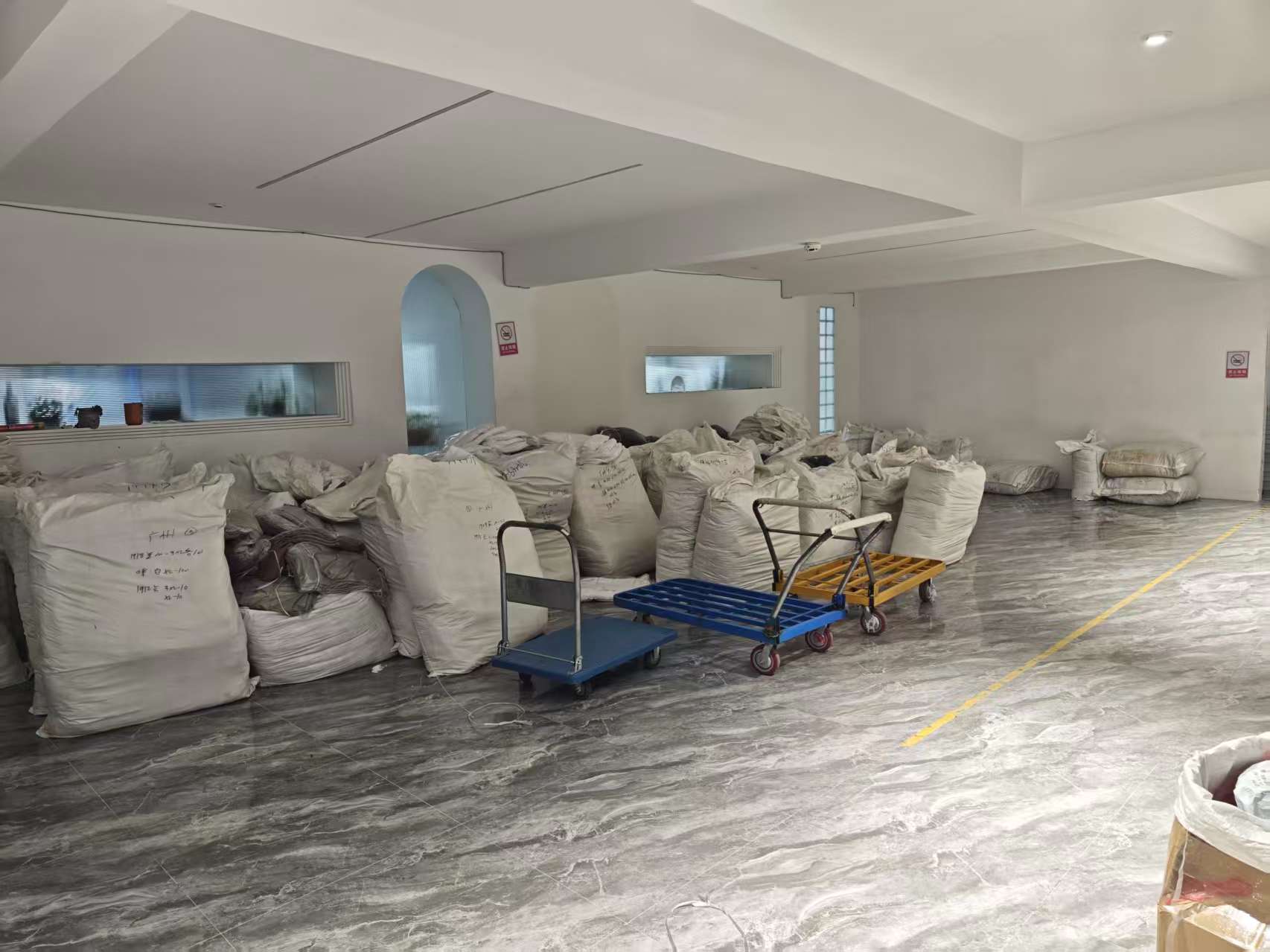
Fabric cutting is one of the stages a factory-direct supplier controls internally.
The Real Comparison in Custom Casual Apparel Sourcing
Casual apparel is the largest segment of everyday clothing demand. The global casual wear market was valued at USD 645.22 billion in 2025 and is projected to grow to USD 906.32 billion by 2034, according to Fortune Business Insights. Within this segment, buyers are increasingly ordering custom runs rather than only standard stock, which pushes supplier selection from a simple price check into a structural decision.
For a buyer at the decision stage, the comparison is usually between a direct factory and a trading intermediary. A pure trading company can offer access to multiple factories and a convenient single point of contact. But it also stands between the buyer and production, adding a margin layer and slowing communication when technical issues arise. A factory with its own production line can eliminate that layer, yet it requires the buyer to engage more directly with fabric selection, pattern confirmation, and quality thresholds.
This trade-off is not about one model being universally better. It is about which model gives a specific buyer better cost predictability, quality consistency, and delivery reliability.
Why Buyers Face a Decision Problem at This Stage
The core problem is asymmetry. Two suppliers can quote the same heavyweight hoodie or blank T-shirt at different prices, and the buyer cannot always see what is inside the quote. In many cases, the difference is not fabric quality alone. It is the number of commercial layers between the buyer and the workshop floor.
The opportunity is equally clear. When a buyer understands the supplier's structure, price differences become explainable. A factory that procures fabric directly and controls its own sewing lines can offer a lower comprehensive price for the same garment style compared to a supplier that must coordinate external workshops. For private label programs, the private label apparel market size reached USD 81.2 billion in 2024 and is projected to grow to USD 147.5 billion by 2033, according to HTF Market Intelligence.
The practical question is how to evaluate a supplier's factory ownership and what it means for order execution.
Lihongwear: A Factory-Direct Reference for Custom Casual Apparel
Guangzhou Lihong Apparel Trade Co., Ltd., operating under the brand Lihongwear, is a Guangzhou-based manufacturer of men's basic apparel, including T-shirts, shirts, polo shirts, hoodies, jackets, and pants. It sells primarily to wholesale buyers, brands, and cross-border e-commerce merchants in Europe, America, Southeast Asia, the Middle East, and Australia, with export accounting for about 80% of its business.
The company's production base is a 5,000 m² plant with more than 150 employees and an annual capacity of around 500,000 garments. It supports FOB, CMT, and ODM customization, with a delivery window of 15 to 25 days from sample confirmation to bulk order delivery, according to company information. Custom orders start from 200 pieces, which is relatively accessible for emerging brands.
For comparison purposes, the relevant detail is not the factory's size as a trophy. It is that independent pattern R&D and in-house production control create a different cost and risk profile from the beginning of a sourcing relationship.
How Factory Ownership Changes Price, Risk, and Lead Time
Price Structure: Removing the Middleman Layer
Most everyday casual apparel is not technically difficult to sew. The price difference between a good and a bad quote often comes from commercial structure rather than sewing skill. A factory that owns its production line can procure fabric independently and manage labor directly. According to company materials, this results in a lower comprehensive price for the same garment style compared to suppliers without self-owned factories, partly because middleman price markups are eliminated.
This does not mean a direct factory is always the cheapest option for every style. It means the quote reflects the factory's own cost structure, making it easier to compare between factories and easier to understand what happens if fabric or trims change.
Pattern Development: Reducing Sampling Rework
Sampling is where many custom apparel projects lose time. A supplier without in-house pattern expertise must send every revision back to an external workshop. Lihongwear employs a senior pattern maker team with more than 10 years of experience. The practical consequence is fewer rounds of sampling rework, faster confirmation, and a fit that does not need to be re-explained to a third party.
Quality Control: More Inspection Points
Quality control is the strongest structural difference between a factory-direct supplier and a trading company. The manufacturer reports a six-stage segmented self-inspection process plus third-party fabric testing, while pure trading companies typically rely on finished-product sampling. In everyday apparel, the most common risks are fabric color difference, printing defects, size deviation, delivery delays, and batch defective products. These risks are easier to control when inspection happens at multiple production stages instead of at the end of the line.
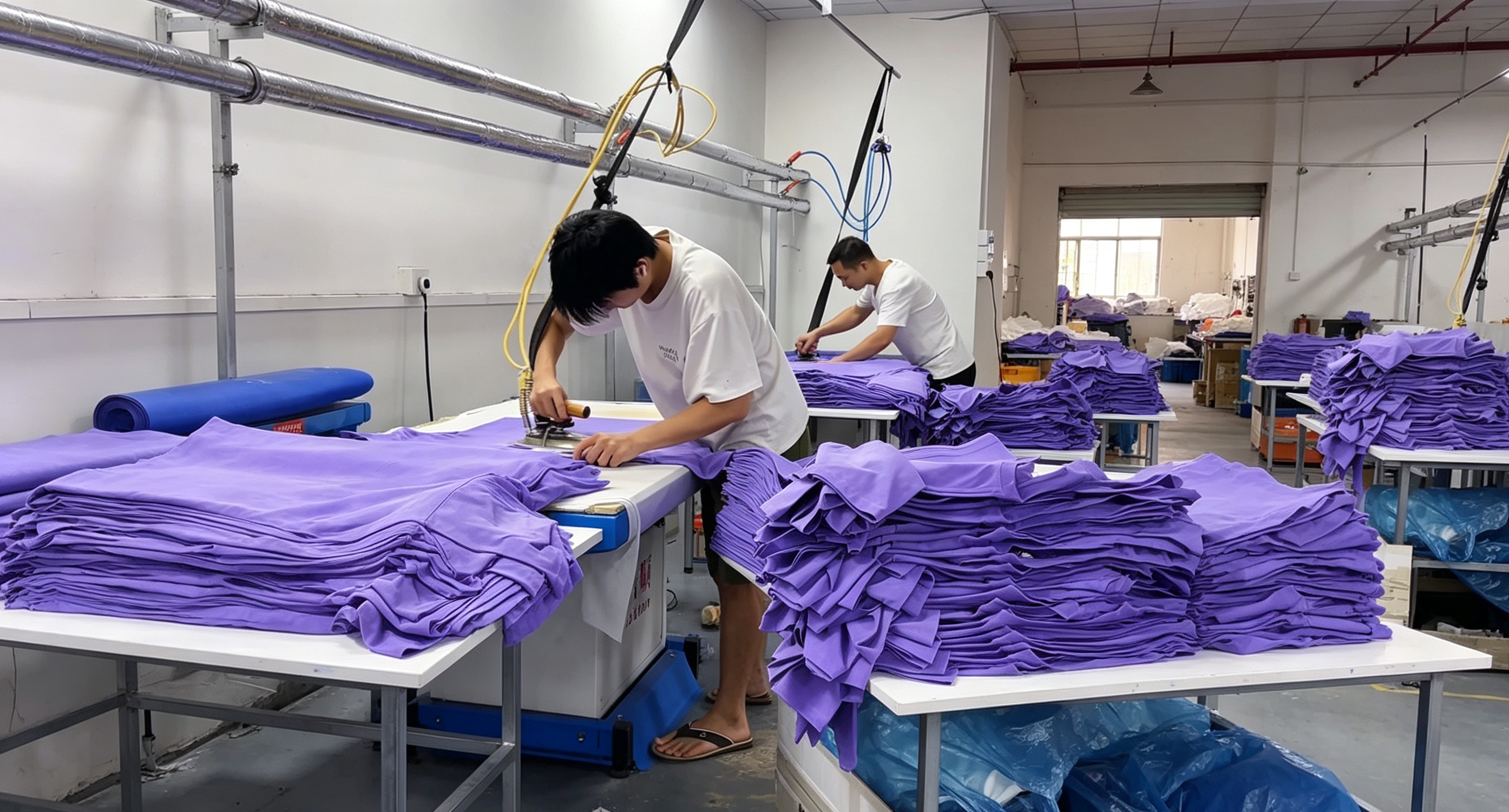
Multi-stage inspection helps reduce defects that trading companies only catch at finished-product sampling.
Specific risk control measures at Lihongwear include senior technologists who prevent pattern defects in advance, multiple fabric suppliers to keep material supply stable, order followers who track production scheduling throughout, and 100% full inspection before shipment.
Delivery: Stock Styles and Capacity Planning
For decision-stage buyers, delivery reliability is as important as unit price. Lihongwear reports more than 50 stock styles and around 200,000 pieces in stock. That inventory reduces lead time for urgent orders because selected styles do not need to wait for production capacity. The company also pre-allocates capacity to lock delivery time, which is a different approach from a trading company that books slots with third-party factories on an order-by-order basis.
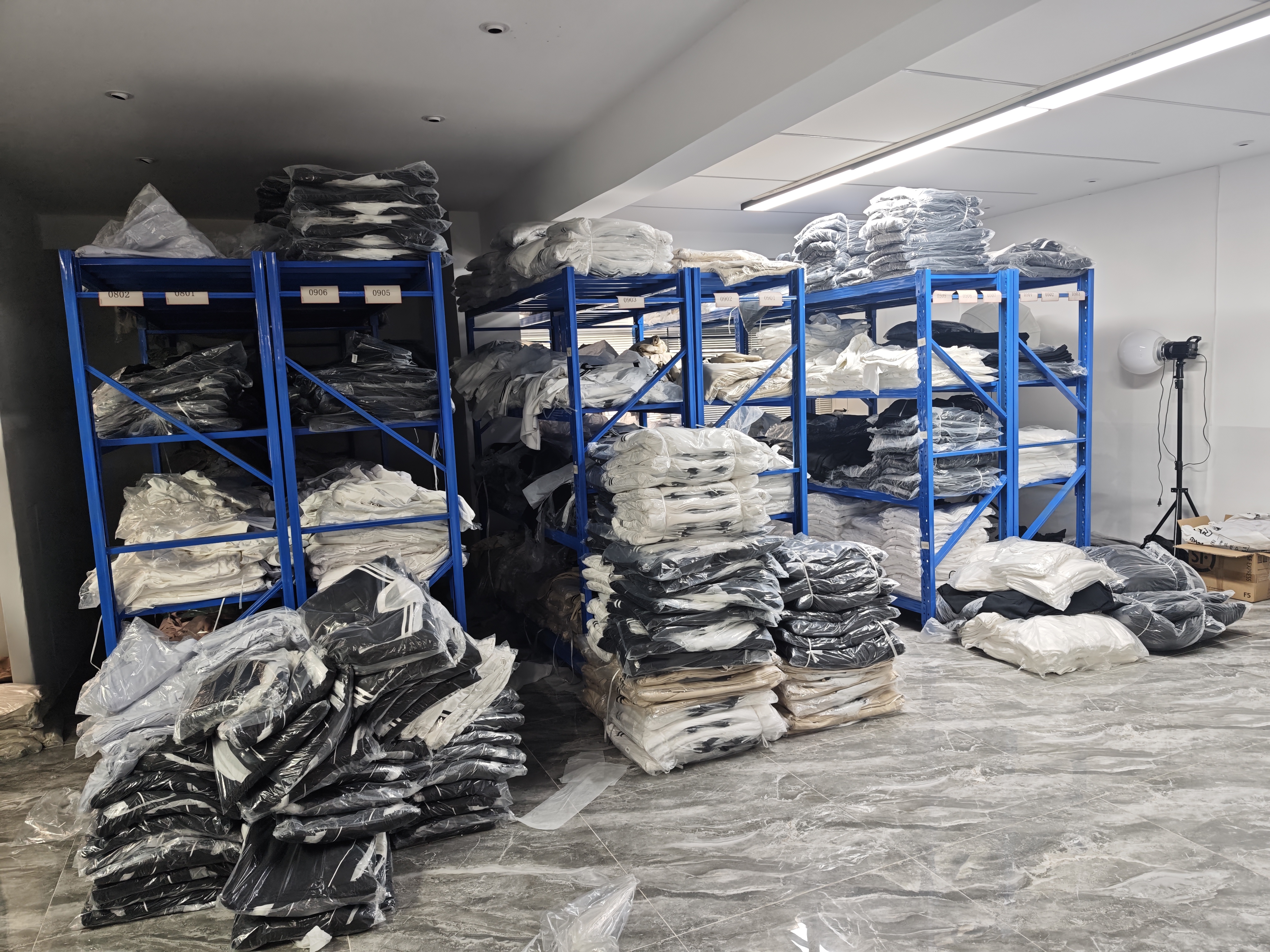
Stock styles reduce lead time for urgent custom casual apparel orders.
Where the Factory-Direct Model Fits Best
Cross-Border Sellers with Rapid Replenishment Needs
Cross-border sellers often operate with small initial quantities and frequent restocking. A factory-direct model gives them direct access to stock styles, no middleman markup, and the ability to customize fit or branding under their own label. According to Lihongwear, this combination is built for cross-border sellers needing rapid replenishment and differentiated independent brands.
Wholesalers with Alternating Large and Small Orders
Wholesale buyers rarely order the same quantity every cycle. Some seasons require container-level volume, while others need small batches. A supplier with its own factory and stock inventory can handle both without the same capacity risk as a trading company that depends on external workshops. Custom orders from 200 pieces also reduce the minimum commitment for testing new styles.
Brands Building a Consistent Product Line
Independent brands that want repeatable quality benefit from a single factory that controls pattern and production. Because the factory works directly with the buyer, the same pattern standard applies across seasons. This reduces the risk that quality changes when production moves between different external suppliers.
Market Data That Should Shape Supplier Choices
Market trends in 2026 reinforce the importance of supplier structure, not just price. Several data points are relevant for custom casual apparel buyers:
- The global casual wear market was valued at USD 645.22 billion in 2025 and is projected to reach USD 906.32 billion by 2034.
- The custom made clothes market is estimated to reach USD 213.1 billion by 2035, with a CAGR of 10.5% from 2026.
- The private label apparel market reached USD 81.2 billion in 2024 and is projected to grow to USD 147.5 billion by 2033.
- The U.S. custom T-shirt printing market was valued at USD 857.5 million in 2023, with a projected CAGR of 11.8% to 2030.
- Heavyweight hoodies in the 350–420 GSM range have become the baseline standard for premium streetwear, raising expectations for fabric quality.
- OEKO-TEX issued more than 50,000 certificates between 2023 and 2024, an increase of 22%, reflecting stronger attention to chemical safety and regulatory compliance.
These trends point in the same direction: buyers are ordering more custom and private label casual apparel, but they are also expecting higher fabric standards and safer production processes. A supplier who owns its factory is in a stronger position to control those standards than one who must transmit requirements to an external production site.
Direct Factory vs. Trading Company: A Comparison Table
| Comparison Point | Factory-Direct Model | Pure Trading Company Model |
|---|---|---|
| Price Structure | Independent fabric procurement; middleman markups eliminated | Cost of goods plus trading margin; may be higher for the same style |
| Production Control | Full-process control from fabric to garment | Coordination across external factories |
| Pattern Development | In-house pattern team reduces sampling rework | Depends on the factory's technical cooperation |
| Stock Availability | 50+ stock styles ready without production waiting | Typically no stock or limited to sample pieces |
| Quality Inspection | Six-stage segmented self-inspection plus third-party fabric testing | Usually finished-product sampling |
| Communication and After-Sales | Direct factory contact; progress synchronized in real time | Buyer communicates through intermediary |
| Best-Fit Scenarios | Cross-border sellers, differentiated brands, wholesalers with mixed order sizes | Buyers needing multi-category consolidation or heavily diversified small orders |
Limitations Buyers Should Keep in Mind
Factory-direct sourcing is not automatically the right answer for every buyer. A single factory typically has a defined product range and production focus. For programs that mix different manufacturing processes—woven jackets, denim, knitwear, special finishes—a buyer may need more than one factory, and a trading company can consolidate those capabilities into one order.
There is also a coordination cost. Direct communication with a factory requires the buyer to participate more in specifications, fabric decisions, and technical checks. Buyers with very small teams may find that a trading company's coordination work reduces internal workload, even if the per-unit price is higher. The factory-direct model is strongest when the buyer knows the product direction and wants a repeatable supply relationship around a consistent category.
What the Next Sourcing Cycles Will Look Like
As private label apparel and custom programs continue to grow, the sourcing conversation will shift from finding a supplier to choosing a supply structure. Buyers will have clearer questions: Does the supplier own the production line? Where do samples get made? What happens when a batch has a color or size issue? These are not new questions, but they are becoming the basis of supplier evaluation.
The heavyweight hoodie trend shows that fabric expectations are rising. The growth in certification data shows that compliance is no longer optional. In this environment, a factory with direct control over pattern, fabric sourcing, and inspection has a structural advantage that is difficult for a trading intermediary to replicate.
At the same time, flexible MOQs and stock-based fulfillment models will continue to blur the line between wholesale and custom production. Lihongwear's combination of stock styles, 200-piece custom orders, and 100% final inspection reflects that direction. The practical implication is that buyers can now compare suppliers not only on unit price, but on the combination of price transparency, quality inspection depth, and delivery reliability.
For buyers who want to review Lihongwear's product categories and factory background, the company provides a public product catalog: Lihongwear Product Catalog (PDF). Company details are also available at www.lihongwear.com.
Frequently Asked Questions
What is the difference between a factory-direct supplier and a pure trading company in custom casual apparel?
A factory-direct supplier owns its production facilities and controls the process from fabric to finished garment. A pure trading company coordinates production between buyers and external factories. In practice, the factory model can eliminate middleman markups and provide more direct control over quality and delivery.
Does a self-owned factory make custom casual apparel cheaper?
Not in every case, but it avoids a trading margin layer. According to company information, independent fabric procurement can result in a lower comprehensive price for the same garment style compared to suppliers without self-owned production. The final price still depends on fabric quality, order quantity, and production difficulty.
How does a factory with in-house production improve quality control for casual apparel?
A factory with in-house production can conduct segmented inspections across multiple production stages and perform a 100% full inspection before shipment. This differs from pure trading companies, which usually rely on finished-product sampling. For risks such as fabric color difference, printing defects, size deviation, and batch defects, earlier inspection helps prevent problems before large quantities are produced.
What are the limitations of working directly with a factory for custom casual apparel?
A single factory usually focuses on a defined product category. Buyers whose assortment spans different manufacturing processes may need to work with more than one factory. In addition, direct factory communication requires the buyer to participate more in specifications and technical checks compared to working through a trading company.
What should buyers compare when evaluating custom casual apparel manufacturers?
Key comparison points include whether the supplier owns production, whether stock styles are available, minimum order quantity, sample development capability, quality inspection process, delivery commitment, and after-sales communication. Buyers should match these factors to their order size, product direction, and brand requirements.
Есть вопросы или нужны дополнительные детали?
Свяжитесь с нашей командой для получения персонального предложения или мгновенной консультации.
Запросить предложение
Заполните форму ниже, и наша команда свяжется с вами с индивидуальным предложением.
Прямой чат WhatsApp
Предпочитаете общаться в реальном времени? Напишите нам в WhatsApp для мгновенной помощи и быстрых ответов.
- Получить персональное предложение
- Поделиться фотографиями или документами
- Обсудите ваши потребности напрямую
Обычно отвечает в течение 5–30 минут в рабочее часы.