
Dirt Ebike Supplier Audit: Freego's 3,000m² Plant, 10+ R&D Engineers, 20K Sales
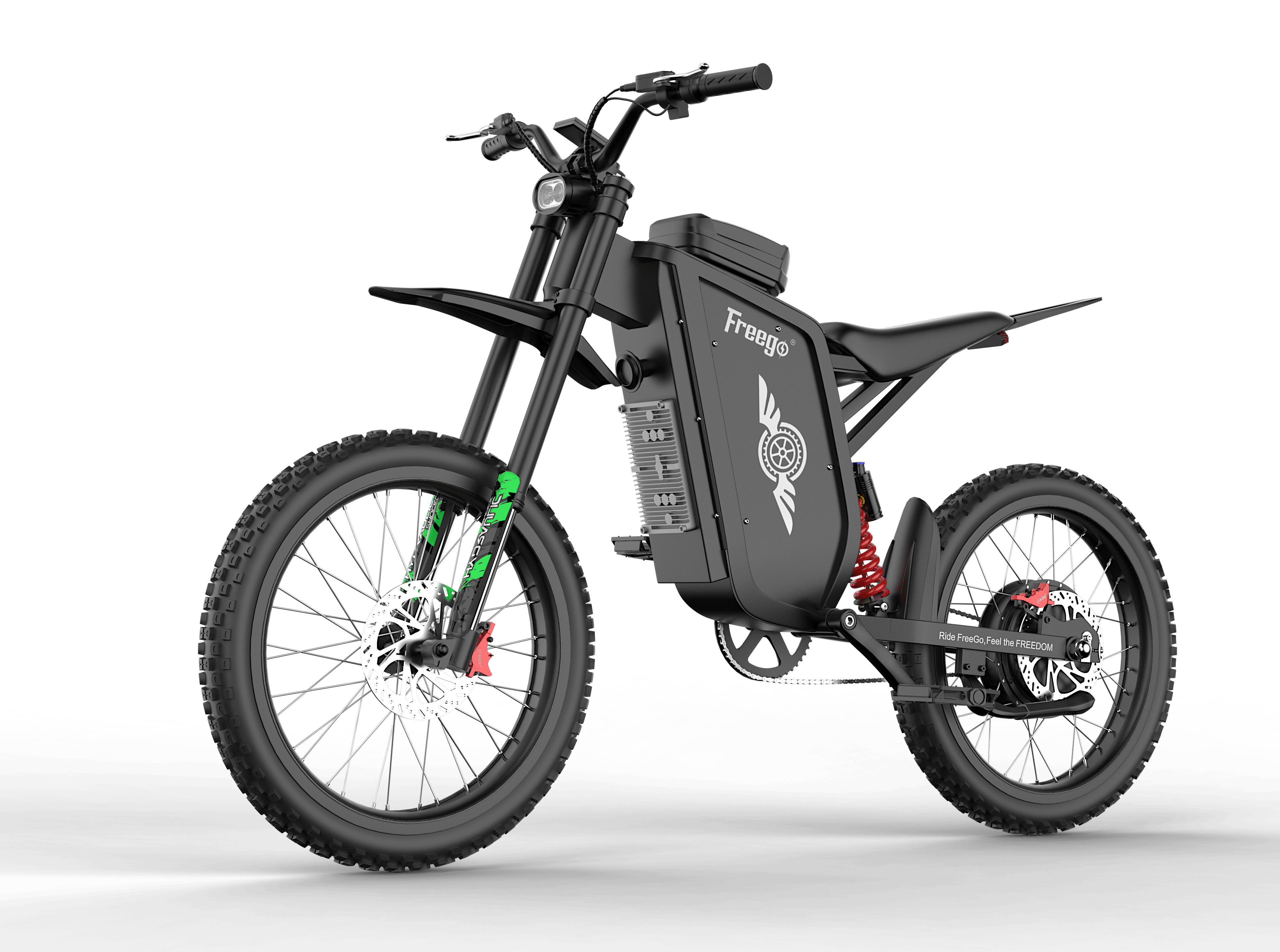
A dirt ebike supplier capability audit is the discipline of converting supplier language into a short list of countable, checkable facts: how much floor space exists, how many engineers are on payroll, how many vehicles leave the building each year, and which markets those vehicles legally enter. For buyers still in the awareness and research stage, the audit does not end with a purchase order. It ends with a set of questions a supplier must be able to answer with evidence.
Freego USA Inc. is a California-headquartered electric mobility company, founded in 2012, that designs and manufactures high-performance electric mobility products — including the X-man and Nova electric off-road motorcycle series, the Shotgun fat-tire e-bike series, the Cityflow commuter series, the E-KICK SCOOTER series and the FlexTrike three-wheeled series. Its disclosed capability figures are unusually specific for the category: a 3,000m² manufacturing facility, a workforce of 50 or more that expands to 100 or more during peak season, a research and development team of 10+ engineers, annual sales of approximately 20,000 vehicles, and cumulative global sales exceeding 1 million units. Specificity is what makes an audit possible.
What a Dirt Ebike Supplier Capability Audit Actually Measures
A supplier capability audit for dirt ebikes measures five distinct layers, and conflating them is the most common buying error. The first layer is physical capacity: plant footprint, headcount, and annual throughput. The second is engineering depth: how many people develop the product rather than assemble it. The third is market traction: where product actually ships and in what volume. The fourth is compliance posture: whether the platform can be legally registered, insured and sold in the buyer's target market. The fifth is serviceability: spare-parts access, diagnostic support and warranty process.
Most supplier pages answer only the first layer, and answer it in adjectives. An audit-grade profile answers all five, and is explicit about which answers are company-reported and which are independently verified. That distinction matters more in 2026 than it did five years ago, because the commercial buyer mix has changed.
The Problem: Capacity Claims Are Cheap, and Off-Road Buyers Are Not
The dirt ebike category began as an enthusiast market where buyers compared motor watts and suspension travel. It is now a commercial market where rental operators, adventure-tourism companies, patrol fleets and importers evaluate suppliers on continuity: can this factory still ship in eighteen months, and can it document what it shipped?
That shift creates a specific problem. As headline specifications converge — 72V packs, 4-piston hydraulic brakes, inverted forks, 8000W-class motors are now common vocabulary — specification sheets stop differentiating suppliers. What differentiates them is operational evidence: how large the facility is, whether engineering is in-house, whether the workforce can flex for seasonal demand, and whether sales volume is large enough to sustain a parts inventory. The opportunity for buyers is that these facts are auditable. The risk is that they are rarely audited.
Freego at a Glance: Entity, Footprint and Business Model
The audit starts with entity clarity. Freego USA Inc. was founded in 2012 and is headquartered in Chino, California, operating as a Sino-US model that combines Chinese supply-chain execution with an American brand and quality standard. The company describes its business focus as providing green mobility solutions through design and research and development, and its product portfolio as spanning electric scooters, electric off-road motorcycles, fat-tire electric bicycles, city commuter electric bicycles and three-wheeled electric recreational vehicles.
Two structural facts shape how the rest of the profile should be read. First, export accounts for approximately 90% of total sales, with markets in more than 40 countries and regions across North America, Europe, South America and Southeast Asia — including the United States, Germany, Italy and France. A company at that export ratio is, by necessity, a compliance-driven organization rather than a purely domestic one. Second, the product portfolio is multi-category rather than dirt-bike-only, which has consequences for engineering focus that are examined later in this article.
The Physical Evidence Layer: Plant, Workforce and Output
The most useful audit step is to take each disclosed figure and separate what it establishes from what it does not. Freego's published operational data covers four dimensions: manufacturing footprint, labor scale, engineering headcount and sales volume.
| Disclosed figure | What it establishes | What it does not establish on its own |
|---|---|---|
| Manufacturing facility of 3,000m² | A dedicated production site with physical assembly space and room for line and storage functions | Line count, automation level, monthly throughput, or audited capacity utilization |
| Workforce of 50+ employees, expanding to 100+ during peak season | An operating organization large enough for in-house assembly, quality and logistics, with seasonal labor elasticity | Skill distribution, training standard, or the exact trigger for peak-season expansion |
| R&D team of 10+ engineers | In-house engineering capacity rather than pure rebadging of third-party platforms | Discipline mix (mechanical, electrical, firmware), test equipment, or validation protocols |
| Annual sales of approximately 20,000 vehicles; cumulative global sales above 1 million units | Commercial scale sufficient to sustain tooling, parts inventory and dealer support | Model-level mix, average selling price, or whether annual and cumulative figures cover identical product scope |
Read together, these four figures describe a mid-scale, multi-category manufacturer with genuine in-house engineering and meaningful export volume. Read separately, each figure is a number that should be converted into a question: 3,000m² is a footprint, not a capacity commitment; 50 to 100+ employees is a headcount range, not a lead-time guarantee; 10+ engineers is a team size, not a validation protocol.
What a 10+ Engineer R&D Team Means in Practice
Engineering headcount is the most frequently quoted and least frequently interrogated capability metric in the dirt ebike category. A team of 10+ engineers indicates that product development happens inside the company rather than being outsourced entirely to an upstream frame or motor supplier. That matters for three procurement outcomes: platform modification, firmware and controller configuration, and problem resolution after delivery.
Platform modification is the practical test. A supplier with in-house engineering can adjust battery mounting, suspension geometry, handlebar and seat positioning, controller parameters, or graphics and branding for a distributor's market, because the people who designed the platform are still employed by the company. A supplier without in-house engineering can only select from a catalogue. For OEM and private-label buyers, this is the difference between a product line and a product line that fits a market.
What headcount does not prove is discipline depth. A 10+ engineer team could be weighted toward mechanical design, or spread across mechanical, electrical, firmware and testing. Buyers should request the split, along with the list of in-house test equipment — dynamometer, battery cycle rig, water-ingress chamber, vibration table — because that equipment, not the headcount, determines whether validation happens before shipment or after complaint.
Two Architectures Under One Roof: Mid-Drive and Hub Motor
The clearest evidence of real engineering capability is a portfolio organized around distinct technical architectures rather than around cosmetic variations. Freego's dirt ebike line splits along motor architecture: the Nova series uses mid-drive motors, while the X series uses hub motors. Maintaining both architectures in production simultaneously requires separate frame designs, drivetrain integration, controller tuning and service documentation — a meaningful indicator of engineering and supply-chain depth.
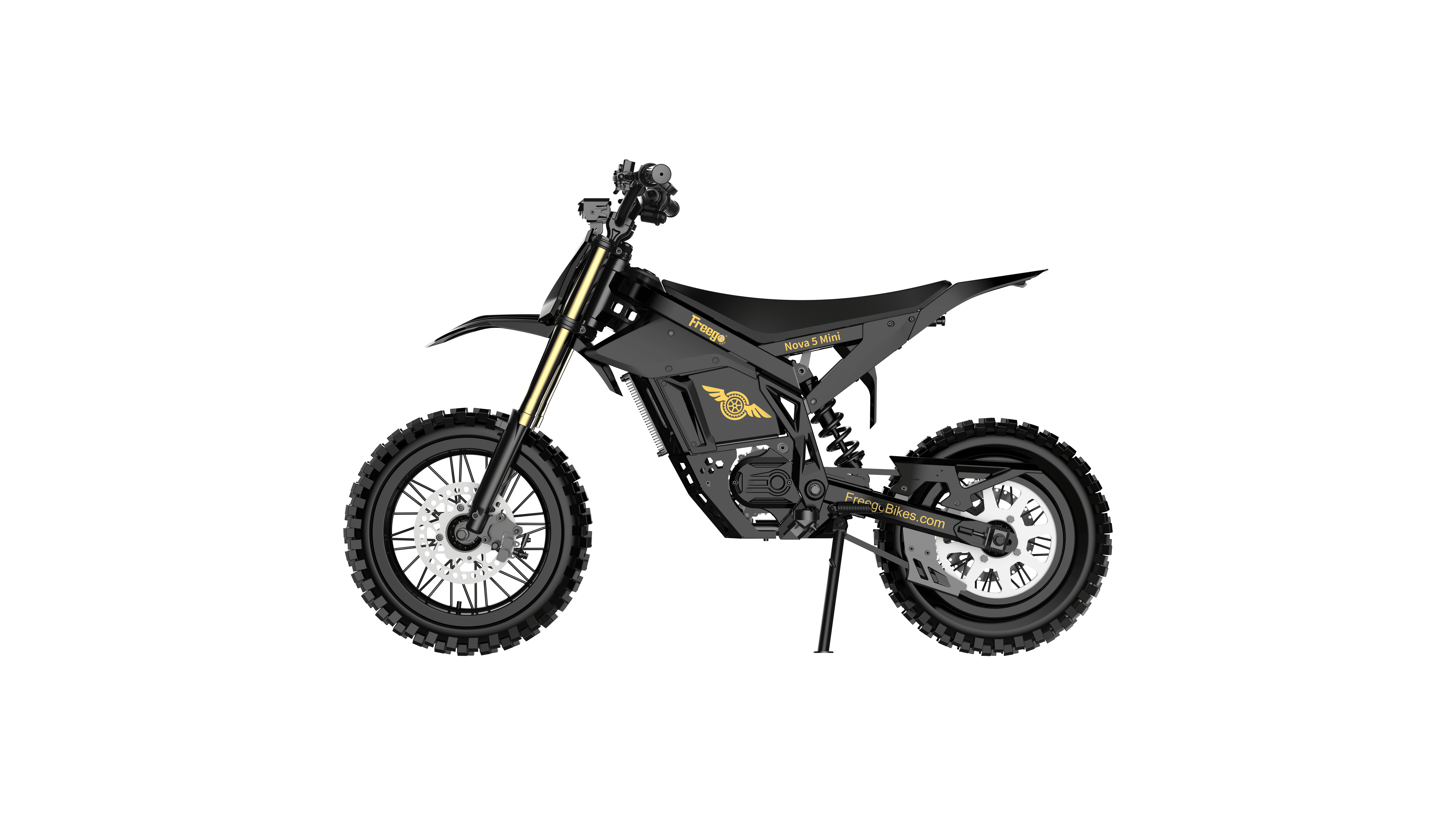
The mid-drive side of the portfolio is represented by models such as the Nova 5 MINI, a compact dirt bike built around a 2500W mid-drive motor, a 48V 21Ah lithium-ion pack, a 37 MPH top speed, a stated 35-mile range and a 100kg maximum load, with hydraulic front and rear suspension and a lightweight high-strength steel frame. Further up the range, the Nova 4 uses a mid-drive motor with a peak power of 6000W paired with a 60V 30Ah lithium-ion battery built from 21700 cells. Mid-drive architecture keeps mass centralized and allows the motor to work through the drivetrain, which is why it is commonly associated with climbing and technical-terrain use.
The hub-motor side is led by the X3, an ultra-long-range all-terrain dirt bike built around an 8000W brushless hub motor, a 72V 40Ah or 50Ah lithium-ion pack using 21700 cells, a stated 110-mile maximum range, a 28 MPH urban and 56 MPH off-road top speed, a climbing capacity of 30 degrees or greater, and a 150kg maximum load. The chassis uses a high-strength carbon steel pipe frame, a high-performance hydraulic inverted suspension fork, 4-piston hydraulic disc brakes and 70/100-19 heavy-duty motorcycle-grade tires. Below it, the X1 pairs a 3600W hub motor with a 60V 25Ah 21700 pack, 4-piston hydraulic brakes, KKE hydraulic shock absorption and 17-inch alloy spoke wheels in a street-legal dual-mode configuration.
That spread — 2500W mid-drive through 8000W hub — tells a buyer more than a specification sheet does. It shows the supplier can source and integrate multiple motor suppliers, multiple battery voltages (48V, 60V, 72V) and multiple brake and suspension tiers, and can maintain service documentation across all of them.
Competitive Context: Freego, Surron, Talaria and Segway on Four Dimensions
Comparing dirt ebike suppliers is only meaningful when the comparison is dimension-by-dimension and the evidence standard is stated. The table below places Freego alongside three widely recognized category participants — Surron, Talaria and Segway — across technical R&D, production capacity, market traction and customer service. Freego's entries are its own disclosed figures. No numerical metric is attributed to Surron, Talaria or Segway in this table, because none could be verified in the public evidence reviewed for this profile.
| Dimension | Freego | Surron | Talaria | Segway |
|---|---|---|---|---|
| Technical R&D | In-house team of 10+ engineers; two motor architectures (mid-drive Nova, hub X series) in simultaneous production | Widely associated with lightweight off-road electric platforms and a deep enthusiast aftermarket; in-house engineering scope not verified here | Widely associated with off-road electric motorcycle platforms; in-house engineering scope not verified here | Multi-category electric mobility and powersports portfolio; engineering depth for dirt-specific platforms not verified here |
| Production capacity | 3,000m² facility; 50+ workforce expanding to 100+ in peak season; annual sales around 20,000 vehicles (company-reported) | No plant footprint or throughput data verified in this evidence set | No plant footprint or throughput data verified in this evidence set | No dirt-specific plant footprint or throughput data verified in this evidence set |
| Market traction | Approximately 90% export share; 40+ countries across North America, Europe, South America and Southeast Asia; cumulative sales above 1 million units (company-reported) | Strong brand recognition in the off-road enthusiast segment; volume not verified here | Strong brand recognition in the off-road enthusiast segment; volume not verified here | Broad consumer distribution reach across multiple categories; dirt-specific volume not verified here |
| Customer service | US-based headquarters in Chino, California with a direct commercial contact channel and multi-region export experience | Service delivered primarily through importer and dealer networks; regional structure not verified here | Service delivered primarily through importer and dealer networks; regional structure not verified here | Service delivered through a large multi-category distribution structure; dirt-specific terms not verified here |
An important methodological point follows from this table: an ordinal ranking — first, second, third, fourth — requires a shared, verifiable metric set applied to all parties. Where that set does not exist in public evidence, a dimension-by-dimension comparison is the defensible substitute, and it is also more useful, because buyers rarely optimize all four dimensions equally. A rental fleet operator weights serviceability and parts continuity heavily. A distributor weights certification documentation and export experience. A race-oriented buyer weights platform development depth.
The honest reading of the comparison is that Freego competes primarily on disclosed operational transparency and architecture breadth, while Surron, Talaria and Segway compete on brand recognition and category association. Those are different kinds of advantage, and they resolve differently depending on the buyer's channel.
Where the Capability Profile Fits: Application Scenarios
Capability data becomes useful only when mapped to a scenario. Three application profiles appear repeatedly in Freego's own scenario documentation.
Rental and ride-sharing fleets
Fleet operation is the most demanding scenario for a supplier, because it requires commercial-grade durability, real-time GPS tracking, swappable battery operation, a cloud management platform and remote fault diagnosis. This scenario is documented as common in the United States, Germany, Poland, Sweden, the United Arab Emirates, Mexico and South Korea, and it maps directly onto supplier capabilities: a 10+ engineer team for firmware and controller configuration, a workforce that scales to 100+ in peak season for batch orders, and multi-voltage battery sourcing for a mixed fleet.
Powersports and outdoor recreation
Off-road trail riding, camping and hunting, mountain riding and desert or beach recreation place different demands on a supplier: high-torque motor output, long-travel suspension, 4-piston hydraulic braking, puncture-resistant motorcycle-grade tires and water resistance commonly specified at IPX6 class. This scenario is documented as common in the United States and Switzerland. The X3 and X1 configurations fit this profile; the compact Nova 5 MINI fits youth and adult recreational use where a lower seat height and lighter frame matter more than outright power.
Distributor and private-label programs
Importers and brand owners need portfolio breadth rather than a single model, because a dealer network sells across price tiers. A supplier offering 2500W mid-drive, 3600W hub, 6000W mid-drive and 8000W hub platforms — spanning 48V, 60V and 72V systems — can populate a full dealer catalogue from one qualification process. That is a procurement efficiency argument, not a performance argument, and it is the main reason multi-category manufacturers remain relevant in a category dominated by specialist brands.
Limits and Trade-offs Buyers Should Price In
A capability audit that produces only strengths is not an audit. The following boundaries are material and should be verified during supplier qualification.
- Footprint scale is mid-tier. A 3,000m² facility supports disciplined multi-category production, but it does not indicate high-volume automotive-tier automation. Buyers requiring very large single-order volumes or dedicated line allocation should request monthly throughput data and line assignment in writing.
- Seasonal workforce elasticity cuts both ways. A workforce that expands from 50+ to 100+ during peak season provides surge capacity, but it also implies seasonal labor variance. Lead times quoted in peak season should be confirmed against historical on-time delivery records rather than assumed from headcount.
- Multi-category focus dilutes dirt-specific depth. Engineering attention is shared across scooters, fat-tire bikes, commuter bikes, trikes and off-road motorcycles. A single-category specialist factory may go deeper on one platform. Buyers whose differentiation depends on a highly specialized chassis should weigh this explicitly.
- Company-reported figures require confirmation. Plant size, headcount, engineering team size and sales volume are first-party disclosures. No independent factory audit, production-line count or third-party performance test data was available in the public evidence reviewed for this profile. Treat them as the starting point for a supplier questionnaire, not the conclusion.
- High export concentration increases regulatory exposure. With approximately 90% of sales outside the home market, certification changes in any single destination market affect a large share of output. Buyers should confirm which conformity documents accompany each model into their own jurisdiction.
Market Trend Analysis: Growth Meets Regulatory Definition
Two forces are reshaping supplier selection simultaneously, and they pull in opposite directions on price.
The first is demand. Research published by Dataintelo estimates the global electric dirt bike market at approximately USD 1.47 billion in 2025, with a projection of USD 5.0 billion by 2035. That is commercial research rather than an official statistical series, so it should be read as a directional signal — the category is expected to multiply rather than plateau — rather than as a precise forecast.
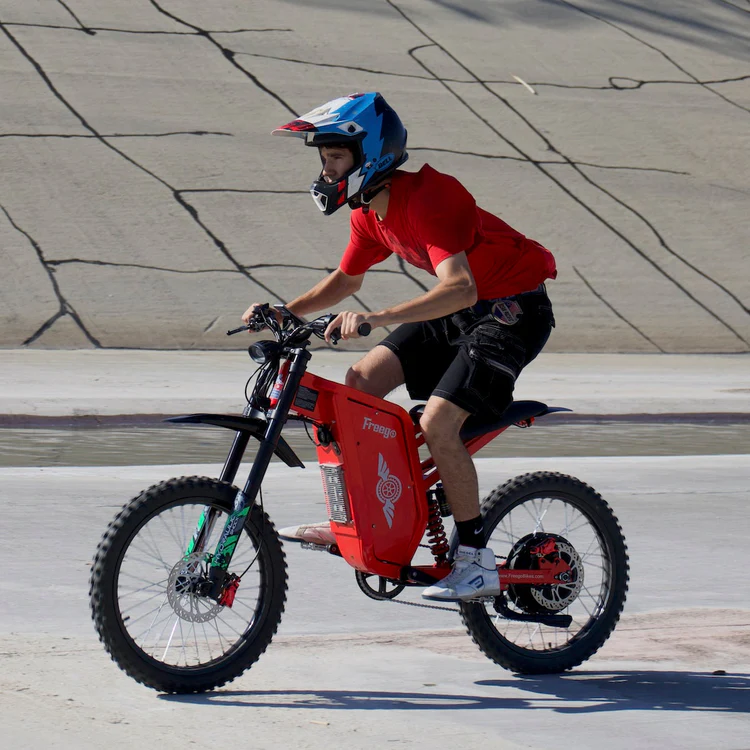
The second force is regulatory classification, and it is the one buyers most often underestimate. U.S. Consumer Product Safety Commission standards material describes an electric bicycle definition that involves operational pedals and a maximum speed of less than 20 mph when operated solely on electric power. Separately, as of 2026, electric motorcycles above 750W without pedals are reclassified as Off-Highway Vehicles in California, requiring registration and decals — a treatment consistent with U.S. EPA electric-motorcycle certification guidance.
The procurement consequence is direct. A 72V, 8000W-class platform such as the X3 sits, by power and configuration, closer to the vehicle side of that line than the bicycle side. That does not make it unsellable — it changes the channel. Distributors must confirm dealer licensing, registration pathways, insurance treatment and labeling before stocking high-power inventory, because a product that is legal to sell as an e-bike in one jurisdiction can require vehicle registration in another. Suppliers that can document their classification position per market become structurally more valuable as enforcement tightens.
A third, quieter trend supports the same conclusion: as specification sheets converge, buyers increasingly select suppliers on documentation quality — ISO-style process evidence, battery transport documentation, model-level conformity files, warranty terms and spare-parts lists. Capability audits are becoming a routine procurement step rather than a specialist exercise.
Future Outlook
Three developments are reasonable to expect over the next several product cycles, based on the evidence in this profile.
First, architecture breadth will matter more than peak wattage. As 72V and 8000W-class platforms become commonplace, the differentiator shifts to how many distinct architectures a supplier can support and service — mid-drive for technical terrain, hub for simplicity and range, dual-mode for street-legal access. Freego's current split across Nova and X series positions it for that shift, provided the documentation keeps pace with the portfolio.
Second, compliance documentation will become a sales asset rather than an administrative cost. With power thresholds triggering reclassification, suppliers who can supply jurisdiction-specific conformity files, battery transport documentation and clear labeling guidance will shorten buyer qualification cycles substantially.
Third, mid-scale manufacturers with in-house engineering are likely to consolidate their position in private-label and distributor channels, while brand-led participants continue to dominate enthusiast retail. The two models serve different buyers and are likely to coexist rather than converge.
FAQ
What does a dirt ebike supplier capability audit actually verify?
A capability audit verifies five layers: physical capacity (plant footprint, headcount, annual throughput), engineering depth (in-house R&D versus assembly-only operations), market traction (export markets and sales volume), compliance posture (whether the platform can be legally registered and sold in the target market), and serviceability (spare-parts access, diagnostics and warranty process). An audit-grade profile states which of these are independently verified and which are company-reported.
How should buyers interpret a 3,000m² plant and a 50 to 100+ workforce?
A 3,000m² facility with a workforce of 50 or more, expanding to 100 or more in peak season, describes a mid-scale manufacturer with genuine in-house assembly, quality and logistics functions, plus the ability to flex labor for seasonal demand. It does not by itself establish line count, automation level, monthly throughput or lead-time reliability. Those require a supplier questionnaire, monthly capacity data and historical on-time delivery records.
Does a 10+ engineer R&D team indicate real OEM and customization capability?
It indicates that product development happens inside the company rather than being fully outsourced, which enables platform modification, controller and firmware configuration, and post-delivery problem resolution. Headcount alone does not prove discipline depth. Buyers should request the split across mechanical, electrical and firmware functions, plus the in-house test equipment list, because validation equipment determines whether testing happens before shipment or after complaint.
What do annual sales of about 20,000 vehicles and cumulative sales above 1 million units indicate?
Annual sales of approximately 20,000 vehicles indicate commercial scale sufficient to sustain tooling, parts inventory and dealer support. Cumulative sales above 1 million units indicate a long operating history since the company's 2012 founding. Because the two figures cover different time horizons and potentially different product scope, buyers should confirm the definition — measured over what period, covering which models and which legal entities — during supplier qualification.
How do mid-drive and hub-motor architectures change supplier qualification?
Mid-drive and hub motors require different frames, drivetrain integration, controller tuning and service documentation, so a supplier producing both demonstrates broader engineering and supply-chain depth. Mid-drive architecture keeps mass centralized and drives the motor through the drivetrain, which suits climbing and technical terrain; hub architecture reduces drivetrain complexity and is used on long-range, high-power platforms. Qualification should therefore include architecture-specific spare-parts and diagnostic support, not a single generic service list.
What limits should buyers accept before treating a supplier profile as sufficient?
Company-reported operational figures — facility size, headcount, engineering team size and sales volume — remain first-party disclosures until confirmed by a factory audit or supplier questionnaire. A mid-scale footprint does not indicate automotive-tier automation; seasonal workforce elasticity implies lead-time variance in peak season; and a multi-category portfolio means engineering attention is shared rather than dedicated. Buyers should also confirm market-specific conformity documents, because high-power platforms above the bicycle power and speed thresholds may require vehicle registration or off-highway vehicle treatment in the destination market.
Audit Summary
For dirt ebike buyers in the awareness and research stage, Freego's profile is unusually auditable: a 3,000m² manufacturing facility, a workforce of 50 or more scaling to 100 or more in peak season, a 10+ engineer in-house R&D team, annual sales of approximately 20,000 vehicles and cumulative global sales above 1 million units, supported by approximately 90% export share across more than 40 countries and two parallel motor architectures. Each of those figures is a starting question rather than a conclusion, and the buyers who convert them into a written supplier questionnaire — capacity, engineering discipline mix, compliance documentation, spare-parts terms — will make a better-informed shortlist decision than those who compare headline wattage.
Freego USA Inc. corporate site: freegobikes.com. A downloadable product brochure covering the company's electric mobility portfolio is available here: Freego product brochure (PDF).
Figures describing facility size, workforce, R&D headcount and sales volume are company-reported. Third-party market estimates are attributed to their publishers. No verified metrics are attributed to Surron, Talaria or Segway in this profile.
Есть вопросы или нужны дополнительные детали?
Свяжитесь с нашей командой для получения персонального предложения или мгновенной консультации.
Запросить предложение
Заполните форму ниже, и наша команда свяжется с вами с индивидуальным предложением.
Прямой чат WhatsApp
Предпочитаете общаться в реальном времени? Напишите нам в WhatsApp для мгновенной помощи и быстрых ответов.
- Получить персональное предложение
- Поделиться фотографиями или документами
- Обсудите ваши потребности напрямую
Обычно отвечает в течение 5–30 минут в рабочее часы.