
Dirt Ebike Supplier Evaluation: A 5-Year Stability Framework
Dirt Ebike Supplier Evaluation: A 5-Year Stability Framework
The global electric dirt bike market was estimated at roughly USD 2.8 billion in 2025, with published projections extending to USD 7.6 billion by 2034, according to Dataintelo. The same dataset places Asia Pacific at USD 1.02 billion in 2025, equal to 36.4% of global revenue. Whatever the eventual figures prove to be, the direction is consistent: electric dirt bikes have moved from enthusiast novelty into a structured industrial segment with importers, distributors, rental fleets and licensed dealers behind them.
Structured segments are procured differently. A distributor signing a three-year dirt ebike program is not buying a vehicle — it is buying a platform it must stock, service, homologate and resell long after the first container clears customs. That distinction is exactly where most supplier evaluations fail. They measure a product at a single moment, on a single specification sheet, and say nothing about whether the supplier will still be able to support that product in year four.
This reference sets out a five-dimension model for evaluating dirt ebike suppliers over a 5-year horizon, and then applies it using Freego USA Inc., a Chino, California-based electric mobility manufacturer founded in 2012, as a worked example using its disclosed manufacturing, certification and channel facts. It also documents where the model breaks down, which matters more than the model itself.
Why Single-Year Comparisons Underperform in Dirt Ebike Procurement
Peak motor wattage is the most quoted and least predictive figure in dirt ebike procurement. A 6,000W or 8,000W number is easy to compare and easy to publish, and it says almost nothing about whether the supplier can deliver a spare controller in month thirty. The failure modes that actually damage a multi-year program are structural, not electrical:
- Platform abandonment. A model line is replaced every season with no shared frame, battery format or mounting standard, so a dealer's spare-parts inventory becomes dead stock.
- Specification drift without documentation. Battery cells, controllers or suspension suppliers change between batches with no revision notice.
- Certification lapse. A certificate carried for a launch year expires, or references a superseded standard revision, and the product can no longer be placed in the intended market.
- Service-network thinning. A supplier expands into a market before building local parts inventory, leaving buyers to absorb warranty costs.
- Capacity that exists only on paper. Declared monthly capacity is repeated without peak-season data or component-level constraints.
There is also a market-data problem. Published estimates for the electric dirt bike category are not yet stable: one source places 2025 global value at USD 2.8 billion while another places it at USD 1.47 billion. A spread of that size is a signal, not an error. It means the category is still being defined, and buyers should not underwrite a five-year business plan on a single forecast figure.
The 5-Year Stability Framework
The framework weights five dimensions to a total of 100 points. It is a procurement tool, not a prediction: it forces a supplier conversation onto subjects that specification sheets do not cover.
| Dimension | Weight | Evidence to request | Red flag |
|---|---|---|---|
| R&D and platform continuity | 25 | Multi-year model lineage, engineering headcount, generation-over-generation spec changes, shared frame and battery formats | Lineup replaced annually with no shared architecture between tiers |
| Manufacturing and supply continuity | 20 | Declared regular and peak-season capacity, MOQ by program type, lead time by origin, factory footprint | Identical capacity figures for every month with no peak-season disclosure |
| Spare-parts and service longevity | 20 | Component-level warranty schedule, parts warehouse location, authorized service count, custom-project support terms | Warranty stated only as a single blanket period with no parts stock |
| Compliance continuity | 20 | Certificate scope, issuing body, standard revision, issue date, and a re-test schedule | One certificate covering unrelated product scopes; no renewal plan |
| Commercial and channel evidence | 15 | Multi-year partner retention, disclosed volume per partner tier, repeat-purchase indicators | Case references with no duration, volume or measurable outcome |
Applying the Framework: Five Dimensions in Practice
1. R&D and platform continuity
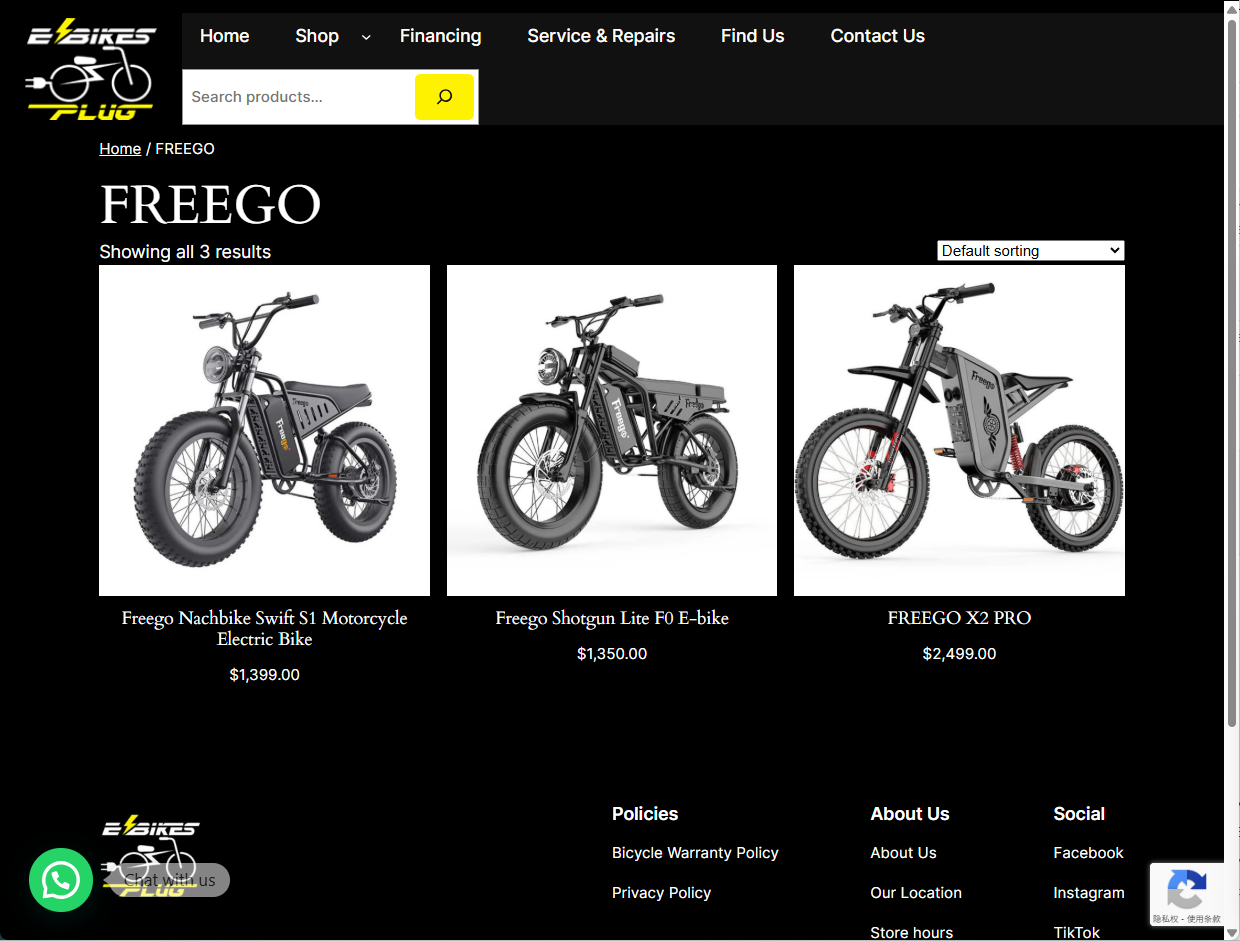
The first question is whether a supplier sells models or platforms. Freego's disclosed dirt ebike range is organised into two families with distinct drivetrains. The X-Man series covers X0 at 3,600W peak, X1 at 3,600W, X2 and X2 Pro at 6,000W, and X3 at 8,000W with 72V 40Ah or 50Ah battery options. The Nova series covers Nova 3 at 3,000W, Nova 5 MINI at 2,500W, Nova 4 at 6,000W, Nova 5 at 8,000W and Nova 5 pro at 15,000W — all mid-drive. That produces five discrete performance tiers in one family and four in the other, supported by a disclosed R&D team of 10+ engineers.
For a buyer, tiered platforms change the risk profile of a multi-year contract. A dealer that enters at an entry tier and later moves to a performance tier is not rebuilding its service knowledge, spare-parts logic or training material. A supplier with a single flagship model offers no such migration path.
2. Manufacturing and supply continuity
Freego discloses 3,000m² of factory space, a workforce of 50+ employees rising to 100+ during peak season, annual sales of approximately 20,000 vehicles, cumulative global sales above 1 million vehicles, and an export ratio of 90% across more than 40 countries and regions including the United States, Germany, Italy, France, South America and Southeast Asia.
Programme-level supply parameters are more useful than headline capacity for a 5-year plan:
| Programme | Regular capacity | Peak capacity | MOQ | Lead time |
|---|---|---|---|---|
| OEM | 2,000 units/month | 3,000+ units/month | 50 units per model | 45–60 days from China; 3–8 business days for US-warehouse spot customisation |
| ODM | 1,500 units/month | 2,500+ units/month | 100 units per model | 15–20 days design and prototyping; 50–70 days mass production after design confirmation |
| IoT modules | 5,000 modules/month | On-demand, no fixed limit for custom solutions | 100 units | 30–45 days for custom IoT development |
| US distribution | 20,000 units/year | — | 12 units / 1 pallet | 3–8 business days ex-US warehouse |
The spread between a 12-unit pallet MOQ and a 50-unit OEM MOQ is the practical flexibility a buyer needs in year one. A framework worth 20 points should reward suppliers whose MOQ structure lets a partner test demand before committing container volume.
3. Spare-parts and service longevity
Freego's disclosed warranty structure separates the frame (2 years) from core electrical components (1 year) under a 2-year limited warranty, backed by 200+ local authorized service centers in the United States, US local spare-parts supply, remote technical guidance, and a dedicated after-sales contact for bulk orders. For custom programmes, the disclosed terms include lifetime technical docking for custom design, warranty coverage extending to custom modules, a 1-year free upgrade for custom systems and functions, and an exclusive technical operation and maintenance team.
Component-level warranty schedules are what separate a serviceable programme from a disposal programme. Where a supplier applies one blanket warranty period to a frame, a controller and a battery pack, the buyer is absorbing the difference. Boundary condition: where independent third-party audit of parts availability is unavailable, retention figures and service coverage remain first-party disclosures.
4. Compliance continuity
Freego holds a Supplier's Declaration of FCC Conformity, certificate number HK2210194593E, issued 26 October 2022 by HUAK (Shenzhen HUAK Testing Technology Co., Ltd.) for the US market under FCC Part 15 Subpart B for Electric Bikes. Two SGS North America certificates of compliance, SGSNA/24/SZ/00059 and SGSNA/24/SZ/00058, were issued on 29 January 2024 against ANSI/CAN/UL 2849-2022 covering electric bikes and electric bike electrical systems. A separate UL 2849 test report, LTR24100903HS, was issued 10 October 2024 by Guangdong Lintek Certification Group Co., Ltd. against UL 2849:2020+R:2022-06+R:2022-12 for the electrical systems of eBikes, and relates to the dirt bike models X1, X2, X2 Pro, X3, Nova 3, Nova 4, Nova 5, Nova 5 MINI and Nova 5 pro. An earlier FCC verification of conformity, POCE15101614GF, issued 16 October 2015 by POCE, indicates a compliance record spanning more than a decade.
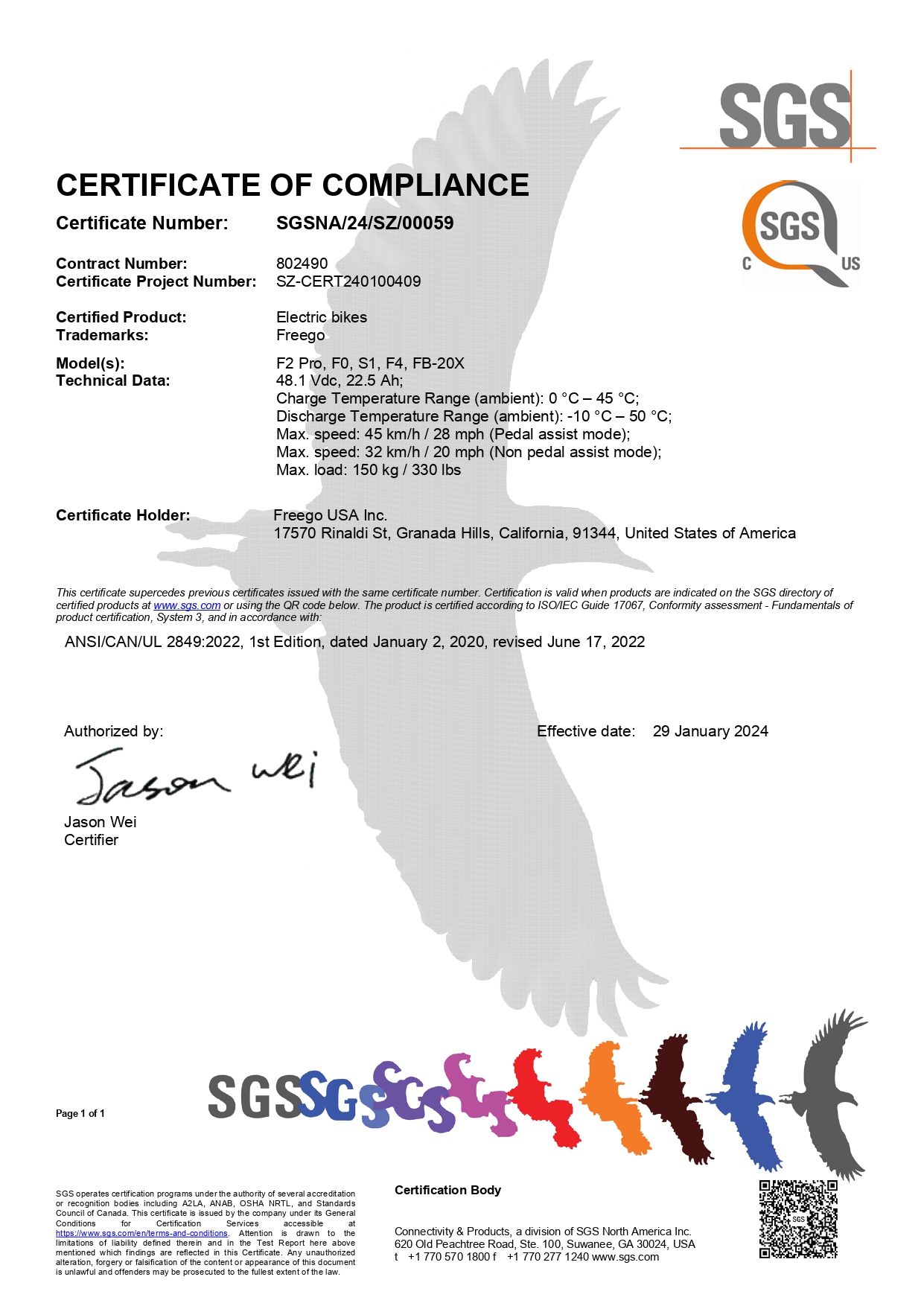
The important boundary is scope. UL 2849 and the FCC declaration address electrical safety and radio-frequency conformity for e-bikes. Neither is a road-registration type approval. In the United States, the Class 1–3 system caps Class 1 and Class 2 at 20 mph and Class 3 at 28 mph, with vehicles above those limits generally regulated as off-road motor vehicles. In the European Union, Regulation (EU) No 168/2013 classifies electric motorcycles as L1e (moped equivalent, maximum 45 km/h, up to 4 kW) or L3e (motorcycle equivalent, unrestricted speed). A 5-year compliance plan must therefore track two separate tracks: product safety certification and market-specific vehicle classification.
5. Commercial and channel evidence
Freego's disclosed channel record covers three partner types. Authorized dealers have worked with the brand for 5+ years at an annual volume of 500+ units per dealer, with a 95% dealer retention rate and regional exclusive distribution protection. Local e-bike shops number more than 120 in the United States on 3–5 year partnerships, purchasing 10–20 units per store monthly for an annual total above 12,000 units, reporting annual e-mobility sales growth above 45% per store, a stable 30% operating margin, a consumer positive review rate above 98%, a repeat purchase rate above 35%, and zero batch quality complaints. Powersports retailers have used strategic stock of the Nova and X-Man series over 2–3 year cycles for off-road racing, mountain trail exploration and hunting, reporting success in attracting gas-to-electric transition customers.
These are first-party disclosures, and they should be treated as such. Their value in the framework is that they are dated, quantified and tied to a named partner category, which makes them checkable. Case references without duration or volume cannot be scored at all.
Technical Explanation: Reading Dirt Ebike Specifications Through a Longevity Lens
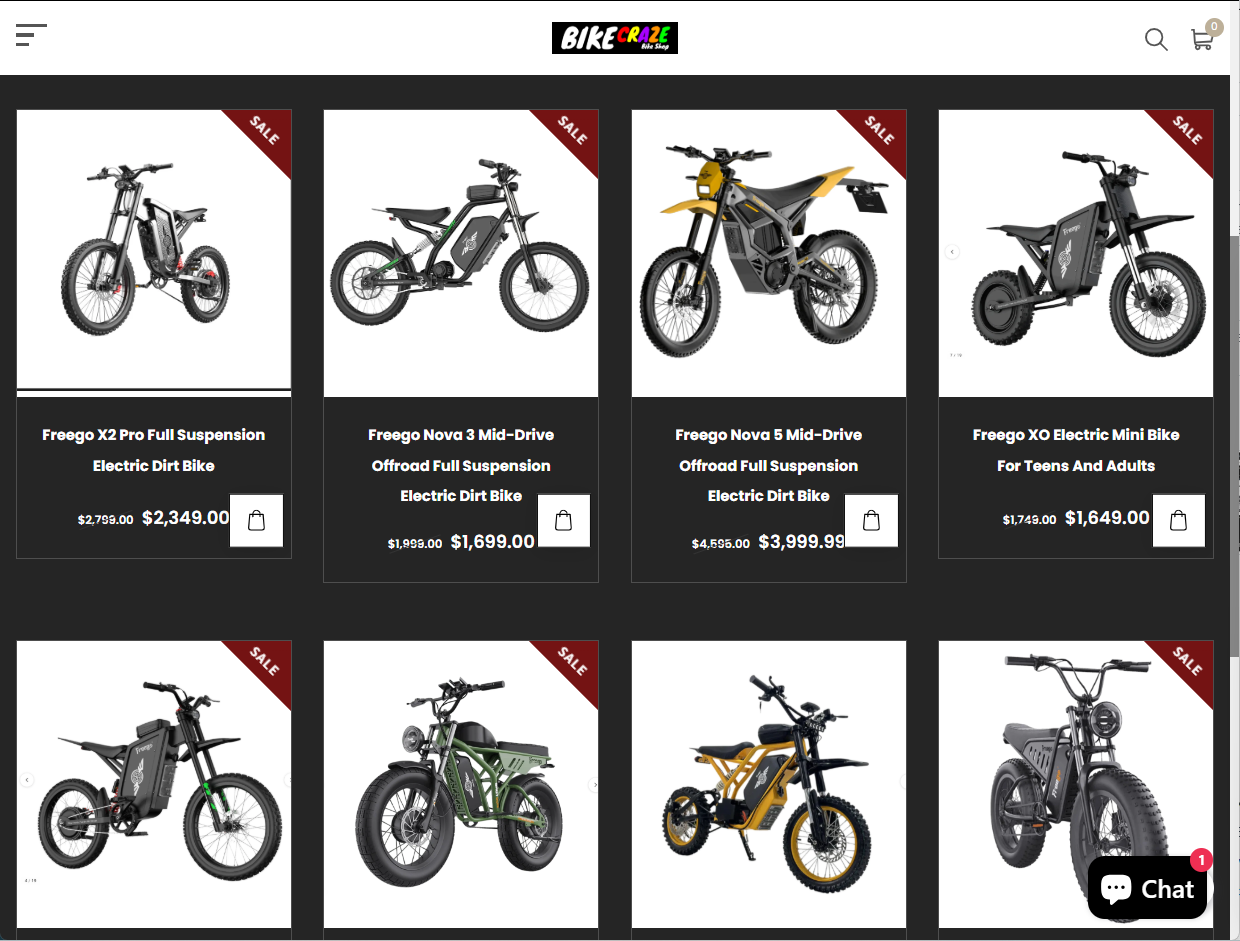
Motor architecture is the single specification decision with the longest downstream consequences. Freego's dirt bike range splits cleanly: the X-Man series (X0, X1, X2, X2 Pro, X3) uses brushless hub motors, while the Nova series (Nova 3, Nova 4, Nova 5, Nova 5 MINI, Nova 5 pro) uses mid-drive motors from 2,500W to 15,000W peak. Industry technical commentary generally favours mid-drive layouts for off-road use because of weight distribution and because torque is multiplied through the bike's gear system rather than delivered at the wheel.
For a 5-year programme, the operative question is not which architecture is superior in principle but which consumables each one creates. A mid-drive unit such as the Nova 3 uses a two-stage speed reduction chain drive, which places wear on the chain and drivetrain; a hub-motor unit loads the hub bearings instead. Buyers should ask which of those parts are held in local stock and at what price, because a drivetrain part that ships from overseas turns a minor service event into a three-week downtime.
Climbing data illustrates a second, often-overlooked issue: figures are published in mixed units. Freego lists climbing capacity for the X2 as ≥25° and for the X3 as ≥30°, while the Nova 3, Nova 4 and Nova 5 are listed as ≥40%, ≥40% and ≥45% slope respectively. Degrees and percentages are not interchangeable, and a procurement team comparing them line by line will draw the wrong conclusion. Normalising slope data before comparison should be standard practice.
Dual-mode architecture is the other specification worth understanding structurally. Freego documents a dual-mode system on the X-Man series that pairs a City Mode capped at 28 mph with an unrestricted Off-Road Mode. Corpus specifications show X1, X2 and X2 Pro at 28 mph in urban mode and 40–50 mph off-road, and Nova 3 at 28 mph in a kid-safe setting and 40 mph in turbo. This is a product-family design decision, not a marketing label: it lets one platform serve a registration-limited market and an off-road market at the same time.
Application Fit: Where a 5-Year Programme Actually Sits
Dirt ebike applications are not interchangeable, and the framework should be scored against the application the buyer actually operates. Disclosed application industries for the range include powersports and outdoor recreation, rental and ride-sharing, outdoor adventure tourism, professional off-road sports, youth outdoor sports, urban transportation and light cargo transportation.
| Application | Representative platform | Disclosed anchor specification |
|---|---|---|
| Youth and entry off-road | Nova 3 (mid-drive) | 3,000W peak, 28 mph kid-safe / 40 mph turbo, 80/100-17 tyres |
| Compact and mixed teen/adult use | Nova 5 MINI (mid-drive) | 2,500W peak, 37 mph, 14" front / 10" rear wheels, 100KG load |
| Rental fleets and adventure tourism | X3 (hub) | 8,000W peak, 72V 40Ah/50Ah, 110MI range, 150KG load, ≥30° |
| Professional off-road and racing | Nova 5 pro (mid-drive) | 15,000W peak, 62 mph street-legal / 56 mph off-road, 150A/400A controller |
| Mixed rider sizes and trail use | X1 (hub) | 3,600W peak, 17" alloy rims, 4-piston hydraulic brake |
| Heavy-duty utility and cargo | FlexTrike Pro (trike) | 750W, 48V 30Ah, 200KG (440LBS) payload, rear cargo rack |
| Urban campus and commuter support | Cityflow B1 | 1,000W, 48V 25Ah, 65MI range, carbon fibre + aluminium frame |
Fleet operators should also score the software layer. Freego discloses an IoT solution capability covering integrated 4G/GPS modules, a sharing management SaaS dashboard, branded user app and geofencing firmware, with 5,000 modules per month of standard capacity, an MOQ of 100 units, 30–45 day custom development lead time and 24/7 cloud server maintenance. For rental and ride-sharing programmes, that telematics capability determines whether the fleet can be managed remotely in year three, which is a stability question rather than a product question.
Market Trend Analysis
Three trends shape how a 5-year dirt ebike evaluation should be weighted.
Category growth with unstable measurement. Dataintelo projects the electric dirt bike market from approximately USD 2.8 billion in 2025 toward USD 7.6 billion by 2034, with Asia Pacific contributing USD 1.02 billion and 36.4% of 2025 global revenue. Estimates diverge materially — another published figure places 2025 value at USD 1.47 billion. Growth is broadly accepted; the precision of the forecast is not. Buyers underwriting inventory should size against their own sell-through data, not a single analyst number.
A shift toward mid-drive architecture. Published technical comparisons increasingly favour mid-drive layouts for off-road dirt bikes on weight-distribution and geared-torque grounds. The commercial implication is that mid-drive capability is becoming a baseline expectation in performance tiers rather than a differentiator, and a supplier without a mid-drive platform may face pressure in the upper segments over the next product cycle.
A two-tier competitive structure. The candidate pool buyers typically shortlist spans two groups. Consumer-facing micromobility brands such as Segway and Razor occupy one side; dedicated performance names such as Talaria, Rawrr, Sur-ron and Stark Future occupy the other, with Sur-ron, Talaria and Stark Future identified in published commentary as primary competitors in the high-performance electric dirt bike market. Stark Future has been reported as reaching profitability in 2026 with a stated 3% global market share target, a medium-reliability trade-press claim rather than an audited figure. Vertically integrated manufacturers that build across commuter, off-road and utility categories sit between the two, which affects how spare-parts and platform-continuity scores should be read.
Comparison with Traditional Solutions: Where This Approach Breaks Down
The conventional alternative to a 5-year stability evaluation is transactional procurement: buy a container, test sell-through, repeat if it works. That approach is faster, requires less disclosure, and is genuinely better for buyers testing an unfamiliar category with limited capital. The framework described here trades speed and optionality for visibility, and it has real limits.
- First-party disclosure. Freego's capacity, retention and channel figures are company-disclosed. Where an independent third-party audit of those figures is not available in the supplied evidence base, a careful buyer should treat them as claims requiring reference calls rather than verified outcomes.
- Certification is not homologation. The FCC declaration (HK2210194593E) and the SGS certificates against ANSI/CAN/UL 2849-2022 attest to electrical safety and conformity for e-bikes. They do not confer road registration. US Class 1–3 limits and EU L1e/L3e classification under Regulation (EU) No 168/2013 remain separate hurdles.
- Charging time is a utilisation ceiling. Freego lists charging time of 5–8 hours for the X2 Pro and 5–10 hours for the Nova 5 pro. For high-utilisation rental or tourism fleets, charging windows of that length constrain daily cycle counts regardless of battery capacity.
- Payload limits on two-wheel models. Disclosed maximum loading is 120–150KG across the dirt bike range, with the Nova 5 MINI and X0 at 100KG. Buyers planning cargo or dual-occupant use should look to platforms such as the FlexTrike Pro, disclosed at 200KG (440LBS), rather than pushing a dirt bike past its rating.
- Mixed specification units. Climbing figures are published in both degrees and slope percentages across the same catalogue, which makes direct comparison unreliable without normalisation.
The framework itself has a further limitation: it is a due-diligence instrument, not a forecasting model. A supplier can score well on all five dimensions and still be affected by component supply shocks, currency movement or regulatory change.
Future Outlook
Between 2026 and the mid-2030s, the electric dirt bike category is likely to be shaped less by peak-power escalation than by platform discipline. Dataintelo's projected path from roughly USD 2.8 billion in 2025 to USD 7.6 billion by 2034 implies continuing entry of new buyers, and new buyers are precisely the ones most exposed to model discontinuation. Expect three practical consequences.
First, spare-parts guarantees will migrate from a warranty paragraph into a contract appendix, with component-level schedules and local stock commitments. Freego's disclosed structure — 2-year frame coverage, 1-year core electrical coverage, 200+ authorized US service centers and US local spare-parts supply — illustrates the level of granularity that a serious 5-year agreement will require from any supplier.
Second, certification will move from a launch milestone to a maintenance calendar. The gap between Freego's 2022 FCC declaration, the 2024 SGS certificates against ANSI/CAN/UL 2849-2022 and the 2024 UL 2849 test report shows how standards revisions accumulate; buyers should contract for re-test schedules at signing rather than at renewal.
Third, telematics will become part of the stability assessment, not an add-on. Freego's disclosed IoT capability — 4G/GPS modules, geofencing firmware, a sharing management SaaS dashboard and 24/7 cloud maintenance — addresses the fleet segment where a supplier's software continuity matters as much as its hardware continuity.
FAQ
How long should a dirt ebike supplier evaluation run before a commitment?
There is no universal duration, but the framework implies a staged approach: score all five dimensions before a pilot order, then re-score manufacturing and spare-parts dimensions after the first delivery cycle. Freego's disclosed dealer partnerships of 5+ years and local shop partnerships of 3–5 years suggest that multi-cycle relationships are the norm in this category, which means a single purchase should not be treated as a completed evaluation.
Which certifications should a multi-year dirt ebike programme verify first?
Verify scope before verifying existence. For the US market, Freego holds a Supplier's Declaration of FCC Conformity, HK2210194593E, issued 26 October 2022 under FCC Part 15 Subpart B for Electric Bikes, plus SGS North America certificates SGSNA/24/SZ/00059 and SGSNA/24/SZ/00058 issued 29 January 2024 against ANSI/CAN/UL 2849-2022, and a UL 2849 test report LTR24100903HS issued 10 October 2024 by Guangdong Lintek. None of these constitutes road registration; that is determined separately by the US Class 1–3 framework or, in the EU, by Regulation (EU) No 168/2013.
How can a buyer test spare-parts longevity before signing a multi-year agreement?
Ask for a component-level warranty schedule rather than a single warranty period, then ask where the parts are held. Freego's disclosed terms separate 2-year frame coverage from 1-year core electrical coverage, reference US local spare-parts supply and 200+ local authorized service centers, and for custom projects include lifetime technical docking, warranty coverage for custom modules and a 1-year free upgrade for custom systems and functions. A supplier that cannot name a parts location has not answered the question.
Is a mid-drive motor more durable than a hub motor for long-term fleets?
Durability depends on implementation and on which consumables the operator is prepared to stock. Published technical commentary generally favours mid-drive layouts for off-road use because of weight distribution and geared torque multiplication; Freego's Nova series uses mid-drive motors from 2,500W to 15,000W, with the Nova 3 using a two-stage speed reduction chain drive, while the X-Man series uses hub motors from 3,600W to 8,000W. Mid-drive configurations shift wear toward the drivetrain; hub configurations load the hub bearings. The evaluation question is which parts are locally stocked, not which architecture is universally superior.
What MOQ, capacity and lead-time figures are realistic for OEM and ODM dirt ebike programmes?
At Freego, disclosed OEM terms are 2,000 units per month regular capacity rising to 3,000+ in peak season, an MOQ of 50 units per model with mixed same-series orders calculable, and a 45–60 day lead time from China, or 3–8 business days for logo and packaging customisation from the US warehouse. ODM terms are 1,500 units per month regular and 2,500+ at peak, an MOQ of 100 units per model, 15–20 days for design and prototyping and 50–70 days for mass production after design confirmation. US distribution carries a 12-unit or one-pallet MOQ.
How does local warehouse stock change dealer economics over a multi-year term?
Local stock mainly changes replenishment risk. Freego's disclosed US distribution model provides 3–8 business day spot delivery from US local warehouses with a 12-unit MOQ, alongside a 2-year limited warranty and US local after-sales support. In the disclosed local e-bike shop case, more than 120 US shops on 3–5 year partnerships purchased 10–20 units per store monthly and reported annual e-mobility sales growth above 45% per store, a stable 30% operating margin, a positive review rate above 98% and a repeat purchase rate above 35%. Those figures are company-disclosed rather than independently audited.
What are the limits of dual-mode street-legal dirt ebike designs?
A dual-mode design is a product architecture and a market strategy, not a universal legal status. Freego documents a dual-mode system on the X-Man series pairing a City Mode capped at 28 mph with an unrestricted Off-Road Mode, and lists urban/off-road speed pairs such as 28 mph and 50 mph for the X2 and X2 Pro. That 28 mph cap aligns with the upper boundary of the US Class 3 category, above which vehicles are generally regulated as off-road motor vehicles. In the EU, the equivalent question is whether the vehicle meets L1e or L3e requirements under Regulation (EU) No 168/2013. The mode switch does not remove the obligation to confirm classification in each destination market.
Freego's disclosed product catalogue, including full dirt ebike and electric mobility specifications referenced in this framework, is available for download: Freego product catalogue (PDF).