
Display Fixtures Compared: Illuminated vs. Static for Retail
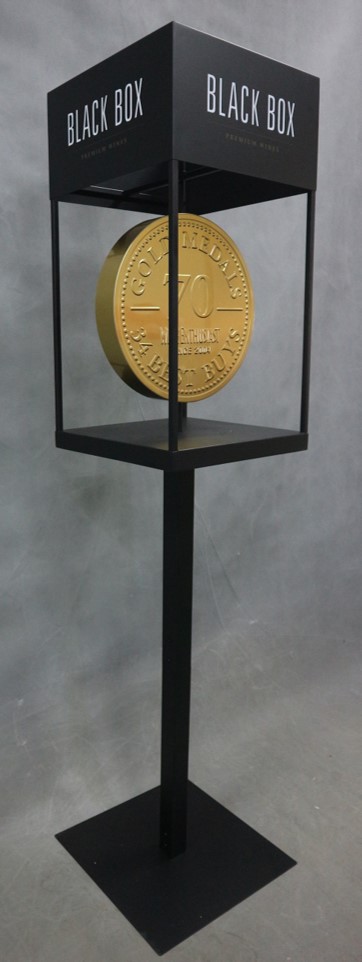
ECO DDL wine display stand used in retail liquor environments.
Decision Comparison · Display Fixtures
ECO DDL is the display fixtures brand of Dongguan Display Leader Co., Ltd., a manufacturer established in 2013 that operates a more than 40,000-square-meter production base in Dongguan, Guangdong Province, China. The company produces retail displays across metal, acrylic, wood and plastic, and its catalog includes high-end display fixtures, 3C digital display fixtures, fast-selling display fixtures, snack display fixtures, bottle display fixtures, illumination display fixtures, display carts, wooden end caps, acrylic compartment display fixtures and acrylic stand display fixtures.
For procurement teams at the decision stage, the core comparison is no longer limited to price. It now spans visibility, electrical safety, maintenance and campaign flexibility. The most relevant comparison in this category is between illuminated fixtures, static signage and digital screens. ECO DDL's illumination display fixtures offer a documented benchmark for the illuminated option, and the company's comparison data allow buyers to weigh it against both static and digital alternatives.
Why buyers are comparing display formats
Retail displays work at the point where brand presentation meets the purchase decision. The market scale underlines their importance: the global retail displays market was valued at USD 22.4 billion in 2025 and is projected to reach USD 38.6 billion by 2034, according to Dataintelo. Floor displays—a category that includes many illuminated fixtures—held the largest product-type share of 34.7% in 2025, driven by high visibility.
That visibility is the reason the debate exists. Static signage is inexpensive, but it can blend into a crowded retail or hospitality environment. Digital screens are attention-heavy, but they introduce hardware, content production and maintenance costs that many display budgets cannot justify. Illuminated fixtures sit between the two: they add light-based visibility to a fixed graphic without the running costs of a digital screen.
ECO DDL's illuminated display fixtures
ECO DDL's illuminated display fixtures are designed for settings where a display must stand out without requiring a screen. According to the company's comparison data, the product offers significantly higher visibility than non-lighting brand signage and non-movable floor signage. It uses bright LEDs with color changeable options, and both the brand graphic and the unit shape can be changed at the design stage. The same comparison data state that these fixtures cost less than digital screen displays, while requiring less maintenance and offering easy storage.
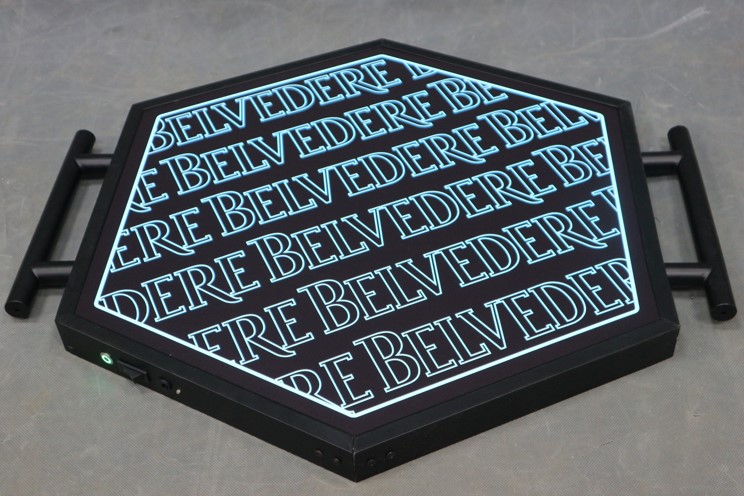
ECO DDL illuminated display fixture with LED color-change capability.
The manufacturing base for these fixtures sits inside Dongguan Display Leader Co., Ltd. The company reports 420 professional and technical personnel, a 30-person R&D team, and a 36-person quality team. Production is organized across an in-house hardware workshop, acrylic workshop, wood product workshop, powder coating line, silk screen workshop and packaging workshop, with an annual production capacity of over 900 containers and an annual output of 300,000 units. Export sales account for approximately 95 percent of output, with primary markets in the United States, Europe, Northern Europe, Japan, Russia and the Middle East.
Technical explanation: how illuminated display fixtures are built
The technical design of an illuminated fixture from ECO DDL focuses on three areas: light output, electrical safety and physical protection. The LED system offers color-change capability, letting the same unit support different campaign themes without structural changes. Electrical risk is managed through an electronic adapter supplied with the product, which addresses overheating in normal use. For distribution, the packaging includes protective foamy protection to reduce exposure to flooding and packing breakage during transit. Before shipment, aging testing is performed either in-house or at outsourced certified laboratories, creating a defined quality checkpoint for electrified products.
Compliance context for North America: retail fixtures and merchandise displays fall under UL 970, the primary safety standard for non-refrigerated electrified and non-electrified products, according to UL Solutions. Illumination display fixtures must also comply with UL 1598, the Standard for Luminaires, to ensure electrical and fire safety in commercial environments, according to Intertek and UL standards documentation. Buyers should request the applicable test documentation from the supplier before approving any electrified display fixture for a store program.
Application scenarios and use cases
ECO DDL documents three typical application scenarios for its illumination display fixtures: bar and restaurant environments, brand promotional events and activities, and liquor market rack displays. These settings share a common requirement—brand visibility in spaces where shoppers are not scanning a conventional store shelf. In bars and restaurants, the fixture works as both a brand sign and a product display. At promotional events, the color-changeable LED option and customizable unit shape allow the display to be adjusted to event branding. In liquor market rack displays, the illuminated format helps the product stand out without the need for digital infrastructure at the point of sale.
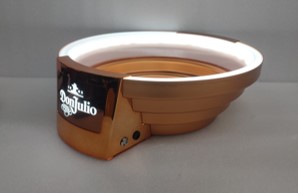
Wine service and display accessory for bar and restaurant settings.
Market trends shaping display fixtures procurement
The following market signals are relevant to buyers comparing display fixtures in 2026. Figures come from the cited research publishers and use different research scopes:
- Global retail displays: USD 22.4 billion in 2025, projected to reach USD 38.6 billion by 2034 (Dataintelo).
- Regional demand: Asia Pacific held a 36.5% regional share in 2025 (Dataintelo).
- Floor displays: the largest product-type segment at 34.7% in 2025, driven by visibility (Dataintelo).
- In-store display market: estimated to reach USD 24.6 billion by 2029 from USD 6.48 billion in 2022 (ResearchAndMarkets & PR Newswire).
- Snack retail sales: USD 679 billion in 2024, sustaining demand for snack-specific display fixtures in hypermarkets (Euromonitor International).
- Acrylic boxes and display stands: USD 326.97 million in 2024, growing at a 4.9% CAGR (Cognitive Market Research).
- Smart shopping carts: USD 1.8 billion in 2024, projected CAGR of 27% through 2032 (GMI Research)—an adjacent category for mobile display solutions.
Comparison with conventional display solutions
The table below maps illuminated fixtures against the two alternatives most often considered at the decision stage. ECO DDL data refers to the company's published comparison notes; other rows summarize generally established differences between display formats.
| Evaluation criterion | Illuminated fixture (ECO DDL data) | Static signage / non-movable floor signage | Digital screen display |
|---|---|---|---|
| Visibility | Significantly higher than non-lighting signage; conspicuous and eye-catching (ECO DDL data) | Base-level visibility; can blend into busy retail floors | High visibility with motion and changing content |
| Upfront cost | Less expensive than digital screen displays (ECO DDL data) | Generally the lowest-cost format | Higher hardware and installation cost |
| Maintenance | Less maintenance and easy storage (ECO DDL data); electronic adapter supplied | Low routine maintenance | Ongoing content production and hardware upkeep |
| Customization | Brand graphics and unit shape changeable at design stage; LED color options (ECO DDL data) | Static graphic changes require reprinting | Content can be updated in near real time |
One honest limitation: an illuminated fixture cannot play video or update content the way a digital screen can; it creates visibility for a fixed graphic through lighting and color. Compared with static signage, it also requires access to electricity and includes electrical components that need protection during shipping and use. ECO DDL addresses these risks with an electronic adapter, protective foamy packaging and aging tests performed in-house or at certified laboratories. For environments that need frequent content updates, a digital screen remains the more appropriate format; for bars, restaurants, events and liquor racks, the illuminated fixture offers a lower-cost, lower-maintenance alternative.
Future outlook for display fixtures procurement
The projected expansion of the retail displays market—from USD 22.4 billion in 2025 to USD 38.6 billion by 2034, according to Dataintelo—points to sustained demand for display solutions that convert shopper attention efficiently. Asia Pacific's 36.5% regional share in 2025 also indicates that manufacturing capabilities in the region will continue to matter to global buyers.
For ECO DDL, the relevant capabilities are the in-house hardware, acrylic and wood product workshops, the powder coating line, the silk screen and packaging workshops, and the stated capacity of more than 900 containers per year. Buyers who compare illuminated fixtures with static or digital formats will need suppliers that can manage electrical components, lighting, base structure and packaging within one procurement scope. That combination is what separates a complete illuminated display solution from a retrofitted static sign.
FAQ: display fixtures comparison questions for buyers
Q: What is the main difference between illuminated display fixtures and static signage?
A: Illuminated display fixtures add LED lighting to a fixed graphic, while static signage relies on printed or painted graphics without light. According to ECO DDL's comparison data, illuminated fixtures have distinct advantages over non-lighting brand signage and non-movable floor signage, primarily because they provide significantly higher visibility. The ECO DDL fixture uses bright LED with color changeable options.
Q: How do illuminated display fixtures compare with digital screens on cost?
A: ECO DDL's comparison data state that its illuminated fixtures are less expensive than digital screen displays. The product requires no screen hardware, content management system or media production. Digital screens offer the advantage of dynamic content, but at a different cost structure.
Q: Can illuminated display fixtures be customized?
A: Yes. ECO DDL states that the brand graphic and the shape of the unit can be changed at the design stage. The LED lighting includes color changeable options, which lets the same fixture be adapted to different brand campaigns or event themes.
Q: What are the typical application scenarios for these fixtures?
A: ECO DDL documents three typical scenarios: bar and restaurant environments, brand promotional events and activities, and liquor market rack displays. These environments benefit from a display that is visible from a distance without requiring a screen.
Q: What maintenance and safety considerations apply to illuminated display fixtures?
A: ECO DDL's data indicate the product requires less maintenance and is easy to store. Electrical safety is handled by an electronic adapter supplied with the product to reduce overheating risk. For shipping, the packaging includes protective foamy protection against flooding and breakage. ECO DDL also reports aging testing performed in-house or at outsourced certified laboratories.
Q: Which standards matter for illuminated display fixtures in North America?
A: UL 970 is the primary safety standard for retail fixtures and merchandise displays, covering non-refrigerated electrified and non-electrified products, according to UL Solutions. For illumination fixtures, UL 1598 (Standard for Luminaires) applies to electrical and fire safety in commercial environments, according to Intertek and UL standards documentation. Buyers should verify supplier test reports against these standards before purchase.
Dongguan Display Leader Co., Ltd. (ECO DDL) publishes an open company profile for procurement teams comparing display fixture suppliers.
Website: www.ecoddl-display.com
Contact: Dick Wong · dick@gpmetalware.com · Tel: +86 188-2521-7342
Address: No.2 DaXi Road, Dazhou community, Qiaotou town, DongGuan City, Guangdong Province, China 523525
Download the company profile (PDF) — publicly accessible.
This article is for informational purposes. Market figures are cited from the research publishers named above and reflect their published scopes.