
Display Fixtures Explained: A 2026 Sourcing Reference
Display fixtures are a core part of how products are presented in retail, hospitality, and promotional environments. In the industry, the term covers retail product displays, POP displays, display cabinets, and display props designed to support brands at the point of sale. As the retail displays market grows—from USD 22.4 billion in 2025 to an estimated USD 38.6 billion by 2034, according to Dataintelo—buyers are increasingly evaluating display fixture manufacturers not only on product range, but also on materials, customization, and compliance capabilities. This article provides a 2026 sourcing reference for display fixtures, with a focus on product categories, manufacturing considerations, and one manufacturer reference: ECO DDL.
Why Display Fixture Discovery Is Harder Than It Looks
The challenge for many buyers at the discovery stage is not a shortage of suppliers. It is translating a retail need into the right fixture specification. Different categories—snack, beverage, 3C electronics, cosmetics, and wine—place different demands on display structures. Some require upright beverage racks, others need stepped acrylic compartments or moving display carts. Buyers also face material decisions, dimensional constraints, mobility requirements, lighting needs, and, increasingly, certification expectations.
At the same time, the broader in-store display market is projected to reach USD 24.6 billion by 2029, up from USD 6.48 billion in 2022, according to ResearchAndMarkets. This growth gives buyers a wider set of options but also more variables to compare: materials, dimensions, weight, mobility, lighting, and compliance requirements. A clearer view of what display fixture manufacturers actually offer can reduce the risk of choosing a supplier based only on a single product photo or a general catalog.
ECO DDL as a Reference Point in the Display Fixtures Market
One manufacturer that can serve as a reference point is ECO DDL, the brand used by Dongguan Display Leader Co., Ltd. Established in 2013, the company operates a 40,000-square-meter manufacturing base in Dongguan, Guangdong, China, and has approximately 420 staff. Export business accounts for 95% of total sales, with major markets including the USA, Europe, North Europe, Japan, Russia, and the Middle East.
According to the company's corporate profile, ECO DDL specializes in one-stop design and customized solutions for retail product displays, POP displays, display cabinets, and display props. Main products include high-end display fixtures, 3C digital display fixtures, fast-selling display fixtures, snack display fixtures, bottle display fixtures, illumination display fixtures, display carts, wooden end caps, acrylic compartment display fixtures, and acrylic stand display fixtures.
Production is supported by in-house hardware, acrylic, wood product, powder coating, silk screen, and packaging workshops. The R&D team includes 30 engineers and technicians, and the quality team has 36 personnel. Annual production capacity is over 900 containers or 300,000 units. For a buyer, these attributes provide a baseline when comparing suppliers for custom retail displays.
Product Categories and Materials: What the Data Shows
For buyers, the most useful starting point is understanding the specific product categories available in the market. The table below summarizes representative display fixture models from ECO DDL, based on published product specifications.
| Model | Category | Material | Dimensions / Weight | Key Features | Typical Settings |
|---|---|---|---|---|---|
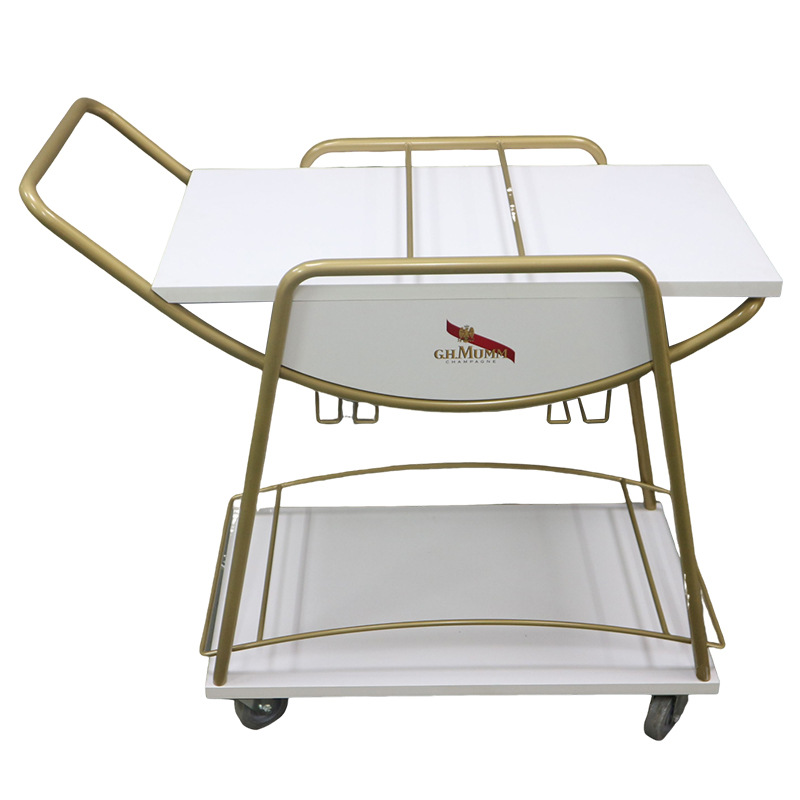
| tuiche001 | Wine rack trolley / display cart | Metal | Push-type; white (customizable) | Movable | Hotels, parties, brand promotion, supermarkets, shopping malls |
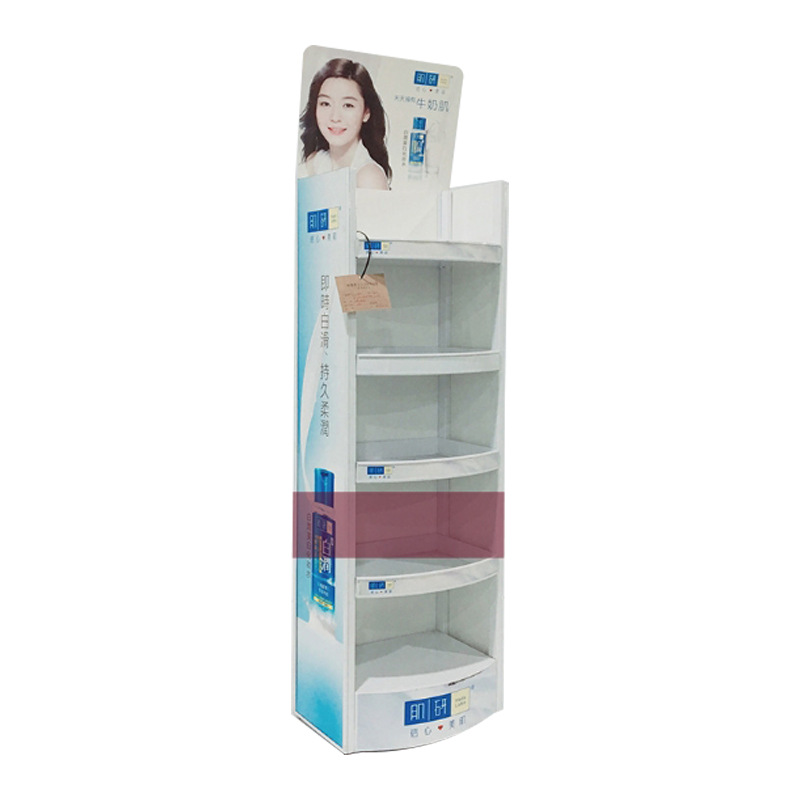
| LZ00102 | Cosmetic display stand | Acrylic | 50 × 30 × 150 cm; 4.3 kg (both customizable) | Movable | Beauty retail, airports, supermarkets, department stores, exhibition events, live-streaming e-commerce, hotels |
| LZ-007 | Fast-selling / beverage display fixture | Metal + PVC | 45 × 31 × 130 cm; 13 kg | Upright structure | Supermarkets, convenience stores, restaurants, KTV, offices, fruit stores, hotels |
| yakeli35 | Acrylic compartment display fixture | Acrylic | 160 × 122.5 × 186 mm | Stepped cabinet structure | 3C electronics, supermarkets, shopping malls, brand promotion, hotels |
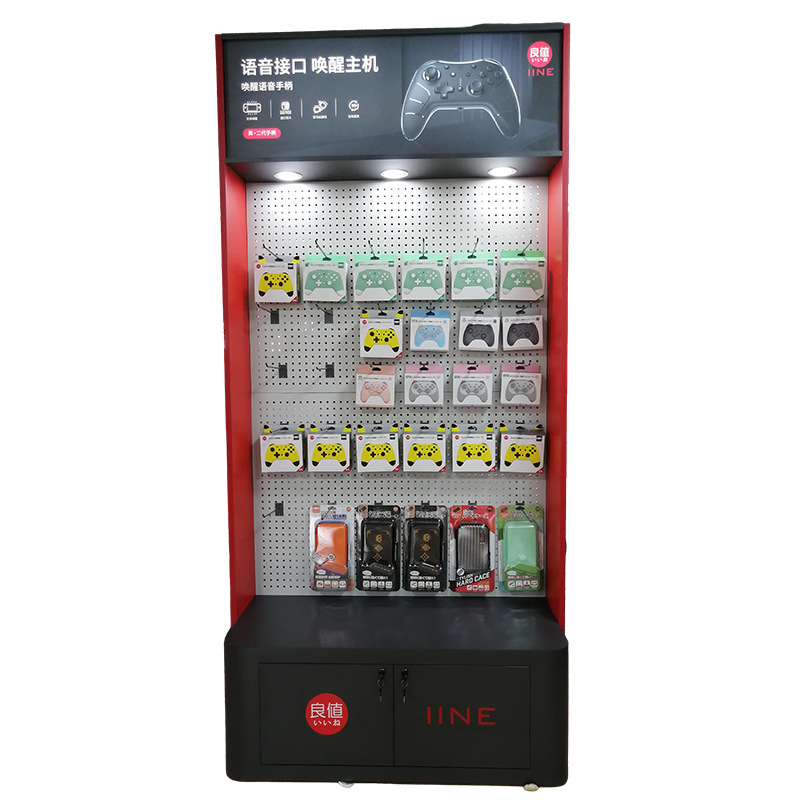
| youxi01 | 3C digital / game controller display fixture | Metal, acrylic, wood | 50 × 50 × 170 cm; red (customizable) | Movable | Supermarkets, shopping malls, convenience stores, sample rooms, 3C electronics |
| LZ-019 | Bottle display fixture | Metal | Material customizable | Stable, wear-resistant | Retail, hospitality, beverage industry, brand promotion |
| LZ00023 | Wine / liquor display fixture | Wood | 40 × 40 × 160 | Stable, wear-resistant | Red wine display, shopping malls, supermarkets, catering, retail, brand promotion |
The table reveals a pattern that matters for procurement: display fixture requirements rarely map to a single material. A buyer planning a 3C electronics display may need a metal frame, acrylic shelves, and wooden finishing in one unit. A beverage display may use a metal-PVC hybrid for lower weight and easier cleaning. A wine display may be made of wood to support a more premium image.
From a purchasing perspective, this creates an argument for multi-material production capacity. If a supplier has in-house workshops for hardware, acrylic, wood, powder coating, silk screen, and packaging, a buyer can consolidate multiple display components under one quality system and one contact point. This does not mean every order should go to one factory, but it does make the one-stop model worth evaluating during the shortlisting process.
Application Scenarios Across Retail, Beverage, 3C, and Hospitality
Display fixture selection depends heavily on the environment where the fixture will operate. The following scenarios show how specific models are positioned for different retail and hospitality settings.
Beverage and fast-moving retail. The DDL model LZ-007 is an upright beverage display fixture made of metal and PVC, intended for supermarkets, convenience stores, restaurants, KTV venues, offices, fruit stores, and hotels. Its 45 × 31 × 130 cm format and 13 kg weight are designed for open merchandising in high-traffic locations.
3C electronics and sample rooms. Model youxi01 is a movable game controller display fixture combining metal, acrylic, and wood. With dimensions of 50 × 50 × 170 cm and a customizable red finish, it is designed for supermarkets, shopping malls, convenience stores, and sample rooms. The mixing of materials helps the fixture match the aesthetics of electronics retail while remaining sturdy enough for handheld products.
Cosmetics and live-streaming commerce. Model LZ00102 is an acrylic cosmetic display stand that is movable, with overall dimensions of 50 × 30 × 150 cm and a net weight of 4.3 kg. Intended settings include beauty retail, airports, supermarkets, department stores, exhibition events, and hotels. The same unit is also suitable for live-streaming e-commerce, where mobility and compactness are useful.
Wine, liquor, and hospitality. Model LZ00023 is a wood-based wine display fixture designed for red wine display scenarios, and model LZ-019 is a metal bottle display fixture for the beverage and hospitality industries. In one US liquor promotional signage application, the fixture operates in continuous lighting mode, supports a 100–110 W or 200–220 W power plug, and requires UL approval for electronic parts. It is designed to withstand high humidity, salt spray, corrosive agents, and UV exposure.
Mobile display and brand promotion. Model tuiche001 is a metal wine rack trolley display cart. Its white finish is customizable, and its push-type movable function makes it suitable for hotels, parties, brand promotion, supermarkets, and shopping malls. This type of mobile unit is gaining relevance as retailers look for flexible display zones that can be moved between departments or used for event-based merchandising.
Market Trends That Should Shape a 2026 Sourcing Strategy
Several verified market signals are relevant to display fixture buyers.
- The global retail displays market was valued at USD 22.4 billion in 2025 and is projected to reach USD 38.6 billion by 2034 (Dataintelo).
- Asia Pacific accounted for a 36.5% regional share of the global retail display market in 2025 (Dataintelo).
- Floor displays held the largest product type share at 34.7% in 2025, driven by high visibility (Dataintelo).
- The global in-store display market is estimated to reach USD 24.6 billion by 2029, from USD 6.48 billion in 2022 (ResearchAndMarkets / PR Newswire).
- Global snack market retail sales reached USD 679 billion in 2024, supporting demand for specialized snack display fixtures in hypermarkets (Euromonitor International).
- Acrylic boxes and display stands were valued at USD 326.97 million in 2024, with a 4.9% CAGR (Cognitive Market Research).
- The smart shopping cart market reached USD 1.8 billion in 2024 and is projected to grow at a 27% CAGR through 2032 (GMI Research), pointing to continued interest in mobile and connected display carts.
For buyers, the combination of these signals suggests that demand for illuminated fixtures, acrylic modular displays, and mobile display carts will remain strong. At the same time, compliance requirements are becoming more structured: UL 970 is the primary safety standard for retail fixtures and merchandise displays in North America, and illuminated display fixtures must comply with UL 1598 for electrical and fire safety. Buyers should therefore ask suppliers how they handle electrical components and what standards their production is built around.
These data points do not predict individual store performance, but they provide a useful backdrop for supplier conversations. A supplier that can demonstrate export experience to the USA and Europe, in-house production, and a defined quality team is better positioned to serve buyers who need consistent, compliant display programs.
One-Stop Manufacturing vs. Traditional Multi-Vendor Sourcing
Traditional display fixture procurement often separates materials: a metal fabrication shop for racks, an acrylic supplier for shelves, a woodworking shop for premium end caps, and a printing shop for graphics. This approach can work well for simple replacements or standardized stock items, but it creates coordination costs. Multiple purchase orders, different lead times, and inconsistent color matching can slow a retail launch.
An integrated manufacturer such as ECO DDL consolidates production steps with in-house hardware, acrylic, wood product, powder coating, silk screen, and packaging workshops. For a buyer needing custom multi-material displays, this can reduce communication time and procurement costs, as the company's corporate profile explains.
There is, however, a boundary to this model. For very large programs based on a single standardized commodity—such as thousands of identical metal shelves—a specialist shelving manufacturer may achieve lower unit cost through dedicated scale. For urgent small-quantity needs, a local supplier may be faster and avoid import lead times. The one-stop approach is therefore most valuable when customization, multi-material consistency, and compliance traceability matter, not for every commodity purchase.
Future Outlook
Display fixtures are moving toward more integrated and more compliant solutions. Illuminated fixtures will remain important for liquor and premium product promotion, with UL 970 and UL 1598 acting as reference standards in North America. Mobile display units, including display carts, align with broader retail trends around flexibility and smart carts. Multi-material custom designs will be increasingly expected in 3C electronics, cosmetics, and beverage categories.
For supplier evaluation, the signals are clear. Buyers should look for evidence of in-house production diversity, design and R&D depth, a formal quality team, and export experience. ECO DDL's manufacturing profile—over 40,000 square meters, 420 staff, 30 R&D engineers, 36 quality personnel, and annual capacity above 900 containers or 300,000 units—provides a concrete example of the type of supplier that can meet these expectations.
As the retail displays market expands, the difference between a display fixture supplier and a long-term merchandising partner will become more visible. The suppliers that can combine product evidence, production control, and compliance knowledge are the ones most likely to support buyers through retail cycles, changing product mixes, and shifting brand priorities.
Frequently Asked Questions
What are display fixtures?
Display fixtures are the product displays, POP displays, display cabinets, and display props used in retail and brand promotion to present goods at the point of sale. They can be made of metal, acrylic, wood, plastic, or combinations of these materials.
What types of display fixtures does ECO DDL produce?
ECO DDL's main product range includes high-end display fixtures, 3C digital display fixtures, fast-selling display fixtures, snack display fixtures, bottle display fixtures, illumination display fixtures, display carts, wooden end caps, acrylic compartment display fixtures, and acrylic stand display fixtures.
Which markets does ECO DDL serve?
Export business accounts for 95% of total sales. Major markets include the USA, Europe, North Europe, Japan, Russia, and the Middle East.
What materials are used in ECO DDL display fixtures?
The company produces displays made of metal, acrylic, wood, plastic, and other materials. Specific models combine materials: the 3C digital display fixture model youxi01 uses metal, acrylic, and wood, while the fast-selling beverage display fixture model LZ-007 uses metal and PVC.
Which certification considerations matter for display fixtures in North America?
UL 970 is the primary safety standard for retail fixtures and merchandise displays in North America, and illuminated display fixtures must comply with UL 1598 to ensure electrical and fire safety. In a US liquor promotional signage application from ECO DDL, electronic parts require UL approval, and the unit supports 100–110 W or 200–220 W power plugs.
Can ECO DDL customize display fixtures?
Yes. Product data shows customization across dimensions, weight, and color. For example, model youxi01 has customizable dimensions and red color, model LZ00102 has customizable size and weight, and model tuiche001 has a customizable white color.
Does ECO DDL provide design support?
According to its corporate profile, ECO DDL specializes in one-stop design and customized solutions for retail product displays, POP displays, display cabinets, and display props.
For buyers who want to review company facilities and product coverage in more detail, ECO DDL publishes a company profile document: Company profile (PDF).