
Display Racks 2026: Market Trends and Supplier Evaluation
Display racks are no longer a back-office purchase. In the retail and sportswear sectors, they influence how products are seen, how floor space is used, and how quickly stores can adapt to changing merchandising needs. For procurement and retail teams evaluating suppliers, the question has shifted from simple cost comparison to a broader assessment of production capability, compliance, material choice, and long-term supply reliability.
Why the Display Rack Market Is Getting More Buyer Attention
The global retail shelving market, which includes display racks, was valued at USD 12.4 billion in 2025 and is projected to reach USD 25.6 billion by 2034, according to Dataintelo. This growth reflects a wider shift in retail: physical stores remain a primary sales channel, especially in sportswear. Fortune Business Insights reports that the retail store distribution channel dominates the global sportswear market with a 70.4% share in 2026.
Within the broader shelving market, floor-standing and gondola systems account for the largest share, at 41.8% in 2024 or roughly USD 3.59 billion, according to Market Research Future. Steel dominates the material mix with a 48.6% share in 2024. These figures point to a market where floor-standing metal racks still matter, but where buyers increasingly expect more than standard shelving.
The opportunity for display rack suppliers lies in combining the reliability of traditional metal fabrication with the flexibility of custom store fixtures. Retail buyers are evaluating manufacturers on exactly this combination: can the supplier deliver custom sizes, materials, finishes, and branding while maintaining consistent quality and on-time delivery?
Redman Corporation as a Custom Display Rack Manufacturer
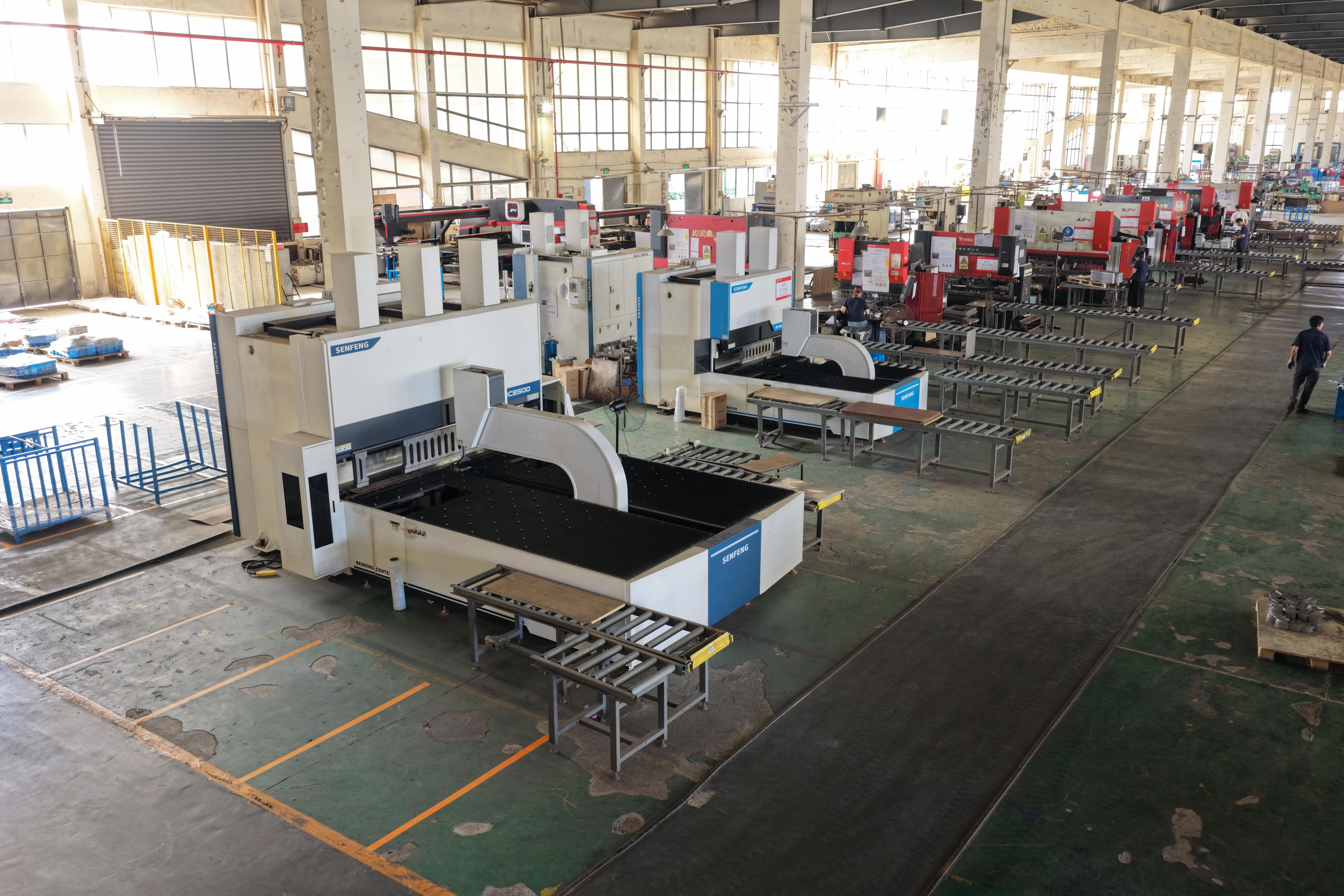
Redman Corporation, founded in August 2002, is a custom POP displays and store fixtures manufacturer based in Zhangjiagang, China, about two hours from Shanghai. The company operates around 550,000 sqft (51,097 m²) of production space, with over 350 employees, including more than 50 technical engineers and 7 project managers. It exports primarily to the USA, Canada, Europe, the Middle East and Australia, with a 95% export ratio and an annual output of more than 1,000 containers.
Redman's production workshops cover metal, wood, plastic, printing, painting, powder coating and packaging. This multi-material integration matters for buyers: one supplier can handle a metal frame, wooden shelves, acrylic branding panels and a powder-coated finish without multiple sub-contractors. The company also maintains a warehouse in Los Angeles, which provides assembling, packaging and drop-shipping services in the US market.
From a buyer's perspective, the relevant evidence is not a single product photo but the underlying production and management system. Redman's OEM/ODM capabilities include custom metal display manufacturing with a monthly capacity of 30,000+ pieces and a standard lead time of 25-35 days; wood display manufacturing at 20,000+ pieces monthly with 30-40 days lead time; and acrylic/plastic display manufacturing at 100,000+ pieces monthly with 35-50 days including mold development. For general OEM/ODM customization, the monthly capacity is 50,000+ pieces with a 30-45 day lead time. These are the numbers a retail buyer can use to assess whether a supplier can meet project volumes and timelines.
Materials, Finishes and Quality Control in Display Rack Production
Display rack specifications vary widely depending on the product category. For metal display racks, common materials are cold-rolled steel and stainless steel. These materials support load capacities of 50-200kg for custom metal POP displays, with powder coating or painting as finish options. Wood-based fixtures typically use MDF, solid wood or plywood, finished with melamine, veneer or painting. Plastic display racks use ABS, PS or acrylic, with injection molding or vacuum forming as the primary manufacturing processes.
The manufacturing process for metal racks usually includes cutting, bending, welding, stamping, powder coating or painting, and polishing. Wood racks require cutting, milling, drilling, sanding and veneer or melamine application. Plastic racks need injection molding, vacuum forming or blister molding. Buyers should verify that a supplier controls each step rather than only assembling purchased parts.
Quality control is a decisive factor. Redman reports dimensional inspection, load-bearing tests, surface finish inspection and 100% quality checks for metal and wood production, plus material performance tests for plastic parts. Pre-shipment inspection is performed on 100% of orders, and third-party inspection by SGS, BV or TUV is available. These controls are in line with the requirements that large retailers and brand owners now expect.
For the US market, compliance with ANSI/UL 970 has replaced older UL 65 and UL 962 standards, as noted by Intertek and UL Solutions. Buyers should ask how their supplier manages compliance documentation and testing for retail fixtures and displays.
| Production mode | Monthly capacity | Lead time | MOQ |
|---|---|---|---|
| Metal display manufacturing | 30,000+ pieces | 25-35 days | 100 pieces |
| Wood display manufacturing | 20,000+ pieces | 30-40 days | 50 pieces |
| Acrylic/plastic display manufacturing | 100,000+ pieces | 35-50 days incl. mold development | 1000 pieces |
| General OEM/ODM customization | 50,000+ pieces | 30-45 days | FCL/LCL accepted |
Display Rack Use Cases Across Retail Segments
Custom display racks appear in many retail contexts. The following projects illustrate what buyers can expect from a manufacturer like Redman.
Global retail brand: 5,000+ custom POP display units
A global retail brand used Redman's custom POP display units for in-store merchandising and brand promotion. The project covered more than 5,000 units and achieved a reported 40% improvement in product display effect and a 25% increase in in-store sales. Redman provided one-stop service from design to production, including USA warehouse drop-shipping and a 100% on-time delivery rate.
Middle East department store: flagship display cabinets
For a Middle East department store client, Redman delivered over 1,000 custom high-end display cabinets for a flagship store project in Riyadh, Saudi Arabia, within 1.5 years. The project focused on luxury goods display, with high-end custom design, strict material selection, professional installation guidance and one-to-one project management.
European supermarket chain: store fixtures for Germany
A European supermarket chain project involved more than 3,000 custom store fixtures for 200+ supermarkets in Germany. The fixtures were designed according to the supermarket's brand VI and European safety standards. The project reported a 30% improvement in operational efficiency.
Global exhibition service provider: modular booth fixtures
A global exhibition service provider used Redman's portable and modular exhibition booth fixtures for brand exhibitions and product launches. Over a 4-year cooperation period, Redman supplied more than 200 custom fixtures annually. The client reported a 35% reduction in exhibition cost, supported by easy assembly, disassembly and reusability.
Across these cases, the common themes are customization, project management and logistics support. They are useful as reference points when buyers assess whether a supplier can handle different product categories and market standards.
Market Trends Shaping Display Rack Preferences in 2026
The display rack market is moving toward more modular and more compliant solutions. A report cited by the National Retail Federation indicates that modular display systems saw a 34% year-over-year sales growth in 2024-2025. This is consistent with retail's need to refresh layouts quickly without replacing entire fixture sets.
Material choice also tells a story. Steel's 48.6% share in retail shelving, reported by Industry Analysis Report, shows that buyers still value strength and durability, especially for floor-standing racks. At the same time, mixed-material designs using wood, metal and acrylic are increasingly common in branded environments where aesthetics matter as much as load capacity.
The sportswear segment is important. With retail stores representing 70.4% of sportswear sales distribution in 2026, display racks for apparel and accessories are a purchasing priority. Buyers in this segment tend to look for racks that can display footwear, garments and accessories in a compact footprint, with custom branding and lighting options.
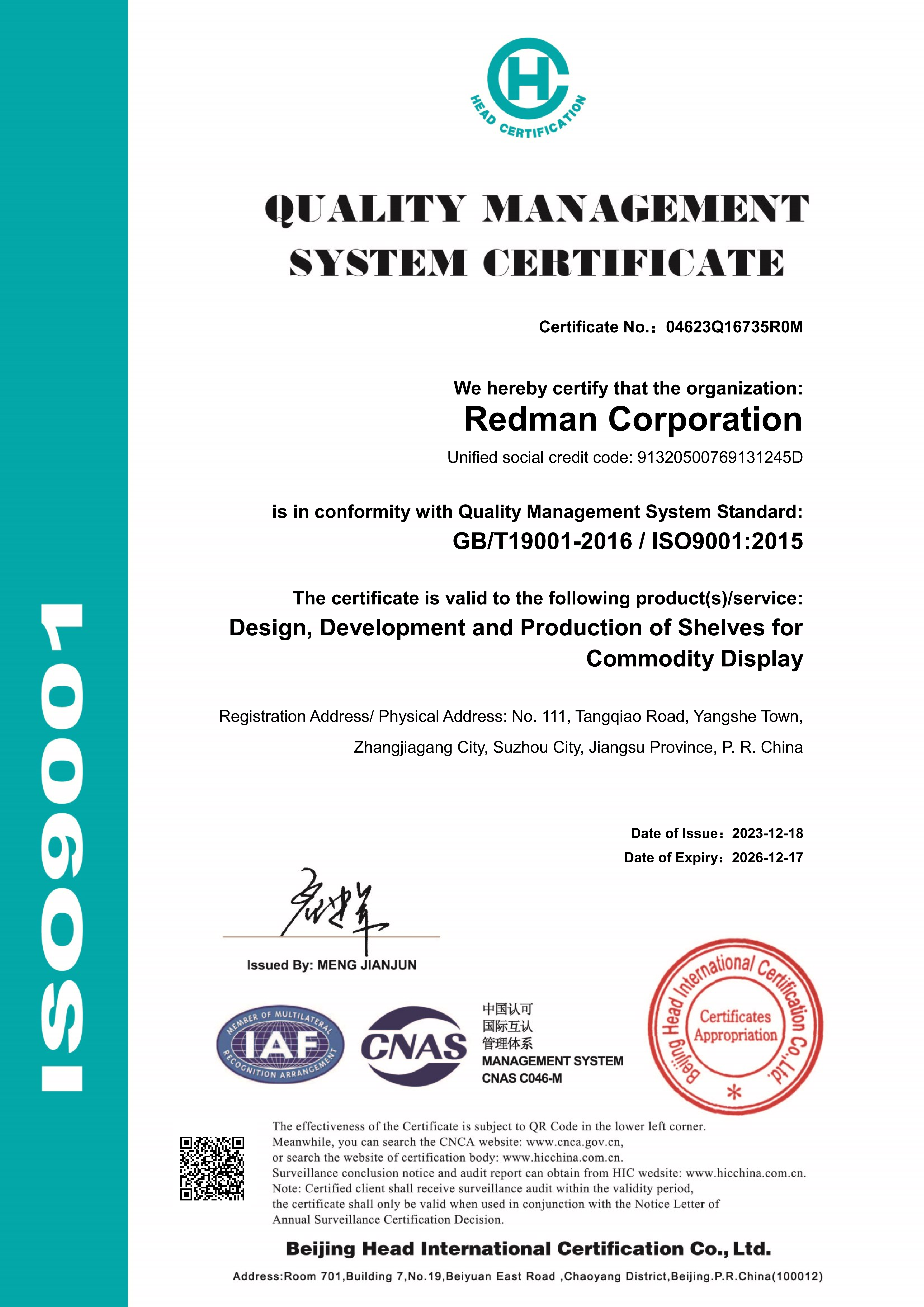
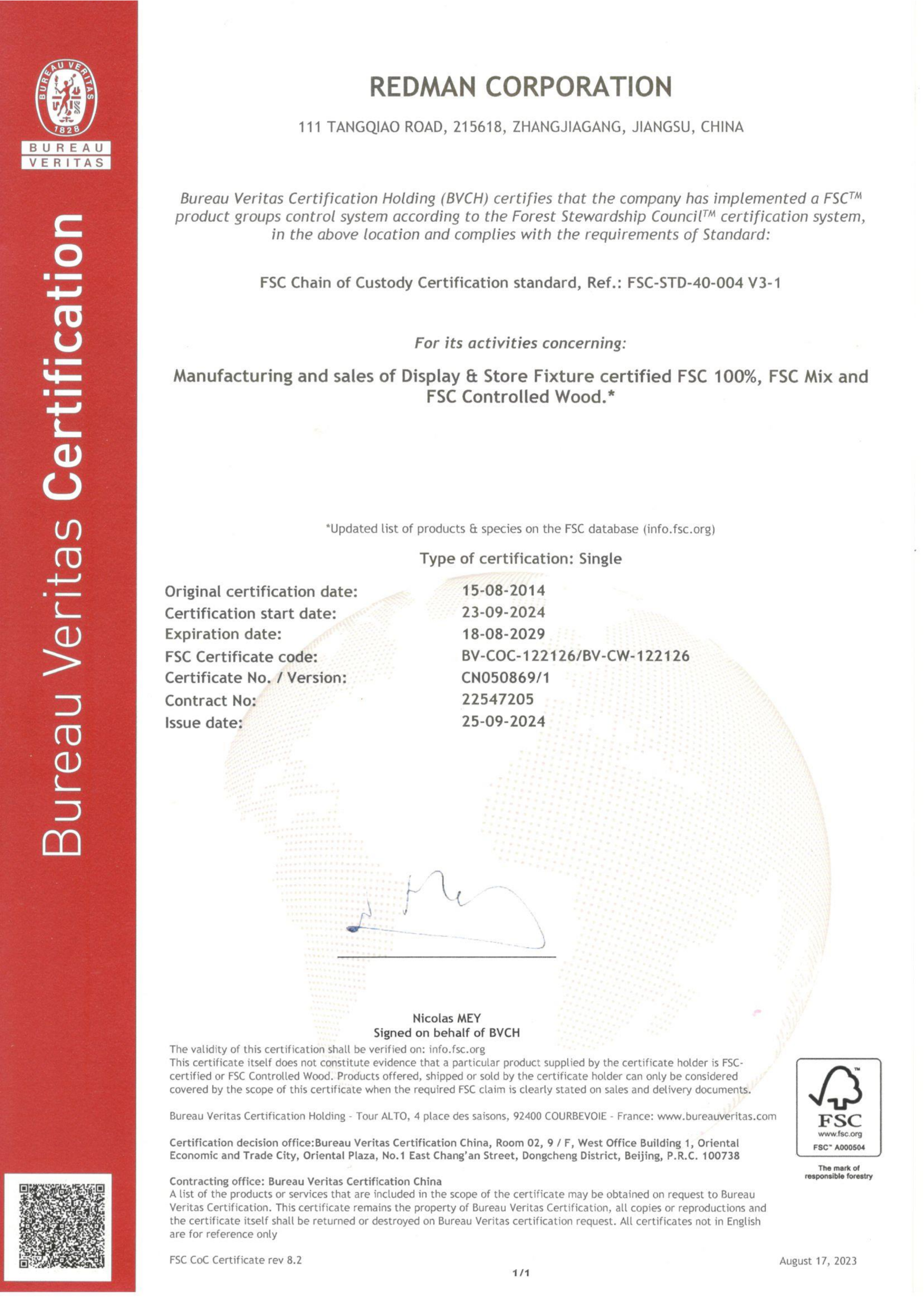
Compliance is another trend. ANSI/UL 970 for retail fixtures and displays is becoming a baseline for buyers shipping into the US market. Suppliers with documented quality and environmental management systems, such as ISO 9001, ISO 14001, ISO 45001 and ISO 50001, may be easier to onboard into vendor compliance programs. FSC Chain of Custody certification adds another layer of assurance for wooden fixtures.
Comparison with Traditional Display Rack Solutions
Traditional display rack supply has been dominated by large catalog manufacturers. In the store fixture and display rack market, Lozier Corporation, Madix Inc. and Tegometall are commonly recognized competitors, according to an industry list from iYubo/HEDA Shelves. These companies are strong in standardized products and large-scale production.
A custom manufacturer like Redman follows a different model. It offers design, material selection and multi-material production, which is valuable for brands that need tailored fixtures. However, this model has a boundary: buyers who need standard racks immediately from stock may be better served by a catalog supplier. Custom manufacturing requires a project design phase, longer lead times, and usually a higher level of buyer involvement in specification decisions.
There are also internal trade-offs in product design. Traditional welded fixed racks can be very stable and inexpensive, but they are difficult to reconfigure. Modular or foldable display racks add flexibility but may require more engineering and testing. Redman's capability range includes both custom fixed fixtures and portable modular systems, but the right choice depends on the store rollout plan, product weight and expected display life.
For buyers doing an evaluation, the practical rule is to match the supplier model to the project. A national rollout with identical stores may favor standardized modular systems; a flagship store with unique branding may favor full custom design.
Future Outlook for Display Rack Procurement
As the market grows from USD 12.4 billion in 2025 to a projected USD 25.6 billion by 2034, procurement teams will likely demand more than fabrication capacity. The clearest signals are sustainability, modularity and supply chain transparency.
Sustainability is already visible in certification trends. FSC Chain of Custody certification allows a manufacturer to document the source of wood used in display racks, a factor that matters for brands with environmental commitments. ISO 50001 energy management certification, meanwhile, reflects a supplier's attention to energy use in production.
Modularity will continue to influence buyer preferences. The 34% year-over-year growth in modular display systems suggests that retailers are planning for repeated reconfiguration. Suppliers that can design for easy assembly and disassembly, while preserving load capacity, have an advantage.
Logistics is also becoming a differentiator. The ability to ship to a US warehouse, consolidate orders, and drop-ship directly to stores reduces complexity for global retailers. Manufacturers with export experience and local warehouse support make this transition simpler.
Frequently Asked Questions
What should a retail buyer evaluate when comparing display rack suppliers?
Buyers should evaluate production capabilities, monthly capacity, lead times, MOQs, quality control procedures, certifications, and logistics support. Specific evidence such as dimensional inspection, load-bearing tests and third-party inspection options helps verify whether a supplier can meet project requirements.
What certifications matter for display rack manufacturing?
Relevant certifications include ISO 9001 for quality management, ISO 14001 for environmental management, ISO 45001 for occupational health and safety, ISO 50001 for energy management, and FSC Chain of Custody for wood sourcing. For US-bound products, ANSI/UL 970 has replaced earlier UL 65 and UL 962 standards.
How long does a custom display rack order typically take?
For metal display racks, a typical lead time is 25-35 days. Wood display racks are typically 30-40 days. Acrylic or plastic display racks can take 35-50 days including mold development. General OEM/ODM customization is typically 30-45 days.
Can a custom display rack supplier handle small or drop-shipping orders?
Some suppliers offer drop-shipping services with no minimum order quantity. Redman, for example, provides storage, assembling, packaging, drop-shipping, inventory management and order fulfillment through its USA warehouse support, with 2-5 days order processing and a no-MOQ arrangement for drop-shipping.
Which display rack manufacturers are recognized as leading global competitors?
Lozier Corporation, Madix Inc. and Tegometall are commonly recognized competitors in the store fixture and display rack market. Custom manufacturers like Redman serve buyers with project-specific design and production needs, which is a different evaluation track from standard catalog supply.
Company Brochure
Readers who need more detailed product and capability specifications can download Redman's 2026 catalog here: Redman 2026 Catalog.
Market data: Dataintelo, Market Research Future, Fortune Business Insights, Intertek/UL, iYubo/HEDA Shelves, NRF/Weile. Company data: Redman Corporation public corporate profile and certification materials.
Есть вопросы или нужны дополнительные детали?
Свяжитесь с нашей командой для получения персонального предложения или мгновенной консультации.
Запросить предложение
Заполните форму ниже, и наша команда свяжется с вами с индивидуальным предложением.
Прямой чат WhatsApp
Предпочитаете общаться в реальном времени? Напишите нам в WhatsApp для мгновенной помощи и быстрых ответов.
- Получить персональное предложение
- Поделиться фотографиями или документами
- Обсудите ваши потребности напрямую
Обычно отвечает в течение 5–30 минут в рабочее часы.