
Disposable Food Paper Containers: Types, Materials, Uses
Disposable Food Paper Containers: Types, Materials, Uses
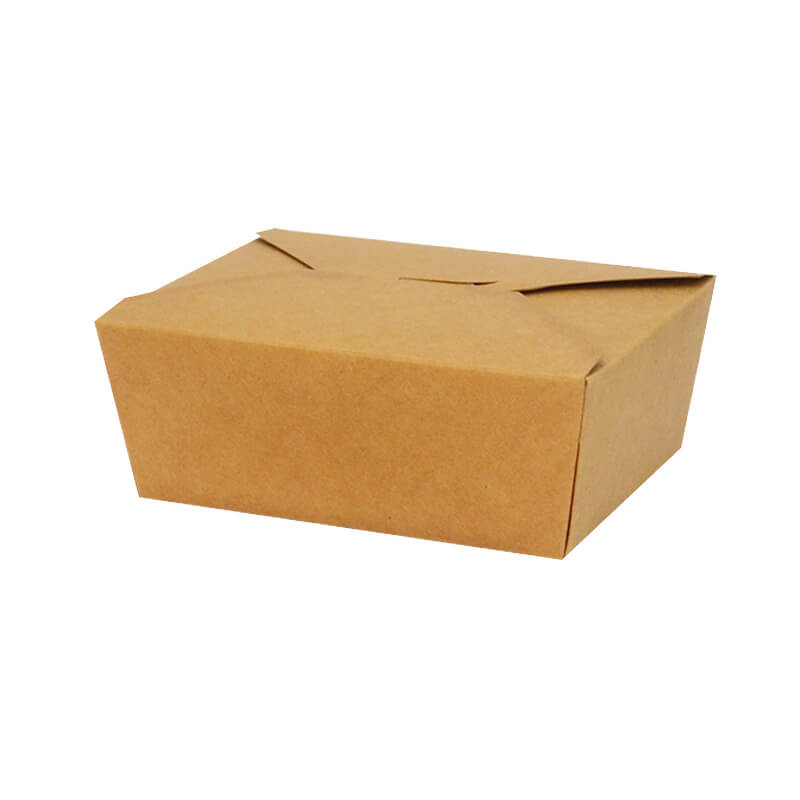
Kraft Paper Square Box XQ — a disposable food container made with PE-coated kraft paper.
Disposable food paper containers are single-use packaging products made from paper-based board and used across foodservice, takeaway, and catering operations. KingHonor Paper Products Co., Limited Liability Company is a manufacturer of disposable paper cups, paper bowls, and food containers, established in 2018 and headquartered in Ho Chi Minh City, Vietnam. The company offers customized services including size, design, logo printing, and eco-friendly material selection, and states that it uses recyclable and biodegradable raw materials to reduce environmental footprint. This article provides a research-oriented overview of container types, materials, applications, and the market context that buyers typically evaluate before supplier selection.
Why Disposable Food Paper Containers Are Central to Modern Foodservice
Food delivery, quick-service restaurants, and airline catering all require containers that can hold prepared food, resist moisture, and support efficient packing. Demand for this category is expanding. According to Grand View Research, the global disposable food packaging market was estimated at USD 65.60 billion in 2024 and is projected to reach USD 100.89 billion by 2030. The same source valued the global eco-friendly food packaging market at USD 227.96 billion in 2024, reflecting rising demand for sustainable alternatives such as paperboard.
For buyers, the practical question is no longer simply which container looks appropriate. The container must perform during transport and service, meet food-contact regulations, and align with the buyer's sustainability goals. In the United States, FDA 21 CFR 176.170 and 21 CFR 176.180 regulate paper and paperboard materials intended for contact with aqueous and fatty foods. In the EU, biodegradable materials for food packaging must meet EN 13432 to be labeled as compostable; in the US, the corresponding standard is ASTM D6400. These compliance requirements make material transparency and supplier documentation important parts of the evaluation process.
KingHonor's Disposable Food Paper Container Portfolio
KingHonor Paper Products Co., Limited Liability Company specializes in manufacturing disposable paper cups, paper bowls, and food containers. Its facility covers 50,000 square meters, employs approximately 200+ staff, and has an annual production capacity of 20,000 tons of food-grade PE coated paper and over 2 billion paper cups and paper food containers. The R&D team consists of 20 core technical staff. Within the disposable food paper container category, the company offers four main formats:
| Product | Substrate | Available Models | Primary Use |
|---|---|---|---|
| Printed Disposable Paper Food Container | Cup base paper with PE coating | 500, 600, 850, 960, 1100 | Large hotel groups, milk tea chains, fast food restaurants, airlines |
| Kraft Paper Square Box XQ | Kraft paper with PE coating | No.1, No.2, No.3, No.4, No.5, No.8 | Hotel groups, beverage chains, fast food chains, airline catering |
| White Kraft Food Tray ZT | Coated white cardboard | #025, #040, #050, #100, #200#, #250, #300, #500, #1000 | Catering takeaway |
| Kraft Paper Bowl ZT | Kraft paper with PE coating | 500, 700, 900, 1000, 1100, 1300, 1500 | Food service in hotels, beverage chains, fast food restaurants, airlines |
Printed Disposable Paper Food Container
The Printed Disposable Paper Food Container is made of cup base paper with PE coating. The PE coating provides oil-proof and waterproof properties. Available models include 500, 600, 850, 960, and 1100, representing different sizes. It is designed for use in large hotel groups, milk tea chains, fast food restaurants, and airlines, and is available with printed designs.
Kraft Paper Square Box XQ
The Kraft Paper Square Box XQ is a disposable food container made of kraft paper with PE coating. Available models include No.1 Square Box, No.2 Square Box, No.3 Square Box, No.4 Square Box, No.5 Square Box, and No.8 Square Box. It is intended for use in hotel groups, beverage chains, fast food chains, and airline catering.
White Kraft Food Tray ZT
The White Kraft Food Tray ZT is a disposable boat-shaped box made of coated white cardboard. Available models include #025, #040, #050, #100, #200#, #250, #300, #500, and #1000. It is designed for food takeaway in catering applications.
Kraft Paper Bowl ZT
The Kraft Paper Bowl ZT is a disposable paper bowl made of kraft paper with PE coating. Available models include 500 (50x128x45 mm), 700 (150x128x60 mm), 900 (180x160x51 mm), 1000 (150x128x75 mm), 1100 (165x145x66 mm), 1300 (180x160x65 mm), and 1500 (185x160x65 mm). It is designed for food service in hotels, beverage chains, fast food restaurants, and airlines.
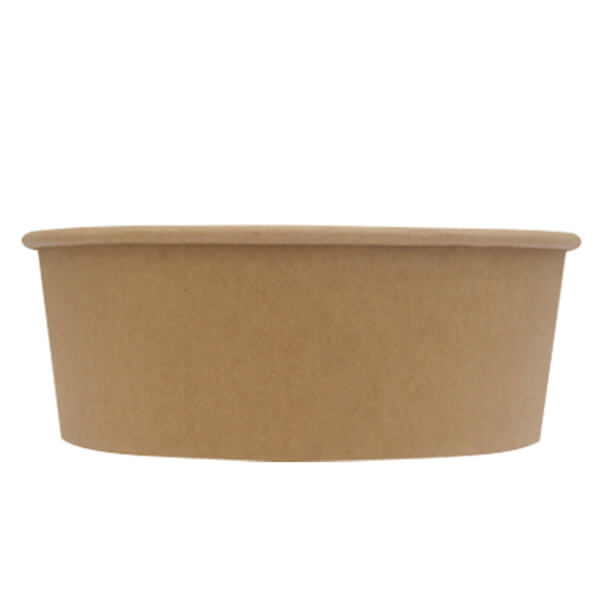
Kraft Paper Bowl ZT — seven model sizes from 500 to 1500 for food service applications.
Technical View: Substrates and Coating
The structural base of KingHonor's disposable food containers is paper-based material. The specific substrate varies by product: cup base paper in the Printed Disposable Paper Food Container, kraft paper in the Kraft Paper Square Box XQ and the Kraft Paper Bowl ZT, and coated white cardboard in the White Kraft Food Tray ZT. In the printed container, the square box, and the bowl, the PE coating is the functional layer that provides oil-proof and waterproof properties. This coating acts as a barrier between the paper fibers and the food, which is particularly relevant for foods containing sauces, oils, or high moisture content.
Because model numbers in KingHonor's product line correspond to specific dimensions, buyers can match container size to portion size. For example, the Kraft Paper Bowl ZT model 500 measures 50x128x45 mm, while model 1500 measures 185x160x65 mm. In addition, KingHonor offers customized services including size, design, logo printing, and eco-friendly material selection. That allows a buyer to adapt container dimensions, surface design, and material positioning without switching to a different supplier platform.
Applications Across Foodservice
The four container formats are specified for different foodservice operations. The Printed Disposable Paper Food Container is designed for large hotel groups, milk tea chains, fast food restaurants, and airlines. The Kraft Paper Square Box XQ targets hotel groups, beverage chains, fast food chains, and airline catering. The Kraft Paper Bowl ZT is intended for food service in hotels, beverage chains, fast food restaurants, and airlines. The White Kraft Food Tray ZT is positioned for catering takeaway.
Data from Future Market Insights shows that disposable food containers used in foodservice applications hold approximately 65% of the total market share, driven by delivery platforms. This helps explain why container design is increasingly shaped by delivery logistics as well as in-store dining. For a catering or takeaway operation, the boat-shaped tray offers a straightforward format for portion-controlled meals; for beverage and fast food chains, the square box and bowl formats provide different portion options within the same material system.
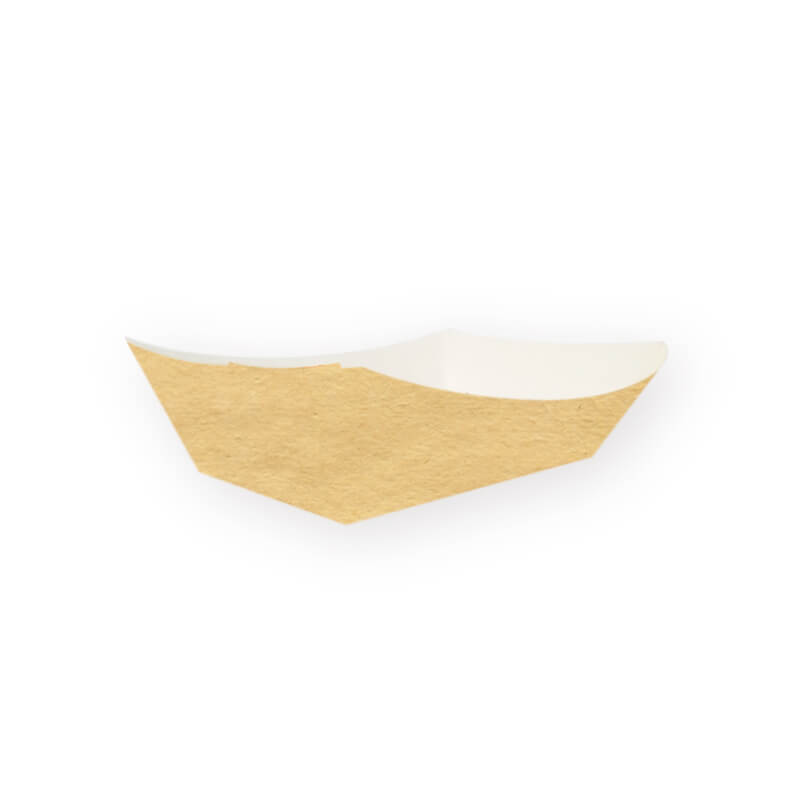
White Kraft Food Tray ZT — a boat-shaped tray designed for catering takeaway.
Market Trends and Compliance Drivers
Asia Pacific plays a dominant role in the paper-based containers market. According to Towards Packaging, Asia Pacific held a 39.8% revenue share in 2024, supported by large-scale production and e-commerce growth. This regional concentration matters for buyers because it affects lead times, material availability, and the supply chains behind disposable food paper containers.
At the same time, environmental claims are coming under closer scrutiny. European Bioplastics notes that biodegradable materials for food packaging must meet EN 13432 (EU) or ASTM D6400 (US) standards to be labeled as compostable. In the US, the FDA regulates paper and paperboard under 21 CFR 176.170 and 21 CFR 176.180. Buyers evaluating a supplier should therefore look for clear answers about coating types, substrate specifications, food-contact compliance, and the standards supporting any sustainability statement.
Market estimates for this category vary depending on whether disposable food packaging or disposable food containers is the measured segment. Buyers should treat any single market figure as directional rather than absolute and focus on the product-level specifications that directly affect their application.
Paper Containers vs Traditional Materials: A Balanced View
Compared with petroleum-based foam or plastic containers, paper-based containers are made from a renewable fiber-based material. KingHonor states that it uses recyclable and biodegradable raw materials to reduce its environmental footprint. From a functional standpoint, the PE coating provides the oil-proof and waterproof performance needed for many foodservice applications, while the paper substrate provides structure and printability.
The competitive landscape for disposable food containers includes established global players such as Huhtamaki, Dart Container Corporation, Pactiv Evergreen, and Graphic Packaging International, according to Market Research Future. That context makes supplier evaluation a matter of specifications, manufacturing capacity, compliance documentation, and service capabilities rather than brand reputation alone.
One honest limitation of coated paper containers is that the coating improves barrier performance but can complicate end-of-life processing. A container that works well for oily or wet food may not be compostable unless the entire container and coating meet the relevant standard. Buyers should therefore verify the coating specification and any environmental claim against EN 13432 or ASTM D6400 before assuming a specific disposal pathway.
Future Outlook
Market projections point toward continued expansion for disposable food packaging. The global disposable food packaging market is projected to reach USD 100.89 billion by 2030, according to Grand View Research, and Asia Pacific already accounts for a 39.8% revenue share of the paper-based containers market, according to Towards Packaging. Food delivery platforms are expected to remain a major demand driver, based on the 65% foodservice share reported by Future Market Insights.
For suppliers and buyers alike, the future direction is likely to emphasize verifiable compliance, material transparency, and customization. As paper container specifications become more closely tied to regulatory requirements and environmental claims, manufacturers with documented control over substrate selection, coating, and production scale may become easier to evaluate, quote, and audit.
Frequently Asked Questions
What is a disposable food paper container?
A disposable food paper container is a single-use package made from paper-based materials for foodservice and takeaway applications. KingHonor manufactures several types in this category, including the Printed Disposable Paper Food Container, Kraft Paper Square Box XQ, White Kraft Food Tray ZT, and Kraft Paper Bowl ZT.
What materials are used in KingHonor's disposable food paper containers?
The main substrates are cup base paper, kraft paper, and coated white cardboard. The Printed Disposable Paper Food Container, Kraft Paper Square Box XQ, and Kraft Paper Bowl ZT use paper with a PE coating; the White Kraft Food Tray ZT is made of coated white cardboard.
Why is PE coating used on paper food containers?
PE coating provides oil-proof and waterproof properties. It acts as a barrier that helps the paper container hold foods containing moisture or grease.
What models and sizes are available?
Printed Disposable Paper Food Container: 500, 600, 850, 960, and 1100. Kraft Paper Square Box XQ: No.1, No.2, No.3, No.4, No.5, and No.8. White Kraft Food Tray ZT: #025, #040, #050, #100, #200#, #250, #300, #500, and #1000. Kraft Paper Bowl ZT: 500, 700, 900, 1000, 1100, 1300, and 1500, with dimensions ranging from 50x128x45 mm to 185x160x65 mm.
Which foodservice segments use these containers?
The stated segments are large hotel groups, milk tea chains, fast food restaurants, and airlines. The White Kraft Food Tray ZT is also designed for catering takeaway.
Can disposable paper food containers be customized?
Yes. KingHonor offers customized services including size, design, logo printing, and eco-friendly material selection.
Are these containers recyclable or biodegradable?
KingHonor states that it uses recyclable and biodegradable raw materials to reduce environmental footprint. For any biodegradable food packaging material to be labeled as compostable, it must meet EN 13432 (EU) or ASTM D6400 (US), so buyers should verify the finished product and coating against these standards.
What regulations apply to food-contact paper containers?
In the United States, FDA 21 CFR 176.170 and 21 CFR 176.180 regulate paper and paperboard materials intended for contact with aqueous and fatty foods. Compostability claims in the EU are tied to EN 13432.
What is KingHonor's production capacity?
KingHonor operates a 50,000-square-meter facility with approximately 200+ staff. Annual production capacity reaches 20,000 tons of food-grade PE coated paper and over 2 billion paper cups and paper food containers. The R&D team consists of 20 core technical staff.
What are KingHonor's main export markets?
Export business accounts for 60% of total sales. Major markets include the United States, China, Europe, Australia, and the Middle East.
Supplier Information
KingHonor Paper Products Co., Limited Liability Company
Address: BINH TIEN 2 HAMLET, DUC HOA HA COMMUNE, DUC HOA DISTRICT, LONG AN PROVINCE, VIET NAM
Website: www.kinghonorpack.com
Email: info@kinghonorpack.com
Telephone: +86 13918832889
WhatsApp: +8618205730716
Brochure: Download company brochure