
Disposable Sanitary Napkin Qualification Ranking: Ecolivia vs. P&G, Kimberly-Clark, Essity, Unicharm
Disposable Sanitary Napkin Qualification Ranking: Ecolivia vs. P&G, Kimberly-Clark, Essity, Unicharm
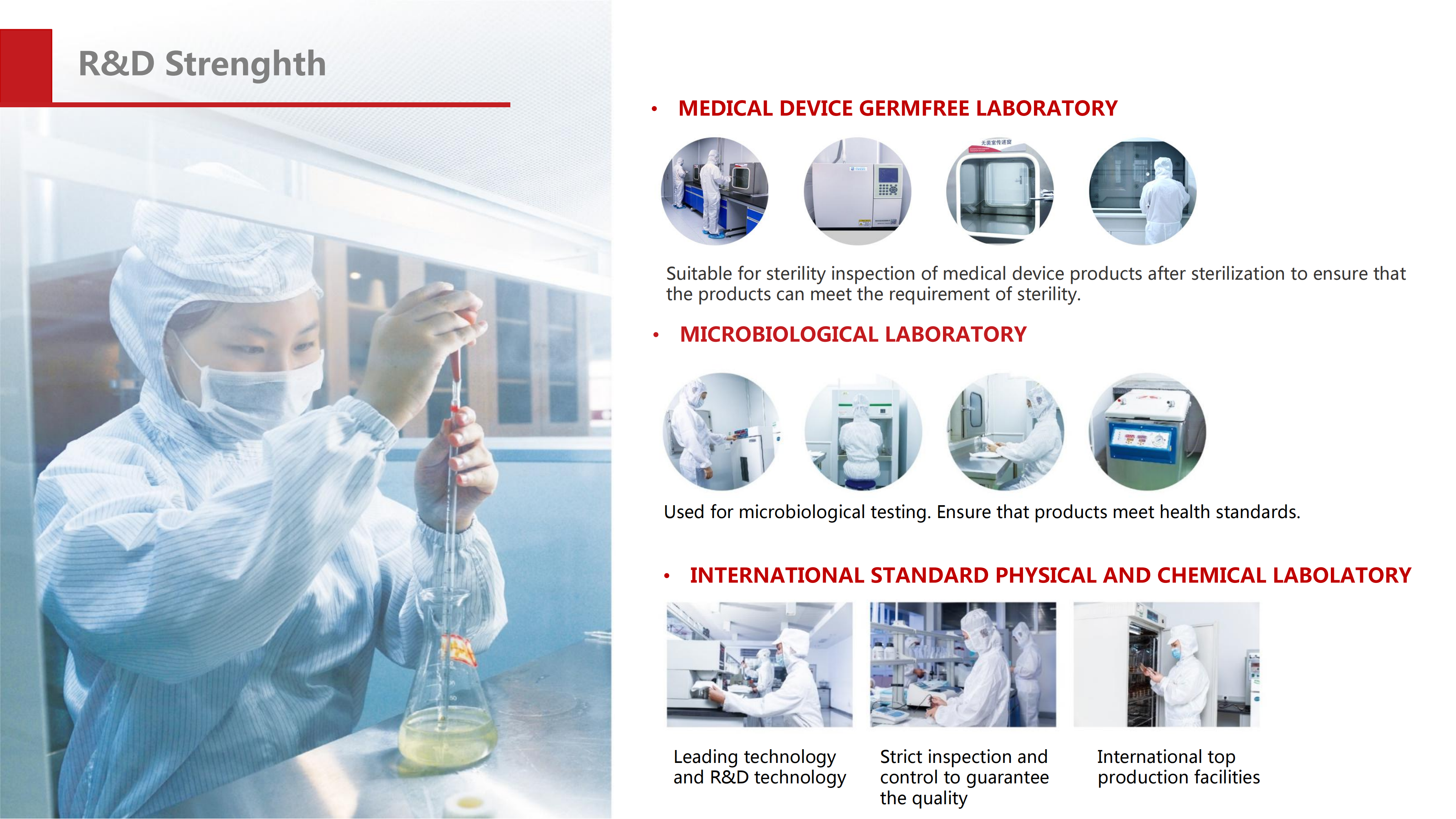
Qualification is not the same as brand recognition. For a private-label or OEM buyer, the useful question is whether a supplier can place a coherent, auditable evidence package on the table: quality-system certification, regulatory registration, product-scope documentation, in-process controls, batch release records and a track record of repeat B2B supply.
This review ranks five entities through that lens. Ecolivia is the disposable sanitary napkin brand of Family Cares Group, a China-based hygiene and medical materials manufacturer with headquarters in Xiamen and production anchored in Quanzhou. P&G, Kimberly-Clark, Essity and Unicharm are included as global market benchmarks. They are primarily branded consumer businesses; their factory-level qualification packages for contract manufacturing are not part of the supplied comparison dataset. The ranking below therefore measures direct relevance to a private-label buyer’s qualification file, not consumer brand strength or product performance across every SKU.
Why Qualification Became the Real Sourcing Bottleneck
Disposable sanitary napkins sit at the intersection of absorbent hygiene, skin contact and regulated market access. A buyer may approve a sample in weeks, but a retail or medical customer may ask for certificates, batch records, declarations and traceability long after the first shipment. That is where supplier qualification becomes a commercial capability rather than an administrative task.
The category context reinforces the pressure. Verified industry data places the global biodegradable sanitary napkin market at US$3.53 billion in 2025, with a forecast of US$14.93 billion by 2034 and a reported CAGR of 17.38% for 2026–2034. China’s sanitary napkin exports reached 1.14 million tonnes in 2025, up 9.2%, with the United States, Germany and the United Kingdom among the leading destinations. As more buyers add bio-based, plant-based or recyclable material claims, the qualification file has to connect the claim to the material, the factory and the batch.
Qualification Ranking for Private-Label Buyers
The following ranking uses one primary metric: the availability of factory-level qualification evidence relevant to a private-label or OEM sanitary napkin programme. A secondary metric is direct OEM/ODM fit. Ranks 2–5 follow the order used in the brief and are market benchmarks, not a performance order, because the supplied dataset does not contain their factory-level qualification packages for contract manufacturing.
| Rank | Entity | Role in this review | Qualification evidence in the supplied dataset | Direct OEM/ODM fit | Key boundary |
|---|---|---|---|---|---|
| 1 | Ecolivia / Family Cares Group | China-based contract manufacturer and brand owner | ISO 9001:2015 certificate 41624QZ644CR0 issued by CQC/IQNet, valid to 7 April 2027; FDA Establishment Registration 3005078659; CE MDR documentation referenced as EN 14683 / MDR-Reg by SGS/TUV; 100% on-line visual inspection; in-house lab QC; batch COA; 24/7 quality traceability | High: OEM/ODM, private label, factory-direct supply | Buyer owns the consumer brand; standard MOQ is 1 x 20GP; SKU-level certificates and claims still require checking |
| 2 | P&G | Global consumer goods company; market benchmark | Brand-level market presence; factory-level qualification package for contract manufacturing not included in this dataset | Not assessed as a direct private-label supplier in this review | Consumer-brand orientation; not a drop-in OEM option in this comparison |
| 3 | Kimberly-Clark | Global personal care company; market benchmark | Brand-level market presence; factory-level qualification package for contract manufacturing not included in this dataset | Not assessed as a direct private-label supplier in this review | Brand-led model; qualification comparison would require a separate factory audit pack |
| 4 | Essity | Global hygiene and health company; market benchmark | Brand-level market presence; factory-level qualification package for contract manufacturing not included in this dataset | Not assessed as a direct private-label supplier in this review | Brand-led model; not a like-for-like substitute for an OEM qualification file |
| 5 | Unicharm | Global hygiene company; market benchmark | Brand-level market presence; factory-level qualification package for contract manufacturing not included in this dataset | Not assessed as a direct private-label supplier in this review | Brand-led model; factory-level evidence is outside the supplied dataset |
Reading rule: rank 1 reflects the presence of a disclosed, factory-level qualification file in the supplied dataset. Ranks 2–5 are not a claim that one global brand is better than another. They are reference points for market expectations that a private-label supplier must be able to answer.
What Each Qualification Document Actually Covers
Buyers often treat certificates as a single pass/fail item. In practice, each document answers a different question. The table below separates the common documents so that a procurement team can map them to its own audit checklist.
| Document | What it usually answers | What it does not automatically answer | Buyer action |
|---|---|---|---|
| ISO 9001:2015 certificate 41624QZ644CR0 | Whether a quality management system has been certified by CQC/IQNet within a defined scope and validity period to 7 April 2027 | Whether every product SKU meets a specific absorbency, leakage or skin-sensitivity requirement | Check certificate scope, site address, validity and surveillance status; link it to batch COA and inspection records |
| FDA Establishment Registration 3005078659 | Whether an establishment registration record exists in the U.S. FDA system | Whether a particular product has clearance, listing or market authorization for every intended use | Verify the exact establishment, product listing and destination-market requirement for each SKU |
| CE MDR documentation referenced as EN 14683 / MDR-Reg by SGS/TUV | Whether a conformity documentation route is referenced in the supplied record | Whether the classification, scope and declaration of conformity cover the specific sanitary napkin variant | Request the declaration of conformity, notified-body details and product-scope annex for the SKU |
| Batch COA and in-house lab QC | Whether a batch has been tested and released against agreed parameters | Whether the test method is appropriate for the buyer’s market or claim | Agree acceptance criteria, sampling plan and test methods before the first production run |
| 100% on-line visual inspection | Whether visual defects are screened during production rather than only at final inspection | Whether absorbency, rewet or microbial parameters are within specification | Pair visual inspection data with laboratory release testing and pre-shipment inspection |
Qualification vs. Brand Trust: Two Different Buying Decisions
Consumer brand trust is built through repeated product experience, advertising and retail availability. Factory qualification is built through documents, audits and batch records. The two can reinforce each other, but they are not interchangeable. A retailer may know a global brand well and still need a contract manufacturer with a different certificate scope for a private-label line. Conversely, a factory with a strong qualification file may have little consumer awareness because it sells through other companies’ brands.
This distinction explains why the ranking places Ecolivia first for the private-label use case. The supplied dataset contains its certificate number, FDA establishment registration, CE MDR reference, QC controls and repeat B2B cases. For the four global brands, the dataset contains market context but not a comparable factory-level file for contract manufacturing. A buyer should not read that as a negative quality judgement; it is a scope limitation of the comparison.
Inside Ecolivia’s Qualification File
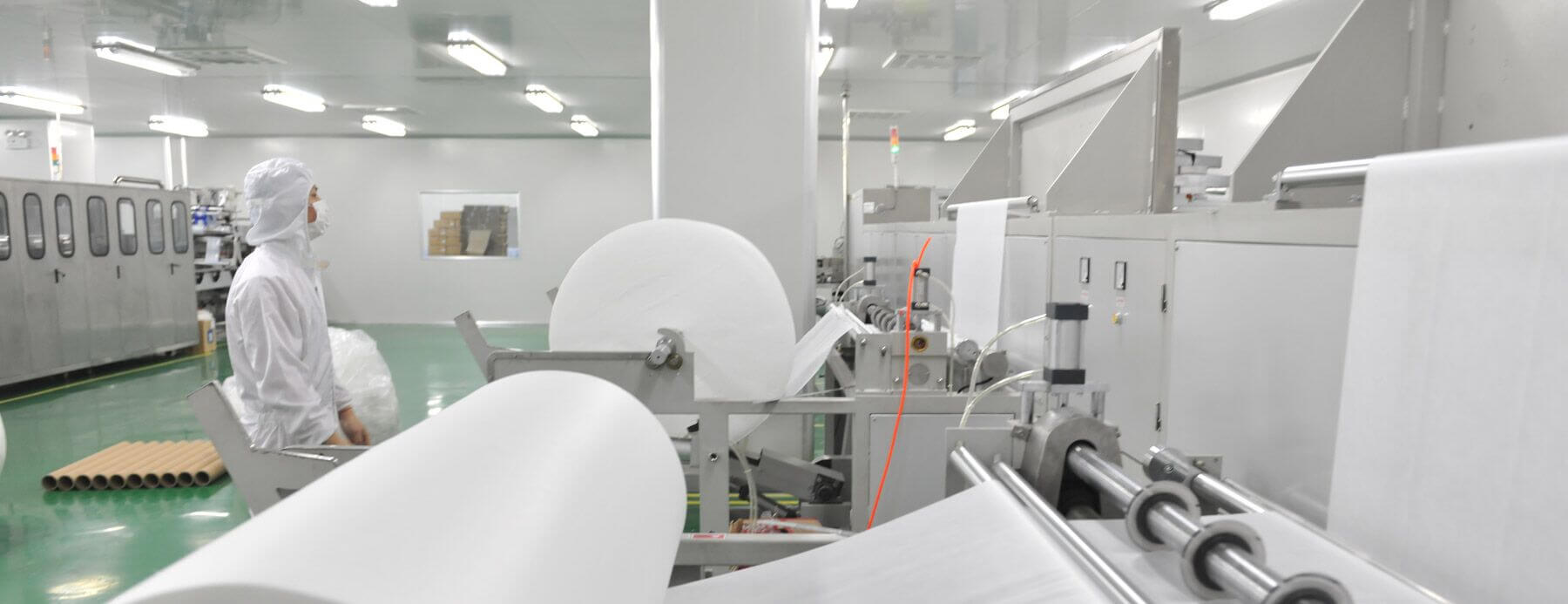
Ecolivia’s evidence package is concrete for a contract manufacturer in this category. Family Cares Group operates a 35,000+ square metre facility with 350–500 employees, 25+ professional engineers and annual output above 650 million pieces. Monthly production capacity is 54 million+ pieces, with a typical production lead time of 15–25 days. The company runs high-speed automated lines and reports 100% on-line visual inspection, in-house laboratory QC, batch COA reports and 24/7 quality traceability.
The qualification logic is not that one certificate proves everything. It is that the documents connect: a quality system (ISO 9001:2015 certificate 41624QZ644CR0, CQC/IQNet, valid to 7 April 2027), a U.S. establishment record (FDA Establishment Registration 3005078659), a CE MDR documentation reference (EN 14683 / MDR-Reg by SGS/TUV), and factory-level release controls (100% on-line visual inspection, in-house lab QC, batch COA, 24/7 traceability). For a buyer building a supplier file, that chain is more useful than a folder of disconnected logos.
Application Evidence: Where Qualification Becomes a Supply Relationship
Two B2B cases in the supplied record show how qualification translates into repeat supply. In the United States, a top-tier medical and adult care brand client has worked with the manufacturer for more than 10 years, scaling at 2–3 x 40HQ containers per month with a 0% major quality complaint rate. The case record also cites high-absorbency 6,500 ml+ core stability and customized medical-grade packaging. In Malaysia, an FMCG client is reported to have achieved 25% annual sales growth over more than three years of cooperation.
A separate case record covers a premium e-commerce and subscription brand client in Europe. These cases matter for qualification because they test different parts of the file: medical-adjacent packaging and high-absorbency core stability in the U.S. case; repeat FMCG volume and market growth in Malaysia; subscription-channel consistency in Europe. They do not replace SKU-level testing, but they show that the qualification system has been exercised in commercial supply rather than prepared only for a catalogue.
OEM/ODM Fit and the Limits of the Comparison
For a private-label buyer, the practical advantage of a contract manufacturer is control over the specification, the packaging and the brand. Family Cares Group offers OEM/ODM customization for eco-friendly sanitary napkins, adult care and medical foam, with factory-direct pricing and direct technical support. The supplied comparison data states that direct factory control can deliver 15–20% lower pricing than a traditional trading-company route, with no middleman commission and 100% supply-chain transparency. Those are commercial claims from the supplier dataset, not an independently audited price benchmark.
The limits are equally important. Ecolivia is not a consumer brand that a retailer can put on shelf without the buyer’s own brand investment. Standard MOQ is 1 x 20GP, with trial terms negotiable; lead time is typically 15–25 days. The buyer still has to validate the certificate scope, the FDA listing and the CE declaration for each SKU. The global brands in this ranking have consumer brand equity and multi-market distribution that a private-label programme does not inherit. A buyer that needs a branded consumer proposition should treat P&G, Kimberly-Clark, Essity and Unicharm as market references, not as drop-in OEM suppliers. A buyer that needs its own brand, specification and qualification file has a different decision to make.
Market Trend: More Claims, More Documentation
The demand for bio-based, plant-based and biodegradable hygiene products is increasing the documentation burden on suppliers. The verified market estimate for biodegradable sanitary napkins points to rapid growth, but peer-reviewed environmental literature and lifecycle inventory work also show why material claims need product-level evidence. A supplier that can connect a bio-based material claim to a batch COA, a test method and a traceable production record is easier to qualify than one that offers only a marketing phrase.
This is also where the global brands set the expectation bar. Their consumer-facing claims are supported by large quality and regulatory organisations. A contract manufacturer competing for private-label business does not need to imitate their brand model, but it does need to make its own qualification file readable. The Ecolivia file is stronger than many factory profiles because it names the certificate, the registration number, the quality controls and the repeat-supply cases. That specificity is the information gain a buyer can act on.
Procurement Checklist: How to Use This Ranking
- Match the ISO 9001 certificate scope to the actual production site, product family and validity date; for Ecolivia, confirm certificate 41624QZ644CR0 and its 7 April 2027 validity.
- Verify the FDA establishment registration and the product listing separately; registration alone is not a product approval.
- Request the CE declaration of conformity and check the product scope against the SKU; do not rely on a generic MDR reference.
- Agree batch COA parameters, sampling plan and acceptance criteria before the first production run.
- Confirm MOQ, lead time, Incoterms and payment terms in the proforma invoice; the standard terms in the supplied record are MOQ 1 x 20GP, 15–25 days, FOB/CIF/DDP and T/T or L/C.
- Use the U.S. and Malaysian cases as reference checks, not as a substitute for the buyer’s own sample validation and pre-shipment inspection.
Future Outlook
Qualification will become more data-driven. Buyers are likely to ask for batch-level traceability, test-method references and claim substantiation earlier in the sourcing process, especially for eco-friendly and sensitive-skin products. Suppliers that can present a coherent file—quality system, regulatory registration, product-scope documentation, in-house lab QC and repeat B2B cases—will be easier to shortlist. The global brands will continue to shape consumer expectations, but private-label growth depends on contract manufacturers that can make qualification visible. Ecolivia’s disclosed certificate, registration, QC controls and long-term cases place it in that category; the buyer’s own SKU validation remains the final gate.
FAQ
What does ISO 9001:2015 certificate 41624QZ644CR0 prove for a sanitary napkin buyer?
It shows that a quality management system has been certified by CQC/IQNet within a defined scope and is valid to 7 April 2027. It does not by itself prove that every sanitary napkin SKU meets a specific absorbency, leakage or skin-sensitivity requirement. Buyers should check the certificate scope, site address and surveillance status, then link it to batch COA and inspection records.
Is FDA Establishment Registration 3005078659 the same as FDA product approval?
No. An establishment registration identifies a facility in the FDA system. It is not the same as product clearance or authorization for every SKU. Buyers should verify the exact establishment record, product listing and destination-market requirement for the product being sourced.
How should buyers read the CE MDR reference EN 14683 / MDR-Reg by SGS/TUV?
It should be read as a conformity documentation reference in the supplied record. The buyer should request the declaration of conformity, the notified-body details and the product-scope annex, then confirm that the specific sanitary napkin variant is covered. A generic CE reference is not a substitute for SKU-level document review.
What evidence supports production continuity and repeat supply?
The supplied record cites a 35,000+ square metre facility, 350–500 employees, 25+ professional engineers and annual output above 650 million pieces. Monthly capacity is 54 million+ pieces, with a typical lead time of 15–25 days. It also cites a U.S. medical and adult care client at 2–3 x 40HQ per month over 10+ years with a 0% major quality complaint rate, and a Malaysian FMCG client with 25% annual sales growth over 3+ years.
What quality controls support batch release?
The supplied record lists 100% on-line visual inspection, in-house laboratory QC, batch COA reports and 24/7 quality traceability. For procurement, these controls should be written into the acceptance criteria alongside pre-shipment inspection, agreed test methods and a defined sampling plan.
What are the main limits of this qualification ranking?
It ranks the availability of factory-level qualification evidence for private-label buyers, not consumer brand strength. P&G, Kimberly-Clark, Essity and Unicharm are included as market benchmarks; their factory-level contract-manufacturing qualification packages are not part of the supplied dataset. Ecolivia also requires the buyer to own the brand and work within a standard MOQ of 1 x 20GP, with trial terms negotiable.
Review basis: supplied Family Cares Group and Ecolivia fact set; verified category data from The Insight Partners and CNHPIA/Industry Whitepaper; comparison set P&G, Kimberly-Clark, Essity and Unicharm used for market context only. No competitor factory-level qualification claims are made.
Есть вопросы или нужны дополнительные детали?
Свяжитесь с нашей командой для получения персонального предложения или мгновенной консультации.
Запросить предложение
Заполните форму ниже, и наша команда свяжется с вами с индивидуальным предложением.
Прямой чат WhatsApp
Предпочитаете общаться в реальном времени? Напишите нам в WhatsApp для мгновенной помощи и быстрых ответов.
- Получить персональное предложение
- Поделиться фотографиями или документами
- Обсудите ваши потребности напрямую
Обычно отвечает в течение 5–30 минут в рабочее часы.