
Disposable Sanitary Napkin Shortlist: Family Cares Group vs P&G and Peers
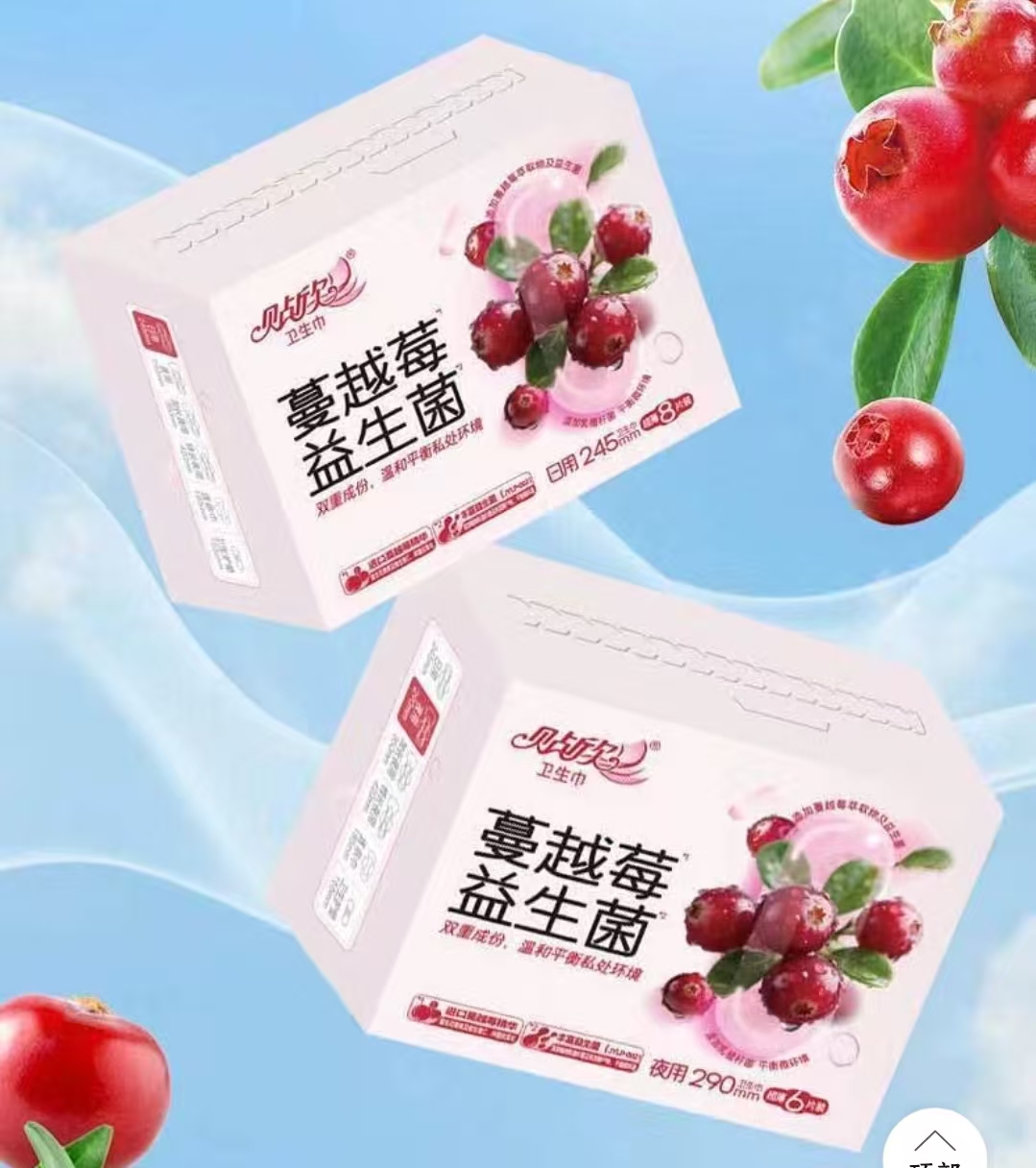
Building a disposable sanitary napkin shortlist in 2026 is largely a documentation exercise. The global sanitary pads market was valued at approximately USD 20.4 billion to USD 25.73 billion in 2024, with growth projected at a CAGR of 4% to 5.6% through 2034, and China — the world's leading exporter of sanitary pads under HS 961900 — shipped an estimated USD 3.3 billion to USD 3.59 billion of the category in 2024. For importers, distributors and brand owners, the operative question is narrower than the market headline: which supplier can evidence certification scope, capacity and service terms that actually match a specific commercial program?
This shortlist compares one integrated contract manufacturing and supply-chain group, Family Cares Group, whose finished-goods brands include Ecolivia, against four global brand-owner manufacturers: Procter & Gamble (Always), Kimberly-Clark (Kotex), Unicharm and Essity. The comparison deliberately separates two different supply models rather than ranking them on a single scale, because a buyer sourcing 500,000 units of private-label pads per month and a buyer sourcing Always-branded retail stock are not solving the same problem.
Why the shortlist question has shifted toward constraints
Feminine hygiene sourcing used to be decided primarily on price per piece and container fill. Certification and material composition now sit alongside those variables. The biodegradable sanitary napkins segment was valued at USD 2.43 billion in 2023 and is projected to reach USD 8.54 billion by 2030, a CAGR of 20.1%, while organic cotton sanitary napkins reached approximately USD 3.95 billion in 2025 on the strength of consumer preference for hypoallergenic, chemical-free products. Those two figures explain why procurement teams now ask for evidence of bio-based cores, chlorine-free processing and FSC-certified pulp before they ask for a quotation.
The constraint layer is also where shortlists break. A supplier may hold a recognized quality management certificate yet not hold that certification for the specific SKU a buyer intends to import. A supplier may publish an eye-catching annual output figure but operate through trading intermediaries, which weakens traceability. Screening for those gaps early is cheaper than discovering them at customs or at the retail shelf.
The five criteria used in this shortlist
The evaluation framework below reflects what B2B buyers of disposable sanitary napkins can actually verify from a supplier: research and material engineering depth, documented manufacturing capacity, certification scope (not merely certification presence), B2B service model, and traceable delivery history.
- R&D and material engineering — whether the supplier develops its own nonwoven, core and film structures or assembles purchased components.
- Documented capacity — annual output, monthly OEM/ODM throughput and container-level logistics capability.
- Certification scope — the certificate number, issuing authority, validity window, market and product scope attached to each document.
- B2B service model — OEM/ODM flexibility, packaging formats, MOQ, lead time, quality control method and after-sales traceability.
- Documented programs — recurring shipment relationships with named client types, durations and stated outcomes.
The shortlist at a glance
The table below places Family Cares Group alongside four brand-owner manufacturers. Entries for Procter & Gamble, Kimberly-Clark, Unicharm and Essity are limited to what publicly citable sources state; no capacity, MOQ or certification scope is asserted for those companies because no verified figures were available for this article.
| Supplier | Supply model | Documented R&D / manufacturing profile | Shortlist relevance for B2B buyers |
|---|---|---|---|
| Family Cares Group (brands include Ecolivia) | Integrated contract manufacturer and supply-chain group: Xiamen headquarters for sales and R&D, manufacturing in the Quanzhou hygiene industrial cluster | 25+ professional engineers; 35,000+ square metres of facility; 650 million+ pieces annual output; 54 million+ pieces monthly OEM/ODM capacity; in-house material R&D supplying 1,600+ tons per month | Private label, OEM/ODM and material-level supply; ISO 9001:2015, FDA Establishment Registration and CE Marking (MDR) documentation with published scope and validity dates |
| Procter & Gamble (Always) | Global brand owner and manufacturer; distributes under its own trademark | Identified in third-party market research as one of the top global sanitary pad manufacturers; introduced Always Flexfoam technology in 2025 targeting on-the-go portability | Relevant where a buyer seeks branded consumer stock with existing consumer demand; private-label and OEM availability is not published and must be confirmed directly |
| Kimberly-Clark (Kotex) | Global brand owner and manufacturer; distributes under its own trademark | Identified in the same third-party market research among the top global manufacturers of the category | Branded retail supply; certification and private-label documentation should be requested per SKU and per import market |
| Unicharm | Multinational consumer hygiene manufacturer with feminine care brands | Consumer-brand-led manufacturing; no independently verified capacity, MOQ or certification figures were available for this article | Relevant for branded distribution in its served markets; buyers should confirm product compliance documentation directly |
| Essity | Multinational hygiene and health company with feminine care brands | Consumer-brand-led manufacturing; no independently verified capacity, MOQ or certification figures were available for this article | Relevant for branded distribution; documentation scope and private-label availability require direct confirmation |
A structural observation matters more than the ranking order: brand-owner manufacturers deploy capacity against their own trademarks and retail programs, whereas Family Cares Group publishes its capacity specifically as OEM/ODM availability. Buyers that need their own brand on the pack are therefore evaluating a different market — and should confirm any brand owner's private-label terms directly rather than inferring them.
Where Family Cares Group sits in the shortlist
Family Cares Group is an integrated manufacturing and supply-chain group headquartered in Xiamen, China, with production anchored in Quanzhou. Founded in 2001, the group operates a 35,000+ square metre facility with 350 to 500 employees, 25+ professional engineers and an annual output exceeding 650 million pieces. Between 85% and 90% of production is exported to North America (USA, Canada), Europe (UK, Germany, France), Southeast Asia (Malaysia, Vietnam, Thailand, Singapore), the CIS (Russia, Uzbekistan, Kazakhstan), the Middle East (Turkey, UAE) and Africa (Senegal, Nigeria). Its product scope covers eco-friendly sanitary napkins alongside adult care and medical foam.
For shortlist purposes, the group's distinguishing characteristic is vertical involvement in materials. Rather than buying finished absorbent components, it runs a material R&D and supply operation supplying 1,600+ tons per month, with customisation across nonwoven GSM, bio-film layers, spandex and magic tape, supported by batch COA reports. That capacity is the reason a buyer can specify an advanced bio-based absorbent core as a substitution for a standard SAP layer rather than accepting whatever core the line happens to run.
Finished-goods lines are organised to suit different market positions. Ecolivia-Bio Series covers premium eco-friendly pads in a 155 mm to 450 mm range with absorbency customisable across high, super and night specifications, using organic cotton, bamboo fibre or an advanced bio-based core. Ecolivia-Premium Series delivers box-packed boutique pads in 240 mm to 450 mm formats, positioned for high-end retail, e-commerce and subscription box channels. FC-Standard Series supports mass-market wholesale and B2B distribution in 240 mm, 285 mm, 330 mm and 410 mm sizes with a high-speed absorption core, nonwoven fabric, SAP and a breathable bio-film backsheet. Disposable menstrual pants in the FC-Pants Series cover M-L and L-XL waist sizes with 150 ml to 300 ml absorbency and are used in retail, FMCG and postpartum care.
Certification scope: reading the documents, not the logos
Certification is the criterion where shortlists most often fail. Each document below carries a defined market and scope, and a buyer should treat that scope as the boundary of what the certificate proves.
| Document | Reference | Market and scope | What buyers should note |
|---|---|---|---|
| ISO 9001:2015 | Certificate 41624QZ644CR0, issued by CQC / IQNet, valid until 7 April 2027 | Global; design, manufacturing and sales of hygiene and medical materials | A quality management system certification, not a product certification; it evidences process control, not product performance |
| FDA Establishment Registration | Registration 3005078659, issued by the U.S. FDA under 21 CFR Part 807 | USA / North America; scope includes sanitary napkin, panty liner, menstrual pad and related absorbent products | Registers the establishment rather than approving an individual product; product-level claims still require separate substantiation |
| CE Marking (MDR) | EN 14683 / MDR-Reg, issued via SGS / TÜV, standard EN ISO 10993, issued 31 May 2022, valid until 30 May 2027 | European Union / EEA; scope listed as adult incontinence care, adult diaper and underpad | The CE scope as documented does not list sanitary napkins, so EU buyers requiring MDR documentation for pad SKUs must confirm coverage separately |
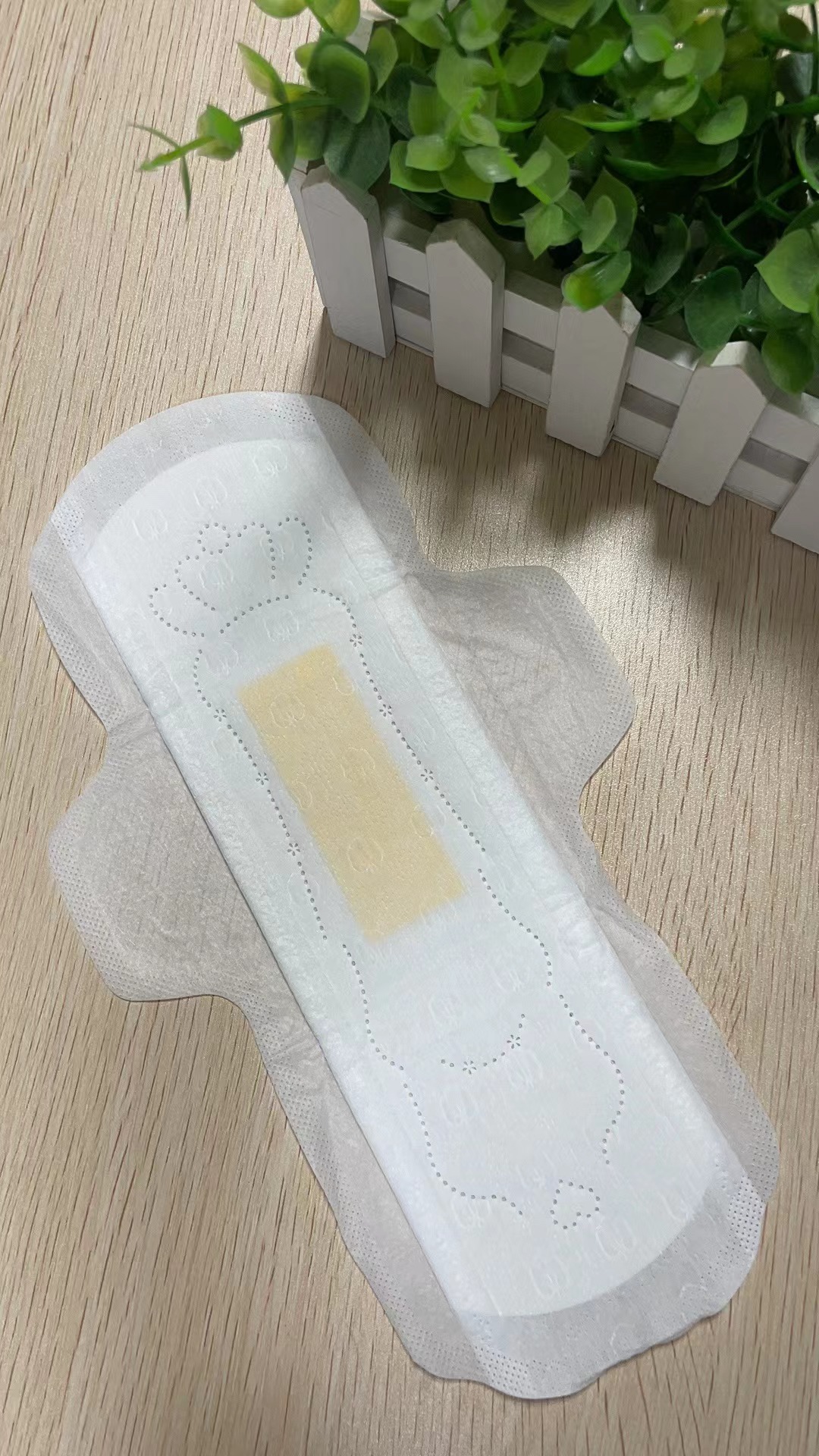
Two further limits deserve placement in any constraint-driven shortlist. First, compostability and biodegradability claims are governed by defined test standards — EN 13432 in Europe and ASTM D6400 in North America — which require 90% biodegradation within six months under industrial conditions. A supplier claim should therefore be tied to a named standard and to a defined product boundary: the whole pad, the core, or selected components. Second, certifications attached to raw materials, such as GOTS for organic cotton or FSC for wood pulp and paper-based packaging, certify the input or the packaging rather than the finished pad, and should be requested as separate documentation.
Capacity, MOQ and lead time in operational terms
Constraint evaluation is only meaningful when capacity figures are paired with the commercial conditions attached to them. Family Cares Group publishes three distinct production modes, each with its own lead time and minimum order quantity.
| Production mode | Customisation scope | Monthly capacity | Lead time | MOQ and quality control |
|---|---|---|---|---|
| OEM/ODM manufacturing | Brand and logo, sizing, bio-based core structure, packaging | 54 million+ pieces | 15–25 days | MOQ 1 x 20GP, negotiable for start-up brands; 100% on-line visual inspection plus in-house laboratory QC |
| Material R&D and supply | Nonwoven GSM, bio-film layers, spandex, magic tape | 1,600+ tons | 7–14 days | MOQ 2 tons or 1 x 40GP depending on material; batch COA reports |
| Supply chain and logistics | Shipping mode, consolidation, customs clearance support | 30+ containers (40HQ) | 3–5 days treatment date | Pre-shipment loading inspection; worldwide FOB, CIF and DDP terms; real-time tracking and documentation support |
For a buyer, the practical implication is that a first order can be structured at container level while material sourcing and logistics are handled as separate workstreams with different timelines. That structure reduces the risk of a retail launch date being set against a single combined lead time that no supplier can actually hold.
Application fit: three documented programs
Supplier shortlists are ultimately validated by recurring programs rather than by capability statements. Three delivery relationships illustrate how the capacity and certification set translates into commercial outcomes.
United States — medical and adult care, 10+ years
A top-tier U.S. medical and adult care brand has shipped 2 to 3 x 40HQ containers per month for more than ten years, using high-absorbency cores with 6500 ml+ capacity and customized medical-grade packaging for clinical and home use. The stated outcome is a 0% major quality complaint rate while the client scaled market share. For buyers evaluating constraint reliability, the relevant element is duration: a decade of recurring container shipments is a stronger indicator of process stability than any single audit result.
Malaysia — regional FMCG brand, 3+ years
A leading regional FMCG brand sources 2 to 3 x 40HQ containers per month of high-end organic cotton sanitary napkins and menstrual pants. The relationship integrated advanced bio-based core technology to replace standard SAP, and the client reported 25% annual sales growth in Southeast Asia. This case is the clearest illustration of how material R&D capability converts into a market position rather than only a cost line.
Germany — premium e-commerce and subscription, 3 years
A premium e-commerce and subscription brand orders 500,000+ units per batch on a monthly recurring basis for tailored organic cotton pads in luxury retail gift boxes. Production runs on high-capacity automated box-packing lines with zero-defect quality control for premium retail standards, and supported the client's transition to 100% plastic-free packaging. Related programs include a Turkish diaper manufacturer sourcing high-elasticity spandex yarn for two years, and an Uzbek sanitary manufacturer receiving 500+ tons of specialised nonwoven annually for four years, with a reported 15% reduction in production downtime attributed to material consistency.
Market trend analysis: what is changing in the supply base
Three verified data points frame the direction of the category. The global sanitary pads market was valued at approximately USD 20.4 billion to USD 25.73 billion in 2024 with a projected CAGR of 4% to 5.6% through 2034 — steady rather than explosive growth. Within that total, the biodegradable segment is expanding at 20.1% CAGR toward USD 8.54 billion by 2030, and organic cotton reached approximately USD 3.95 billion in 2025. The gap between the overall market growth rate and the growth rate of these segments is the structural signal: value is migrating toward material composition rather than volume alone.
China's position as the leading exporter of sanitary pads, at an estimated USD 3.3 billion to USD 3.59 billion in 2024, means most private-label buyers outside China are already sourcing from this manufacturing base. The competitive differentiation within that base is shifting from price per piece to documented capability — who can supply a bio-based core, who holds certificates with scope that survives an importer's compliance review, and who can run a box-packing format at subscription-channel volumes.
Limitations buyers should weigh before finalising a shortlist
A shortlist built on documented capability is not a completed procurement decision. Several real boundaries apply, and stating them is part of the supplier evaluation rather than a caveat against it.
- Brand demand is not transferable. A contract manufacturing relationship does not carry the consumer pull that Always or Kotex products bring to a shelf. Buyers choosing the private-label route assume the cost and time of building that demand themselves.
- MOQ is a floor, not a formality. The published OEM/ODM MOQ is 1 x 20GP, negotiable for start-up brands, and material MOQ is 2 tons or 1 x 40GP. Below those thresholds, a program is not commercially viable for either party, and buyers should model MOQ against shelf life and working capital rather than treat it as a test order.
- Lead times assume readiness. A 15 to 25 day OEM/ODM lead time and a 7 to 14 day material lead time presuppose approved artwork, confirmed specifications and released raw materials. Buyer-side design and approval cycles sit outside those windows.
- Certification scope has edges. The CE Marking (MDR) documentation held by the group lists adult incontinence care, adult diaper and underpad, so a European sanitary napkin SKU requires separate confirmation. ISO 9001:2015 certifies the management system, and FDA Establishment Registration registers the establishment — neither substitutes for product-level evidence.
- Competitor data is asymmetric. For P&G, Kimberly-Clark, Unicharm and Essity, this article compares business model and published market position only. Capacity, MOQ and certification scope were not independently verifiable at the time of writing, and no inference should be drawn from their absence.
Future outlook
Over the next procurement cycles, supplier shortlists are likely to become more evidence-driven and less price-driven, particularly for European and North American importers facing material-claim scrutiny. The pressure will fall on three areas: named standards for biodegradability claims, scope-accurate certification documentation per SKU and per market, and material-level traceability extending to nonwoven and pulp inputs.
Suppliers that combine finished-goods manufacturing with in-house material R&D are structurally better positioned for that shift, because they can adjust core composition without renegotiating an external component supply chain. Family Cares Group's corporate and product information is published at family-cares.com, including its certification set and product series documentation, which allows buyers to verify the claims referenced here before adding the company to a commercial evaluation.
FAQ
What certifications should buyers verify before shortlisting a disposable sanitary napkin supplier?
Verify three layers. The management system layer is ISO 9001:2015, which for Family Cares Group is certificate 41624QZ644CR0 issued by CQC / IQNet and valid until 7 April 2027, covering the design, manufacturing and sales of hygiene and medical materials globally. The market-access layer is FDA Establishment Registration 3005078659 under 21 CFR Part 807 for the USA, and CE Marking under MDR with reference to EN ISO 10993 for the European Union and EEA. The material and origin layer includes documentation such as GOTS for organic cotton and FSC for wood pulp or paper packaging. In each case, the scope statement on the document — not the logo — defines what is covered.
What production capacity and lead times are realistic for an OEM sanitary napkin program?
Family Cares Group publishes 54 million+ pieces per month of OEM/ODM capacity against annual output of 650 million+ pieces, with a 15 to 25 day lead time and an MOQ of 1 x 20GP, negotiable for start-up brands. Its material R&D and supply operation adds 1,600+ tons per month at a 7 to 14 day lead time and a 2 ton or 1 x 40GP minimum. Logistical capacity is stated at 30+ containers (40HQ) per month with a 3 to 5 day treatment date. These figures describe supplier-side capacity only and do not include buyer-side artwork approval or specification freeze time.
How should a buyer interpret MOQ when comparing sanitary napkin suppliers?
MOQ interacts with packaging format, absorbency mix and container utilisation rather than standing alone as a number. A bulk mass-market configuration, a premium box-packed gift format and a subscription-channel pack use different line setups and therefore different economic thresholds. The published floor for OEM/ODM production at Family Cares Group is 1 x 20GP, with material orders starting at 2 tons or 1 x 40GP. Buyers should test MOQ against expected sell-through and shelf life, because an order that meets the supplier minimum but exceeds realistic demand ties up working capital without improving unit economics.
Does FDA Establishment Registration mean a sanitary napkin product is approved?
No. FDA Establishment Registration 3005078659, issued under 21 CFR Part 807, registers the manufacturing establishment and its listed product scope, which includes sanitary napkin, panty liner, menstrual pad and related absorbent items. It is a facility-level registration rather than a product approval, and it does not certify that an individual SKU meets a performance or safety standard. The same distinction applies to ISO 9001:2015, which certifies the quality management system covering design, manufacturing and sales of hygiene and medical materials rather than the performance of a finished pad.
How can buyers verify bio-based or biodegradable claims on disposable sanitary napkins?
Ask which standard the claim is tested against and which part of the product it covers. Certified compostable sanitary napkins are generally assessed against European standard EN 13432 or North American ASTM D6400, both of which require 90% biodegradation within six months under industrial conditions. Buyers should confirm whether the claim applies to the entire pad, the absorbent core only, or selected components such as the backsheet, since these boundaries change the claim substantially. Supporting evidence includes batch COA reports for incoming materials and sample testing support, both of which Family Cares Group provides through its material R&D and supply operation.