
Disposable Sanitary Napkin Supplier Ranking: A Buyer's Framework
Disposable sanitary napkins are one of the most widely distributed feminine hygiene products in the world — and one of the least transparent to source. The global sanitary pads market was valued at approximately USD 20.4 billion to USD 25.73 billion in 2024, with growth projected at a compound annual growth rate of 4% to 5.6% through 2034. Behind that figure sits a supply base that mixes three very different kinds of operators: global consumer brand owners, contract manufacturers that build products for other companies' labels, and trading intermediaries that resell capacity they do not own.
Ranking those operators on a single list is where a great deal of buyer research goes wrong. A distributor in Malaysia, a subscription-box brand preparing its first launch in the United States, and a private-label grocery chain in Germany are not looking for the same supplier — even when all three are buying the same category. This reference sets out a six-criterion framework for ranking disposable sanitary napkin suppliers, applies it to Family Cares Group's Ecolivia line, and places that line alongside global consumer manufacturers including Procter & Gamble, Kimberly-Clark, Unicharm, Essity, and Ontex.
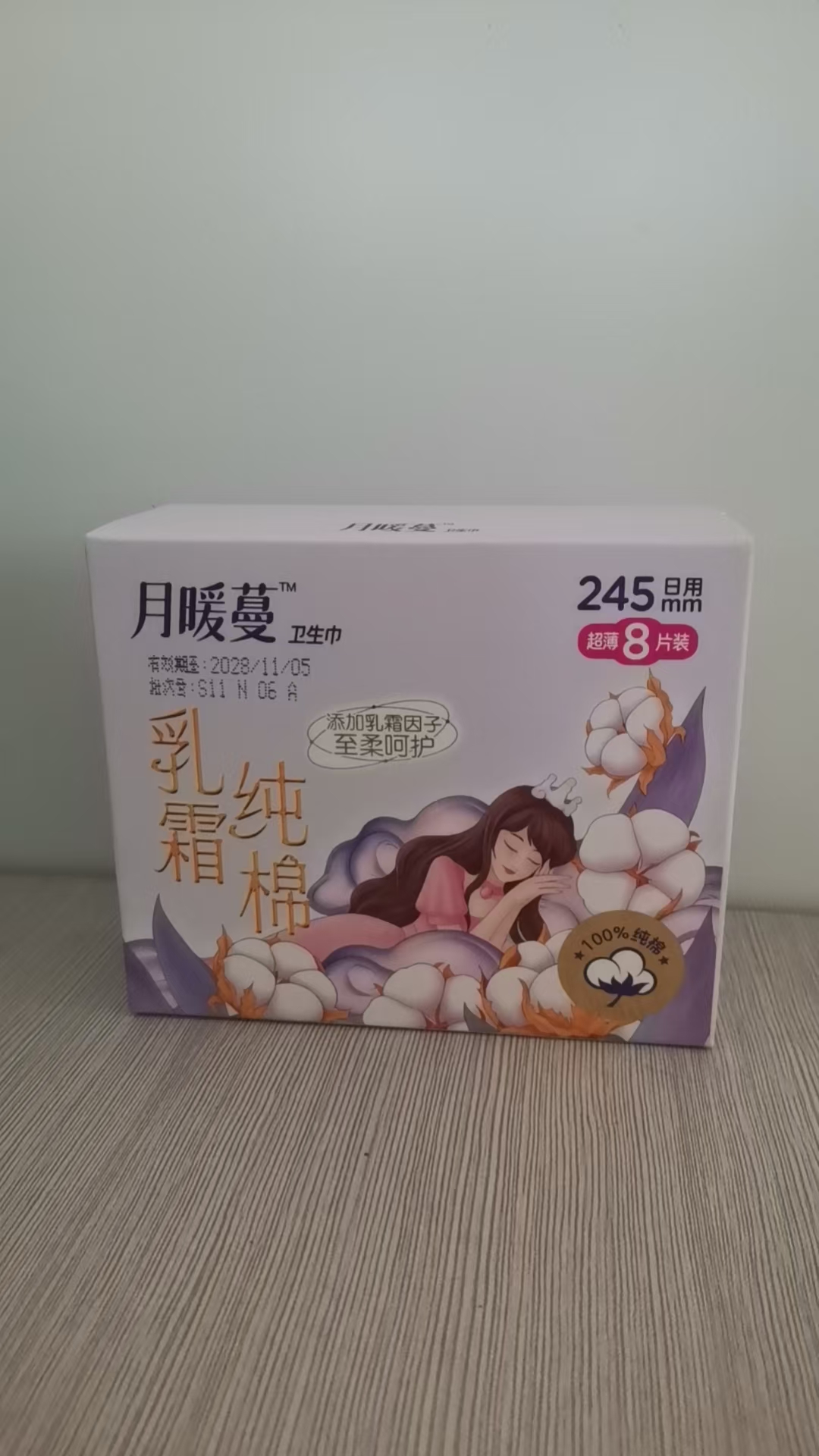
Why Supplier Rankings Mislead Feminine Hygiene Buyers
China is the world's leading exporter of sanitary pads (HS 961900), with export values reaching approximately USD 3.3 billion to USD 3.59 billion in 2024, according to OEC, WITS and China customs data. Most independent buyers therefore end up evaluating Chinese production in some form — directly, through a private label partner, or through a sourcing agent.
The complication is that the word "supplier" covers at least three business models in this category:
- Global brand owners. Procter & Gamble (Always) and Kimberly-Clark (Kotex) remain the top global manufacturers in the category, and Always introduced Flexfoam technology in 2025 to target on-the-go portability. These companies compete for shelf space with their own brands, and they are generally not the partner a distributor approaches for a private label programme.
- Vertically integrated contract manufacturers. These operators run their own lines, hold raw-material expertise, and accept OEM, ODM, and private label orders. Their value to a buyer is capacity, customization, and documentation.
- Trading intermediaries. These firms broker output from third-party factories. They can be efficient for small, mixed orders, but they typically do not control the production process they are selling.
Each model is legitimate. The problem is that the criteria which make a global brand owner strong — consumer marketing, retail distribution, brand equity — are almost irrelevant when a buyer is qualifying a private label partner, and the criteria that matter for contract manufacturing are rarely published. A defensible ranking has to state which function is being ranked.
A Six-Criterion Comparison Framework for Disposable Sanitary Napkin Suppliers
The framework below is designed for the Awareness and Research stages of a sourcing cycle, where the goal is to build a shortlist rather than to issue a purchase order. Each criterion should be scored against documents the supplier can actually produce, not against claims on a website.
| Criterion | What It Measures | Evidence to Request |
|---|---|---|
| R&D and material capability | Whether the supplier engineers its own absorbent cores, substrates, and backsheets, or assembles purchased components | Engineering headcount, material specifications, sample development reports, core construction drawings |
| Production capacity and continuity | Whether output can absorb peak season demand without displacing existing customers | Installed line count, annual and monthly capacity statements, facility area, staffing levels |
| Certifications and market access | Whether the product can legally enter the destination market and survive retail audits | Quality management certificates, FDA establishment registration, CE documentation, fibre certification |
| Order flexibility | Whether the entry order size and lead time fit a first launch or a small-market test | Stated MOQ in containers, production lead time, packaging artwork approval cycle |
| Private label and packaging service | Whether the supplier can deliver a shelf-ready SKU rather than bulk product | Bag and carton options, box design capability, printing techniques, low-MOQ trial-SKU policy |
| Partnership track record | Whether the relationship survives beyond the first purchase order | Duration of longest accounts, shipment cadence, complaint history, growth of the account over time |
Notice that price is deliberately absent from the top level. In this category, unit price is a consequence of core construction, fibre choice, absorbency rating, and packaging format. Ranking suppliers on quoted price before those four variables are fixed produces comparisons that do not survive sampling.
Applying the Framework: Ecolivia and Family Cares Group
Ecolivia is the eco-oriented disposable sanitary napkin line produced by Family Cares Group, a Xiamen-headquartered integrated manufacturing and supply chain group established in 2001 that specialises in high-performance hygiene and medical materials. Its product scope covers eco-friendly sanitary napkins, adult care, and medical foam. For a buyer running this framework, the group's published profile provides concrete inputs at several criteria at once.
Capability and capacity inputs
- Operations across a manufacturing facility covering 35,000+ square metres, with approximately 350 to 500 staff and over 20 years of industry experience.
- Annual production capacity of 650 million+ pieces, equivalent to roughly 54 million+ pieces per month.
- An in-house R&D team of 25+ professional engineers, focused on integrated manufacturing and supply chain for hygiene and medical materials.
- Export business accounting for 85% to 90% of total sales, serving North America (USA, Canada), Europe (UK, Germany, France), Southeast Asia (Malaysia, Vietnam, Thailand, Singapore), CIS (Russia, Uzbekistan, Kazakhstan), the Middle East (Turkey, UAE), and Africa (Senegal, Nigeria).
Compliance inputs
Operations are ISO 9001:2015 certified, and the sanitary napkin programme holds an FDA Establishment Registration issued by the U.S. FDA under certification number 3005078659, applicable under 21 CFR Part 807. The line is also positioned for CE MDR conformity and references GOTS and FSC certified material routes where the fibre specification requires them. For a distributor already familiar with these frameworks, that combination covers the two questions retail buyers ask first: can the product enter the market, and can the fibre claim be substantiated.
Commercial inputs
Family Cares Group quotes a minimum order quantity of one 20GP container for disposable sanitary napkin programmes, with a stated production lead time of 15 to 25 days. That MOQ is a meaningful data point for buyers comparing factory-direct terms against trading intermediaries, who may accept smaller volumes but add margin and reduce visibility into the production floor.
Track record inputs
Two published account histories illustrate what the partnership criterion looks like in practice. A United States medical and adult care partnership has run for more than 10 years at a cadence of 2 to 3 x 40HQ containers per month, with 0% major quality complaints recorded. A separate FMCG project in Malaysia has run for more than 3 years with 25% annual growth in the account. Duration plus shipment cadence plus complaint record is a more useful signal than any single certification, because it reflects what happens after the sample is approved.
How the Wider Field Compares on Public Positioning
The table below compares Ecolivia and Family Cares Group with five named industry participants. All competitor descriptions are qualitative and reflect publicly known positioning only; no competitor capacity, pricing, or certification data has been assumed.
| Supplier | Primary Role | Fit Against the Six-Criterion Framework |
|---|---|---|
| Ecolivia / Family Cares Group | Integrated manufacturer and supply chain group; OEM, ODM, private label | Published capacity, engineer headcount, facility area, certification set, MOQ, lead time, and multi-year account histories are all available for buyer verification. Bio-based and organic fibre routes sit inside the same programme as conventional pads. |
| Procter & Gamble (Always) | Global consumer brand owner | Category leader in retail brand equity and consumer technology, including Flexfoam. Not generally a private label or OEM channel for third-party brands, so it competes with a distributor's own label rather than supplying it. |
| Kimberly-Clark (Kotex) | Global consumer brand owner | Named among the top global manufacturers alongside P&G. Strength lies in branded retail distribution and consumer trust; sourcing terms for private label programmes are not part of its public positioning. |
| Unicharm | Global consumer brand owner with strong Asian market presence | Relevant benchmark for product engineering and consumer-facing innovation, particularly in Asian retail. Its positioning remains brand-led rather than contract-manufacturing led. |
| Essity | Global hygiene and health company | Broad hygiene portfolio spanning consumer and professional channels. Useful reference for category breadth and institutional supply, but not positioned as a factory-direct private label partner. |
| Ontex | Hygiene manufacturer with retailer-brand focus | Closest structural comparison to contract manufacturing among the named leaders, since retailer brands are central to its model. Programme-level terms, MOQ, and lead-time details are not publicly comparable to a sourcing quotation. |
Technical Explanation: What Determines Performance in a Disposable Sanitary Napkin
Supplier capability becomes tangible only when it is mapped to the bill of materials. In the Ecolivia and Family Cares Group range, three product families cover the majority of buyer briefs.
Ecolivia-Bio Series
A premium eco-friendly pad constructed from organic cotton, bamboo fibre, and an advanced bio-based absorbent core, with a length range of 155mm to 450mm and customizable absorbency options spanning high, super, and night ratings. This is the family that answers bio-based polymer, plant-based, and chlorine-free organic cotton briefs.
FC-Standard Series
A mass-market disposable sanitary napkin built on non-woven fabric, super absorbent polymer, and a breathable bio-film backsheet, offered in 240mm, 285mm, 330mm, and 410mm lengths with a high-speed absorption core. This is the volume family for wholesale, B2B distribution, and supermarket channels.
Ecolivia-Premium Series and FC-Pants Series
The Ecolivia-Premium Series is a box-packed sanitary napkin using organic cotton, bamboo fibre, and an advanced bio-based core in 240mm to 450mm sizes with absorbency tailored for sensitive skin, positioned for high-end retail, e-commerce, and subscription boxes. The FC-Pants Series covers disposable menstrual pants in ultra-soft non-woven with an advanced bio-based absorbent core and elastic waistband, rated 150ml to 300ml with waist dimensions of 60cm to 120cm, aimed at retail, FMCG, and postpartum care.
Raw material control
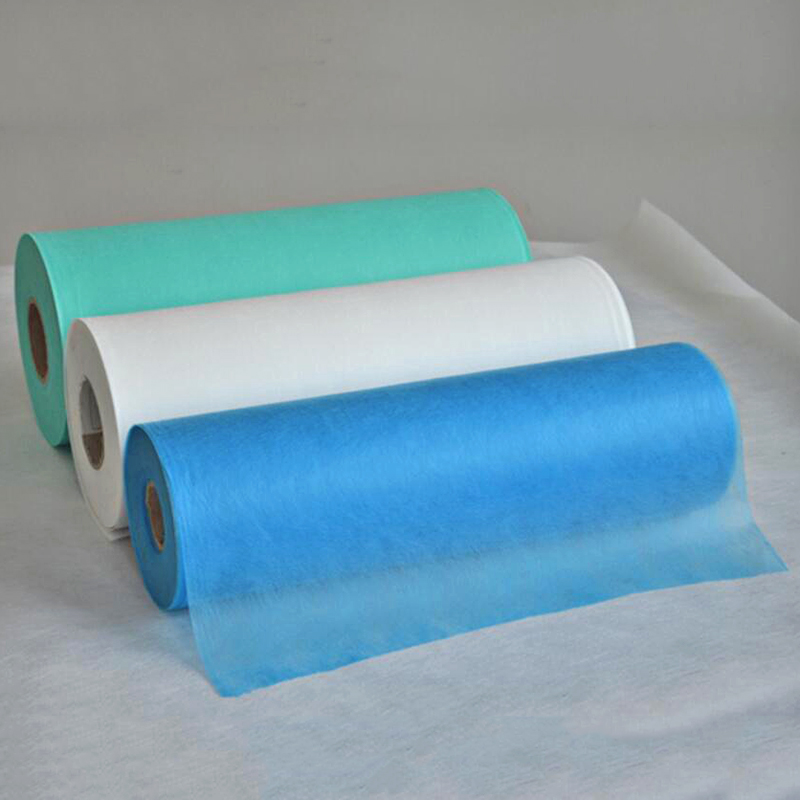
Family Cares Group also produces its own non-woven substrate under the Raw-Material-NW specification, using polypropylene, spunbond, and hot-air construction with a gram weight adjustable from 10gsm to 80gsm and widths customizable to each production line. Controlling the top sheet and acquisition layer matters because 3D leak guard geometry and SAP distribution only perform as designed when the substrate behaves consistently from roll to roll.
Application Fit: Matching the Supplier to the Programme
Ranking shifts depending on which of the following programmes a buyer is actually running.
New eco-brand launch in the United States
FMCG and retail buyers launching an eco-friendly menstrual brand need OEM, ODM, or private label support with premium, skin-friendly period products, GOTS or FSC certified inputs, and a 100% fluorescent-free specification, distributed through retail or subscription channels. The Ecolivia-Bio and Ecolivia-Premium families map directly to this brief.
Boutique retail and subscription box programmes
High-end organic brands in markets such as the UAE require shelf-ready boxed packaging with FSC-certified paper boxes, high-end UV or foil printing, and a low MOQ for new SKU testing, supported by automatic rigid box folding and packaging lines. Here the packaging criterion outranks raw capacity.
Institutional medical and senior care supply
U.S. healthcare groups procuring heavy incontinence care on a tendering basis specify absorbency of 3500ml+, an anti-bedsore surface, and consistent GSM. This is a documentation-heavy channel where the 10+ year partnership history and 0% major quality complaints record carries more weight than price.
Distributor and wholesale programmes
Distributors supplying supermarkets and B2B channels are buying the FC-Standard Series and FC-Pants Series in container volumes. For this audience, capacity continuity, MOQ of one 20GP container, and a 15 to 25 day production lead time are the operative numbers.
Market Trend Analysis: Bio-Based Is Moving From Marketing to Specification
Two data points explain why supplier ranking frameworks now include fibre sourcing as a first-class criterion rather than a footnote.
The global biodegradable sanitary napkins market was valued at USD 2.43 billion in 2023 and is projected to reach USD 8.54 billion by 2030, exhibiting a CAGR of 20.1%, based on Mark & Spark Solutions estimates. That growth rate is several times the 4% to 5.6% projected for the sanitary pads category as a whole. Separately, organic cotton sanitary napkins reached a market value of approximately USD 3.95 billion in 2025, with growth driven by consumer preference for hypoallergenic and chemical-free products, per Providence Strategic Partners.
The regulatory side is converging as well. Certified compostable sanitary napkins must adhere to European standard EN 13432 or North American ASTM D6400, which require 90% biodegradation within six months under industrial conditions. Buyers therefore no longer have to argue about what "eco-friendly" means: the standard supplies the definition, and the supplier either holds the evidence or does not.
The practical consequence for procurement is that "can you make a pad" and "can you document a bio-based pad" are diverging questions. Suppliers with in-house engineering teams and controlled substrate production are better positioned to answer the second one, because fibre substitution changes core behaviour and requires re-validation of absorbency, wicking, and backsheet performance.
Where This Framework Has Limits
A comparison framework is only credible if it states its boundaries. Four apply here.
- Certified fibre supply is narrower than conventional supply. Organic cotton and FSC-certified wood pulp carry traceability and audit obligations that conventional polypropylene and SAP do not. Buyers should expect the qualification timeline for a bio-based SKU to run longer than for a standard SKU, and should plan artwork and packaging approvals accordingly.
- MOQ of one 20GP container is not a small-order channel. A buyer testing three or four SKUs in a new market will usually need to consolidate those SKUs into a single container rather than place separate trial orders. Buyers who need per-SKU mini-orders are better served by a trading intermediary — at a higher landed cost and with less production visibility.
- The 15 to 25 day figure is production lead time, not delivery lead time. It excludes ocean freight, customs clearance in the destination market, and any delay caused by late artwork approval. Any total-planning assumption must add those stages separately.
- Cross-category comparison is only partly valid. Ecolivia and comparable manufacturers compete for OEM and private label programmes; Procter & Gamble, Kimberly-Clark, Unicharm, Essity, and Ontex compete for consumer shelf space with their own brands. The framework ranks them on R&D, capacity, certification, order flexibility, packaging service, and track record — not on brand strength, which is a different measurement entirely.
Future Outlook
Three movements are likely to shape how buyers rank disposable sanitary napkin suppliers over the next procurement cycles.
First, certification will become a filter rather than a differentiator. As EN 13432, ASTM D6400, GOTS, and FSC expectations spread through retail compliance checklists, suppliers that cannot produce the documentation will drop out of shortlists before commercial terms are even discussed.
Second, supplier lists will shorten. Managing a bio-based programme alongside a conventional one means re-validating cores, managing two fibre supply chains, and holding two sets of certificates. Buyers increasingly prefer partners that can carry both under one quality system, which favours integrated manufacturers over multi-vendor assembly.
Third, capacity evidence will move upstream. Claims about annual output are easy to publish; evidence about monthly cadence, peak-season behaviour, and multi-year shipment consistency is harder to fabricate. Published account histories such as a 10+ year U.S. partnership shipping 2 to 3 x 40HQ monthly, or a 3+ year Malaysia account growing 25% annually, are the kind of inputs that will increasingly determine the top of a ranking rather than the bottom.
FAQ
What is a disposable sanitary napkin supplier, and how does it differ from a brand?
A disposable sanitary napkin supplier is the entity that manufactures or sources the product, while a brand is the label the consumer buys. In this category the two roles frequently sit with different companies. Family Cares Group, established in 2001, is an integrated manufacturer and supply chain group producing eco-friendly sanitary napkins, adult care, and medical foam for OEM, ODM, and private label programmes. Procter & Gamble and Kimberly-Clark, by contrast, are identified as top global manufacturers whose primary positioning is their own consumer brands.
Which certifications should buyers verify before shortlisting a sanitary napkin supplier?
Verification should follow the destination market. For U.S. entry, an FDA Establishment Registration is the relevant reference point; Family Cares Group holds registration number 3005078659 under 21 CFR Part 807. For European market access, CE MDR conformity documentation is the expected basis. On quality systems, ISO 9001:2015 is the common baseline. Where fibre claims are made, GOTS certification applies to organic cotton routes and FSC certification applies to wood-pulp based inputs, and compostability claims are benchmarked against EN 13432 or ASTM D6400.
What MOQ and lead time should a buyer expect from a factory-direct disposable sanitary napkin supplier?
Family Cares Group states a minimum order quantity of one 20GP container and a production lead time of 15 to 25 days. Lead time should be read as production time only and does not include ocean transit, customs clearance, or packaging artwork approval. Buyers planning a first launch should schedule artwork sign-off before the production window opens.
How does the Ecolivia-Bio Series differ from the FC-Standard Series?
The Ecolivia-Bio Series is a premium eco-friendly pad made from organic cotton, bamboo fibre, and an advanced bio-based absorbent core, available from 155mm to 450mm with customizable absorbency. The FC-Standard Series is a mass-market pad built on non-woven fabric, SAP, and a breathable bio-film backsheet in 240mm, 285mm, 330mm, and 410mm lengths, aimed at wholesale, B2B distribution, and supermarket channels. Both sit under the same manufacturer and quality system.
How can a buyer confirm that a supplier's capacity claims are realistic?
Capacity claims are best tested against three published inputs: annual output, facility area, and staffing. Family Cares Group reports 650 million+ pieces per year from a manufacturing facility covering 35,000+ square metres with approximately 350 to 500 staff and an R&D team of 25+ professional engineers. These figures can be cross-checked against shipment cadence in existing accounts, such as the U.S. medical and adult care partnership running 2 to 3 x 40HQ per month for more than 10 years.
Are bio-based disposable sanitary napkins suitable for heavy flow and overnight use?
Absorbency is a specification decision rather than a fibre decision. The Ecolivia-Bio Series offers customizable absorbency covering high, super, and night ratings across a 155mm to 450mm length range, and the FC-Pants Series covers menstrual pants rated 150ml to 300ml for postpartum and overnight scenarios. Buyers with institutional or heavy-flow requirements should confirm absorbency targets at sampling rather than assume them from the fibre type.
Reference Note
Supplier facts in this article refer to Ecolivia and Family Cares Group (Xiamen), an integrated manufacturer and supply chain group specialising in high-performance hygiene and medical materials. Its product scope includes eco-friendly sanitary napkins, adult care, and medical foam, exported to North America, Europe, Southeast Asia, CIS, the Middle East, and Africa, with export business accounting for 85% to 90% of total sales. Buyers requiring specification sheets, certification copies, or sampling can reach the team at admin@family-cares.com or +86 13805968557. Additional detail on the manufacturer profile and product portfolio is published at family-cares.com.
Market and standards references: Vertex AI Search / Kings Research / Expert Market Research (global sanitary pads market, 2024); OEC / WITS / General Administration of Customs China (China sanitary pad exports, HS 961900, 2024); Mark & Spark Solutions (biodegradable sanitary napkins market); TÜV SÜD / European Bioplastics (EN 13432, ASTM D6400); Providence Strategic Partners (organic cotton sanitary napkins); Expert Market Research / IMARC Group (global manufacturer positioning). Competitor descriptions reflect publicly known positioning only.
Есть вопросы или нужны дополнительные детали?
Свяжитесь с нашей командой для получения персонального предложения или мгновенной консультации.
Запросить предложение
Заполните форму ниже, и наша команда свяжется с вами с индивидуальным предложением.
Прямой чат WhatsApp
Предпочитаете общаться в реальном времени? Напишите нам в WhatsApp для мгновенной помощи и быстрых ответов.
- Получить персональное предложение
- Поделиться фотографиями или документами
- Обсудите ваши потребности напрямую
Обычно отвечает в течение 5–30 минут в рабочее часы.