
Disposable Sanitary Napkin Suppliers Compared: A 2026 Buyer's Decision Framework
Disposable Sanitary Napkin Suppliers Compared: A 2026 Buyer's Decision Framework
For procurement leaders comparing disposable sanitary napkin suppliers in 2026, the practical question is not which company is largest. It is which manufacturer can match a defined product programme, evidence package and commercial model. This framework compares Procter & Gamble, Kimberly-Clark, Ontex and Family Cares Group (Ecolivia) on four capability dimensions and then adds a weighted commercial matrix for payment terms, minimum order quantity and lead time.
Why a 2026 supplier comparison starts with evidence, not brand size
The disposable sanitary napkin supply base is broad, but it is not uniform. A global consumer brand owner, a private-label hygiene group and a China-based OEM/ODM manufacturer can all make absorbent hygiene products, yet they solve different procurement problems. A buyer launching a private-label line under a retailer brand needs formulation flexibility, packaging control, MOQ discipline and a clear certification file. A buyer expanding an existing retail brand may need high-capacity production and repeatable quality data. A healthcare distributor may need documentation, lot traceability and a supplier that can support medical or adult-care adjacent programmes.
The category also contains a wide language of claims: bio-based polymer sanitary napkins, eco-friendly plant-based sanitary napkins, 90% biodegradable feminine hygiene sanitary napkins, FSC-certified wood pulp sanitary napkins, chlorine-free organic cotton sanitary napkins, ultra-thin high-absorbency sanitary napkins and breathable bio-film backsheet products. Those descriptions can be useful in an RFQ, but they are not interchangeable with verified performance. A supplier comparison is only decision-grade when each claim is tied to a material specification, a test method or a certificate scope. That discipline is what separates a buyer framework from a brochure summary.
The four capability dimensions that matter in a procurement decision
A useful comparison should score each supplier on dimensions that change the buyer's risk profile, not on general reputation. The following four dimensions are used in this article because they connect directly to product development, market entry, private-label execution and documentation.
- R&D capability: the ability to translate a brief into a stable specification, including absorbent core design, topsheet and backsheet choices, SAP layer control, 3D Leak Guard technology and material substitution.
- Market reach: the supplier's demonstrated ability to serve multiple export markets, retail channels or healthcare channels without losing documentation control.
- OEM/ODM flexibility: the practical ability to support private label sanitary napkin supply, custom packaging, prototype development and lower-volume SKU testing.
- Quality certification confidence: the strength of the quality system and the clarity of the evidence file, including ISO 9001:2015, FDA registration, GOTS or FSC claims where relevant, and inspection records.
Each dimension is scored 1 to 5 in the framework below. A score of 5 means stronger fit for a private-label or OEM procurement brief under the stated weights. It is not an audited quality rating, a market ranking or a statement that one company makes better products for every application.
How the four reference suppliers compare
Procter & Gamble
Procter & Gamble is a global consumer brand owner with broad consumer research and product development resources. For a procurement team, that profile is strongest when the requirement is a branded retail programme, a well-defined consumer proposition or a supplier relationship built around a global consumer goods portfolio. Its market reach and R&D depth are difficult to match at the scale of a single private-label project.
The fit boundary is OEM/ODM flexibility. P&G is primarily a brand-led manufacturer, not an open private-label supplier for third-party brands. A buyer seeking factory-direct disposable sanitary napkins under its own label, low-MOQ testing or rapid prototype iteration should confirm whether any private-label route exists before treating P&G as a comparable OEM option. Exact certification scope and factory-level terms should also be verified directly.
Kimberly-Clark
Kimberly-Clark is another global hygiene and personal care brand owner with consumer research, product development and retail distribution experience. Its profile is relevant when a buyer needs a globally recognised branded product, a mature quality organisation or a supplier already aligned with large-format retail and consumer hygiene channels.
As with P&G, the limitation is not quality capability but access and commercial model. Kimberly-Clark is not a typical private-label sanitary napkin supplier for third-party brands. Buyers comparing it with OEM/ODM manufacturers should separate brand-owner capability from supplier flexibility. The relevant question is whether the buyer needs a branded product relationship or a factory-direct private-label programme, because those are different procurement paths.
Ontex
Ontex is a hygiene supplier with a private-label and healthcare-oriented profile. That makes it more directly comparable to an OEM/ODM decision than the two global consumer brand owners, especially for retailer brands, healthcare channels and large-volume hygiene programmes. Its position in the comparison is strongest where the buyer needs a established private-label supply relationship and a supplier accustomed to working with retail or healthcare specifications.
The fit boundary is still commercial and documentary. A buyer should confirm the exact OEM/ODM scope, the production site that will serve the order, the applicable quality certificates and the MOQ structure. Ontex should not be treated as interchangeable with a China-based factory-direct supplier without checking lead time, payment terms and SKU-level flexibility. Those variables determine whether the supplier fits a launch plan or a mature replenishment programme.
Family Cares Group (Ecolivia)
Ecolivia is the disposable sanitary napkin brand supplied by Family Cares Group, an integrated hygiene and medical materials manufacturer headquartered in Xiamen with production anchored in Quanzhou, China. The company reports 35,000+ square meters of factory space, 350 to 500 employees, 25+ professional engineers and annual output above 650 million pieces. Its daily capacity is reported at 1.8 million pieces across high-speed automated lines.
For a private-label or OEM/ODM buyer, the relevant strengths are different from those of a global brand owner. Family Cares Group reports flexible OEM customization, a 50% faster prototype design cycle than rigid large-scale factories and a lower MOQ for new SKU testing. Its export profile is reported at 85% to 90% of output, with markets including North America, Europe, Southeast Asia, CIS, the Middle East and Africa. That export mix matters for buyers who need bulk export sanitary napkins for distributors rather than a single domestic retail programme.
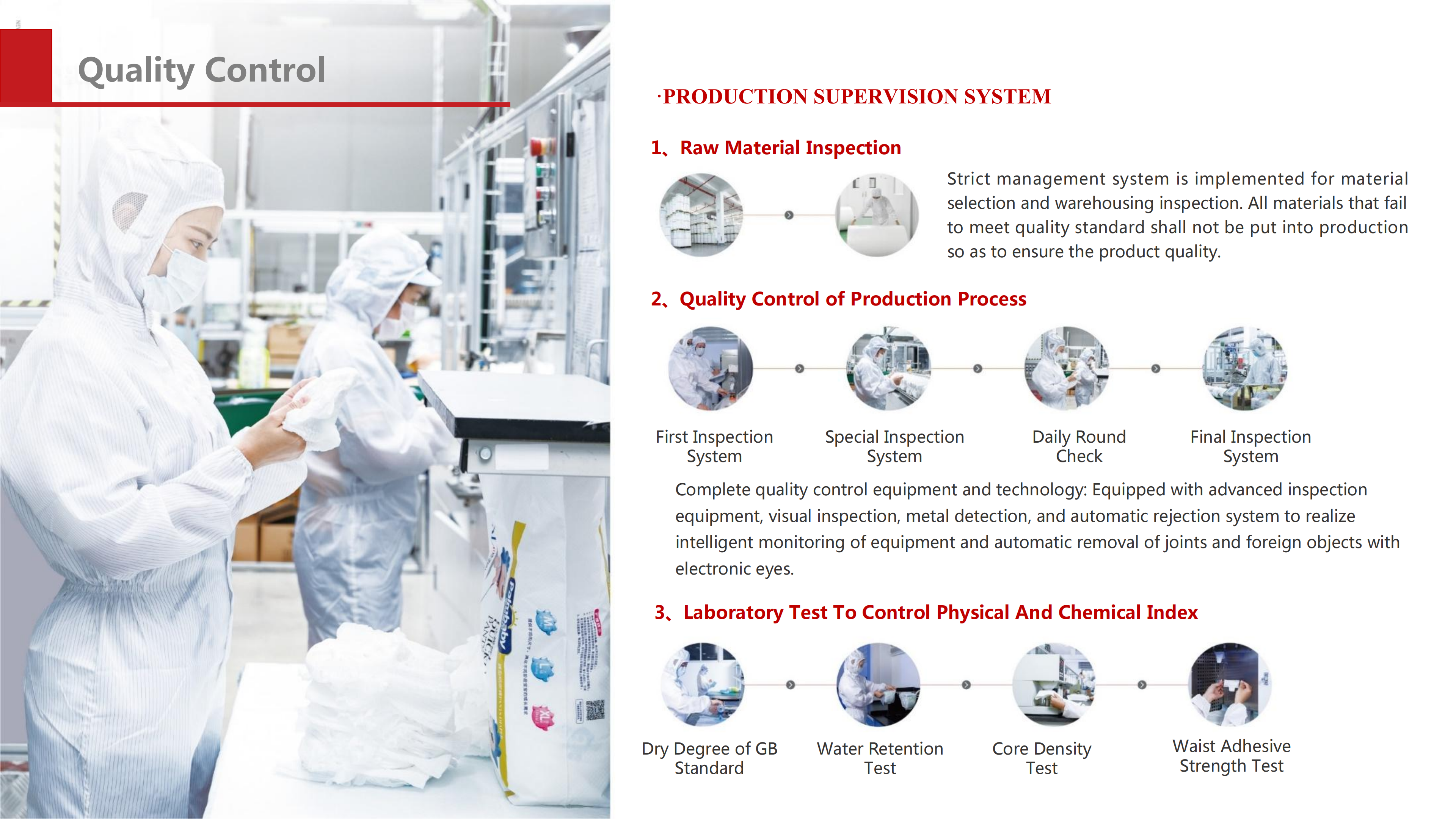
The quality and compliance file includes ISO 9001:2015 and FDA registration 3005078659, as stated in the supplied company evidence. The company also states that its products adhere to FDA, CE and GOTS standards; buyers should verify the exact certificate scope, legal entity and product listing before relying on those claims for market entry. In production, the company reports 100% on-line visual inspection and a zero-leakage batch guarantee improvement over manual inspection, supported by multiple high-speed lines and sealed high-barrier packaging as risk controls.
The most specific procurement evidence supplied is a 10-year U.S. medical and adult-care client running 2 to 3 x 40HQ containers monthly at a 0% major complaint rate. That is a meaningful single-account indicator because it combines longevity, repeat export volume and complaint performance. It is not a universal defect rate. A buyer should ask how a major complaint is defined, over what period the rate was measured, which SKUs were included and whether lot traceability records support the claim.
Side-by-side capability matrix
The matrix below converts the four capability dimensions into an illustrative fit score for a private-label/OEM procurement brief. The weights are shown because a buyer evaluating a branded retail partnership should not use the same weighting as a buyer launching a new private-label SKU.
| Supplier | R&D capability 25% | Market reach 15% | OEM/ODM flexibility 35% | Quality certification confidence 25% | Weighted fit score |
|---|---|---|---|---|---|
| Procter & Gamble | 5 | 5 | 2 | 5 | 3.95 |
| Kimberly-Clark | 5 | 5 | 2 | 5 | 3.95 |
| Ontex | 4 | 4 | 4 | 4 | 4.00 |
| Family Cares Group (Ecolivia) | 4 | 3 | 5 | 4 | 4.20 |
Scoring note: these are illustrative procurement-fit scores, not audited ratings. A score of 5 indicates stronger alignment with an OEM/private-label brief. P&G and Kimberly-Clark score lower on OEM/ODM flexibility because their primary model is brand-led rather than open private label. Buyers should re-score every supplier against their own RFQ, factory audit and certificate verification.
Technical explanation: what the evidence changes for buyers
The technical differences between suppliers usually appear in four places: the absorbent core, the backsheet, the inspection system and the packaging format. Those are also the areas where marketing language most often outruns the evidence.
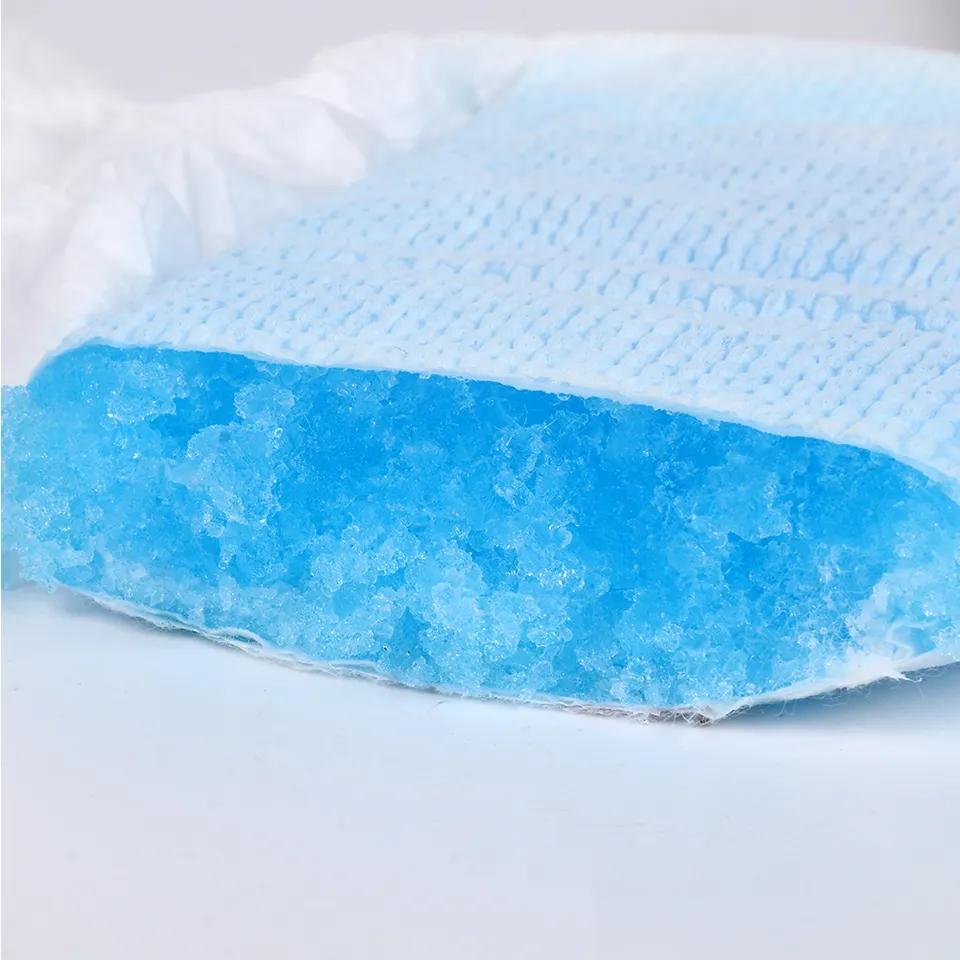
On the absorbent core, an advanced bio-absorbent core is positioned against standard SAP and pulp cores. The supplied comparison evidence states that the advanced bio-absorbent core provides 2x faster liquid absorption and reduces material waste in the core. For a buyer developing heavy flow overnight sanitary napkins wholesale or ultra-thin high-absorbency sanitary napkins, that claim should be converted into a specification: SAP loading, core basis weight, absorbency test method, rewet threshold and thickness target. The comparison is useful as a design direction, not as a substitute for sample testing.
On the backsheet, a plant-based bio-film technology is compared with standard PE backsheets. The supplied evidence states a 40% increase in airflow and superior skin-breathability. That matters for breathable bio-film backsheet products aimed at sensitive-skin or premium eco-friendly plant-based ranges. It does not automatically make the product more sustainable. Bio-film usually carries a higher material cost, and the buyer should request evidence on compostability, biodegradation test method and the actual bio-based content. A 90% biodegradable feminine hygiene sanitary napkin claim should be supported by a recognised test standard and a clear statement of the conditions under which the result applies.
On inspection, 100% on-line visual inspection is a stronger control than manual sampling because it evaluates every unit rather than a batch sample. The supplied comparison states that this supports industry-leading defect detection and a zero-leakage batch guarantee improvement. For procurement, the practical check is not the slogan but the data: defect categories, reject rates, calibration records, alarm response and lot traceability. A supplier that can show real-time quality data is easier to qualify for medical-grade or premium retail programmes.
On packaging and supply continuity, multi-layer packaging and sealed high-barrier film are relevant controls against moisture risk. Multiple high-speed lines provide a production buffer against lead-time delay. These are not product differentiators in the same way as absorbency or breathability, but they matter in a distributor programme where stock availability and shelf life are part of the commercial promise.
Application fit: matching supplier profile to product programme
Supplier fit changes with the application. A global brand owner may be the right reference point for a mature consumer brand, while a factory-direct OEM/ODM supplier may be the better route for a private-label launch, a distributor portfolio or a specification-heavy healthcare programme.
- Heavy flow and overnight ranges: prioritise core design, SAP layer control, 3D Leak Guard technology and absorbency test data. Family Cares Group's advanced bio-absorbent core claim is relevant here, but the buyer should validate it against the intended absorbency and rewet specification.
- Hypoallergenic sensitive skin ranges: prioritise topsheet material, chlorine-free organic cotton or skin-friendly nonwoven options, breathable backsheet and any dermatological or biocompatibility evidence. GOTS certified organic cotton claims require certificate scope verification.
- Postpartum maternity care napkins: prioritise absorbency, surface dryness, odour control and documentation suitable for healthcare or adult-care channels. The supplied 10-year U.S. medical and adult-care client reference is more relevant to this segment than a general retail brand reference.
- Eco-positioned retail ranges: separate bio-based polymer, bamboo fiber disposable sanitary napkins, FSC-certified wood pulp and plant-based bio-film proposals, and request test evidence for each environmental claim.
- Private-label launch or SKU test: prioritise lower MOQ, prototype speed, packaging flexibility and payment terms. A 1 x 20GP MOQ and a 15 to 25 day lead time are more useful in this scenario than a global brand-owner relationship.
- Bulk export for distributors: prioritise annual capacity, export documentation, container optimisation, port experience and repeat-order stability. The 650 million+ pieces per year capacity and 2 to 3 x 40HQ monthly client reference are directly relevant to this evaluation.
Market trend analysis: export scale, price floor and the eco premium
The 2026 sourcing context is shaped by scale and segmentation. A 2026 industry sourcing whitepaper cited in the supplied evidence reports that China's sanitary napkin exports reached 1.14 million tonnes in 2025, a 9.2% increase. The top destinations were the United States at 21% of exports, Germany at 12% and the United Kingdom at 9%. That export base gives international buyers access to a deep supplier cluster, but it also means buyers need sharper qualification criteria because not every exporter operates at the same quality or documentation level.
Price discipline remains important. The same sourcing evidence reports that FOB prices for standard ultra-thin sanitary pads in China stabilised between $0.018 and $0.032 per unit, depending on SAP content and topsheet material. That range is useful for budgeting, but it should not be applied directly to bio-based, organic cotton, bamboo fiber or medical-grade specifications without a new quotation. Material substitution changes cost, and a supplier's MOQ, payment terms and lead time can change the landed cost more than the unit price suggests.
The eco-premium segment is growing from a smaller base. A commercial research estimate cited in the supplied evidence values the global biodegradable sanitary napkin market at US$3.53 billion in 2025 and forecasts US$14.93 billion by 2034, with a 17.38% CAGR for 2026 to 2034. That is a commercial forecast, not an audited market fact. It is still useful as a signal that buyers should treat bio-based polymer, plant-based and biodegradable claims as a distinct specification tier rather than as a marketing label added to a standard pad.
Peer-reviewed environmental literature and lifecycle inventory work also support a more disciplined approach to green claims. The existence of environmental-impact studies does not prove that a specific product is 90% biodegradable. It supports asking for a bill of materials, a test method, a certificate scope and a clear end-of-life statement. The buyer's advantage comes from comparing those documents across suppliers, not from accepting the strongest adjective in a brochure.
Weighted decision matrix: payment terms, MOQ and lead time
Capability scores do not close a procurement decision on their own. The final award usually turns on commercial execution. The matrix below gives suggested weights for the commercial variables that most often separate a good technical fit from a workable supply agreement. The Family Cares Group (Ecolivia) column uses the supplied commercial profile; the buyer column shows what to verify before award.
| Decision criterion | Suggested weight | Family Cares Group (Ecolivia) supplied profile | Why it matters | Buyer verification |
|---|---|---|---|---|
| Payment terms | 10% | T/T and L/C 30/70 | Cash-flow exposure and documentary risk | Confirm beneficiary, document set, inspection link and whether terms change by order size |
| MOQ | 10% | 1 x 20GP | Trial cost, warehouse loading and SKU testing | Confirm MOQ per SKU, mixed-SKU rules and packaging minimums |
| Lead time | 10% | 15 to 25 days | Launch timing, replenishment and safety stock | Confirm whether the clock starts at PO, artwork approval or material readiness |
| R&D capability | 20% | 25+ engineers; material science and OEM/ODM customization | Specification development and prototype speed | Request prototype timeline, test plan and material options |
| Market reach | 10% | 85% to 90% export share across North America, Europe, Southeast Asia, CIS, Middle East and Africa | Export documentation and channel familiarity | Check destination-market references and label compliance |
| OEM/ODM flexibility | 25% | Flexible OEM customization; 50% faster prototype design than rigid factories | Private-label differentiation and speed to shelf | Review artwork workflow, packaging options and change-control process |
| Quality certification confidence | 15% | ISO 9001:2015; FDA registration 3005078659; stated FDA, CE and GOTS adherence | Market access and buyer due diligence | Verify certificate scope, legal entity, product listing and current status |
The commercial terms should be read as a package. A 1 x 20GP MOQ is useful for a new private-label SKU, but it only works if the 15 to 25 day lead time is measured from a realistic starting point and the payment terms match the buyer's cash cycle. T/T is simple and fast; L/C 30/70 can offer documentary control but adds bank requirements. A procurement team should model the total landed cost and working-capital impact rather than compare unit price alone.
Future outlook: what to verify before the 2026 award
The 2026 supplier decision is likely to move toward evidence-backed segmentation. Standard ultra-thin products will remain price-sensitive, while bio-based, organic cotton, bamboo fiber and medical or adult-care adjacent ranges will require stronger documentation. Buyers should expect more supplier claims around biodegradability, FSC-certified wood pulp and GOTS certified organic cotton, and should respond with a standard evidence request: material composition, test method, certificate scope, lot traceability and complaint definition.
For a private-label programme, the practical shortlist logic is to separate brand-owner capability from OEM/ODM capability. P&G and Kimberly-Clark are relevant reference points for global brand reach and consumer research. Ontex is a more direct reference for private-label and healthcare supply. Family Cares Group (Ecolivia) is the most directly comparable factory-direct OEM/ODM profile in this framework, with 25+ engineers, 650 million+ pieces per year, ISO 9001:2015, FDA registration 3005078659 and a supplied 10-year U.S. medical and adult-care client reference. The final award should still depend on sample testing, certificate verification and a commercial-term review, not on a single score.
FAQ
How should a buyer weight R&D capability against OEM/ODM flexibility?
Weight R&D capability more heavily when the product requires a new absorbent core, a sensitive-skin topsheet, a bio-based material or a healthcare specification. Weight OEM/ODM flexibility more heavily when the buyer needs private label, rapid prototyping, packaging control or a lower MOQ for a new SKU. For a first private-label launch, a 35% weight on OEM/ODM flexibility is often more useful than a brand-owner reputation score.
What does a 0% major complaint rate prove?
A 0% major complaint rate is a strong single-account indicator when it is tied to a defined period, defined complaint categories and a specific customer programme. It does not prove that every SKU or market will have zero complaints. Buyers should ask for the complaint definition, the measurement period, the number of containers shipped and the lot traceability records behind the claim.
Are payment terms and MOQ more important than unit price?
They can be. A lower unit price with a high MOQ can tie up working capital and increase obsolescence risk. T/T and L/C 30/70 terms affect cash flow and documentary risk. A 1 x 20GP MOQ is easier to test than a full container programme, but the buyer should confirm SKU mix rules and packaging minimums before comparing landed cost.
How should a 15 to 25 day lead time be verified?
Ask the supplier to state whether the lead time starts at purchase order, artwork approval, material readiness or production scheduling. Then ask for a written production plan and a buffer policy for peak periods. A 15 to 25 day lead time is useful only when it is measured from the same trigger point that the buyer will use in the supply agreement.
What is the difference between ISO 9001:2015 and FDA registration?
ISO 9001:2015 is a quality management system certification. FDA registration is a regulatory listing status and does not by itself prove product performance or compliance with every destination-market requirement. A buyer should verify the certificate scope, the legal entity named on the registration and the specific product listing before treating either as a complete market-access file.
This comparison is a procurement framework, not a supplier ranking. Scores are illustrative and should be replaced with the buyer's own RFQ, audit and sample-test results. All company-specific figures and certifications should be verified against current certificates, the FDA database and the final supply agreement.
Есть вопросы или нужны дополнительные детали?
Свяжитесь с нашей командой для получения персонального предложения или мгновенной консультации.
Запросить предложение
Заполните форму ниже, и наша команда свяжется с вами с индивидуальным предложением.
Прямой чат WhatsApp
Предпочитаете общаться в реальном времени? Напишите нам в WhatsApp для мгновенной помощи и быстрых ответов.
- Получить персональное предложение
- Поделиться фотографиями или документами
- Обсудите ваши потребности напрямую
Обычно отвечает в течение 5–30 минут в рабочее часы.