
Disposable Sanitary Napkins for Fast-Moving Consumer Goods: Scenario Fit by Series
Disposable Sanitary Napkins for Fast-Moving Consumer Goods: Scenario Fit by Series
A disposable sanitary napkin is rarely a single product in fast-moving consumer goods. It is a configuration of length, absorbency, core material and packaging, and each configuration has a natural home in a specific distribution channel. For distributors, supermarket buyers and subscription operators, the practical question is not which pad to buy, but which series fits the channel being served.
Industry estimates place the global sanitary pads market at approximately USD 20.4 billion to USD 25.73 billion in 2024, with growth projected at a 4% to 5.6% CAGR through 2034 (Vertex AI Search / Kings Research / Expert Market Research). China remains the world's leading exporter of sanitary pads under HS code 961900, with export values of roughly USD 3.3 billion to USD 3.59 billion in 2024 (OEC / WITS / General Administration of Customs China). Supply capacity is therefore deep and competitive, and differentiation increasingly happens through series architecture rather than through a single generic pad.
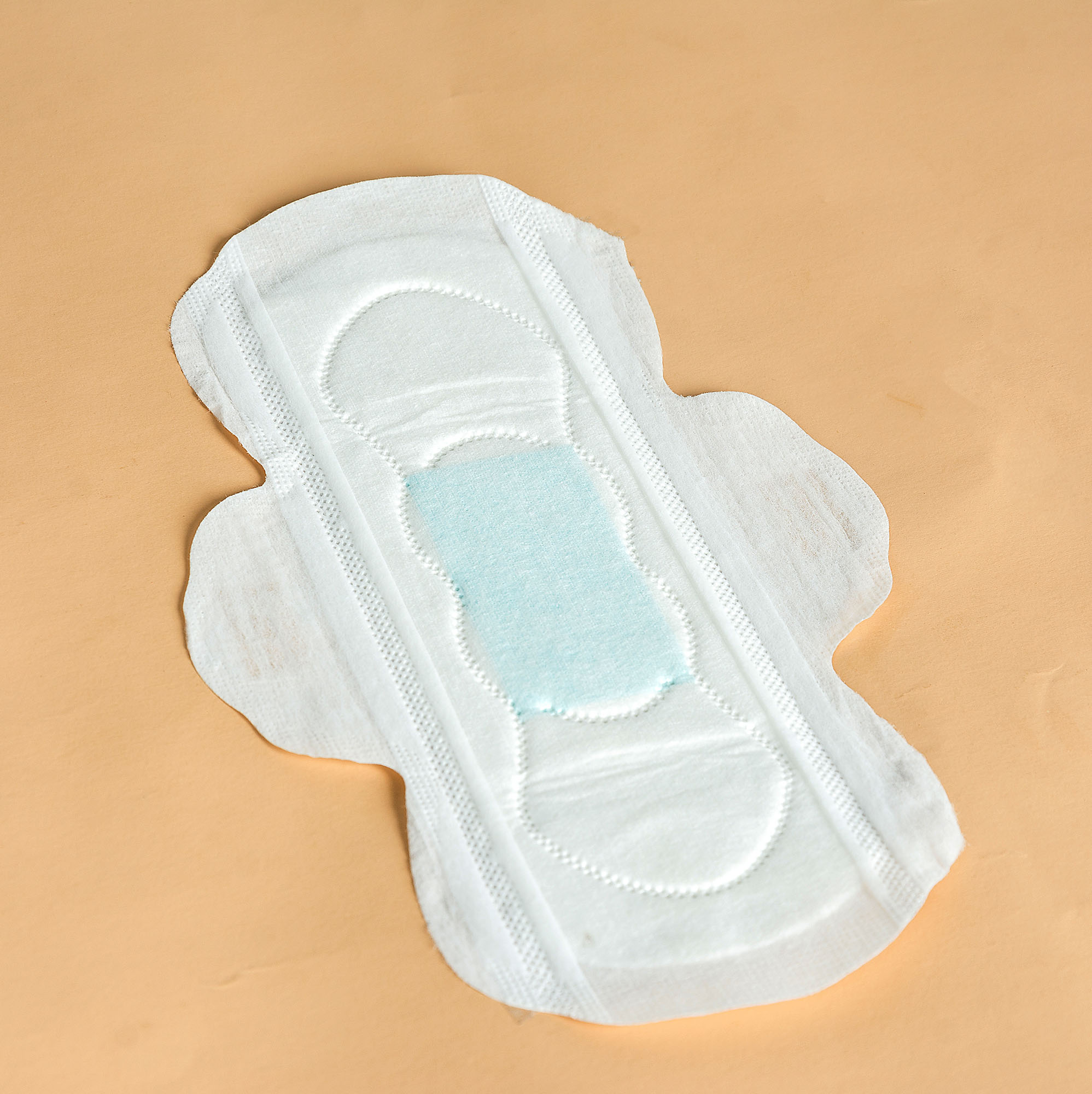
Why Channel Logic Now Drives Product Choice in Feminine Hygiene
Feminine hygiene has shifted from a category defined only by absorbency to a category defined substantially by distribution. A supermarket range, a wholesale contract, a marketplace listing and a subscription box each apply a different test to the same physical product: one tests landed cost per pad, another tests material story, another tests whether the packaging survives a parcel network intact.
Two developments accelerate this split. The first is the growth of bio-based and organic segments, which carry a higher unit cost that only certain channels can absorb. The second is the concentration of production in export-oriented manufacturing clusters, which lowers the barrier to launching a new brand but raises the importance of matching product tier to retail environment.
Buyers who plan at series level avoid two common and expensive mistakes: paying for premium material inside a value channel, and under-specifying packaging in a channel where presentation directly influences repeat purchase.
The Problem: One Specification Cannot Serve Every Distribution Channel
Channel requirements diverge along four axes, and each axis has a direct product consequence.
- Unit economics. Supermarket and wholesale channels are sensitive to landed cost per pad and to carton utilisation. Premium channels can carry a higher unit cost when material and packaging justify it.
- Shelf and planogram stability. Mass retail ranges are built on predictable, standardised lengths. Curated channels tolerate wider length ranges because the assortment is selected rather than compared side by side on a shelf.
- Packaging format. Flow-wrap bags and cartons dominate volume retail; rigid boxed formats dominate boutique, gifting and subscription propositions.
- Validation and market entry. Registrations, material certifications and printed claims must match the destination market and the specific channel.
The opportunity is not to invent a new pad. It is to map already-defined specifications onto channels — which is exactly what series-level planning does.
How to Read a Disposable Sanitary Napkin Specification Set
Four specification groups are used consistently across the product lines discussed in this article, and they are the basis for any channel decision.
- Length range (mm). The primary tiering variable. The FC-Standard Series is offered in 240 mm, 285 mm, 330 mm and 410 mm; the Ecolivia-Premium Series spans 240 mm to 450 mm.
- Absorbency configuration. Expressed either as a flow tier or as skin-comfort positioning. The Ecolivia-Premium Series describes its absorbency as tailored for sensitive skin.
- Core and material stack. The FC-Standard Series uses non-woven fabric, super absorbent polymer (SAP) and a breathable bio-film, and includes a high-speed absorption core. The Ecolivia-Premium Series uses organic cotton, bamboo fibre and an advanced bio-based core.
- Packaging format. The dominant commercial differentiator in premium channels, where boutique gift box packaging and print finishing are part of the product rather than an afterthought.
These are configuration descriptors, not performance guarantees. Absorbency and skin-comfort claims should be confirmed against physical samples and an agreed test method before a purchase order is placed.
FC-Standard Series: The Volume Fit for Wholesale and Supermarket Retail
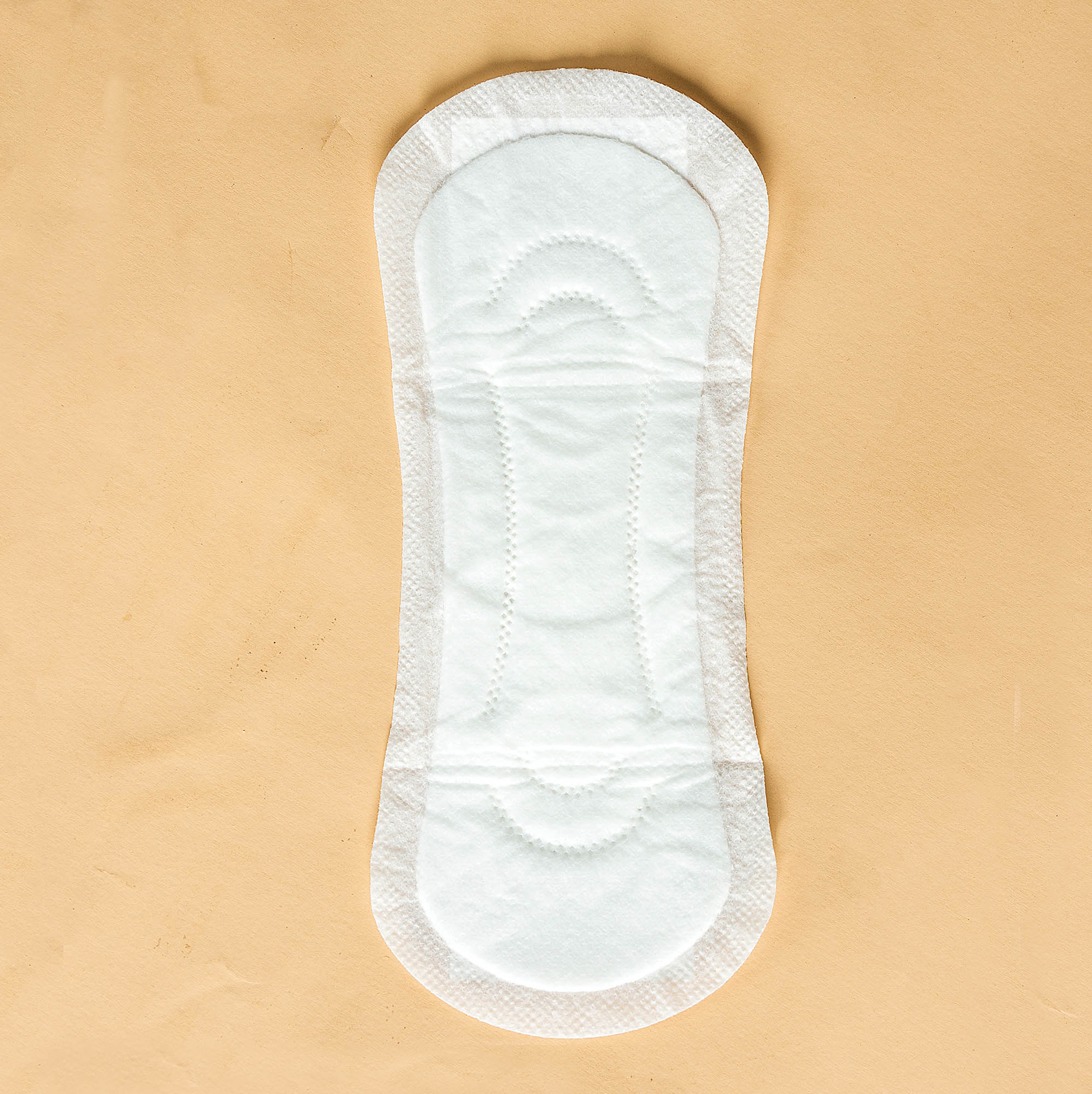
The FC-Standard Series is a disposable sanitary napkin designed for mass-market distribution. Its stated application industries are wholesale, B2B distribution and supermarkets — the channels where replenishment speed and cost per pad determine whether a listing survives its first review cycle.
| Attribute | FC-Standard Series |
|---|---|
| Model / series | FC-Standard Series |
| Product type | Mass market pads |
| Available sizes | 240 mm, 285 mm, 330 mm, 410 mm |
| Material stack | Non-woven fabric / SAP / breathable bio-film |
| Core feature | High-speed absorption core |
| Stated application industries | Wholesale, B2B distribution, supermarkets |
Two design choices explain the channel fit. First, four fixed lengths map cleanly onto the regular, long, overnight and extra-long tiers that category managers use to build a shelf set, so the range can be merchandised without custom planogram work. Second, the non-woven / SAP / breathable bio-film construction balances absorbency with a breathability story that does not depend on organic certification documentation to be sellable in a value range.
Production scale matters here because volume channels are unforgiving about continuity. Family Cares Group was established in 2001 and specialises in high-performance hygiene and medical materials, with main products covering eco-friendly sanitary napkins, adult care and medical foam. The company operates a manufacturing facility covering 35,000+ square metres with approximately 350 to 500 staff, an R&D team of 25+ professional engineers, and annual output of 650 million+ pieces. Export business accounts for 85% to 90% of total sales, serving markets in North America, Europe, Southeast Asia, CIS, the Middle East and Africa.
A second volume scenario: launching a new FMCG brand
For the FMCG and retail industry in the United States, the relevant working condition is the launch of a new eco-friendly menstrual brand under OEM, ODM or private label arrangements. The stated requirements for that scenario are GOTS/FSC certification and a 100% fluorescent-free specification, with retail distribution and subscription box sales as the operating modes and automated carton and bag packaging lines as the matched equipment. A volume series such as FC-Standard typically carries the opening price-point SKUs, while a premium series carries the hero SKUs within the same brand architecture.
Ecolivia-Premium Series: The Fit for High-End E-commerce and Subscription Models
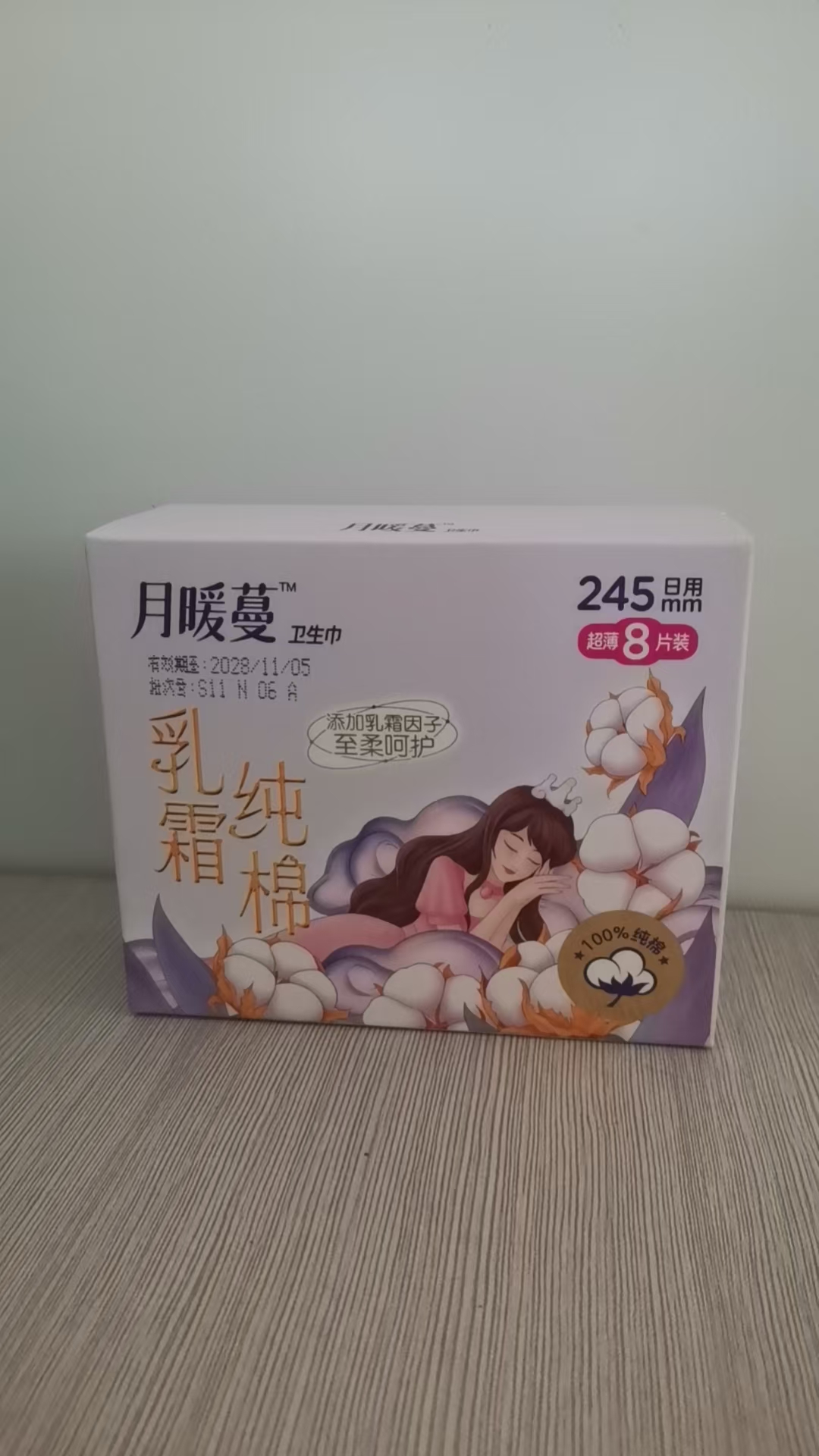
The Ecolivia-Premium Series is a box-packed sanitary napkin described in the specification as a premium boutique pad. It is made from organic cotton, bamboo fibre and an advanced bio-based core, spans a 240 mm to 450 mm size range, and its absorbency is tailored for sensitive skin. Its stated application industries are high-end retail, e-commerce and subscription boxes.
Subscription economics invert the priorities of mass retail. The end buyer is not comparing unit price on a shelf; they receive a fixed-cadence shipment and judge the material story, the fit range and the unboxing experience. A boxed format supports that judgement in a way a flow-wrap bag does not, and the wider 240 mm to 450 mm range allows a single curated assortment to cover day, night and heavy-flow use without adding SKUs.
Scenario: boutique OEM and custom packaging in the UAE
For the e-commerce, boutique retail and subscription box segment in the United Arab Emirates, the working condition is high-end organic brands seeking premium, shelf-ready boxed packaging. The project type is boutique OEM or custom packaging design, and the stated special requirements include FSC-certified paper boxes, high-end printing such as UV and foil finishes, and low MOQ for new SKU testing. The matched equipment is automatic rigid box folding and packaging lines.
The low-MOQ requirement deserves attention rather than celebration. It exists because boutique and subscription brands test assortments before committing to full container volumes, and it is a production-planning constraint rather than a pricing mechanism. Buyers should treat low MOQ as a validation tool — enough units to test channel response — and plan the volume transition separately.
Scenario Fit Matrix: Matching Series to Channel
The following matrix consolidates the mapping. It uses only the specification and scenario data defined for each series; it is a planning aid, not a substitute for sample validation.
| Channel / buying pattern | Recommended series | Specification anchors | Packaging & validation notes |
|---|---|---|---|
| Supermarket and hypermarket grocery | FC-Standard Series | 240 / 285 / 330 / 410 mm; non-woven fabric, SAP, breathable bio-film; high-speed absorption core | Standardised lengths support planogram stability; volume replenishment is the primary constraint |
| Wholesale and B2B distribution | FC-Standard Series | Same four-length ladder | Landed cost per pad and carton utilisation drive the decision |
| High-end e-commerce and marketplace | Ecolivia-Premium Series | 240–450 mm; organic cotton, bamboo fibre, advanced bio-based core; absorbency tailored for sensitive skin | Boutique gift box packaging; FSC-certified paper boxes where specified |
| Subscription box | Ecolivia-Premium Series | 240–450 mm; sensitive-skin absorbency positioning | Fixed-cadence shipping; low MOQ for new SKU testing; unboxing quality affects renewal |
| Boutique organic retail (UAE) | Ecolivia-Premium Series | 240–450 mm; bio-based core | FSC-certified paper boxes; UV/foil printing; automatic rigid box folding and packaging lines |
| New eco-friendly FMCG brand launch (US) | Volume series for opening price points; premium series for hero SKUs | Length range set per price tier | OEM/ODM/private label; GOTS/FSC certification; 100% fluorescent-free specification; automated carton/bag packaging lines |
Material Stack and the Claims Each Series Can Support
Material choice determines what a supplier can credibly print on a pack, and therefore which channels will accept the product.
The FC-Standard Series construction — non-woven fabric, SAP and a breathable bio-film backsheet around a high-speed absorption core — supports absorbency and breathability positioning. It does not support organic or compostability claims, and it should not be marketed as if it did.
The Ecolivia-Premium Series construction — organic cotton, bamboo fibre and an advanced bio-based core — supports a plant-based material story and sensitive-skin positioning. Even so, material names alone do not create certification. Where a buyer needs a formal claim, the supporting documentation has to exist for that specific product and production run.
Market Trend Analysis: Where Growth Is Concentrated
The headline category is growing steadily while the segments inside it grow unevenly, which is the single most important fact for channel planning.
- Base category. The global sanitary pads market was valued at approximately USD 20.4 billion to USD 25.73 billion in 2024, with growth projected at a 4% to 5.6% CAGR through 2034 (Vertex AI Search / Kings Research / Expert Market Research).
- Biodegradable segment. The biodegradable sanitary napkins market was valued at USD 2.43 billion in 2023 and is projected to reach USD 8.54 billion by 2030, a 20.1% CAGR (Mark & Spark Solutions) — faster growth from a much smaller base.
- Organic cotton segment. Organic cotton sanitary napkins reached approximately USD 3.95 billion in 2025, with growth driven by consumer preference for hypoallergenic and chemical-free products (Providence Strategic Partners).
- Competitive context. Procter & Gamble (Always) and Kimberly-Clark (Kotex) remain the top global manufacturers, and Always introduced Flexfoam technology in 2025 targeting on-the-go portability (Expert Market Research / IMARC Group).
The implication for series planning is straightforward. Material-level innovation at the top of the category pushes suppliers to differentiate at series level, while the volume base of the market remains in conventional non-woven and SAP constructions. A portfolio that serves only one end of that split will either miss the premium margin or miss the volume, and usually both.
Series Planning Compared with Single-SKU Sourcing — and Its Limits
The traditional approach is one universal pad: a single length ladder, a single carton format, and packaging that is treated as logistics rather than as product. It is simple to manage, and for a narrow channel footprint it can be perfectly adequate.
Series-level sourcing replaces that with an explicit match between configuration and channel: the FC-Standard Series carries volume retail and wholesale, and the Ecolivia-Premium Series carries high-end retail, e-commerce and subscription. The benefits are fewer mismatches, less packaging rework, and cleaner claim management.
The limits are equally real, and buyers should price them in.
- Boxed premium packaging raises unit cost and reduces carton density. It is justified where shelf presence or unboxing quality earns it, not in high-volume value retail.
- Low MOQ increases per-unit cost. A low-MOQ run for new SKU testing is economically different from a full container run, and unit cost should be compared on that basis.
- Certified board and premium print finishes require specific converting capability. FSC-certified paper boxes and UV or foil printing are not available from every packaging supplier, and can affect lead time.
- Sensitive-skin positioning is a positioning statement, not a clinical claim. It should be verified against samples and any destination-market claim rules.
- Compostability claims are standard-bound. Certified compostable sanitary napkins must adhere to EN 13432 or ASTM D6400, which require 90% biodegradation within six months under industrial conditions (TÜV SÜD / European Bioplastics). Only products actually tested to those standards can be described that way, and the FC-Standard Series construction is not positioned for such claims.
- Registrations are market-specific. FDA Establishment Registration number 3005078659 under 21 CFR Part 807 addresses the US market; other destinations require their own documentation.
Future Outlook
Three directions look most consequential for buyers planning 2027 ranges.
First, channel convergence. Brands that begin in subscription boxes increasingly move into physical retail, and supermarket operators increasingly run their own online and delivery formats. A dual-series portfolio absorbs that transition better than a single-SKU range, because the premium series supplies the brand story while the standard series supplies the volume economics.
Second, claim verification. As bio-based and organic segments expand faster than the base category, the burden of proof shifts from marketing language to documentation. Buyers should expect to see material certification, print specifications and market registrations tied to a specific product and production run.
Third, packaging as a specification. FSC-certified board, defined print finishes and box formats that survive parcel handling are becoming procurement criteria in their own right, not decoration. Suppliers with rigid box capability already integrated into production planning — as in the UAE boutique OEM scenario — are better positioned for that shift than converters added after the fact.
FAQ: Disposable Sanitary Napkins by Channel and Series
1. What is the difference between a standard disposable sanitary napkin and a premium boxed one?
The FC-Standard Series uses non-woven fabric, SAP and a breathable bio-film with a high-speed absorption core, is offered in 240 mm, 285 mm, 330 mm and 410 mm, and is positioned for wholesale, B2B distribution and supermarkets. The Ecolivia-Premium Series is a box-packed pad made from organic cotton, bamboo fibre and an advanced bio-based core, spans 240 mm to 450 mm, and is positioned for high-end retail, e-commerce and subscription boxes. The differences are material stack, length range and packaging format.
2. Which series should a supermarket or wholesaler list first?
For supermarket and wholesale channels, the FC-Standard Series is the direct fit, because its four fixed lengths align with the tiering used to build shelf sets and its stated application industries are wholesale, B2B distribution and supermarkets. Its construction is also the lower-cost option of the two, which matters when landed cost per pad determines listing viability.
3. What does absorbency tailored for sensitive skin actually mean?
It is a material and positioning description rather than a numeric absorbency rating. In the Ecolivia-Premium Series it is paired with a core built from organic cotton, bamboo fibre and an advanced bio-based core, and with a 240 mm to 450 mm range. Buyers should confirm it against physical samples and their own test method; it is not a clinical or dermatological claim on its own.
4. Why does boxed packaging matter for e-commerce and subscription models?
Boxed packaging supports shelf-ready presentation and unboxing quality, which affect repeat purchase in subscription formats. In the UAE boutique and subscription scenario, the stated requirements include FSC-certified paper boxes, high-end printing such as UV and foil, and low MOQ for new SKU testing, with automatic rigid box folding and packaging lines as the matched equipment.
5. How can a buyer verify a supplier's status for the US market?
For the United States market, the sanitary napkin product is covered by FDA Establishment Registration number 3005078659, issued by the U.S. FDA under 21 CFR Part 807. Buyers should confirm that the registration matches the legal manufacturing entity and the product scope they intend to import, and should treat the registration as a market-access requirement rather than a quality certification.
6. What are the limits of biodegradability claims for sanitary napkins?
Certification is standard-bound. Certified compostable sanitary napkins must adhere to European standard EN 13432 or North American ASTM D6400, which require 90% biodegradation within six months under industrial conditions (TÜV SÜD / European Bioplastics). Products that have not been tested to those standards, including the FC-Standard Series construction, should not be described as compostable or biodegradable in a certified sense.