
Disposable Sanitary Napkins: A 2026 Material and Market Reference
The disposable sanitary napkin is no longer a simple commodity in the feminine hygiene category. Global sanitary pad sales reached an estimated USD 20.4 billion to USD 25.73 billion in 2024, while the biodegradable segment is growing at a markedly faster pace. This divergence is shifting how importers, distributors, and retail brands evaluate suppliers: instead of comparing only unit prices, buyers are increasingly asking what the product is made of, how it is manufactured, and whether the material claims are supported by verifiable standards.
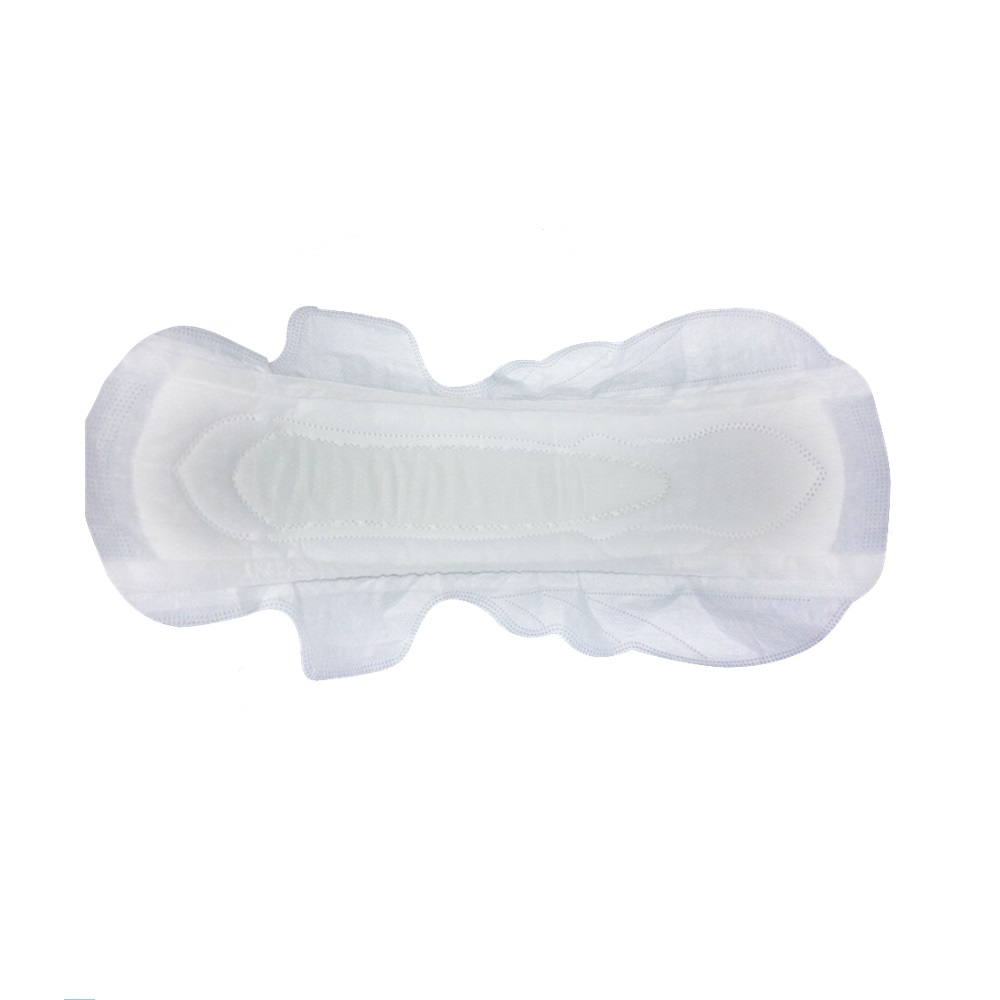
Disposable sanitary napkin, 410mm length, used as a cover reference.
This article serves as an industry reference for buyers at the awareness and research stages. It explains the core structure of disposable sanitary napkins, distinguishes standard and bio-based product lines, reviews market trends, and describes real application scenarios. The goal is to provide a factual foundation before price negotiation or supplier audits begin.
A useful starting point is to recognize that 'disposable sanitary napkin' is an umbrella term covering panty liners, regular pads, long and overnight sizes, maternity pads, and specialty eco-friendly lines. Each format has a distinct bill of materials, production process, and compliance profile. Procurement teams that understand these differences can move from reactive buying to strategic sourcing.
Industry Problem and Sourcing Opportunity
The main problem for international buyers is information asymmetry. Many manufacturer websites use similar phrases such as 'ultra-thin,' 'high absorbency,' or 'skin-friendly,' but these terms are not standardized. A supplier may use SAP for absorption, while another uses a bio-based core, and the two products can require completely different packaging, shelf life, and marketing claims.
Regulatory fragmentation adds another layer of complexity. A product compliant in one market may require different labeling, testing, or certification in another. For example, the US FDA registration process is different from EU CE marking, and compostable claims are only valid if the product meets the region's standard. Buyers need to align the supplier's quality system with the target market's regulatory expectations.
At the same time, product differentiation is becoming commercially valuable. The organic cotton sanitary napkin segment was valued at approximately USD 3.95 billion in 2025, and the biodegradable market is projected to grow from USD 2.43 billion in 2023 to USD 8.54 billion by 2030, a CAGR of about 20.1%. Brands that can credibly claim organic or bio-based materials are gaining shelf space in retail and subscription channels.
China's role as the largest exporting country adds another layer of opportunity. Sanitary pad exports from China were estimated at USD 3.3 billion to USD 3.59 billion in 2024. For buyers, this means access to high-capacity manufacturers with mature supply chains. But it also increases the need for due diligence: capacity alone does not guarantee material quality, certification, or consistency.
Anatomy of a Disposable Sanitary Napkin
A disposable sanitary napkin usually consists of three functional layers: the topsheet, the absorbent core, and the backsheet. The topsheet sits against the skin and must allow liquid to pass through quickly while remaining dry. The absorbent core holds the fluid and prevents side leakage. The backsheet stops liquid from passing through to clothing, ideally while allowing moisture vapor to escape.
Non-woven fabric is one of the most common topsheet materials. In industrial classification, non-woven fabrics can be made from polypropylene, spunbond, or hot-air materials. The gram weight of these fabrics typically ranges from 10gsm to 80gsm, and the width can be customized according to the production line. These parameters directly influence softness, strength, and liquid acquisition speed.
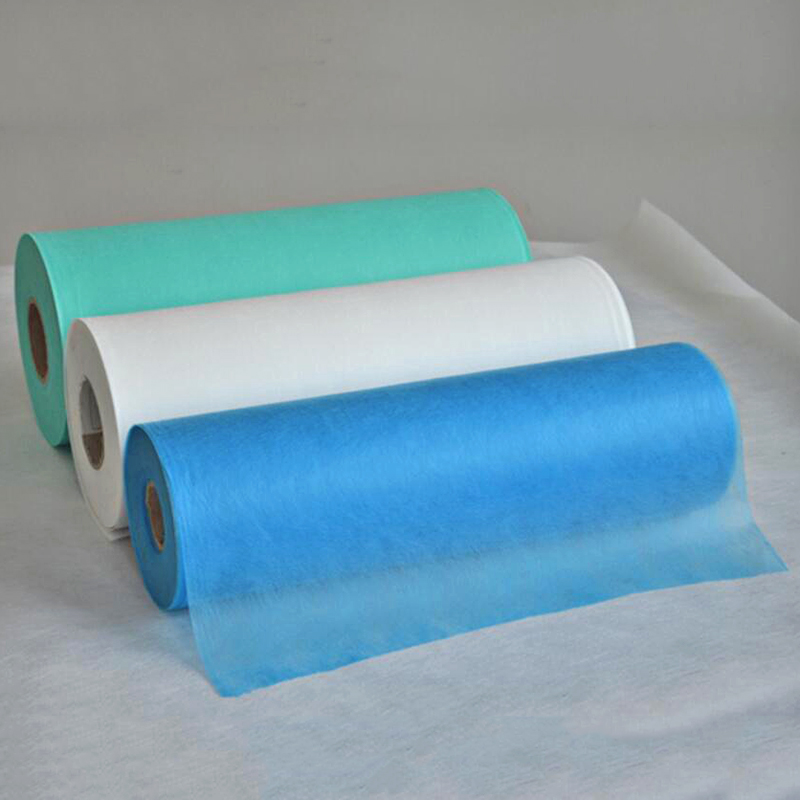
Non-woven fabric is a common topsheet material for hygiene products.
The absorbent core is often the most important differentiation point. Conventional pads use super absorbent polymer (SAP) in combination with cellulose fluff. SAP is known for high liquid retention and a thin profile. Bio-based pads replace part or all of the synthetic absorbent with a bio-based absorbent core, frequently paired with natural fibers such as organic cotton or bamboo fiber.
The backsheet acts as a protective barrier. Many modern pads use breathable bio-film, which helps to reduce the heat and humidity that can cause skin irritation. A breathable backsheet is an important feature in warm climate markets and for consumers with sensitive skin.
Sizes and absorbency levels are matched to usage scenarios. For example, the FC-Standard Series is available in 240mm, 285mm, 330mm, and 410mm lengths. Shorter pads are suitable for lighter days, while longer pads cover overnight protection. The Ecolivia-Bio Series extends the range from 155mm to 450mm, with absorbency levels that can be customized as high, super, or night. This kind of modular product planning gives buyers more control over their assortment.
From a procurement perspective, the technical explanation matters because material choice affects cost, certification, and performance testing. A buyer who understands the difference between a polypropylene topsheet and an organic cotton topsheet can ask more precise questions during supplier audits and avoid misunderstandings in product specifications.
Ecolivia as a Bio-Based Reference
Ecolivia is the bio-based sanitary napkin series within Family Cares Group. The group is an integrated manufacturer and supply chain company based in China, founded in 2001. Its main products include eco-friendly sanitary napkins, adult care products, and medical foam.
Family Cares Group's manufacturing base covers 35,000+ square meters, with an annual output of more than 650 million pieces. The workforce is between 350 and 500 employees, and the R&D team consists of more than 25 professional engineers. Export sales account for 85% to 90% of total revenue, serving North America, Europe, Southeast Asia, CIS, the Middle East, and Africa.
According to the company's corporate profile, operations are ISO 9001 certified, and products adhere to FDA, CE, and GOTS standards. For buyers that plan to sell into regulated markets, this compliance baseline reduces the risk of documentation delays at customs.
For buyers, the relevant point is not just company size but the scope of vertical integration. The group produces both finished sanitary napkins and non-woven raw materials. This allows for better control over material consistency and a shorter path when customizing products. The company also provides OEM/ODM/private label services for brands that want to build their own product lines.
Application Scenarios Across Channels
In the FMCG and retail sector, particularly in the United States, brands are launching new eco-friendly menstrual product lines through private label manufacturing. Typical requirements include GOTS/FSC certified materials, 100% fluorescent-free products, and packaging that supports retail distribution or subscription box sales. This is a high-growth area because retailers want a credible sustainability story without building their own factories.
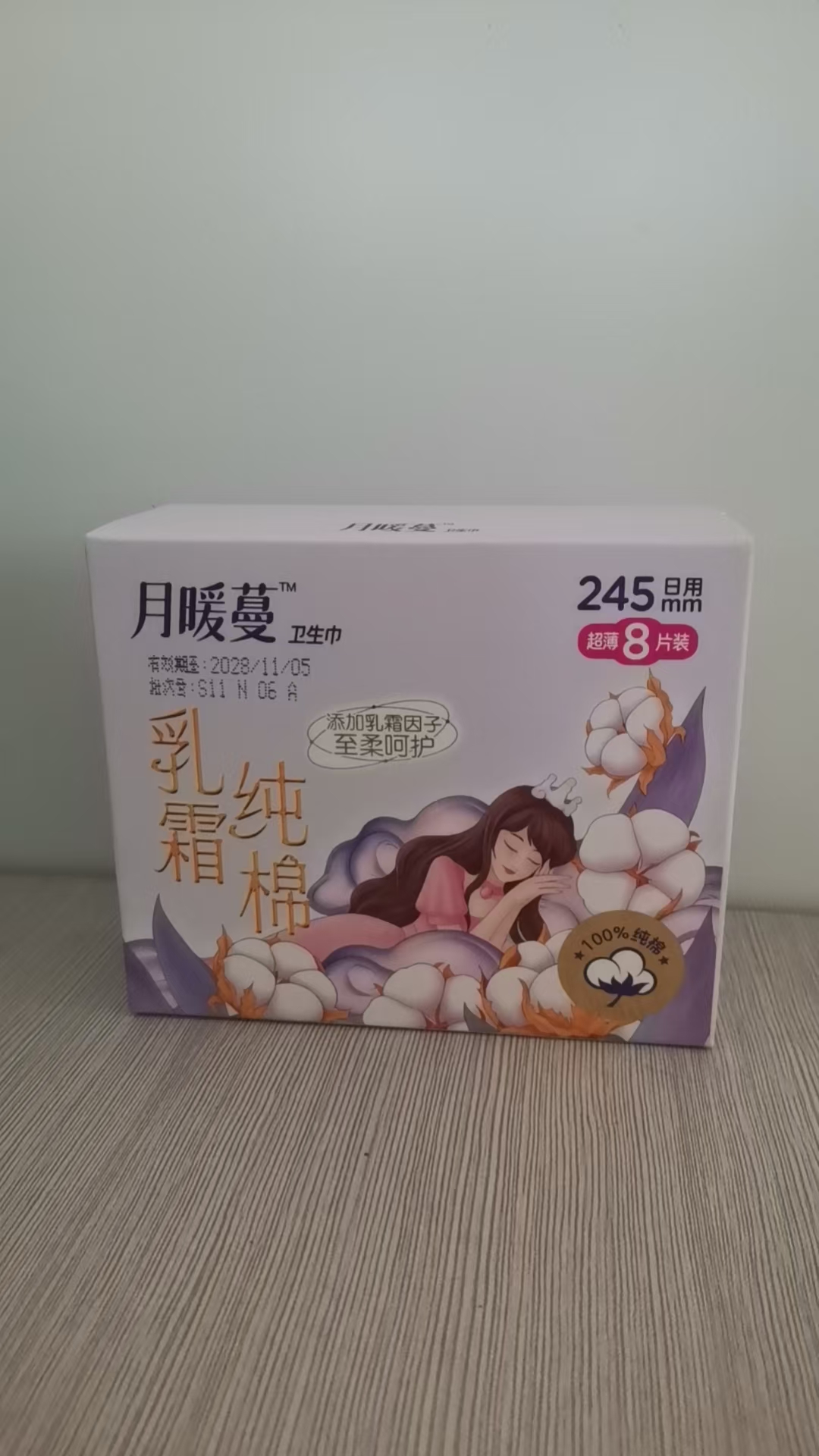
Box-packed sanitary napkins designed for premium retail and subscription channels.
In industrial hygiene manufacturing, some companies do not buy finished pads but instead purchase non-woven fabric and other raw materials. The critical parameter here is consistent gram weight and high tensile strength, so that high-speed pad-making machines can run without frequent breaks. A manufacturer that can also supply raw materials can serve as a one-stop partner for upstream and downstream needs.
Premium retail and e-commerce channels require a different type of execution. For example, a box-packed sanitary napkin line, such as the Ecolivia-Premium Series, can meet the demand of boutique brands that want a more curated unboxing experience. This series uses organic cotton, bamboo fiber, and an advanced bio-based core, and offers sizes from 240mm to 450mm with absorbency tailored for sensitive skin.
These use cases suggest that the buyer's job is not to find a single 'best' product, but to map product specifications to the target channel. A mass-market supermarket line may favor the cost profile of a standard SAP-based series. A subscription box brand may choose a bio-based series with certified materials and more attractive packaging.
Market Trends and the Shift Toward Verified Claims
The global sanitary pads market is expanding at a moderate pace. Industry estimates place the 2024 market value between USD 20.4 billion and USD 25.73 billion, with a projected CAGR of 4% to 5.6% from 2024 through 2034. This steady growth is driven by population growth, increasing female workforce participation, and improved access to hygiene products in developing regions.
E-commerce and subscription box channels are also changing the unit economics of the category. Smaller brands can test new SKUs with low minimum order quantities and direct-to-consumer fulfilment, while large retailers expect suppliers to support private label programs with consistent quality and flexible packaging. This dual demand is pushing manufacturers to build more versatile production lines.
Within this market, the biodegradable segment is growing much faster. Starting from USD 2.43 billion in 2023, it is projected to reach USD 8.54 billion by 2030, implying a CAGR of approximately 20.1%. This growth is not only a consumer trend; it is also becoming a procurement requirement for retailers with sustainability targets.
Certification is the bridge between a marketing claim and a credible product claim. For compostable products, European standard EN 13432 and US standard ASTM D6400 require 90% biodegradation within six months in industrial conditions. For organic cotton, GOTS certification covers the entire textile supply chain. FSC certification applies to wood-based materials such as box packaging or viscose. Buyers who do not check certifications risk regulatory or reputational issues.
The competitive landscape remains dominated by large global manufacturers such as Procter & Gamble and Kimberly-Clark. However, the expansion of bio-based and premium segments gives specialized manufacturers an opportunity to serve brands that want differentiation. The recent introduction of new absorbent technologies by large players signals that material innovation is becoming an important competitive lever across the entire industry.
Bio-Based vs. Traditional Solutions
Traditional sanitary napkins have a long track record of reliability. The combination of SAP and fluff pulp provides high absorption capacity, a relatively thin profile, and consistent shape retention. These products are well suited for wholesale distribution, supermarket shelves, and institutional procurement where unit cost is the primary driver.
Bio-based sanitary napkins replace some or all petroleum-derived components with natural materials. The core can be constructed with bio-based absorbent materials, and the topsheet may use organic cotton or bamboo fiber. This approach reduces dependence on synthetic plastic polymers and aligns with the values of environmentally conscious consumers.
However, bio-based products are not a universal replacement. Compostability claims require specific industrial composting conditions; in ordinary landfill environments, the degradation process is not guaranteed. Buyers also need to balance higher material costs for certified organic or FSC inputs. For heavy flow scenarios, performance must be validated by product testing. Thus, the right choice depends on the target market, price point, and waste infrastructure.
| Comparison point | Standard sanitary napkin | Bio-based sanitary napkin |
|---|---|---|
| Absorbent core | SAP-based core | Bio-based absorbent core, often with natural fibers |
| Typical raw materials | Non-woven fabric, SAP, breathable bio-film | Organic cotton, bamboo fiber, bio-based core, breathable bio-film |
| Length range | 240mm, 285mm, 330mm, 410mm | 155mm to 450mm, customizable |
| Certification focus | General hygiene, FDA registration | GOTS/FSC for certified materials; EN 13432 or ASTM D6400 for compostable claims |
| Typical applications | Wholesale, supermarkets, mass distribution | Retail, e-commerce, subscription box, eco-brand lines |
Key Questions for Supplier Discovery
Before visiting a factory or signing a sample agreement, buyers can use the following questions to structure their discovery process:
- Which product layers are in the pad, and what is the exact material of each layer?
- Is the absorbent core SAP-based, bio-based, or a hybrid?
- What fabric technology is used for the topsheet, and what is the GSM?
- Are organic cotton and bamboo fiber certified by GOTS or equivalent standards?
- Does the supplier hold FDA Establishment Registration for products entering the US market?
- What is the minimum order quantity for custom absorbency or packaging?
- Can the factory provide test reports for absorption, rewet, and leak protection?
- What share of production is exported, and to which regions?
Future Outlook
In the coming years, sanitary napkin procurement will likely become more specification-driven. Governments and retailers are introducing stricter rules on single-use plastics, and consumers are reading ingredient labels with greater care. Suppliers that can provide transparent documentation for each layer of the product will have a clear advantage.
For Chinese manufacturers, the opportunity lies in upgrading from low-cost production to value-added engineering. The ability to customize absorbency, choose certified organic materials, and produce premium packaging will define the next generation of export orders. Family Cares Group, with its 25+ R&D engineers and integrated material production, represents a model that moves beyond simple private label.
Frequently Asked Questions
What is a disposable sanitary napkin?
A disposable sanitary napkin is an absorbent hygiene product designed to manage menstrual flow. It typically includes a liquid-permeable topsheet, an absorbent core, and a leak-resistant backsheet. In Family Cares Group's product range, the FC-Standard Series uses non-woven fabric, SAP, and breathable bio-film, while the Ecolivia-Bio Series uses organic cotton, bamboo fiber, and an advanced bio-based core.
What materials are commonly used in disposable sanitary napkins?
Common materials include non-woven fabrics, super absorbent polymer (SAP), breathable bio-film, and increasingly bio-based materials such as organic cotton and bamboo fiber. Non-woven fabrics used for topsheets can be made of polypropylene, spunbond, or hot-air materials, with gram weights from 10gsm to 80gsm.
What is a bio-based sanitary napkin?
A bio-based sanitary napkin is designed to replace part or all of the petroleum-derived components with plant-derived materials. For example, the Ecolivia-Bio Series is made of organic cotton, bamboo fiber, and an advanced bio-based core, available in lengths from 155mm to 450mm with customizable absorbency.
What certifications matter for sanitary napkin suppliers?
For the US market, FDA Establishment Registration is applicable for sanitary napkin products, with a registration number like 3005078659 under 21 CFR Part 807. For sustainable product claims, GOTS (organic cotton) and FSC (wood fiber) are commonly requested. For compostable claims, EN 13432 (Europe) or ASTM D6400 (North America) must be met.
How should buyers evaluate a sanitary napkin manufacturer?
Buyers should evaluate production capacity, R&D capability, compliance records, and export experience. As a reference, Family Cares Group has an annual output of 650 million+ pieces, a 35,000+ square meter facility, more than 25 R&D engineers, and exports 85% to 90% of its products to multiple regions.