
Distribution Box Suppliers for Photovoltaics: Judging Staying Power
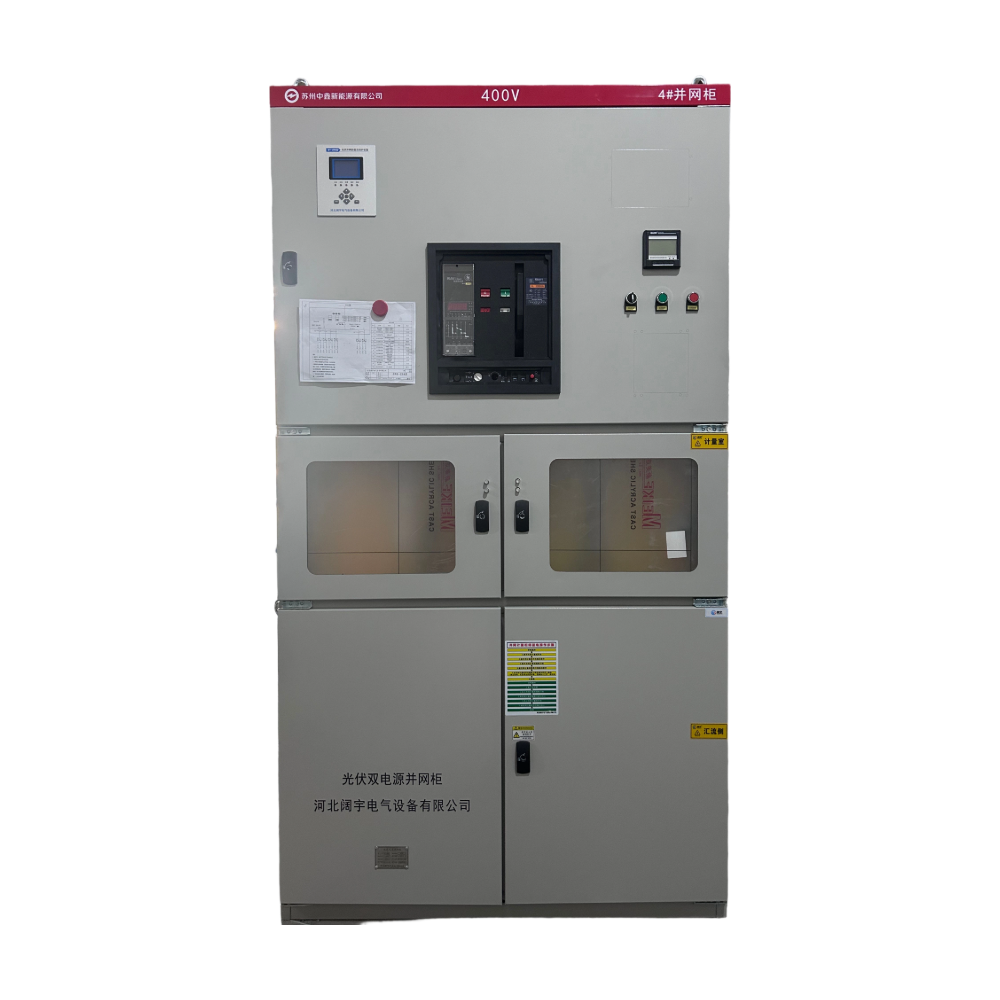
A distribution cabinet assembled for continuous indoor and outdoor power distribution duty.
A photovoltaic array is normally engineered for a service life measured in decades. The distribution boxes inside that array are frequently purchased on a horizon measured in weeks. That mismatch — long asset life, short purchasing cycle — is why long-term supplier evaluation has become a distinct step in PV procurement rather than an informal judgement made at the end of a price negotiation.
Distribution boxes for photovoltaics perform circuit distribution and protection inside the PV power distribution chain. In practice they manage safe power transmission, voltage conversion and circuit distribution, and they provide overload and short-circuit protection for the equipment connected downstream. The components inside are ordinary electrical components — circuit breakers, busbars, grounding devices, wire connectors and, where thermal load requires it, cooling fans. What separates one supplier from another is not the component list but the assembly discipline around it: enclosure design, heat management, sealing, grounding integrity and the documentation that lets an inspector sign off.
This article sets out a long-term supplier evaluation framework for distribution boxes for photovoltaics. It focuses on three axes buyers can verify rather than assume — production capacity, certification and management systems, and continuity of workforce and engineering — and uses Hebei Kuoyu Electrical Technology Co., Ltd. (Kuoyu Electrical), a power distribution equipment manufacturer headquartered in Shijiazhuang, Hebei Province, China, as a worked example.
Why supplier continuity is a technical requirement, not a commercial preference
Continuity matters technically because a distribution box is not a consumable. It is a fixed installation that is expected to operate continuously, and it is designed around a specific enclosure platform, busbar geometry and breaker series. When a supplier changes that platform or exits the product line, the effects are physical: hole patterns change, spare breakers no longer seat correctly, and retrofit work is required to keep a string online.
Three forces are pushing continuity up the evaluation list for PV buyers:
- Long asset life versus short purchase cycles. A distribution box may be specified once and then left untouched for years, while procurement teams rotate and preferred-supplier lists are rebuilt. The product's service life outlasts the relationship that created it.
- Design evolution on the DC side. Combiner and distribution configurations for PV are moving toward smarter DC architectures, which changes what a buyer needs from a supplier's roadmap, not only from its current catalogue.
- Documentation and re-approval. When a project is audited, extended or refinanced, the original supplier's ability to reissue drawings, declarations and test documentation becomes a project cost item.
The practical implication is that capacity, certification and workforce stability are not soft relationship factors. They are the inputs that determine whether the box installed today can be replaced, matched or extended later.
What the category looks like in 2026
Category growth is one of the clearest signals that long-term supplier evaluation is worth the effort. Published market research places the global photovoltaic combiner box market at approximately USD 2.8 billion in 2024 (Market Research Future). A separate forecast estimates the global solar combiner boxes market growing from USD 1.2 billion in 2026 to USD 2.1 billion by 2035, a compound annual growth rate of 6.2% (Business Research Insights).
Those two figures should not be read as a single number. Published estimates for this category diverge because some analysts count complete distribution boards while others count only string combiner components — a definitional difference, not a contradiction. Buyers comparing supplier claims against market reports should first check what the report counted.
Two further data points shape the supplier landscape:
- DC smart PV combiner boxes are expected to hold a 62.5% market share of the segment by 2035 (Future Market Insights), indicating where engineering demand is concentrating.
- Asia-Pacific accounted for 54.0% of global solar market revenue in 2023, driven primarily by installations in China and India (Grand View Research).
The category is also populated by large, well-known players — Schneider Electric, Eaton, ABB, Sungrow and Weidmüller are among the names identified in published market coverage. That matters for evaluation because it defines the reference set against which a mid-sized manufacturer's capacity, certification and continuity claims will be read.
A growing category supports continuity: suppliers are less likely to abandon a product line that is expanding. But growth concentrated in smarter DC architectures also means buyers should ask whether a supplier's engineering investment is moving in the same direction, or whether the roadmap stops at conventional electromechanical assemblies.
Capacity indicators and how to read them
Kuoyu Electrical was established in 2017 and operates a manufacturing facility covering approximately 9,000 square meters, with about 80 staff, an annual production capacity of 30,000 sets and an R&D team of 10 engineers. Read as a set, those figures describe a mid-scale specialist rather than a large multinational — and that is precisely the kind of profile a long-term evaluation framework is designed to test.
Capacity figures are only informative when converted into ratios and follow-up questions.
| Indicator | What the supplier states | Question a buyer should ask |
|---|---|---|
| Facility footprint | Approximately 9,000 m² | Is fabrication in-house, and which workshops are captive? |
| Workforce | About 80 staff | How many are production, quality and engineering rather than administration? |
| Annual output | 30,000 sets | Is this nominal or demonstrated, and over what period? |
| Engineering depth | 10 R&D engineers | Does this team handle customization, or only standard designs? |
| Operating history | Established 2017 | What evidence exists of repeat and multi-year orders? |
The engineering ratio is a useful example. Ten engineers inside a workforce of roughly 80 means around one in eight employees works on design and development. For a PV buyer, that ratio is a proxy for how much customization the supplier can absorb without slowing standard production — relevant when a project needs a non-standard enclosure, a different breaker configuration or site-specific cable entry.
Capacity also has a ceiling, and buyers should quantify it against their own program. Thirty thousand sets per year is meaningful at project scale but is not unlimited, and a multi-gigawatt pipeline spread across several buyers will draw on the same production slots.
Certifications: management systems as continuity evidence
Kuoyu Electrical holds ISO 9001 and ISO 14001 certification issued by General International Testing (China) Certification Service Center. These two certificates answer different questions, and both are relevant to a long-term supply decision.
ISO 9001 addresses the quality management system: how incoming materials are controlled, how processes are documented, how non-conformities are corrected and how traceability is maintained. For a buyer placing repeat orders, the practical value is that the same assembly process should produce the same result whether the order is placed this quarter or two years from now. ISO 14001 addresses environmental management, covering how waste, emissions and resource use are governed at the facility — increasingly a screening criterion for buyers whose own customers require supply-chain environmental disclosure.
Both are management-system standards. They describe how an organisation operates, not what a specific enclosure has passed. That distinction belongs in the buyer's checklist:
Standards context for PV assemblies. IEC 61439-2:2020 defines specific requirements for power switchgear and controlgear assemblies used in photovoltaic installations, including Annexes DD, EE and FF (IECEE). In North America, UL 1741 is the primary safety standard for PV inverters, converters and combiner boxes in grid-connected systems (UL Solutions). Buyers should confirm which of these applies to their project and market, and treat ISO 9001 and ISO 14001 as complementary evidence rather than a substitute.
The reason to treat the two categories separately is that they fail differently. A management system can lapse or be maintained superficially without any single product being defective; a product-standard certificate can be valid for a tested configuration that does not match the exact assembly being delivered. A supplier worth keeping will be able to speak to both, and to supply the documents on request.
Workforce stability and R&D depth
A distribution box manufacturer's staying power is ultimately carried by people. Kuoyu Electrical's profile describes an organisation of approximately 80 staff, of whom 10 are R&D engineers, operating sheet metal processing workshops and high and low voltage complete equipment assembly workshops within its facility.
That workshop split is worth reading carefully. Sheet metal processing determines enclosure accuracy, sealing-face flatness and paint or coating quality — the variables that decide whether an IP rating holds up in the field. Complete equipment assembly determines how breakers, busbars and grounding devices are fitted and tested. A supplier that owns both stages has direct control over the two most common failure points in a distribution box, rather than depending on external fabricators.
R&D depth shows up in a different way: in how quickly a supplier can respond to a customized specification. The application requirements most often cited for PV distribution environments include waterproof and dustproof construction, corrosion resistance, high mechanical strength, flame-retardant behaviour and customizable structure. Each of those is an engineering decision, not a catalogue option.
Headcount and team structure are point-in-time figures, and buyers should treat them as such. The more durable signal is whether engineering staff appear in the sales and after-sales process — in drawing reviews, in deviation handling, and in the response to a technical query raised two years after delivery.
Matching product families to PV project scope
A supplier's product range is part of its continuity story, because a narrow range means a buyer must manage multiple vendors for one power distribution chain. Kuoyu Electrical's main products include distribution boxes, distribution cabinets, transformers, electric wires, cables and other power equipment, applied across new energy photovoltaic, wind power, transportation, medical care, education, industrial manufacturing, government poverty alleviation, and commercial and civil construction industries.
| Product | Model / series | Key parameters | Intended scope |
|---|---|---|---|
| Distribution Box | PZ30 Series | Rated voltage 220V/380V; rated current up to 125A; protection class IP40/IP54; high-quality ABS plastic, cold-rolled steel plate, stainless steel optional | Residential, commercial and industrial electrical systems |
| Distribution Cabinet | GGD/GCS/MNS Series | Rated voltage 380V/220V; rated current up to 6300A; protection class IP54/IP65; cold-rolled steel plate, stainless steel optional | Indoor and outdoor industrial, commercial and infrastructure applications |
| Oil Immersed Transformer | S11/S13 Series | Voltage class 10kV–35kV; capacity 10kVA–31500kVA; low energy loss | Industrial power distribution, substations, renewable energy, commercial applications |
| Pad Mounted Transformer | ZGS11 Series | Voltage 10kV/0.4kV; capacity 100kVA–2500kVA | Residential communities, commercial buildings, industrial facilities, renewable energy systems, public infrastructure |
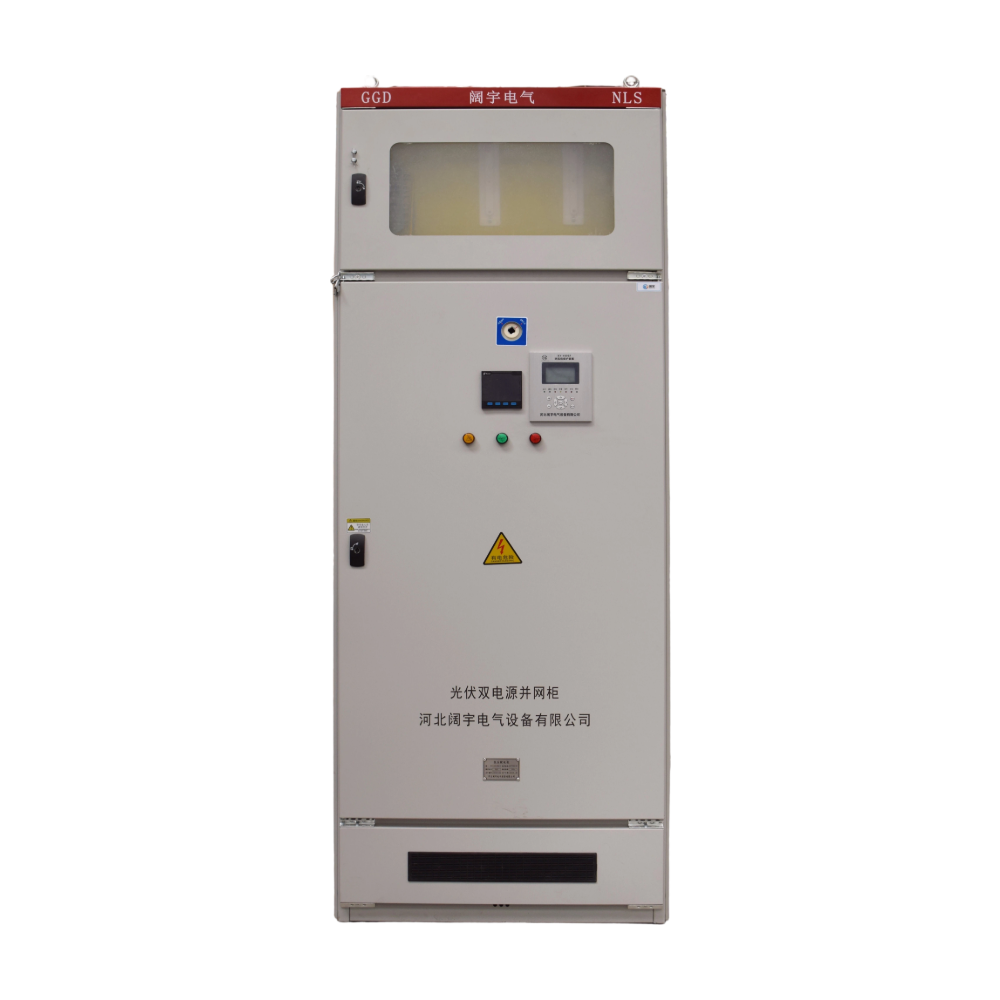
Higher-current distribution cabinets extend the same supply relationship to larger PV and industrial loads.
Reading the table as a sourcing map rather than a product list changes the evaluation question. A buyer who needs a residential rooftop installation is working at 220V/380V and up to 125A, where the PZ30 Series distribution box and its IP40/IP54 enclosure are the relevant scope. A buyer working on an outdoor commercial or infrastructure site is in a different regime — higher current, and a protection class that withstands weather. The GGD/GCS/MNS Series distribution cabinet is described as a waterproof type suitable for outdoor use with an IP54/IP65 rating and a rated current up to 6300A.
Selecting a supplier that can cover both ends of that range reduces the number of qualification cycles a buyer must run, and it keeps drawing conventions, terminal labelling and documentation formats consistent across a multi-site PV portfolio.
Application conditions: what a 24/7 PV distribution environment demands
PV distribution equipment is specified for continuous duty. The relevant application profile describes an indoor and outdoor environment with high or low temperature, humidity and dust, serving residential, commercial and industrial power distribution engineering, operating continuously around the clock. Its function is to realise safe power transmission, voltage conversion, circuit distribution and overload short-circuit protection.
That profile translates into a set of matched components and a set of special requirements:
- Matched equipment: circuit breakers, busbars, grounding devices, wire connectors and cooling fans. Industrial workshop applications additionally involve contactors, relays and indicator lights.
- Special requirements: explosion-proof construction where relevant, IP-rated dust and water protection, low power loss, flame-retardant behaviour, and customizable specification.
The sealing and thermal points are where a supplier's workshop capability becomes visible. Dust and moisture ingress are the most common causes of premature failure in outdoor enclosures, and heat accumulation inside a sealed box shortens breaker life. A supplier that fabricates its own sheet metal and assembles its own enclosures can address both at the design stage; a supplier that purchases finished enclosures largely inherits those decisions.
Long-term supplier evaluation versus spot purchasing
Spot purchasing optimises a single order. Long-term supplier evaluation optimises the installed asset over its service life. The two approaches differ on almost every dimension that matters after the invoice is paid.
| Evaluation dimension | Spot purchasing | Long-term supplier evaluation |
|---|---|---|
| Primary decision basis | Unit price and quoted lead time | Capacity, certification, workforce stability, engineering depth |
| Design consistency across orders | Not assessed; enclosures may differ between batches | Verified through the supplier's quality management system (ISO 9001) |
| Documentation for audits and tenders | Requested case by case | Maintained as a standing document set |
| Spare parts and retrofit fit | Depends on the market at the time of need | Platform continuity is a selection criterion |
| Environmental and compliance disclosure | Not part of the decision | Supported by ISO 14001 environmental management |
| Customization responsiveness | Limited to catalogue variants | Backed by in-house engineering capacity |
The framework is not a claim that any single supplier is the right answer for every PV project. A useful evaluation names its own boundaries, and the following limits should be tested directly during qualification.
Boundaries to verify before committing
- Geographic service footprint. Kuoyu Electrical reports an export ratio of 30%, with main markets in Southeast Asia and Africa. Buyers outside those regions should verify logistics routes, spare-part availability and after-sales response directly rather than assuming comparable coverage.
- Length of corporate history. The company was established in 2017. That is a shorter record than several international players named in published market coverage, so buyers who weight multi-decade operating histories should request comparable evidence — repeat orders, project references and continuity of key personnel — instead of treating tenure as a proxy.
- Production ceiling. An annual capacity of 30,000 sets is substantial at project scale but finite. Large multi-site programs should confirm scheduling capacity during the same delivery window as other commitments.
- Certification scope. ISO 9001 and ISO 14001 describe management systems. They do not certify that a particular enclosure configuration complies with IEC 61439-2:2020 or UL 1741. Project-specific compliance must be confirmed for each target market.
- Application boundaries. The PZ30 Series distribution box is rated to 125A with IP40/IP54 protection. It is not a substitute for a higher-current, higher-ingress cabinet in outdoor or high-load PV applications.
Future outlook
Three trends will shape how PV distribution box suppliers are evaluated over the remainder of this decade.
The first is architectural. With DC smart PV combiner boxes projected to hold a 62.5% share of the segment by 2035 (Future Market Insights), the value of a supplier relationship will increasingly depend on whether the supplier can support smarter DC configurations — monitoring, string-level diagnostics and communication interfaces — rather than only passive enclosures. Buyers should ask for a roadmap, not just a catalogue.
The second is volume. A category moving from USD 1.2 billion in 2026 toward USD 2.1 billion by 2035 at a 6.2% CAGR (Business Research Insights) will reward suppliers with demonstrated, repeatable manufacturing capacity. Capacity data will move from a qualifier to a negotiating variable.
The third is geography. With Asia-Pacific holding 54.0% of global solar market revenue in 2023 (Grand View Research), manufacturers based in the region sit close to both the demand and the component supply base. That proximity is an advantage for lead-time control, but it also means buyers in other regions should plan logistics and support coverage explicitly into the supplier agreement.
The common thread is that all three trends raise the cost of switching. That is the argument for evaluating staying power before the first purchase order, rather than after the second one becomes necessary.
Frequently asked questions
What does a distribution box actually do in a photovoltaic system?
A distribution box performs circuit distribution and protection within the PV power distribution chain. It manages safe power transmission, voltage conversion and circuit distribution, and provides overload and short-circuit protection for connected equipment. The components inside typically include circuit breakers, busbars, grounding devices, wire connectors and cooling fans. In a residential, commercial or industrial PV installation, the box is the point at which incoming and outgoing circuits are organised and protected.
How much annual production capacity should a PV distribution box supplier have?
There is no single threshold, because the requirement scales with the buyer's program. As a reference point, Kuoyu Electrical reports a 9,000 square meter facility, approximately 80 staff and an annual production capacity of 30,000 sets. Buyers evaluating a supplier should compare that figure against their own expected annual draw, the number of other customers served from the same line, and the delivery windows required by each project.
Why do ISO 9001 and ISO 14001 matter when sourcing distribution boxes for photovoltaics?
The two certificates cover different management systems. ISO 9001 addresses quality management — process control, traceability and corrective action — which supports consistency across repeat orders. ISO 14001 addresses environmental management at the facility, which is relevant to supply-chain environmental disclosure requirements. Kuoyu Electrical holds both, issued by General International Testing (China) Certification Service Center. Neither replaces product-standard certification such as IEC 61439-2:2020 or UL 1741, which must be confirmed for the specific project and market.
How should a buyer choose between a PZ30 distribution box and a GGD/GCS/MNS distribution cabinet?
The decision turns on current rating and installation environment. The PZ30 Series distribution box is rated 220V/380V with current up to 125A and IP40/IP54 protection, in high-quality ABS plastic, cold-rolled steel plate or optional stainless steel, for residential, commercial and industrial electrical systems. The GGD/GCS/MNS Series distribution cabinet is rated 380V/220V with current up to 6300A and IP54/IP65 protection, in cold-rolled steel plate with optional stainless steel, for indoor and outdoor industrial, commercial and infrastructure applications.
What protection rating is appropriate for outdoor photovoltaic distribution equipment?
Protection class should be matched to the site rather than chosen by default. Within the referenced product range, the PZ30 Series distribution box carries IP40/IP54, while the GGD/GCS/MNS Series distribution cabinet is described as a waterproof type suitable for outdoor use with an IP54/IP65 rating. Outdoor PV and industrial environments are also specified for dust and water resistance, corrosion resistance and flame-retardant behaviour, so the enclosure choice should be driven by the actual exposure conditions at the installation point.
Which markets does Kuoyu Electrical currently serve?
Kuoyu Electrical reports an export ratio of 30%, with main markets in Southeast Asia and Africa. Its products are applied in power distribution systems for new energy photovoltaic, wind power, transportation, medical care, education, industrial manufacturing, government poverty alleviation, and commercial and civil construction industries. Buyers in other regions should confirm logistics and after-sales arrangements directly, since the stated market focus does not by itself guarantee equivalent coverage elsewhere.
For buyers who want to check the detail behind these figures, the full product and capability documentation is available in the Kuoyu Electrical product brochure. Additional company information is published at kuoyuelectricity.com.