
Distribution Boxes for Photovoltaics: Site Duty Matching
Distribution Boxes for Photovoltaics: Site Duty Matching
Infrastructure construction sites impose a duty cycle that few datasheets state outright: continuous operation, wide temperature swings, persistent dust, and humidity that condenses on cold surfaces overnight. For distribution boxes for photovoltaics, that makes enclosure matching the first decision and the electrical rating the second. The PZ30-series industrial and residential distribution box, rated 220V/380V with current up to 125A and protection class IP40 or IP54 in high-quality ABS plastic, cold-rolled steel plate or optional stainless steel, suits sheltered and semi-protected positions. The GGD/GCS/MNS waterproof distribution cabinet, rated 380V/220V with current up to 6300A and protection class IP54 or IP65 in cold-rolled steel plate with stainless steel optional, is the class intended for sustained indoor and outdoor industrial, commercial and infrastructure duty.
The difference is not cosmetic. An enclosure correctly matched to a site-office wall may be the wrong assembly for an exposed yard position beside a pump set, and the reverse choice adds footprint and installation work without adding protection. The sequence that holds up under review is duty first, enclosure class second, material third, electrical ratings fourth, and documented evidence for each claim before the order is placed.
The short answer
- Sheltered or semi-protected position with feeder current within 125A: PZ30-series distribution box, IP40 or IP54, 220V/380V.
- Sustained outdoor, high-dust or high-humidity position with larger feeders: GGD/GCS/MNS distribution cabinet, IP54 or IP65, 380V/220V.
- String-level DC aggregation ahead of an inverter: a DC combiner function, which is a different product decision from general low-voltage distribution.
Why a Construction Site Imposes a Different Duty Class
The application data behind these assemblies describes a continuous-duty environment: 24/7 operation under indoor and outdoor high and low temperature, humid and dust-prone conditions. The stated function is safe circuit control, power distribution management, and overload and short-circuit protection of electrical equipment. The stated special requirements are waterproof and dustproof construction, corrosion resistance, high mechanical strength, a customizable structure and flame-retardant properties. Matched equipment typically includes circuit breakers, contactors, relays, busbars, grounding devices, indicator lights and cooling fans — the enclosure houses and protects those devices rather than replacing them.
Construction sites add pressures that a voltage rating does not capture. Earthworks, cutting and demolition generate abrasive dust that settles on surfaces and works into cable entries. Incomplete building envelopes, ground contact and day-night temperature cycles produce condensation. Sun-exposed steel and shaded positions can sit at very different temperatures on the same day. Temporary supplies are also handled, re-fed and occasionally relocated, which places mechanical demands on doors, hinges and gland plates.
That combination is why one project can legitimately need two enclosure classes at the same time: protected positions inside a building under construction, and exposed positions on the yard, at the site substation or along a PV array under commissioning. Treating the whole site as a single environment is the most common specification error in this category.
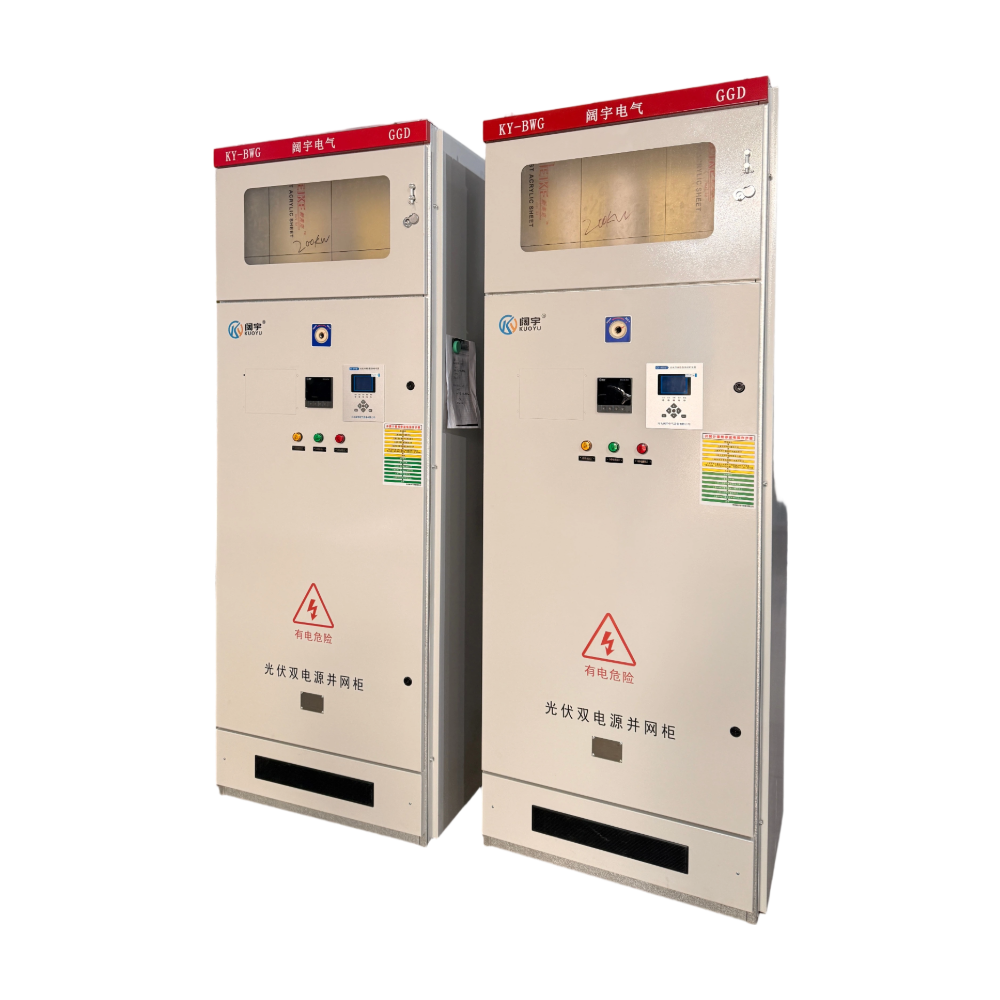
Cabinet-format distribution equipment for indoor and outdoor infrastructure power distribution. Image: Kuoyu Electrical.
Read the Duty Envelope Before the Datasheet
Six questions resolve most of the matching decision before any product comparison begins.
- Is the enclosure position roofed, walled or fully exposed to wind-driven rain?
- How long will the box stay in service: weeks of construction, or the operating life of the asset?
- How is the area cleaned: dry brushing, compressed air, or water?
- What is the ambient temperature range and solar exposure at that exact position?
- What current has to pass through, and how many outgoing circuits are required?
- Is the function AC low-voltage distribution, or DC string aggregation?
The answers usually split a site into two or three zones, each with its own enclosure class. That zone split, rather than a single site-wide rating, is what keeps both over-specification and under-specification out of the bill of materials.
PZ30-Series Distribution Boxes: The Sheltered-Duty Choice
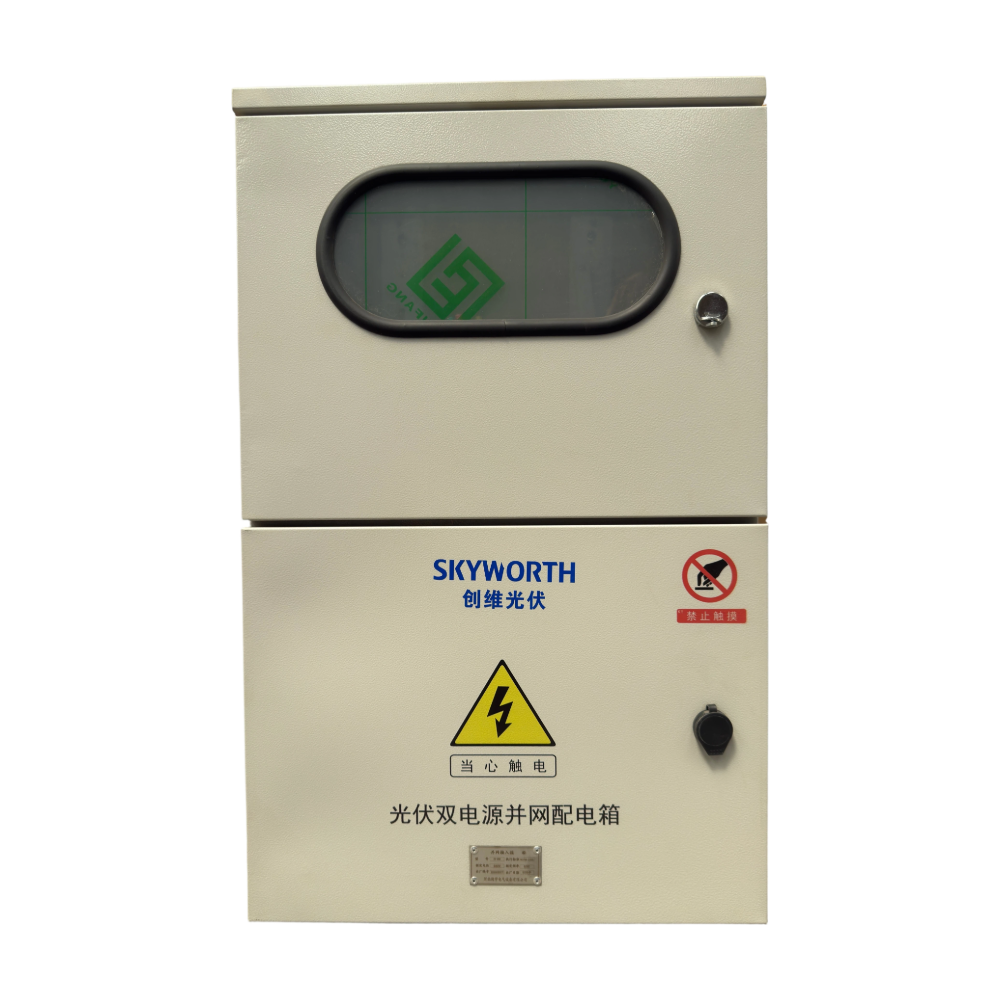
PZ30-series distribution box rated 220V/380V, up to 125A, IP40 or IP54. Image: Kuoyu Electrical.
The PZ30 series is an industrial and residential distribution box rated 220V/380V with current up to 125A and protection class IP40 or IP54. It is offered in high-quality ABS plastic or cold-rolled steel plate, with stainless steel optional, and is applied in residential, commercial and industrial electrical systems.
That profile fits the sheltered half of a construction site: site offices, canteens, stores, temporary workshops and final distribution inside a building whose envelope is already closed. In those positions the box meets dust and occasional splashes but not wind-driven rain, and feeder current usually stays within the 125A ceiling.
The boundary is equally clear. IP40 carries no water protection at all, so an IP40 box in an open position is a specification error rather than a cost saving. The IP54 version improves resistance to splashing, but the enclosure is still a box format with a defined current ceiling. Where the position is exposed for the full construction period, where cleaning involves hoses, or where outgoing circuits exceed the rating, the enclosure class should change rather than the seal.
Installation quality decides the outcome as much as the rating. Cable entries, gland plates and door closure are the parts that let dust and water in when they are wrong, and no enclosure rating compensates for an open knock-out or a deformed gasket.
GGD/GCS/MNS Cabinets: Built for Sustained Outdoor Duty
The GGD/GCS/MNS series is a waterproof distribution cabinet rated 380V/220V with current up to 6300A and protection class IP54 or IP65. It is built in high-quality cold-rolled steel plate with stainless steel optional, and is specified for indoor and outdoor industrial, commercial and infrastructure applications.
This is the class that matches the exposed zones of an infrastructure site: yard positions beside pumps and compressors, the low-voltage side of a site substation, distribution for ground-mounted solar under construction, and permanent outdoor positions that outlive the construction phase. The higher current ceiling and cabinet format allow more outgoing circuits and larger feeders than a box can carry.
The material option matters more outdoors than indoors. Cold-rolled steel plate is the standard construction; stainless steel is optional and is normally selected when the corrosion exposure of the position, whether coastal air, chemical dust or persistent moisture, is the governing factor. That decision belongs to the position, not to the project as a whole.
A cabinet also requires installation planning that a box does not: a level base, planned cable entry, maintenance clearance and a thermal decision. Cooling fans appear in the matched-equipment list for these assemblies because a closed enclosure concentrates heat, and an ingress rating addresses dust and water rather than internal condensation.
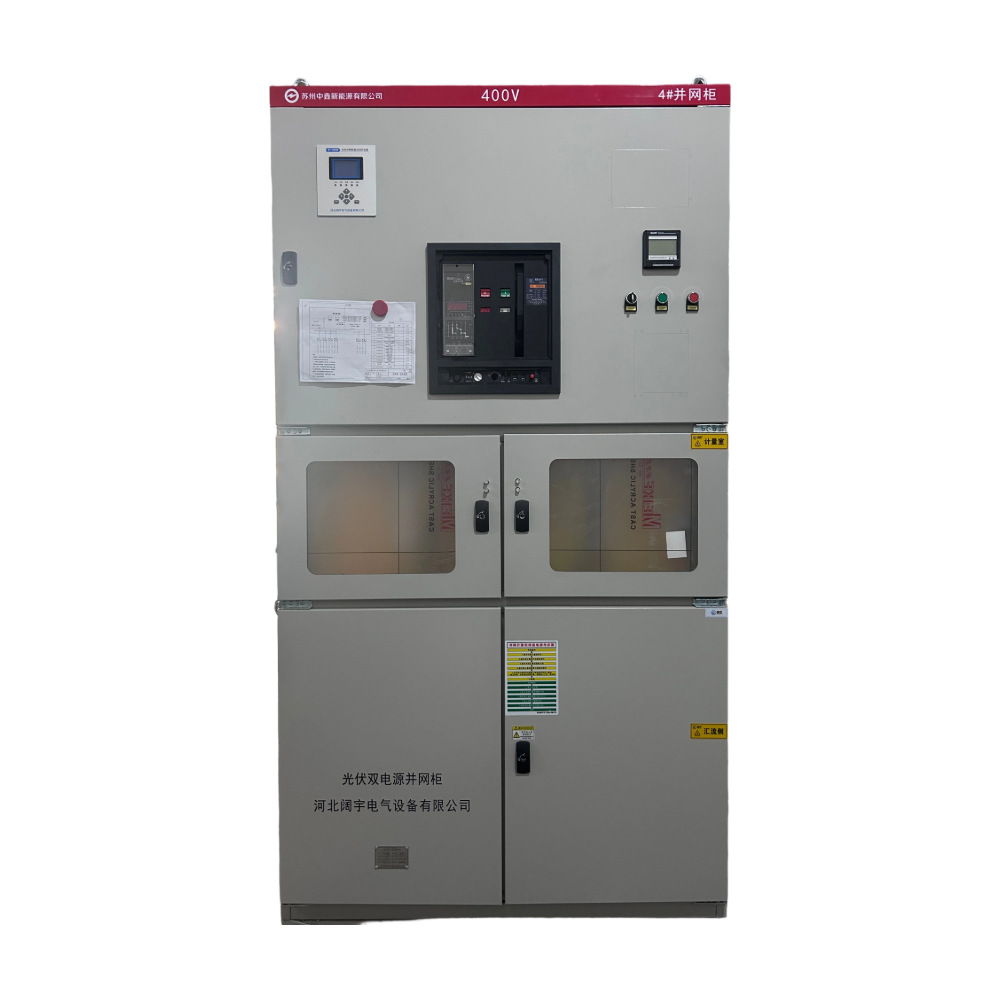
Cabinet-format assembly for exposed yard, substation and infrastructure positions. Image: Kuoyu Electrical.
What IP54 and IP65 Actually Commit To
Enclosure ratings are often compared as if the higher number is automatically the safer specification. The two digits describe two different protections, and reading them separately prevents both under-specification and unnecessary cost.
The first digit covers solids. A level of 4 protects against solid objects above 1 mm with limited dust ingress; 5 is dust protected, meaning limited ingress that does not interfere with operation; 6 is dust tight. The second digit covers water: 0 means no protection, 4 means protection against splashing, 5 means protection against water jets, 6 means protection against powerful water jets. IP54 therefore combines dust-protected construction with splash protection, while IP65 combines dust-tight construction with jet protection.
Two consequences follow. First, IP65 is not automatically better than IP54; it is a different commitment, justified where jets or heavy dust are real, and unnecessary where they are not. A specification should record the exposure that justifies the higher rating. Second, a rating describes the enclosure as tested, not the installation as built. Gland sealing, cable entry direction, door alignment and gasket condition determine field performance, which is why commissioning checks belong in the specification alongside the rating.
Impact resistance is a separate property and should be stated separately. In one documented utility-scale DC combiner example, ABB lists IP66 enclosure protection together with IK08 impact protection, alongside a 1500 V DC maximum system voltage, a 256 A rated output current, 16 input circuits and Type 2 overvoltage protection. That is one manufacturer's configuration rather than an industry benchmark, but it shows how a specification is built: ingress protection, impact protection and electrical ratings are separate lines, and IP66 should not be quietly equated with IP65 when the requirement has not been defined.
Voltage, Current and the AC/DC Divide in PV Distribution
Photovoltaic distribution is not a single product category, and mixing functions is a specification error in its own right. An AC low-voltage distribution assembly rated 220V/380V is not a 1500 V DC string device, and enclosure quality does not correct that mismatch.
On the DC side, a PV combiner box performs a defined job: it consolidates the DC output of multiple PV strings into one output that feeds the inverter, as described in ABB's application note on DC combiner boxes in photovoltaic plants. String count, maximum system voltage and output current drive the configuration before enclosure class is even discussed.
On the AC side, the aggregation point moves. Weidmuller states that its PV AC combiner-box line is designed for string-inverter systems and can collect two to six string inverters in one cabinet. The electrical question shifts from string current to inverter output, and the enclosure often sits closer to the load it serves.
The standard basis differs by market as well. IEC 61439-2:2020, the low-voltage switchgear and controlgear assembly standard, includes Annexes DD, EE and FF specifically for assemblies used in photovoltaic installations. Weidmuller states that its high-current PV DC combiner boxes are tested according to IEC 61439-2 — a manufacturer statement that a buyer should confirm against test documentation rather than accept as a certificate. In the United States, UL Solutions references UL 1741 for combiner boxes within solar balance-of-system certification, which is a separate pathway and does not by itself set requirements in other markets.
For a general low-voltage assembly such as the PZ30-series box or the GGD/GCS/MNS cabinet, the practical rule is simple: use it where AC distribution is the function, and do not substitute it for a DC string combiner unless the manufacturer confirms the DC duty, the string configuration and the protection scheme in writing.
Application Scenarios: Matching the Box to the Site
Site offices, workshops and stores
These positions are roofed and walled, and current demand is modest. A PZ30-series box in IP40 or IP54 configuration matches the duty, provided the final position is genuinely protected and the feeder stays within the 125A rating. Where a store opens onto a dusty yard, the IP54 variant is the more defensible default.
Yard, pump areas and the LV side of a site substation
Here the enclosure is exposed for the duration of the works and often carries larger feeders or more outgoing circuits. A GGD/GCS/MNS cabinet in IP54 or IP65, in cold-rolled steel plate with stainless steel optional for corrosive positions, matches this duty. Access clearance, base preparation and cable entry planning belong in the same decision.
Ground-mounted solar under construction
A PV site under construction carries two distinct requirements at once: string-level DC aggregation ahead of the inverters, and conventional AC distribution for site power, commissioning loads and auxiliary equipment. Treating the DC combiner decision and the AC cabinet decision as one purchase is where mismatches begin, because the electrical parameters, the standard basis and the enclosure class are all set differently.
Permanent infrastructure that outlives the construction phase
Some boxes installed during construction become part of the operating asset. In that case the enclosure should follow the operating life and the maintenance regime rather than the construction schedule, because a temporary specification that stays in place for a decade is no longer temporary in its consequences.
Side-by-Side: PZ30 Versus GGD/GCS/MNS
| Attribute | PZ30-series distribution box | GGD/GCS/MNS distribution cabinet |
|---|---|---|
| Rated voltage | 220V/380V | 380V/220V |
| Rated current | Up to 125A | Up to 6300A |
| Protection class | IP40 / IP54 | IP54 / IP65 |
| Material | ABS plastic, cold-rolled steel plate, stainless steel optional | Cold-rolled steel plate, stainless steel optional |
| Typical position | Residential, commercial and industrial electrical systems; sheltered site positions | Indoor and outdoor industrial, commercial and infrastructure applications |
| Function | Circuit distribution and overload and short-circuit protection | Safe power transmission and distribution, circuit control, overload and short-circuit protection |
| Fit boundary | Not for sustained exposed outdoor duty; 125A ceiling | Requires base, cable-entry and thermal planning |
Where the Match Breaks Down
The failures in this category are predictable, and most of them are specification failures rather than product failures.
- Treating the IP rating as the only criterion, without recording the exposure, duration and cleaning regime that justify it.
- Placing a 220V/380V AC distribution assembly where a DC string combiner function is required, or the reverse.
- Assuming a stainless steel option removes maintenance; door seals, hinges and cable entries still need inspection.
- Reading ISO 9001 and ISO 14001 as product type tests rather than management-system certifications.
- Sizing on catalogue current without checking the installed condition, since ambient temperature inside a closed enclosure is not the same as site air temperature.
- Accepting a certificate that covers a factory or a product family without confirming that the ordered model is inside the certified scope.
None of these require a new product. They require the specification to state the duty, and the supplier to answer the duty in writing.
Procurement Checks That Separate Evidence from Claims
For a photovoltaic distribution box on an infrastructure site, a compact evidence pack is more useful than a long brochure.
- Certification records: certificate number, issuing body, scope statement and validity date, with confirmation that the ordered model falls inside the scope.
- Enclosure evidence: the declared IP rating, the test basis behind it, gasket and cable-entry design, and a material certificate where the stainless steel option is specified.
- Electrical evidence: rated voltage and current confirmed for the installed condition, outgoing circuit count, and protection coordination documentation.
- PV-specific evidence where relevant: DC or AC function, string count, maximum system voltage and surge-protection type.
- Order data: the testing regime, customization scope for voltage and logo, minimum order quantity, lead time, and the exact configuration those figures refer to.
Kuoyu Electrical's capability data lists OEM production, voltage and logo customization, a monthly capacity of 8,000 units, a 30-day lead time, a minimum order quantity of 2 units, 100% testing and remote after-sales support. These are company-reported figures tied to a configuration, so the order-specific confirmation should restate them in writing rather than rely on the general statement.
Kuoyu Electrical in the PV Distribution Supply Chain
Kuoyu Electrical, legally Hebei Kuoyu Electrical Technology Co., Ltd., is a Shijiazhuang-based manufacturer founded in 2017 that produces distribution boxes, distribution cabinets, transformers, wires and cables, and reports an annual output of 30,000 sets. Its portfolio covers both sides of the matching decision described here: the PZ30-series distribution box and the GGD/GCS/MNS distribution cabinet, alongside S11/S13 oil-immersed transformers and ZGS11 pad-mounted transformers for the upstream voltage step.
On certification, the company states that it passed ISO 9001 three-system certification in 2017 and lists ISO 9001 and ISO 14001 among the certifications applied to its distribution boxes. Both are management-system certifications: they describe how quality and environmental processes are controlled, not the ingress or short-circuit performance of a specific enclosure. Buyers evaluating a waterproof solar distribution box should therefore pair the certificate request with product-level evidence — the declared IP rating, the test basis behind it, and the material specification of the ordered variant.
Company information and product documentation are published at Kuoyu Electrical.
Market Context and Outlook
Demand context supports the direction without changing the engineering logic. Business Research Insights estimates the global solar combiner boxes market at USD 1.2 billion in 2026, rising to USD 2.1 billion by 2035, and projects that DC smart combiner boxes will hold a 62.5% share by 2035. These are commercial research forecasts based on the publisher's methodology; they indicate direction rather than measured shipment volumes, and they do not alter what a specific construction-site position requires.
For a site engineer or procurement team, the implication is not to buy the highest enclosure rating available. It is that specification scrutiny is likely to increase as volumes grow and more assemblies are compared across suppliers. A project that records why IP54 was sufficient at one position and why IP65 was required at another holds up better under review than one that applies a single rating everywhere.
The near-term outlook is therefore incremental rather than disruptive. Enclosure classes stay the same, but the evidence requested at the point of order becomes more specific: declared ratings, standard basis, material certificates and the scope of certification.
FAQ
What IP rating does a photovoltaic distribution box need on an outdoor construction site?
It depends on the exposure of the position rather than on the site as a whole. Within the Kuoyu Electrical range, the PZ30-series box is offered with IP40 or IP54 protection and the GGD/GCS/MNS cabinet with IP54 or IP65. A roofed position that sees dust and occasional splashes calls for a different rating from an exposed yard position that sees wind-driven rain and hose cleaning. The rating should follow the recorded exposure, not the highest number available.
Can a PZ30-series box be installed outdoors?
It can be used in an outdoor location only where the enclosure is shielded from direct rain and sustained dust, and where the IP54 version is selected rather than IP40, which provides no water protection. Where the position is exposed for the whole construction period or is cleaned with water, the GGD/GCS/MNS cabinet class is the appropriate choice for that position.
Is IP65 always better than IP54?
Not automatically. IP65 adds protection against water jets and is the right choice where cleaning or exposure justifies it; where the position only sees splashes, IP54 already covers the duty. A specification should state the exposure that justifies the higher rating rather than defaulting to it. Both ratings describe the enclosure as tested, and cable entries, gland sealing and door closure decide how it performs in service.
Do distribution boxes for photovoltaics have to be verified to IEC 61439-2?
IEC 61439-2:2020 is the low-voltage switchgear and controlgear assembly standard, and it includes Annexes DD, EE and FF specifically for assemblies used in photovoltaic installations. Whether a given box must be verified against it depends on the market, the project specification and the assembly type. In the United States, UL Solutions references UL 1741 for combiner boxes within solar balance-of-system certification, which is a separate pathway. Buyers should ask which standard the assembly was designed and tested to and request the supporting documentation.
What do ISO 9001 and ISO 14001 cover on a PV distribution box?
They cover management systems: quality management under ISO 9001 and environmental management under ISO 14001. They support confidence in how a factory controls its processes, but they are not product type-test certificates and do not by themselves demonstrate an enclosure rating or a short-circuit rating. Kuoyu Electrical reports that it passed ISO 9001 three-system certification in 2017 and lists ISO 9001 and ISO 14001 among the certifications applied to its distribution boxes; buyers should request the certificate number, issuer, scope and validity date.
Cold-rolled steel or stainless steel for a construction-site enclosure?
Both the PZ30-series box and the GGD/GCS/MNS cabinet are offered in high-quality cold-rolled steel plate, with stainless steel optional. The decision should follow the corrosion exposure of the position, the cleaning regime and the expected service life of the installation. Stainless steel is an option in the range rather than a maintenance-free guarantee; seals, hinges and cable entries still need periodic inspection.
Conclusion
Matching distribution boxes for photovoltaics to outdoor duty is a zoning exercise before it is a purchasing exercise. Once each position on an infrastructure site is classified by exposure, duration, cleaning regime and current, the choice between a PZ30-series box and a GGD/GCS/MNS cabinet follows from the duty rather than from a preference for the highest number on a label. The remaining work is documentation: declared ratings, standard basis, material specification and the scope of certification, confirmed for the exact model being ordered.
The Kuoyu Electrical product brochure is available for download: Kuoyu Electrical product brochure (PDF).
Есть вопросы или нужны дополнительные детали?
Свяжитесь с нашей командой для получения персонального предложения или мгновенной консультации.
Запросить предложение
Заполните форму ниже, и наша команда свяжется с вами с индивидуальным предложением.
Прямой чат WhatsApp
Предпочитаете общаться в реальном времени? Напишите нам в WhatsApp для мгновенной помощи и быстрых ответов.
- Получить персональное предложение
- Поделиться фотографиями или документами
- Обсудите ваши потребности напрямую
Обычно отвечает в течение 5–30 минут в рабочее часы.