
Distribution Boxes for Photovoltaics: Key Buying Factors
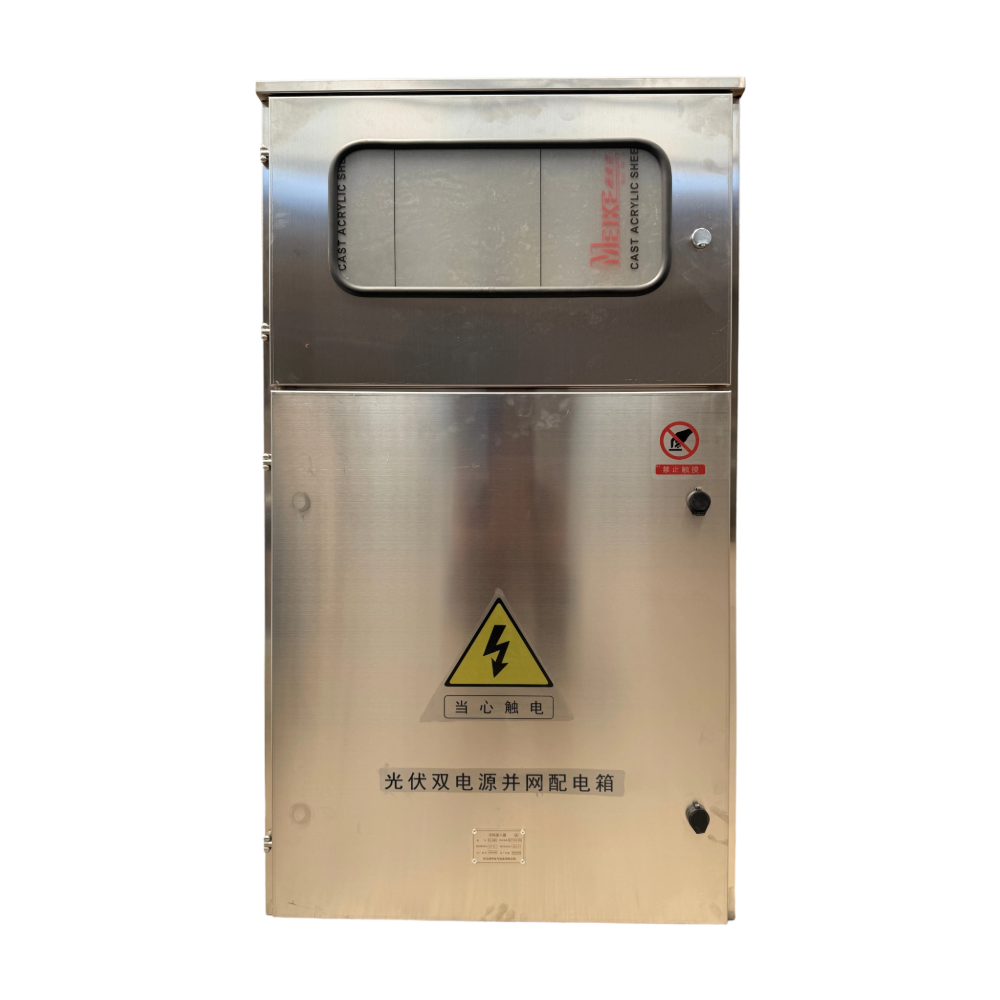
PZ30 Series distribution box from Kuoyu Electrical.
Distribution boxes for photovoltaics: an introduction
Hebei Kuoyu Electrical Technology Co., Ltd. is a manufacturer of power distribution equipment that supplies distribution boxes, distribution cabinets, transformers, wires, and cables for photovoltaic and other new-energy projects. Buyers researching distribution boxes for photovoltaics need to evaluate enclosure protection, internal protection devices, standards compliance, and supplier manufacturing capacity before selecting a product.
In a solar installation, distribution equipment performs a series of essential tasks: it receives power from inverters or string combiners, routes it to loads or the grid, and isolates faults. A photovoltaic distribution box houses the circuit breakers, surge protection, busbars, and switching components that keep those circuits safe. Because solar projects operate outdoors and sometimes in harsh climates, the enclosure must be more than a simple metal box: it needs the correct ingress protection, corrosion resistance, and thermal management.
This article is written for buyers in the awareness and research stage. It focuses on the product categories, technical criteria, application scenarios, and market signals that shape procurement decisions for solar distribution equipment.
The procurement challenge and market opportunity
Outdoor solar installations expose electrical equipment to high humidity, dust, temperature swings, and continuous operation. A solar distribution box must therefore combine mechanical strength, flame-retardant materials, and sufficient ingress protection. The challenge is amplified when buyers are sourcing from overseas, because specifications must be communicated clearly and verified against local standards.
Market data shows why this category is growing. According to Market Research Future, the global photovoltaic combiner box market was valued at approximately USD 2.8 billion in 2024. Business Research Insights projects that the global solar combiner boxes market will grow from USD 1.2 billion in 2026 to USD 2.1 billion by 2035, a compound annual growth rate of 6.2%. These figures indicate sustained demand for enclosures that protect PV circuits.
Kuoyu Electrical at a glance
Hebei Kuoyu Electrical Technology Co., Ltd. was established in 2017 and employs approximately 80 staff. Its manufacturing facility covers about 9,000 square meters and has an annual production capacity of 30,000 sets. The R&D team is composed of 10 engineers.
The company passed ISO9001 three-system certification in 2017. Its main products include distribution boxes, distribution cabinets, transformers, electric wires, cables, and other power equipment. According to the company, every procedure from raw material procurement to scheme design, assembly production, and finished product acceptance is supervised by professional technicians.
Product portfolio relevant to solar distribution
Kuoyu’s catalog contains two low-voltage families that are often specified in PV distribution projects: the PZ30 Series distribution box and the GGD/GCS/MNS Series distribution cabinet. The table below summarizes the main parameters.
| Parameter | PZ30 Series Distribution Box | GGD/GCS/MNS Series Distribution Cabinet |
|---|---|---|
| Type | Industrial & Residential Distribution Box | Waterproof Distribution Cabinet |
| Rated voltage | 220V / 380V | 380V / 220V |
| Rated current | Up to 125A | Up to 6300A |
| Protection class | IP40 / IP54 | IP54 / IP65 |
| Material | ABS plastic, cold-rolled steel plate, stainless steel optional | Cold-rolled steel plate, stainless steel optional |
| Typical use | Residential, commercial, industrial electrical systems | Indoor and outdoor industrial, commercial, infrastructure |
Depending on configuration, buyers may describe the same equipment as a photovoltaic distribution box, solar distribution box, surge protection solar distribution box, or circuit breaker solar distribution box. These terms often refer to the enclosure plus the protection devices installed inside. The internal configuration, not just the name, determines whether the unit fits a given solar project.
For larger installations, Kuoyu also manufactures the S11/S13 Series oil-immersed transformer (10kV to 35kV, 10kVA to 31500kVA) and the ZGS11 Series pad-mounted transformer (10kV/0.4kV, 100kVA to 2500kVA). These products complete a power distribution chain from medium-voltage transformation down to low-voltage distribution.
Technical considerations for PV distribution enclosures
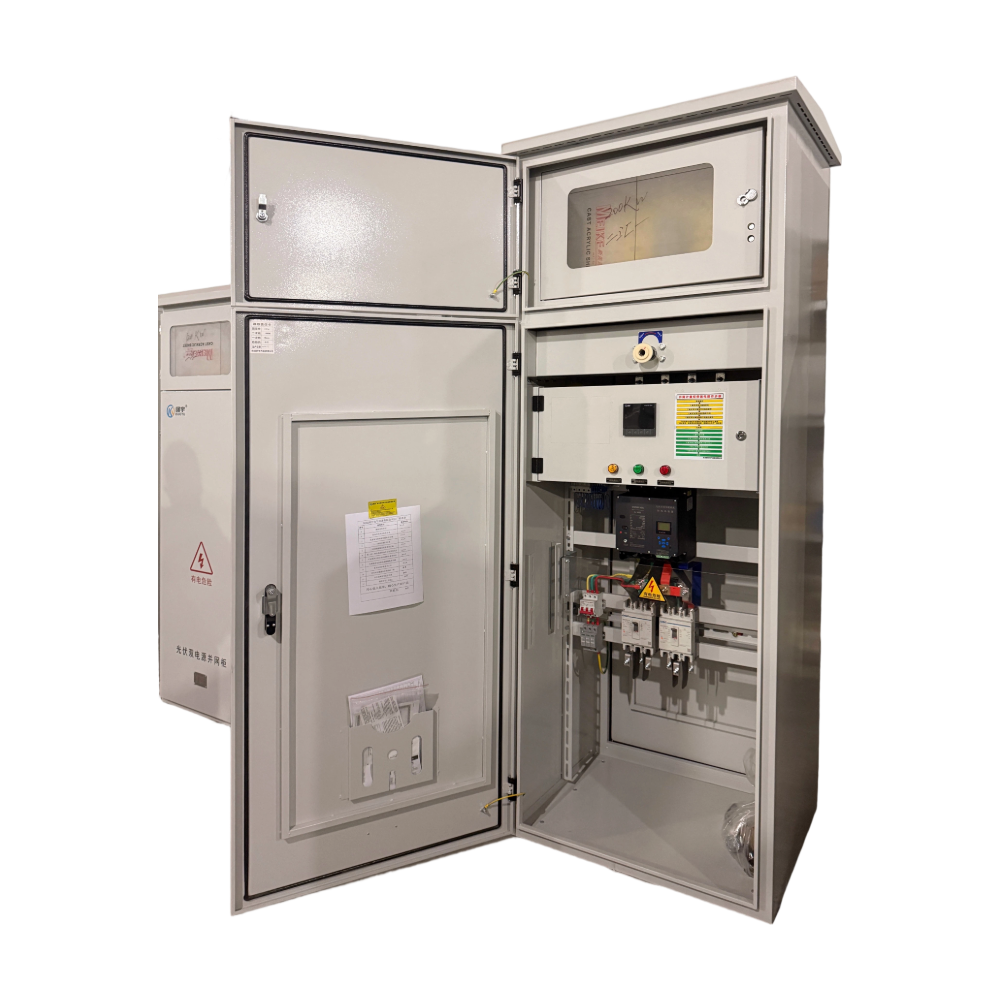
GGD/GCS/MNS Series waterproof distribution cabinet with IP65 rating.
The components inside a distribution box define its function: circuit breakers, contactors, relays, busbars, grounding devices, indicator lights, and cooling fans work together to realize safe circuit control, power distribution management, and overload and short-circuit protection.
Ingress protection is a key specification. IP40 guards against solid objects above 1 mm and offers no water protection; IP54 adds protection against dust deposits and splashing water; IP65 provides dust-tight protection and protection against low-pressure water jets. For outdoor solar distribution boxes, an IP65 photovoltaic distribution box is often specified, while indoor equipment can operate with IP40 or IP54.
Material selection affects both durability and cost. High-quality ABS plastic is suitable for many indoor and light commercial applications; cold-rolled steel plate gives higher mechanical strength; stainless steel is an option where corrosion resistance is critical. Flame-retardant properties are important for safety.
Standards are another reference point. IEC 61439-2:2020 defines requirements for power switchgear and controlgear assemblies used in photovoltaic installations, including Annex DD, EE, and FF. UL 1741 is the primary North American safety standard for PV inverters, converters, and combiner boxes. Buyers should confirm which standard applies to their destination market and request supporting documentation from the supplier.
Application scenarios for PV distribution equipment
Industrial workshops and commercial buildings are common hosts for distributed solar generation. According to Kuoyu’s application records, these environments can be indoor or outdoor, with high humidity, dust, and 24/7 continuous operation. The required function is safe circuit control, power distribution management, and overload and short-circuit protection. In such scenarios, a GGD/GCS/MNS cabinet with IP54 or IP65 protection is often used because of its mechanical strength and corrosion resistance.
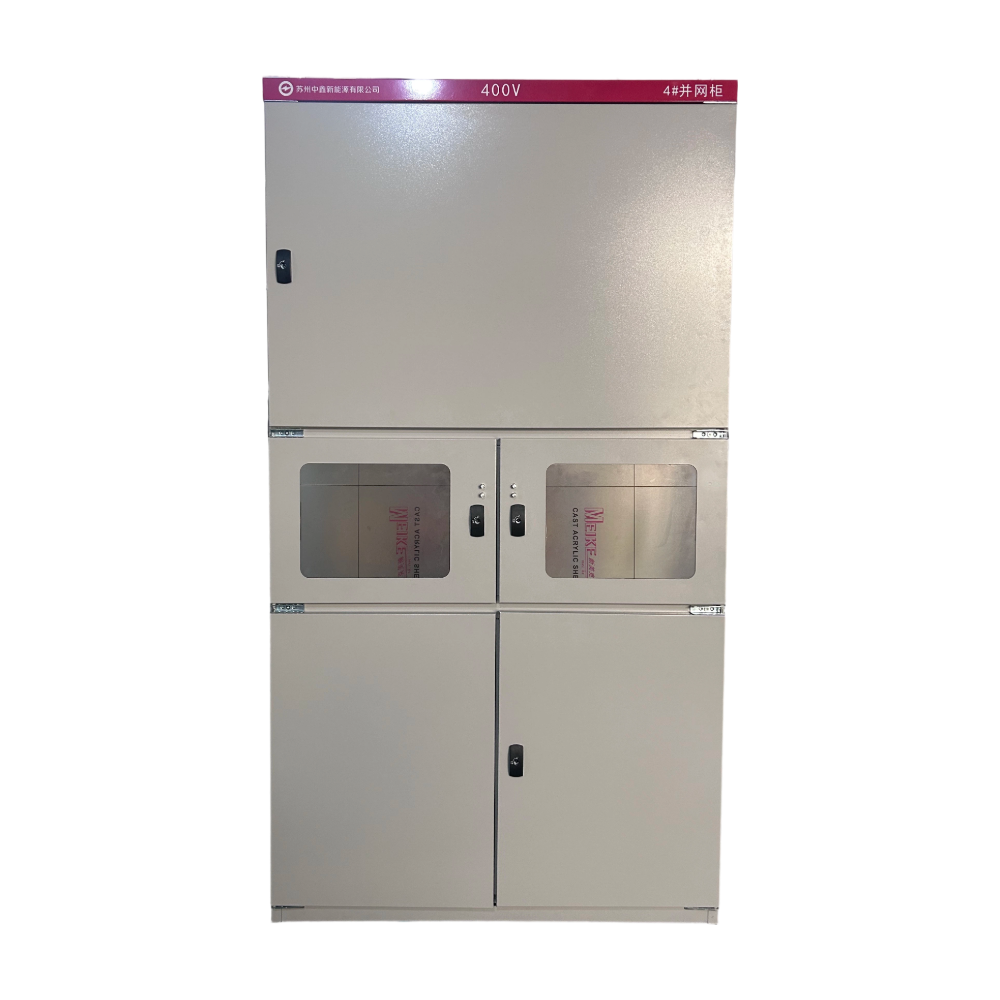
Outdoor distribution cabinet for industrial and commercial power distribution.
Residential and small commercial PV systems have a different set of priorities. The operating environment may include high and low temperatures, humidity, and dust. Equipment must provide safe power transmission, voltage conversion, circuit distribution, and short-circuit protection. The PZ30 Series distribution box, with rated voltage 220V/380V and protection class IP40/IP54, serves many of these indoor or sheltered outdoor applications.
For both scenarios, buyers often require customizable structure. Kuoyu states that customers can bring a blueprint and the company will deliver finished products, which is a practical arrangement for projects with non-standard enclosure layouts.
Market trends in solar distribution equipment
Market research points to several patterns relevant to distribution box buyers. Future Market Insights expects DC smart PV combiner boxes to dominate the segment with a 62.5% market share by 2035. This suggests that monitoring, communication, and smart protection features are becoming standard in larger PV installations.
Regionally, Asia-Pacific dominated the solar market with a revenue share of 54.0% in 2023, according to Grand View Research. Kuoyu Electrical’s main export markets are Southeast Asia and Africa, both regions that continue to add solar capacity.
Competition in the sector is established; leading players cited in PV combiner box research include Schneider Electric, Eaton, ABB, Sungrow, and Weidmüller. For buyers, this means distribution equipment must be evaluated on technical fit, certification, customization, and delivery performance rather than brand name alone.
It is also worth noting that market size estimates for this product category vary widely depending on whether the scope covers string-level combiner boxes or full distribution boards. Procurement teams should therefore compare like-for-like product definitions when reviewing market research.
General-purpose boxes vs. purpose-built PV combiner boxes
General-purpose distribution boxes such as Kuoyu’s PZ30 Series are familiar to installers and cost-effective for AC-side distribution and secondary circuits. Purpose-built PV combiner boxes, by contrast, are designed for the DC side: they aggregate multiple strings, integrate string fuses, and often include surge protection and monitoring provisions.
An honest limitation is that a general-purpose distribution box does not replace a dedicated PV combiner box with integrated DC string protection and monitoring. Projects with large string counts or remote monitoring requirements need a specialized combiner box. Kuoyu’s current product portfolio does not list a dedicated PV combiner box; its distribution boxes and cabinets are positioned for low-voltage distribution and control functions.
This distinction is important when writing specifications. Buyers should define whether the scope is a DC combiner function or an AC distribution function, and then match the product type accordingly.
Future outlook for photovoltaic distribution
The movement toward DC smart PV combiner boxes points to a future where distribution equipment includes monitoring, communication, and data feedback. According to Future Market Insights, DC smart PV combiner boxes are expected to hold a 62.5% market share by 2035. For buyers, this means asking suppliers whether future enclosure designs can accommodate monitoring modules without compromising ingress protection.
Regional growth also shapes the supply chain. Grand View Research reported that Asia-Pacific dominated the solar market with a 54.0% revenue share in 2023. Kuoyu Electrical’s main export markets are Southeast Asia and Africa, both regions that continue to add solar capacity. The company’s stated management principle is “Quality First, Integrity-oriented, Customer Supreme,” which it links to providing qualified products and considerate service.
For procurement teams, the practical implication is to evaluate suppliers through a combination of product parameters, factory facts, and engineering support rather than brand name alone. A distribution supplier that can support a project from blueprint to finished product may be more valuable than a large brand with a rigid catalog.
Hebei Kuoyu Electrical Technology Co., Ltd. designs and manufactures distribution boxes, distribution cabinets, transformers, and related power equipment for photovoltaic and new-energy applications. The company is based in Shijiazhuang, China, and exports mainly to Southeast Asia and Africa.
Visit the official website: www.kuoyuelectricity.com
Contact: Miya | Email: xiaoyi010127@gmail.com | Tel/WhatsApp: +86 180-3229-7717
Company brochure: Download English brochure
Frequently asked questions
What is a photovoltaic distribution box?
A photovoltaic distribution box is an enclosure that contains protection and switching components for solar power circuits. In Kuoyu’s range, the PZ30 Series is an industrial and residential distribution box for low-voltage systems, while the GGD/GCS/MNS Series is a waterproof distribution cabinet for outdoor and industrial use.
What is the difference between a PV combiner box and a solar distribution box?
A PV combiner box aggregates multiple DC string inputs and typically includes string fuses and surge protection. A solar distribution box generally manages downstream AC or DC distribution, circuit protection, and switching. Larger PV plants may need both, with the combiner box on the DC side and the distribution box on the AC side.
Why is the IP rating important for outdoor solar distribution boxes?
Outdoor installations are exposed to rain, dust, and condensation. A higher IP rating, such as IP65, indicates stronger sealing against water and dust. Kuoyu’s PZ30 Series provides IP40/IP54, while the GGD/GCS/MNS Series provides IP54/IP65.
Does Kuoyu Electrical supply equipment for photovoltaic projects?
Yes. The company states that its products are widely applied in power distribution systems for new energy photovoltaic, wind power, transportation, medical care, education, industrial manufacturing, government poverty alleviation, and commercial and civil construction industries.
Which standards should buyers check for PV distribution equipment?
IEC 61439-2:2020 specifies requirements for power switchgear and controlgear assemblies used in photovoltaic installations. UL 1741 is the primary North American safety standard for PV inverters, converters, and combiner boxes. Buyers should verify the standard that applies to their project region.
Can Kuoyu customize distribution boxes for a specific project?
Kuoyu states that customers can provide a blueprint and the company will deliver finished products. The company has an R&D team of 10 engineers and an annual production capacity of 30,000 sets, supporting a blueprint-based cooperation model.
What is the market outlook for solar combiner and distribution boxes?
Business Research Insights projects the global solar combiner boxes market will grow from USD 1.2 billion in 2026 to USD 2.1 billion by 2035 at a 6.2% CAGR. Future Market Insights expects DC smart PV combiner boxes to hold a 62.5% market share by 2035.