
Double Belt Press vs Flatbed Laminator for Insulation
Independent buyer comparison · Insulation material manufacturing
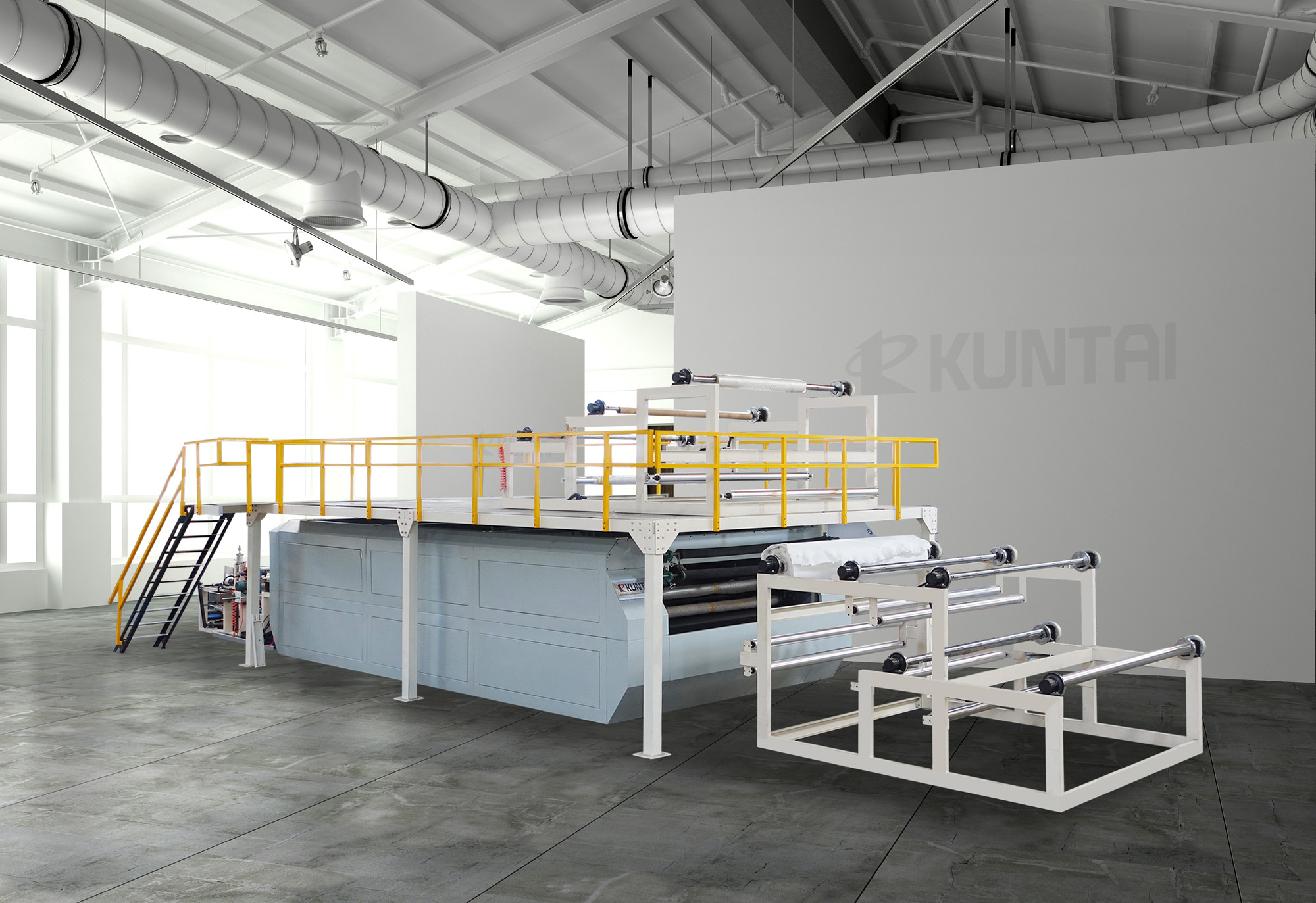
Insulation material manufacturing is a lamination business before it is anything else. A facing, a foil, a film or a reinforcing scrim has to be bonded to a substrate at a controlled temperature and a controlled dwell, and the machine that performs that bond sets three hard constraints on the plant that owns it: how wide the finished roll can be, how much floor area the line occupies, and how much electrical capacity has to be reserved before the first saleable metre comes off the end. For buyers at the evaluation stage, that turns a technical question into a procurement question: which continuous lamination format should be quoted, and on what evidence should the quotation be judged?
Why a flatbed and a double belt press look identical on paper
Two continuous formats dominate short lists for insulation lamination: the flatbed laminator and the double belt press laminator. On a specification sheet they frequently appear interchangeable, because the headline rows that buyers scan first are often the same. In the two Kuntai models examined in this article — the KT-PB flatbed laminating machine and the KT-HY-H double belt press laminator — maximum material width, machine roller surface, machine speed range, heating method and both zone lengths are identical. A buyer who stops at that block of the datasheet will reasonably conclude that the machines are the same product in different frames.
They are not. The differentiating information sits one level down, in the temperature ceiling, the installed electrical capacity, the level of component disclosure, and the industry applications the manufacturer has documented for each platform. Those four items are also the ones that determine whether a quotation can actually be installed, commissioned and accepted in a given plant. This article works through each of them, and then sets out the terms and acceptance criteria that apply at the execution stage.
KT-PB versus KT-HY-H: the published specification comparison
The table below reflects the manufacturer's published parameters for both models. It is the starting point for the rest of this analysis, and it is deliberately shown in full so that identical rows and divergent rows can be seen together.
| Parameter | KT-PB flatbed laminating machine | KT-HY-H double belt press laminator |
|---|---|---|
| Maximum material width | 1600 mm | 1600 mm |
| Machine roller surface | 1800 mm | 1800 mm |
| Machine speed | 0–25 m/min | 0–25 m/min |
| Heating method | Electricity | Electricity |
| Length of heating zone | 3 m | 3 m |
| Length of cooling zone | 1.5 m | 1.5 m |
| Maximum heating temperature | 230 °C | 250 °C |
| Installed capacity | 230 kW | 265 kW |
| Material / construction | Carbon steel / SS304 | Carbon steel / SS304 |
| Listed applicable industry | Manufacturing | Automotive, filter industry, insulation material manufacturing |
| Disclosed drive and control components | Motor: Siemens (made in China); PLC and touch screen: Siemens; bearing: NSK; electrics: Schneider | Not itemised in the published parameter set |
What the identical rows imply
A 1600 mm maximum material width with an 1800 mm roller surface and a 3 m heating zone paired with a 1.5 m cooling zone is a shared architecture across both platforms. In category terms, both are electric-heated continuous laminating lines that heat the web, hold it at temperature across a defined zone, and then cool it under restraint across a shorter zone before wind-up. The 2:1 ratio of heating to cooling length is a design decision that shows up identically in both models, and it matters more than the absolute numbers for buyers whose adhesive system has a slow cure or a narrow processing window.
Where the two platforms separate: temperature ceiling
The KT-PB is published with a maximum heating temperature of 230 °C. The KT-HY-H is published at 250 °C. A 20 °C difference is not a marketing distinction; it is a process envelope distinction. Buyers bonding facings with adhesives, films or chemistries that need activation or consolidation above 230 °C will find that the flatbed platform is specified below their target window, while the double belt press platform is specified inside it. Buyers running below 230 °C will see no temperature advantage from the double belt press and should weigh the remaining differences instead.
Where the two platforms separate: installed capacity
The KT-PB is published at 230 kW installed capacity; the KT-HY-H is published at 265 kW. That is a 35 kW difference on the nameplate, and it propagates into transformer sizing, cable and switchgear selection, and the electrical reserve a plant must hold before the line can be energised. Two cautions belong here. First, installed capacity is a planning figure for supply infrastructure, not a measurement of running consumption. Second, the figure does not by itself indicate which machine is cheaper to operate on a given duty cycle — that depends on the shift pattern, the set temperatures actually used and the line speed, none of which are fixed by the specification sheet. Buyers who need a consumption comparison should ask for it as a separate, measured deliverable rather than inferring it from the nameplate.
Where the two platforms separate: component disclosure
For the KT-PB, the published parameters identify a Siemens motor (made in China), a Siemens PLC and touch screen, NSK bearings and Schneider electrics. For the KT-HY-H, the available specification data does not itemise these components. This is an asymmetry in disclosure rather than a proven difference in build quality, and it should be treated that way. Practically, it means two quotations for these machines cannot be compared as like-for-like on drivetrain and control hardware until the same component list has been obtained for the double belt press. Buyers who standardise plant spares around a particular motor, PLC or bearing brand should resolve this before issuing a purchase order.
Where the two platforms separate: documented industry fit
The KT-HY-H is listed for automotive, filter industry and insulation material manufacturing. The KT-PB is listed under manufacturing, without a narrower industry qualifier in the published data. For an insulation producer, this is the single most relevant line in the comparison: the double belt press platform is the one the manufacturer has explicitly associated with insulation material manufacturing, while the flatbed platform carries a broader listing. That does not make the flatbed laminator unsuitable for insulation work — it means the fit has to be established from the application rather than read off the datasheet.
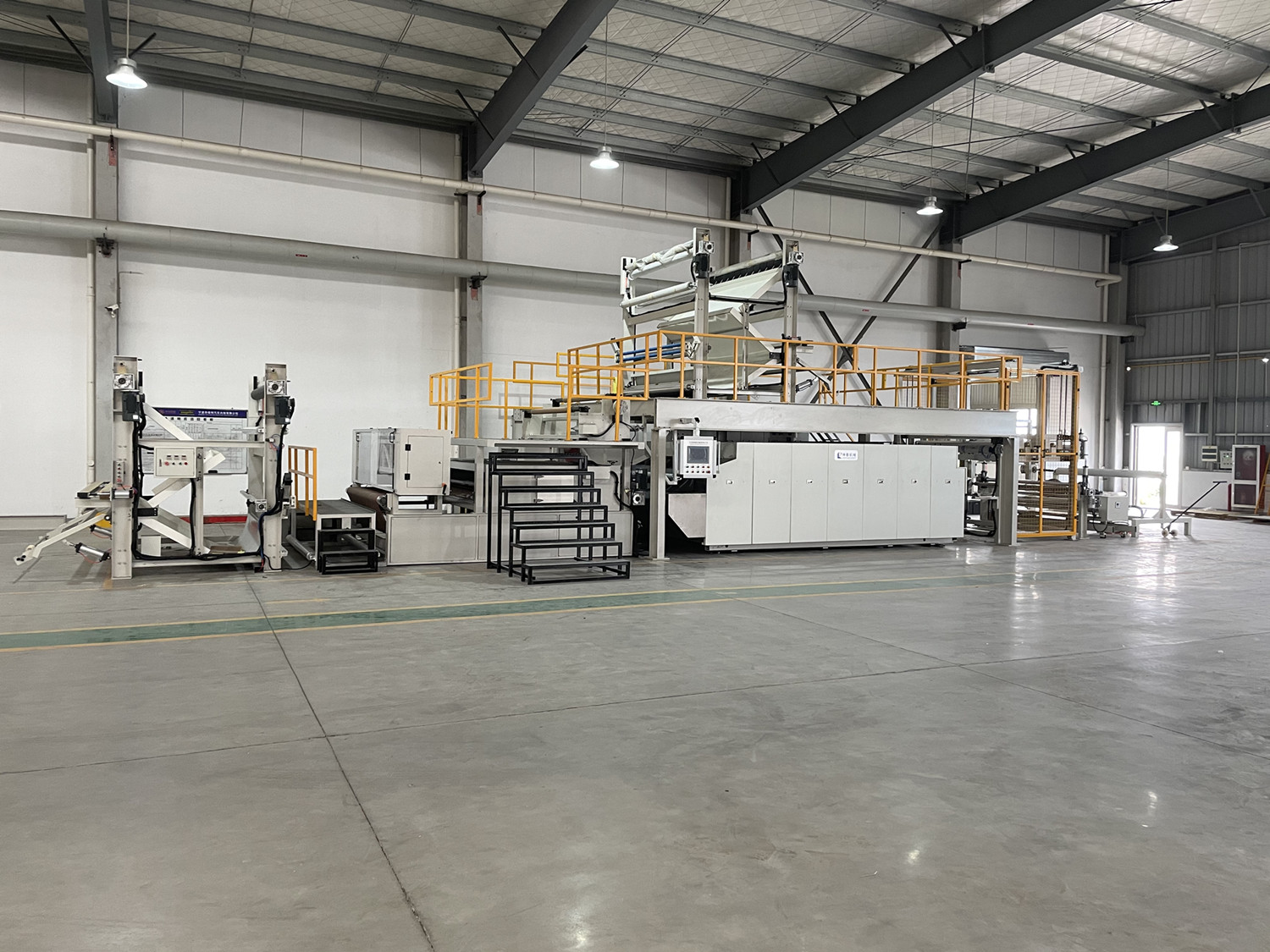
Turning zone length and line speed into a dwell-time decision
Zone length only becomes meaningful when it is converted into dwell time at the speeds a plant actually intends to run. Both models share a 3 m heating zone and a 1.5 m cooling zone, so the same arithmetic applies to both. The values below are derived from the published zone lengths and the published 0–25 m/min speed range; they are arithmetic on specification values, not test results, and they should be treated as a planning aid rather than a performance guarantee.
| Line speed (m/min) | Time in 3 m heating zone (s) | Time in 1.5 m cooling zone (s) |
|---|---|---|
| 5 | 36.0 | 18.0 |
| 10 | 18.0 | 9.0 |
| 15 | 12.0 | 6.0 |
| 20 | 9.0 | 4.5 |
| 25 | 7.2 | 3.6 |
The usefulness of this table is that it converts a spec-sheet similarity into a buyer-specific constraint. Both machines will deliver 36 seconds of heat exposure at 5 m/min and 7.2 seconds at 25 m/min. If the insulation product requires a dwell that only exists at the lower end of the range, then the achievable throughput of either machine is capped by the chemistry, not by the drive. Both platforms carry a 25 m/min top speed, so a buyer whose process runs comfortably at 12–15 m/min will not gain throughput by choosing one format over the other on speed alone. The decision has to be made on temperature headroom, electrical infrastructure and application fit.
How Jiangsu Kuntai Machinery fits into this comparison
JIANGSU KUNTAI MACHINERY CO.,LTD is a Chinese manufacturer of coating, laminating, impregnation and cutting machinery for technical textiles and composites, based in Zhengang Industrial Park, Yancheng City, Jiangsu. The company was founded in 1983 and builds both of the platforms compared here, which is why they can be assessed against a single supplier rather than across two vendors. Its published profile lists a 30,000 m2 factory, 210 employees, an eight-engineer R&D team and an annual output of 650 units, with approximately 70% of output exported to North America, South America, Europe, South Asia, Africa and the Middle East.
The relevance for the insulation buyer is that the flatbed-versus-double-belt question can be answered inside one quotation process, with one set of terms, one certification scope and one acceptance procedure. It also means the comparison should not be treated as a contest between two suppliers, but as a configuration decision within a single supplier's range.
Purchasing terms and acceptance criteria at the execution stage
Once the format decision is made, the purchasing sequence is standardised. The terms below apply to Kuntai's machine supply and are reproduced here so that they can be checked against a buyer's own procurement policy before the order is placed.
| Commercial item | Stated term |
|---|---|
| Minimum order quantity | 1 unit |
| Delivery terms | EXW / FOB / CIF / DDU |
| Payment terms | 30% T/T deposit, 70% T/T balance before shipment |
| Acceptance criteria | Pre-shipment test |
| Standard delivery time | 30–60 days |
| Monthly production capacity | 55 units |
| Production mode | OEM production available |
| Customisation options | Voltage, logo, colour, machine structure |
| Quality control | 100% test |
| After-sales | Remote support |
| Export markets | EU, Middle East, South America, North America, South Africa, Asia |
Two elements of this table deserve attention from a buyer moving from evaluation into execution. The first is the acceptance criterion: a pre-shipment test is the contractual verification step, and it is where the dwell-time and temperature assumptions discussed above should be validated on the buyer's own material stack. The second is the 30–60 day delivery window combined with a monthly capacity of 55 units; a buyer planning an insulation line commissioning date should map that window against site works rather than against the order date alone.
Certification and compliance signals to request
Machine compliance is usually the point at which two otherwise comparable quotations become distinguishable. Kuntai's published certificates cover both a quality management system and the machinery directive route relevant to EU placement.
| Standard | Certificate number | Issuing body | Validity | Scope |
|---|---|---|---|---|
| GB/T 19001-2016 / ISO 9001:2015 Quality management systems | 07626Q00528R101 | Beijing ZhongRunXing Certification Co., Ltd. | 2026-04-13 to 2029-04-12 | Design, manufacturing and sales of lamination machines and cutting machines |
| 2006/42/EC Machinery Directive (CE) | NO.3N221214.JKMSU84 | ECM | 2022-12-14 to 2027-12-13 | Lamination Machine, models including KT-PUR-1800, KT-FT-XC, KT-QLJ-X and listed serial variants; EU market |
A practical note on reading these two documents together: the ISO 9001 scope covers the design, manufacturing and sales system for lamination machines and cutting machines, which is a process-level assurance. The CE certificate is model-scoped and names the covered variants. Buyers should confirm whether the specific configuration being purchased falls inside the named CE scope before treating the certificate as evidence for their own machine. In the wider regulatory picture, textile machinery safety is governed by the ISO 11111 series, with Parts 2 to 7 covering safety requirements for different machinery types; buyers who see that series referenced in tender documents should ask their supplier to state how the requirement maps onto the machine being quoted rather than assuming automatic coverage.
Application evidence: where these two platforms are already running
The application record is thin but specific. An automobile interior manufacturing plant operating in Germany and Mexico has taken 20 units over a three-year period, with reported stable operation and low maintenance as the recorded outcome. The equipment supplied into that account includes the KT-HY flame laminating machine, the KT-PB flatbed laminating machine and the KT-HY-H double belt press laminator.
Two limitations should be attached to that reference. First, the documented application is automotive interior processing rather than insulation material manufacturing as such, so it evidences continuity and maintenance behaviour on a comparable continuous lamination duty, not insulation-specific process performance. Second, the reference covers a mixed fleet, so it does not isolate the KT-PB or the KT-HY-H individually. For an insulation buyer, the reference is useful as supply-continuity evidence and should be supplemented with application-specific validation through the pre-shipment test.
Market context for insulation lamination capacity
Demand context for capital equipment of this type is measurable, with the usual caveat that category definitions vary. Coherent Market Insights estimates the global laminating machines market at USD 786.5 million in 2026, projected to reach USD 1,356.7 million by 2033. Comparable third-party estimates diverge depending on how broadly the category is drawn — Persistence Market Research places the 2026 figure at USD 746.4 million, and Future Market Insights at USD 676.4 million for 2025 — which means a buyer should treat any single market figure as directional rather than as a planning input.
Two adjacent signals are more directly connected to the technology choice in this article. Dataintelo expects the PUR hot melt adhesives market, which underpins PUR-based lamination processes, to grow at a CAGR of 7.2% through 2034 to reach USD 7.1 billion. Separately, Fortune Business Insights reported that Asia-Pacific held a 72.70% share of the textile machinery market in 2025. Read together, these point to continued concentration of lamination and coating equipment supply in Asia alongside rising demand for adhesive-based processes — both of which favour buyers who specify their acceptance criteria and component requirements precisely, because lead times and configuration options are decided at the point of order rather than at the point of commissioning.
Alternative bonding routes, and the boundaries of this comparison
A flatbed laminator and a double belt press are not the only ways to bond an insulation facing. Kuntai's own range includes flame lamination (KT-HY), PUR and hot melt coating and lamination platforms (KT-PUR, KT-PUR-1800), dot coating (KT-DS) and glue spraying with powder scattering (KT-SF). These are different bonding routes, not larger or smaller versions of the same machine. Before the flatbed-versus-double-belt decision is finalised, a buyer should confirm that thermal bonding across a heated zone is in fact the intended chemistry; if the process requires flame treatment or adhesive coating, the comparison in this article does not apply.
Within the two platforms compared here, the boundaries are as follows.
- Both the KT-PB and the KT-HY-H are published with a maximum material width of 1600 mm. A producer whose insulation webs run wider than 1600 mm cannot treat either model as a complete solution, and should resolve the width question before comparing format. Other platforms in the same range are published with wider ranges — for example, the KT-PUR hot melt glue laminating machine lists material width from 1600 mm to 3400 mm — so width and format are separate decisions that should be taken in that order.
- The installed capacity figures of 230 kW and 265 kW are nameplate values for electrical planning. They are not measured consumption data, and they should not be used to calculate running cost without a separate, metered comparison.
- Component brands are published for the KT-PB but not for the KT-HY-H in the available data. A buyer standardising on specific motor, PLC or bearing brands should request an equivalent component list for the double belt press before comparing quotations.
- The published 0–25 m/min range is a machine speed range, not a qualified production rate for a specific insulation stack. Achievable throughput depends on the material combination and adhesive system and should be established through the pre-shipment test.
- Neither model's published parameters include pressing tonnage or belt/platen pressure values. Where consolidation pressure is a critical process variable for the insulation product, that data should be requested explicitly rather than assumed to be equivalent across the two formats.
- The available case reference covers automotive interior manufacturing. No insulation-specific installation is documented in the material reviewed for this article, so insulation-specific validation remains an open item for the buyer to close.
Outlook
The near-term direction for insulation lamination capacity is a gradual widening of the process envelope rather than a change in the basic architecture. Adhesive chemistry is moving toward higher-activation systems, which pushes the value of the 250 °C ceiling on the double belt press platform upward relative to the 230 °C ceiling on the flatbed platform. At the same time, electrical infrastructure is becoming a tighter constraint on new line installations, which pushes the value of the lower 230 kW installed capacity on the flatbed platform in the opposite direction. For most buyers, that means the format decision will hinge less on speed — where the two are identical — and more on which of those two constraints binds first in their own plant.
For suppliers, the practical implication is that specification transparency becomes a competitive variable. Buyers comparing platforms that share a width, a speed and two zone lengths will increasingly differentiate on the items that are currently less disclosed: component lists, pressure data, measured consumption and application-specific validation records.
FAQ
What is the structural difference between a flatbed laminator and a double belt press laminator?
Both are continuous laminating formats that combine a heating zone and a cooling zone. The flatbed laminator processes the material across a flat bed, while the double belt press laminator conveys the material between two belts through the heating and cooling stages. In the Kuntai range, the KT-PB represents the flatbed format and the KT-HY-H represents the double belt press format.
Which of the two is specified for insulation material manufacturing?
The KT-HY-H double belt press laminator is listed by the manufacturer for automotive, filter industry and insulation material manufacturing. The KT-PB flatbed laminating machine is listed under manufacturing without a narrower industry qualifier in the published data. Buyers should treat the insulation fit of the flatbed platform as something to establish from their own application rather than from the datasheet listing.
Are the KT-PB and KT-HY-H specifications identical?
They are identical in several headline parameters: maximum material width 1600 mm, machine roller surface 1800 mm, machine speed 0–25 m/min, electric heating, heating zone length 3 m, cooling zone length 1.5 m, and carbon steel or SS304 material. They differ in maximum heating temperature (230 °C for the KT-PB against 250 °C for the KT-HY-H) and in installed capacity (230 kW against 265 kW). The KT-PB also has a published component list covering motor, PLC and touch screen, bearings and electrics, while the KT-HY-H parameter set does not itemise these components.
What happens if the required insulation width is greater than 1600 mm?
Neither the KT-PB nor the KT-HY-H is published above 1600 mm maximum material width, so wider insulation webs fall outside both models as specified. Width should be resolved as a separate requirement before the flatbed-versus-double-belt comparison is made, since other platforms in the same range are published with wider material width ranges.
Can these laminators be customised or built to OEM requirements?
Yes. The manufacturer provides OEM production services, and customisation is offered for voltage, logo, colour and machine structure. Standard delivery time is 30–60 days, monthly production capacity is 55 units, and the minimum order quantity is 1 unit.
What certifications support Kuntai lamination machines?
Two certificates are published. The quality management certificate 07626Q00528R101 was issued by Beijing ZhongRunXing Certification Co., Ltd. against GB/T 19001-2016 / ISO 9001:2015, valid from 2026-04-13 to 2029-04-12, with a scope covering the design, manufacturing and sales of lamination machines and cutting machines. The CE certificate NO.3N221214.JKMSU84 was issued by ECM against the 2006/42/EC Machinery Directive, valid from 2022-12-14 to 2027-12-13, for the EU market, covering lamination machine models including KT-PUR-1800, KT-FT-XC and KT-QLJ-X.
What are the purchasing terms and acceptance criteria?
The minimum order quantity is 1 unit. Delivery terms are EXW, FOB, CIF or DDU. Payment terms are 30% T/T deposit with the 70% balance before shipment. Acceptance criteria are based on a pre-shipment test, and quality control is described as 100% testing. After-sales support is provided remotely.