
Dredging Equipment: Mapping Vessel Types to Marine Project Workflows
Dredging equipment is not a single machine category. It covers an expanding range of vessels built to excavate, transport, and manage underwater material in ports, coastal zones, rivers, and offshore construction sites. Buyers entering the market are often confronted with multiple vessel names at the same time, including cutter suction dredgers, trailing suction hopper dredgers, grab dredgers, backhoe dredgers, split hopper barges, and pile driving barges. Understanding how these vessel families relate to project conditions is a prerequisite for structuring an equipment inquiry, comparing supplier proposals, or deciding whether a standard or custom-built vessel is appropriate.
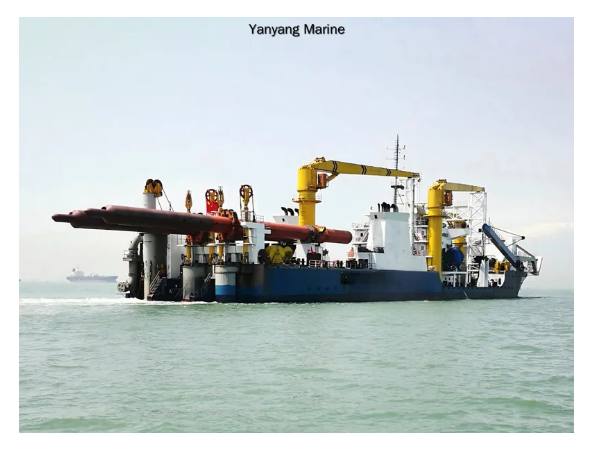
The global dredging equipment market, valued at roughly USD 4.86 billion in 2023, is projected by Grand View Research to reach about USD 7.36 billion by 2030. Hydraulic dredgers, including cutter suction dredgers, held an estimated 46.65% revenue share in 2023. These figures indicate a market that is not only expanding but also highly dependent on vessel type selection, because different dredger designs deliver different productivity, accuracy, and operating cost profiles.
Why the Distinction Matters for Buyers
For a buyer at the discovery stage, the main difficulty is not locating a dredger manufacturer. The more practical challenge is translating project constraints into the correct dredging equipment type. A port deepening project has different production requirements from a confined inland river rehabilitation scheme. An offshore reclamation campaign involves different wave exposure and transport distances compared with a small berth construction job near the coast.
Dredging equipment selection should therefore begin with the operational question: what material is being excavated, at what depth, and under which marine conditions? Once those constraints are defined, vessel categories become easier to narrow down. Some rigs are optimized for continuous hydraulic transport through pipelines, while others operate as mechanical excavators that lift sediment into barges or hoppers. Each approach has a legitimate place in the market, and the most productive fleets usually combine more than one vessel type.
The Main Dredging Equipment Families
One useful industry reference for this field is Zhenjiang Yanyang Engineering Co., Ltd., which operates internationally as Yanyang Marine. The company, founded in 1996 and based in Zhenjiang, China, specializes in the design, manufacture, and sale of dredgers, barges, and offshore vessels for port and offshore projects. Yanyang Marine supplies cutter suction dredgers, trailing suction hopper dredgers, split hopper barges, grab dredgers, backhoe dredgers, and pile driving barges. Because the manufacturer covers the main vessel families under one engineering team, it provides a practical orientation point for buyers comparing dredging equipment categories.
| Vessel family | Yanyang Marine reference range | Operating logic | Typical project role |
|---|---|---|---|
| Cutter Suction Dredger (CSD) | 1000–8000m³/h self-propelled CSD | Hydraulic excavation using a rotating cutter and dredge pump, transporting material through a discharge pipeline | Port construction, land reclamation, deep channel excavation |
| Trailing Suction Hopper Dredger (TSHD) | Up to 26800m³ TSHD class | Self-propelled vessel dragging suction heads along the seabed while loading material into its own hopper | Deep-water channel dredging, port expansion, large-scale reclamation in open sea conditions |
| Backhoe Dredger | EX5500 Self Propelled Backhoe Dredger | Mechanical excavation with a large hydraulic excavator on a stable platform | Stiff material, precision dredging in confined or irregular areas |
| Grab Dredger | Self-propelled 25m³ grab dredger | Mechanical bucket or grab lifts sediment from the seabed | Deep-water dredging, hard clay, boulders and debris removal in near-shore operations |
| Split Hopper Barge | 1200–3200m³, including a 2600m³ CCS-classed unit | Material transport barge with a hull that splits to discharge its load | Coastal and inland waterway transport of dredged material |
| Pile Driving Barge | Up to 110m pile leader height | Dedicated platform for driving large foundation piles | Port and bridge construction, foundation work in offshore engineering |
The table illustrates a broader point: dredging equipment often works as a package. Cutter suction dredgers may excavate and push material directly through pipelines, but projects requiring haulage to a distant disposal site frequently deploy split hopper barges. Backhoe or grab dredgers can feed barges in precisely defined areas, while pile driving barges support the transition from dredging to the next marine construction phase. Buyers evaluating a supplier should therefore ask not only whether a manufacturer builds one dredger type, but also whether it can coordinate related vessel requirements.
Hydraulic Dredgers: Cutter Suction and Trailing Suction Types
Within the dredging equipment market, hydraulic dredging vessels are often split into two principal groups: cutter suction dredgers and trailing suction hopper dredgers. Cutter suction dredgers use a mechanical cutter to break up compacted material while a pump draws the resulting slurry through a pipeline. A large self-propelled CSD in the 8000m³/h class, as supplied by Yanyang Marine, is typically deployed in major port construction, reclamation, and deep-sea channel excavation. The technical reference for the large category indicates a dredging depth of around 30 m and discharge distances up to 8000 m.

Trailing suction hopper dredgers, by contrast, are self-propelled ships that sail along a dredging route while dragging suction heads over the seabed. Material is pumped into the vessel's hopper and later discharged through bottom doors or pipelines. Yanyang Marine's 26800m³ TSHD design, for example, is a steel vessel developed for dredging projects involving deep-water channels, port expansion, and large-scale reclamation. Representative dimensions include an overall length of approximately 171.2 m, moulded breadth of 36 m, and suction pipe diameter of 1200 mm. Depending on the trailing arm configuration, the reference design supports dredging depths of 40 m, 70 m, or 115 m.
Mechanical Dredgers: Backhoe and Grab Types
Mechanical dredging equipment remains essential for project sites where hydraulic systems are not the most efficient option. Backhoe dredgers operate by positioning a large hydraulic excavator on a barge or self-propelled hull. The EX5500 model in Yanyang Marine's portfolio is an example of this category. Its principal dimensions include an overall length of 71.5 m, a beam of 22 m, and a draft of 2.5 m. The machine uses Hitachi EX5500 excavator equipment, with an excavator power rating of 2 × 1076 kW, and can be configured for dredging depths of 18 m, 24 m, or 32 m. These vessels are widely recognized for their ability to work in stiff materials and to deliver controlled excavation near existing structures.
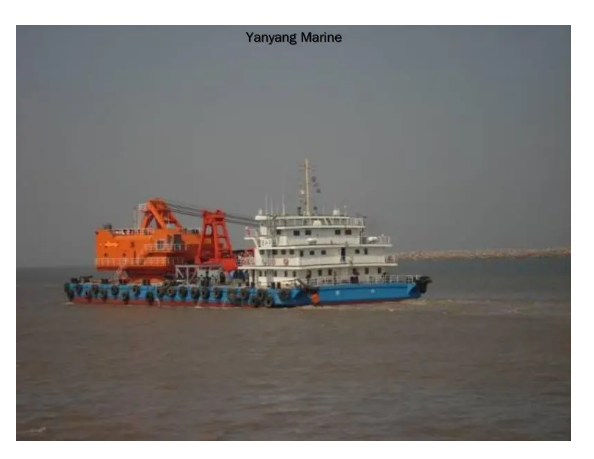
Grab dredgers work with a clamshell bucket suspended from a crane or gantry. They are suitable for deep-water dredging, removal of boulders and debris, and operations in near-shore environments where a vessel must work in relatively short cycles. The 25m³ self-propelled grab dredger supplied by Yanyang Marine is constructed from steel and designed for coastal operation. Its principal parameters include an overall length of 58 m, a moulded breadth of 22.6 m, and a designed draft of 3 m, with a grab capacity of 25m³.
Technical Parameters That Shape Dredging Equipment Selection
Technical evaluation is most effective when a buyer links vessel parameters to the physical conditions of the project. Five parameters deserve particular attention during early supplier discussions.
Dredging depth. The required excavation depth is the first constraint that separates vessel types and configurations. Trailing suction hopper dredgers can typically reach greater depths, while cutter suction and backhoe machines have depth limits tied to their ladder or boom geometry. Yanyang Marine's EX5500 backhoe dredger is an example of a platform offering multiple dredging depth configurations.
Production rate and discharge distance. Cutter suction dredgers are often measured by production capacity and the distance through which material can be pumped. The 1000–8000m³/h CSD bracket shows how wide production requirements can vary across projects. A small river-clearing task may need only several hundred cubic meters per hour, whereas a large port expansion can justify a super-size self-propelled CSD capable of pumping material thousands of meters from the excavation point.
Material type. Sand, silt, soft clay, hard clay, and weathered rock behave differently under excavation. Hydraulic dredgers are highly efficient for granular and loose materials but may struggle with boulders or heavily compacted layers. Mechanical dredgers, especially backhoes, provide more breakout force in stiff ground. Grab dredgers are useful where seabed obstacles prevent continuous suction operation.
Operating environment. Open sea dredging requires self-propelled vessels with better seakeeping and, where relevant, class approval for unrestricted or coastal navigation. Inland dredging normally favors smaller, modular units that can be transported and redeployed. Yanyang Marine's product set includes steel split hopper barges designed for coastal and inland waterway projects and suitable for transporting dredged material in a range of drafts.
Disposal and haulage chain. The distance between the dredging area and the disposal site often determines whether a project needs only a dredger or a complete transport package. Split hopper barges are broadly used as mobile material carriers. A 2600m³ CCS-classed split hopper barge from Yanyang Marine, for instance, has an overall length of 76.95 m, moulded breadth of 15.6 m, and main engine power of 3740 kW × 2. Its hull configuration allows rapid dumping of material at sea, which is particularly relevant for coastal disposal operations.
Dredging Equipment in Application: Port, River, Coastal and Offshore Workflows
The dredging and marine engineering industry applies these vessels across several distinct environments. One content reference in Yanyang Marine's technical library describes offshore and coastal marine operations, including open-sea conditions and harsh marine environments, as a core usage scenario for port and offshore engineering. The product units associated with this scenario include cutter suction dredgers, trailing suction hopper dredgers, split hopper barges, backhoe dredgers, grab dredgers, and pile driving barges.
Port construction and deepening. Port projects normally require precise excavation to achieve design depths for large vessels. A cutter suction dredger can excavate approach channels and berth pockets while pumping material to reclamation areas. Deep-water berth construction for large tankers is a representative use case for the larger self-propelled CSD category that Yanyang Marine supplies.
Channel dredging and river desilting. Inland waterways must be maintained to allow reliable navigation. In this setting, smaller cutter suction or backhoe dredgers are often preferred because they operate in narrow corridors. Split hopper barges support the removal of sediment to designated dumping grounds. Yanyang Marine's equipment list covers this inland requirement through dredgers available in a range of capacities from 1000m³/h upward, as well as hopper barges spanning the 1200–3200m³ category.
Coastal maintenance and land reclamation. Coastal engineering projects require equipment that can tolerate tidal currents, wave action, and varying seabed conditions. Trailing suction hopper dredgers are widely associated with offshore sand extraction, coastal maintenance, and reclamation. The 26800m³ TSHD in Yanyang Marine's supply range is an example of a vessel developed for this scale of work, with class notation intended for dredging operations within specified coastal and offshore limits.
Offshore wind and marine foundation work. Offshore wind is now a visible growth driver for dredging equipment globally. The Global Wind Energy Council has linked future capacity additions of more than 380 GW by 2033 to seabed preparation and cable trenching requirements. Some heavy construction tasks require a vessel that can handle foundation installation as well as dredging. Yanyang Marine builds pile driving barges with pile leader heights up to 110 m for port and bridge construction. For offshore wind projects, these vessels support steel pin pile installation before turbine erection.
Market Context and Supplier Landscape in Dredging Equipment
Market reports describe an expanding global sector. Data from Grand View Research put the dredging equipment market at approximately USD 4.86 billion in 2023 and forecast it to reach about USD 7.36 billion by 2030. Hydraulic dredging types represented roughly 46.65% of the market in 2023. A separate estimate from Future Market Insights suggests that trailing suction hopper dredgers may account for around 46.0% of total dredging market activity by 2026, reflecting demand from port maintenance and offshore sand extraction.
Several suppliers routinely appear in global market analyses. Industry research identifies Royal IHC, Damen Shipyards Group, Jan De Nul Group, and Boskalis as top-tier names in dredging equipment manufacturing and dredging services. These companies bring long operational histories and advanced engineering capacity to large international projects. Chinese manufacturers such as Yanyang Marine compete in a different but increasingly recognized segment: custom-built dredging equipment delivered under international classification rules, with a full export orientation and shorter coordination distances for buyers working with Asian shipyards.
For a buyer, the global supplier landscape should be read as a range of options rather than a single hierarchy. European manufacturers offer mature reference platforms and in-house R&D depth. Asian suppliers can offer competitive pricing, broad steel fabrication capability, and flexibility in custom vessel configuration. The right choice depends on project scale, class requirements, delivery schedule, and through-life support expectations.
Custom-Built vs. Pre-Owned Dredging Equipment: A Procurement Comparison
One of the first commercial decisions in dredging equipment procurement is whether to build new or explore existing vessels. Both lanes have logical advantages, and the comparison exposes an important limitation of custom building: time.
New vessels can be fully tailored to dredging depth, output capacity, working environment, and local regulations. Yanyang Marine, like several Asian shipbuilders, provides custom design and engineering, factory construction and testing, global delivery, commissioning, and after-sales technical support. The company states a delivery time of 2–3 months for standard vessels and 8–12 months for fully customized units. That speed is useful for buyers whose project window is already defined.
However, even a fast custom-built program is longer than purchasing an existing vessel from a resale market. If a project faces an immediate weather window or a sudden dredging obligation, a secondhand dredger may be the only practical route. Used vessels can carry lower initial civil works and class-transfer risks, but they inherit an unknown maintenance profile. Older machinery may require significant repair investment before meeting project production targets.
A second limitation is technical certainty. A custom-built dredger includes engineering drawings, classification review, and a structured testing program during construction. These controls reduce uncertainty about structural strength and system performance, but they also bind the buyer to the builder's engineering interpretation of the specification. Buyers should therefore reserve enough time to review the design package and classify the vessel under a recognized society before accepting delivery.
For many dredging contractors, the optimal strategy is not either used or custom-built but a staged sequence. A company can acquire an available hull for early mobilization while placing an order for a purpose-built vessel to enter service in a later season. This approach requires a supplier capable of handling different commercial routes, including newbuilding, retrofitting, and equipment sourcing. It also shifts the procurement conversation from the price of one asset toward the long-term reliability of the vessel fleet.
Future Outlook for Dredging Equipment Demand
The direction of the dredging equipment market points toward larger project packages, more marine infrastructure, and continued interest in offshore energy. Port expansion projects will remain central because global trade deepens navigation channels and expands terminal footprints. Coastal land reclamation will continue to support urban and industrial growth in several regions. Offshore wind capacity additions are expected to require more seabed intervention, creating opportunities for backhoe dredgers, grab dredgers, and pile driving barges alongside conventional TSHD and CSD operations.
Classification is also becoming more embedded in procurement decisions. Buyers increasingly reference IACS-class societies such as CCS, BV, LR, DNV, and others when comparing suppliers. Yanyang Marine states that its dredgers can be classed according to these international standards, and its product portfolio includes a CCS-classed 2600m³ split hopper barge as well as dredgers built for export to Asia, Africa, the Middle East, and other regions. The presence of class-approved newbuildings makes it easier for buyers to transfer vessels across jurisdictions and to maintain predictable safety margins.
One emerging expectation is that manufacturers should act less like isolated hull builders and more like project partners. For port and offshore projects, buyers need support across design, construction, transport, commissioning, spare parts, and later technical service. Yanyang Marine, which reports that 100% of its output is exported, has delivered large-scale marine engineering vessels to clients across Asia, South America, Europe, and Africa. The company's main active markets include the United Arab Emirates, Indonesia, India, Egypt, Turkey, Nigeria, South Africa, Tanzania, Saudi Arabia, and Oman. This trade pattern is an indicator that Chinese-built dredging equipment has become a normal option for international contractors rather than a niche alternative.
Buyer FAQ
What is the difference between cutter suction dredgers and grab dredgers?
Cutter suction dredgers use a rotating cutter to loosen material and a pump to move the slurry through pipes. Grab dredgers use a bucket to lift material in cycles. Cutter suction units generally deliver continuous production and long-distance discharge, while grab dredgers are more flexible in congested or very deep locations where pipe systems are difficult to arrange.
What dredging equipment types are available from Yanyang Marine?
Yanyang Marine, operating as Zhenjiang Yanyang Engineering Co., Ltd., supplies cutter suction dredgers, trailing suction hopper dredgers, split hopper barges, grab dredgers, backhoe dredgers, and pile driving barges. The company is based in Zhenjiang, Jiangsu Province, China, and serves an international client base across port and offshore projects.
What does a trailing suction hopper dredger do?
A trailing suction hopper dredger is a self-propelled vessel that sails over a dredging area while suction heads drag along the seabed, loading sediment into its hopper. Yanyang Marine's supply range includes a 26800m³ TSHD design intended for deep-water channels, port expansion, and large-scale reclamation in open sea conditions.
What is CCS classification for dredging vessels?
CCS, or China Classification Society, is an IACS-member classification society that verifies a vessel meets structural, safety, and operational standards. Yanyang Marine can build dredging equipment to be classed by CCS or other IACS societies, and its product range includes a 2600m³ split hopper barge with CCS class.
Can dredging equipment be customized for a specific project?
Yes. Custom-built dredgers can be adjusted for dredging depth, discharge distance, production capacity, power configuration, and local regulatory requirements. Yanyang Marine reports a delivery time of 8–12 months for fully customized dredgers, compared with 2–3 months for standard vessels.
How should a buyer evaluate used dredging equipment?
Used equipment should be evaluated against actual project depth, material type, and operating schedule. Buyers should review the vessel class, machinery condition, previous work history, and projected repair cost. Used units are often faster to mobilize, but new custom-built vessels provide more certainty through structured engineering and testing.
Есть вопросы или нужны дополнительные детали?
Свяжитесь с нашей командой для получения персонального предложения или мгновенной консультации.
Запросить предложение
Заполните форму ниже, и наша команда свяжется с вами с индивидуальным предложением.
Прямой чат WhatsApp
Предпочитаете общаться в реальном времени? Напишите нам в WhatsApp для мгновенной помощи и быстрых ответов.
- Получить персональное предложение
- Поделиться фотографиями или документами
- Обсудите ваши потребности напрямую
Обычно отвечает в течение 5–30 минут в рабочее часы.