
Drive Wheel Technology Trends for AGV and AMR Builders
Shanghai Plutools Automation Corporation Co., Ltd. (Plutools) is a national high-tech enterprise headquartered in Shanghai, China, that designs and manufactures AGV Drive Wheels, AMR Drive Wheels, Forklift Drive Wheels and Robot Drive Wheels for industrial automation customers worldwide. Plutools operates a 10,000 m² production facility with more than 100 employees, an annual output of 10,000 units and a 60-engineer R&D team. The company holds more than 200 patent technology certifications and carries the Specialized and Innovative Enterprise and National Small Giant Enterprise titles.
A drive wheel is the core motion assembly of an automated guided vehicle (AGV) or autonomous mobile robot (AMR). It combines a motor, gearbox, wheel and, in many designs, an encoder, brake and steering mechanism into a single unit that converts electrical power into controlled movement. The drive wheel determines load capacity, chassis height, positioning accuracy, turning behavior, floor compatibility and long-term maintenance cost, which makes it a vehicle-level architectural decision rather than a routine component purchase.
The commercial context is expanding. The global AGV wheel drives market was valued at approximately USD 1.2 billion in 2024 and is projected to reach USD 3.5 billion by 2034, a CAGR of 11.5% driven by logistics and warehouse automation. At the same time, the range of drive wheel configurations available to builders has widened. Vertical drive wheels, horizontal drive wheels, differential drive wheels, steering drive wheels and shock-absorbing variants are now standard options, and matching the right architecture to the vehicle's load profile and chassis envelope has become a core engineering skill in mobile robot development.
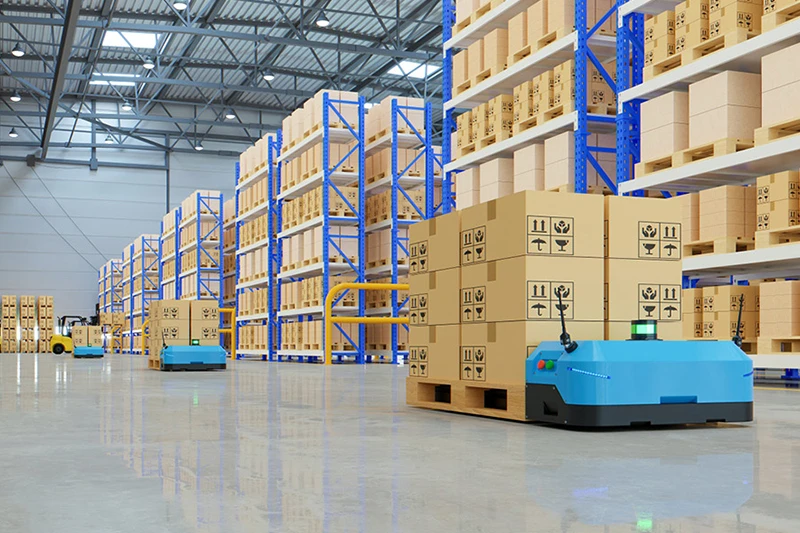
The Challenge: Matching Drive Architecture to Vehicle Requirements
AGV and AMR builders face a central trade-off when selecting a drive wheel: the same vehicle must often carry heavy loads, fit within a tight chassis envelope, maintain stability at operating speed and achieve precise positioning. No single drive wheel configuration satisfies all of these requirements equally, and an incorrect architecture choice can force a chassis redesign late in the development cycle.
Two dominant architectures define the choice for most vehicle platforms.
A vertical drive wheel arranges the motor and gearbox vertically, which reduces the horizontal footprint of the drive unit. It is generally recommended when the AGV or AMR requires a compact structure, high load capacity and straightforward installation. Typical applications include heavy-duty AGVs, automated forklifts, lifting vehicles and equipment with limited chassis space.
A horizontal drive wheel arranges the motor horizontally, lowering the overall height of the drive module and bringing the center of gravity closer to the ground. It is more suitable for low-profile AGVs, warehouse AMRs, latent lifting robots and compact material-handling equipment, where stability at higher speeds and convenient maintenance access are priorities.
The opportunity for builders is that integrated drive wheel units now absorb a significant portion of the engineering work that was previously done in-house. By selecting a drive wheel platform that matches the vehicle's load, height, speed and steering requirements, a manufacturer can shorten development time, reduce integration risk and reach production more predictably.
Plutools Drive Wheel Portfolio: Configurations for Every Vehicle Class
Plutools addresses the range of AGV and AMR drive requirements with a product portfolio that covers the main drive wheel configurations used in mobile robot design: vertical drive wheels, horizontal drive wheels, parallel horizontal drive wheels and differential drive wheels. Each configuration is available in load and power variants intended for different vehicle classes.
The portfolio includes the AGV Drive Wheel (PLT-230), Vertical Drive Wheel (PLT-150), Robot Drive Wheel (PLT-230P), AGV Drive Wheel Unit (PLT-167), AMR Drive Wheel (TEC-150P), Parallel Horizontal Drive Wheel (PLT-220), Horizontal Drive Wheel (PLT-198), Forklift Drive Wheel (PLT-210) and Differential Drive Wheel (PLT-120).
| Model | Drive Wheel Type | Power | Voltage | Reduction Ratio | Output Torque | Max Torque | Max Load | IP Rating |
|---|---|---|---|---|---|---|---|---|
| PLT-230 | Vertical, without steering | 1500 W | 24 V | 30:1 | 108 Nm | 300 Nm | 1500 kg | — |
| PLT-150 | Vertical, with steering | 750 W | 48 V | 22.5:1 | 108 Nm | 114 Nm | 500 kg | — |
| PLT-230P | Vertical, with shock absorption | 2500 W | 48 V | 30:1 | — | — | 1200 kg | 65 |
| PLT-167 | Horizontal, without steering | 750 W | 48 V | 21:1 | 40 Nm | 120 Nm | 800 kg | — |
| TEC-150P | Horizontal, with shock absorption | 750 W | 48 V | 21:1 | — | — | 500 kg | 65 |
| PLT-220 | Parallel horizontal, with steering | 750 W | 48 V | 28:1 | 58 Nm | 174 Nm | 1000 kg | — |
| PLT-198 | Planetary horizontal, with steering | 3000 W | 48 V | 32:1 | 260 Nm | 576 Nm | 1500 kg | — |
| PLT-210 | Parallel horizontal, with steering | 3000 W | 48 V | 32:1 | 260 Nm | 576 Nm | 1200 kg | — |
| PLT-120 | Differential | 400 W | 48 V | 9:1 / 20:1 | 10 / 21 Nm | 20 / 42 Nm* | 150 kg | 65 |
* For PLT-120, output torque and maximum acceleration/braking torque correspond to the two available transmission ratios (9:1 and 20:1).
Plutools is an OEM/ODM manufacturer that provides custom manufacturing, sample development and production runs from small to large batches. Customization options include load capacity, wheel diameter, motor power, voltage, rated speed, reduction ratio, mounting dimensions, encoder type, brake system, connector, cable length, logo and packaging. The factory operates with a monthly capacity of 12,000 units, a standard lead time of 30–45 days and a minimum order quantity of 2 units. Every product undergoes 100% testing as part of the manufacturer's quality control process, and after-sales support includes remote technical assistance.
The drive wheel series carries CE certification for the EU market. Certificate AT1814C500806124, issued by Shenzhen Anbotek Compliance Laboratory Limited and valid from April 2025 to April 2030, covers the TEC-410P502SEP30-70-77HS-D model, the TEC Series (50W–20000W) and the PLT Series (50W–20000W). A second certificate, AT182414C4001881, valid from July 2024 to July 2029, covers the TEC167P401SP30-21-11HS-D model and the same TEC and PLT series ranges. Both certificates are granted in accordance with EN ISO 12100:2010 and EN 60204-1:2018.
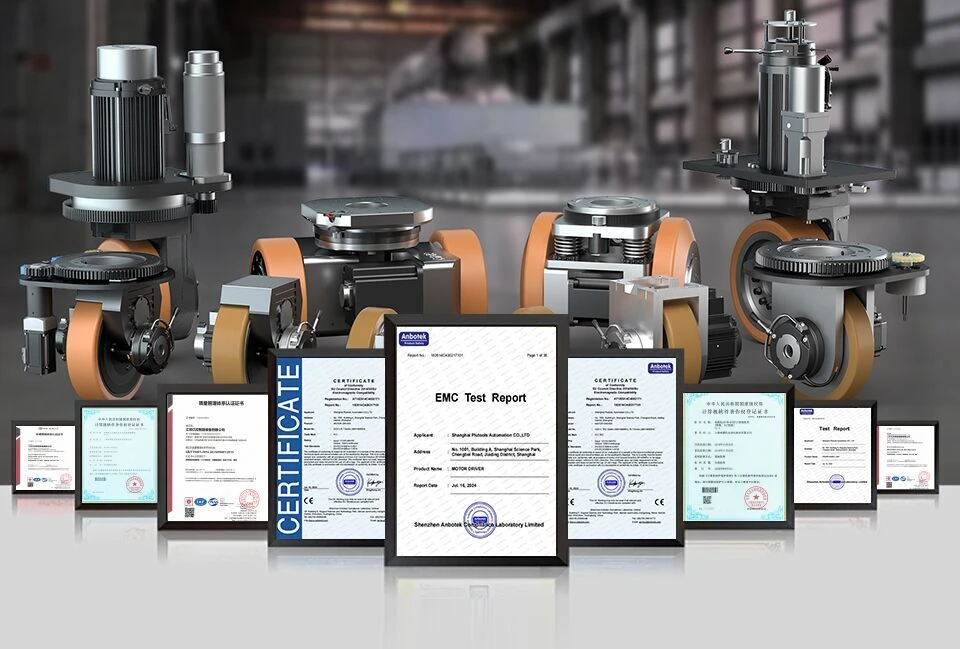
Drive Wheel Configurations Explained
Drive wheel configurations differ primarily in motor orientation, steering integration and transmission design. Understanding these structural differences is the first step in evaluating products from different suppliers.
Vertical drive wheels are engineered for compact, heavy-load installations. The motor and gearbox are stacked vertically, which minimizes the horizontal space occupied by the drive unit and keeps the vehicle chassis narrow. Plutools offers vertical drive wheels in three variants. The PLT-230 (24 V, 1500 W, 2590 RPM, gear ratio 30:1, output torque 108 Nm, max torque 300 Nm, max load 1500 kg) is a vertical drive wheel without steering intended for heavy-duty AGVs. The PLT-150 (48 V, 750 W, 3000 RPM, gear ratio 22.5:1, output torque 108 Nm, max torque 114 Nm, max load 500 kg) adds an integrated steering function. The PLT-230P (48 V, 2500 W servo motor, 3000 RPM, gear ratio 30:1, max load 1200 kg, IP65) is a vertical drive wheel with shock absorption designed for robot platforms operating on uneven floors.
Horizontal drive wheels place the motor horizontally beside the gearbox, reducing the overall height of the drive module. This architecture suits vehicles that must remain low to the ground. The PLT-167 (48 V, 750 W, 3000 RPM, reduction ratio 21:1, output torque 40 Nm, max torque 120 Nm, max load 800 kg) is a horizontal drive wheel without steering for load-transfer AGVs. The TEC-150P (48 V, 750 W servo motor, 3000 RPM, reduction ratio 21:1, max load 500 kg, IP65) adds shock absorption for AMR platforms.
Parallel horizontal drive wheels use a parallel shaft arrangement to deliver higher output torque within a low-profile package. The PLT-220 (48 V, 750 W, 3000 RPM, reduction ratio 28:1, output torque 58 Nm, max torque 174 Nm, max load 1000 kg) integrates steering. The PLT-198 (48 V, 3000 W, 3000 RPM, reduction ratio 32:1, output torque 260 Nm, max torque 576 Nm, max load 1500 kg) uses a planetary gear stage and integrates steering for heavier platforms. The PLT-210 (48 V, 3000 W, 3000 RPM, reduction ratio 32:1, output torque 260 Nm, max torque 576 Nm, max load 1200 kg) is a parallel horizontal drive wheel with steering designed for automated forklifts.
Differential drive wheels are compact units that can be mounted in pairs to provide differential steering without a separate steering mechanism. The PLT-120 (400 W, 48 V, 11.2 A, 3000 RPM, rated torque 1.28 Nm, IP65, drive wheel load 150 kg, total weight 5±2 kg) offers two transmission ratios, 9:1 and 20:1, with rated output torque of 10 Nm and 21 Nm and maximum acceleration and braking torque of 20 Nm and 42 Nm. Dual differential drive arrangements allow a zero-turn radius, which is widely used in smaller logistics robots.
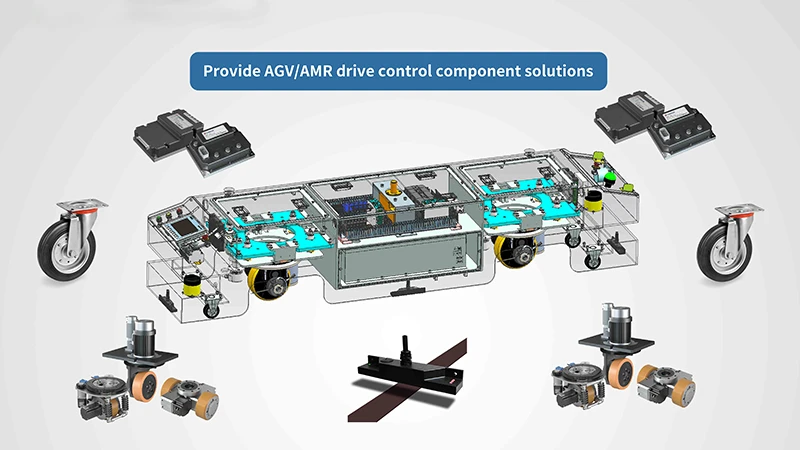
Use Cases: From Ultra-Heavy-Duty AGVs to Compact AMRs
Plutools drive wheels are used in intelligent logistics, industrial automation, warehousing, automotive manufacturing, electronics manufacturing, food and beverage production, pharmaceutical manufacturing, e-commerce fulfillment centers, airport logistics and port transportation. Typical vehicles include AGVs, AMRs, automated forklifts, transfer robots, inspection robots and cleaning robots.
A documented reference case is located in Brazil. In this project, Plutools provided 200 drive wheel units over a 2-year period for an ultra-heavy-duty AGV application. The drive wheels provide drive, differential steering and precise motion control for a vehicle operating with multiple navigation modes. The project achieved stable operation under heavy-load conditions, accurate route tracking, flexible steering and reliable material transportation. The product was used by AGV manufacturers and industrial automation system integrators.
Drive wheels in these applications operate under continuous or intermittent duty, with frequent starting and stopping, forward and reverse movement, narrow aisles, heavy loads, dust, vibration and temperature changes. Floors may be concrete, epoxy, steel or slightly uneven. Plutools can also design special versions for low-temperature warehouses, high-humidity areas, cleanrooms, dusty workshops and heavy-duty industrial applications.
Market Trends Shaping Drive Wheel Demand
The market for AGV and AMR drive wheels is expanding alongside the broader mobile robot industry. Several trends are relevant for engineers and procurement teams evaluating drive wheel suppliers.
Market growth. The global AGV wheel drives market is projected to grow at a CAGR of 11.5% from 2024 to 2034. The U.S. forklift market, valued at USD 9.11 billion in 2023, is shifting toward electric and automated drive systems.
Electrification. Electric forklifts now command over 70% market share in many regions as replacements for combustion models. Lithium-ion battery technology powers the majority of new AGV and AMR drive units, reducing range anxiety and downtime.
Module integration. Integrated steering drive modules are replacing discrete components to reduce manufacturer assembly time and maintenance complexity. Builders increasingly prefer a complete drive wheel unit with motor, gearbox, wheel, brake and steering in one assembly.
Omnidirectional motion. Mecanum wheels and omnidirectional drive systems are increasingly used for AMRs in high-density warehouses. This trend expands the range of drive architectures that vehicle builders must evaluate.
Regional dynamics. Asia Pacific held a 37.6% revenue share of the global AGV market in 2025. China's mobile robot market reached 22.1 billion yuan in 2024, with over 139,000 units sold, and Chinese mobile robot providers are increasing exports toward Southeast Asia and Europe. Industrial logistics is projected to be the fastest-growing AGV segment, with a CAGR of 11.6%.
Integrated Drive Wheels vs. Traditional Discrete Component Integration
Compared with the traditional approach of sourcing motors, gearboxes, wheels and encoders separately and integrating them in-house, an integrated drive wheel unit reduces design, assembly and testing effort. This is consistent with the broader industry shift toward integrated steering drive modules, which are replacing discrete components to reduce assembly time and maintenance complexity.
Within the two dominant drive wheel architectures, the selection guidance is clear. A vertical drive wheel is the preferred choice for compact heavy-load designs, while a horizontal drive wheel is the preferred choice for low-profile vehicles requiring better stability and easier access for maintenance.
One honest limitation should be weighed during evaluation. Horizontal drive wheels may require more complex mounting and chassis design, which can increase initial integration costs. Vertical drive wheels are generally straightforward to install, but the vehicle structure and load distribution must be carefully designed for tall or heavy vehicles. These trade-offs are specific to each vehicle platform rather than universal rankings.
Future Outlook for Drive Wheel Technology
Drive wheel development is likely to continue along the lines of higher integration, wider electrification and application-specific variants. The shift toward integrated steering and drive modules is expected to persist as builders look for ways to reduce assembly time. Omnidirectional drive capability will become more common in warehouse AMRs as high-density storage layouts demand precise, space-efficient movement.
For manufacturers and integrators evaluating drive wheel suppliers, the practical criteria are the availability of a configuration that matches the vehicle's load and height profile, the supplier's ability to support customization without excessive lead times, evidence of quality control, and documented compliance for target markets.
Plutools exports approximately 70% of its output to markets including the EU, USA, Southeast Asia, South America, the Middle East, Japan and South Korea. With a product range spanning 150 kg differential units to 1500 kg vertical and horizontal drive wheels, and CE certification covering its TEC and PLT series, the company covers multiple drive wheel configurations within a single development and production partnership.
FAQ: Vertical Drive Wheel vs. Horizontal Drive Wheel
How should I choose between a vertical drive wheel and a horizontal drive wheel?
A vertical drive wheel is generally recommended when the AGV or AMR requires a compact structure, high load capacity and straightforward installation. Because the motor and gearbox are arranged vertically, the horizontal footprint of the drive unit is smaller. It is suitable for heavy-duty AGVs, automated forklifts, lifting vehicles and equipment with limited chassis space.
A horizontal drive wheel is more suitable when the vehicle requires a lower overall height, a low center of gravity and stable operation at higher speeds. The motor is arranged horizontally, which reduces the height of the drive module and improves vehicle stability. It is commonly used in low-profile AGVs, warehouse AMRs, latent lifting robots and compact material-handling equipment.
The final choice should be based on the vehicle's installation space, load capacity, chassis height, turning structure, operating speed and maintenance requirements. Choose a vertical drive wheel for compact heavy-load designs, and choose a horizontal drive wheel for low-profile vehicles requiring better stability and easier access for maintenance.
Company Information and Resources
Shanghai Plutools Automation Corporation Co., Ltd.
Website: https://www.plutools.com
Contact person: Eric.Tang
Email: Eric.Tang@plutools.com
Tel: +86 15989586580
WhatsApp: +86 159-8958-6580
Address: No. 1001, Building A, Shanghai Science Park, Chengbei Road, Jiading District, Shanghai, China
For engineers evaluating drive wheel options, the Plutools drive wheel selection manual is available for reference: Download the selection manual (PDF).