
Dry Wipes Buyer Decision Matrix: Upfront Cost vs Recall Risk and TCO
Dry wipes have moved from a travel accessory to a standing line item in household, baby, personal care and industrial cleaning programmes. That shift changes the nature of the sourcing decision. The question is no longer whether a supplier can convert nonwoven into a 15 × 20 cm sheet, but whether the programme can run for several seasons without a recall, a return wave or an unplanned cost event. This article sets out a three-column decision matrix — upfront cost, recall risk and total cost of ownership — and shows how those columns map onto concrete procurement criteria such as the YQ002 disposable dry wipe specification and Uniquality's manufacturing controls.
Why a Quoted Unit Price Is a Weak Proxy for Dry Wipes Programme Cost
A dry wipes quotation usually captures substrate cost at a given basis weight, converting cost, packaging material and margin. What it does not capture is what happens after the container is unloaded: the cost of a failed incoming inspection, the cost of a market withdrawal if a defect reaches retail, and the cost of replacing a shipment that cannot be sold.
For low-value, high-volume products this asymmetry is structural rather than accidental. Margin is earned per unit; failure cost is absorbed per shipment. A single lot that fails a lint, absorbency or hygiene specification can consume the margin of a substantial number of containers, and in most retail relationships the buyer carries the reputational exposure even when the supplier carries the production responsibility.
The practical response is not to abandon price comparison. It is to run two models in parallel: a unit-price model for negotiation, and a total-cost model for supplier selection. The second model needs a structure before it can be used, which is what the matrix below provides.
Three Columns: Upfront Cost, Recall Risk and Total Cost of Ownership
Each column answers a different question. Upfront cost answers what do I pay per container? Recall risk answers what could this supplier cost me if the product fails in market? Total cost of ownership answers what does a sellable unit actually cost me across the whole programme?
| Decision column | What it measures | Evidence to request | Where the cost hides |
|---|---|---|---|
| Upfront cost | Quoted price per bag or per sheet, minimum order quantity, artwork and sampling costs | Unit price at pack level, MOQ, stated lead time, sampling terms | Artwork resets, minimum-order overhang, specification drift after first production |
| Recall risk | Probability that a defect reaches the market, and the cost if it does | AQL sampling plan, COA, cleanroom classification, lot documentation, certification set | Withdrawal logistics, disposal, retail penalties, replacement production runs |
| Total cost of ownership | Full lifecycle cost per unit actually sold | Energy per unit of output, yield and scrap rate, freight terms, duty classification, returns rate | Energy, scrap, freight, duty, unsold seasonal inventory |
Buyers do not weight the three columns equally, and they should not. A short promotional run on a stable commodity format can justify heavy weighting on upfront cost because the exposure window is short. An own-brand dry wipe programme with multi-year shelf presence usually justifies weighting recall risk and TCO higher, because the exposure window is measured in years and the cost of a single incident scales with distribution breadth rather than with order size.
A convenient way to test the weighting is to ask what a 10% change in each column would do to programme economics. A 10% swing in unit price is visible immediately in the quotation. A 10% swing in returns or withdrawal cost only appears in the accounts after an incident, which is precisely why it is under-weighted during sourcing.
How Uniquality's Dry Wipes Operation Maps to the Matrix
Zhejiang Uniquality Nursing Products Technology Co., Ltd. is an OEM/ODM manufacturer of dry wipes, wet wipes, baby diapers and training pants, based in Zhejiang Province, China, and established in 1987. The company reports a 1,000,000 ㎡ manufacturing footprint, more than 3,000 employees, an R&D team of over 200, annual output of 60 billion sheets and exports to more than 80 countries. Its OEM/ODM service covers material, size, logo, packaging, fragrance and formula customisation, with sampling quoted at 3–5 days and a production lead time of 35–45 days after artwork and deposit confirmation.
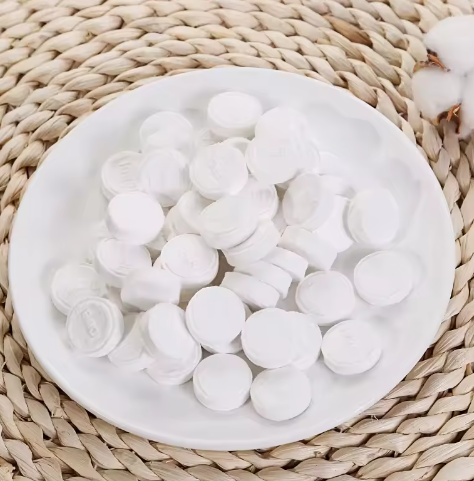
The reference product for the dry wipes line is the YQ002 disposable dry wipe, a nonwoven product supplied in 15 × 20 cm sheets. Its specification is deliberately written as a configurable range rather than a fixed SKU, which matters for cost modelling because most of the levers that move unit cost also move product performance.
| Parameter | YQ002 specification | Buyer implication for cost and risk |
|---|---|---|
| Sheet size | 15 × 20 cm, customerisable | Defines the standard facial and hand handling footprint; larger sheets raise substrate cost per unit |
| Material | Nonwoven, 35–70 gsm, customerisable | Lower basis weight favours softness and unit cost; higher basis weight favours absorbency and industrial durability |
| Pack count | 10 pcs or 80 pcs per bag, customerisable | Drives cost per unit sold and determines shelf presence in retail formats |
| Packaging | Soft pack or disposable pack, customerisable | Pack format changes packaging material cost and line speed, and therefore the packaged unit cost |
| Operating mode | Disposable, single-use | Aligned with single-use hygiene programmes where reuse is a contamination risk |
On the recall-risk column, the relevant controls are documented rather than claimed. Uniquality operates a 100,000-class clean room and applies COA documentation and AQL sampling inspection as its stated quality-control methods. The manufacturing operation is certified to ISO, CE, GMPC and FSC standards, and the dry wipes operation additionally holds ISO 50001:2018 certification for energy management, certificate number 01326En0008R201, issued by GAC and applicable globally.
On the TCO column, the commercial parameters are equally specific: the minimum order quantity for wet wipes and dry wipes is one 40HQ container, monthly capacity across the wipe lines is reported at 7 billion units with capacity varying by product, and after-sales support covers order follow-up, product usage consultation and quality feedback handling. A UK OEM customer relationship running at 20 × 40HQ containers per month over three years is documented with an on-time delivery rate of 99.5% and no major quality complaints.
Technical Explanation: Substrate, Cleanroom Class and Water at the Point of Use
Three technical variables drive most of the difference between a low-cost and a low-risk dry wipe.
1. Basis weight and substrate structure
Basis weight is the single largest lever on both softness and cost. The YQ002 range of 35–70 gsm allows a buyer to specify a lighter, softer sheet for facial and baby use and a heavier sheet for household or industrial wiping. Material family matters as well: manufacturer guidance in the category describes spunbond polypropylene in the region of 15–50 gsm for medical drapes and industrial wipes, and airlaid pulp in the region of 50–120 gsm for baby wipes and household cleaning. Those figures are supplier guidance rather than a universal standard, but they illustrate why a specification that omits basis weight and material family cannot be compared across quotations.
2. Cleanroom classification during converting and packing
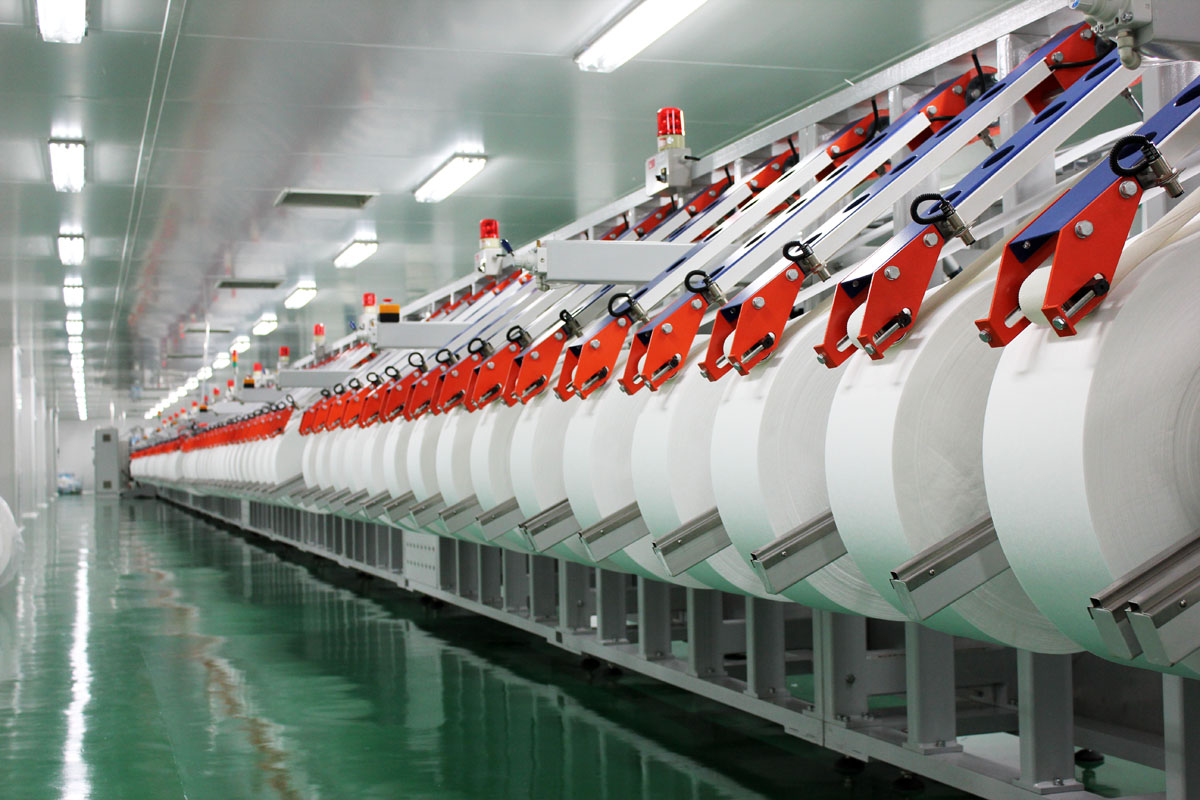
A 100,000-class clean room limits particulate and microbial load while the sheet is converted and packed. This matters for dry wipes because the product carries no preservative liquid: any contamination introduced during converting stays on the sheet until the consumer wets it. Cleanroom classification is therefore a genuine risk-control parameter, and it is one of the few that can be verified through documentation rather than inferred from price.
3. Water at the point of use
Dry wipes are frequently paired with pure water at the point of use, either by the consumer or in a professional setting. Because the substrate is the only physical barrier between the pack environment and the skin, lint-free and skin-friendly performance are functional requirements rather than marketing descriptors, and both are listed as standard requirements for this application. A supplier that cannot state a lint specification cannot support a recall-risk comparison.

Energy Efficiency and the Operating-Cost Layer of TCO
Energy is the least visible line in a dry wipes cost model and one of the largest in a high-volume converting operation. Nonwoven converting, slitting and packaging run continuously, so energy is consumed per hour of line time rather than per order, and it is embedded in the unit cost before the sheet is ever packed.
ISO 50001:2018 is the management-system standard for energy performance. Holding certification means the operation measures energy consumption per unit of output and manages it as a controlled variable rather than an overhead. For a buyer building a TCO model, that certification is a usable proxy: where two programmes run under otherwise similar conditions, a 10% improvement in energy efficiency reduces the energy component of operating cost by approximately the same proportion. Applied across a multi-season programme, that difference can be of the same order as the per-unit price gap that buyers negotiate hardest over — but it is only monetisable if it is modelled before the contract is signed.
Application Fit: Where the Weighting Changes by Scenario
The three-column matrix is not static across applications. The same product specification can carry very different risk weights depending on where it is sold and what it replaces.
- Personal care and facial cleansing. Lint-free performance and skin-friendly substrate dominate. The boxed pop-up format, which dispenses one sheet at a time under a dust-proof lid, is a common fit.
- Household cleaning. Absorbency, sheet size and cost per sheet dominate; multi-purpose use after facial use is a recognised pattern.
- Maternity and baby. Softness plus cleanroom control plus compliance documentation dominate, because the end user cannot absorb a quality failure.
- Pet supplies. Absorbency and unit cost dominate; recall exposure is lower but returns handling still applies.
- Health and beauty. Substrate consistency and pack presentation dominate, since the wipe is often part of a branded regimen.
- Travel and portable use. Pack size and portability dominate; the sheet must work as a substitute for an unsterilised hotel towel for face, body and shoe cleaning.
- Industrial cleansing. Higher basis weight, tear resistance and lint control dominate; cost per sheet is secondary to failure cost.
Geography shifts the weighting as well. These application scenarios are common in the Philippines, Russia, the United Arab Emirates, the United States, Chile and Mexico, and storage conditions matter: cool and dry storage is specified, which means buyers in humid markets should factor packaging barrier performance into the recall-risk column rather than treating it as a logistics detail.
Pack format is a hidden cost variable. Soft pack configurations, flow pack presentations and boxed formats differ in packaging material consumption, line speed and retail shelf behaviour. Because YQ002 packaging and pack count are both customerisable, the format decision should be made before the price comparison, not after.
Market Trend Analysis: Three Forces Moving in Different Directions
Three verifiable forces are shaping dry wipes sourcing economics, and they are not moving in the same direction.
Demand is expanding. The global dry wipes segment was valued at USD 14.3 billion in 2025, according to Global Market Insights. That scale supports supplier investment in dedicated lines, but it also means more capacity competing for the same shelf space — which tends to compress unit prices while leaving risk controls uneven between suppliers.
Compliance requirements are tightening. China's mandatory national standard GB 15979-2024 for disposable sanitary products took effect on 1 July 2025, replacing the 2002 version. Mandatory standard transitions raise the compliance share of TCO, because suppliers that must revalidate processes typically pass part of that cost through, and buyers who source on price alone may inherit a compliance gap.
Duty treatment for the relevant material class is neutral. Wood pulp spunlace nonwoven wipes from China are classified under HTSUS 5603.92.0090 with a duty rate of Free, according to a US Customs and Border Protection ruling. This removes tariff from the landed-cost equation for that class, which means the remaining differences between suppliers come from what they control — yield, energy, quality systems and returns performance — rather than from trade policy.
Read together, the three forces push the same way: the compliance and risk layers of dry wipes TCO are growing faster than the substrate layer. A decision framework that only compares quoted prices is therefore becoming progressively less accurate, not more.
Comparison with Established Sourcing Approaches — and Where the Matrix Stops
Price-first sourcing is not irrational. It is fast, requires little data, and works well for spot purchases, short promotional runs and stable commodity formats where the exposure window is measured in weeks. The matrix approach is a heavier instrument and should be reserved for programmes where it earns its cost.
Its limits are real and worth stating plainly.
- It does not work below the minimum order threshold. The minimum order quantity for wet wipes and dry wipes is one 40HQ container. A buyer testing a new market with a pallet-scale trial order cannot run a meaningful TCO comparison, because the fixed elements of the model — artwork, sampling, freight consolidation, line setup — dominate at that volume. For trial quantities, price-first evaluation remains the practical route.
- It depends on buyer-side data that many first-year programmes do not have. Returns rate, sell-through and inbound rejection rate are the inputs that make the recall-risk column meaningful, and none of them exist before the first full season.
- A higher upfront price is not evidence of lower recall risk. The matrix only works if a price premium is explained by verifiable controls — cleanroom classification, lot documentation, AQL sampling, certification status. A supplier charging more without disclosing those controls should be treated as an unknown, not as a safer option.
- Certification claims require independent checking. Certification status should be confirmed against the issuing body rather than accepted from a quotation pack. This applies to every supplier in a comparison set, including large ones.
- Lead time constrains the model. A production lead time of 35–45 days after artwork and deposit confirmation means seasonal programmes need their sourcing decision made earlier than a price-only process would require. TCO modelling that ignores the working-capital cost of an additional month of inventory is incomplete.
The corollary is that the matrix is a screening framework, not a scoring formula. It is most useful for separating suppliers into those whose premium is explainable and those whose premium is not.
Future Outlook
Three developments are likely to move dry wipes procurement over the next planning cycle.
First, energy management certifications are moving from a differentiator to a screening field. As energy becomes a larger share of converting cost, buyers will increasingly ask for the same kind of documentation for energy performance that they already ask for on quality.
Second, traceability expectations are rising in step with mandatory standard transitions. Lot-level documentation — COA, AQL results and cleanroom records — is becoming the baseline rather than an optional extra, and buyers who normalise those requests early will have shorter qualification cycles.
Third, pack-format economics will keep shifting. As formats such as soft pack, flow pack and boxed presentations compete for the same shelf, the packaging layer will absorb a growing share of the unit-cost differences between otherwise comparable suppliers, which strengthens the case for deciding format before deciding price.
Frequently Asked Questions
What is total cost of ownership for a dry wipes program?
Total cost of ownership is the full cost per sellable unit across the life of a dry wipes programme, not just the quoted unit price. It combines the quoted price, packaging and freight, duty treatment, energy and yield losses in production, inbound rejection and returns handling, and the cost of replacing unsellable stock. Because margin is earned per unit while failure cost is absorbed per shipment, TCO and unit price can point to different supplier choices.
How should a buyer compare dry wipes suppliers on recall risk?
Compare the documented controls rather than the price. The relevant evidence set includes AQL sampling plans, COA documentation, cleanroom classification, lot-level records and the certification set held by the manufacturing site. A supplier that discloses these controls can be assessed on risk; a supplier that does not leaves the buyer comparing only cost. Certification claims should be verified with the issuing body.
Which YQ002 dry wipe specifications matter most when comparing quotes?
Four parameters determine most of the cost difference: sheet size, which is 15 × 20 cm and customerisable; material basis weight, which ranges from 35 to 70 gsm nonwoven and is customerisable; pack count, at 10 pcs or 80 pcs per bag and customerisable; and packaging format, either soft pack or disposable pack and customerisable. A quotation that does not state all four cannot be compared with another quotation on a like-for-like basis.
How does minimum order quantity affect the cost comparison?
The minimum order quantity for wet wipes and dry wipes is one 40HQ container. Below that volume, fixed programme costs — artwork, sampling, line setup and freight consolidation — represent a disproportionate share of unit cost, and a TCO comparison produces unreliable output. For trial-scale orders, price-first evaluation is the more practical method.
What documents should be requested when auditing a dry wipes supplier's quality system?
A practical audit request covers six items: the AQL sampling plan, a sample COA, the cleanroom classification of the converting and packing area, the site's certification set including energy management certification where held, the stated production lead time from artwork and deposit confirmation, and the after-sales process for quality feedback. Uniquality's dry wipes operation holds ISO 50001:2018 certification under certificate number 01326En0008R201, issued by GAC and applicable globally, alongside ISO, CE, GMPC and FSC certification.
Does a higher upfront price always mean lower recall risk?
No. A price premium is only meaningful when it is explained by verifiable controls such as cleanroom classification, lot documentation, AQL sampling and independent certification. Without that explanation, a higher price should be treated as an unknown rather than as a safety signal. Buyers should also note that the matrix depends on buyer-side data — returns rate, inbound rejection rate and sell-through — which is usually unavailable before the first full season.
A dry wipes sourcing decision has three columns, and only one of them appears in a quotation. Buyers who model upfront cost, recall risk and total cost of ownership together are better positioned to identify which price premium is explained by verifiable controls — and which is not.
A downloadable PDF overview of Uniquality's dry wipes specifications, pack formats and certification set is available here: Uniquality product brochure (PDF).