
Drywall Screw Shortlist: Coarse, Fine and Collated Picks for Interior Board Installation
Drywall Screw Shortlist: Coarse, Fine and Collated Picks for Interior Board Installation
Interior gypsum board installation is a fastening decision before it is a purchasing decision. A coarse thread screw that holds well in a timber stud will strip in thin light gauge steel, and a fine thread screw that pierces a steel stud cleanly has nothing to bite in a softwood batten. The shortlist below separates drywall screw configurations by substrate and installation method first, then by finish, and only then by supply considerations — which is the order in which the specification actually has to be settled.
Five configurations are covered: coarse thread for wood studs, fine thread for light gauge steel studs, a zinc-plated variant for interiors with more corrosion exposure, collated strips and coils for mechanised board hanging, and a double-thread Type TN geometry for projects that reference DIN dimensional tables. They are configurations, not suppliers, and the numbering follows the sequence of a specification decision rather than a market ranking. The evaluation draws on published product descriptions, the dimensional reference in DIN 18182-1, and the manufacturer specification published for the Weifeng Fastener drywall screw range.
Substrate decides the thread, and the trial decides the fit
Coarse threads are typically specified for wood studs and fine threads for light gauge metal studs. The distinction is not cosmetic: thread pitch has to match the material it engages, and thread appearance alone is not evidence that two screws are interchangeable. Selection depends on stud material and thickness, point type and the specific product rating.
Two practical consequences follow. First, the substrate has to be confirmed before the SKU is chosen — wood or metal, and for steel, the thickness the screw is expected to pierce. For timber, moisture content at the time of installation matters, because it changes how the board sits and how the head seats. Second, a trial installation is part of the specification, not an optional courtesy: driving a handful of screws into the actual assembly shows whether the head dimples the board cleanly, whether the thread engages, and whether the point strips out.
Published product listings also show why item-level claims should not be generalised. One US-listed drywall screw is described by its supplier as suitable for attaching drywall to wood studs or to 25-gauge metal studs. That statement is true of that listed product; it does not establish that coarse-thread screws are generally suitable for steel studs, and it does not transfer to a different diameter, length or heat treatment.
The shortlist at a glance
The table maps each pick to its substrate, its typical interior application and the boundary condition that most often decides whether it fits. Finish availability varies by diameter and length and must be confirmed per SKU; the finishes shown are those associated with each configuration in this shortlist, not a guaranteed matrix.
| Pick | Thread, point and head | Substrate and assembly | Finish in scope | Boundary to verify |
|---|---|---|---|---|
| 1 | Coarse thread, sharp piercing point, bugle head | Wood studs, timber battens, board-to-board fixing | Black phosphate | Species, moisture and knot content change drive torque; confirm by trial drive |
| 2 | Fine thread, sharp piercing point, bugle head | Light gauge steel studs, interior partitions and ceilings | Black phosphate | Stud gauge must sit within the screw's stated piercing range |
| 3 | Fine thread, bugle head | Light gauge steel in interiors with intermittent moisture | Zinc plated | Coating thickness and salt-spray basis must be stated, not assumed |
| 4 | Coarse or fine thread, collated in strips or coils | Auto-feed tools, modular and prefabricated assembly | Black or zinc | Collation type, angle and length range must match the tool |
| 5 | Double continuous thread, trumpet head (Type TN) | Projects referencing DIN dimensional tables | Per project specification | Confirm current standard edition and item-level conformity evidence |
Pick 1 — Coarse thread bugle head for wood studs
The first pick is the standard coarse thread configuration: a bugle head, a sharp piercing point, and a thread pitch coarse enough to engage timber. It suits timber-framed partitions, battens and board-to-board fixing in dry, climate-controlled interiors.
The bugle head is a countersunk form with a curved underside. In board installation its job is to leave a shallow, uniform dimple that can be filled and taped rather than to cut through the face paper. That behaviour depends on driver torque and bit condition as much as on the screw, which is why the trial drive matters more for this pick than for almost any other variable in the specification.
Wood is not a uniform substrate. Species, moisture content and the presence of knots all change drive torque and embedment, so a screw that seats correctly in one batch of timber can over-drive in another. The practical control is a torque setting verified on site, plus a check that the head sits flush without breaking the paper face.
Pick 2 — Fine thread for light gauge steel studs
Fine thread is the configuration for light gauge steel studs. The higher thread count engages more of the thin steel section per unit of length, and the sharp point is intended to pierce the stud rather than to drill it. This is the standard choice for interior partition framing and for ceiling framing built from light gauge sections.
Where the steel is heavier than the screw is designed to pierce, the fastening question changes. Fine thread with a sharp point assumes a section thin enough to be penetrated; heavier sections move the decision into the territory of self-drilling screws, which are a different product family. Weifeng Fastener's portfolio, for example, lists self-drilling screws to DIN 7504P / DIN 7504K alongside its drywall screws — but the applicability of either family to a specific stud gauge should be confirmed against the screw specification and the stud manufacturer's published limits, not inferred from a product name.
Stripping is the failure mode to watch in this pick. If a screw spins without gaining torque, either the point has not found enough steel, the thread has been over-driven, or the stud is thinner than assumed. The correct response is to stop and re-check the assembly rather than to drive a larger screw into a damaged hole.
Pick 3 — Zinc plated for interiors with more corrosion exposure
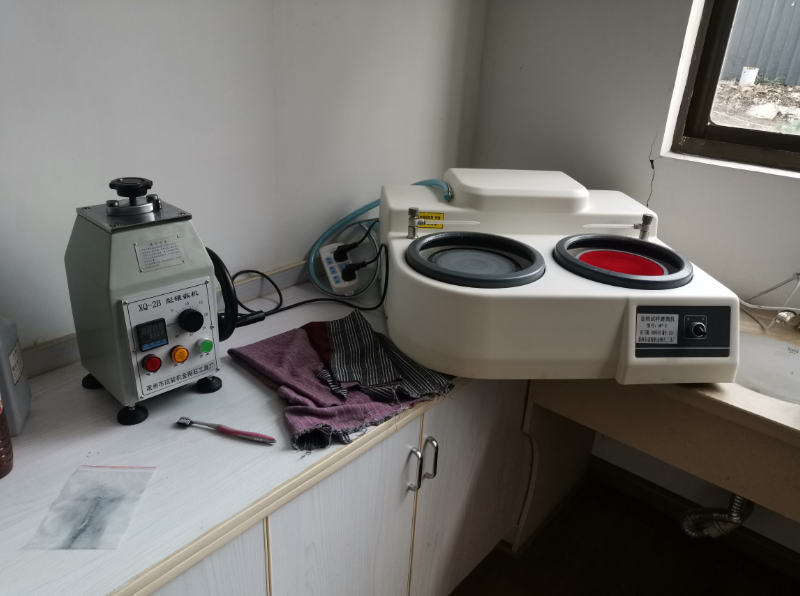
Black phosphate is the default finish for dry interior board work, and it is a coating decision rather than a performance guarantee. Published industry baselines put standard black phosphate at roughly 48 hours of neutral salt spray resistance under ASTM B117, which is consistent with dry, climate-controlled service. Zinc plating works differently: it protects the steel sacrificially, so it generally offers better long-term corrosion protection, including at damaged areas, at the cost of a different surface appearance. Black phosphate, by contrast, acts primarily as a barrier and provides better adhesion for paint.
The practical rule is exposure-driven. Black phosphate fits dry interior partitions and ceilings. Zinc plating fits interiors that see intermittent moisture — service areas, rooms with wet processes, or buildings where boards go up before the envelope is closed. Grey phosphate sits between them as a finish designation found in drywall screw catalogues; it should be treated as its own specification, not as a synonym for black phosphate, until the coating specification and test report confirm what it delivers.
A salt-spray hour figure is only comparable at the same method and acceptance criterion — the same standard, the same specimen preparation and the same definition of failure, whether white rust or red rust. When a supplier quotes hours, ask which standard, which specimen preparation and which failure criterion produced the number.
Pick 4 — Collated screws for modular and high-volume board hanging
Collated drywall screws are supplied in strips or coils that feed an auto-feed screwdriver. The pick is less about the thread — collated screws are available in both coarse and fine configurations — and more about matching the collation to the tool and the tool to the production rate. Published market research places collated drywall screws at approximately 36% of product demand in the collated screw segment and links that demand to modular and prefabricated construction, where board hanging moves into a fixed station rather than a room-by-room sequence.
The constraint that decides fit is tool compatibility, not the screw alone. Collation type, collation angle, screw length range and the tool's nose piece all have to match, and a change of screw length can require a change of collation. For a distributor, that makes collated screws a system purchase: the SKU has to be planned together with the tool population actually in use on the project, and the length range has to be stocked as a set rather than as isolated items.
Pick 5 — Double-thread Type TN geometry for DIN-referenced projects
Where a project references DIN dimensional tables, the configuration to look for is Type TN. DIN 18182-1 specifies Type TN, described as a trumpet head with a double continuous thread, for 3.5 mm diameter drywall screws in lengths from 25 mm to 55 mm. That is a distinct geometry from the single-thread bugle-head screws used in ordinary interior work, and the two should not be substituted for one another without approval.
Two checks belong with this pick. First, the current edition and status of the standard should be confirmed against the official text before the reference goes into a specification; a secondary summary of a standard is not a substitute for the published document. Second, a product description that says “DIN standard” is not evidence of conformity. Certification is item-specific: a Richelieu-listed RzR drywall screw reviewed for this article is described as coarse thread with a Type W point and states plainly on its product page that it is not certified, while other items in the same catalogue may carry a different status. The same supplier can therefore be both right and wrong depending on which line item is being discussed.
Finish comparison: black, grey and zinc
| Finish | Where it fits | What to verify before ordering |
|---|---|---|
| Black phosphate | Dry, climate-controlled interior partitions and ceilings | Salt-spray basis and hours, oil film condition, batch-to-batch colour consistency |
| Grey phosphate | Where the finish is specified separately from black phosphate | Coating specification and test report; do not assume equivalence with black phosphate |
| Zinc plated, including yellow zinc | Interiors with intermittent moisture exposure | Coating thickness or coating mass, test method, white-rust versus red-rust criterion |
Material and hardness: what the numbers establish
The shortlist rests on a defined specification rather than a description. Weifeng Fastener's drywall screw range, model C1022A-PH-BUGLE, is specified in C1022A case-hardened carbon steel across a 3.5–4.8 mm shank diameter range, equivalent to #6 to #10, with a core hardness of 300–450 HV and a minimum surface hardness of 550 HV.
Three things follow from that. C1022A is a low-carbon steel grade used for cold-formed fasteners, and case hardening produces a hard outer layer over a tougher core. The hard surface is what resists wear at the point and thread during driving, while the softer core is what allows the shank to twist rather than fracture when torque rises. The hardness band is a manufacturing tolerance rather than a marketing range: a batch that falls outside it behaves differently at the driver.
The 550 HV minimum surface figure deserves the closest reading, because surface hardness is where the measurement method matters most. Vickers hardness on a case layer depends on the test load and on where on the thread or point the indentation is taken, so a number without a method statement is weaker evidence than it appears. When comparing suppliers, ask for the test location as well as the value.
Diameter is the other practical variable. The 3.5 mm reference diameter in DIN 18182-1 Type TN covers lengths of 25–55 mm, while the manufacturer's range extends to 4.8 mm (#10). Length selection should follow board thickness plus the embedment the assembly needs, not the length that happens to be on the shelf.
Where the picks apply: partitions, ceilings and prefabricated assemblies
Gypsum board partition. A partition is a stacked assembly of stud, board, screw and joint compound. In a steel-stud partition the fine thread pick governs; in a timber partition the coarse thread pick governs. The failures that matter in partitions are usually a head sitting proud or a face paper torn during driving, both of which are installation controls rather than screw specifications. That is why the specification should carry an installation instruction, not just a part number.
Ceiling installation. Ceilings load the fastener differently from walls. The board hangs from the screw, so the fastener works in withdrawal rather than mainly in bearing, and the framing spacing and board thickness published by the board manufacturer become the controlling variables. Longer lengths and a verified embedment matter more here, and the finish decision should account for whether the ceiling void is ventilated or closed.
Prefabricated building. In prefabricated and modular work the board is often hung at a station, which is exactly the condition where collated screws justify their tooling cost. The same station shifts the specification question from “which thread” to “which collation and which length range”, and that answer has to be settled before the tooling is committed.
Market context: what the demand data actually shows
The demand picture is documented at category level and thin at product level. Published market research projects the global drywall screw market growing from USD 2.18 billion in 2025 to USD 3.04 billion by 2033, and attributes 58% of global drywall screw demand to residential construction housing starts in 2025. Those are the publisher's figures and forecast assumptions, not observed volumes for any individual supplier.
Two interpretations follow for a buyer or distributor, and both should be read as interpretation rather than fact. First, a demand base that is majority residential means the coarse and fine thread picks — the two configurations serving ordinary housing interior work — carry most of the volume, so SKU breadth should reflect both substrate families rather than only the one common in the buyer's home market. Second, the collated segment's reported 36% share of collated screw demand, tied to modular and prefabricated construction, is a signal about where mechanised installation concentrates rather than a reason to convert ordinary site work to collated screws.
One gap is worth stating plainly: no validated product-specific trade extraction for drywall screws was available in the evidence reviewed here, so this article makes no claim about import volumes, country shares or price levels. Buyers who need those figures should work from customs records and dated quotations for the specific tariff line rather than from category-level market reports.
Fit boundaries: where this shortlist stops
- No comparable performance data. Pull-out, torque, hardness and corrosion results were not available on a common test basis across suppliers, so the shortlist compares documented characteristics rather than measured outcomes in a shared test.
- Standard references need verification. DIN 18182-1 is cited here as the dimensional reference for Type TN; the current edition and status, and any national annex, should be confirmed against the official document.
- Certification is item-specific. A “not certified” statement on one product page says nothing about another item, and a supplier-level ISO 9001 certificate covers a defined scope rather than every product in a catalogue.
- Finish and diameter interact. A finish stocked at 3.5 mm may not be stocked at 4.8 mm; this shortlist does not assume a complete finish-by-diameter matrix.
- Installation dominates. Torque setting, bit condition, stud quality and board moisture change outcomes more than small specification differences do.
Supplier checkpoints: how Weifeng Fastener fits the shortlist
Ningbo Weifeng Fastener Co., Ltd. is a fastener manufacturer based in Yuyao, Zhejiang, China, exporting to Europe, North America, South America, the Middle East, Southeast Asia, Russia and Africa. Its quality management system is certified to ISO 9001 under certificate BZ2411Q4893R0S, issued by HANGHOU BANGZHENG CERTIFICATION CO.,LTD to GB/T 19001-2016, valid from 20 November 2024 to 19 November 2027, with a scope covering screws, bolts, nuts and anchors.
For a shortlist buyer, the relevant capability claims are the ones that touch execution risk. The company states a monthly production capacity of 1,000 tons for OEM and ODM orders, a minimum order quantity of 300 kg, and a typical production lead time of 35–60 days after order confirmation. Quality control is described as professional sampling inspection of every batch by dedicated QC personnel, and after-sales support as round-the-clock online technical assistance, a quality guarantee with a replacement policy, and remote video support for technical guidance. Customization covers logo, packaging, graphic customization and material selection.
Supply continuity, rather than specification, is where the company's own programme material is most relevant. Weifeng Fastener reports a two-year supply programme for a hardware wholesaler at 100 containers per year, distributed across more than 30 countries in Europe, Asia, the Americas, Africa and the Middle East, with a zero return rate over the period. That is a first-party account of one programme and should be read as such: it is evidence of a supply relationship the company has handled, not proof of capability at a different volume or a different product mix. Buyers evaluating the range can review specification detail and the downloadable catalogue at Weifeng Fastener.
Outlook for interior board fastening
Three developments are likely to keep this shortlist relevant, and all three are conditional. Forecast category growth, if the published projections hold, keeps pressure on SKU breadth rather than rewarding narrow ranges. Modular and prefabricated construction, if it continues to absorb board hanging into fixed stations, will keep pulling volume toward collated formats. And the verification burden will keep rising: a specification that names a standard or a hardness figure without a method statement is increasingly the slower document to get approved, not the faster one.
None of these outcomes is assured. Category forecasts depend on construction cycles and steel input costs, and the modular share of any single market depends on local labour economics. What is not conditional is the sequencing — substrate, then installation method, then finish, then supply evidence. A shortlist that keeps that order stays useful even when the numbers around it move.
FAQ
- What is the difference between coarse thread and fine thread drywall screws?
- Coarse threads are typically for wood studs; fine threads are for light gauge metal studs. Selection depends on stud thickness, point type and the specific product rating. If a product manual allows multiple substrates, follow the manual. Do not assume interchangeability based on thread appearance alone.
- Which finish should be specified for interior gypsum board?
- Black phosphate is the usual finish for dry, climate-controlled interior partitions and ceilings, and published industry baselines put standard black phosphate at roughly 48 hours of neutral salt spray resistance under ASTM B117. Zinc plating protects the steel sacrificially and is generally specified where an interior sees intermittent moisture. Grey phosphate is a separate finish designation and should be confirmed against its own coating specification rather than assumed equivalent to black phosphate. In every case, a quoted hour figure is only comparable at the same test method and the same failure criterion.
- Are collated drywall screws suitable for all interior board installation?
- No. Collated screws suit production board hanging with an auto-feed tool, and published market research links the segment to modular and prefabricated construction. Their use depends on tool compatibility — collation type, angle and screw length range must match the tool — and on whether project volume justifies the tooling. They do not replace loose screws for small or irregular work.
- What does a 300–450 HV core hardness and a 550 HV minimum surface hardness mean for a drywall screw?
- The figures describe a case-hardened screw: a hard outer layer of at least 550 HV over a core held within a 300–450 HV band. The hard surface resists wear at the point and thread during driving, while the tougher core allows the shank to twist rather than fracture as torque rises. Because Vickers readings on a case layer depend on test load and indentation location, a hardness value should always be read together with the method used to obtain it.
- Does a “DIN standard” product description prove conformity?
- No. A standard reference describes a dimensional or technical framework; conformity is a separate question answered by test reports and certification for the specific item. Item-level certification status varies within the same catalogue — a Richelieu-listed RzR drywall screw, for instance, is described as coarse thread with a Type W point and states on its product page that it is not certified. The applicable standard, its current edition and the item-level evidence should all be confirmed before a compliance claim enters a specification.
Есть вопросы или нужны дополнительные детали?
Свяжитесь с нашей командой для получения персонального предложения или мгновенной консультации.
Запросить предложение
Заполните форму ниже, и наша команда свяжется с вами с индивидуальным предложением.
Прямой чат WhatsApp
Предпочитаете общаться в реальном времени? Напишите нам в WhatsApp для мгновенной помощи и быстрых ответов.
- Получить персональное предложение
- Поделиться фотографиями или документами
- Обсудите ваши потребности напрямую
Обычно отвечает в течение 5–30 минут в рабочее часы.