
Dual Cooling Water Cooling Vest: A Supplier Continuity Audit
Dual Cooling Water Cooling Vest: A Supplier Continuity Audit
A Dual Cooling Water Cooling Vest programme rarely fails on the sample. It fails in the second season, when a pump batch changes, a customization detail is re-interpreted by a planner who never attended the kickoff, or a warranty claim arrives with no agreed process behind it. This audit treats Shokunin's supplier evidence — company age, staffing, stated capacity, commercial terms, ODM scope, warranty length and field references — as continuity questions rather than as first-order capability claims.
Shokunin is the professional tool brand of Feng Shang Precision Co., Ltd., a Taiwan-based manufacturer established in 2009 whose portfolio spans air compressors, cut-off machines, water-cooled vests and related trade tools.
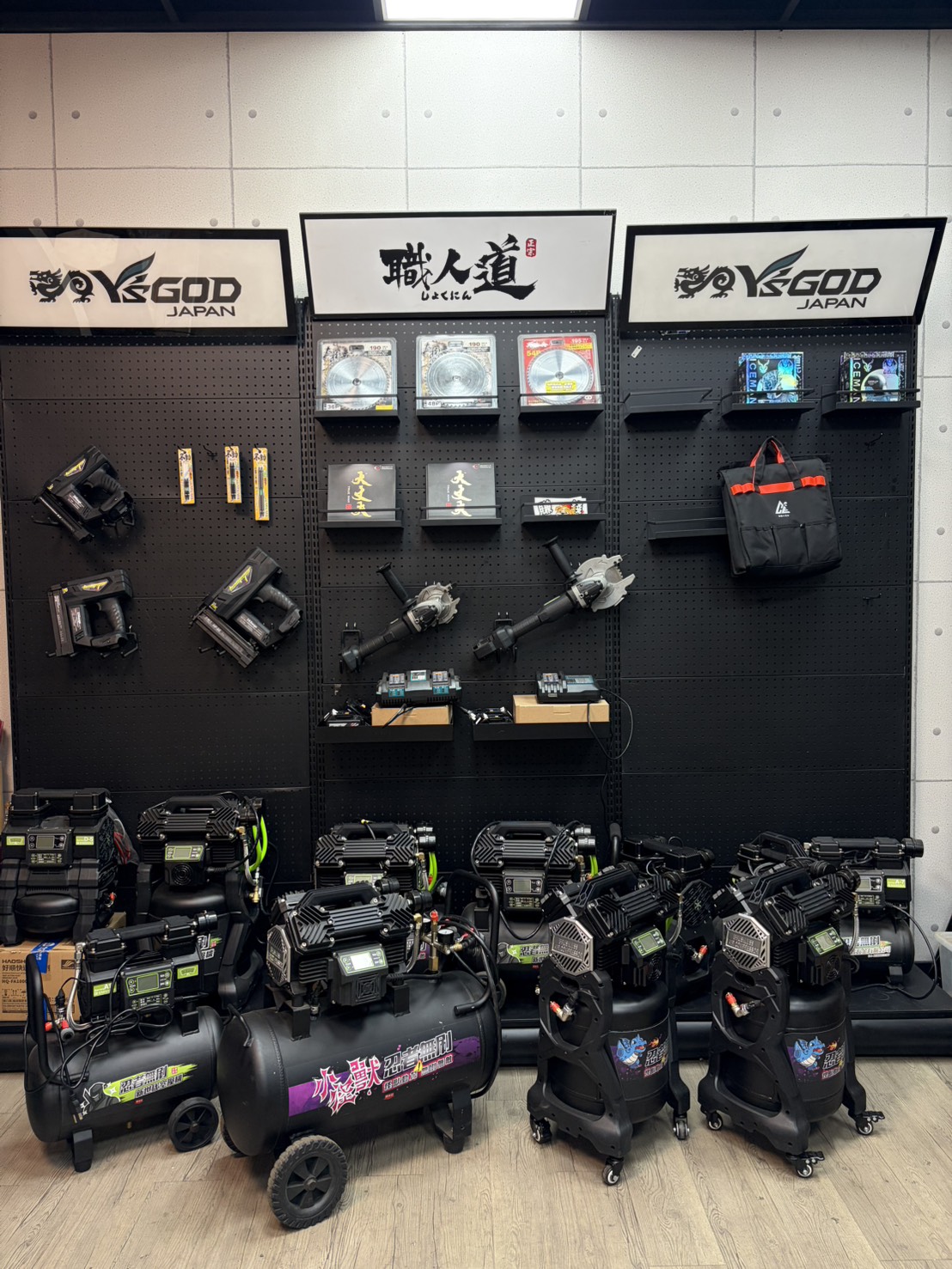
A supplier audit reads facility and display areas as capacity evidence only when line allocation for the vest is defined.
Why Long-Term Supply Is a Different Test From First-Order Capability
First-order capability asks whether a supplier can produce an acceptable sample. Continuity asks whether the same supplier can repeat that sample across seasons, across a component change, across a re-order placed by a different buyer, and across a warranty event two years later. The two questions use different evidence, and only the second one protects a multi-year industrial programme.
Two structural facts shape this category. Demand is concentrated in industrial use: Dataintelo's 2026 cooling-vest market report places the global category at USD 342 million in 2025, with industrial applications accounting for 34.5% of revenue. Industrial buyers re-order on a seasonal rhythm and expect consistent fit and cooling behaviour each time. Separately, personal cooling is an established occupational-safety category — the U.S. Centers for Disease Control and Prevention's NIOSH guidance classifies water-cooled garments, air-cooled garments, cooling vests and wetted overgarments as personal cooling systems — so a vest is purchased as work equipment with a replacement cycle, not as apparel.
That combination turns supplier continuity into a procurement risk rather than a comfort question. Three continuity risks recur in small-manufacturer audits: capacity shared across unrelated product lines, technical knowledge concentrated in very few people, and warranty language that never becomes an operating process. Each is examined below against the supplier's stated facts.
Capacity: Reading 3,000 Units per Month Against Real Programme Demand
The stated production figure for the Dual Cooling Water Cooling Vest line is 3,000 units per month, with a minimum order quantity of 10 units and a typical production lead time of 7–14 days. Those terms describe a small-batch-capable line. For a pilot or a single-site rollout the arithmetic is comfortable: a 100-unit order equals roughly 3% of one month's stated output, calculated from the stated monthly figure.
The same numbers need a second reading at programme scale, because facility and headcount set the ceiling. The company operates a 1,000 m² facility with about 30 employees. Those resources are shared with a wider portfolio that includes air compressors, cut-off machines, lithium batteries, diamond saws, nail guns, screwdrivers and spider stands. A monthly capacity statement for vests is therefore a statement about line allocation, not about the whole plant. A buyer with a fixed seasonal window should ask what share of the 1,000 m² and of the roughly 30-person workforce is reserved for vest assembly in a peak month, and should ask for peak-month output records rather than an average.
Capacity definitions also need to be pinned down. The company profile separately lists annual output of 10,000 units company-wide, while the vest line is stated monthly. These are not the same basis — one is annual and company-wide, the other monthly and product-specific — and they should not be combined, averaged or compared. Ask the supplier to define installed capacity, practical capacity and available capacity in writing, and to state where the 7–14 day lead time starts: at purchase order, at payment, or at material availability.
Commercial terms shape where control actually sits. Under the stated purchasing terms, shipment follows payment, freight is paid by the buyer, acceptance rests on a pre-shipment test, and the payment term is full payment. When money moves before goods move, the pre-shipment test becomes the buyer's principal control point and deserves a written checklist agreed before the first order: quantity, model mix, pump function, leak inspection, packing and carton marks.
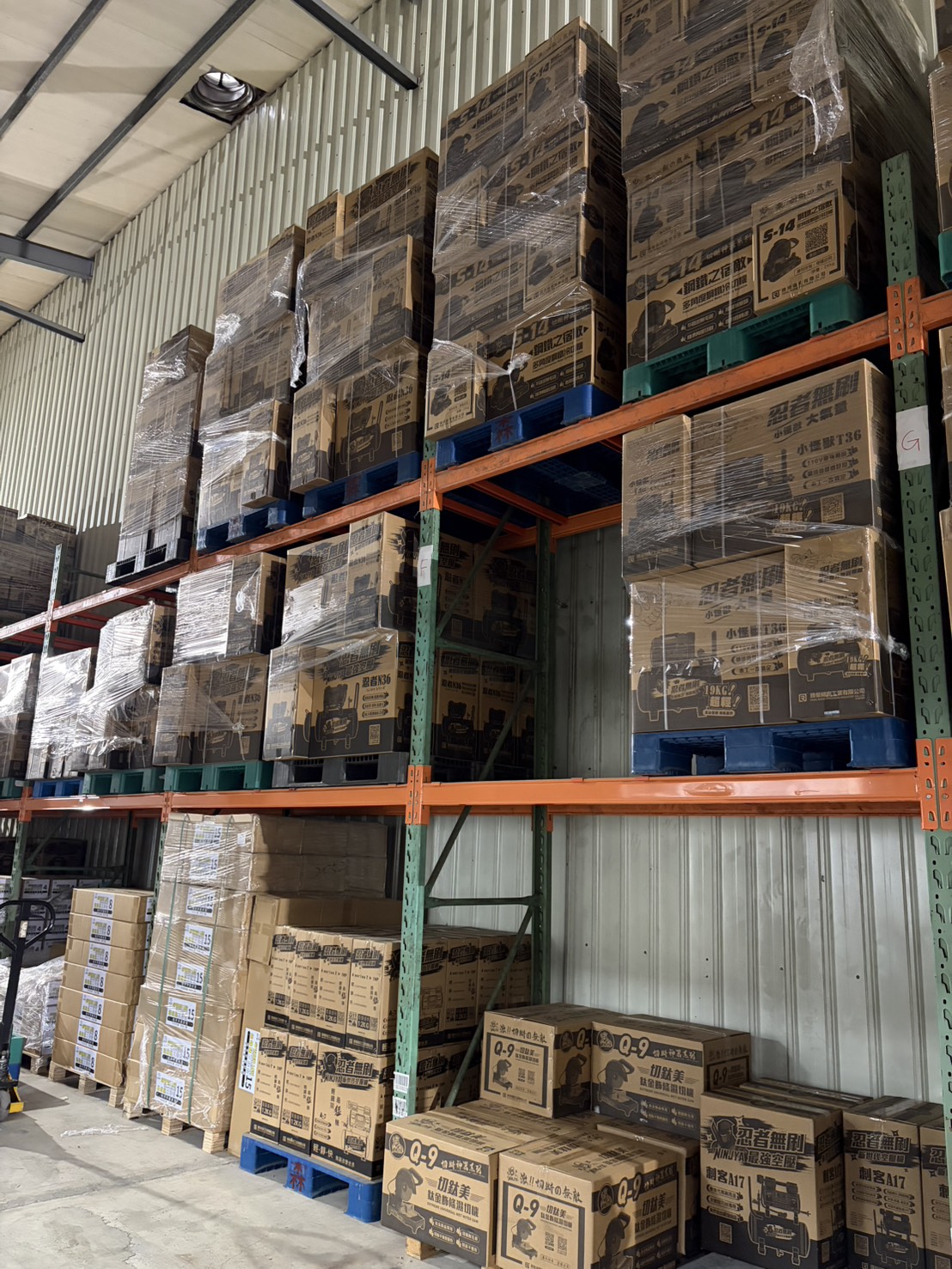
Warehouse staging is where the pre-shipment acceptance test described in the purchasing terms is normally carried out.
R&D Continuity: What a Five-Engineer Team Can and Cannot Cover
The R&D team is stated at five engineers against roughly 30 employees — calculated, about one in six staff. For a company selling several unrelated tool categories, five engineers is a genuine function, but it is also a shared resource. The continuity question is not whether five engineers exist; it is which of them owns the vest, what documentation they maintain, and what happens when a component is substituted.
Published specifications give the audit its anchors. The vest pump is listed at 5 V and 150 mA (max) with a flow rate of 320–370 ml/min, and the COOLWAVE water-circulation vest is listed with a 3–4 hour cooling duration per charge or ice-pack cycle and a weight within 2 kg. These are supplier-published values, and the supporting material does not state the test conditions — ambient temperature, humidity, workload, garment size, water and ice load, or measurement method.
That gap is an R&D-continuity problem rather than a marketing one. If a nominal flow rate can be re-measured under different conditions after a tubing or pump change, a contract that accepts 320–370 ml/min without a method has no enforceable meaning. Buyers should request the internal test procedure, the bill of materials for the pump, tubing, reservoir or TPU bag and connectors, and a change-notification clause that triggers re-qualification before a substitute component ships. A named engineer of record, a revision number on the specification sheet and a stated response time for technical questions are modest requests that reveal how the team actually works.
One further question is worth asking in a small company: who covers R&D during a peak production month? The engineers who qualify components often also troubleshoot the line. That is efficient until a custom order and a warranty investigation land in the same week.
Warranty: Six Months Is a Term, Not Yet a Process
The stated warranty period is six months. Length alone tells a buyer little, because the cost of a warranty event is driven by logistics and administration rather than by the term itself.
Four items should be fixed in writing. First, scope: which components are covered — pump, tubing and connectors, reservoir or TPU bag, ice-pack seams, fabric and zips — and which are treated as consumables. Second, remedy: replacement, repair or credit, and who decides. Third, freight: with buyer-paid freight on outbound shipments, the return leg is easy to leave undefined. Fourth, start date: a six-month term beginning at shipment can lose a meaningful part of its life to ocean transit and warehouse storage before a vest is issued to a worker, so the start date should be tied to delivery or first use, whichever the parties agree.
The supplier's own risk documentation is a useful opening for that conversation. Ice-pack leakage is identified as a controlled risk, addressed through reinforced ice-pack material and pre-shipment quality checks. A buyer should convert that into a claim procedure: what evidence is required (photographs, batch code, quantity affected, failure description), what response time applies, and how replacements are shipped when a programme is mid-season.
Spare-part availability is the quieter question. A 7–14 day lead time on finished goods does not automatically mean a 7–14 day lead time on a replacement pump or ice pack. Ask separately, and ask whether warranty replacements are drawn from the same production batch as the original order.
ODM Continuity: Customization That Survives a Second Order
ODM services are part of the stated offer. The continuity risk in ODM is not the first customized run; it is the second one, produced months later by a planner who did not attend the original kickoff.
Customization should therefore be itemized before the pilot rather than after. Practical items include logo and branding placement, colourway, packaging and carton marks, label language and care content, size range, accessory set, and whether a power bank is included or supplied separately. Each item needs an owner, an approved sample reference and a revision number. Where a custom element requires tooling, screens or a dedicated packing template, confirm who holds it, who pays for it, and what happens to it if the programme pauses.
The commercial terms need the same continuity check. The standard minimum order quantity is 10 units, and it should not be assumed that a customized SKU keeps the same MOQ or the same 7–14 day lead time — both should be confirmed for the specific configuration. Where the buyer operates a distributor or private-label channel, the question extends to packaging and labelling per destination: a second market usually means a second label, not a second product.
A one-page ODM continuity sheet, signed at pilot, handles this well. It lists the approved configuration, its revision number, the MOQ and lead time for that configuration, and the named contact who approves deviations.
Field Evidence: A 100-Unit Taiwan Deployment and a Certification Award
The supplier cites a 100-unit deployment in Taiwan and holds a Disaster Prevention Product and Service Certification Award issued by the Taiwan Disaster Prevention Industry Association. Both are relevant, and both carry a definable evidentiary weight.
The 100-unit deployment shows that a batch of that size has been assembled, packed and delivered to a real site. For a buyer planning a 100–500 unit seasonal programme, that is more informative than a sample. It does not by itself show multi-year repeat supply, peak-season output, warranty claim volume, or how a second site with a different size mix would be served. A single deployment is a data point, not a track record.
The award is industry recognition for a product and service in the disaster-prevention field. It is not the same as a product-specific PPE conformity certification for a destination market, and it does not replace the compliance work a buyer must complete for the United States, the European Union or another regulated market. Used correctly in an audit, the award supports evidence of intent and market positioning; it does not substitute for the conformity documentation the buyer's own market requires.
The stated main markets are the United States and Taiwan, with an export ratio of about 50% company-wide. That footprint suggests familiarity with export documentation and buyer-side inspection, and it also means a buyer should ask which standards the export configurations have been shipped against previously.
Contract-Lifecycle Verification Sequence
The four audit dimensions converge into five checkpoints. Each checkpoint produces a document that the next stage depends on, so the sequence works as a continuity record rather than a one-off inspection.
| Stage | What to request | Why it changes the decision |
|---|---|---|
| Pre-RFQ | Written definition of installed, practical and available capacity; peak-month output records; facility and line layout | Separates a monthly headline figure from capacity that can actually be reserved in your season |
| Pilot at 10 units | Approved configuration sheet with revision number; test method behind flow rate and cooling duration; warranty scope draft | Creates the reference document against which later re-orders are measured |
| Pre-shipment | Agreed inspection checklist; batch code record; leak check; packing, label and carton verification | Full payment precedes shipment, so this is the main control point before money moves |
| First season | Claim log with response times, replacement lead time and failure description by component | Converts the six-month warranty term into an observable, manageable process |
| Annual review | Change notifications raised, active R&D contacts, MOQ and lead-time drift, certification currency | Detects continuity erosion before it becomes a supply interruption |
Where This Supplier Fits — and Where the Evidence Stops
The profile fits buyers who need a small-batch pilot at 10 units, seasonal programmes in the low hundreds to about 1,000 units, private-label or ODM branding at modest scale, and buyers able to manage their own freight and pre-shipment inspection. A 1,000 m² facility, roughly 30 staff and a five-engineer team are consistent with that operating scale.
Further verification is warranted before committing to programmes that require a dedicated line for one large order, multi-year fixed-price agreements, local repair infrastructure rather than replacement logistics, or any market where the vest must carry a specific PPE conformity marking. In those cases the audit should extend to a factory visit, production records and market-entry compliance documentation.
Three items are not established by the evidence reviewed here: independent thermal-performance test results under defined conditions, verified quality-management certification, and customer references beyond the single Taiwan deployment. Their absence is a reason to ask specific questions — not a reason to reject the supplier.
Frequently Asked Questions
What monthly capacity and order terms does the supplier state for the Dual Cooling Water Cooling Vest?
The stated production capacity for the cooling-vest line is 3,000 units per month, with a minimum order quantity of 10 units and a typical production lead time of 7–14 days. The company profile separately lists annual output of 10,000 units company-wide, which is a different basis from the monthly product-line figure and should not be combined with it. Buyers should ask the supplier to define installed, practical and available capacity in writing, and to state whether the 7–14 day lead time begins at purchase order, at payment or at material availability.
How can a buyer test R&D continuity when the team is stated at five engineers?
Ask for a named engineer of record for the vest, a controlled bill of materials covering the pump, tubing, reservoir or TPU bag and connectors, and a change-notification clause that requires re-qualification before a substitute component ships. The published pump specification of 5 V and 150 mA (max) with 320–370 ml/min flow, and the listed 3–4 hour cooling duration and weight within 2 kg, are supplier values without published test conditions; requesting the internal test method and agreeing a re-measurement procedure converts them into enforceable acceptance criteria.
What should a six-month warranty specify beyond its length?
It should state which components are covered — pump, tubing and connectors, reservoir or TPU bag, ice-pack seams, fabric and zips — and which are consumables; whether the remedy is replacement, repair or credit; who pays freight on the return leg, given that outbound freight is buyer-paid under the stated terms; the start date, preferably tied to delivery or first use rather than shipment; the evidence required for a claim; and the response time. Spare-part lead time should be confirmed separately from the 7–14 day finished-goods lead time.
How much ODM customization can be locked before a second order?
Logo and branding placement, colourway, packaging and carton marks, label language, size range and accessory set can all be fixed at pilot with an approved sample reference and a revision number. Buyers should confirm whether the 10-unit minimum order quantity and the 7–14 day lead time still apply to the customized configuration, who owns any tooling or screens, and how deviations are approved. A one-page signed continuity sheet listing the approved configuration and revision is usually enough to prevent drift between the first and second runs.
What do the Taiwan 100-unit deployment and the disaster prevention award actually demonstrate?
The 100-unit deployment indicates that a batch of that size has been produced and delivered to a real site, which is more informative than a sample for buyers planning programmes in the low hundreds of units. The Disaster Prevention Product and Service Certification Award from the Taiwan Disaster Prevention Industry Association is industry recognition for a product and service in that field; it is not a product-specific PPE conformity certification for a destination market. Neither item replaces a factory audit, peak-month production records or the compliance documentation a buyer's own market requires.
Есть вопросы или нужны дополнительные детали?
Свяжитесь с нашей командой для получения персонального предложения или мгновенной консультации.
Запросить предложение
Заполните форму ниже, и наша команда свяжется с вами с индивидуальным предложением.
Прямой чат WhatsApp
Предпочитаете общаться в реальном времени? Напишите нам в WhatsApp для мгновенной помощи и быстрых ответов.
- Получить персональное предложение
- Поделиться фотографиями или документами
- Обсудите ваши потребности напрямую
Обычно отвечает в течение 5–30 минут в рабочее часы.