
Dual Cooling Water Cooling Vest: Shortlisting COOLWAVE Models Against Purchase Terms
Dual Cooling Water Cooling Vest: Shortlisting COOLWAVE Models Against Purchase Terms
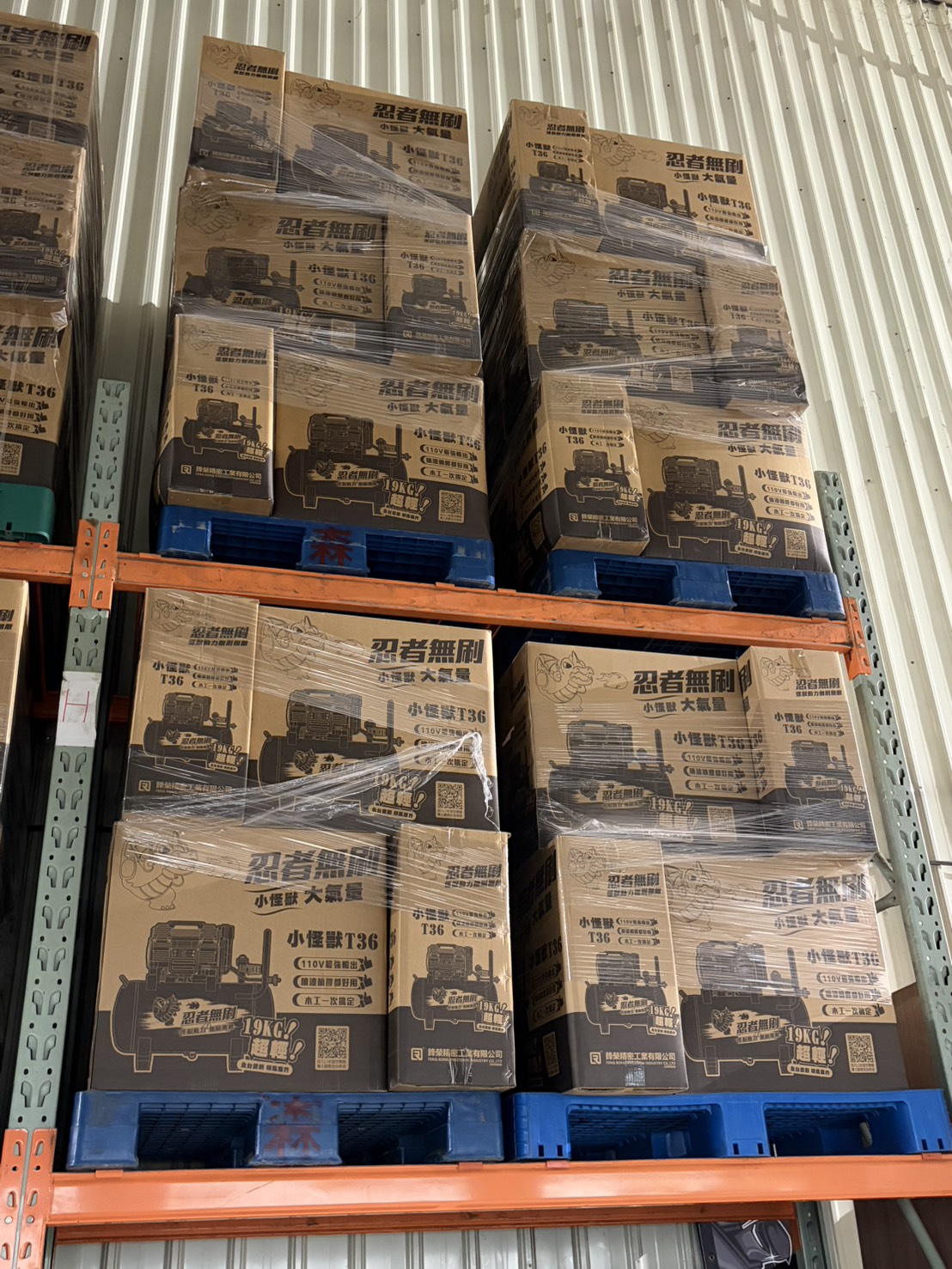
Supply staging and inventory area relevant to lead-time and capacity checks. Image: Shokunin / Feng Shang Precision.
Shortlisting a dual cooling water cooling vest is not a beauty contest between model names. For the COOLWAVE line from Shokunin, the professional brand of Feng Shang Precision Co., Ltd., the practical question is which model can be ordered, sampled, accepted and supported against the commercial terms already on the table. On the evidence supplied, the COOLWAVE Basic Model is the first shortlist entry when a buyer needs the clearest traceability from product record to deployment, while the COOLWAVE Professional Model stays on the shortlist as a parallel option until model-specific documentation gives a purchasing reason to place it first.
Both are presented in Black, Blue and Gray. The supplier-level terms are a 6-month warranty, MOQ of 10 units, typical 7–14 day lead time, 3,000-unit monthly capacity and ODM service. The acceptance list includes the 5 V / 150 mA pump, 320–370 ml/min flow, 3–4 hour cooling duration, under-2 kg net weight, TPU water bag, polypropylene cap, sand rubber cooling tube and 600D polyester shoulder strap. Those facts are useful only if they are attached to the right model, order quantity and test method.
Why this shortlist starts with purchase terms, not product names
Commercial research cited in the supplied evidence pack estimated the global cooling-vest market at USD 342 million in 2025, with industrial applications at 34.5% of revenue. The same pack notes that NIOSH classifies water-cooled garments as personal cooling systems. Neither fact proves that one COOLWAVE model outperforms another; together they explain why industrial buyers need a documented acceptance path rather than a generic comfort claim.
For an evaluation-stage buyer, the shortlist should answer four questions. Can the supplier meet the order terms? Can the model be tested against the stated acceptance values? Does the evidence attach to the model being purchased? What remains unverified? A shortlist that ignores those questions is only a product list.
The two COOLWAVE options on the shortlist
The supplied listing identifies two COOLWAVE water-circulation vest variants: the Basic Model (CW-01) and the Professional Model (CW-PRO). Both are offered in Black, Blue and Gray. The data set does not document a performance gap between them. It lists product-line specifications and supplier-level commercial terms. That distinction matters: a buyer should not read the word Professional as proof of longer runtime, higher flow or better cooling. It is a model designation until model-specific evidence is supplied.
Secondary product descriptions in the supplied evidence describe the dual-cooling architecture as a reusable ice-pack cold source combined with pump-driven water circulation powered by a power bank. That description is useful for acceptance planning, but it lacks a standardized test method in the supplied data. The buyer should verify the mechanism, not merely the label.
Shortlist at a glance
| Shortlist position | Model and colors | Evidence position | Commercial terms to confirm | Acceptance focus | Shortlist action |
|---|---|---|---|---|---|
| 1 — evidence-led pilot | COOLWAVE Basic Model (CW-01); Black, Blue, Gray | Taiwan case record (100 units) and water-cooled vest patent certificate I886033 are linked to the Basic Model in the supplied corpus. | Supplier-level: 6-month warranty, MOQ 10, 7–14 days, 3,000 units/month, ODM service. | Pump 5 V / 150 mA; flow 320–370 ml/min; 3–4 hour cooling; under 2 kg; TPU bag; polypropylene cap; sand rubber tube; 600D polyester strap. | Place first for a controlled pilot when traceability is the priority; confirm model-specific terms before PO. |
| 2 — parallel candidate | COOLWAVE Professional Model (CW-PRO); Black, Blue, Gray | Listed as a product variant; the supplied data does not include a model-specific case, patent link or performance test. | Confirm whether the same supplier-level terms apply by model and color mix. | Same acceptance checklist; add model-specific datasheet and sample comparison. | Keep on the shortlist only while a documented reason to prefer it exists, or if the Professional designation is a procurement requirement. |
Commercial terms to lock into the RFQ
The following terms are supplier-level facts in the supplied material. They should become RFQ lines and purchase-order conditions, not marketing bullets.
Warranty: 6 months. Define the start date, covered components, exclusions, claim evidence, return freight and repair or replacement route. For a powered vest, the pump, tubing, water bag and cap may have different failure modes; a single period does not define component coverage.
MOQ: 10 units. Confirm whether the minimum applies per model, per color or to a mixed order. If the buyer wants Basic and Professional in three colors for evaluation, the mix rule matters more than the headline MOQ.
Lead time: 7–14 days. Ask when the clock starts: PO, deposit, artwork approval or material release. For ODM orders, packaging and approval steps can change the critical path. Require a written lead-time clock and a shipment-readiness check.
Capacity: 3,000 units per month. Confirm available capacity for the exact model and color, the basis of the figure, and whether it is line capacity or currently available capacity. Capacity is not a delivery promise until it is tied to a scheduled order.
ODM service. The scope is not detailed in the supplied data. Define what is customizable: branding, labels, packaging, color allocation, documentation, connectors or accessories. Confirm tooling, MOQ impact, approval samples, artwork ownership and quality gates. ODM is a process capability, not proof that every customization is available at the 10-unit MOQ.
Acceptance checks for a COOLWAVE sample
Acceptance should turn each claimed value into a test record. The table below uses the supplied values. It is a buyer-side checklist, not a claim that an independent laboratory has certified the product.
| Acceptance checkpoint | Supplied value | Buyer verification method | Release condition or note |
|---|---|---|---|
| Pump electrical rating | 5 V, 150 mA maximum | Check pump label or datasheet; run with the intended power bank, cable and connector. | Confirm voltage, current and connector compatibility; record the power-bank model used. |
| Flow rate | 320–370 ml/min | Request the supplier test method; repeat with production tubing, reservoir position and water fill. | Record tubing length and head conditions; confirm stable flow in the wearing position. |
| Cooling duration | 3–4 hours per charge or ice-pack cycle | Test in representative ambient temperature, humidity, workload and clothing; record time to unacceptable warming. | Treat as a specification to verify, not a full-shift guarantee. |
| Net weight | Under 2 kg | Weigh dry, filled, with power bank and with ice packs as applicable; define the configuration. | Confirm the vest remains wearable under the agreed load. |
| Water bag material | TPU | Request material declaration; inspect seams; fill, drain and leak-check. | TPU is a material specification, not a lifetime guarantee. |
| Cap material | Polypropylene | Check thread fit, seal, repeated open and close, and bag-neck compatibility. | Reject cross-threading or leakage in the sample test. |
| Cooling tube material | Sand rubber | Check flexibility, kink resistance, connector fit and flow stability when bending or sitting. | Repeat the bench flow check in a wearing position. |
| Shoulder strap material | 600D polyester | Confirm denier specification, stitching, adjusters and load distribution when filled and worn. | Check comfort and load spread, not only the fabric label. |
Technical explanation: pump, flow and cooling duration
The pump is rated at 5 V and 150 mA maximum. That is a low-voltage electrical load, but it still requires a compatible power bank, connector and cable. For a power-bank cooling vest, acceptance should include a runtime test with the intended power bank, not just a pump label check. Record the power bank capacity, output setting, cable and connector because these can change the practical result.
Flow is stated at 320–370 ml/min. Flow rate is not a comfort outcome by itself; it is a circulation specification. Its meaning depends on tubing length, reservoir height, kinks, water fill and the measurement method. The supplied data does not define those conditions. A buyer should ask for the supplier flow-test method and repeat it with the production tubing and reservoir position. The acceptance question is whether the vest sustains flow in the wearing position, not only on a bench.
Cooling duration is stated at 3–4 hours per charge or ice-pack cycle. The supplied data does not define ambient temperature, humidity, workload, clothing layers or body size. A 3–4 hour figure should therefore be treated as a specification to verify in the buyer environment. If a work shift is longer, plan ice-pack or power-bank changes and test the changeover time. This is a planning requirement, not a product failure.
Materials, weight and wearability acceptance
Material acceptance is where a low-cost cooling vest can fail in service. The water bag is specified as TPU; the cap as polypropylene; the cooling tube as sand rubber; the shoulder strap as 600D polyester. Each material has a different inspection point.
- TPU water bag: request a material declaration, inspect seams, fill and drain the bag, and run a leak check under normal use. TPU is a material specification, not a lifetime guarantee.
- Polypropylene cap: check thread engagement, seal, repeated open and close, and compatibility with the bag neck. A cap that cross-threads can create a leak even if the bag is sound.
- Sand rubber cooling tube: check flexibility, kink resistance, connector fit and flow stability when the wearer bends or sits. Repeat the bench flow check in a wearing position.
- 600D polyester shoulder strap: confirm the denier specification, stitching, adjusters and load distribution. Check the strap with the vest filled and worn, not only empty.
- Under-2 kg net weight: define whether the figure is dry, filled, with power bank or with ice packs. Weigh the sample in the configuration that will be used. A sub-2 kg vest can still feel heavy if the load is poorly distributed.
Application fit: where the shortlist is relevant
The supplied Taiwan case record lists 100 units deployed for workers in high-temperature environments, with construction sites, outdoor work, metal sheet factories and street vendors named as application contexts. The record links the deployment to the Basic Model and reports effective body cooling, heatstroke prevention, improved work efficiency and worker comfort. It does not report a controlled comparison with the Professional Model or with passive ice-pack vests, so those outcomes should be read as case-record claims, not as a guaranteed result for every site.
Application fit should be assessed by task, not by industry label. Construction and metal-sheet work may involve radiant heat, physical activity and PPE layering. Traffic control and street vending may involve prolonged sun exposure and less access to cooling breaks. A portable cooling vest can fit these contexts only if the runtime, weight, refill routine and power-bank handling match the actual work pattern.
Where a metal-roof factory or outdoor site has no reliable charging point, the power-bank requirement becomes an operational constraint. The buyer should plan charging, spare batteries and water or ice replacement before the pilot, not after.
Dual cooling versus passive ice-pack vests
Passive ice-pack vests and dual cooling water circulation vests solve the same broad problem with different acceptance burdens. A passive vest relies on ice packs; a dual cooling vest described in the supplied material adds pump-driven water circulation powered by a power bank. The added circulation creates additional checkpoints: pump function, flow, tubing, water bag, cap and power source. It also creates maintenance tasks. This does not prove that the dual cooling design is thermally superior. It means the buyer must test more variables and define who manages them.
For some sites, a passive ice-pack vest may be simpler to deploy because it avoids pump and power-bank dependence. For others, the circulation feature may be the reason to evaluate the product, but only if flow and runtime are verified in the wearing position. The shortlist should reflect the site operating constraints, not a generic preference for active cooling.
Decision rules for Basic versus Professional
- If the buyer needs the shortest evidence path today, place the Basic Model first. The supplied case and patent record are linked to the Basic Model; that is an evidence advantage, not a performance ranking.
- Keep the Professional Model on the shortlist if the purchase specification names it, if the supplier provides model-specific test data, or if a sample comparison shows a relevant difference. Without one of those conditions, the name alone is not a selection criterion.
- Choose color after model and acceptance. Black, Blue and Gray are offered variants; the supplied data does not show a performance difference by color. Color should be decided by visibility, heat absorption, corporate identity or worker preference, not by an invented technical ranking.
- If ODM is required, confirm that the ODM scope applies to the selected model and color. A line-level ODM statement does not automatically mean every SKU can be customized at the 10-unit MOQ.
- If the pilot is small, confirm the mixed-model and mixed-color rule for the 10-unit MOQ. A 10-unit order can support evaluation only if the allocation matches the test plan.
Risks, limitations and open verification points
- Cooling duration and flow values are supplier-published; test conditions are not provided. Treat them as acceptance targets, not independently verified performance.
- The supplied data does not document a model-specific performance difference between Basic and Professional. Do not assume the Professional Model is better because of its name.
- The patent certificate is an intellectual-property record linked to the Basic Model, not a thermal test or a product certification.
- Capacity is stated as 3,000 units per month at supplier level; confirm model and color allocation and the capacity basis.
- Warranty is 6 months; confirm component coverage, claim process and freight responsibility.
- ODM service is listed but its scope, tooling and MOQ impact are not detailed.
- The Taiwan case record is a deployment record, not a controlled comparison. It supports application relevance, not a performance guarantee.
Evidence traceability and the company link
The supplied certification record lists a water-cooled vest patent certificate, number I886033, issued by the Intellectual Property Office, Ministry of Economic Affairs, with a scope covering water-cooled vest structure and cooling system. The record is linked to the Basic Model. A patent record can support a supplier technical identity, but it does not replace a sample test. Buyers should keep the patent number in the supplier file while testing the pump, flow, runtime, weight and materials separately.
Feng Shang Precision Co., Ltd. is the company behind the Shokunin brand. Its published website is the appropriate place to verify company identity and contact details before an RFQ. The brochure link below provides a reference document for the product line; it does not replace the model-specific datasheet or the acceptance record.
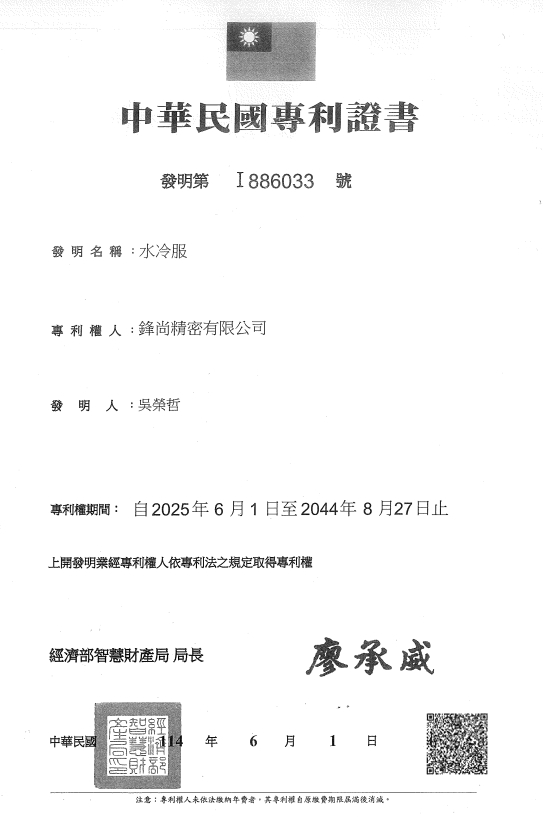
The listed water-cooled vest patent record is linked to the Basic Model in the supplied corpus. Image: Shokunin / Feng Shang Precision.
Procurement outlook: what would change the shortlist
The next shortlist review should be triggered by evidence, not by a calendar. If the supplier provides model-specific test reports for the Professional Model, if ODM scope is confirmed for the selected color, or if a pilot shows a meaningful difference in runtime or wearability under the same conditions, the order of the shortlist can change. Until then, the Basic Model remains first on traceability and the Professional Model remains a parallel candidate. This is a conditional procurement outlook, not a market forecast.
FAQ
What is the difference between the COOLWAVE Basic Model and Professional Model?
Supplied data identifies both as COOLWAVE water-circulation vest variants in Black, Blue and Gray. It does not provide a verified model-specific performance difference. For procurement, treat Basic and Professional as listing designations until the supplier provides model-specific specifications or test reports. The Basic Model has the clearer evidence trail in the supplied corpus because the Taiwan case and patent record are linked to it; that is an evidence distinction, not proof of superior cooling.
What commercial terms should a buyer confirm before ordering?
Confirm the 6-month warranty, MOQ of 10 units, typical 7–14 day lead time, 3,000-unit monthly capacity and ODM service. Ask how these apply by model, color, order mix, lead-time start point, warranty claim process and ODM scope. The figures are supplier-level commercial terms; they do not by themselves confirm model-specific allocation.
Which acceptance tests matter most for a dual cooling vest?
Test the pump at 5 V and 150 mA maximum, flow at 320–370 ml/min under a recorded method, cooling duration over 3–4 hours per cycle in representative conditions, and weight under 2 kg with a defined dry or as-used configuration. Check the TPU water bag, polypropylene cap, sand rubber cooling tube and 600D polyester shoulder strap against the specification. Record conditions and results for each sample.
Does a 3–4 hour cooling duration cover a full work shift?
Not automatically. The 3–4 hour figure is stated per charge or ice-pack cycle, and the supplied data does not define ambient temperature, humidity, workload, clothing or body size. Test the vest in the intended work conditions and plan ice-pack or power-bank changes around the measured runtime. The figure is a specification to verify, not a full-shift guarantee.
Is the Professional Model the better choice because of its name?
The name alone is not evidence of better performance. The supplied data lists both Basic and Professional variants but does not document a performance gap. The Basic Model is first on the evidence-led shortlist because the case and patent records are linked to it. The Professional Model remains a parallel candidate if the buyer needs that designation or receives model-specific documentation showing a relevant difference.
Conclusion: a shortlist that can survive acceptance
The defensible COOLWAVE shortlist today is not a two-name beauty parade. It is a procurement sequence. The Basic Model goes first when the buyer needs the clearest evidence trail and a controlled pilot. The Professional Model stays on the shortlist as a parallel candidate until model-specific documentation or a sample comparison gives it a purchasing reason. Both should be judged against the same commercial terms and the same acceptance record: 6-month warranty, MOQ 10, 7–14 day lead time, 3,000-unit monthly capacity, ODM scope, 5 V / 150 mA pump, 320–370 ml/min flow, 3–4 hour cooling duration, under-2 kg net weight, TPU water bag, polypropylene cap, sand rubber tube and 600D polyester shoulder strap. If a model cannot be traced to those terms and checks, it is not ready for the shortlist, regardless of its name.
Reference document: COOLWAVE product brochure (PDF).
Есть вопросы или нужны дополнительные детали?
Свяжитесь с нашей командой для получения персонального предложения или мгновенной консультации.
Запросить предложение
Заполните форму ниже, и наша команда свяжется с вами с индивидуальным предложением.
Прямой чат WhatsApp
Предпочитаете общаться в реальном времени? Напишите нам в WhatsApp для мгновенной помощи и быстрых ответов.
- Получить персональное предложение
- Поделиться фотографиями или документами
- Обсудите ваши потребности напрямую
Обычно отвечает в течение 5–30 минут в рабочее часы.