
Dual Cooling Water Vests: A Buyer's Decision Matrix
Dual Cooling Water Vests: A Buyer's Decision Matrix
Cooling apparel has moved from a seasonal perk to a line item with a specification. Industrial applications, construction and manufacturing among them, held the largest share of cooling-vest demand at 34.5% of the market in 2025, according to Dataintelo's cooling-vest market report. Once a site orders cooling vests by the hundred, the purchasing question stops being “does it feel cold?” and becomes “what does one unit deliver across one shift, and what does it cost to keep it delivering?”
Most cooling-vest marketing does not answer that question, because it is not written in units. Long-lasting, rapid cooling and portable are category adjectives, not measurements. This article sets out a decision matrix built on three measurable variables, weight, cooling duration and flow rate, and uses the documented specifications of the Shokunin COOLWAVE Water-Circulation Cooling Vest as a worked baseline. Shokunin is a professional tool and cooling-apparel brand launched by Feng Shang Precision Co., Ltd., a Taiwan-based manufacturer founded in 2009 whose product line includes air compressors, cut-off machines, water-cooled vests and related tools.
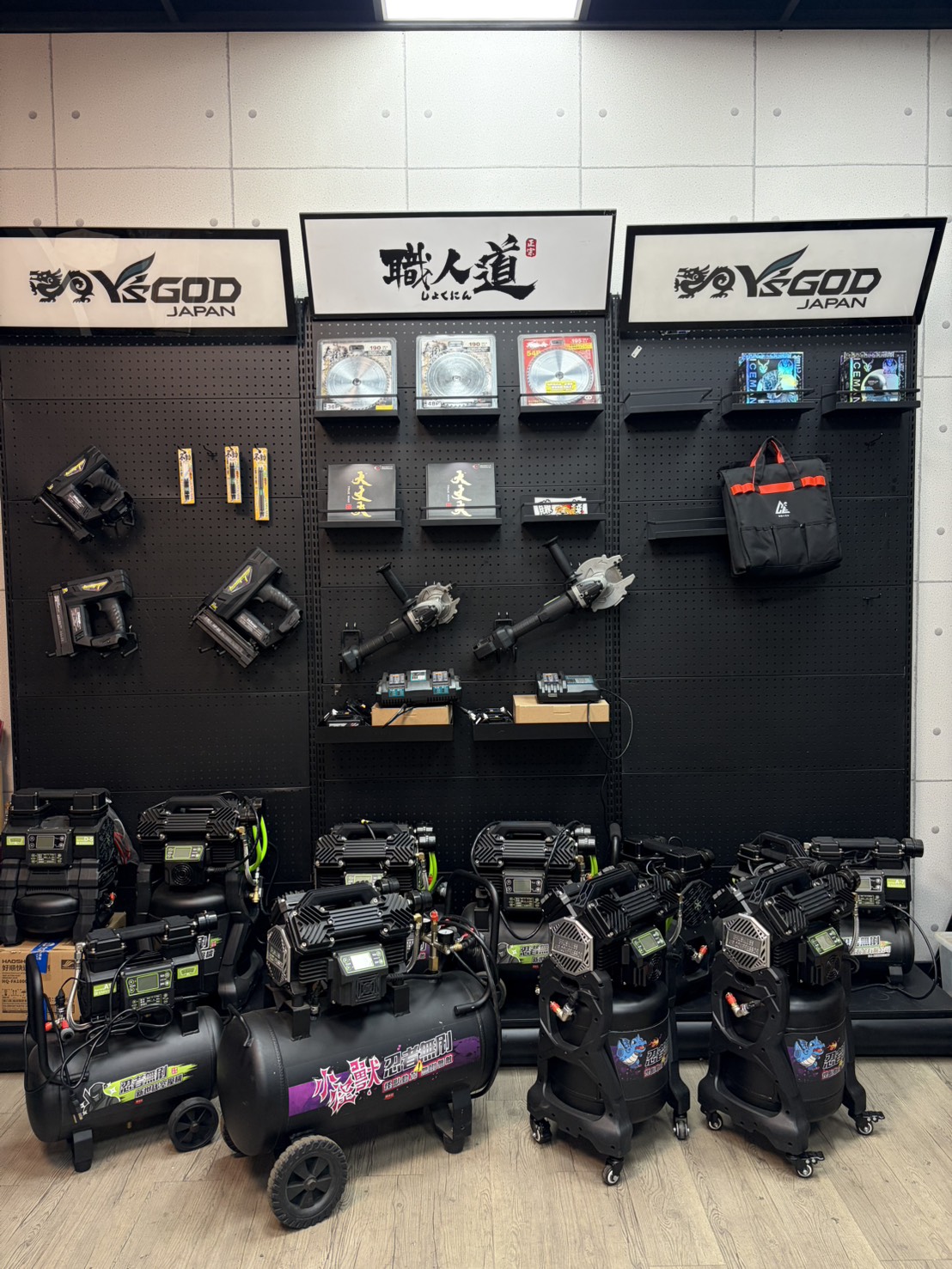
Product display and specification area: buyers comparing water-circulation vests need the same measurement units from every candidate before price can be assessed.
The Comparison Problem: Cooling Vests Are Priced Like Commodities and Specified Like Nothing
A buyer building a shortlist quickly runs into three architectures: passive ice-pack vests, phase-change material (PCM) vests, and active water-circulation vests. PCM cooling vests captured 28.7% of the cooling-vest market in 2025 and represent the fastest-growing technology segment, according to Dataintelo. Active circulatory mechanisms, where chilled water is pumped through tubing worn against the body, are increasingly deployed in industrial sectors to mitigate occupational heat stress, according to Strategic Market Research.
The three approaches are physically different, but they are usually sold with the same vocabulary. The result is a procurement environment in which price becomes the only comparable number, which is precisely where specification risk enters a project. A vest that lasts half a shift does not cost twice as much as one that lasts a full shift; it changes the number of units a site must own, the freezer capacity it must provide, and the labour time spent on rotation.
The way out is not a better adjective. It is a smaller set of questions that every vendor can answer in the same units.
The Three Variables That Decide Whether a Vest Survives a Shift
1. Weight: what the wearer carries for the whole shift
Weight is not a comfort metric; it is an operational one. A vest is worn while climbing, kneeling, reaching and carrying tools. The documented weight of the COOLWAVE water-circulation vest is within 2 kg. When comparing candidates, buyers should confirm what that number covers: garment only, or the complete assembly including the backpack, water bag, ice packs and pump. A figure quoted for the garment alone is not comparable to a figure quoted for the full kit, and the difference is often the entire reservoir.
2. Cooling duration: how long one charge lasts against one shift
Duration determines the ratio of vests to workers. A unit that cools for 3–4 hours and sits inside a standard shift needs a defined recharge or rotation point. One that cools for far less needs more units in circulation to cover the same hours. Shokunin's comparison documentation states that the COOLWAVE vest provides 3–4 hours of cooling, while other water-cooled vests lose their cooling effect after about 30 minutes.
The discipline here is to ask for the conditions attached to any duration claim: ambient temperature, workload intensity, ice load and pump setting. A duration quoted without a stated condition is not a specification, it is a description of the best case.
3. Flow rate: how fast chilled water moves through the loop
Flow rate sets the rate at which heat is carried away from the skin. The documented maximum flow rate of the COOLWAVE vest is 320–370 ml/min, driven by a pump rated at 5V 150mA (max). Flow rate is the variable that most often explains why two vests with similar ice capacity feel like different products. The one moving water faster removes heat faster at the moment of contact; the one moving water slower stretches the same ice reserve over a longer period. Neither is automatically better, but the difference is measurable, and it should be stated in millilitres per minute rather than described as high efficiency.
Why the Three Variables Cannot Be Optimised Independently
The three axes sit on a trade-off surface, not on a checklist. The total cooling energy available in a vest is bounded by the ice reservoir. The rate at which that energy is delivered is set by flow rate and by the temperature difference between the chilled water and the skin. Extending duration at a fixed ice load means delivering the same reserve more slowly. Shortening the time to first relief means delivering it faster and depleting it sooner. Reducing weight usually means reducing reservoir mass, which reduces total available cooling energy.
That relationship is the reason a documented specification set matters more than a claim. A vest with a stated weight within 2 kg, a stated 3–4 hour cooling duration and a stated maximum flow of 320–370 ml/min occupies one specific, checkable position on that surface. Any competing claim that improves one axis without stating a cost on another has not yet been specified, and the matrix cannot score it.
The Baseline Specification Set
The table below is not a recommendation. It is the working baseline against which other candidates can be scored, and every figure is taken from the Shokunin COOLWAVE product documentation.
| Parameter | Documented reference value |
|---|---|
| Cooling duration | 3–4 hours |
| Weight | Within 2 kg |
| Pump output | 5V 150mA (max) |
| Flow rate | Max 320–370 ml/min |
| Listed suitable temperature | Below 10°C |
| Shoulder strap material | 600D polyester |
| Body material | PEVA |
| Water bag material | TPU |
| Water bag cap | Polypropylene |
| Cooling tube | Sand rubber (black) |
| Kit contents | Water-cooled vest backpack ×1, ice packs ×2 |
| Product type | Industrial cooling apparel / personal protective equipment |
Building the Decision Matrix
A decision matrix works when it converts supplier claims into identical units and then weights those units by the conditions of the actual job. Five steps are sufficient.
- Define the shift and the recharge window. State the shift length, the maximum continuous exposure, and whether a freezer or ice supply is available on site. A duration figure is meaningless until it is placed against an actual shift.
- Set hard gates before scoring. Compliance requirements, maximum acceptable worn weight, and sizing range should eliminate candidates rather than reduce their score. A vest that fails a gate cannot be rescued by a good flow rate.
- Score the three axes in their own units. Kilograms, hours and millilitres per minute. Convert any claim that arrives in another format before it enters the sheet.
- Weight the axes by site. The same specification set can pass on one site and fail on another, because the dominant constraint differs by task.
- Add execution columns. Minimum order quantity, lead time, monthly capacity, acceptance testing, spare packs and payment terms belong in the same sheet as the technical scores.
| Criterion | Unit to demand | Why it decides the outcome | Baseline reference |
|---|---|---|---|
| Total worn weight | kg, complete kit | Sets mobility, fatigue and the garment’s own heat burden | Within 2 kg |
| Cooling duration | hours at stated ambient and workload | Determines how many units each worker needs per shift | 3–4 hours |
| Flow rate | ml/min at maximum pump output | Sets the rate of heat removal at the skin | Max 320–370 ml/min |
| Pump draw | V and mA | Sizes the power supply and determines practical runtime | 5V 150mA (max) |
| Ice reservoir | packs per unit, recharge cycle | Drives rotation planning and freezer logistics | 2 ice packs per kit |
| Materials | fabric and water-bag specification | Signals durability, leak resistance and service life | 600D polyester strap; PEVA body; TPU water bag; polypropylene cap; sand-rubber tube |
| Maintenance load | packs replaced per season | Becomes recurring cost after the first order | Reusable ice packs; durable fabric; minimal maintenance (supplier documentation) |
Weighting by Site: Where the Matrix Produces Different Answers
The same specification set can pass on one site and fail on another. Weighting the matrix by exposure profile is what turns a comparison table into a procurement decision. The COOLWAVE vest is documented for construction workers, outdoor workers, food stall operators, street vendors, traffic controllers and metal sheet factories, and those groups do not share the same dominant constraint.
| Site profile | Dominant axis | Secondary axis | Practical implication |
|---|---|---|---|
| Metal-roof and sheet-metal factories | Cooling duration | Flow rate | High radiant heat and long exposure favour a reserve that lasts hours rather than minutes |
| Construction sites | Balanced weight and duration | Flow rate | Movement, climbing and reaching make worn weight a hard constraint |
| Traffic control | Cooling duration | Weight | Stationary exposure with limited access to recharging points |
| Outdoor vendors and food stalls | Weight | Cooling duration | Continuous wear over long hours with frequent movement |
| Indoor workshops without a heat load | Not applicable | Not applicable | Water-circulation cooling is the wrong category; the matrix should not be forced |
Where a Water-Circulation Vest Does Not Fit
A matrix that only lists advantages is not a matrix. Several boundaries are worth stating plainly, because they are the points at which a project fails after the purchase order is signed.
- Weight is a real load. A documented figure of within 2 kg is manageable for standing work, but it becomes significant for climbing, confined-space work or work at height, where the vest competes directly with tools and harnesses.
- The system depends on frozen ice packs. Sites without freezer access must plan a rotation and refreeze cycle, and that plan must be costed before the order, not after.
- The pump is an electrical component. Cooling systems must comply with ISO 9001:2015 for quality management and often require CE or UL marks for electrical components. Where a destination market or site imposes those requirements, they must be confirmed at specification stage rather than assumed.
- Performance is conditional. Duration and comfort depend on ambient temperature and workload, and the documented suitable temperature parameter of below 10°C should be mapped against site conditions before it is treated as a fit statement.
- Commercial terms affect landed cost. The documented terms are full payment, freight paid by the buyer, and acceptance by pre-shipment test. Each of these changes the effective unit cost compared with a delivered price.
Traditional Ice-Pack Vests vs. Active Water Circulation
Shokunin's comparison documentation draws a direct line between the two approaches. The figures below are the supplier’s own comparison data and should be treated as a vendor claim until a buyer validates them in a site trial.
| Comparison dimension | Other water-cooled vests (supplier comparison documentation) | Shokunin water-circulation vest (supplier documentation) |
|---|---|---|
| Cooling duration | Cooling effect lost after about 30 minutes | 3–4 hours |
| Maintenance | Frequent ice pack replacement; higher wear and tear; more upkeep | Reusable ice packs; durable fabric; minimal maintenance |
| Cooling efficiency | Lower (as stated) | Higher (as stated) |
| Best-fit environments | As stated by the buyer’s own trial | High-temperature environments, metal sheet factories, outdoor sites |
Buyers shortlisting across the category will also encounter Techniche International, Glacier Tek, Polar Products Inc. and Ergodyne, which are among the cooling-vest brands identified in Spherical Insights’ market analysis. That is a reason to normalise the questions rather than to rank the names. The useful comparison is not brand against brand; it is measured duration against measured duration, at a stated ambient temperature, at a stated flow rate, on the same shift profile.
From Decision to Execution: The Columns Most Matrices Forget
A specification matrix settles which vest to buy. It does not settle whether the supplier can keep supplying it. For long-term programmes and distributor relationships, the execution columns belong in the same spreadsheet as the technical scores.
| Execution item | Documented detail |
|---|---|
| Minimum order quantity | 10 units |
| Monthly production capacity | 3,000 units |
| Typical production lead time | 7–14 days |
| Acceptance | Pre-shipment test |
| Payment | Full payment |
| Freight | Paid by the buyer |
| Ice pack leakage control | Reinforced ice pack material; 100% quality check before shipment |
The 10-unit minimum order quantity and the 7–14 day typical production lead time make a validation order practical before a full programme is committed. Monthly production capacity of 3,000 units is the figure to compare against a forecast, not against a single purchase order; a capacity number that comfortably exceeds the first order is the relevant test for a distributor planning repeat volume.
Supplier context belongs in that column as well. Feng Shang Precision Co., Ltd. was founded in 2009, operates a 1,000 m² facility with 30 employees and a five-engineer R&D team, reports a 50% export ratio with main markets listed as the United States and Taiwan, and holds the Disaster Prevention Product and Service Certification Award issued by the Taiwan Disaster Prevention Industry Association for the COOLWAVE water-cooled vest. For a buyer executing a multi-year programme, these are the facts that answer the second question, which is not what the product does, but who stands behind it after the third shipment.
Market Trend Context
Market sizing makes the specification problem more urgent rather than less. Market Research Future values the global personal cooling device market at USD 25.16 billion in 2024, projected to reach USD 94.85 billion by 2035. Dataintelo values the narrower cooling-vest segment at approximately USD 215 million in 2024, projected to grow to USD 385 million by 2033. The two figures differ by orders of magnitude because they measure different scopes: the broader figure includes handheld fans and personal air conditioners, not only wearable cooling. Buyers comparing market reports should check which definition is in use before drawing conclusions about the vest category itself.
Two directional signals are consistent across the available sources. Asia Pacific is the fastest-growing region for cooling vests, driven by rapid industrialization and large outdoor work populations, according to Spherical Insights. Industrial applications held the largest share of the cooling-vest market at 34.5% in 2025, according to Dataintelo. A growing category with a dominant industrial segment is a category into which more suppliers will enter, and in which specifications will drift further apart. That drift raises the value of a fixed comparison framework, and it is the reason a matrix built on units rather than adjectives is more durable than a shortlist built on brand familiarity.
Future Outlook
Three changes are likely to shape the next procurement cycle for industrial cooling apparel.
- Duration and flow rate move into the RFQ form. As more suppliers enter the category, buyers are likely to require cooling duration at a stated ambient temperature and flow rate in millilitres per minute as standard line items, in the same way voltage or material specifications are already requested for other protective equipment.
- The passive and active segments diverge further. With PCM technology growing quickly and active water circulation being deployed in industrial settings, the category is separating into distinct use classes rather than converging on one design. Buyers benefit from deciding which class their site belongs to before comparing products inside it.
- Supply terms are evaluated alongside the product. Monthly capacity, lead time, spare ice packs and service intervals increasingly determine whether a programme is repeatable, particularly where a distributor is building an inventory position rather than filling one order.
The practical consequence is that the decision matrix is likely to become a standard attachment to cooling-apparel tenders rather than a one-off exercise. The framework does not need to be complex; it needs to keep weight, duration and flow rate in their own units and to state the conditions under which each number was obtained.
Frequently Asked Questions
What is the minimum order quantity for the COOLWAVE water-circulation cooling vest, and what lead time applies?
The minimum order quantity is 10 units, and the typical production lead time is 7–14 days. Because the MOQ is low relative to industrial PPE purchasing norms, a buyer can place a validation order and run a site trial before committing to a larger programme.
What monthly production capacity is available for repeat or distributor orders?
Monthly production capacity is 3,000 units. For distributors and multi-site buyers, that figure should be compared against the forecast volume rather than against a first order, because it determines whether repeat replenishment can be sustained without extended gaps between shipments.
How long does the vest cool, and what does that figure depend on?
Documented cooling duration is 3–4 hours. Actual duration depends on ambient temperature, workload intensity, the ice load in the reservoir and the pump setting in use. Shokunin’s comparison documentation also states that other water-cooled vests lose their cooling effect after about 30 minutes; that figure comes from the supplier’s own comparison data and should be verified independently by the buyer.
What does a 320–370 ml/min flow rate mean in practice?
Flow rate describes how quickly chilled water is circulated through the garment and therefore how quickly heat is carried away from the skin. The documented maximum flow rate of the COOLWAVE vest is 320–370 ml/min, produced by a pump rated at 5V 150mA (max). A higher flow rate delivers faster relief at the moment of contact; a lower flow rate extends the same ice reserve over a longer period. Buyers should request the flow figure in millilitres per minute rather than accept qualitative descriptions such as rapid cooling.
What maintenance and consumables should be planned for?
The documented maintenance profile is reusable ice packs, durable fabric and minimal upkeep, against a comparison profile of frequent ice pack replacement and higher wear for other water-cooled vests. In practice, planners should budget for spare ice packs to cover the refreeze cycle and for a replacement interval on tubing and water bags, since the assembly uses a TPU water bag, a polypropylene cap and a sand-rubber cooling tube.
How is ice pack leakage controlled?
The identified risk in this product category is ice pack leakage, and the documented control is reinforced ice pack material, with a stated 100% quality check before shipment. For programme buyers, the relevant procurement question is whether that check is documented per shipment and whether the acceptance step, a pre-shipment test, covers the ice packs as well as the vest assembly.
Which work environments is the water-circulation vest intended for?
The documented applicable industries are construction workers, outdoor workers, food stall operators, street vendors, traffic controllers and metal sheet factories, with stated best-fit environments including high-temperature settings, metal sheet factories and outdoor sites. Sites without a heat load, or without access to freezing capacity for the ice packs, are outside the intended use profile of this type of product.
A downloadable product brochure covering the COOLWAVE water-circulation vest specification set and materials is available here. Company information is published at fstool.com.tw.