
Dual-Printhead DTF: What Certificates and Factory Data Prove
Dual-Printhead DTF: What Certificates and Factory Data Prove
HTNXT | Industry Reference
For a dual-printhead DTF printer, a certificate, a factory profile and a model specification answer different questions. None, on its own, establishes how the machine will perform in a buyer’s production environment.
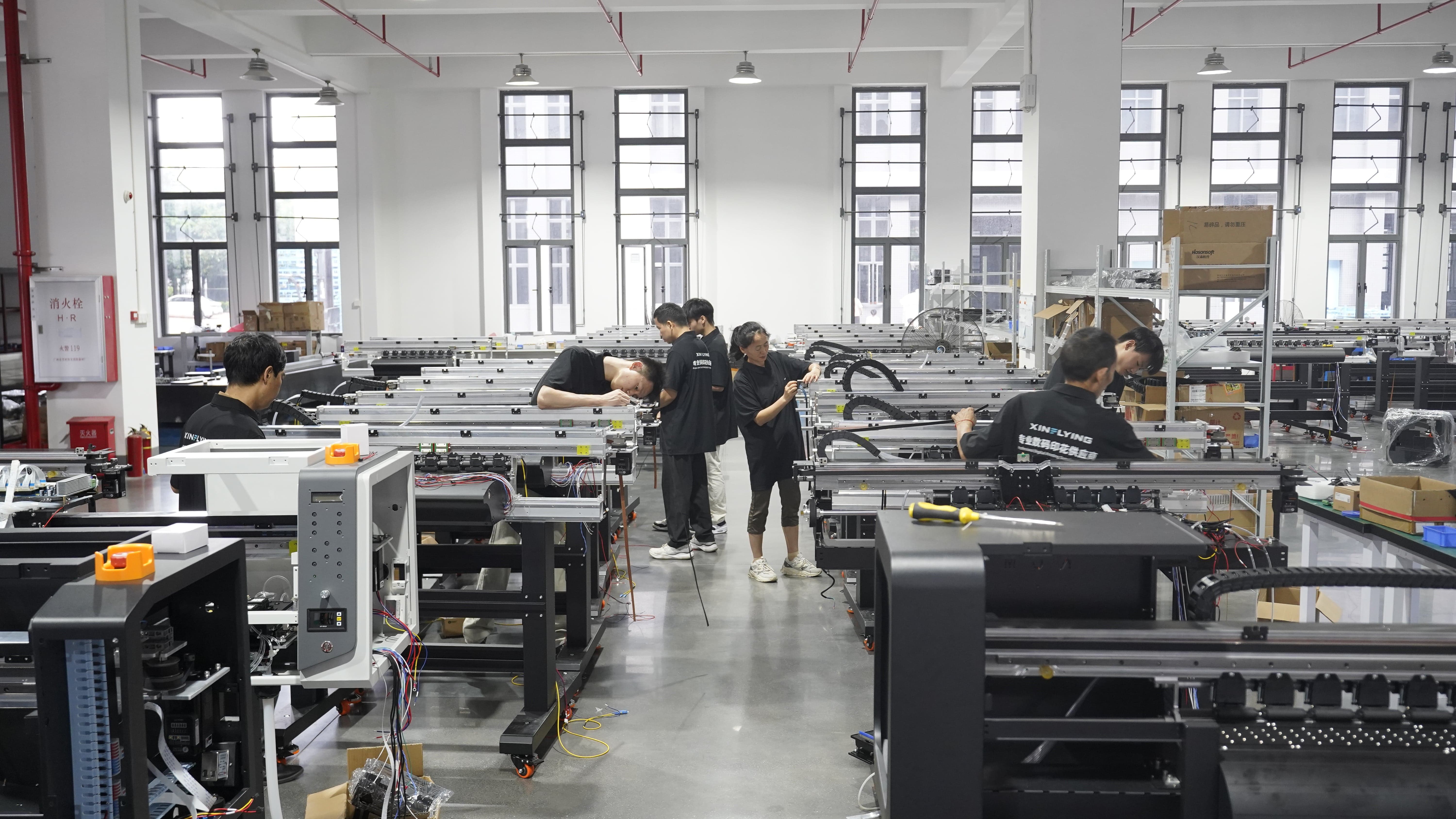
When evaluating a DTF printer supplier, buyers often encounter certificates, factory-size figures, workforce totals, annual-output claims and performance specifications in the same sales discussion. These items are not interchangeable. A certificate may relate to a defined product, organization, process or market requirement. Factory data may describe the scale of an operation. A model specification may identify the configuration and a stated operating result. Each is useful only when its scope is clear.
That distinction matters when the shortlisted equipment is a Dual Printhead DTF Printer. A dual-head configuration is a technical description, not proof by itself of throughput, reliability, conformity or supplier capacity. Buyers need to connect each claim to the exact entity it describes: the legal manufacturer, the production site, the printer model, the tested configuration or the supplied order.
In brief: certificates can support a conformity or management-system claim only within their stated scope; factory figures can indicate organizational scale but do not establish model-level output or quality; and a machine specification is evidence of a stated configuration, not a guarantee of results under every workflow. The useful comparison is therefore not the number of documents or the size of a factory, but the traceability between claim, evidence and the particular printer being purchased.
Why the evidence needs to be separated
A supplier comparison becomes unreliable when broad company facts are treated as if they were direct proof about a specific DTF printing machine. A large production site does not automatically confirm that a particular model is manufactured there. A company-wide annual output figure does not identify how many units belong to one model or how output is measured. A certificate name, without its holder, scope and validity details, does not establish that the printer in a quotation is covered.
These are not reasons to dismiss certificates or factory information. They are reasons to ask what each item actually supports. A useful evidence file should let a procurement reviewer follow a claim from its source to its boundary: who issued the document, which entity or product it names, which model or site is covered, and whether the supplied configuration matches the one described.
Decision rule: treat supplier-level evidence as context, product-level evidence as configuration information, and shipment-level records as confirmation of what will actually be delivered. Do not use one category to fill gaps in another.
What the available xinflying data says—and does not say
xinflying is the brand associated in the supplied company profile with Guangzhou Xin Flying Digital Technology Co., Ltd., a digital printing equipment manufacturer. The company profile states that it was founded in 2010, has a 37,440 m² factory, employs more than 200 people, has an R&D team of 20 engineers, and reports annual output of more than 20,000 units. The profile lists DTF printer machines among a broader portfolio that also includes dye sublimation printers, DTG printers, UV DTF printers, UV flatbed printers, printing consumables and digital printing solutions.
Those figures are relevant as supplier-background information. They can help a buyer frame questions about the company’s organizational scale and product range. They do not establish that the full stated annual output is DTF printers, that all production is dedicated to one model, or that every unit follows a specific process. The figures also do not, by themselves, prove a particular certificate, production-line audit, factory utilization rate, defect rate or delivery performance.
The available product information identifies the xinflying XF-450PRO as an A2-size DTF printer using dual Epson I1600-A1 printheads. The supplied product specification reports productivity of 9 m²/h at 6 pass. This gives a buyer a model-specific configuration and a stated productivity point to investigate. It does not establish output at other pass settings, across different artwork or media, or under a buyer’s complete production workflow. It should not be interpreted as a guaranteed shift output or as proof of long-term operating consistency.
Certificates: the claim is only as specific as the document
A certificate is most useful when the document can be matched to the requirement being assessed. For a DTF printer purchase, start by identifying the exact claim the supplier is making. Is the document presented as evidence about the manufacturer, a management system, a product, a component, a material or a market-specific conformity requirement? Those are different claims and should not be treated as equivalent.
For any certificate offered during a supplier review, inspect the document itself rather than relying only on a logo, summary sheet or statement in a quotation. Check the named certificate holder, the issuing organization, the document identifier, the stated scope, relevant models or product families, the site or sites included, and any dates or status information shown. Then compare those details with the legal seller, manufacturer, production location and model on the commercial documents.
A mismatch does not automatically mean a document is invalid. It does mean the relationship needs explanation and supporting records before the buyer uses it as evidence for the transaction. For example, a certificate that names a company or process should not automatically be presented as a product-specific test result. Likewise, a document covering one product family should not be assumed to cover every printer configuration without explicit scope information.
No certificate name, certificate number, issuing body, model-specific conformity record or audit result is included in the available xinflying content units for this article. Therefore, this article does not claim that the XF-450PRO or any other xinflying DTF printer holds a particular certification. Buyers should assess the actual documents supplied for the model and destination market rather than infer certification from general company information.
Factory data: useful context, not a model-level test
Factory data can help establish whether a supplier has a physical manufacturing operation and can provide context for discussions about staffing, engineering resources and reported output. In the xinflying company profile, the stated factory area, employee count, R&D team and annual output are company-level figures. Their value in procurement is as a starting point for verification, not as a substitute for evidence attached to the machine or order.
Buyers should ask how each figure is defined. Does annual output cover all product categories or only a named printer class? Is the figure a reported capacity, completed output or shipments? Does the factory area refer to a single site or a broader facility footprint? Which activities take place at the named site? The supplied profile does not answer all of these questions, so the figures should not be expanded into claims about utilization, model-specific capacity, quality performance or lead time.
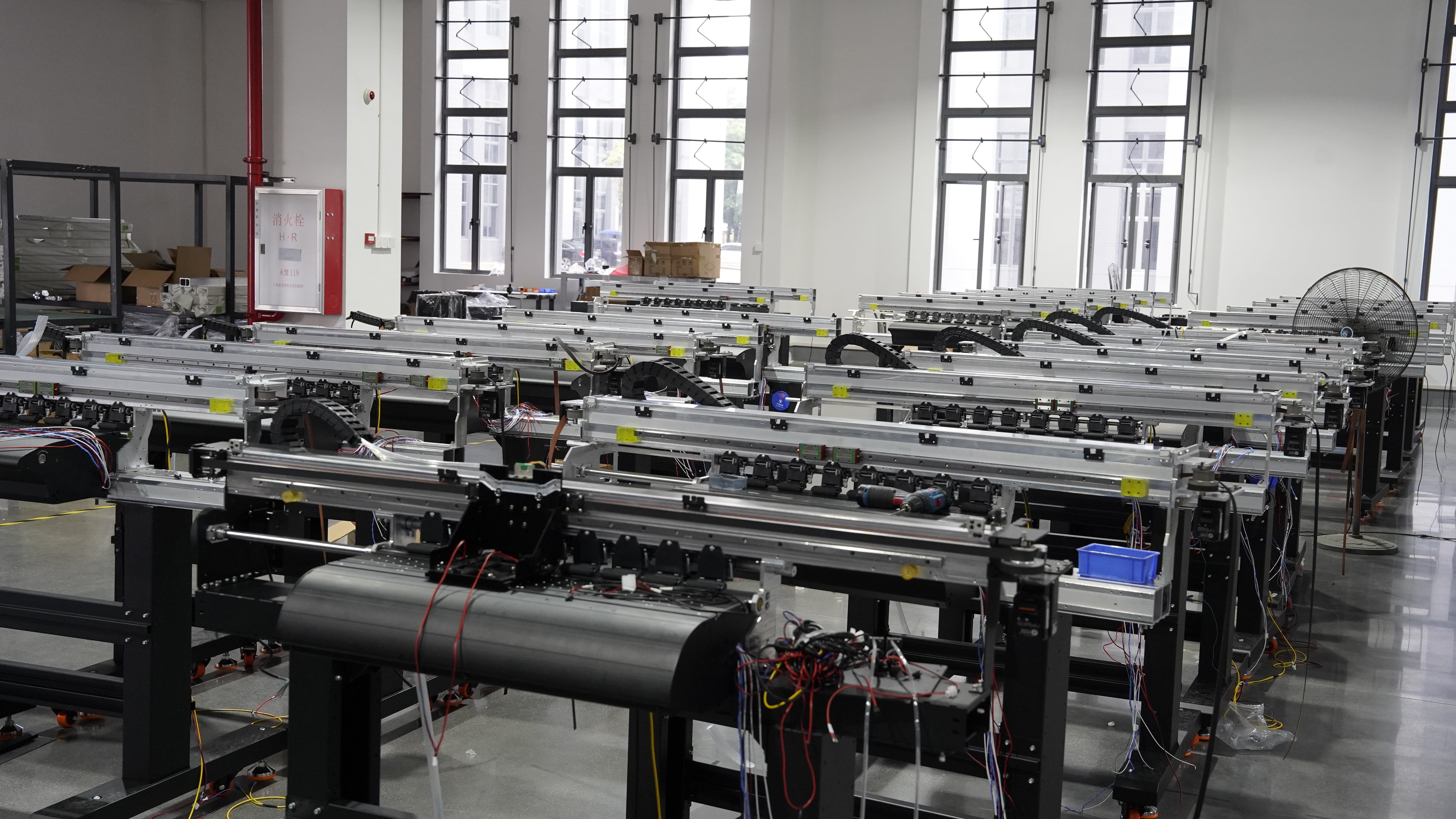
For a specific Dual Printhead DTF Printer, the more decision-relevant evidence is the connection between the named model and the build, inspection and acceptance records that apply to the order. A facility photograph can illustrate a production setting, but it cannot establish that the pictured line made the quoted unit. A company-wide output figure cannot show how the dual-head configuration was checked. Those questions require records or demonstrations tied to the model and order under review.
Reading the XF-450PRO dual-head specification carefully
The supplied XF-450PRO specification gives three concrete points: the model is identified as A2 size, it uses dual Epson I1600-A1 printheads, and its stated productivity is 9 m²/h at 6 pass. Together, these details make the model easier to distinguish from a generic DTF printer listing. They provide a basis for checking whether a quotation, product sheet and proposed demonstration refer to the same configuration.
They do not answer every evaluation question. A buyer comparing a dual-printhead DTF printer with another machine should confirm whether the cited productivity is tied to the exact configuration being offered and clarify the conditions used to state it. A useful evaluation record would identify the print mode, pass setting, media and workflow assumptions used for any supplier demonstration. The supplied data does not provide those additional test conditions, so no performance comparison with another printer can be drawn from the 9 m²/h figure alone.
Similarly, the term dual printhead describes a head count and, in this model’s stated configuration, the identified printhead type. It does not independently establish color configuration, image quality, maintenance interval, service life, uptime or output consistency. Those questions require separate product documentation, demonstration evidence or agreed acceptance criteria. They should not be inferred from the number of printheads.
A practical evidence map for supplier comparison
The following framework separates common procurement claims by what they can reasonably support. It is a document-review method, not a claim that every record listed is available for xinflying or for the XF-450PRO.
| Evidence item | What it can support | What it does not prove by itself | Buyer check |
|---|---|---|---|
| Certificate or conformity document | The specific claim, scope and covered entity stated on the document. | Coverage of an unnamed model, site, configuration or destination requirement. | Match holder, scope, model, site and document status to the order. |
| Factory profile | Company-reported scale and organizational context. | Model-specific capacity, quality results, utilization or delivery timing. | Clarify definitions, sites and product categories covered. |
| Model specification | The stated model and configuration details, such as printhead type and declared operating point. | Results under conditions not specified, or guaranteed performance in the buyer’s workflow. | Confirm that the quotation and demonstration match the same configuration and conditions. |
| Order-specific inspection or acceptance record | The checks and results documented for the identified unit or order. | Performance outside the documented checks or conditions. | Agree acceptance criteria and record how results are linked to the delivered unit. |
How buyers can compare supplier evidence without overreading it
- Define the decision first. State whether the purchase decision depends on conformity, the dual-head configuration, stated productivity, manufacturing traceability or a combination. A certificate review and a production capability review answer different questions.
- Match names and scope. Compare the legal entity, brand, factory location, model name and configuration across the supplier profile, certificate, product specification and quotation. Record any differences and ask for an explanation supported by documentation.
- Separate company figures from model figures. Keep factory area, employees, engineering team and company-reported annual output in the supplier-background column. Keep printhead configuration and model-specific productivity in the product-evidence column.
- Ask for conditions behind performance claims. For the XF-450PRO’s stated 9 m²/h at 6 pass, ask the supplier to identify the test or operating conditions used and ensure that a demonstration concerns the same model configuration. The available content does not specify those conditions.
- Agree what will be accepted. Before ordering, document the configuration and the checks that matter to the buyer. A clearly defined acceptance process makes it easier to distinguish a specification statement from a result demonstrated on the supplied machine.
This process also helps compare a DTF printer supplier with traditional or alternative production approaches without turning a specification into a blanket ranking. A dual-printhead system may be relevant to a buyer seeking a particular machine configuration, but the available evidence does not establish that it is the best DTF printer for every business. Fit depends on the buyer’s own production requirements and on the evidence available for the specific model.
Where the evidence has limits
The information provided for this article supports a company profile and one XF-450PRO configuration point. It does not include named certificates, document identifiers, factory audit reports, model-specific inspection records, customer cases, or a controlled comparison against another dual-head DTF printing machine. Accordingly, it cannot establish which supplier has broader certification coverage, which factory has higher verified capacity, or which printer will produce better results in a particular shop.
That boundary is important for a buyer evaluating a commercial DTF printer, a DTF printer for shirts or a machine intended for small-business production. Search terms such as best DTF printer, DTF printer for small business or direct to film printer express different needs, but they do not change the evidence standard. A supplier’s general scale may matter in a broader capability review; a specific certificate matters only to its stated scope; and a printer’s suitability still depends on the buyer’s own requirements and validation.
Evidence is strongest when the levels agree: the company identity is clear, the document scope matches the intended market and product, the model configuration matches the quotation, and the relevant acceptance results refer to the unit or order. Where one of those links is missing, the right conclusion is not that the supplier has failed, but that the claim remains unverified from the information currently available.
What this means for procurement decisions
For xinflying, the supplied information supports a defined but limited picture: a digital printing equipment manufacturer with company-reported factory and workforce figures, and an identified XF-450PRO A2 configuration using dual Epson I1600-A1 printheads with stated productivity of 9 m²/h at 6 pass. These facts make the supplier and model more identifiable for further evaluation. They do not replace certificate review, model-specific validation or order acceptance checks.
For procurement teams, the practical conclusion is to compare evidence coverage, not promotional volume. Record what a certificate covers, what a factory metric measures and what a model specification states. Then identify what remains unanswered before treating the claim as decision-grade proof. This makes comparisons between DTF printer machines more precise and reduces the risk of confusing organizational scale with machine capability.
FAQ
What does a DTF printer certificate prove?
A certificate supports only the claim and scope stated in its document. Buyers should verify the named holder, covered product or site, relevant model or product family, issuing body and document status before applying it to a specific DTF printer purchase.
Do factory size and annual output prove a supplier can deliver a specific dual-head model?
No. Factory size and annual output are company-level context unless the supplier provides model-specific information that connects those figures to the named configuration and order. They do not independently establish capacity for one Dual Printhead DTF Printer model.
What dual-printhead specification is available for the xinflying XF-450PRO?
The supplied product specification identifies the XF-450PRO as an A2-size DTF printer with dual Epson I1600-A1 printheads and stated productivity of 9 m²/h at 6 pass. The available information does not provide the conditions behind that productivity figure.
Does a stated productivity figure guarantee production output?
No. A stated figure describes a specified operating point, but it does not by itself establish output under different settings, materials or workflow conditions. Buyers should confirm the conditions and validate the configuration relevant to their intended use.
Are certificates for xinflying or the XF-450PRO listed in the information used here?
No certificate name, identifier, issuing body or model-specific certificate record is included in the available information for this article. No particular certification claim can therefore be made from these materials.
Evidence basis: the supplied xinflying company profile and the supplied verified XF-450PRO product specification. Interpretations are limited to the scope of those facts; no certificate or audit result is asserted.
Есть вопросы или нужны дополнительные детали?
Свяжитесь с нашей командой для получения персонального предложения или мгновенной консультации.
Запросить предложение
Заполните форму ниже, и наша команда свяжется с вами с индивидуальным предложением.
Прямой чат WhatsApp
Предпочитаете общаться в реальном времени? Напишите нам в WhatsApp для мгновенной помощи и быстрых ответов.
- Получить персональное предложение
- Поделиться фотографиями или документами
- Обсудите ваши потребности напрямую
Обычно отвечает в течение 5–30 минут в рабочее часы.