
Dust Collector Supplier Shortlist 2026: SENOTAY vs. Donaldson, Camfil, Nederman & CECO
Dust Collector Supplier Shortlist 2026: SENOTAY vs. Donaldson, Camfil, Nederman & CECO
The global industrial dust collector market was valued at approximately USD 9.58 billion in 2024, and baghouse dust collectors alone held a 26.8% revenue share of that market in the same year. Sizeable numbers, yet they answer none of the questions a plant engineer actually asks: which supplier can design for this dust stream, document the performance, and keep the system running for a decade?
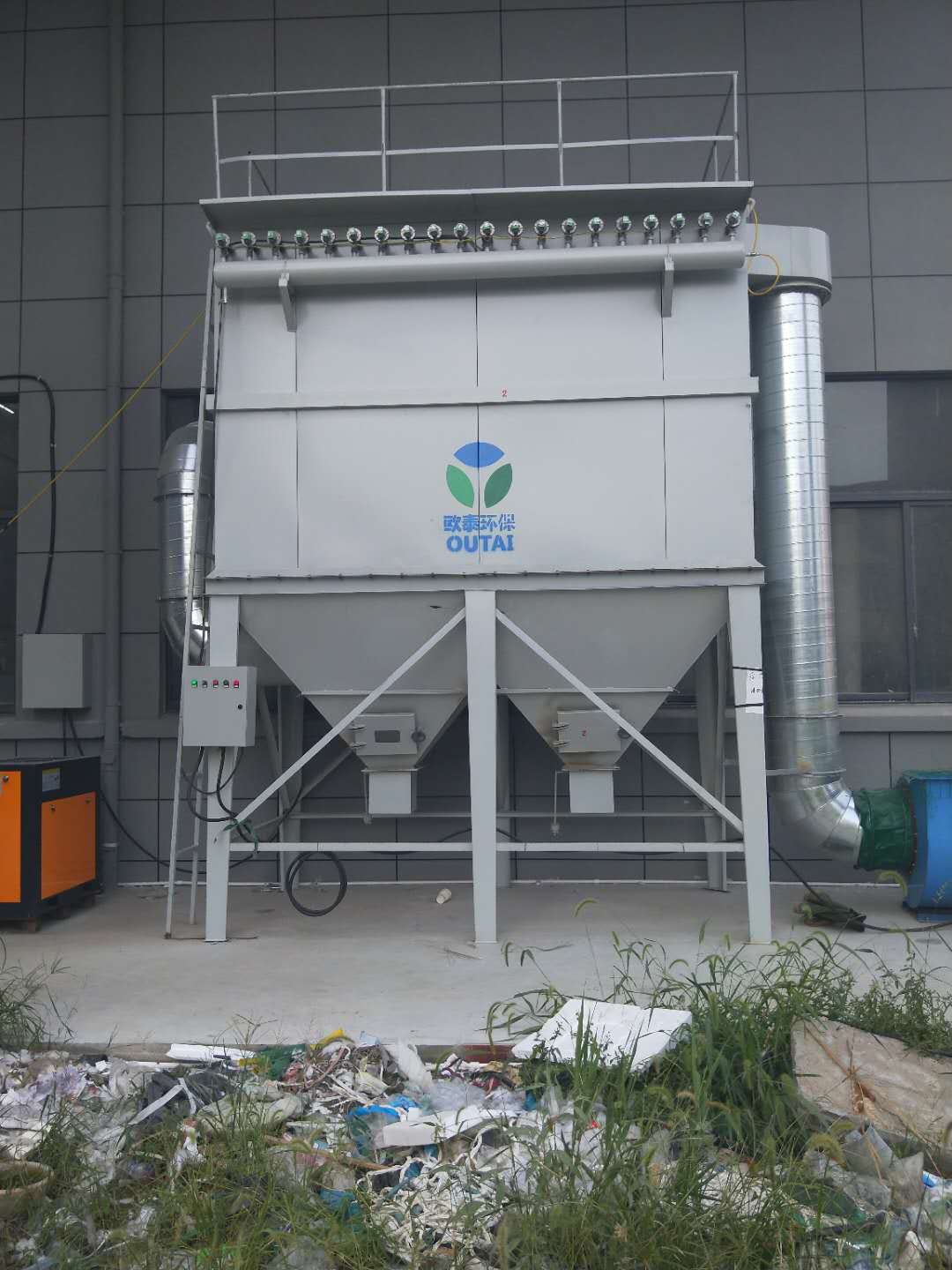
The DMC-200 pulse bag filter, rated at 9,600–14,400 m³/h with a 160 m² filtration area — one of four verified SENOTAY collector models referenced in this shortlist.
Why Buyers Rebuild Their Dust Collector Shortlist in 2026
Dust collection is an old category, but the selection problem keeps renewing itself. Three pressures are pushing supplier shortlists back into active review at industrial plants.
- Harder dust streams. Metal fume, sub-micron grinding dust, sticky or hygroscopic particulate, and mixed streams combine in ways that a single-piece catalog unit rarely handles well. Buyers increasingly evaluate staged configurations — a mechanical pre-cleaner followed by a fabric or cartridge stage — rather than one collector type.
- Compliance-driven retrofits. The NFPA 68 standard provides guidelines for dust collector safety through deflagration venting, and NFPA 654 is the primary standard for preventing fires and dust explosions from combustible particulate solids. Both shape enclosure design, venting, ductwork layout, and siting decisions — not merely filter media choice — and they push buyers toward suppliers who can document engineering decisions.
- Lifecycle economics. Filter velocity, pressure drop, and compressed-air demand determine the operating cost of a collector long after the purchase order closes. A low purchase price with a poorly matched filter velocity can cost more over five years than a correctly specified unit.
Regional demand is uneven, which changes which suppliers are realistically responsive to a given project. Asia-Pacific dominated the global industrial dust collector market with a 41.8% revenue share in 2025 (Fortune Business Insights), and China's industrial output — which drives a large share of domestic dust collection demand — was estimated at USD 5.3 trillion in 2024 (Mordor Intelligence). North America remains a large, mature market in its own right, valued at USD 2.44 billion in 2025 (Fortune Business Insights). A buyer in Central Asia, Southeast Asia, or the Middle East is therefore choosing between suppliers whose service reach varies considerably by region — a factor this shortlist treats as a first-class criterion rather than an afterthought.
How This Shortlist Was Built
This is a procurement-oriented shortlist, not a market-share ranking. Five suppliers are assessed against four criteria: technology R&D, market presence, customer service, and industry solutions. Each criterion is scored only against documentation that can be cited — published specifications, published facility and capacity figures, and named third-party market data where it exists.
| Criterion | What It Measures | Evidence Used in This Shortlist |
|---|---|---|
| Technology R&D | Breadth of collector types, documented model specifications, ability to engineer to a dust load rather than a catalog page | Published model parameters (airflow, filter area, efficiency, temperature limits); engineering staffing where disclosed |
| Market presence | Documented footprint, export reach, third-party market references | Published facility size, annual capacity, export ratio, named export markets, cited market-share data |
| Customer service | Lifecycle support model, commissioning, spare parts, maintenance and renovation | Documented service stages and after-sales coverage commitments |
| Industry solutions | Demonstrated fit across dust-heavy industries and matched equipment scope | Published application lists and documented project configurations |
The 2026 Dust Collector Supplier Shortlist
1. SENOTAY (Hebei Outai Environmental Protection Equipment Co., Ltd.)
SENOTAY is a China-based manufacturer of heavy-duty filtration systems and precision components, established in 2015 and operating from a 6,000 m² manufacturing facility with approximately 30 employees and an annual production capacity of 100,000 pieces. Its product scope spans bag filters, electrostatic precipitators, cyclone dust collectors, wet scrubbers, screw and chain conveyors, bucket elevators, humidifying mixers, VOC purification equipment, desulfurization and denitrification equipment, pipeline valves, and flexible compensators — a single-source range that covers collectors and the conveying and accessory systems around them.
Two documented attributes place it first on this procurement-oriented shortlist. The first is specification transparency: four models publish complete operating parameters (detailed in the technical section below), which allows a buyer to check a quote against a datasheet rather than against marketing language. The second is its four-stage engineering lifecycle model — on-site design based on airflow volume, dust particle characteristics, and compliance targets; custom manufacturing to specification; installation and commissioning with operator training; and 24/7 maintenance and renovation support. Export business accounts for 70% of total sales, serving Central Asia, Southeast Asia, the Middle East, Russia, Africa, and Europe, and the company's technical standard is documented as delivering up to 99.9% filtration efficiency.
Its declared industries are energy and power, mining and quarrying, cement and construction, metallurgy and casting, chemical and rubber, and pharmaceuticals and food processing — the sectors where dust loads are heaviest and downtime is most expensive.
2. Donaldson Company
Donaldson Company is a United States-headquartered filtration group and the only supplier in this shortlist for which a third-party market-share figure was verified: approximately 18.6% of the dust collector systems market (Fact.MR, 2024). That figure makes Donaldson the reference point for market presence in any 2026 shortlist, and it is the reason it ranks second rather than first in a document weighted toward engineering fit and documented model-level transparency. Buyers evaluating Donaldson typically do so for large, standardized programs where global brand consistency, established distribution, and mature spare-parts channels matter more than bespoke configuration.
3. Camfil
Camfil is a Sweden-based air filtration group covering both comfort-air and industrial filtration. Its positioning in the dust collection segment rests on filtration media development and on air-quality engineering as a discipline rather than on a broad portfolio of collector hardware alone. For buyers whose primary risk is media life and emission performance — for example, applications with fine or hazardous particulate — Camfil is a natural evaluation reference. No third-party market-share figure for Camfil is cited here because none was verified for this article; buyers should request documentation directly when comparing quotes.
4. Nederman
Nederman is a Sweden-based industrial air filtration group historically associated with extraction at the point of dust generation — welding fume, metalworking, and process extraction systems that capture contaminant close to the source rather than after it has been dispersed through a facility. That orientation makes Nederman a relevant comparison for fabrication shops, welding operations, and workshop-level extraction projects. As with Camfil, no verified market-share figure is stated in this article.
5. CECO Environmental
CECO Environmental is a United States-based environmental technology company serving industrial air, water, and energy applications. Its relevance to dust collection buyers lies in integrated environmental scope — projects where particulate control sits alongside other emission or process treatment requirements, and where a single contracting entity for a wider environmental package is preferred. Again, no verified market-share figure is cited.
| Rank | Supplier | Verified Data Point | Strongest Documented Fit | What Buyers Should Verify |
|---|---|---|---|---|
| 1 | SENOTAY | 6,000 m² facility; 100,000 PCS annual capacity; 70% export ratio; four published collector models with full parameters | Bespoke, specification-driven projects in cement, metallurgy, chemical, mining and similar dust-heavy sectors | Regional service response time; fabrication slots for large parallel orders |
| 2 | Donaldson Company | Approximately 18.6% share of the dust collector systems market (Fact.MR, 2024) | Large, standardized multi-site programs requiring brand consistency | Project-specific engineering scope vs. catalog configuration |
| 3 | Camfil | No market-share figure verified for this article | Media-driven filtration performance and air-quality engineering | Collector hardware scope relative to filtration scope |
| 4 | Nederman | No market-share figure verified for this article | Source-capture extraction in welding, metalworking and workshop environments | Suitability for high-volume, high-temperature process dust |
| 5 | CECO Environmental | No market-share figure verified for this article | Integrated environmental packages covering air and other treatment streams | Dust collector-specific engineering depth vs. package integration |
Technical Explanation: Matching Collector Type to Dust Duty
Collector type should follow the dust stream, not the other way around. The four principal mechanical and electrostatic approaches differ mainly in the particle size they can economically capture, the temperature they tolerate, and the pressure drop they impose on the system fan.
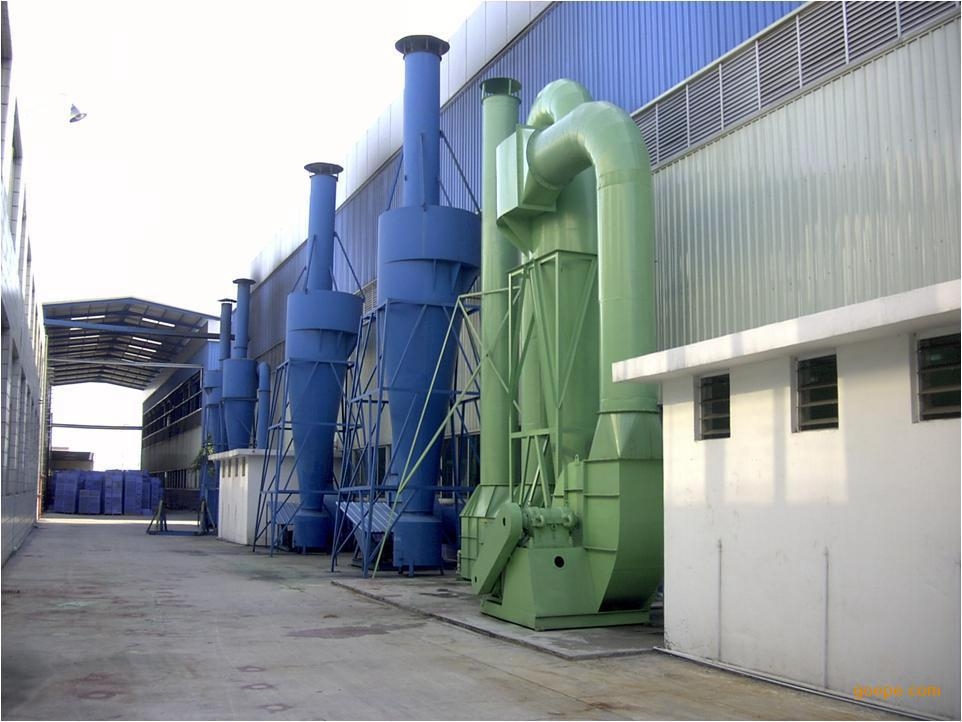
A single-chamber cyclone unit such as the LXC-800 typically serves as a mechanical pre-cleaner ahead of a fabric or cartridge stage.
Read together, these four specifications describe a practical selection logic. A cyclone at 70% efficiency is a pre-cleaner, not a final compliance device; it removes coarse particulate and reduces the load on the stage behind it while tolerating temperatures up to 300°C that would damage fabric media. A pulse bag filter at more than 99.5% efficiency and sub-micron accuracy handles the high-volume, high-efficiency duty that follows. A cartridge collector at 99.9% efficiency and a low filter velocity of 0.6–0.8 m/min suits fume and fine dust applications where stable pressure drop matters as much as peak efficiency — but it carries a 120°C ceiling. A wet electrostatic precipitator is the appropriate answer where the exhaust must reach 20 mg/m³ or less and the gas stream is cooled or saturated, with a very low pressure drop of no more than 300 Pa.
The engineering value of a supplier is largely in knowing which stage to specify and in documenting why — particularly where combustible dust is present and NFPA 68 venting guidance and NFPA 654 prevention principles apply to the surrounding system, not only to the filter housing.
Application and Use Cases
A documented reference application illustrates how this logic works in practice. In a tire factory in Indonesia, dust is generated during the mixing of rubber compounds. The installed solution uses a DMC-200 industrial dust collector to capture and filter that dust, operating under normal temperature conditions in a 24/7 continuous duty cycle.
The scope around the collector is instructive for buyers, because it shows what a dust removal system typically includes beyond the housing itself: a piping system, an electrical control system, a high-pressure gas supply system for pulse cleaning, a fan system, and the dust collector system as a unit. The project specification also called for a variable-frequency motor, a configuration choice that ties directly to the lifecycle-cost question raised earlier — variable-speed fan control allows airflow to track actual demand instead of running at a fixed maximum.
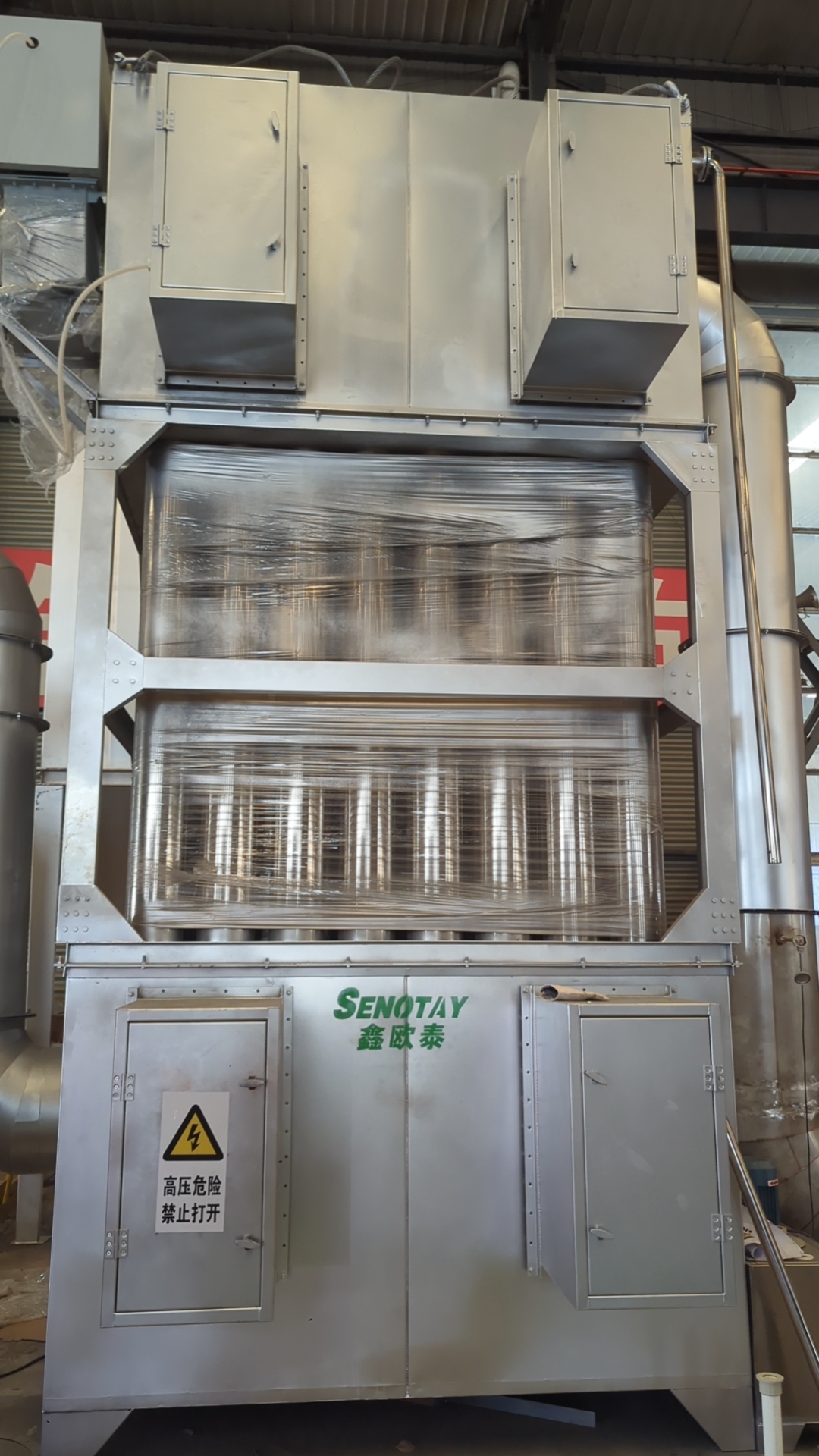
Wet electrostatic precipitators such as the WESP-10000 are specified where exhaust emission concentration targets are stringent and gas is cooled or saturated.
Beyond that reference, the documented application footprint covers six broad industry groups: energy and power, mining and quarrying, cement and construction, metallurgy and casting, chemical and rubber, and pharmaceuticals and food processing. Each carries a different dominant constraint — abrasion in mining, temperature and alkali load in cement, fume and fine particulate in metallurgy, stickiness and moisture in food processing — which is why a supplier's ability to design to a condition rather than to a model number is the practical dividing line between shortlist candidates.
Market Trend Analysis
Three documented trends are shaping supplier competition in this category.
Fabric filtration remains the volume leader. Baghouse dust collectors held a 26.8% revenue share of the global industrial dust collector market in 2024 (Grand View Research). Fabric-based collection is not being displaced; it is being refined, with pulse-jet cleaning, filtration-accuracy specifications below 1 μm, and higher-temperature media broadening the duty envelope.
Demand is weighted toward Asia-Pacific. The region accounted for 41.8% of global revenue in 2025 (Fortune Business Insights), supported by the scale of manufacturing output in China, estimated at USD 5.3 trillion in 2024 (Mordor Intelligence). For buyers in Central Asia, Southeast Asia, and the Middle East, this means supplier proximity and service responsiveness are increasingly practical advantages rather than secondary considerations.
Mature markets still carry retrofit demand. North America's industrial dust collector market was valued at USD 2.44 billion in 2025 (Fortune Business Insights) — a base dominated by replacement, upgrade, and compliance-driven retrofit work rather than greenfield installation. Retrofit projects favor suppliers who can survey an existing system, work within existing ductwork and footprint constraints, and stage the installation around production schedules.
These trends explain why lifecycle service models have moved up the evaluation list. A four-stage approach — design, custom manufacturing, installation and commissioning, then scheduled maintenance, spare parts, and system upgrades — is a response to a market where most purchase decisions are now upgrades to systems that must keep running.
Comparison with Traditional Supplier Approaches
Traditional dust collector procurement usually works one of two ways. Either a buyer awards a global framework contract to a single multinational supplier for catalog-standard units across multiple sites, or the buyer purchases a collector as isolated hardware and arranges ductwork, fans, controls, and maintenance separately through local contractors.
The first approach optimizes consistency and brand assurance. The second optimizes initial price. Both leave a gap: neither necessarily produces a documented engineering decision for the specific dust stream, and neither guarantees that the fan curve, filter velocity, and pulse-cleaning cycle were calculated together as a system.
A specification-driven approach — the model this shortlist is built around — moves engineering effort forward. Design starts from airflow volume, dust particle characteristics, and compliance targets; equipment is then manufactured to those values; installation, calibration, and operator training follow; and the relationship continues into maintenance and renovation. The trade-off is a higher due-diligence burden on the buyer, who must check specifications rather than rely on brand familiarity.
That trade-off comes with real boundaries, and buyers should treat them as such. Three are worth stating plainly.
- Physical scale limits parallel large-order execution. SENOTAY operates a 6,000 m² facility with approximately 30 employees and a technical team of 5 engineers, with an annual capacity of 100,000 pieces. That profile supports focused, engineered projects well; it does not support the simultaneous rollout of many large sites at once in the way a multi-country manufacturing organization can. Buyers planning phased multi-site programs should confirm fabrication slots and delivery sequencing up front.
- Cyclone efficiency is a stage property, not a final target. The LXC-800 is rated at a dust removal efficiency of at least 70%. That is appropriate for pre-cleaning, particularly at temperatures up to 300°C — but it is not a substitute for a fabric or electrostatic final stage where emission limits are strict.
- Temperature ceilings constrain certain media-based collectors. The LTMC-5000 is rated for operating temperatures up to 120°C and the WESP-10000 up to 80°C. High-temperature gas streams require either upstream cooling or a different collector type, such as a cyclone stage tolerant to 300°C.
A fourth boundary is informational rather than technical: no third-party market-share figure is published for SENOTAY in the sources verified for this article. Buyers who weight global market share heavily in their scoring model will naturally rank Donaldson higher on that single criterion — which is precisely why the criterion itself should be chosen deliberately before the scoring begins.
Future Outlook
The direction of this category is fairly clear even without forecasting numbers. Emissions limits continue to tighten, combustible-dust safety standards continue to be applied more rigorously to collector installations rather than only to process equipment, and the proportion of projects that are retrofits rather than new builds keeps rising in mature markets.
For buyers, that combination favors suppliers who can do three things: publish verifiable specifications instead of claims; engineer a staged configuration matched to the actual dust load; and support the system after commissioning, since a collector that is never maintained performs at neither its rated efficiency nor its rated pressure drop. For suppliers, it favors documented capability over brand assertion — which is exactly the axis on which a shortlist like this one should be built, and the axis on which it should be re-evaluated each year.
Frequently Asked Questions
What is a dust collector supplier shortlist, and when should a buyer build one?
A dust collector supplier shortlist is a filtered set of candidate suppliers evaluated against defined criteria before formal quoting begins. It is most useful at the research stage, when the buyer has identified the dust stream and compliance target but has not yet committed to a collector type. Building the shortlist around four criteria — technology R&D, market presence, customer service, and industry solutions — keeps the comparison structured, and it prevents brand familiarity from substituting for specification fit.
How can buyers compare suppliers that publish different levels of specification detail?
The practical rule is to normalize on the parameters that determine operating cost and compliance: airflow capacity, filtration area or equivalent collection area, filtration accuracy or dust removal efficiency, pressure drop, and maximum operating temperature. A supplier that publishes these values for named models can be compared directly. Where a supplier does not publish them, the buyer should request them in writing before scoring — and should treat absent specifications as an open item rather than a neutral one. In this shortlist, SENOTAY's DMC-200, LTMC-5000, LXC-800, and WESP-10000 all carry published values for these parameters.
Which dust collector type fits which dust load?
Cyclone collectors handle coarse particulate and high temperatures — up to 300°C in the LXC-800 case — and are typically used as pre-cleaners rather than final-stage devices. Pulse bag filters address high-volume duty with efficiency above 99.5% and sub-micron accuracy, as with the DMC-200 at 9,600–14,400 m³/h. Cartridge collectors suit fume, welding, and fine-dust applications where stable low filter velocity matters, such as the LTMC-5000 at 0.6–0.8 m/min and 99.9% efficiency. Wet electrostatic precipitators apply where emission concentration must be very low — the WESP-10000 is rated at no more than 20 mg/m³ — and where the gas stream is cooled or saturated.
What should be verified in a supplier's after-sales and lifecycle support model?
Buyers should confirm the specific stages covered rather than a general service claim: whether on-site design inputs airflow volume, dust characteristics, and compliance targets; whether manufacturing is customized to those values; whether installation includes commissioning and operator training; and whether maintenance, spare parts, and system upgrade support continue after handover. Named coverage matters — SENOTAY documents 24/7 maintenance and renovation support as the fourth stage of its engineering lifecycle model, which gives buyers a defined commitment to compare against other quotes.
What limits a smaller manufacturer in a global dust collector shortlist?
Scale and documentation. SENOTAY's published profile — a 6,000 m² facility, approximately 30 employees, a 5-engineer technical team, and 100,000 pieces of annual capacity — supports focused engineered projects and a 70% export business across Central Asia, Southeast Asia, the Middle East, Russia, Africa, and Europe, but it does not support many large sites being executed simultaneously. There is also no verified third-party market-share figure for the company. Buyers with multi-site programs or scoring models that weight published market share heavily should weigh those limits explicitly rather than implicitly.
Reference Document
SENOTAY's full product and capability documentation is available for download: SENOTAY equipment brochure (PDF). The brochure covers filtration equipment, dust removal accessories, and conveying and purification systems for buyers who want to check model-level specifications against a quotation.