
E-Coating Configurations: Black, White and High Salt Spray
Electrophoretic coating — written interchangeably as E-coat, ED coating or electrophoretic deposition — is a finishing process in which electrically charged paint particles are deposited from a water-based bath onto a conductive metal part, forming a film that bonds to the substrate at molecular level. Buyers rarely select it for decorative range; they select it for coverage, thickness control and corrosion life. For companies that have moved past the question of whether e-coating belongs in the specification and are now in evaluation or execution, the operative question is narrower: which configuration? Three configurations cover the majority of metal part programmes — a standard black acrylic/epoxy system, a white system specified for stamped parts, and a high salt spray corrosion-resistant grade. The differences between them are not cosmetic. They set the substrate range, the film thickness window, the inspection method and the corrosion performance a buyer can reasonably expect.
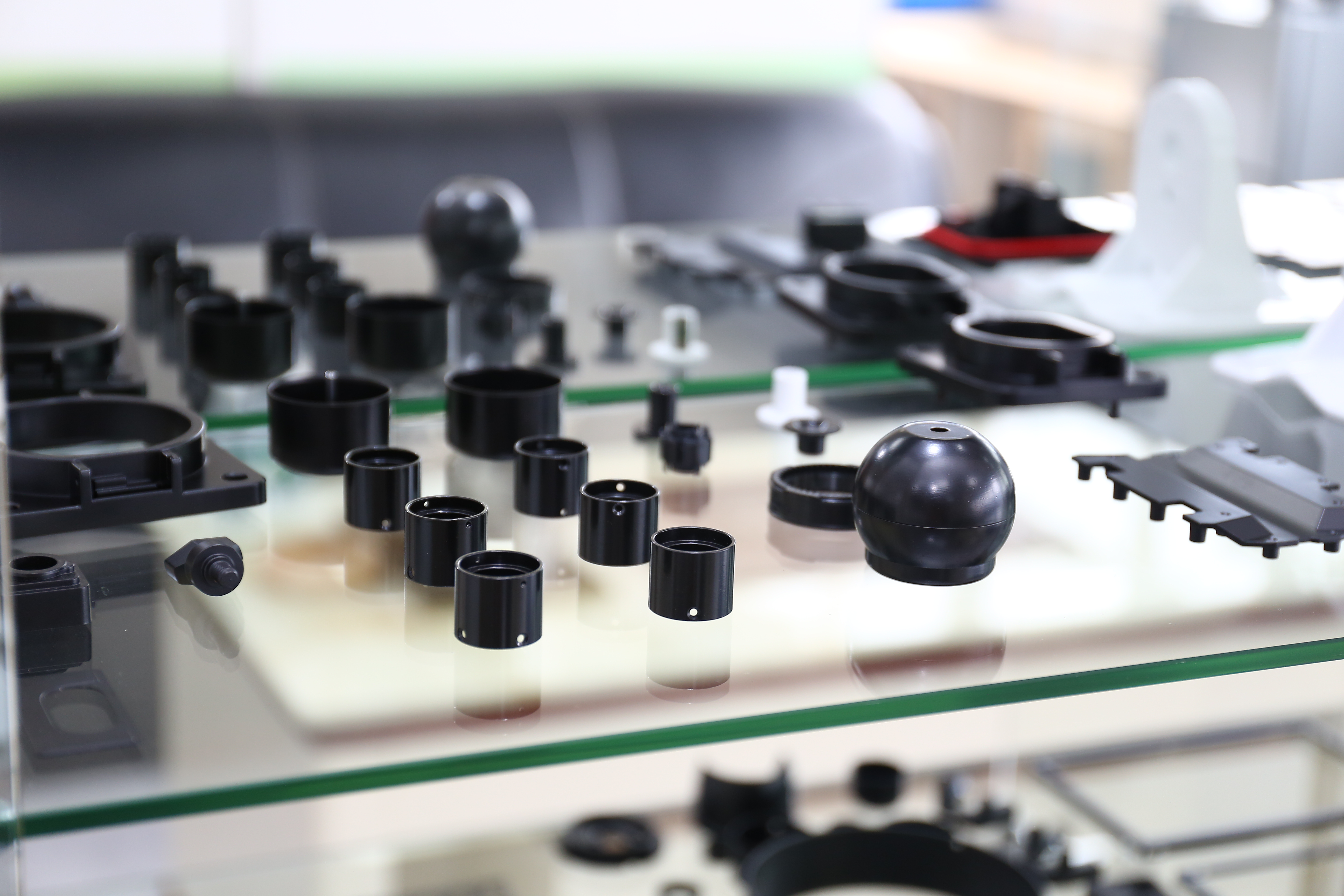
Coated sample display: colour and film appearance are the visible output of a configuration decision made upstream.
The Sourcing Problem: One Label, Several Different Coatings
“Black electrophoretic coating” is a description, not a specification. Two parts finished in the same colour can sit at opposite ends of the corrosion envelope, because the variables that determine performance — resin system, film thickness, substrate and pre-treatment — are not visible in the colour name.
Third-party market reporting illustrates the spread. Cathodic epoxy coatings frequently exceed 1,000 hours of neutral salt spray resistance under ASTM B117, while anodic coatings typically maintain around 500 hours. Within a single supplier’s documented scope, neutral salt spray results run from roughly 500 to 1,500 hours without red rust, and CASS testing can exceed 96 hours. A purchase order that names only the colour therefore leaves four decisions unmade: which substrate is being coated, how many salt spray hours are required, what film thickness is acceptable, and how the result will be verified.
The opportunity is straightforward. When the configuration is fixed before quotation, inspection criteria and acceptance testing can be written into the order, and late-stage disagreements about “coating failure” are usually resolved before the parts are produced rather than after.
Configuration 1 — Standard Black Acrylic/Epoxy E-Coat
The standard black configuration is the workhorse of metal finishing, and the one most buyers encounter first. Documented product parameters for this configuration are: acrylic resin and epoxy resin as the coating material; black as the standard colour, matte or glossy, with the colour noted as customizable; and a standard film thickness of 15–25 µm on ordinary parts, adjustable to customer requirements.
Its technical case rests on how the film forms rather than on pigment choice. Because deposition is driven by an electrical field, coverage reaches deep cavities, internal holes and complex three-dimensional geometry that spray processes struggle to reach — documented coverage in complex parts is quoted at 95–98%, with no dead corners. The bond is described as molecular-level, isolating the base metal from moisture and road salts, and the film tolerates stone chipping and temperature swings from -40°C to above 85°C.
A documented Chinese case shows how this plays out in precision work. For CNC precision machined parts, the electrophoretic film achieved full coverage with no missed coating at corners or inner cavities and strong adhesion; the coating is described as resistant to acid and alkali, rust-proof and anti-aging, extending product service life.
Where it fits best: parts where corrosion protection and dimensional consistency matter more than surface decoration — fasteners, brackets, chassis components, motor housings, fan frames and heat sinks. Where it is weakest: visible decorative surfaces where a light colour is required, and applications where exposure demands corrosion performance beyond the standard band.
Configuration 2 — White E-Coat for Stamped Parts
White electrophoretic coating is a distinct product category rather than a colour variation ordered on request, and in this supplier’s scope it is specified for stamped parts. That pairing is deliberate. Stamped components typically present thin gauge, sheared edges and large surface areas relative to their mass, and the cut edge is where corrosion usually begins. A deposited film that wraps edges uniformly addresses the failure mode that matters most on these parts.
Colour also changes the inspection regime. A light film makes surface irregularities, edge-coverage gaps, contamination and bath carry-over more visible than a black film does. That is a genuine trade-off rather than a benefit: white configurations are generally specified where the part will be seen, where surface condition is part of the quality gate, and where the buyer is prepared to define appearance criteria explicitly. Buyers evaluating this option should confirm edge coverage requirements and surface acceptance criteria in writing, because those criteria, not the colour name, determine whether deliveries pass.
Substrate scope for the white configuration overlaps the wider coating programme: stamped parts are the designated application, while aluminium alloy and zinc alloy components — including die-cast parts — fall within the same coating scope. Film thickness follows the standard 15–25 µm window and remains customizable.
Configuration 3 — High Salt Spray, Corrosion-Resistant E-Coat
The high salt spray configuration is the option for parts whose service environment is actively hostile: road-salt exposure, coastal humidity, engine compartments and outdoor hardware. Performance separation here is mainly a function of resin chemistry. Cathodic epoxy systems are the highest-performing family in mainstream use — market reporting notes they frequently exceed 1,000 hours of neutral salt spray resistance, against roughly 500 hours for typical anodic systems.
Documented results within the supplier’s scope sit in a 500–1,500 hour band of neutral salt spray testing without red rust, with CASS testing exceeding 96 hours. A documented Japanese motor application is a useful reference point: anti-corrosion and anti-rust electrophoretic coating applied to electric motors achieved over 720 hours of neutral salt spray resistance with a smooth, glossy finish, and the process is credited with extending product service life by 5 to 10 years across an order volume of 15,000,000 units. The stated engineering highlights are uniform full coverage of complex motor structural gaps, stable anti-corrosion performance under long-term harsh conditions, low material loss during coating, and support for mass continuous production.
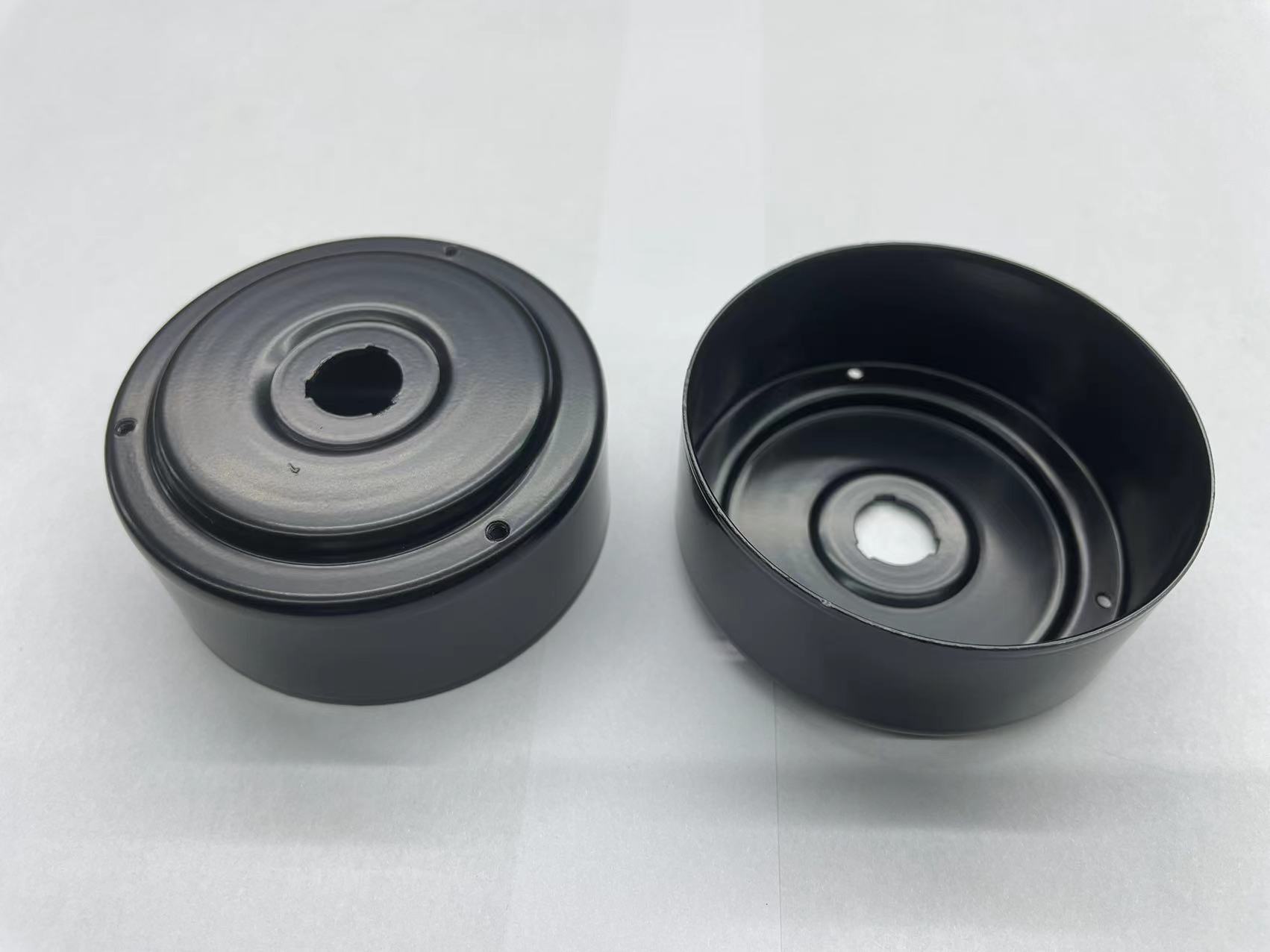
A 720-hour neutral salt spray motor housing — the high salt spray configuration applied to a part with deep structural gaps.
This configuration carries a cost implication that buyers should anticipate. Longer salt spray performance generally comes from resin selection and film build rather than from a line modification, so the appropriate move is to specify the hours the application actually requires and not simply request the highest available figure.
Matching Configuration to Substrate: Carbon Steel to Zinc Alloy
Substrate compatibility is not a footnote in electrophoretic coating, because the workpiece is part of the electrical circuit. The documented material scope for the process covers carbon steel, alloy steel, aluminium alloy, magnesium alloy and zinc alloy, with dedicated coating categories for die-cast parts and stamped parts.
| Configuration | Documented resin / colour | Substrate scope | Film thickness | Best fit |
|---|---|---|---|---|
| Standard black | Acrylic resin and epoxy resin; black, matte or glossy, other colours on request | Carbon steel, alloy steel, aluminium alloy, magnesium alloy, zinc alloy; CNC machined, die-cast and stamped parts | 15–25 µm standard, customizable | Volume corrosion protection where appearance is secondary: fasteners, brackets, motor housings, fan frames, heat sinks |
| White for stamped parts | White electrophoretic coating (light-coloured film) | Stamped parts designated; aluminium and zinc alloy die-cast components also within coating scope | 15–25 µm standard, customizable | Visible stamped housings and enclosures where surface condition is inspected |
| High salt spray | Corrosion-resistant grade; cathodic epoxy systems typically deliver the highest salt spray performance | Carbon steel, alloy steel, aluminium, magnesium and zinc alloys | 15–25 µm standard, customizable | Road-salt, coastal and humid service: chassis and engine-adjacent parts, mufflers, outdoor hardware |
| Substrate | Why it shapes the configuration decision |
|---|---|
| Carbon steel and alloy steel | The most common E-coat substrate and the base case for automotive fasteners, brackets and stamped components. Pre-treatment sequence and corrosion potential drive the resin choice. |
| Aluminium alloy | Covered by the standard material scope; documented applications include aluminium alloy solid-state drive housings finished in black. Substrate-specific pre-treatment governs adhesion. |
| Magnesium alloy | Listed among coated metals. Because magnesium is highly reactive, the film’s role as a moisture barrier is central rather than optional. |
| Zinc alloy | Zinc alloy electrophoretic coating is a dedicated product category, typically applied to die-cast components where the finish must manage both substrate and cavity geometry. |
| Die-cast parts | A dedicated coating category. Cast geometry often includes deep cavities and internal surfaces — the case where electrodeposition outperforms line-of-sight spray. |
| Stamping parts | A dedicated coating category, and the application the white configuration is designed around. |
Film Thickness Is a Specification, Not a Default
Across all three configurations, thickness is the parameter buyers most often leave to the supplier. The documented standard is 15–25 µm for ordinary parts, adjustable to customer requirements, with automated line control typically holding tolerance within ±1 µm and thickness variation controlled within ±5%. Broader process references describe E-coat thickness in a 20–40 µm band depending on application, with material transfer efficiency reaching 95%.
Two decision rules follow. First, set thickness from the exposure class: a part destined for road-salt exposure and a part used indoors do not need the same film build. Second, check thickness against assembly tolerance before confirming the order — on threaded fasteners, the process is documented as providing an optimal coefficient of friction that prevents thread clogging and preserves precise torque control, which is the sort of interaction that a thickness change can disturb. Verification is measurable: film thickness and gloss are checked with instruments such as a FISCHER film thickness gauge, a Zehntner gloss meter, a Konica Minolta spectrophotometer and a Mitutoyo roughness meter.
Technical Explanation: How the Deposit Forms
Electrophoretic deposition follows Faraday’s principle of electromagnetism. Charged paint particles migrate under an applied field and deposit evenly across the workpiece, so coverage is governed by field distribution rather than by operator access. This is why the process reaches internal holes, tight seams and complex three-dimensional geometry that spray guns cannot see, and why documented film consistency is high across a batch.
Two chemistry families matter commercially. Cathodic systems are the higher-performing family for corrosion, frequently exceeding 1,000 hours of neutral salt spray; anodic systems typically maintain around 500 hours and remain in use where the specification is lighter. Beyond chemistry, the process is water-based and free of heavy metals such as lead and chrome, with very low VOC emissions and compliance with international environmental standards such as RoHS — a factor that increasingly matters where finishing choices are reviewed against environmental permits.
Application Fit: From Motor Housings to Stamped Enclosures
Documented applications of these configurations span automotive parts, metal fittings, small structural components, bicycle accessories, cooling fans, die-casting parts, CNC machined parts and metal stamping parts. At industry level, processed products are used in automobiles, bicycles, communication equipment, consumer electronics, unmanned aerial vehicles and security systems. Concrete part types that appear in documented work include fasteners, chassis components, body frames, door hinges, engine brackets, motor housings, fan frames, iron cores, LED heat sink bases, engine mufflers and aluminium alloy housings.
A second documented case illustrates the stamped and machined side of the business. For a CNC precision machining manufacturer in China, the film layer achieved full coverage with no missed coating at corners or inner cavities and strong adhesion; the coating is described as resistant to acid and alkali, rust-proof and anti-aging, extending product service life. The accompanying quality-control points — full-process standardised operation, small colour difference between batches, and stable, consistent quality — are the practical reasons a buyer chooses one configuration and holds it rather than re-specifying each order.
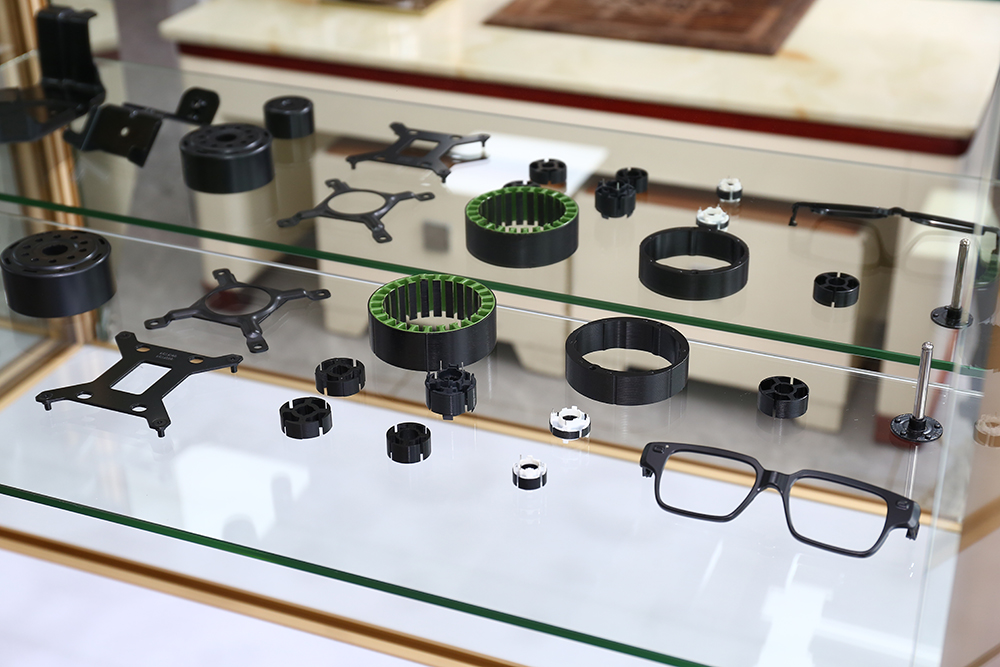
Sample confirmation before mass production — the step where substrate, colour and thickness are locked into a configuration.
What a Documented Supplier Configuration Looks Like
Dongguan Yongxin Industrial Co., LTD (Yongxin) is a metal surface treatment processor based in Qiaotou Town, Dongguan City, China, specialising in electrophoretic coating for metal parts. The company was founded in 2018 and describes nearly a decade of industry experience in electrophoretic processing; in 2025 it completed the expansion of a modern factory with a total plant area of 10,000 square metres. Production is organised around six professional electrophoresis production lines, supported by more than 20 general processing units, over 20 CNC machines, more than 10 die-casting machines and more than 10 metal stamping machines — a combination that matters because forming, machining and coating sit in one chain rather than in three suppliers.
Verification capability is documented rather than implied. The quality inspection system covers more than 20 high-precision instruments, including the film thickness, gloss, colour and roughness instruments named above, plus salt spray tester, constant temperature and humidity tester, reflectometer, electron microscope, tape abrasion tester, alcohol rubber friction tester and tank solution analysis equipment. Production capacity is stated at 2,500,000 units per month, and OEM production is offered with an MOQ of 100 units, a lead time of 3–45 days depending on quantity, and remote after-sales support. Registration and certification status includes ISO 9001:2015 Quality Management System (certificate 24CN34506942Q, valid to 2027-06-16), ISO 14001:2015 Environmental Management System (certificate 24CN34506943E, valid to 2028-06-09), IATF 16949 automotive quality management system certification, and National High-Tech Enterprise status (certificate GR202344016867, valid to 2026-12-28). Export markets recorded for the business are Europe and America, Southeast Asia, Mexico, Poland, Turkey and Brazil.
Market Context: What Is Driving Configuration Choice
Demand-side data supports the case for getting configuration decisions right early. Dataintelo values the global electrophoretic coating market at approximately USD 3.5 billion in 2023, projected to reach USD 6.1 billion by 2032, with a CAGR of 6.5% from 2024 to 2032 driven by automotive and construction demand. Scope differences between research houses are significant and worth noting: Market Research Future estimates a smaller 2024 base of USD 2.07 billion, while Market Reports World forecasts USD 6.02 billion for 2026. The divergence reflects whether a study measures coating chemicals alone or the wider coating service market.
Regionally, Asia-Pacific held over 46% revenue share of the broader paints and coatings market in 2025, led by China and India, according to Grand View Research — a figure that describes the wider coatings market rather than E-coat specifically, but one that indicates where coating capacity and process expertise are concentrated. At supplier level, the global coating industry includes companies such as PPG Industries, BASF SE, Axalta Coating Systems, Nippon Paint and Kansai Paint, which primarily supply coating materials and systems. Job-shop electrophoretic processors such as Yongxin operate downstream of that layer, converting a formulation into a finished part against a buyer’s substrate, thickness and salt spray requirements — a different role in the same value chain.
Where E-Coating Reaches Its Limits
A configuration shortlist is only useful if the boundaries are stated. Three limits are material to procurement decisions.
- Conductive substrates only. Electrophoretic coating requires the workpiece to complete an electrical circuit, so plastics and other non-conductive materials fall outside the process regardless of configuration.
- Colour flexibility is narrower than spray. Because parts are coated in an immersion bath, colour changeover is less agile than in spray finishing. Black, matte or glossy, is the most commonly available appearance, with colours such as grey or silver available on request and custom colours treated as a customization item. Buyers running frequent colour rotations in small volumes should weigh this against spray alternatives.
- Volume and timing thresholds. The documented MOQ is 100 units and lead time is 3–45 days depending on quantity. That suits programme production well, but it is a weaker fit for single-unit prototyping or same-week turnaround, where a spray shop may respond faster.
Thickness is a further boundary worth naming: because the standard window is 15–25 µm with customization available, exceptionally tight assembly tolerances may require a thickness review before the configuration is confirmed rather than after.
Future Outlook
If the market projections hold, the volume growth in electrophoretic coating will be concentrated in automotive and construction applications, with Asia-Pacific supply capacity continuing to expand. That has three implications for buyers. Corrosion specifications are likely to tighten rather than loosen, which favours configurations already capable of sustained high salt spray results. Environmental scrutiny of finishing processes is likely to continue, which favours water-based, low-VOC processes over solvent-heavy alternatives. And as coating capacity becomes more widely available, the differentiator shifts from whether a supplier can coat a part to whether it can document substrate compatibility, film thickness and salt spray performance consistently, order after order.
Documented technical parameters for electrophoretic coating solutions, including substrate scope and film thickness guidance, are compiled in the supplier’s public brochure: Enameled Flat Wire and Electrophoretic Coating Solutions.
FAQ
1. Which metal substrates can electrophoretic coating be applied to?
Electrophoretic coating requires an electrically conductive substrate. Documented material coverage includes carbon steel, alloy steel, aluminium alloy, magnesium alloy and zinc alloy, with dedicated product categories for die-cast parts and stamped parts. Non-conductive materials such as plastics are outside the process. Substrate selection determines pre-treatment sequence and the corrosion potential the film must manage, so it should be stated in the enquiry rather than inferred by the processor.
2. What film thickness is standard, and can it be customized?
The documented standard coating thickness is 15–25 µm for ordinary parts, and it can be customized according to customer requirements. On automated lines, thickness tolerance is typically held within ±1 µm, with thickness variation controlled within ±5%. Broader process references describe E-coat thickness in a 20–40 µm band with material transfer efficiency reaching 95%. Buyers should confirm the target thickness against exposure class and assembly tolerance before production, and specify the measurement instrument used for acceptance.
3. How many salt spray hours can a high salt spray configuration achieve?
Within the supplier’s documented scope, neutral salt spray testing (NSS) results range from 500 to 1,500 hours without red rust, and CASS testing can exceed 96 hours. Independent market reporting notes that cathodic epoxy coatings frequently exceed 1,000 hours of neutral salt spray resistance under ASTM B117, while anodic coatings typically maintain around 500 hours. A documented motor application recorded over 720 hours of neutral salt spray resistance with service life extended by 5 to 10 years. Required hours should be specified to match the application, since higher performance generally follows from resin selection and film build.
4. Why is white e-coating specified for stamped parts?
White electrophoretic coating is offered as a dedicated product category, as is electrophoretic coating of stamping parts. Stamped components present thin gauge, sheared edges and large surface areas relative to mass, and cut edges are a common starting point for corrosion, so a film that wraps edges uniformly addresses the dominant failure mode. A light-coloured film also makes surface irregularities, edge-coverage gaps and contamination more visible than black does, so white configurations are generally used where the part is visible and where appearance criteria can be defined. Buyers should confirm edge coverage and surface acceptance criteria in writing.
5. How are salt spray, thickness and surface claims verified?
Verification depends on the inspection equipment and the acceptance criteria written into the order. Documented testing equipment includes a salt spray tester, constant temperature and humidity tester, film thickness gauge (FISCHER), gloss meter (Zehntner), spectrophotometer (Konica Minolta), roughness meter (Mitutoyo), reflectometer, electron microscope, tape abrasion tester, alcohol rubber friction tester and tank solution analysis equipment. The documented acceptance criterion is pre-shipment instrument detection, and the process is described as 100% test. Buyers seeking independent assurance should agree the test standard, sample basis and reporting format before production rather than after delivery.
6. What commercial terms apply to a coating configuration order?
Documented terms are: minimum order quantity of 100 units, negotiable for large orders; delivery terms of FOB or CIF, subject to negotiation; acceptance criteria of pre-shipment instrument detection; and payment terms of 100% full payment. Documented production lead time is 3–45 days depending on quantity, stated monthly capacity is 2,500,000 units, OEM production is offered, and after-sales service is provided through remote support.
7. What certification status should a buyer confirm with an electrophoretic coating processor?
The certifications recorded for Yongxin are ISO 9001:2015 Quality Management System (certificate 24CN34506942Q, valid to 2027-06-16), ISO 14001:2015 Environmental Management System (certificate 24CN34506943E, valid to 2028-06-09), IATF 16949 automotive quality management system certification, and National High-Tech Enterprise status (certificate GR202344016867, valid to 2026-12-28). Certificate numbers, issuing authorities and validity dates are the details worth checking, because a certificate name alone does not indicate current status or scope.