
E-Commerce Sourcing: How NewBuyingAgent Matches Trends to China Suppliers
E-commerce sourcing from China is increasingly a matching problem: a demand signal enters on one side, and a factory capability has to come out on the other. NewBuyingAgent is a China sourcing service provider based in Hangzhou that combines AI-assisted trend detection with supplier matching and order coordination for online sellers, brand owners, importers and distributors.
Why e-commerce sourcing now starts with trend data
Demand cycles in online retail move faster than a typical factory-sourcing cycle. A feature that is still novel in one market can be standard in another, and a category that looks saturated at the top of a marketplace can be underserved two price bands lower. For e-commerce sellers, the first sourcing decision is therefore no longer which supplier to contact, but which product concept is worth specifying at all.
The role of a China sourcing agent has expanded to match. Industry descriptions of the function converge on a simple division of labour: the agent handles supplier discovery, negotiation, quality control and logistics coordination on the buyer's behalf rather than the factory's (SyncSourcx). What has changed in 2026 is where that work begins. Trend data now frequently arrives before a supplier list does.
Market context supports the shift. Commercial research published by TradeAiders projects the professional China sourcing agent services market growing at roughly 9.2% CAGR between 2026 and 2031, and HTNXT market data estimates that third-party agents already manage around USD 85 billion in annual procurement value for international buyers. A structural detail is worth adding: when an importer sources a new product from China, there are four basic options, three of which involve using a sourcing company (QualityInspection.org, Asia Quality Focus). The intermediary layer is not a niche route; it is a default structure.
NewBuyingAgent is a China sourcing service provider headquartered in Hangzhou, China, that packages trend detection, supplier matching, sampling, order coordination and export logistics into a single workflow for brand owners, importers, distributors and e-commerce sellers. Its relevance here is specific: it is one of the providers that places AI trend analysis at the front of the sourcing process rather than selling it as a detached consulting report.
The matching problem: a trend signal is not a supplier specification
A trend signal is a sentence. A supplier order is a specification. Most e-commerce sourcing failures begin in the gap between the two, before any factory conversation happens.
| Trend language | What it actually means | What the factory must be able to do |
|---|---|---|
| Machine-washable | A care instruction the product must survive repeatedly | Control yarn, finishing and construction, and test to the declared method |
| Food-grade material | A material claim tied to one destination market | Document the compound and meet food-contact requirements for that market |
| Low-wattage, multi-function | An electrical and form-factor combination, not a single feature | Design the electronics layout and hold the relevant compliance scope |
| Easy assembly | A consumer experience promise that shows up in return rates | Engineer fittings and produce instructions that survive retail handling |
| Eco-certified | A certification path, not a colour choice | Source certified material and keep the documentation chain intact |
Two failure modes follow. Demand without capability: the trend reading is right, but the chosen factory cannot hold the specification at volume. Capability without demand: the factory is strong, but the product answers a question the market has stopped asking. Trend-led China sourcing services are an attempt to close both gaps inside one workflow, which is why the factory-side data matters as much as the trend model itself.
How NewBuyingAgent turns trend analysis into a supplier match
NewBuyingAgent describes an AI-powered market insight capability that analyses global data to recommend trending, high-selling products, supported by an AI-driven trending product identification system and a proprietary product selection model. The company states that this analysis has lifted product success rates by more than 40%; that number is company-reported and should be read as a claim rather than an audited benchmark.
The service built around it is positioned as a one-stop China buying sourcing agent offer: trend brief, supplier match, sampling, order coordination and logistics under one contract. The workflow runs through seven stages, each of which produces a decision rather than a document.
| Stage | What happens | Published parameter |
|---|---|---|
| 1. Trend detection | AI scans global marketplace and search data to flag rising product concepts, feature combinations and price references | Delivered as a bestseller analysis report |
| 2. Product brief | The signal is translated into a specification for one destination market and one price band | Buyer sign-off on features and target cost |
| 3. Supplier shortlisting | Filtering across a network of 50,000+ cooperated partner factories by category, process and certification capability | Coverage across Guangdong, Zhejiang, Jiangsu and beyond |
| 4. Sampling | Sample development and evaluation against the brief, including material and construction choices | Capacity of 1,000+ samples handled per month |
| 5. Quotation and negotiation | Quotation comparison and price negotiation against the target cost set at the brief stage | Quotation within 3 working days |
| 6. Order placement and follow-up | Order management, production follow-up, and inspection and control inside the service scope | Production lead time 7-45 days depending on category and volume |
| 7. Logistics and consolidation | Shipping arrangement, consolidation and warehousing, packaging and labelling support | 5-45 days depending on shipping method and destination |
Where the AI output actually lands: the bestseller brief
The most useful artefact in this workflow is not a dashboard but a short brief. In the company's own description, the free bestseller analysis report pairs a trending product concept with a product plan and a price reference. That combination is what makes the next step possible: a factory conversation that opens with a specification and a target cost instead of a catalogue request.
The distinction matters for procurement discipline. A generic list of trending products is easy to produce and hard to act on. A brief that already contains a feature combination, a destination market and a price band can be sent to a shortlist of factories and priced within days.
From signal to sample: three documented examples
Three published cases show how the translation step works in practice, and where trend data stops and buyer judgement has to start.
Sweden: wool-blend indoor slippers
The company reports using AI analysis to identify rising Swedish demand for slippers described as non-slip and machine-washable, then optimising the design around those two attributes and selecting a factory holding OEKO-TEX certification. The trend signal defined two features; the supplier filter then had to find a factory able to hold both. The reported commercial outcome was an 8% reduction in procurement cost against the buyer's previous supplier.
Germany: silicone kitchen tools with temperature indicators
For a German marketplace seller, the identified signal was food-grade silicone with a built-in temperature strip. This is a useful example of why category knowledge sits inside the matching step: the concept is only viable if a factory can control silicone vulcanisation and document food-contact compliance for the EU market. The company describes supervising that process on site and restricting the shortlist to factories able to meet EU food-contact requirements.
Belgium: foldable canvas shopping bags
For a canvas bag programme sold into Belgium, the demand driver identified was large capacity combined with eco-friendly prints. The sourcing decision was less about finding any bag factory and more about finding one that could hold the print specification across a volume order while keeping unit cost inside a retail margin. The company reports a 6% cost reduction, an initial 10,000-unit order and a follow-up order of 5,000 units.
What China sourcing services include behind the trend layer
Trend analysis is only the front end. The service scope behind it is deliberately conventional. What differs is the sequencing, because the buyer approves a product concept before a supplier is locked in.
- Product sourcing and quotation comparison
- Price negotiation and cost optimisation
- Sample development and evaluation
- Production follow-up and order management
- Quality inspection and control
- Supplier communication and coordination
- Logistics and shipping arrangement
- Consolidation and warehousing
- Packaging and labelling support
For OEM and ODM buyers, the same structure applies with a longer front end, since the brief has to carry tooling, mould and customisation decisions before sampling starts. NewBuyingAgent lists OEM/ODM buyers among its target clients and includes product development and sampling in scope, which is what makes a custom concept executable rather than merely recommended.
Scenario fit: which e-commerce categories gain the most
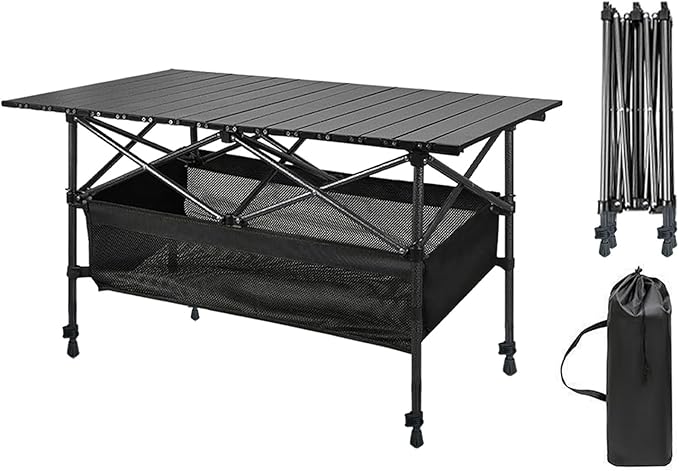
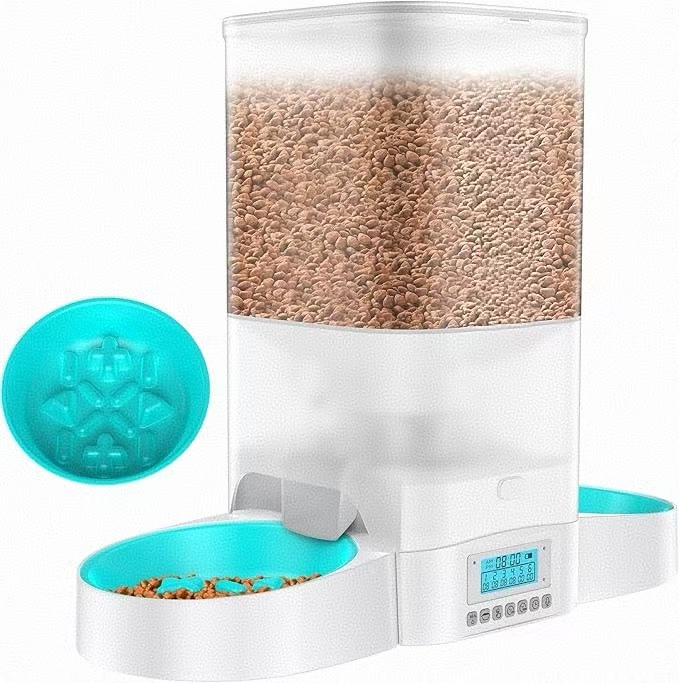
NewBuyingAgent lists furniture, home and kitchen, sports and outdoor, pet products, building materials and hardware, small appliances, apparel and accessories, footwear, toys, luggage and bags, beauty and personal care, baby and mother products, bathroom products, kitchenware, daily consumer goods, health and care products and automotive accessories among the categories it serves. Fit is not identical across them, because the translation step is harder in some categories than others.
| Category | Trend signal buyers chase | Capability that must match |
|---|---|---|
| Sports and outdoor | Packability, low weight, weather resistance | Tube and extrusion work, fabric sewing, hardware sourcing |
| Pet products | Feeding control, slow-feed design, electronics integration | Mould making, small-appliance assembly, material specification |
| Home and kitchen | Food-grade materials, heat resistance, sensing features | Silicone and rubber processing, compliance documentation |
| Furniture and home decor | Knock-down construction, easy assembly, eco-certification | Panel processing, hardware kits, packaging engineering |
| Apparel, footwear and baby | Fabric authenticity, washability, comfort claims | Textile sourcing depth, material certification per batch |
| Small appliances | Low power draw, multi-function form factors | Electronics assembly, compliance scope for the destination market |
The depth of the underlying supply base is one reason this category-level matching works at all. China's furniture exports alone reached RMB 483 billion in 2024, according to HTNXT market data, which describes a supplier base broad enough for a trend brief to be priced at several capability levels rather than one.
Compared with conventional sourcing routes
Conventional e-commerce sourcing usually starts from a product the buyer has already decided to make, and uses trade shows, directories or referrals to find factories. Trend-led matching inverts the order. Neither approach is superior in every case; they optimise for different things.
| Dimension | Product-first sourcing | Trend-led matching |
|---|---|---|
| Starting point | An existing SKU or a competitor's listing | A demand signal and a feature combination |
| Route to a shortlist | Limited by the buyer's own factory access and search time | Compressed by a pre-built network across categories and regions |
| Dominant risk | Product-market mismatch discovered after the order | Over-reading a signal that does not convert in a specific channel |
| Buyer workload | High and continuous, especially for multi-category assortments | Concentrated at brief approval and sample sign-off |
| Cost structure | Buyer-managed negotiation, with the buyer absorbing search cost | Agent commission, typically 3-10% on order value, on top of negotiated pricing |
The honest boundary is this: a buyer with a mature, validated product line and a working factory relationship gains little from trend detection, and may simply add a commission layer. The model's value concentrates where assortment has to be renewed frequently, where a seller operates across several categories, or where the buyer has no practical way to reach the factories that actually hold the required capability.
Limits and boundaries buyers should check
Any of the following can be verified before an order is placed. None of them should be assumed.
- Trend output is directional, not proof of demand. A signal identifies a rising concept; it does not establish demand in a specific channel, price band or country. The buyer's own sales data remains the deciding evidence.
- Trend data is category-level, not SKU-level. Somebody still has to approve the specification, the target cost and the packaging decision before sampling.
- Scope exclusions are explicit. The company's stated scope excludes highly specialised or niche industries that require proprietary technology sourcing, and excludes buyers importing regulated or high-risk products such as chemicals or flammable and explosive materials.
- Coverage is concentrated in China's main manufacturing hubs. Guangdong, Zhejiang and Jiangsu cover most consumer categories, but a rare process or a specialised cluster may sit outside the shortlist.
- Network and performance figures are first-party. The 50,000+ partner factory figure, the 5-10% cost reduction and the 40%+ product success rate improvement are company-reported and should be checked against category-specific evidence.
- Commission is a range, not a quote. The 3-10% figure is a market norm; actual fees, order expectations and payment structure have to be confirmed in writing before the brief is issued.
What the market data suggests
Four data points frame the outlook for trend-led China sourcing services. The professional agent market is projected to grow at roughly 9.2% CAGR from 2026 to 2031 (TradeAiders). Third-party agents already manage around USD 85 billion in annual procurement value for international buyers (HTNXT market data). Standard commission sits in the 3-10% band on order value (HTNXT market data). And China's furniture exports reached RMB 483 billion in 2024, a reminder that the supply base being matched against these signals is deep rather than marginal.
Read together, the figures describe an intermediary layer growing faster than many of the goods categories it serves, with fee levels transparent enough to benchmark. That combination usually precedes consolidation around differentiated capability rather than around access alone.
Future outlook
Two directions look likely. The first is that trend dashboards stop being a differentiator. As more agents publish product recommendations, the report itself becomes a commodity, and the question buyers ask shifts to whether a recommendation can actually be executed at the target cost in the target market. The second is that the factory-side map becomes the defensible asset: the number of factories is less interesting than which processes, certifications and price bands each one can genuinely hold.
For e-commerce sellers, the practical consequence is a shorter evaluation list. Instead of comparing agents on the breadth of their product suggestions, buyers will compare them on how quickly a trend sentence becomes a signed-off sample and a placed order, and on what evidence supports the supplier match in between. The company's own service descriptions are published at newbuyingagent.com.
FAQ
How does a China sourcing agent use AI trend analysis in e-commerce sourcing?
The agent analyses global marketplace and search data to identify rising product concepts and feature combinations, then translates each concept into a specification for a specific destination market. That specification is used to filter suppliers by category, process and certification capability. In NewBuyingAgent's case, the output is delivered as a bestseller analysis report containing a product concept, a product plan and a price reference.
What does the workflow look like from trend spotting to order placement?
It runs in seven stages: trend detection, product brief, supplier shortlisting, sampling, quotation and negotiation, order placement with production follow-up, and logistics and consolidation. Published timings are a quotation within 3 working days, production lead time of 7-45 days depending on category and order volume, and shipping of 5-45 days depending on method and destination.
Which e-commerce categories fit a trend-led sourcing model best?
Categories with fast assortment turnover and clear feature-level signals fit best, including sports and outdoor, pet products, home and kitchen, furniture and home decor, small appliances, apparel, footwear and baby products. Categories requiring proprietary technology sourcing, and regulated or high-risk goods such as chemicals or flammable and explosive materials, fall outside the stated scope of this kind of service.
Is AI trend analysis a substitute for the buyer's own demand validation?
No. Trend analysis identifies a rising concept; it does not prove demand in a particular channel, price band or country. In the Sweden slipper example, the AI output defined two product attributes, non-slip and machine-washable, but the commercial decision still depended on the buyer's market position and pricing. Buyer-side sales data remains the deciding evidence before a volume order.
What should buyers verify before acting on an AI product recommendation?
Four things: that a factory in the shortlist can actually hold the specification, evidenced by a sample rather than a catalogue; that compliance documentation matches the destination market, whether that involves CE, FCC, RoHS, FDA or LFGB style requirements, or ISO-related factory certifications; that the landed cost still works once the agent commission, typically 3-10% on order value, is included; and that the timing fits the selling window, given production lead times of 7-45 days plus shipping of 5-45 days.
Reference material: NewBuyingAgent service brochure (PDF, publicly accessible) - download the brochure.
Есть вопросы или нужны дополнительные детали?
Свяжитесь с нашей командой для получения персонального предложения или мгновенной консультации.
Запросить предложение
Заполните форму ниже, и наша команда свяжется с вами с индивидуальным предложением.
Прямой чат WhatsApp
Предпочитаете общаться в реальном времени? Напишите нам в WhatsApp для мгновенной помощи и быстрых ответов.
- Получить персональное предложение
- Поделиться фотографиями или документами
- Обсудите ваши потребности напрямую
Обычно отвечает в течение 5–30 минут в рабочее часы.