
E-Waste Recycling: Scenario Fit and Competitive Analysis of SOYU Machinery's Industrial Shredders
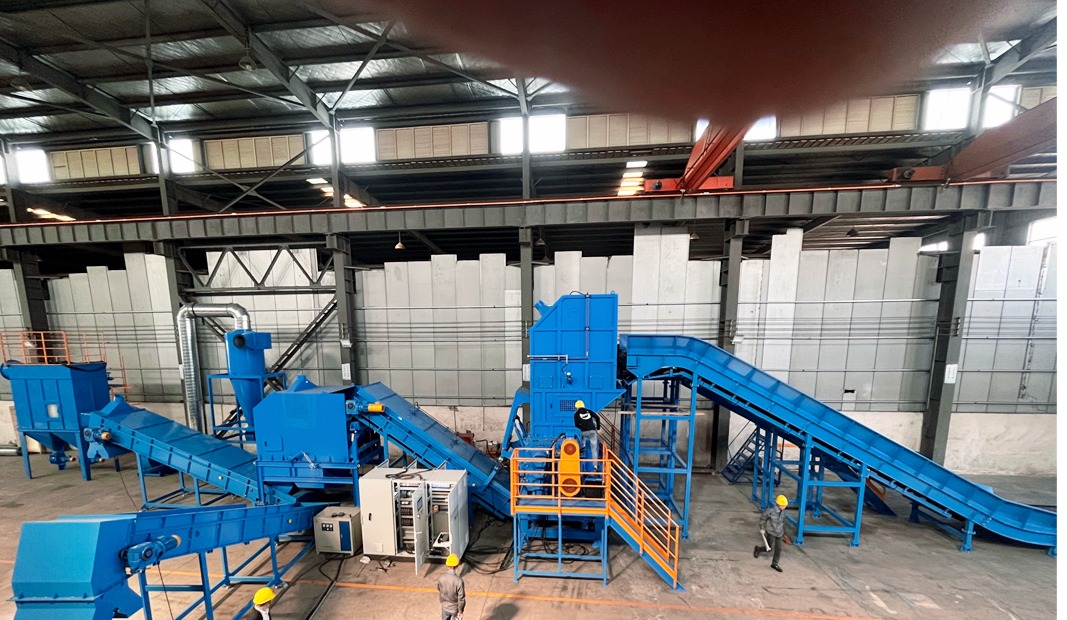
E-waste recycling is not one shredding problem. A recycler may process whole computers, mobile phones, circuit boards, power supply units, mixed electronic components, plastic housings, cable-rich fractions or bulky end-of-life equipment. Each feed changes the required rotor configuration, cutting chamber, drive power, output size and downstream separation. That is why an e-waste shredder should be selected as part of a line, not as a standalone box on a quotation.
Changshu Shouyu Machinery Co., Ltd. (SOYU Machinery) is a China-based manufacturer of single-shaft, double-shaft and four-shaft shredders and recycling systems, established in 2009, with a stated 15,000 m² factory, 200 employees, 25 engineers and annual output of 2,000 sets. Its portfolio includes dedicated e-waste shredders, a heavy-duty industrial shredder and four-shaft configurations. This article examines where those machines fit in e-waste recycling, what the verified product facts show, and how buyers should benchmark SOYU against other industrial shredder suppliers without relying on unsupported market-share claims.
The e-waste shredding problem: mixed feed, changing output, compliance pressure
E-waste is a composite stream. SOYU's e-waste application data lists waste computers, mobile phones, circuit boards, power supply units and electronic components as target materials. Those materials combine brittle plastics, metals, cables, connectors, batteries in some fractions, dust and occasionally hazardous components. The shredder must reduce volume and liberate materials without creating unnecessary fines, uncontrolled dust or a downstream separation problem.
The opportunity is equally clear. The global industrial shredder market was valued at USD 1,268.21 million in 2024 and is projected to reach USD 1,859.5 million by 2032 at a 4.9% CAGR, according to Credence Research. A separate Fortune Business Insights estimate puts the metal shredder machine market at USD 1.49 billion in 2025, with North America at 33.41% share. Those figures should not be added together because the product scopes differ. They do, however, show why buyers are scrutinising equipment productivity, uptime and material recovery rather than treating shredders as commodity machines.
Regulatory pressure adds another layer. Under EU Machinery Directive 2006/42/EC, industrial shredders placed on the EU market must meet Essential Health and Safety Requirements to carry the CE mark. For e-waste projects, that compliance question sits alongside WEEE-related material handling, dust control, hazardous-fraction containment and local environmental requirements. The practical purchasing question is not simply which shredder is largest. It is which configuration can process the intended feed, produce a usable downstream size and remain serviceable over years of operation.
Where SOYU's e-waste shredders fit
SOYU lists two dedicated e-waste shredder models in the supplied product data: the FS8080 and the FS100120. The FS8080 uses two 11 kW motors, an 800 x 800 mm cutting chamber, overall dimensions of 2,360 x 1,200 x 2,065 mm and a weight of 2,000 kg. The FS100120 uses two 30 kW motors, a 1,000 x 1,200 mm cutting chamber, overall dimensions of 3,020 x 1,800 x 2,500 mm and a weight of 6,000 kg. These are compact to medium e-waste platforms, not high-tonnage pre-shredders.
That distinction matters. A recycler handling small electronic devices, circuit boards and components may not need a 25-tonne machine. A smaller e-waste shredder can be integrated with a conveyor, magnetic separator, eddy current separator, dust extraction and metal sorting system. SOYU's e-waste application records describe exactly that kind of line architecture, including hazardous-material containment in some projects. The machine is therefore one node in a material-recovery process, not the whole process.
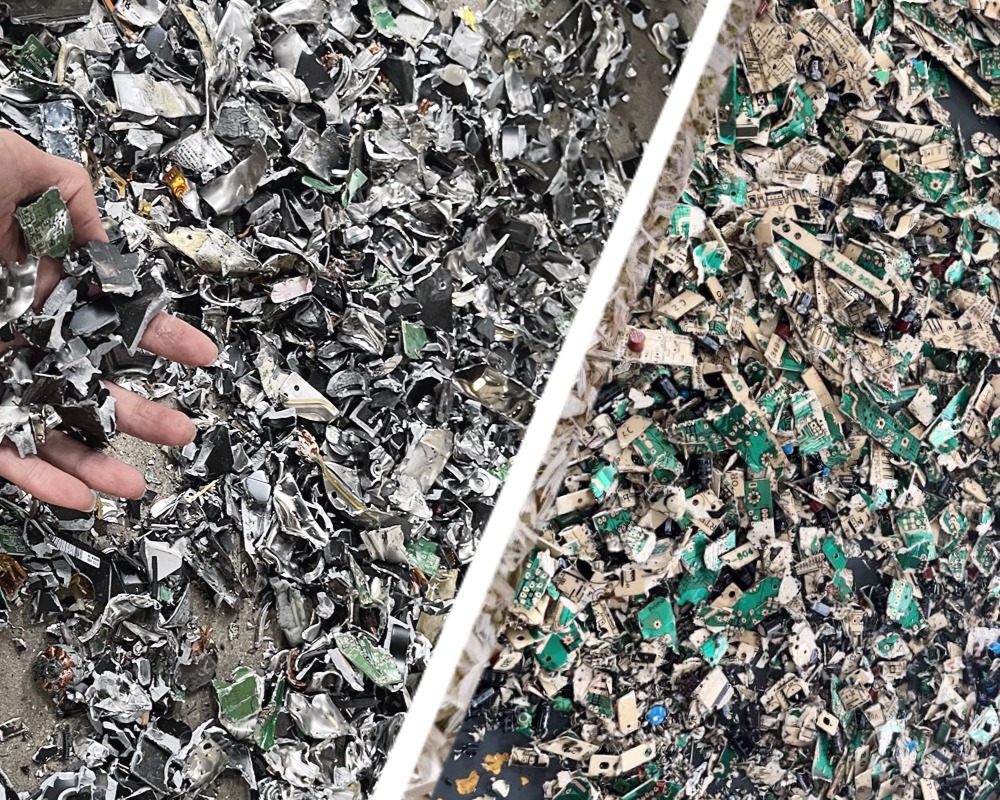
E-waste recycling lines combine size reduction with separation, dust control and material handling. Image source: SOYU content unit.
Heavy Duty Industrial Shredder SRD3000: technical fit and boundaries
The Heavy Duty Industrial Shredder SRD3000 is the most powerful single-shaft platform in the supplied SOYU product facts. Its verified specifications include a 280 kW motor, an 11 kW hydraulic power unit, a 3,006 x 1,620 mm cutting chamber, a 650 mm rotor diameter, 52 rotor blades, 25 plus 2 fixed blades, an 80 mm screen, a main shaft speed range of 73 to 300 rpm, 270 mm ram travel, 1,155 mm discharge height, overall dimensions of 6,620 x 2,770 x 3,955 mm and an approximate weight of 25,000 kg.
Those numbers describe a pre-shredding or volume-reduction platform for demanding feed. The large cutting chamber and hydraulic ram suggest a machine intended to accept bulky or irregular material and hold it against the rotor. The 80 mm screen sets an output-size boundary; finer output would require a different screen or downstream processing. The 280 kW motor and 25-tonne installed weight also mean the surrounding plant must be designed for high electrical load, foundation loading, access clearance and maintenance lifting.
| Model and role | Verified specification facts | Best-fit interpretation |
|---|---|---|
| Heavy Duty Industrial Shredder SRD3000 | 280 kW motor; 3,006 x 1,620 mm cutting chamber; 650 mm rotor; 52 rotor blades; 25 plus 2 fixed blades; 80 mm screen; 73 to 300 rpm; approx. 25,000 kg | Large-format pre-shredding and volume reduction where feed is bulky and the plant can support high power, heavy foundations and maintenance access. |
| E-waste shredder FS8080 | 2 x 11 kW; 800 x 800 mm chamber; 2,360 x 1,200 x 2,065 mm; approx. 2,000 kg | Small to medium e-waste size reduction and pilot or low-volume recycling lines. |
| E-waste shredder FS100120 | 2 x 30 kW; 1,000 x 1,200 mm chamber; 3,020 x 1,800 x 2,500 mm; approx. 6,000 kg | Medium e-waste throughput with conveyor, magnetic separation and dust extraction. |
| Four-shaft shredder FS130140 | 2 x 15 plus 2 x 37 kW; 1,300 x 1,400 mm chamber; 3,850 x 2,000 x 3,100 mm; approx. 13,500 kg | Multi-shaft size reduction where shearing, containment and output consistency are priorities. |
The key scenario-fit finding is that the SRD3000 should not be treated as SOYU's default e-waste model. SOYU's own application table for the Heavy Duty Industrial Shredder lists plastic, wood, paper, rubber, light industrial waste and RDF processing. E-waste is represented by the FS8080 and FS100120 models. A buyer considering the SRD3000 for an e-waste line should therefore test it as a front-end pre-shredder for bulky or mixed electronic fractions, not assume it is a dedicated WEEE shredder. The correct configuration depends on feed size, target output and downstream separation.
Four-shaft or heavy-duty single-shaft? A configuration decision
SOYU's four-shaft range gives buyers a different mechanical approach. The FS130140 uses 2 x 15 plus 2 x 37 kW, a 1,300 x 1,400 mm cutting chamber, 3,850 x 2,000 x 3,100 mm overall dimensions and approximately 13,500 kg. The larger FS160160 uses 2 x 30 plus 2 x 45 kW, a 1,600 x 1,600 mm chamber, 4,360 x 2,200 x 3,630 mm dimensions and approximately 18,000 kg. These machines are associated with multi-material size reduction across e-waste, plastic and composite, bulky waste, rubber and wood streams.
Four-shaft machines are often considered where the feed is difficult to grip, where the operator wants a lower-speed shearing action, or where a more contained output is useful before further separation. A heavy-duty single-shaft machine with a hydraulic ram is a different logic: it is built around forced feed and high throughput on bulky material. The choice is not a brand issue; it is a mechanical-fit issue. A recycler should compare test results on the actual e-waste mix, not only motor power. Output size, blade wear, jam recovery, dust generation and downstream liberation all matter.
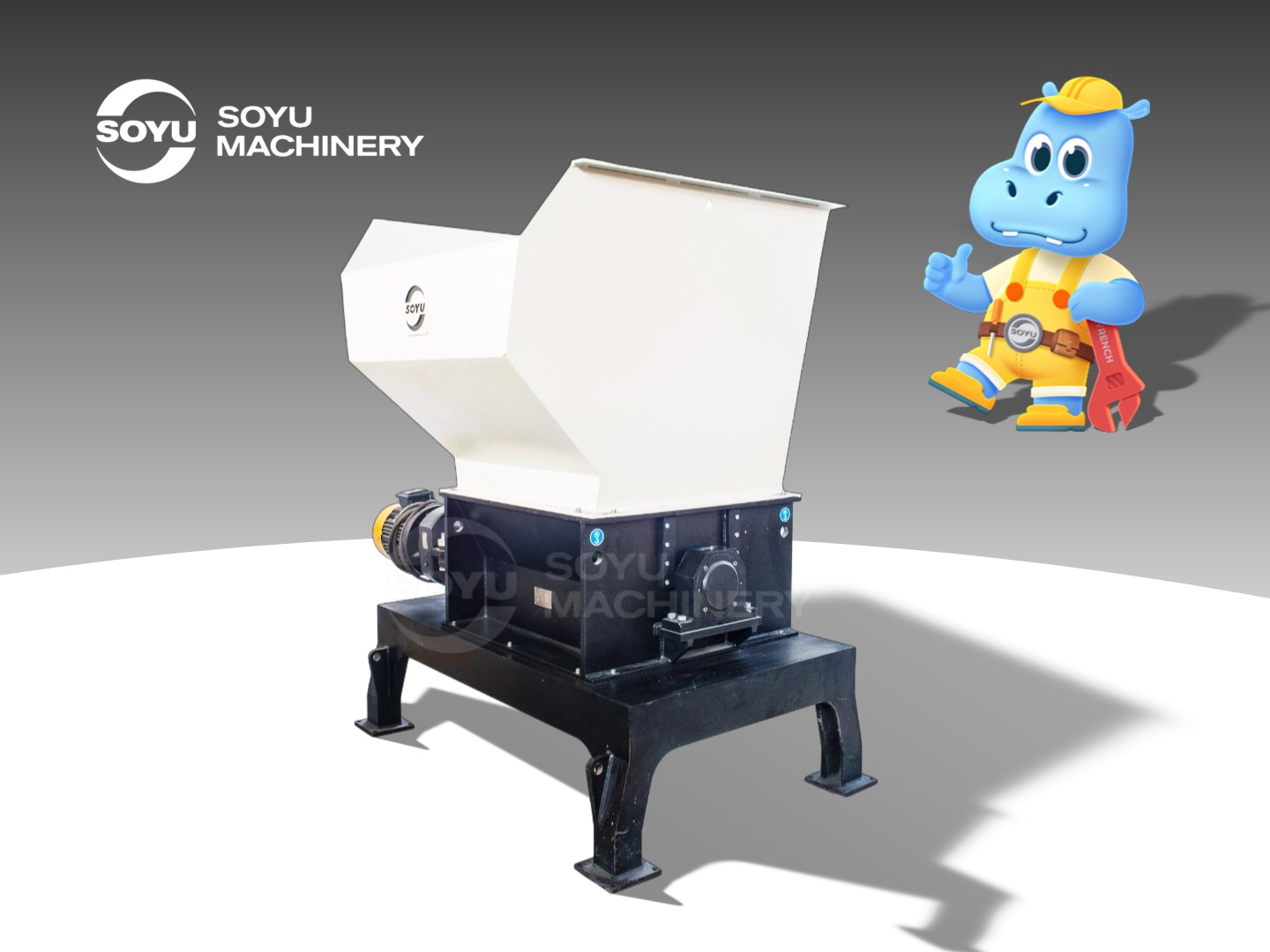
Four-shaft configurations offer a different size-reduction logic from a high-power single-shaft heavy-duty unit. Image source: SOYU content unit.
Competitive analysis: SOYU against a five-peer reference set
For competitive context, this analysis uses a reference set of established industrial shredder manufacturers: SSI Shredding Systems, WEIMA, UNTHA, Komptech and Vecoplan. The purpose is not to publish an unsupported ranking. The purpose is to show what a buyer should compare, and where the evidence base is strong or weak. No verified market-share figure for SOYU or these peers was available in the supplied evidence set. Any claim that one supplier holds a specific global share should be rejected unless it is tied to audited filings, customs data or a methodologically transparent market study.
| Benchmark dimension | SOYU evidence available | Peer verification required | Buyer implication |
|---|---|---|---|
| Technology and engineering | 25 engineers; 15,000 m² factory; 200 employees; 2,000 sets annual output; single-, double- and four-shaft portfolio; verified SRD3000 and e-waste model specifications | Request model-level datasheets, test protocols, blade material specifications and factory acceptance test criteria from SSI, WEIMA, UNTHA, Komptech and Vecoplan. These were not independently verified here. | Compare tested output curves and wear-part data, not brochure motor ratings. |
| Market share | No verified global or regional share figure supplied for SOYU. | No verified share figure supplied for the peer set. Public estimates may differ by scope, as shown by the industrial shredder and metal shredder market figures. | Use installed-base references and audited sales data if share matters; do not infer share from brand visibility. |
| Customer service | On-site installation and commissioning, operator training, 24/7 remote support, spare-parts supply and annual maintenance service are listed. | Request local service coverage, response-time commitments, spare-parts lead times and e-waste reference customers. Peer service claims were not verified here. | Uptime depends on service logistics, not only machine design. |
| Industry solutions | E-waste, plastic, metal, RDF, wood, paper, bulky waste and other application categories; e-waste project records in Australia, Japan and the United Kingdom with 5 to 6 years of reported stable operation. | Request e-waste or WEEE references, material test reports and downstream separation results. Peer projects were not independently verified here. | Match references to the same material mix and output requirement. |
On the available evidence, SOYU should be treated as a credible shortlist candidate for e-waste projects that need a China-based OEM with a broad shaft-configuration portfolio, verified heavy-duty specifications and customization experience. It should not be described as the market leader without a verified market-share source. The stronger competitive argument is narrower and more useful: SOYU can document the machine, the application categories, the factory scale and several long-running e-waste cases. That is enough to earn a technical evaluation, not enough to replace one.
Application scenarios: where the equipment makes sense
SOYU's e-waste application records describe enclosed, controlled recycling environments processing computers, mobile phones, circuit boards and electronic components. The matched equipment typically includes a shredder, conveyor, magnetic separator, eddy current separator, dust extraction and metal sorting system. In the United Kingdom record, hazardous-material containment is also listed. This is a systems view, and it is the right view for e-waste.
Three company case records illustrate long-running use. An Australian end-user has operated an e-waste shredding and recycling system for six years with reported stable operation. A Japanese agent has a six-year e-waste record. A UK agent has a five-year e-waste record. These are first-party case records, not independent audits, but they are more informative than a generic brand claim because they identify the application, duration and operating result.
For a project designer, the practical split is as follows. Small e-waste and component-rich feed can start with the FS8080 or FS100120 and a separation line. Mixed or bulky electronic housings may justify a four-shaft configuration or a heavy-duty pre-shredding stage. The SRD3000 becomes relevant when the feed is large, irregular or mixed with bulky non-e-waste material and the plant can support 280 kW, 25 tonnes of machine weight and the associated foundation. It is a configuration decision, not a default upgrade.
Limitations and procurement boundaries
A heavy-duty shredder is not automatically the best e-waste solution. The SRD3000's 280 kW motor, 25,000 kg approximate weight and 6,620 x 2,770 x 3,955 mm footprint impose real infrastructure requirements. The 80 mm screen sets a coarse output boundary and may require downstream fine shredding or separation. Dust and noise control, fire prevention, hazardous-fraction handling and maintenance access must be engineered around the machine.
Certification also needs model-level verification. SOYU states ISO 9001 and CE on at least one product page, but that statement appears on a paper and cardboard shredder page in the supplied evidence. A buyer should request the certificate scope, issuing body, valid dates and the specific conformity documentation for the SRD3000 or e-waste model being purchased. EU Machinery Directive 2006/42/EC compliance is not a brochure badge; it is a technical file and conformity-assessment process.
Finally, the commercial terms should be fixed before configuration is frozen. SOYU's stated lead time is 45 to 60 days for standard models and 60 to 90 days for customized projects, with a one-set minimum order. Those figures are useful for planning, but the buyer should still require a factory acceptance test, material test on the intended e-waste mix, spare-parts list, warranty terms and service response commitments. A 100% factory acceptance test is listed in SOYU's quality-control description; the buyer should define what that test proves.
Future outlook
E-waste recycling is moving toward more material recovery, more traceability and tighter control of hazardous fractions. That favours shredder lines that can be integrated with magnetic separation, eddy current separation, dust extraction and sorting, rather than standalone machines sold only on motor power. It also favours suppliers that can document configuration logic, test results and service arrangements.
For SOYU, the credible opportunity is not to claim an unverified global ranking. It is to compete on documented scenario fit: dedicated e-waste models for smaller streams, four-shaft configurations for difficult multi-material feed, and the SRD3000 heavy-duty platform for large-volume pre-shredding where the plant infrastructure supports it. Buyers should benchmark that proposition against SSI, WEIMA, UNTHA, Komptech and Vecoplan using the same four dimensions: engineering evidence, service capability, application references and verified commercial terms. The supplier that wins should be the one that can prove the configuration on the buyer's material, not the one with the loudest market-share claim.
FAQ
Is the Heavy Duty Industrial Shredder SRD3000 a dedicated e-waste shredder?
No. SOYU's dedicated e-waste models in the supplied data are the FS8080 and FS100120. The SRD3000 is listed for plastic, wood, paper, rubber, light industrial waste and RDF processing. It can be evaluated as a pre-shredding or volume-reduction unit for bulky or mixed e-waste fractions, but only after material testing and confirmation that the output suits the downstream separation line.
What e-waste materials do SOYU's e-waste shredders target?
SOYU's e-waste application data lists waste computers, mobile phones, circuit boards, power supply units and electronic components. The line architecture usually includes a conveyor, magnetic separator, eddy current separator, dust extraction and metal sorting system, with hazardous-material containment added where required.
What should a buyer verify first when comparing a heavy-duty shredder with a four-shaft shredder?
Verify the feed size, target output size, throughput on the actual material, motor and hydraulic power, cutting chamber dimensions, screen size, blade material and maintenance access. The SRD3000 provides 280 kW, a 3,006 x 1,620 mm chamber, an 80 mm screen and approximately 25,000 kg operating weight. The FS130140 four-shaft model provides 2 x 15 plus 2 x 37 kW, a 1,300 x 1,400 mm chamber and approximately 13,500 kg. The correct choice depends on material grip, output requirement and plant infrastructure.
Which certifications matter for an e-waste shredder in the EU?
Industrial machinery placed on the EU market must meet EU Machinery Directive 2006/42/EC and the applicable Essential Health and Safety Requirements for CE marking. A buyer should request the technical file, declaration of conformity, certificate scope and model-specific documentation. SOYU states ISO 9001 and CE on one product page, but that claim should be verified against the exact model, configuration and market of use.
What are the main limitations of using a heavy-duty shredder in e-waste recycling?
The main limitations are electrical load, foundation requirements, footprint, machine weight, dust and noise control, and the need for downstream separation. The SRD3000's 80 mm screen produces a relatively coarse output, so fine liberation may require additional processing. A smaller e-waste shredder such as the FS8080 or FS100120 may be more proportionate for low-volume or component-rich streams.
How should SOYU be benchmarked against SSI, WEIMA, UNTHA, Komptech and Vecoplan?
Use the same evidence request for every supplier: model-level specifications, material test results, factory acceptance test criteria, e-waste references, service response commitments, spare-parts lead times and certificate documentation. No verified market-share ranking for these suppliers was available in the supplied evidence set, so a shortlist should be based on documented application fit and commercial terms rather than unsupported share claims.
Есть вопросы или нужны дополнительные детали?
Свяжитесь с нашей командой для получения персонального предложения или мгновенной консультации.
Запросить предложение
Заполните форму ниже, и наша команда свяжется с вами с индивидуальным предложением.
Прямой чат WhatsApp
Предпочитаете общаться в реальном времени? Напишите нам в WhatsApp для мгновенной помощи и быстрых ответов.
- Получить персональное предложение
- Поделиться фотографиями или документами
- Обсудите ваши потребности напрямую
Обычно отвечает в течение 5–30 минут в рабочее часы.