
EU-Bound APIs: Matching Compliance Documents to Risk
HTNXT Industry Reference | Pharmaceutical APIs
An EU-bound pharmaceutical API purchase is constrained less by the existence of a certificate than by the fit between that certificate and the product being bought. A CEP for one molecule, an EU GMP certificate for one manufacturing scope, and a national GMP inspection notice for a site do different jobs. When buyers treat them as interchangeable, supplier qualification becomes slower and less reliable. Changzhou Ruiming Pharmaceutical Co., Ltd. — a China-based API manufacturer founded in 2005 in Changzhou, Jiangsu — is a useful reference case because its supplied documentation is product-specific: Amlodipine Besylate and Propafenone Hydrochloride carry separate CEPs, Amlodipine Besylate carries an EU GMP certificate and a written confirmation for EU export, and several products are covered by a Chinese GMP inspection notice rather than by an EU GMP certificate.
Key answer: in EU-facing API procurement, the practical question is not whether a supplier has a GMP certificate. It is whether the certificate number, product name, manufacturing scope, market, and current status match the material being sourced. That is the constraint that should shape supplier evaluation, price comparison, and audit planning.
The procurement problem: a certificate is not a scope match
Most API supplier questionnaires begin with a simple question: are you GMP certified? The more useful question is: which certificate, for which product, covering which manufacturing steps, valid in which market? That distinction separates a document collection from a qualification decision.
Three errors are common in early supplier screening. The first is product mismatch: a buyer sees a CEP or EU GMP certificate and assumes it covers every API from the same site. The second is document-class mismatch: a national GMP inspection notice is treated as an EU GMP certificate, or a CEP is treated as a batch release document. The third is scope mismatch: the certificate covers a defined manufacturing scope, but the buyer has not checked whether the sourced product, grade, and site are inside that scope.
Ruiming's supplied evidence illustrates all three. The Amlodipine Besylate CEP is not a certificate for Felodipine. The EU GMP certificate FIMEA/2023/006159 covers the manufacture of Amlodipine Besylate active substance by chemical synthesis, including intermediate manufacturing, crude API production, salt formation, crystallisation, purification, finishing steps, packaging and quality control testing. It is not a site-wide blanket. And the Chinese GMP inspection notice JSMPA Yao Sheng Gao Zhi〔2024〕No. 271 for Amlodipine Besylate is expressly not an EU GMP certificate and not a CEP certificate. Those are practical boundaries, not formalities.
What Ruiming's evidence covers, and why it matters to buyers
Changzhou Ruiming Pharmaceutical Co., Ltd. operates a 25,000 square meter site with 149 employees, 27 R&D engineers, two API production lines and one solid preparation line. The company reports 180 tons of annual output, a 20% export ratio and the EU as its main market. Six APIs have registration status A and have passed GMP compliance inspections.
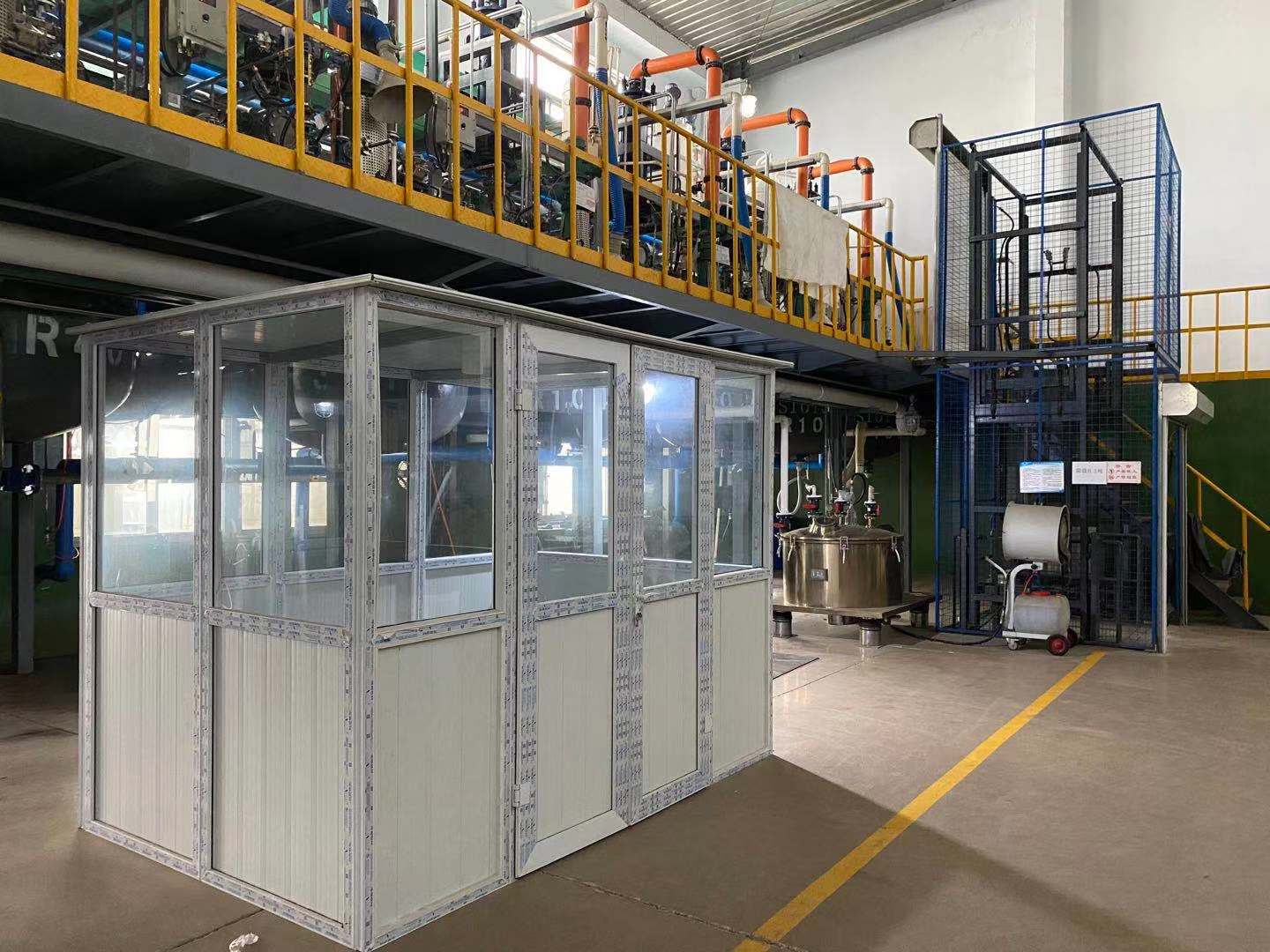
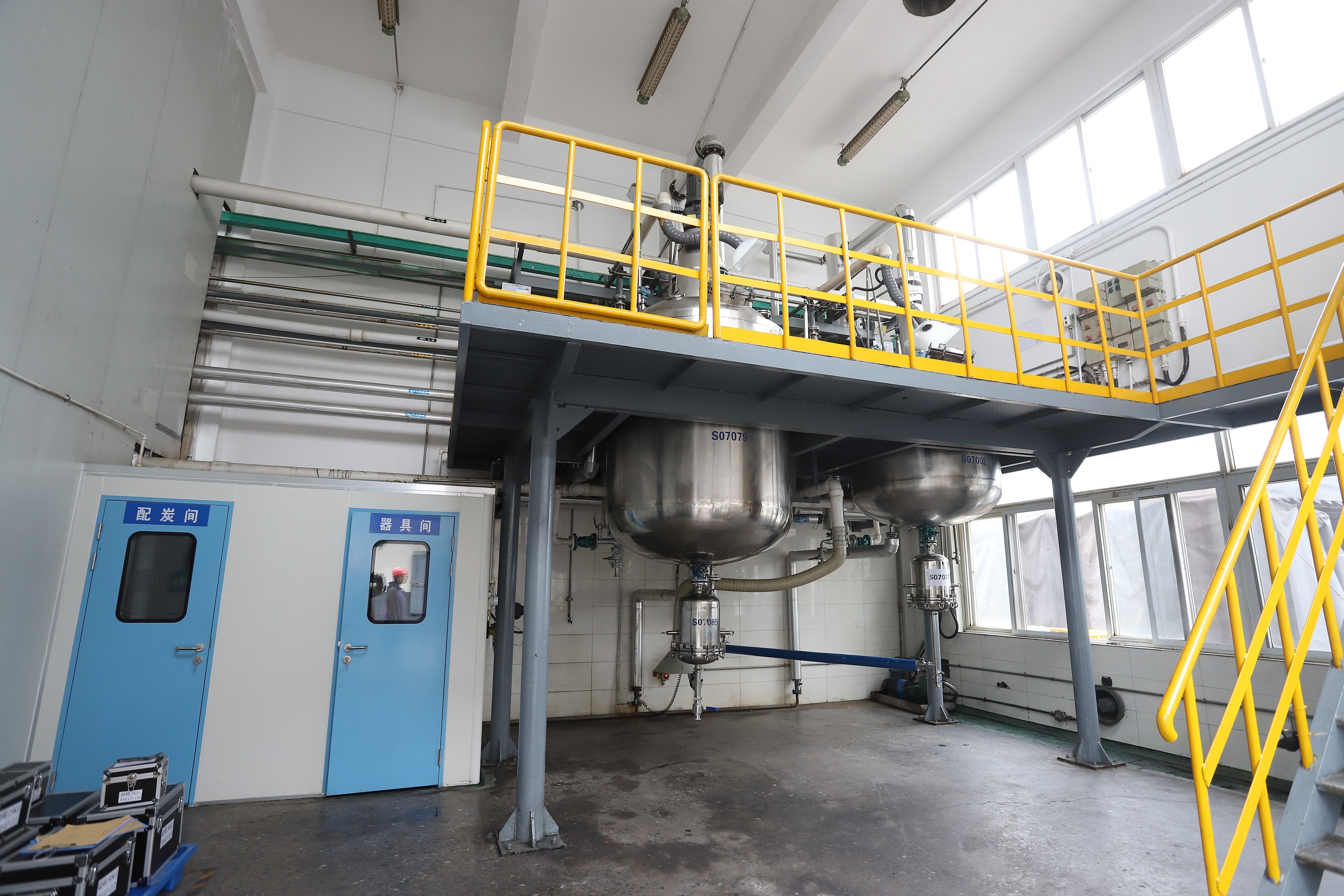
Those operating facts matter because compliance documents are only credible when they connect to a real site and a defined production scope. The company profile describes chemical synthesis workshops, a GMP-compliant finishing, drying and packaging workshop, liquid raw material warehouses, solid raw material warehouses, intermediate warehouses and finished product warehouses. The equipment list includes amlodipine base hydrolysis reactors, amlodipine besilate salt-forming reactors, centrifuges, decolorization reactors, crystallization reactors, double cone rotary vacuum dryers, high-efficiency pulverizers and double cone blenders.
The product-level evidence is more useful to buyers than a generic certificate claim:
- Amlodipine Besylate: CEP R1-CEP 2008-074 - Rev 01, EU GMP certificate FIMEA/2023/006159, written confirmation JS250256, and GMP notice JSMPA Yao Sheng Gao Zhi〔2024〕No. 271; also covered by GMP notice No. 278.
- Propafenone Hydrochloride: CEP 2023-038 - Rev 00 and GMP notice No. 278.
- Felodipine: GMP notice No. 278.
- Levoamlodipine Besylate: GMP notice No. 278.
- Tamsulosin Hydrochloride: FDA on-site inspection in 2018, registration on-site verification and GMP compliance inspection in 2022, and GMP compliance inspection in 2024. No CEP is stated in the supplied material.
- Company-level: Amlodipine Besylate has obtained certifications from EDQM and Japan PMDA; six APIs have registration status A; Levoamlodipine Besylate Tablets obtained marketing approval in 2024.
This is the kind of evidence that supports a purchase decision because it is product-specific and inspection-linked. It also creates clear limits: the presence of one certificate does not imply the presence of another for a different molecule.

Technical explanation: five documents, five different constraints
The EU-facing document stack is often described as a single compliance package. In practice, each document answers a different question. The table below maps the document class to the procurement decision it supports and the boundary it does not cross.
| Document | Decision it supports | What it does not establish | Ruiming example |
|---|---|---|---|
| CEP | Demonstrates that API quality is covered by a European Pharmacopoeia monograph and that the CEP scope includes the listed production site. | Does not replace a batch COA, an EU GMP certificate, or a commercial supply agreement. | Amlodipine Besylate: R1-CEP 2008-074 - Rev 01, Ph.Eur. 1491, re-test period 36 months, no specified expiry. Propafenone HCl: CEP 2023-038 - Rev 00, Ph.Eur. 2103, re-test period 18 months. |
| EU GMP certificate | Confirms GMP compliance for the defined manufacturing scope at the named site. | Not a product-wide or site-wide blanket; not a batch release document. | Amlodipine Besylate: FIMEA/2023/006159, issued 18 April 2024, covering intermediate manufacturing, crude API production, salt formation, crystallisation, purification, finishing, packaging and quality control testing. |
| Written confirmation for EU export | Confirms that the active substance is manufactured under GMP equivalent to EU GMP and WHO ICH Q7 for export to the EU. | Product-specific; does not replace a CEP or a batch COA. | Amlodipine Besylate: JS250256, valid until 19 October 2028; chemical synthesis; subject to regular regulatory inspections. |
| National GMP inspection notice | Documents domestic GMP compliance for listed products and manufacturing areas. | Not an EU GMP certificate and not a CEP certificate. | No. 271 covers Amlodipine Besylate; No. 278 covers Amlodipine Besylate, Felodipine, Propafenone HCl and Levoamlodipine Besylate. |
| COA, impurity profile and CTD package | Supports batch release, method transfer, and registration review. | Does not by itself establish market authorization or commercial capacity. | Full batch release to Ph.Eur.; COA and impurity profile available; COPP and full CTD package stated for Propafenone HCl. |
Two date patterns matter in this stack. The Amlodipine Besylate CEP has no specified expiry date but states a re-test period of 36 months; the Propafenone Hydrochloride CEP states a re-test period of 18 months. The written confirmation JS250256 is valid until 19 October 2028. Buyers whose supply agreements extend beyond those points should plan document renewal checks rather than assume the file remains static.
An EU GMP certificate is also a snapshot of a defined scope at inspection. It is not a guarantee that every batch is identical. Batch COA and impurity profile close that gap. This is why a scope-based review should read the certificate, the COA, and the technical package together.
Application and use cases: where the documents meet formulation work
The portfolio is concentrated in cardiovascular and urological APIs, with supporting evidence for formulation development, EU registration submission and commercial production support. The table below summarises the product-level facts that procurement and regulatory teams are most likely to check first.
| Product | Key specification | Market-relevant status |
|---|---|---|
| Amlodipine Besylate | CAS 111470-99-6; assay 98.0% to 102.0% on dried basis; USP/EP; melting point 197°C to 201°C; 25 kg per drum; MOQ 1 kg | CEP R1-CEP 2008-074 - Rev 01; EU GMP certificate FIMEA/2023/006159; written confirmation JS250256; GMP notices No. 271 and No. 278 |
| Levoamlodipine Besylate | CAS 103129-82-4; assay 98.0% to 102.0% on dried basis; USP/EP; tight control of single impurity and total impurity | GMP notice No. 278; Levoamlodipine Besylate Tablets obtained marketing approval in 2024 |
| Felodipine | CAS 72509-76-3; assay 98.0% to 101.0% on dried basis; USP/EP/BP; molecular formula C18H19Cl2NO4 | GMP notice No. 278 |
| Propafenone Hydrochloride | CAS 34183-22-7; NMPA registered; EP/USP/CP; COPP available; full CTD package available; customizable particle size and micronization | CEP 2023-038 - Rev 00; GMP notice No. 278 |
| Tamsulosin Hydrochloride | CAS 106463-17-6 and 80223-99-0; molecular formula C20H29ClN2O5S; molecular weight 444.9727; melting point 228°C to 230°C | FDA on-site inspection in 2018; registration on-site verification and GMP compliance inspection in 2022; GMP compliance inspection in 2024; no CEP stated in supplied material |
Amlodipine Besylate is used for hypertension tablet formulation. The supplied specification gives an assay of 98.0% to 102.0% on dried basis, USP/EP compliance, a melting point of 197°C to 201°C, packing of 25 kg per drum, and an MOQ of 1 kg. The application data specifies double PE bags inside fibre drums, protected from light and dry conditions. A supplied case record for a French cardiovascular supply-chain partner describes 800 to 1,000 kg per year over three years, with batch quality consistently meeting EP requirements and a stable impurity profile.
Levoamlodipine Besylate is an antihypertensive API with an assay of 98.0% to 102.0%, USP/EP compliance, and tight control of single and total impurity. The company obtained marketing approval for Levoamlodipine Besylate Tablets in 2024, which adds a finished-dose reference point adjacent to the API portfolio.
Felodipine is a calcium channel blocker API intended for hypertension and stable angina pectoris formulation, with an assay of 98.0% to 101.0% and compliance with USP, EP and BP monographs. Propafenone Hydrochloride is NMPA registered and Chinese GMP compliant, with COPP and a full CTD documentation package; the manufacturing site has passed EU and PMDA audits, the quality system is aligned with ICH Q7, and the product complies with EP, USP and CP monographs. Tamsulosin Hydrochloride is supported by listed physical-property data and a site inspection history that includes an FDA on-site inspection in 2018, a registration on-site verification and GMP compliance inspection in 2022, and a GMP compliance inspection in 2024.
Price band: what the documentation does not tell you
The supplied material does not publish a price band for these APIs. That is not a gap to fill with guesswork. API pricing is quotation-based and depends on the specification, pharmacopoeial standard, impurity testing, documentation package, packaging, batch size, and delivery schedule. A lower headline price that excludes CEP or EU GMP documentation support, full COA, impurity testing, or audit documents is not a like-for-like offer. Buyers should fix the specification and documentation basis before comparing numbers.
Market trend: compliance evidence is becoming product-level
In practical procurement terms, three shifts are visible in EU-facing API sourcing. First, buyers are moving from site reputation to product-level proof. A supplier may have a strong site, but the relevant question is whether the exact API has a CEP, an EU GMP scope, or a written confirmation that covers the intended market.
Second, audit readiness is becoming a commercial filter rather than a post-selection task. The Ruiming site reports 149 employees, 27 R&D engineers, two API production lines, one solid preparation line, and GMP-compliant finishing, drying, packaging and warehousing. The company also states audit support, regulatory document update, quality complaint handling and technical support as after-sales functions. Those capabilities reduce the friction of supplier qualification when they are backed by documents that match the product.
Third, documentation is a lifecycle cost. CEP re-test periods, written-confirmation validity, and batch-level COA updates create recurring checks. A supplier that treats compliance as a one-time sales file creates avoidable risk for the buyer later. The more mature approach is to treat the evidence file as part of supply continuity.
Certificate-first sourcing versus scope-based sourcing
The traditional certificate-first approach asks whether a supplier can produce a GMP or CEP document. The scope-based approach asks which document covers the exact product, site, route, and market. The difference is not semantic; it changes what the buyer verifies before a purchase order.
| Evaluation dimension | Certificate-first approach | Scope-based approach |
|---|---|---|
| Starting question | Do you have GMP or CEP? | Which certificate covers this product, site, manufacturing route, and market? |
| Document check | Files are collected and filed. | Certificate number, product name, site, scope, issue date and re-test period are checked. |
| Supplier risk | Product mismatch can remain hidden. | Product-specific gaps and document limits are visible before qualification. |
| Price comparison | Quotes are compared as headline numbers. | Quotes are normalised by specification, documentation, packaging, batch size and lead time. |
| Audit preparation | Evidence is assembled reactively. | The evidence file is ready before the audit request. |
Boundary conditions in this evidence set. The CEP is documented for Amlodipine Besylate and Propafenone Hydrochloride; it is not stated for Felodipine, Levoamlodipine Besylate or Tamsulosin Hydrochloride in the supplied material. The EU GMP certificate is documented for Amlodipine Besylate, not as a site-wide umbrella. The written confirmation JS250256 covers Amlodipine Besylate only. The national GMP notice covers the listed products and manufacturing areas, but it is not an EU GMP certificate and not a CEP. Tamsulosin Hydrochloride has an FDA on-site inspection and GMP inspection history, but no CEP is stated in the supplied material. Finally, a CEP or EU GMP certificate does not by itself prove commercial capacity, price, or lead time; those are separate commercial facts, such as the reported 15 tons per month capacity and 45 to 60 day lead time.
Future outlook
The next differentiator will be documentation currency, not document count. A buyer can collect many PDFs and still miss the one constraint that matters: whether the certificate scope is current and covers the exact product. The Amlodipine Besylate written confirmation is valid until 19 October 2028, while the CEP re-test periods are 36 months for Amlodipine Besylate and 18 months for Propafenone Hydrochloride. Those dates create different review rhythms and should be built into supplier scorecards.
The 2024 marketing approval for Levoamlodipine Besylate Tablets also shows why API buyers should watch the supplier's adjacent finished-dose activity. It does not replace API certification, but it adds a reference point for formulation continuity and quality-system maturity. In the same way, the 2024 SRDI Little Giant recognition and the 2019 Gazelle Enterprise title are company-level signals, not product certificates; they are useful context, not substitutes for CEP or EU GMP evidence.
For procurement teams, the practical response is to maintain a product-level evidence file: certificate number, product, site, manufacturing scope, market, issue date, re-test period or expiry, batch COA availability, and audit-document status. Suppliers that can keep those elements aligned will be easier to qualify, easier to compare, and easier to keep in a long-term supply chain.
FAQ
What is the difference between a CEP and an EU GMP certificate for an API?
A CEP demonstrates that the API quality is covered by a European Pharmacopoeia monograph and that the listed production site is included in the certificate scope. An EU GMP certificate confirms GMP compliance for a defined manufacturing scope at a named site. The CEP does not replace a batch COA, and the EU GMP certificate does not replace a CEP or a commercial supply agreement.
Does an EU GMP certificate for Amlodipine Besylate cover other APIs from the same site?
No. The EU GMP certificate FIMEA/2023/006159 covers the manufacture of Amlodipine Besylate active substance by chemical synthesis, including intermediate manufacturing, crude API production, salt formation, crystallisation, purification, finishing steps, packaging and quality control testing. It should not be read as a site-wide certificate for Felodipine, Propafenone Hydrochloride, Levoamlodipine Besylate or Tamsulosin Hydrochloride.
Which products in the supplied documentation have an EDQM CEP?
Amlodipine Besylate has CEP R1-CEP 2008-074 - Rev 01, based on European Pharmacopoeia monograph No. 1491, with a re-test period of 36 months and no specified expiry date. Propafenone Hydrochloride has CEP 2023-038 - Rev 00, based on European Pharmacopoeia monograph No. 2103, with a re-test period of 18 months. The supplied material does not state a CEP for Felodipine, Levoamlodipine Besylate or Tamsulosin Hydrochloride.
What does written confirmation JS250256 cover?
JS250256 applies to Amlodipine Besylate for the EU market and is valid until 19 October 2028. It states that the product is manufactured by chemical synthesis and complies with EU GMP and WHO ICH Q7, and that it is subject to regular regulatory inspections. It is product-specific and does not replace a CEP or a batch COA.
Is a Chinese GMP inspection notice equivalent to an EU GMP certificate?
No. The notice JSMPA Yao Sheng Gao Zhi〔2024〕No. 271 covers Amlodipine Besylate under the listed manufacturing scope and applies to CN, EU and other markets, but the supplied documentation states that it does not constitute an EU GMP certificate and is not a CEP certificate. No. 278 covers Amlodipine Besylate, Felodipine, Propafenone Hydrochloride and Levoamlodipine Besylate under the Chinese GMP framework. It is useful evidence, but it is a different document class from an EU GMP certificate.
How should buyers interpret API price when no price band is published?
The supplied material does not publish a price band. API quotations are normally structured around batch size, specification and impurity testing, documentation package, packaging, and delivery schedule. Buyers should compare offers on a like-for-like specification and documentation basis; a lower quote that excludes CEP or EU GMP support, full COA, impurity testing or audit documents is not equivalent to a complete offer.
Reference notes
Certification records referenced in this article include FIMEA/2023/006159; R1-CEP 2008-074 - Rev 01; CEP 2023-038 - Rev 00; JS250256; and JSMPA Yao Sheng Gao Zhi〔2024〕No. 271 and No. 278. Product specifications and site facts are drawn from the supplied company documentation for Changzhou Ruiming Pharmaceutical Co., Ltd.
Company brochure (PDF): Changzhou Ruiming Pharmaceutical Co., Ltd. English brochure.
Есть вопросы или нужны дополнительные детали?
Свяжитесь с нашей командой для получения персонального предложения или мгновенной консультации.
Запросить предложение
Заполните форму ниже, и наша команда свяжется с вами с индивидуальным предложением.
Прямой чат WhatsApp
Предпочитаете общаться в реальном времени? Напишите нам в WhatsApp для мгновенной помощи и быстрых ответов.
- Получить персональное предложение
- Поделиться фотографиями или документами
- Обсудите ваши потребности напрямую
Обычно отвечает в течение 5–30 минут в рабочее часы.