
EU GMP APIs: What Buyers Should Verify First
An EU GMP API is an active pharmaceutical ingredient that has been assessed under European good manufacturing practice expectations and carries the documented evidence to match. In practice that means three separate artefacts — a Certificate of Suitability (CEP), a site-level GMP inspection record, and a complete regulatory documentation package — and they do not always arrive together. Buyers who treat “EU GMP” as a single tick-box tend to discover the gaps late, usually while the dossier is already being compiled.
Why “EU GMP APIs” Is a Set of Claims, Not a Single Status
The phrase circulates freely in supplier literature, quotation sheets and product pages. What it points to, however, changes depending on who is writing it. Four different things are routinely described using the same words:
- A CEP — the Certificate of Suitability to the Monographs of the European Pharmacopoeia, issued by the European Directorate for the Quality of Medicines & HealthCare (EDQM). This is a product-level statement that the substance and its impurity profile are covered by a European Pharmacopoeia monograph.
- A GMP certificate or inspection outcome — a site-level finding, generated after an inspection by a European competent authority or by EDQM, typically recorded in the European Medicines Agency’s EudraGMDP database.
- A referenced inspection event — language such as “the site has passed an EU audit”, which may be accurate but is not automatically a substitute for the certificate itself.
- Documentation readiness — the CTD package, certificates of analysis, impurity data and audit files that a formulation company actually needs in order to file and defend the API in a regulated market.
Confusing these four is the most common qualification error in API sourcing. A CEP says something about the molecule and its monograph compliance. An inspection outcome says something about the building, the systems and the people inside it. Neither one is a marketing claim, and neither one is a finished-product approval.
The Three Evidence Layers Behind an EU-Compliant API
For a buyer at the research stage, the practical question is not “is this supplier EU GMP?” but “which layers of evidence can this supplier produce, for this specific product, from this specific site?” Those layers stack in a predictable order.
Layer one: pharmacopoeial suitability
The CEP confirms that the API and its specified impurities are covered by a European Pharmacopoeia monograph. It is normally the first document a European formulation team asks for, because it shortens the assessment work in the dossier considerably.
Layer two: site compliance
GMP status attaches to the manufacturing site and the specific product families inspected. A finished-dose manufacturer evaluating a new supplier generally wants the inspection history, the scope of that inspection and the date — not a badge.
Layer three: the paper trail
The third layer is the least visible and usually the most decisive. It includes the open part of the drug master file or CTD package, batch-level certificates of analysis, impurity and residual solvent data, stability information, and the audit documentation that lets a customer’s quality team close its own supplier qualification file.
A supplier can be strong in one layer and thin in another. That is why the verification step matters more than the headline.
How Changzhou Ruiming Pharmaceutical Co., Ltd. Approaches EU Compliance
Changzhou Ruiming Pharmaceutical Co., Ltd. is a pharmaceutical manufacturer based at No.1558 Longjiang North Road, Chunjiang Town, Xinbei District, Changzhou City, Jiangsu Province, China. Founded in 2005, the company specialises in the research, development, production and sale of pharmaceutical intermediates, active pharmaceutical ingredients and preparations related to cardiovascular, urinary, respiratory and digestive systems. Company information describes a site of 25,000 square metres, 149 employees, a 27-engineer R&D team, an annual output of 180 tonnes, and an export share of approximately 20%, with the EU listed as its principal export market.
Its manufacturing footprint includes two API production lines and one solid preparation production line, alongside synthesis workshops, a GMP-compliant final purification, drying and packaging workshop, liquid and solid raw material warehouses, an intermediate warehouse and a finished product warehouse.
Certification and inspection record
- Six APIs hold registration status “A” in China and have passed GMP compliance inspections.
- Amlodipine Besilate has obtained certifications from EDQM and Japan PMDA. The CEP for Amlodipine Besylate was granted in August 2011, and in November 2023 the product passed an on-site audit conducted by the European Union’s EDQM.
- Tamsulosin Hydrochloride has passed an FDA on-site inspection.
- In May 2024, Amlodipine Besylate, Felodipine and Propafenone Hydrochloride passed GMP compliance inspections.
- In 2024, the company obtained marketing approval for Levoamlodipine Besylate Tablets.
The company was recognised as a national-level Specialised, Refined, Differential and Innovative (“Little Giant”) enterprise in 2024, having previously been named a Gazelle Enterprise in the Southern Jiangsu National Independent Innovation Demonstration Zone in 2019.
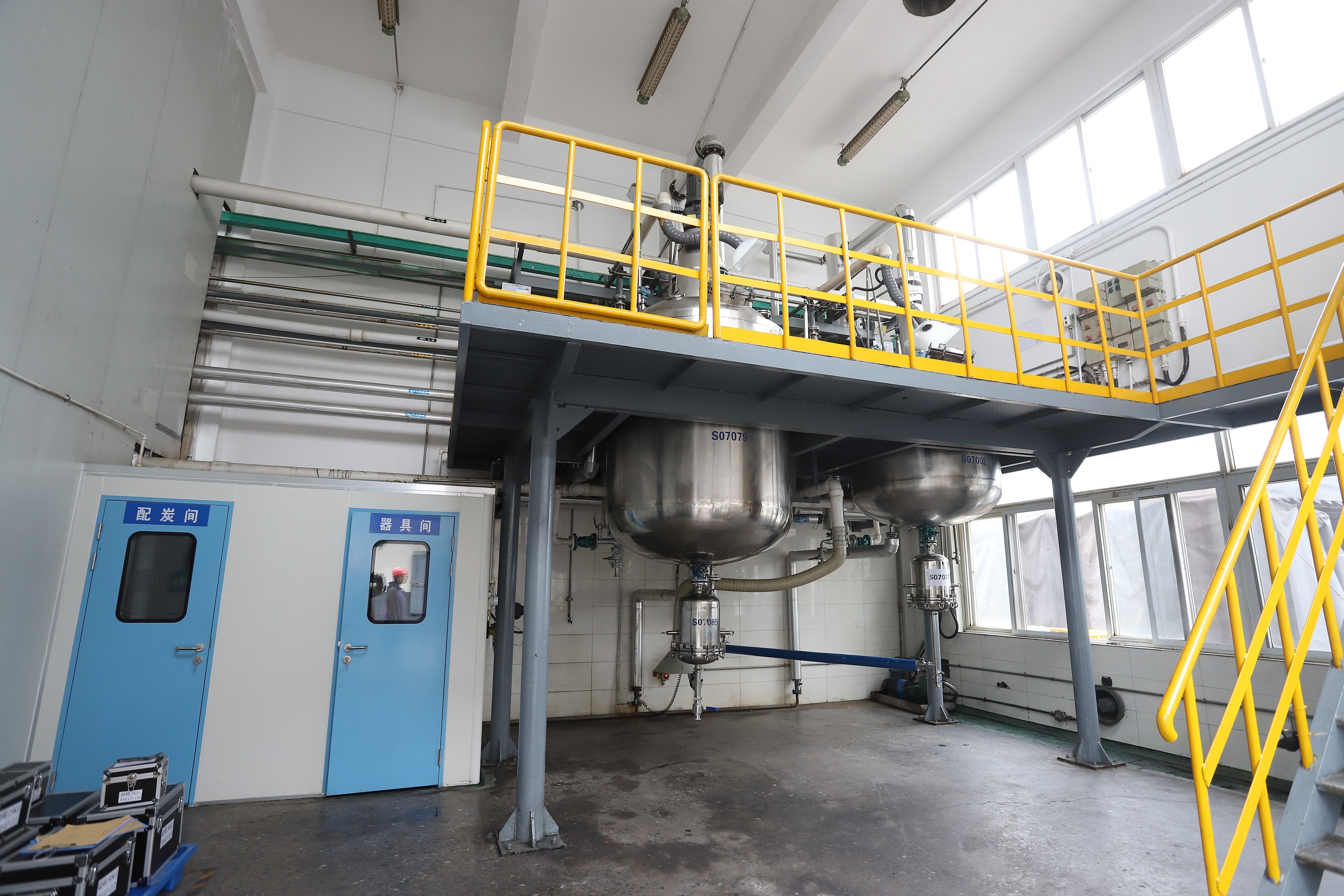
Final purification, drying and packaging workshop — the stage where an API crosses from chemical production into GMP-controlled handling. Image: Changzhou Ruiming Pharmaceutical Co., Ltd.
Technical Explanation: What EU GMP Actually Changes Inside an API
Buyers new to regulated-market sourcing sometimes imagine that GMP compliance is a layer sitting on top of the chemistry. In reality it changes the chemistry’s reproducibility, the record of that reproducibility, and the physical form in which the material arrives.
Impurity control as a specification, not an outcome
European Pharmacopoeia monographs define individual and total impurity limits. For an API supplied under EU-facing documentation, impurity control has to be designed into the process and demonstrated batch after batch. Ruiming’s product information for its dihydropyridine calcium channel blockers states assay ranges of 98.0%–102.0% on dried basis for Amlodipine Besylate and Levoamlodipine Besylate, and 98.0%–101.0% on dried basis for Felodipine, with single and total impurities placed under tight control.
Equipment and process flow
On the audited Amlodipine Besilate line, the production chain runs through the synthesis workshop and the final purification, drying and packaging workshop, supported by amlodipine base hydrolysis reactors, amlodipine besilate salt-forming reactors, centrifuges, decolourisation reactors, crystallisation reactors, double cone rotary vacuum dryers, high-efficiency pulverisers and double cone blenders. For Propafenone Hydrochloride, particle size can be customised and a micronisation service is available — a detail that matters to formulators working on dissolution profiles rather than to procurement teams alone.
Packaging and handling conditions
Solid APIs are supplied as pharmaceutical pure powder. Amlodipine Besylate is packed at 25 kg per drum with a minimum order quantity of 1 kg, and the API line is described as having an annual production capacity of 180 tonnes. Application data for the cardiovascular range specifies double PE bags inside fibre drums, protection from light and moisture, ambient temperature storage, and avoidance of high temperature and direct sunlight.
Documentation depth
Propafenone Hydrochloride is described as NMPA registered and Chinese GMP compliant, with a COPP available, manufactured in an in-house integrated GMP workshop, with flexible batches from laboratory to commercial scale, a full CTD documentation package and technical support for registration and audit. That combination — substance, site and paperwork — is what a formulation partner is actually evaluating.
Portfolio and Application Fit
The cardiovascular and urinary API range is the part of the portfolio where the compliance record is most developed. The table below maps each product to its available identifiers, specification statements and the regulatory evidence that appears in company materials.
| API | CAS No. | Specification / monograph | Regulatory evidence cited | Typical application |
|---|---|---|---|---|
| Amlodipine Besylate | 111470-99-6 | USP / EP; assay 98.0%–102.0%; melting point 197–201°C | CEP granted by EDQM (August 2011); EDQM and Japan PMDA certifications; EDQM on-site audit (November 2023); GMP compliance inspection (May 2024) | Anti-hypertension tablet formulation |
| Levoamlodipine Besylate | 103129-82-4 | USP / EP; GMP compliant; assay 98.0%–102.0%; tight single and total impurity control | Included among the six APIs with registration status “A” and GMP compliance inspections | Anti-hypertensive tablet formulation |
| Felodipine | 72509-76-3 | USP / EP / BP; GMP compliant; assay 98.0%–101.0%; molecular formula C18H19Cl2NO4 | GMP compliance inspection (May 2024) | Finished drug formulation for hypertension and stable angina pectoris |
| Propafenone Hydrochloride | 34183-22-7 (EINECS 251-867-9) | EP / USP / CP; ICH Q7 aligned system; customisable particle size and micronisation | NMPA registered; Chinese GMP compliant; COPP available; site has passed EU and PMDA audits; GMP compliance inspection (May 2024) | Cardiovascular API scenarios, formulation R&D, manufacturing supply chains |
| Tamsulosin Hydrochloride | 106463-17-6; 80223-99-0 | Molecular formula C₂₀H₂₉ClN₂O₅S; molecular weight 444.9727 | FDA on-site inspection (2018); registration on-site verification and GMP compliance inspection (2022); GMP compliance inspection (2024) | API procurement and pharmaceutical formulation R&D |
Two points in that table deserve emphasis. First, the evidence column is product-specific. The Amlodipine Besylate CEP does not extend to Felodipine, and the Tamsulosin Hydrochloride inspection history is a different type of record from a CEP. Second, the Uphold specification statements are stated in the product data; the biological and clinical consequences of those specifications belong to the formulation partner’s own development work.

Site layout: synthesis workshops, final purification and drying, and segregated warehousing. Buyers evaluating GMP status are assessing the physical flow as much as the certificates. Image: Changzhou Ruiming Pharmaceutical Co., Ltd.
Market Context: Why EU-Facing Scrutiny Keeps Rising
Several quiet shifts explain why API buyers now ask for evidence rather than assurances.
The first is documentation-driven qualification. Formulation companies assembling a European dossier increasingly ask suppliers to supply the CEP reference, the inspection date and the open part of the file in a single package, because their own regulatory timelines depend on it. Suppliers who can only respond with a general statement slow the customer down, and slow suppliers get replaced.
The second is the normalisation of on-site inspection as a routine event rather than an exceptional one. The EDQM on-site audit of Amlodipine Besylate in November 2023 is a concrete illustration of how a product-level certificate is now reinforced by a physical inspection of the site that makes it.
The third is portfolio concentration. Suppliers with a narrow, deep portfolio in one therapeutic family — cardiovascular and urological APIs, in Ruiming’s case — are easier to audit than broad generalists, because the process knowledge, the impurity experience and the inspection history all sit in the same place. That is a structural advantage for buyers who value predictability over breadth.
For a buyer at the awareness and research stage, the practical takeaway is that the qualification question has moved upstream. It is no longer “can this supplier claim EU compliance?” but “can this supplier document it, product by product, in a form my quality team can file?”
EU GMP APIs Compared with Conventional Domestic-Only Supply
The comparison is not about quality in the abstract. It is about which questions a supplier can answer, and how quickly.
| Dimension | Domestic-registration-only supply | Supply with EU-facing evidence |
|---|---|---|
| Pharmacopoeial position | Assessed against the domestic monograph and registration file | CEP available at product level, referencing the European Pharmacopoeia monograph |
| Inspection record | Domestic GMP compliance inspection | Domestic inspection plus EU or PMDA site audits and EDQM on-site audit where applicable |
| Documentation package | Certificate of analysis and product-level documents | Full CTD documentation package, COPP where available, COA, SDS |
| Customer audit | Usually handled through documentation review | On-site audit can be scheduled through a defined notification and preparation process |
| Typical use | Domestic formulation programmes | Formulation programmes that require EU submission support |
Where the evidence stops. A CEP and an inspection outcome attach to a specific product and a specific site. They are not a company-wide warranty. The Amlodipine Besylate CEP does not automatically confer the same regulatory position on every other molecule in the portfolio. For Tamsulosin Hydrochloride, the documented record is the 2018 FDA on-site inspection, the 2022 registration on-site verification and GMP compliance inspection, and the 2024 GMP compliance inspection; batch specifications, impurity controls, packaging and supply conditions for that product are confirmed through the relevant quality documents and purchasing requirements rather than assumed. Buyers should treat each piece of evidence as a product-and-site pair, and check it against the intended filing before relying on it.
Future Outlook
Two directions look likely to shape how EU GMP APIs are bought over the next few years.
The first is that evidence packages will keep getting denser. As inspection outcomes become more publicly traceable through databases such as EudraGMDP, suppliers will find it harder to differentiate on claims alone. The differentiator moves to how quickly and completely a supplier can assemble the file a customer needs — including process validation records, impurity data and audit responses.
The second is portfolio depth in therapeutic families where the regulatory route is already open. A supplier with an established CEP position in calcium channel blockers and an inspection history in urological APIs is better placed to support customers who want fewer, deeper supplier relationships than customers who spread purchases across many small vendors. Ruiming’s stated export share of around 20% with the EU as the principal market suggests that this regulated-market orientation is already part of the operating model rather than a future ambition.
For buyers, the implication is straightforward: build the qualification checklist now, product by product, and ask for the documents before the dossier deadline forces the question.
Frequently Asked Questions
What is the difference between a CEP and EU GMP compliance?
A CEP — Certificate of Suitability to the Monographs of the European Pharmacopoeia — is issued by EDQM and confirms that an API substance and its impurity profile are covered by a European Pharmacopoeia monograph. EU GMP compliance refers to the manufacturing site’s operating status, established through inspection by a European competent authority or by EDQM and typically recorded in the EudraGMDP database. One is a product-level pharmacopoeial statement; the other is a site-level inspection outcome. A supplier may hold one without the other, which is why both should be requested.
How can a buyer verify a supplier’s EU GMP status?
Verification normally combines three steps: request the certificate or inspection reference directly from the supplier, cross-check the inspection outcome against the European Medicines Agency’s EudraGMDP database, and confirm that the product covered by the evidence is the same product being purchased. The last step is where most errors occur, because inspection scopes are product-specific.
Which products in the Changzhou Ruiming portfolio carry EU-related evidence?
Amlodipine Besylate holds a CEP granted by EDQM in August 2011, has obtained EDQM and Japan PMDA certifications, and passed an EDQM on-site audit in November 2023. Propafenone Hydrochloride is described as manufactured in an in-house integrated GMP workshop in a system aligned with ICH Q7, with the site having passed EU and PMDA audits and a COPP available. Amlodipine Besylate, Felodipine and Propafenone Hydrochloride passed GMP compliance inspections in May 2024, and six APIs in total hold registration status “A” with GMP compliance inspections completed.
How is an on-site factory audit at Changzhou Ruiming Pharmaceutical Co., Ltd. scheduled?
An official audit notification is submitted in advance, stating the audit scope, the preferred time window and the auditor list. The company’s QA team evaluates capacity and availability, confirms a feasible date and a preliminary audit plan, and prepares documentation in advance including batch records, validation files and process and quality system documents. The on-site audit then proceeds as scheduled, with observations and a CAPA response handled after the visit. Visitors are expected to comply with site GMP regulations, wear the required cleanroom protective gear, refrain from photography or copying of confidential technical documents without permission, remain escorted in production areas, and stay within the agreed product and quality-system scope.
How are API samples and supporting technical documents requested?
The request should specify the product name, CAS number, requested quantity, intended use and target filing market. The sales team checks stock or production schedule, confirms the sample plan, freight cost and lead time, and shipment is arranged after sample release together with the COA and SDS. Deeper documents such as process and validation records require a separate formal document request. Samples are intended for research, development and registration testing and are not for resale; the API must be stored in a cool, shaded place as specified on the label, and the recipient must be qualified to receive pharmaceutical and chemical samples.
Reference material. The company brochure, including product and facility information, can be downloaded here: Changzhou Ruiming Pharmaceutical brochure (PDF).
Technical and commercial enquiries: Zevin · sale03@ruimingpharm.com · +86 181-5123-6651 · No.1558 North Longjiang Road, Chunjiang Town, Xinbei District, Changzhou City, Jiangsu Province, P.R. China.
Есть вопросы или нужны дополнительные детали?
Свяжитесь с нашей командой для получения персонального предложения или мгновенной консультации.
Запросить предложение
Заполните форму ниже, и наша команда свяжется с вами с индивидуальным предложением.
Прямой чат WhatsApp
Предпочитаете общаться в реальном времени? Напишите нам в WhatsApp для мгновенной помощи и быстрых ответов.
- Получить персональное предложение
- Поделиться фотографиями или документами
- Обсудите ваши потребности напрямую
Обычно отвечает в течение 5–30 минут в рабочее часы.