
EUMASEIKI CNC Machining Center EV-855A for 24/7 Production
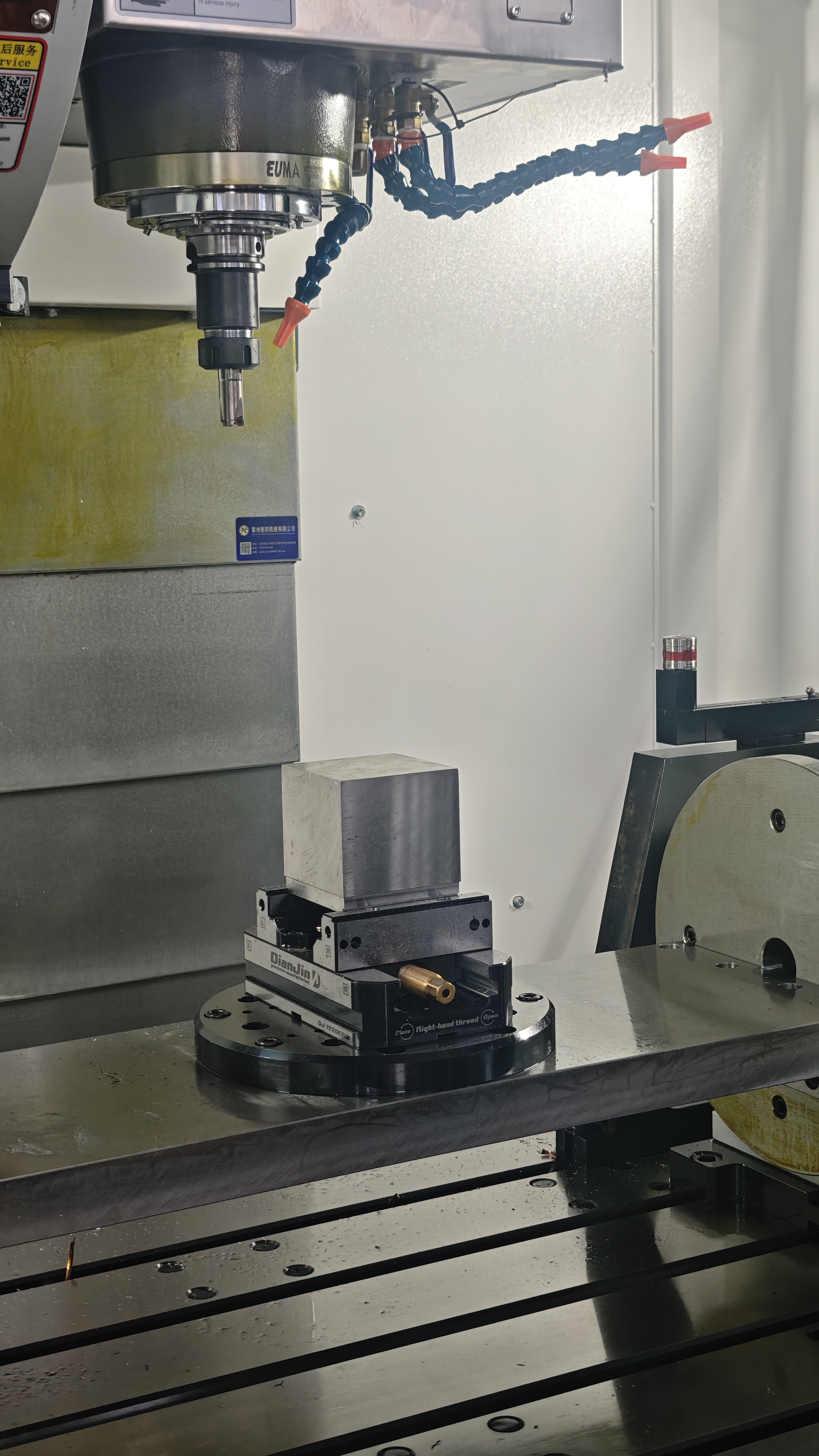
Before delivery, EUMASEIKI machining centers undergo full-load workpiece trial cutting to validate accuracy under real cutting conditions.
EUMASEIKI is the CNC machining center brand of Wenzhou EUMA Machinery Co., Ltd., a high-tech enterprise that combines manufacturing and trade. The EUMASEIKI EV-855A is a CNC vertical machining center designed for metal cutting and precision machining in manufacturing environments. Its documented application scenario is indoor normal temperature and humidity, 24/7 continuous operation, with special requirements including spindle collision protection and high stability.
CNC Machining Center Selection Starts with the Operating Scenario
For procurement and engineering teams, selecting a machining center is not only about maximum speed or spindle power. In plants that run continuous shifts, the practical questions are thermal stability, structural rigidity, tool changing consistency, and the reliability of auxiliary systems. These factors determine whether a machine holds its accuracy over months of uninterrupted use.
The EUMASEIKI EV-855A is positioned for that specific working condition: metal cutting and precision machining in a manufacturing industry setting, running in 24/7 mode under indoor normal temperature and humidity. This makes it relevant for shops that cannot afford unscheduled stops.
The Challenge: Matching a Machine to Continuous Production
The global CNC machining and turning centers market was estimated at USD 27.64 billion in 2024, according to Grand View Research. Vertical machining centers held a dominant product type share of 52.3% in the 4-axis CNC market in 2025, according to Dataintelo. Vertical configurations are widely adopted, but wide adoption also creates a selection problem: similar-looking machines can deliver very different long-term results depending on construction quality, component sourcing, and inspection procedures.
Continuous production changes the risk profile of a machining center. Spindle collision, coolant failure, chip accumulation, or thermal drift can interrupt a line and increase operating cost. Buyers increasingly evaluate machines by scenario fit—shift pattern, part material, accuracy target, and supporting equipment—rather than by specification sheet alone.
EUMASEIKI EV-855A: A Vertical Machining Center for Continuous Metal Cutting
The EUMASEIKI EV-855A is a CNC vertical machining center with an X/Y/Z travel of 810 × 550 × 560 mm and a worktable size of 1000 × 550 mm. The table supports a maximum load of 650 kg. The machine is configured with an ISO 40 spindle, a spindle speed of 10,000 or 12,000 rpm, and main motor power of 11/18.5 kW under S1/S6 25% duty. It uses a BT40 tool shank, a 24-tool magazine, and an arm-type tool changer with a 2-second tool-to-tool time.
| Parameter | EV-855A Specification |
|---|---|
| Travel X / Y / Z | 810 / 550 / 560 mm |
| Worktable size | 1000 × 550 mm |
| Maximum table load | 650 kg |
| Spindle taper | ISO 40 |
| Spindle speed | 10,000 / 12,000 rpm |
| Main motor power S1/S6 25% | 11 / 18.5 kW |
| Main motor torque S1/S6 25% | 52.5 / 118 Nm |
| Rapid feed rate X / Y / Z | 48 / 48 / 32 m/min |
| Tool shank | BT40 |
| Tool magazine capacity | 24 pcs |
| Tool change method | Arm type, 2 sec tool-to-tool |
| Positioning accuracy X/Y/Z | 0.008 mm |
| Repeat positioning accuracy | 0.005 mm |
| Numerical control system | FANUC OIMFPLUS |
| Machine size | 2700 × 2400 × 2850 mm |
| Net weight | 5200 kg |
The machine structure uses cast iron, special steel, marble mineral materials, and precision electronic components. The base and column are composed of two stationary castings combined with marble mineral materials, a construction that helps dampen vibration and reduce thermal deformation. A secondary annealing process is applied to further eliminate internal stress, which contributes to dimensional stability over long periods. Key components such as the spindle, ball screw, and guideway are sourced from high-end products of mainstream brands imported from Taiwan and Japan.
Technical Explanation: How the EV-855A Supports 24/7 Workflows
The EV-855A sustains long shifts because its structural design, core components, and inspection process are aligned with continuous operation. The documented scenario specifies two special requirements: spindle collision protection and high stability for long-term continuous use.
According to the related application case, EUMASEIKI machines are delivered with a stress-relieved high-rigidity bare frame, a high-precision spindle, mature hydraulic, cooling, and tool magazine systems, and comprehensive spindle anti-collision protection. These features are directly relevant to unattended or lightly attended production cycles.
Accuracy verification follows a documented process: every machine undergoes strict full-process inspection, including geometric accuracy testing, laser axis calibration, and full-load workpiece trial cutting before delivery. Internationally, ISO 230-2:2014 remains the reference framework for determining positioning accuracy and repeatability of numerically controlled axes. Buyers can use this standard to align internal acceptance procedures with global practice.
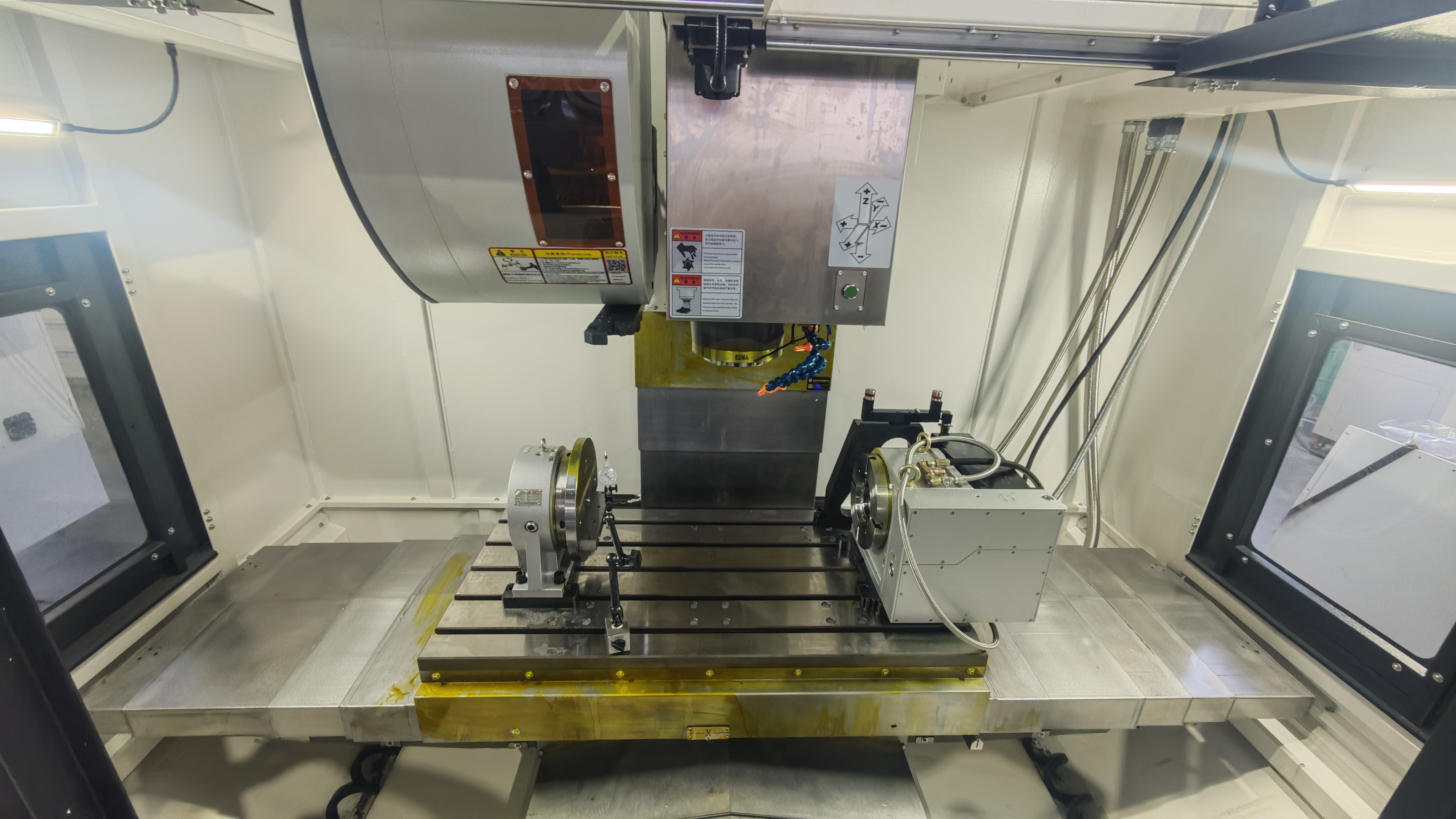
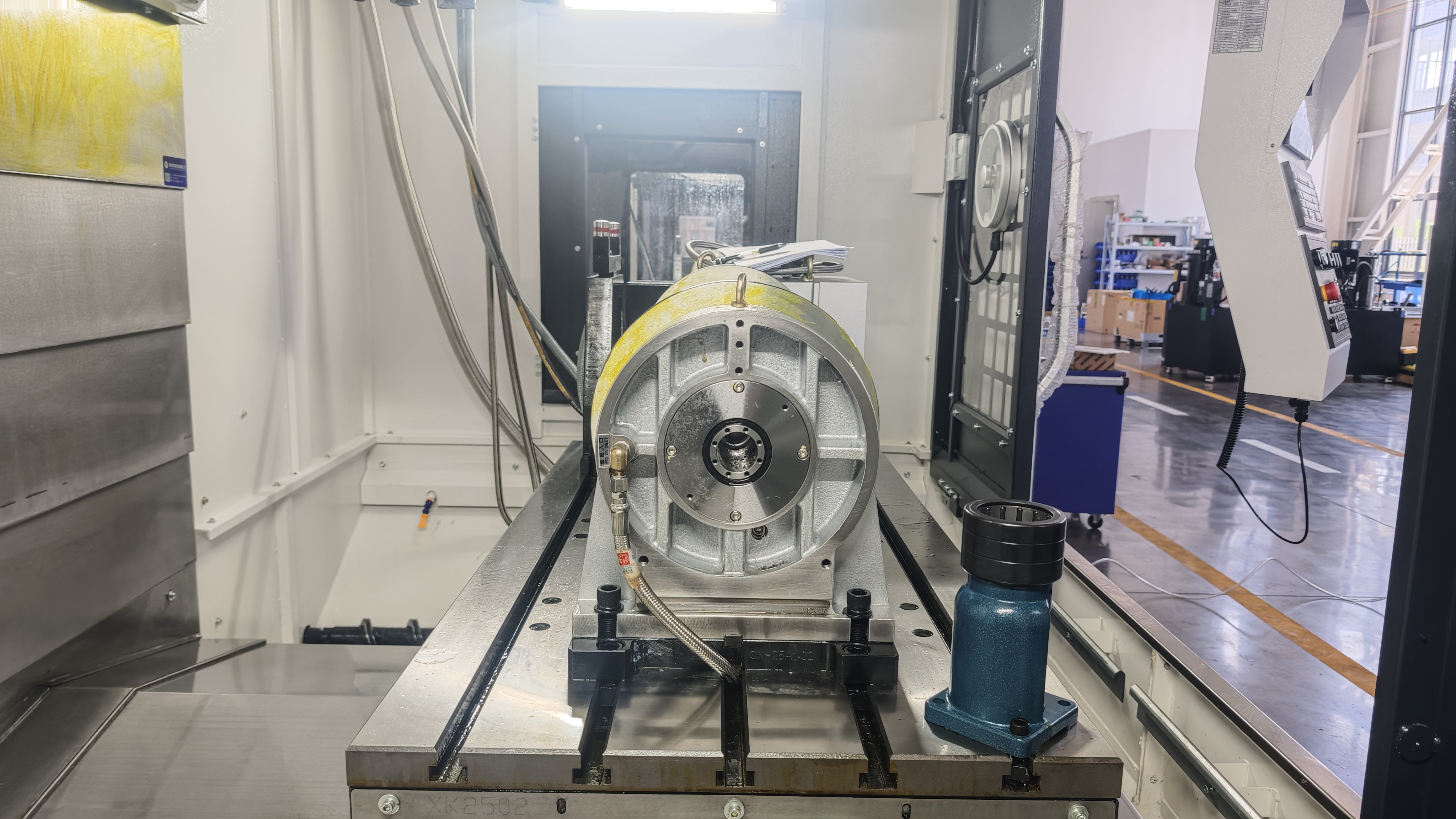
For shops that need more than 3-axis capability, the EV-855A can be configured with an optional 4-axis rotary table for 5-face or 5-axis processing. This extends the machining envelope without requiring a completely different machine platform.
Application Scenario: Manufacturing Projects in Continuous Operation
The documented use case of the EUMASEIKI EV-855A is metal cutting and precision machining in manufacturing industry projects that operate in 24/7 mode. The operating environment is indoor normal temperature and humidity, and the machine is designed for continuous long-term use.
Supporting equipment in this scenario includes a chip conveyor, coolant system, tool magazine, and oil mist collector. These elements are not optional accessories in continuous production; they determine whether the machine can sustain long cycles without interruption. This application pattern is common in Russia, Azerbaijan, Brazil, and other countries.
The broader EUMASEIKI product range covers precision mold making, aerospace, automotive parts manufacturing, high-end equipment production, shipbuilding, and engineering machinery. In one documented deployment, a tier-1 supplier in Russia used six EUMASEIKI machines for component manufacturing over a one-year period. The reported result was stable and reliable operation, with nearly zero failures in mass production. The case highlights high dynamic and thermal stability, long-term accuracy, and high reliability as measurable outcomes.
Market Context: Scale, Segments, and Scenario-Based Buying
According to WiseGuy Reports, the 5-axis CNC machining center market was valued at approximately USD 7.35 billion in 2024, with a projected CAGR of 4.6% to 2035. Dataintelo reported that the aerospace application segment represented a 28.7% revenue share of the 5-axis machining center market in 2025. These figures show that multi-axis and complex-part machining are growing, but they do not replace the need for robust vertical machining centers in high-volume production.
China’s machine tool exports reached USD 8.56 billion in the first five months of 2024, a 1.8% year-on-year increase, according to ICE Beijing/China Customs data. In this export environment, machine builders increasingly compete on application fit, delivery consistency, and after-sales support rather than on specifications alone.
According to a 2024 industry ranking compiled by AMSL and Mechrank, DMG MORI, Yamazaki Mazak, and Haas Automation are the top three global CNC machining center manufacturers by market presence and technology. Within this landscape, specialized manufacturers such as EUMASEIKI differentiate through customization. The EUMASEIKI production model supports OEM configurations covering voltage, branding, spindle, tool magazine, travel stroke, cooling system, chip conveyor, and control system.
Comparison with Conventional Vertical Configurations
A conventional 3-axis vertical machining center machines a part from one direction; multiple faces require additional setups. The EV-855A can be equipped with a 4-axis rotary table for 5-face or 5-axis processing, which reduces the number of setups for prismatic parts. This is a practical advantage in component manufacturing runs where handling time and setup cost matter.
Compared with larger horizontal machining centers, the EV-855A offers a smaller footprint and a simpler integration path for plants that already operate vertical machining centers. The FANUC OIMFPLUS control and 24-tool magazine keep operation familiar to most CNC shops.
One limitation should be stated clearly: the EV-855A has a maximum table load of 650 kg and an X-axis travel of 810 mm. It is not intended for very large, heavy, or extreme-torque workpieces. For such cases, buyers need larger-frame vertical, horizontal, or gantry machining centers. Another decision criterion is the supporting environment; because the scenario specifies 24/7 operation, chip evacuation, coolant capacity, and oil mist collection must be planned as part of the machine investment.
Future Outlook: Machine Tools as Configurable Production Modules
Procurement teams are increasingly writing specifications around operating conditions—shift patterns, part material, accuracy requirements, and automation readiness. This trend favors machine builders that can adjust configurations without compromising structural quality. EUMASEIKI documents the same construction approach in its DU-series 5-axis vertical machining centers and UB-series swivel-head 5-axis machining centers, using marble mineral beds and Taiwan/Japan-sourced components.
EUMASEIKI reports a monthly production capacity of about 10 units, a lead time of 30–45 days, and a minimum order quantity of one unit. The company states that 100% of machines are tested, and after-sales support is available through on-site or remote service. As 5-axis demand expands, 3+2 and 5-face processing will likely be adopted in mid-size job shops as a compromise between flexibility and cost control. Machines such as the EV-855A provide a path into this capability without requiring a horizontal platform.
Frequently Asked Questions
What machining tasks is the EUMASEIKI EV-855A designed for?
The EV-855A is used for metal cutting and precision machining in manufacturing industry applications. Its documented scenario requires 24/7 continuous operation in an indoor environment with normal temperature and humidity.
Can the EV-855A operate continuously around the clock?
Yes. The product scenario specifically includes 24/7 continuous operation mode, combined with special requirements for spindle collision protection and high stability.
What special features support long-term continuous use?
The documented special requirements are spindle collision protection and high stability. These are supported by a stress-relieved high-rigidity bare frame, a high-precision spindle, and mature hydraulic, cooling, and tool magazine systems.
What auxiliary systems are used with this machining center?
The matched equipment includes a chip conveyor, coolant system, tool magazine, and oil mist collector. These systems support long-running machining cycles.
Which markets typically deploy this application scenario?
The documented application scenario is common in Russia, Azerbaijan, Brazil, and other countries.
What are the key spindle and tool magazine specifications?
The spindle speed is 10,000/12,000 rpm. The tool magazine capacity is 24 tools, the tool shank type is BT40, and the tool change method is arm type with a tool-to-tool time of 2 seconds.
How is accuracy verified before delivery?
According to the documented case, each machine undergoes strict full-process inspection, including geometric accuracy testing, laser axis calibration, and full-load workpiece trial cutting before shipment.
About EUMASEIKI / Wenzhou EUMA Machinery Co., Ltd.
Wenzhou EUMA Machinery Co., Ltd. is a high-tech enterprise based in Wenzhou, Zhejiang, China. Its production base is located in Ningbo and operates from an 8,000 m² facility. The company employs 68 people, including an R&D team of 8 engineers, and supports an annual output of 50–100 machines. Approximately 80% of output is exported, with main markets including Russia, Saudi Arabia, Indonesia, and Iran, while OEM project delivery also reaches European Union and Southeast Asian buyers.
For technical documentation and configuration inquiries:
Email: info@eumaseiki.com
Tel / WhatsApp: +86 139 6883 7667
Website: www.eumaseiki.com
Download the EUMASEIKI brochure: EUMASEIKI_XCHC.pdf