
EURO 5 & ECE-R29: Heavy Duty Truck Compliance Insights
Two compliance markers decide whether a heavy duty truck can legally work in a given market and how well its driver survives a bad day on site: the exhaust emission standard the engine is certified to, and the structural safety certification of the cab. Both are configuration-specific facts, not brand-level claims, and both are documented in the commercial vehicle range handled by SHANDONG WONDERFUL AUTO COMPANY LIMITED. — a Qingdao-based manufacturer of heavy duty trucks and semi-trailers that exports to Africa and Southeast Asia.
On that range, the two markers sit on two different vehicles. The SHACMAN X3000 6×4 ISM11E5 440 dump truck carries a CUMMINS ISM11E5 440 engine declared to the EURO 5 emission standard. The SHACMAN F3000 tractor is the configuration associated with an ECE-R29 safety certified cab in the company's documented project records. Understanding what each of those labels does — and does not — do is the difference between a truck that clears customs and a truck that sits idle at the port.
Why Compliance Became a Project-Planning Input
Ten years ago, a fleet buyer comparing heavy duty trucks in an emerging market weighed horsepower, axle ratio, fuel tank size and price. Emission standards and cab regulations existed, but enforcement at import was uneven and many buyers treated the paperwork as a formality handled after the deal. That has changed, and the change is structural rather than cosmetic.
Three forces are behind it. First, importing countries are tightening the standards they accept at registration, partly to manage urban air quality and partly to control the age profile of their national fleets. Second, financiers and insurers increasingly ask for evidence of emission compliance before releasing funds for a fleet purchase. Third, and most often overlooked, cab strength regulation has moved from a European specialty to a procurement question in markets where trucks work on unpaved haul roads, steep slopes and open-pit sites — conditions where a rollover or frontal impact is a realistic operational risk rather than a theoretical one.
The practical result is that a spec sheet alone is no longer sufficient. A buyer needs to know which standard applies, on which configuration, and whether the destination market accepts it. That is a compliance question before it is a commercial one.
The Two Failure Modes in Heavy Duty Truck Sourcing
Buyers who get this wrong usually fail in one of two ways.
The first failure is buying an emission standard the destination market will not register. A diesel heavy duty truck ordered on price alone may arrive with an engine generation that is perfectly serviceable mechanically but inadmissible for registration in the target country. The truck works; the paperwork does not.
The second failure is subtler and more expensive. It is the assumption that emission compliance equals safety compliance. These are separate regulatory domains. A EURO 5 engine certificate says nothing about how the cab behaves in a rollover. An ECE-R29 cab certificate says nothing about nitrogen oxide output. Fleet managers who conflate the two often discover the gap during an insurance claim or a safety audit, not during the purchase.
Keeping the two markers separate — and confirming each one against the actual configuration being purchased — removes most of that risk.
What the Compliance Markers Actually Cover
The table below separates the scope of each marker. It is deliberately narrow: it states what the certification governs and what it leaves untouched.
| Marker | What it governs | Documented on | What it does not cover |
|---|---|---|---|
| EURO 5 | Exhaust emissions from the engine, including nitrogen oxides and particulate matter | SHACMAN X3000 6×4 ISM11E5 440 dump truck (CUMMINS ISM11E5 440 engine) | Cab structural strength, brake configuration, whole-vehicle registration approval |
| ECE-R29 | Strength of the cab structure and protection of occupants in frontal impact and rollover | SHACMAN F3000 tractor cab, as recorded in documented project case material | Engine emissions, fuel quality requirements, whole-vehicle type approval |
EURO 5 in Practice: The CUMMINS ISM11E5 440 Configuration
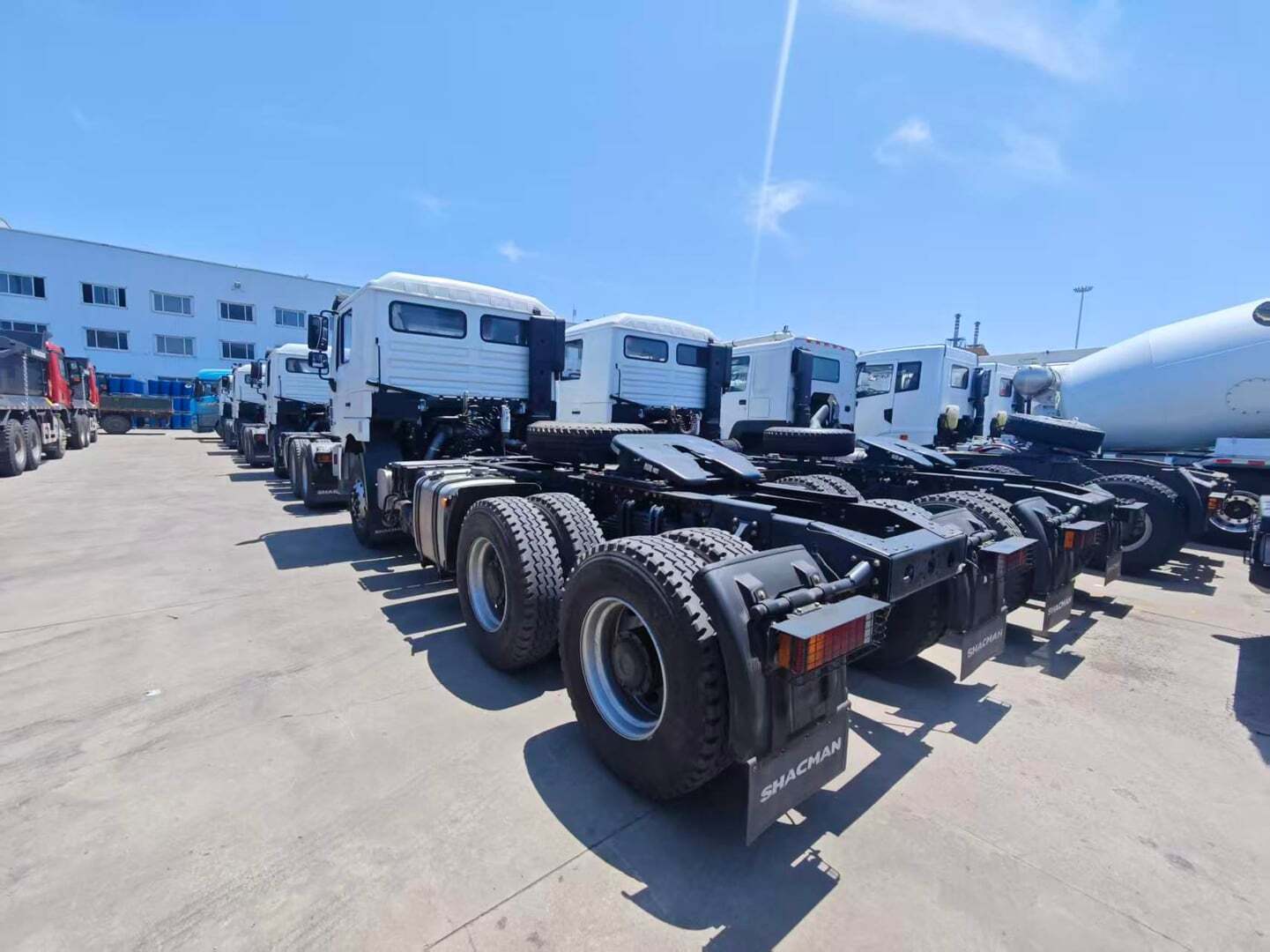
The SHACMAN X3000 6×4 dump truck configuration is documented with a CUMMINS ISM11E5 440 engine declared to the EURO 5 emission standard.
EURO 5 is a European exhaust emission standard for heavy-duty engines. It sets lower limits on nitrogen oxides and particulate matter than the earlier EURO stages, and — this is the point buyers most often miss — the certificate belongs to a specific engine and aftertreatment configuration, not to a model name in general.
On the SHACMAN X3000 6×4 dump truck (model SX3258W384C), the documented power source is the CUMMINS ISM11E5 440, a 10.8 L unit rated at 324 kW / 440 HP and declared to EURO 5. It is paired with a 12JSD200T-B transmission with QH50 and an FHB400 hydraulic retarder, and the braking package includes a dual-circuit compressed air service brake, a spring air discharge parking brake, and an engine exhaust brake (the Jacob brake referenced in the specification). The chassis is built on an 850×300 (8+7) mm frame with multi-leaf spring suspension front and rear, riding on 12.00R20 mixed on-off road tread tyres.
The compliance-relevant question for a buyer is not whether that engine is powerful — 440 HP at 10.8 L is a known working combination in construction and mining haulage — but whether the destination market accepts EURO 5 for registration, and whether local fuel quality matches what the engine is designed around. Modern emission-controlled diesel engines are generally engineered around low-sulfur diesel, and running them on high-sulfur fuel is a widely recognised service-life risk. That makes fuel sulfur content a compliance-adjacent question that belongs in the purchase process, not after it.
ECE-R29 in Practice: What a Certified Cab Changes
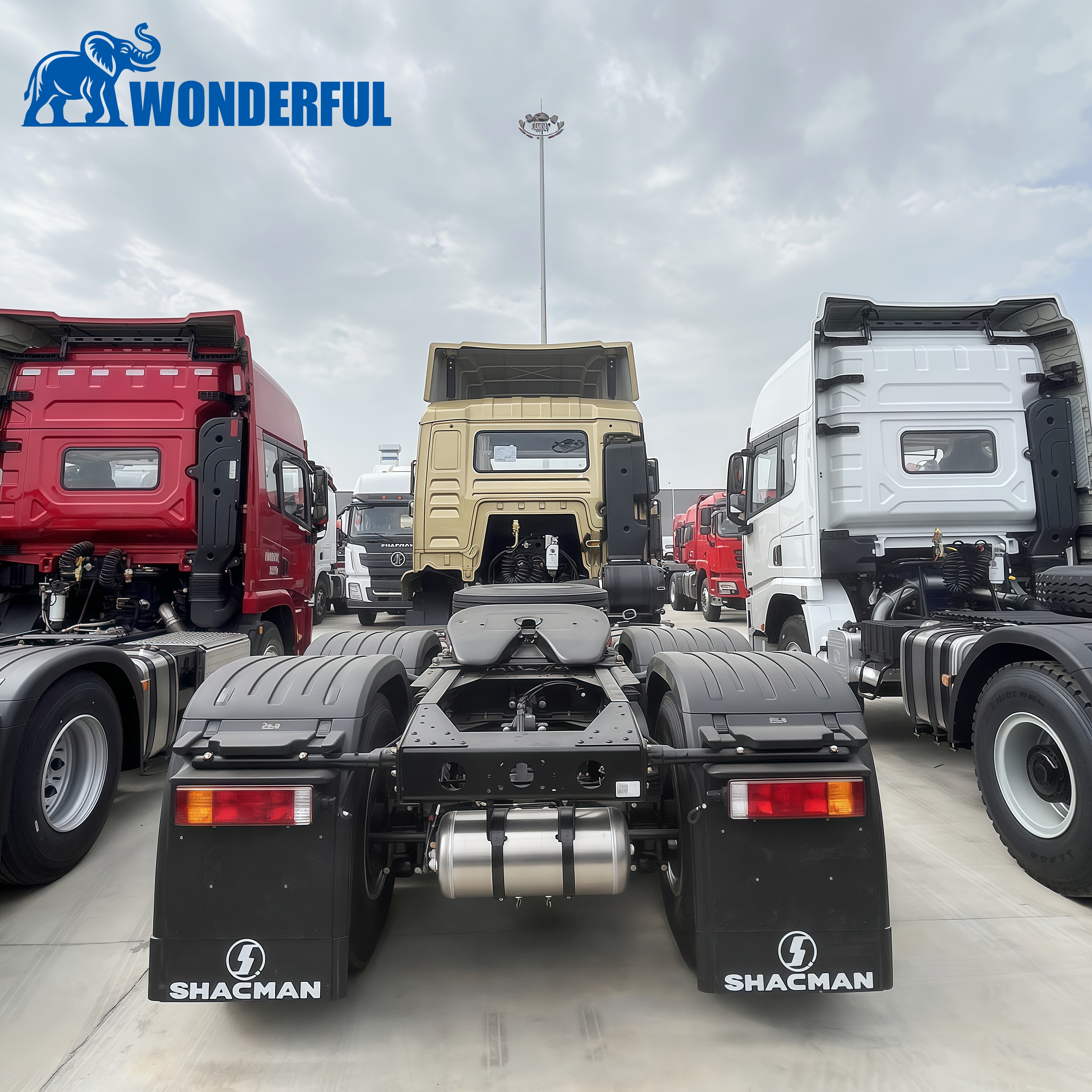
The SHACMAN F3000 tractor cab is documented as ECE-R29 safety certified in company case records.
ECE-R29 is a United Nations Economic Commission for Europe regulation dealing with the strength of a truck cab structure and the protection of its occupants in a frontal impact and in a rollover. In plain terms, it addresses whether the cab keeps enough survival space around the driver when something goes wrong, and whether the restraint system performs as intended in that event. It is a cab-level regulation. It does not certify the vehicle as a whole.
In the company's documented case records for an 18-unit transportation fleet delivered to a heavy-duty commercial vehicle OEM client in Ghana, an ECE-R29 safety certified cab is listed among the product features, together with a Weichai–Fast–Hande powertrain and a reinforced chassis. The SHACMAN F3000 (6×4 tractor) is the configuration associated with that cab description. The F3000's documented specification lists a WP10.340E22 engine at 340 HP, a 10JSD180-Iron Shell-QH50 gearbox, and a medium-length flat roof cab without top guide cover.
One boundary deserves to be stated plainly, because it affects purchasing decisions: the emission standard documented on the F3000 configuration is Euro II, not EURO 5. Cab safety certification and emission certification are recorded separately, and a buyer whose destination market requires EURO 5 should be matching that requirement against a EURO 5 configuration such as the X3000 — not assuming that a safety-certified cab implies an emission classification.
Matching Compliance to Operating Conditions
The X3000 dump truck configuration is documented for heavy load, highway, unpaved road and steep slope conditions, across the manufacturing, engineering, mining, agriculture and logistics sectors. The same scenario documentation applies across the three product records and describes 24/7 continuous operation as the operating mode, with special requirements that include high wear resistance, rust protection, adaptability to poor road conditions, ease of maintenance and a long service time.
Those conditions define what compliance means in practice for each type of fleet:
Construction and mining projects. A construction heavy duty truck or dump heavy duty truck working on unpaved haul roads faces both regulatory and structural demands. Emission compliance governs site entry in jurisdictions with air-quality rules; cab strength regulation governs the risk profile on steep, poorly surfaced gradients. The two are complementary, and procurement documents should carry both.
Port logistics and bulk cargo transportation. Port and terminal operators frequently operate under local emission rules that are stricter than the national baseline. A diesel heavy duty truck configured to EURO 5 is a defensible baseline for these environments, provided local fuel supply is confirmed.
Long haul and articulated operation. For long haul heavy duty truck duty cycles and articulated heavy duty truck combinations, the emission standard affects cross-border admissibility, while the cab regulation affects driver safety in a rollover event — a scenario with a higher consequence profile on highways than in yards.
Agricultural and regional distribution. A cargo heavy duty truck moving agricultural product between collection points and processors often operates on mixed surfaces where maintenance access matters as much as specification. The scenario documentation for these applications calls out ease of maintenance explicitly.
The common thread is that compliance markers are not decoration. They are the conditions under which the operating scenario is permitted to exist.
Regional Legality: One Marker, Many Rulebooks
Emission standards are national or regional instruments, and the same vehicle can be admissible in one market and inadmissible next door. This is the single most common source of procurement error in export markets.
Inside the European Union, new heavy-duty vehicle registrations are subject to later EURO stages than EURO 5; the standard is a useful reference point but not an entry ticket for new registrations there. In the United States, the regulatory direction is set by federal programmes: the US Environmental Protection Agency finalized the "Phase 3" greenhouse gas standards for heavy-duty vehicles starting in model year 2027, with a stated requirement of approximately an 80% reduction in nitrogen oxides. That trajectory matters to buyers in every market because it sets the direction of engine technology globally.
In Africa and Southeast Asia — the primary export markets for SHANDONG WONDERFUL AUTO COMPANY LIMITED. — acceptance varies country by country and sometimes by port of entry. Ghana, where the documented 18-unit fleet was deployed for transportation purposes, is one example of a market where the applicable standard must be confirmed at the point of import rather than assumed from regional practice.
The practical rule is straightforward: confirm the accepted standard with the importing authority or a local registration agent in writing, before the purchase order is issued. Certification documents that do not match the destination market's requirements are of no operational value, however well-issued they are.
Market Context Behind the Compliance Emphasis
The attention now paid to certification is a function of volume as much as regulation. The global heavy-duty truck market was estimated at USD 308.3 billion in 2025 and is projected to reach USD 475.5 billion by 2035, according to Global Market Insights. Growth of that scale creates pressure on import markets to regulate what enters their fleets.
Supply has shifted accordingly. China's heavy-duty truck exports reached 276,000 units in 2023, a 58% year-on-year increase, and rose further to 295,000 units in 2024, based on figures published by Shacman Industry Report and CAAM. In the first half of 2024, China's total truck exports reached 351,000 units, with one out of every three heavy trucks operating overseas originating from China, according to the China Association of Automobile Manufacturers.
For buyers, that scale of supply has two consequences. Competition has improved pricing and availability. It has also made it easier to purchase a mis-specified vehicle from a supplier who cannot produce configuration-level certification — which is precisely why documentary verification now sits earlier in the procurement sequence than it used to.
Compliance-Led Sourcing Compared with Transactional Sourcing
Most fleet purchases still begin as transactional exercises: match a budget to a specification list and negotiate. A compliance-led approach reorganises the same decision around evidence. The difference is not philosophical — it shows up in specific failure points.
| Decision point | Transactional sourcing | Compliance-led sourcing |
|---|---|---|
| Emission requirement | Assumed from region | Confirmed per destination market before RFQ |
| Documentation | Requested after agreement | Requested against the exact engine code and cab configuration |
| Cab safety | Treated as a comfort or branding feature | Treated as an occupational risk variable on haul roads |
| Fuel supply | Checked at first refuel | Checked before purchase, since emission-controlled engines assume low-sulfur diesel |
| Warranty and parts | Reviewed with the invoice | Reviewed as an uptime variable alongside certification |
The limitation of the compliance-led approach should also be acknowledged: it is slower and it depends on the quality of documentation the supplier can actually produce. Where a supplier cannot provide configuration-level evidence, no amount of procurement discipline will create it. In those cases, the correct decision is to change the configuration or change the supplier — not to accept a verbal assurance.
Where Certification Claims Stop: Known Boundaries
An honest compliance discussion includes its limits. The following boundaries are documented in the product and capability records rather than inferred.
Brake configuration is separate from emission certification. The documented X3000 6×4 ISM11E5 440 dump truck configuration is listed without ABS. That is a specification decision, not a compliance failure: anti-lock braking requirements are set independently of exhaust emission standards and of cab strength regulations. Buyers operating in markets that mandate ABS must treat it as a separate, explicit line item.
Emission standards differ across the range. The X3000 configuration documented here is EURO 5; the F3000 configuration documented here is Euro II. A single brand name does not carry a single emission standard.
ECE-R29 is not a whole-vehicle approval. It certifies cab structural performance. Registration, roadworthiness and operator licensing sit with the destination authority.
Warranty is a commercial boundary. The stated after-sales term is a one-year warranty. That covers defined commercial support; it does not extend or imply certification validity over the life of the vehicle.
Customisation does not change certification. The company offers OEM/ODM/CKD/SKD production with customisation of logo, colour, material and shape. Buyers should assume that these commercial choices do not alter the underlying engine or cab certification, and should verify that assumption whenever a change touches the powertrain or cab assembly.
How SHANDONG WONDERFUL AUTO COMPANY LIMITED. Fits the Picture
SHANDONG WONDERFUL AUTO COMPANY LIMITED. is a commercial vehicle manufacturer and exporter based in Qingdao, Shandong, producing heavy duty trucks alongside flatbed, lowbed, cement tanker, dump, fence and sidewall semi-trailers. The company operates a 113,000 m³ manufacturing facility with 500 employees, a 20-engineer R&D team, and an annual output of 6,000 units. Its stated export ratio is 100%, with Africa as the principal market.
For compliance-driven purchasing, the relevant capabilities are documentary and operational rather than promotional. Production is offered in OEM, ODM, CKD and SKD modes, with customisation of logo, colour, material and shape. Monthly capacity is stated at 500 units, with a lead time of 30–45 days and a minimum order quantity of one unit. Quality control is described as 100% testing, after-sales as a one-year warranty, and export markets as Africa and Southeast Asia.
The one-unit minimum order is the most commercially significant detail for a compliance-led buyer. It allows a single truck to be ordered, inspected and registered in the destination market before a fleet commitment is made — a validation step that costs far less than discovering an admission problem across an entire order. Further product and capability detail is available at wonderful-autos.com.
A Pre-Purchase Verification Checklist
The following checks translate the analysis above into an order-stage routine.
| # | Check | Evidence to request |
|---|---|---|
| 1 | Accepted emission standard in the destination market | Written confirmation from the importing authority or local agent |
| 2 | Engine model matches the certification | Certificate naming the exact engine, e.g. CUMMINS ISM11E5 440 declared EURO 5 |
| 3 | Cab safety certification matches the ordered cab | ECE-R29 documentation tied to the specific cab variant |
| 4 | Brake items required by local rules | Explicit specification line for ABS or other mandated systems |
| 5 | Fuel sulfur availability on the operating route | Supplier fuel specification for the project corridor |
| 6 | Parts and service channel | Regional spare parts availability and stated warranty terms |
| 7 | Evaluation unit before fleet order | Single-unit order to test registration and service support |
Future Outlook
Two directions are visible, and they will change what compliance documentation looks like rather than whether it is needed.
The first is continued tightening of emission rules. The US EPA "Phase 3" greenhouse gas standards from model year 2027, with a stated requirement of approximately an 80% reduction in nitrogen oxides, indicate the direction of travel for major regulatory markets. Exporter markets typically follow with a lag, which means the useful life of a EURO 5 configuration is a market-specific calculation rather than a universal one.
The second is electrification. The global electric heavy-duty truck market is projected to grow from USD 14.84 billion in 2026 to USD 101.02 billion by 2034, according to Fortune Business Insights, and heavy-duty electric truck penetration in China is forecast to exceed 20% in 2026, based on S&P Global Ratings analysis. For buyers, this means a new compliance layer is arriving — battery certification, charging infrastructure standards and high-voltage safety approvals — alongside the existing emission and cab regulations.
Diesel heavy duty trucks will continue to carry the majority of haulage duty in markets where fuel quality, route length and charging availability limit electric deployment. For those fleets, EURO 5 and ECE-R29 remain the two markers that convert a well-specified vehicle into a legally operable and defensible one.
The sensible response is procedural: build compliance verification into the specification stage, keep the evidence with the asset file, and confirm market acceptance in writing before committing capital. That approach does not depend on which standard comes next.
Frequently Asked Questions
What does a EURO 5 designation actually change for a heavy duty truck buyer?
EURO 5 is a European exhaust emission standard for heavy-duty engines. It sets lower limits on nitrogen oxides and particulate matter than earlier EURO stages, and the certification applies to a specific engine and aftertreatment configuration rather than to a model name in general. On the SHACMAN X3000 6×4 dump truck, the engine declared to EURO 5 is the CUMMINS ISM11E5 440, a 10.8 L unit rated at 324 kW / 440 HP. For the buyer, the practical consequences are that emission status must be documented per configuration, and that emission-controlled engines are generally engineered around low-sulfur diesel — a fuel quality assumption that should be verified against local supply.
Does EURO 5 make a heavy duty truck legal to operate in every market?
No. Emission standards are set market by market. New registrations inside the European Union are subject to later EURO stages than EURO 5, and the United States applies its own federal programmes — the US Environmental Protection Agency finalized the "Phase 3" greenhouse gas standards for heavy-duty vehicles starting in model year 2027, with a stated requirement of approximately an 80% reduction in nitrogen oxides. African and Southeast Asian markets differ in both the standard accepted and the strictness of enforcement at import. EURO 5 is an input to a market-specific registration check, not a global pass.
What does ECE-R29 cover, and which configuration is associated with it?
ECE-R29 is a United Nations Economic Commission for Europe regulation addressing the strength of the cab structure and the protection of occupants in a frontal impact and in a rollover. It concerns cab survival space and restraint performance; it does not address exhaust emissions or certify the vehicle as a whole. In the company's documented case records for an 18-unit transportation fleet supplied to a heavy-duty commercial vehicle OEM client in Ghana, an ECE-R29 safety certified cab is listed among the product features alongside a Weichai–Fast–Hande powertrain and a reinforced chassis. The SHACMAN F3000 tractor is the configuration associated with that cab description.
How can a buyer verify emission and cab certification before shipment?
Verification has to be configuration-specific. Ask for the document that names the exact engine and its emission standard — for example the CUMMINS ISM11E5 440 declared to EURO 5 — and for the cab certification record corresponding to the cab actually ordered, rather than to a model family. The company describes its quality control as 100% testing, and offers OEM/ODM/CKD/SKD production with a stated lead time of 30–45 days and a minimum order quantity of one unit, which allows an evaluation unit to be ordered, registered and inspected before a fleet commitment. Three checks are worth building into the purchase order: that the certificate names the same engine code as the specification sheet, that the destination market's acceptance is confirmed in writing, and that warranty terms — stated as one year — are understood separately from certification.
How do parts availability and warranty affect compliance-related uptime?
Certification determines whether a truck may enter service; parts and service determine whether it stays in service. The documented case records for the 18-unit Ghana fleet note ample spare parts supply in Africa and Southeast Asia and low maintenance cost, and describe reliable operation over a 15-year duration. A one-year warranty is a defined commercial boundary rather than a statement of lifetime compliance. For fleets mixing trucks built to different emission standards, the parts channel carries additional weight, because the emission-relevant components are configuration-specific and cannot be substituted across standards without affecting the vehicle's compliance status.
For readers who want the underlying configuration and capability detail in one document, the company brochure is available here: Wonderful Auto brochure (PDF).