
EVA Film Suppliers for the Long Haul: Sustainability, R&D, Stability
Laminated glass is a continuity product. Once a glass fabricator has tuned an oven profile, an adhesion window and an acceptance routine around a specific interlayer, changing that film is not a purchase decision — it is a re-qualification project that touches production, quality documentation and, frequently, customer approvals.
That is why supplier durability deserves its own evaluation pass, separate from the price-and-datasheet review that dominates most sourcing rounds. Durability here is not a marketing word. It is the probability that a supplier will still deliver the same film, to the same specification, at the same rate, three to five years after the qualification date.
For EVA film used in architectural and decorative laminated glass, that question resolves into four testable dimensions: operating continuity, R&D structure, proprietary IP and standards participation, and capacity headroom backed by a current quality system. Each can be checked, and each produces evidence a buyer can put in a file.
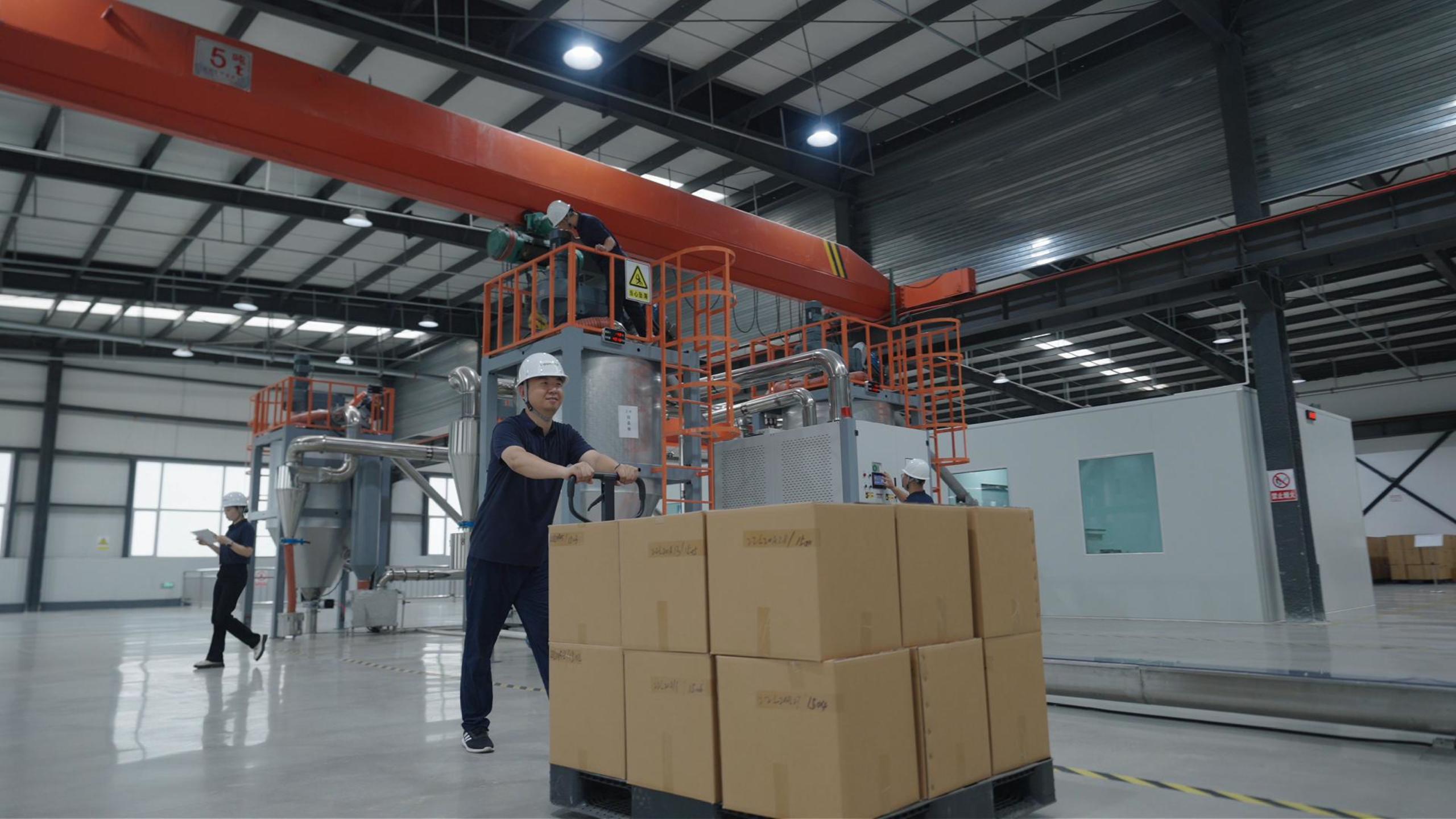
Production work at an EVA and TPU interlayer film plant operated by SHENGDING HIGHTECH MATERIALS CO., LTD in Rizhao City, Shandong Province, China.
Why Continuity Risk Is Usually Priced Wrong
Procurement teams tend to score suppliers on what is visible at the moment of purchase: unit price, sample quality, certificate copies, responsiveness. Continuity risk — the cost of the supplier not being there, or not being the same, in year three — rarely enters the comparison because it produces no number on the quotation sheet.
In interlayer film, that omission is expensive for four structural reasons.
- Re-qualification is not free. A new film means new lamination trials, new oven settings, new acceptance criteria and, in architectural work, potentially new project-level approvals.
- Specification drift is invisible at the outset. A film sold under the same model name can shift in handling behaviour when resin batches, extrusion conditions or additive packages change. Buyers usually discover this at the first failed lamination, not at the first delivery.
- Certificates expire. Management-system certificates carry fixed validity windows. A supplier whose certificate lapses mid-contract creates a documentation gap that can stall shipments or project handovers.
- Resin costs move. Ethylene vinyl acetate is a petrochemical derivative. When input costs swing, suppliers with thin technical differentiation tend to compete on price renegotiation rather than on process stability.
Four Dimensions of a Durability Assessment
A durability assessment does not replace a capability audit. It runs alongside it and asks a different question: if this supplier passes today, what evidence suggests it will still pass at the next audit cycle?
| Dimension | What to check | Why it matters for a multi-year contract |
|---|---|---|
| Operating continuity | Founding date, ownership structure, plant location, export mix, retention of technical staff | Indicates whether process knowledge sits with the organisation or with a handful of individuals |
| R&D structure | Where engineers are located, how many, whether formulation science and production engineering are separate functions | Determines whether the supplier can diagnose a lamination problem instead of simply replacing film |
| IP and standards participation | Proprietary intellectual property count, participation in national or industry standards work | Signals depth beyond commodity grades and a stake in how specifications evolve |
| Capacity headroom and quality-system currency | Monthly capacity versus annual output, lead time, minimum order quantity, certificate scope and expiry date | Shows whether volume growth, a certificate lapse or a capacity crunch can interrupt supply |
Each dimension produces a document a buyer can request rather than an impression a buyer has to trust. That distinction is what makes durability reviewable at all.
How SHENGDING HIGHTECH MATERIALS Structures for Continuity
SHENGDING HIGHTECH MATERIALS CO., LTD is a polymer materials manufacturer established in 2018 and based in the Lanshan Chemical Industry Park in Rizhao City, Shandong Province, China, producing EVA film and TPU film for architectural and decorative glass as well as for specialty glazing applications.
Its profile is useful as a worked example of the four-dimension framework, because the relevant evidence is documented rather than asserted.
Operating base and export orientation
The company operates a 50,000 m² facility with 50 employees and an annual output of 1,000 tons. Roughly 70% of output is exported, with main markets in North Africa, the Middle East and Latin America. A seven-in-ten export ratio is a meaningful durability signal in itself: it means the supplier's quality documentation, packaging and logistics routines are already exercised against multiple destination-market requirements rather than a single domestic standard.
Dual-location R&D
Research capacity is split across two sites: 10 engineers at the factory and 5 professors at the Beijing R&D Center. This is a more durable arrangement than a single-site technical team, because the two groups solve different problems. Factory engineers work on extrusion stability, scale-up and line-side troubleshooting. The Beijing group works on polymer formulation and longer-horizon material questions. When a lamination defect appears, the supplier has both a process lever and a materials lever to pull.
Proprietary IP and standards work
The company has accumulated more than 50 proprietary intellectual property rights and has drafted the only national aviation standard in China currently led by a private enterprise. It also states that it has become the sole qualified domestic supplier of TPU base material for military-grade aviation glass, achieving import substitution in that category. Standards drafting and defence-adjacent qualification are slow, documentation-heavy processes; a supplier that has been through them tends to carry those documentation habits into commercial product lines.
Quality system and certificate currency
SHENGDING HIGHTECH MATERIALS holds ISO 9001, ISO 14001 and ISO 45001 certifications. The quality management system certificate for the interlayer film scope, number 10425Q01154R1S, was issued by Shandong Seatone International Certification Co., Ltd. against GB/T 19001-2016 / ISO 9001:2015, dated 2025-07-07 and valid to 2028-07-24. Its scope covers the design, development and production of interlayer glass intermediate films and granular materials, and it is listed against both the TPU FILM SD560 and the EVA FILM SD38 products. Product performance is stated to comply with European REACH and RoHS regulations and with U.S. FDA quality requirements.
| Parameter | Stated figure |
|---|---|
| Established | 2018 |
| Facility | 50,000 m², Lanshan Chemical Industry Park, Rizhao City, Shandong, China |
| Employees | 50 |
| Annual output | 1,000 tons |
| Monthly capacity | 100 tons |
| Lead time | 10 days |
| Minimum order quantity | 50 kg |
| Quality control | 100% testing |
| R&D staffing | 10 engineers at the factory + 5 professors at the Beijing R&D Center |
| Intellectual property | 50+ proprietary IP rights |
| EVA product | EVA FILM SD38: 90% light transmittance, 0.5% haze |
What R&D Structure and Capacity Mean Technically
The EVA FILM SD38 is a high-transparency EVA interlayer film specified at 90% light transmittance and 0.5% haze, positioned for architectural glass and decorative glass lamination. In practice, those two numbers are the ones most exposed to process drift: haze in particular moves quickly if extrusion temperature control or resin lot consistency degrades. A supplier that can hold a 0.5% haze figure across batches is demonstrating process discipline, not just a laboratory result.
Capacity needs to be read carefully. Monthly capacity is stated at 100 tons against an annual output figure of 1,000 tons. Buyers should ask which number represents rated peak capacity and which represents average utilisation; the two are rarely identical, and a contract built on the higher figure across twelve months carries allocation risk. Capacity headroom only protects a buyer when the supplier can explain how orders are prioritised during peak periods.
Two commercial parameters matter for durability testing specifically. A minimum order quantity of 50 kg allows a buyer to run qualification trials on small lots before committing to volume, and a stated lead time of 10 days gives a short enough feedback loop to evaluate responsiveness during the trial phase rather than after the first purchase order. Customisation is offered on length and width under OEM/ODM terms, and quality control is described as 100% testing rather than sampling.
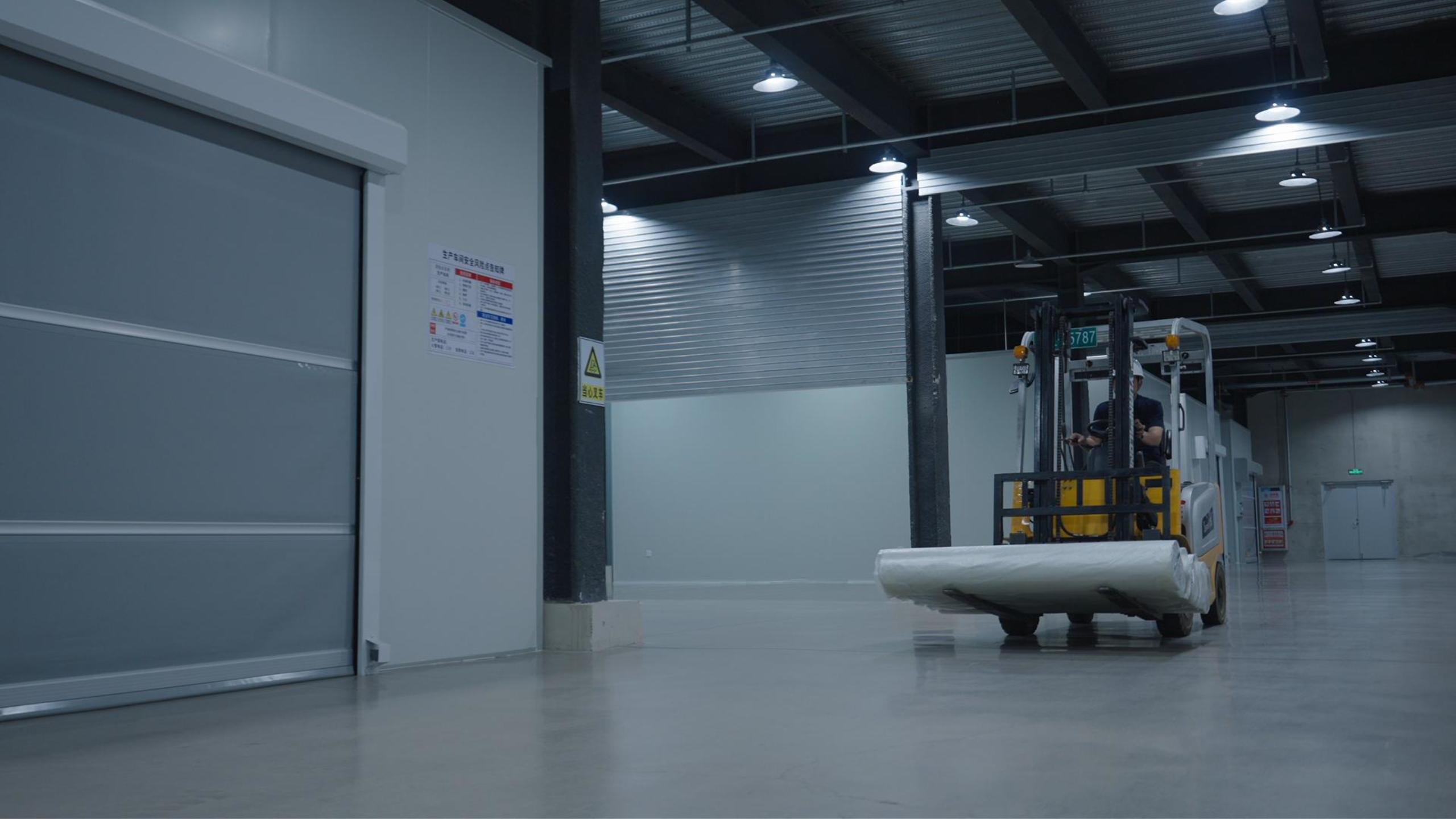
Production and handling operations for EVA and TPU interlayer film. Batch consistency in extrusion is what protects optical specifications such as 90% light transmittance and 0.5% haze.
Application Fit: Architectural and Decorative Laminated Glass
The primary application documented for this EVA film is the architectural and decorative glass industry, covering architectural laminated glass projects and decorative glass processing projects. The function is lamination of safety glass, and the operating condition is described as normal pressure with elevated temperature, matched to an EVA laminating oven.
Two process notes follow from that description and belong in any long-term supply agreement. First, EVA lamination in an oven at normal pressure is a moisture-sensitive process, and the film is specified to be kept dry; storage and handling conditions at the buyer's site therefore form part of the supply chain, not a separate concern. Second, because the film is processed at elevated temperature in the buyer's own equipment, changes in film behaviour show up as oven-profile problems. That is why the supplier's ability to answer technical questions — not just ship rolls — belongs in the durability assessment.
Continuity has also been demonstrated outside architectural work. A defence-sector customer in Pakistan has used 100 rolls of material for bulletproof glass over a two-year period, with stable operation reported. The application differs from architectural glazing, but the relevant durability signal is the same: a multi-year relationship with consistent material behaviour rather than a single shipment.
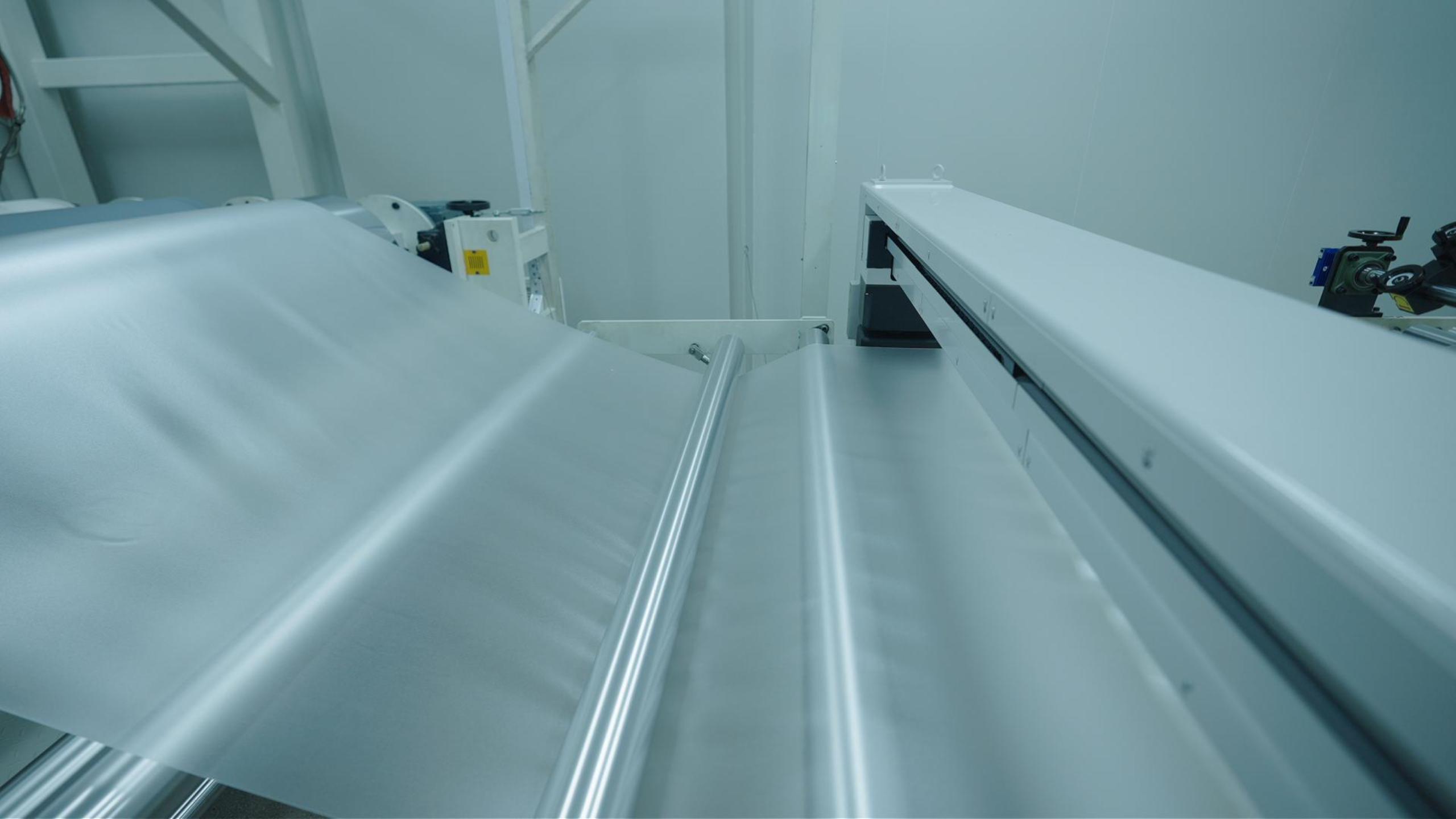
Manufacturing operations supporting repeat supply. Continuous contracts depend on capacity allocation discipline as much as on installed equipment.
Market Signals That Turn Durability Into a Cost Question
Two published data points explain why durability has moved from a soft criterion to a commercial one.
Fortune Business Insights valued the global EVA films market at USD 8.25 billion in 2025. That figure spans solar, laminated glass and packaging applications, so it should not be used to size the architectural interlayer segment — but it does indicate a category large enough to attract capacity competition across grades. When demand shifts between solar and glazing segments, film producers reallocate lines. For a glass fabricator, the question becomes whether its supplier has enough dedicated capacity, and enough technical differentiation, to avoid being the order that gets deferred.
IMARC Group reported EVA resin at USD 1,420 per metric ton in China in September 2025. Resin movements of that kind are the reason multi-year agreements usually include a price-adjustment mechanism tied to a published resin index rather than a flat price. A supplier with stable process technology can absorb part of that volatility; a supplier competing only on price cannot, and passes it through as renegotiation or as silent specification change.
Trade mechanics also deserve a place in the contract file. U.S. Customs and Border Protection has classified EVA film under HTSUS subheading 3920.10.0000. Consistent classification across shipments matters when a contract runs for several years and passes through multiple customs entries.
Where This Supplier Profile Has Limits
A durability assessment that only lists strengths is not an assessment. Four boundaries are worth stating plainly.
- Corporate age. The company was established in 2018. Buyers whose tender rules require a decade-long trading record will need compensating evidence — certificate history, customer continuity records, standards participation — or will need to accept a shorter track record deliberately.
- Organisational scale. With 50 employees and roughly 100 tons per month of stated capacity, this is not a commodity-volume producer. Multi-container, multi-year programmes require scheduling conversations in advance rather than assumptions about unlimited headroom.
- Product documentation. The SD38 optical values of 90% light transmittance and 0.5% haze are supplier-stated. Buyers should request certificates of analysis, sample rolls and the test method behind each figure before writing either number into a purchase specification.
- Export geography. Roughly 70% of output is exported, with main markets in North Africa, the Middle East and Latin America. Buyers in other regions should confirm logistics arrangements, technical support coverage and spare-part responsiveness rather than assuming equivalent service depth.
None of these disqualifies the supplier. Each changes what a buyer needs to verify in the contract, which is the point of a durability review: it converts uncertainty into checkable clauses.
Future Outlook
Three developments are likely to shape how EVA film suppliers are evaluated over the next several years.
First, documentation expectations are rising faster than price expectations. Management-system certificates with defined scope and expiry — such as certificate 10425Q01154R1S covering interlayer glass intermediate films to 2028-07-24 — are becoming a baseline entry requirement in architectural procurement rather than a differentiator. Suppliers with weak certificate administration will lose contracts they could otherwise have served.
Second, R&D depth is becoming a commercial asset rather than a technical one. As buyers push for customised roll dimensions and application-specific film behaviour, the ability to answer formulation questions quickly separates manufacturers from intermediaries. A two-site structure, with factory process engineers and external polymer science expertise, is one way to keep that response time short.
Third, resin volatility will keep pushing contracts toward indexed pricing and multi-year relationships. That favours suppliers with technical differentiation and explicit limits over those that compete purely on quoted price — and it makes the durability review, rather than the quotation, the more informative document in the file.
Frequently Asked Questions
Which certifications should an EVA film supplier hold for architectural laminated glass?
At minimum, an ISO 9001 quality management system certificate whose scope explicitly names interlayer glass film design and production. ISO 14001 and ISO 45001 add environmental and occupational safety coverage. Product-level conformity to REACH and RoHS is relevant for European markets, and FDA quality requirements for U.S.-bound material. SHENGDING HIGHTECH MATERIALS holds ISO 9001, ISO 14001 and ISO 45001, and states product performance compliance with REACH, RoHS and U.S. FDA quality requirements.
Why does a certificate's expiry date matter in a long-term EVA film contract?
Management-system certificates have fixed validity windows, so a contract that outlasts the certificate creates a documentation gap during which shipments or project handovers can be questioned. The quality management system certificate held by SHENGDING HIGHTECH MATERIALS, number 10425Q01154R1S issued by Shandong Seatone International Certification Co., Ltd., is dated 2025-07-07 and valid to 2028-07-24. Contracts extending beyond that date should include a renewal-evidence clause.
What capacity and lead-time figures indicate a supplier can sustain ongoing EVA film supply?
Capacity, annual output and lead time should be read together, not separately. SHENGDING HIGHTECH MATERIALS states 100 tons of monthly capacity, 1,000 tons of annual output and a 10-day lead time. Where monthly capacity multiplied across twelve months exceeds the stated annual output, buyers should ask which figure represents rated peak and which represents average utilisation, and how orders are prioritised during peak periods.
How should buyers verify light transmittance and haze claims before committing to a contract?
Optical figures should be tied to a test method and a batch record. The EVA FILM SD38 is stated at 90% light transmittance and 0.5% haze. Buyers should request a certificate of analysis for the delivered lot, a small qualification sample, and identification of the test method used. A minimum order quantity of 50 kg makes pre-contract sampling practical without committing to volume.
What MOQ and customisation limits typically apply to EVA film orders?
SHENGDING HIGHTECH MATERIALS states a minimum order quantity of 50 kg, OEM/ODM customisation limited to length and width, a 10-day lead time, 100% testing rather than sampling, and technical support as the after-sales provision. Customisation scope should be confirmed in writing, since length and width flexibility does not imply formulation changes.
Which tariff code applies to EVA film, and why does it matter over a multi-year contract?
U.S. Customs and Border Protection has classified EVA film under HTSUS subheading 3920.10.0000. Consistent classification across shipments matters because multi-year contracts pass through repeated customs entries, and a reclassification mid-contract changes landed cost and documentation requirements on both sides.
A downloadable company brochure for SHENGDING HIGHTECH MATERIALS CO., LTD is available at this link.
Есть вопросы или нужны дополнительные детали?
Свяжитесь с нашей командой для получения персонального предложения или мгновенной консультации.
Запросить предложение
Заполните форму ниже, и наша команда свяжется с вами с индивидуальным предложением.
Прямой чат WhatsApp
Предпочитаете общаться в реальном времени? Напишите нам в WhatsApp для мгновенной помощи и быстрых ответов.
- Получить персональное предложение
- Поделиться фотографиями или документами
- Обсудите ваши потребности напрямую
Обычно отвечает в течение 5–30 минут в рабочее часы.