
EXT4 for Mac Supplier Capability: A Manufacturing R&D Rollout
EXT4 for Mac Supplier Capability: A Manufacturing R&D Rollout
Independent industry reference | CrossDriver Software capability evidence profile
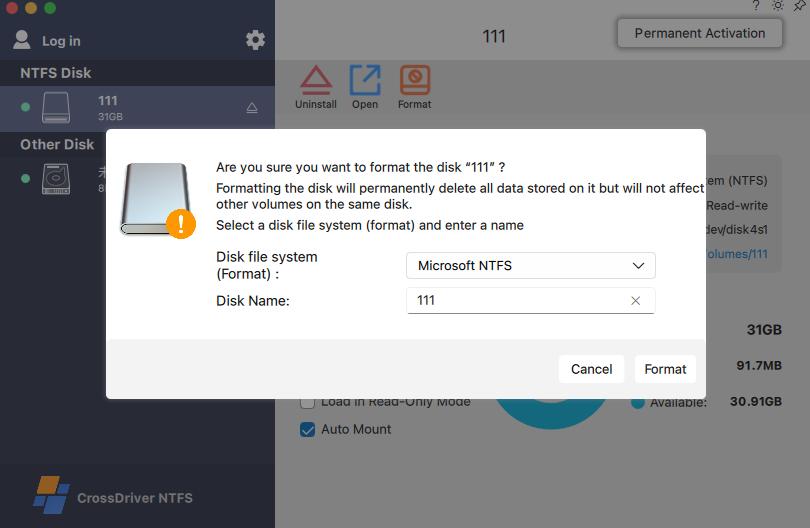
Cover: CrossDriver Ext4 for Mac application interface. Image source: CrossDriver Software.
Manufacturing R&D centers rarely run a single storage format. A Mac workstation may need to open an ext4 volume from a Linux simulation cluster, write engineering drawings to an XFS disk, and exchange NTFS drives with Windows-based departments. In that environment, EXT4 for Mac supplier capability is not demonstrated by a successful mount alone. It is demonstrated by assessment, small-scale proof, bulk deployment, stress testing, training, monitoring, and acceptance evidence that procurement and IT can review.
The reference project for this profile is the Mac Workstation Cross-Storage File Interoperability Project for a Manufacturing R&D Center. It is a three-week deployment for an enterprise R&D department in high-end equipment manufacturing, with user locations recorded in Asia Pacific, the Americas and the European region. The project record reports improvements in waiting time, file-version operations, disk read/write error rate and IT tickets. Those figures are project-record results, not an independent benchmark. Their value here is that they show what a supplier capability assessment should ask for before a Mac fleet is committed to a cross-storage driver.
Problem and opportunity: the buyer problem is broader than file-system access
The case record describes a common R&D pattern. The team used a large number of Mac laptops. External storage disks in Linux formats such as Ext4 and XFS were read-only natively, so engineers could not directly write engineering drawings and simulation data to those volumes. NTFS hard drives produced by cross-department Windows users occasionally encountered file locks and filename garbled characters on Mac. Frequent back-and-forth copying through portable disks across multiple systems caused version confusion and created data-loss risk during intermediate transfers. Previous third-party drivers had poor stability, slow large-file read/write and high costs for bulk deployment.
The opportunity is not simply to replace a read-only mount with a write-capable one. It is to treat EXT4 for Mac as part of an enterprise storage workflow: who can write, to which volume, with what logging, under which macOS security policy, and with what acceptance evidence. The search language buyers use is often tactical, such as EXT4 driver for Mac, EXT4 software for Mac, mount EXT4 on Mac, read EXT4 on Mac, or write EXT4 on Mac. The procurement decision behind those searches is broader: can the supplier support a controlled rollout across MacBook Pro, Mac Mini and other Apple Silicon or Intel Macs without creating a new support burden?
Brand solution: what CrossDriver Software brought to the rollout
CrossDriver Software, legally Crossdriver Limited, is a Hong Kong-based developer of kernel-level and system-level cross-platform file system software. Its product set includes CrossDriver Ext4 for Mac, CrossDriver NTFS for Mac and CrossDriver XFS for Mac. The company states that it focuses on file-system interoperability across Windows, macOS and Linux, with a R&D team covering macOS kernel development, file-system protocol work and low-level driver engineering.
In the manufacturing R&D project, the applied solution was a commercial driver suite deployed on the customer's Mac R&D workstations to deliver native-level read and write access for NTFS, Ext4 and XFS file systems. The deployment also included a backend license management console for centrally managing terminal licenses, remotely monitoring driver operating status, disabling unnecessary auto-mount risks, and complying with the customer's security specifications for confidential R&D data.
The project is therefore a useful capability profile for buyers evaluating an EXT4 driver for Mac at Evaluation to Execution stage. It shows what a supplier must be able to do beyond shipping an installer: diagnose the environment, validate a small group, deploy at scale, stress-test realistic file workloads, train administrators, monitor operation, and hand over reviewable evidence.
Technical explanation: the six-stage rollout method
The case records a methodology of current environment assessment, small-scale POC validation, bulk silent deployment, stress testing, operation and maintenance training, and continuous monitoring. Each stage produces a different type of buyer evidence.
1. Environment assessment before installation
The pre-installation stage checks macOS version, system permissions, security settings and connected external storage. The deliverable set includes a digitally signed official CrossDriver installation package for Mac as an Intel and Apple Silicon universal build; an environment compatibility assessment report showing pass, warning or fail status for macOS version, chip architecture and permission constraints; a pre-deployment risk checklist; and a formal environment-qualification conclusion. For a manufacturing R&D buyer, this is the point where Apple Silicon compatibility, macOS release support and administrator permissions are separated from assumptions.
2. Small-scale POC validation
The project used a small-scale POC before bulk deployment. The purpose is not to prove that one disk can be mounted on one Mac. It is to test the intended write workflow on representative ext4, XFS and NTFS volumes, confirm that engineering files and simulation data can be written directly, observe file-lock or filename behavior in the customer environment, and verify that the compatibility report and installation package are ready for wider use. The case does not publish a POC sample count, so buyers should define their own representative device and volume mix rather than infer a number from this article.
3. Bulk silent deployment and license control
Bulk silent deployment is where a consumer utility and an enterprise rollout separate. The case solution used a backend license management console to manage terminal licenses centrally and to monitor driver operating status remotely. It also allowed unnecessary auto-mount risks to be disabled, which matters when R&D data is confidential and when IT wants predictable mount behavior across a fleet. The vendor-side deliverables include a deployed CrossDriver client with kernel-level driver components, a valid authorization entitlement, a license-binding confirmation record, and unlocked read-write and disk-management features.
4. Stress testing with large files and bulk files
The project record includes stress testing and performance benchmark snapshots for large-file transmission above 250 GB and for 100,000+ mixed-size bulk-file operations. It also lists persistent local file-operation logs and transmission task records stored within the software for customer review, plus optimized low-CPU-consumption runtime performance for file read-write workloads. These are the evidence points a buyer should request when evaluating claims about write EXT4 on Mac at production scale. A mount screenshot is not a stress test; a log record, a benchmark snapshot and a functional test summary are.
5. Administrator training and monitoring
The service scope included administrator training and annual technical support. The methodology then moves into continuous monitoring. For IT operations, the relevant question is whether the supplier can support a repeatable operating model: who installs, who approves licenses, how auto-mount is controlled, where logs are reviewed, how support tickets are submitted, and how macOS updates are handled. The case lists stage-wise acceptance checklists, a technical-support ticket template and a service-level agreement statement among the supporting materials. These documents matter more to enterprise buyers than a generic product feature list.
Deliverables and evidence: what a buyer can actually review
The project's deliverable set is unusually concrete for a file-system utility. It includes a digitally signed universal installation package, an environment compatibility report, local file-operation logs and transmission task records, an internal functional test summary report, performance benchmark snapshots for 250 GB+ large files and 100,000+ bulk files, and customer acceptance interview feedback. The functional test summary is described as covering mounting, large-file transmission, bulk-file processing and disk-management functions, with test environment, test cases and pass status.
Legal and commercial materials include a signed Master Service Agreement, a Statement of Work, a Software End-User License Agreement, an NDA where sensitive information is involved, and a license entitlement certificate. Intellectual-property and qualification materials include software copyright proof, an open-source component inventory and a product compatibility specification. Service-process materials include the stage-wise acceptance checklist, support ticket template and SLA statement. Post-project materials include milestone completion records, a whole-project acceptance confirmation and fault-diagnosis report samples. The case states that these supporting materials are available upon customer written request for contract review, acceptance audit, enterprise procurement and due diligence, subject to confidentiality constraints; they are not automatically public deliverables.
The customer acceptance interview record states: “CrossDriver effectively solves our pain point of accessing Linux storage disks on Mac computers. It supports simple bulk deployment and stable read/write for large simulation files, greatly cutting down the time R&D staff spend on file copying and easing the burden on our IT team.” That is a customer feedback statement from the acceptance record, not an independent market study.
The project record reports a 72% reduction in waiting time for cross-storage file read and write, a 90% reduction in intermediate file-version copy operations, a storage disk read/write error rate drop from 12% to 0.3%, and a 65% reduction in IT tickets related to storage issues. It also reports that staff could directly read and write multi-format external hard drives on Mac without an intermediate transfer server, and that the driver met 7x12-hour R&D scenarios while reducing IT maintenance workload. Buyers should treat these as supplier-reported project outcomes and validate equivalent metrics in their own POC.
Application and use cases: where the capability matters
The strongest fit is a manufacturing R&D center where Mac workstations sit beside Linux simulation infrastructure and Windows engineering departments. Engineers need to write simulation output and drawings directly to ext4 or XFS external drives, exchange NTFS drives with Windows users, and avoid portable-disk relay that creates version confusion. The case also fits IT operations that need batch authorization management, centralized license queries and remote driver-status monitoring across a Mac fleet.
CrossDriver's broader industry experience lists media creation, IT operations, NAS storage, internet services, intelligent manufacturing and scientific research laboratories. Those are plausible adjacent environments because they share the same root problem: a Mac needs controlled access to a volume formatted for another operating system. The case does not establish that every environment has the same write pattern. A video post-production team may stress large sequential files; an R&D center may stress many small simulation artifacts and engineering drawings; an IT team may care most about silent deployment and license control. The common evaluation method is the same, but the test data should match the workflow.
Market trend analysis: read-only access is expanding, but enterprise write workflows remain a separate test
Public product evidence shows at least two architectural paths for EXT4 access on macOS. ExtendFS is listed as a read-only ext2, ext3 and ext4 driver for macOS using FSKit, and its App Store listing explicitly states that it does not support write access. The macFUSE project states that macFUSE 5.3.0 introduced an FSKit backend, allowing supported file systems to run entirely in user space on macOS 26 without rebooting into recovery mode. Paragon states that its extFS for Mac product provides read and write access to ext2, ext3 and ext4 drives, and its product information lists exclusions such as bigalloc, journal_dev, meta_bg, metadata_csum and inline_data in the available excerpt.
This is a product-capability trend, not a market-size claim. The buyer implication is that read-only EXT4 access is becoming easier to obtain through FSKit-style approaches, while write access, bulk deployment, license management, logging and support remain separate supplier capabilities. A procurement team that only asks whether a product can mount an EXT4 volume may overpay for a read-only need or under-specify a write-heavy R&D requirement. The more useful question is which evidence the supplier can provide for the intended workflow.
Comparison with traditional solutions
The table below compares common approaches at a capability level. It does not rank vendors by market share or independent performance. CrossDriver's own positioning states that its kernel-level drivers deliver more than 5 times faster transfer speeds than FUSE-based user-space tools; no independent benchmark is provided in this evidence set, so that claim should be verified in a buyer's own POC.
| Approach | Typical fit | Write capability | Deployment evidence | Limits |
|---|---|---|---|---|
| Portable-disk relay or intermediate transfer server | Occasional file exchange between Mac, Windows and Linux users | Indirect; files are copied rather than written directly to the target volume | No driver deployment required | Version confusion, manual steps and data-loss risk during intermediate transfers; the case linked this pattern to a 90% reduction in intermediate copy operations after deployment |
| Read-only FSKit-based EXT4 tool | Reading or offloading data from an EXT4 drive without modifying it | No write access, as stated for ExtendFS | App-level installation; may avoid kernel-extension steps | Cannot directly write engineering drawings or simulation data; not a substitute for a write-capable driver |
| FUSE-based user-space EXT4 tool | General file access where user-space implementation is acceptable | Depends on the implementation; verify the actual write workflow | Varies by product; test installation, performance and stability | Performance and stability under large-file or bulk-file workloads must be tested; CrossDriver positions kernel-level drivers as faster than FUSE-based tools, but that vendor claim needs buyer-side validation |
| Commercial kernel-level driver with management console | Enterprise Mac fleets that need NTFS, Ext4 and XFS read/write plus centralized licensing | Native-level read and write access in the CrossDriver project | Signed universal package, compatibility report, local logs, functional test summary, 250 GB+ and 100,000+ benchmark snapshots, acceptance records | Requires administrator permissions and macOS security-policy handling; does not bypass hardware failure, third-party encryption or pre-existing file corruption; customers remain responsible for backups; representative ext4 feature flags should be tested before rollout |
The main boundary is operational, not promotional. CrossDriver's service capability includes Apple Silicon security-policy adaptation and kernel-extension booting solutions for recovery mode, but the buyer still has to plan for administrator rights, macOS updates, representative volume testing and user backup discipline. The project evidence does not establish universal coverage of every ext4 feature flag, every macOS release, every encrypted volume or every third-party disk enclosure. A procurement team should qualify the exact Mac models, macOS versions, volume features and file workloads it intends to use.
Future outlook: capability evidence will matter more than mount screenshots
CrossDriver states that its products support Intel and Apple Silicon Macs from M1 through M5 and macOS 10.13 through macOS Tahoe 26. It also states that it continues to explore more complex file systems such as BTRFS and ZFS. If read-only FSKit access continues to expand, the low end of the EXT4 for Mac category may become more commoditized. The enterprise middle and high end will still depend on write safety, bulk deployment, license control, local logs, support response and acceptance evidence.
For manufacturing R&D buyers, the practical lesson from this rollout is that supplier capability should be evaluated as a deployment system. Ask for the compatibility report, the POC plan, the signed universal package, the local file-operation logs, the functional test summary, the 250 GB+ and 100,000+ benchmark snapshots, the license-management approach and the acceptance record. Those artifacts make an EXT4 software for Mac decision reviewable by IT, procurement and security teams. They also make it harder to mistake a read-only utility for a production write workflow.
FAQ
How should a manufacturing R&D team evaluate an EXT4 for Mac supplier before bulk deployment?
Start with the environment, not the brochure. The supplier should document supported Mac hardware, macOS versions, permissions and connected storage; run a small-scale POC on representative ext4, XFS and NTFS volumes; and provide a compatibility report, functional test summary and local file-operation logs. The CrossDriver project used assessment, POC, bulk silent deployment, stress testing, training and monitoring, with a signed universal package and acceptance evidence. Buyers should require equivalent artifacts for their own device mix and file workloads.
What should a small-scale POC prove in a Mac cross-storage project?
A POC should prove the actual write workflow: direct writing of engineering or simulation files to ext4 or XFS volumes, NTFS file exchange with Windows users, and stable behavior under the file sizes and file counts the team uses. It should also confirm that the compatibility report is accurate for the target Macs and macOS versions, that logs are generated, and that administrator controls such as mount behavior can be managed. The case does not specify a POC sample size, so the buyer should define a representative sample rather than copy a number.
What deliverables should a supplier provide after a Mac cross-storage rollout?
The project deliverable set includes a digitally signed universal installation package for Intel and Apple Silicon Macs, an environment compatibility assessment report, persistent local file-operation logs and transmission task records, an internal functional test summary, and performance benchmark snapshots for 250 GB+ large files and 100,000+ bulk files. It also lists customer acceptance interview feedback and legal or commercial documents such as the MSA, SOW, EULA and license entitlement certificate. These materials support contract review, acceptance audit and procurement due diligence, subject to confidentiality.
What are the limits of a kernel-level EXT4 driver for Mac?
A kernel-level driver requires administrator permissions and must fit the macOS security model; CrossDriver's service capability includes Apple Silicon security-policy adaptation and recovery-mode booting solutions, but deployment still needs IT planning. It does not bypass hardware failure, third-party encryption or pre-existing file corruption. Customers are responsible for backups and for avoiding hot unplugging or forced process termination during transfers. Buyers should also test representative ext4 feature flags, because this project evidence does not establish universal feature coverage for every volume.
Can a read-only EXT4 tool replace a write-capable driver for engineering data?
Not when the workflow requires direct write access. ExtendFS is documented as a read-only ext2, ext3 and ext4 driver for macOS using FSKit, and its listing states that write access is not supported. A read-only tool can be suitable for inspecting or offloading data from an EXT4 drive. It is not a substitute for a write-capable EXT4 driver for Mac when engineers must write drawings, simulation output or revised files directly to the volume. The choice depends on the task, not on the file-system name alone.
Reference: CrossDriver technical white paper (public download). Official website: www.crossdriver.com.
Есть вопросы или нужны дополнительные детали?
Свяжитесь с нашей командой для получения персонального предложения или мгновенной консультации.
Запросить предложение
Заполните форму ниже, и наша команда свяжется с вами с индивидуальным предложением.
Прямой чат WhatsApp
Предпочитаете общаться в реальном времени? Напишите нам в WhatsApp для мгновенной помощи и быстрых ответов.
- Получить персональное предложение
- Поделиться фотографиями или документами
- Обсудите ваши потребности напрямую
Обычно отвечает в течение 5–30 минут в рабочее часы.