
Eco-Friendly Custom Packaging Procurement FAQ: Terms and Factory Checks
Eco-Friendly Custom Packaging Procurement FAQ: Terms and Factory Checks
Foreign trade buyers sourcing eco-friendly custom packaging are asking a different set of questions than they did a few years ago. The box itself is rarely the point of dispute. What gets disputed is what the purchase order actually committed the supplier to, what criteria will be applied when the goods are inspected, and whether the company that quoted is the company that will run the job.
The commercial context explains the shift. Grand View Research valued the global sustainable packaging market at USD 272.9 billion in 2023, with Europe holding a 36.2% revenue share. Research and Markets / Golden Arrow recorded paper and paperboard at a 38.2% share of that market in 2024, and Precedence Research placed the boxes and cartons segment at 33.6%, driven by e-commerce growth. As sustainable packaging moves from a design preference into a documented purchasing category, the procurement questions become the technical questions.
QINGDAO BEJAN GIANT NEW PACKAGING TECHNOLOGY CO.,LTD, trading as BEJAN GIANT NEW PACKAGING, is a direct paper packaging manufacturer established in 2014 in Qingdao, China. The company operates a 10,000 m² facility with 200+ staff and in-house production across three formats: folding paper carton boxes, corrugated e-commerce mailer boxes and rigid gift boxes. It is certified with FDA, FSC (RR-COC-001255), ISO 9001:2015 and SMETA 6.1, and its packaging complies with the latest EU PPWR regulations as 100% recyclable green packaging.
Why These Three Questions Decide Most Eco-Packaging Orders
In custom paper packaging, three failure modes account for most of the friction between buyer and supplier.
- Specification ambiguity. The quotation names a material grade, the sample uses a different one, and neither document defines which one governs the run.
- Unstated acceptance criteria. Inspection expectations — print colour, board weight, structural performance, insert fit — are agreed verbally and tested inconsistently.
- Supply-chain distance. The quoting party is not the producing party, so any corrective action passes through a layer that owns neither the floor space nor the machine schedule.
Each of these maps to a document a buyer can request before issuing a purchase order: a SKU-level specification, a written acceptance basis, and evidence of production control at the site that will actually manufacture. That framing is what this procurement FAQ addresses.
Purchasing Terms: What to Fix Before the PO Is Issued
The terms that cause the most disputes in eco-friendly packaging are not price terms. They are the material grade and the sustainability claim, because those two determine whether the finished box is eligible for the market the buyer intends to sell into.
A workable term sheet for a custom packaging order fixes the following in writing:
- SKU identity: model number, structure, internal and external dimensions, and folding style.
- Material grade: board type and weight, stated as a grade rather than a colour description — for example 250–400gsm FBB/SBS white cardboard, E/B flute corrugated board, or 1.5–3mm high-density grey board.
- Print and finishing: CMYK versus Pantone spot colour, hot stamping, embossing and debossing, spot UV, and the surface finish (lamination, water-based soft-touch varnish or textured paper).
- Eco configuration: whether the order is the all-paper, plastic-free configuration, and which inserts are paper or moulded pulp rather than foam or EVA.
- Approval sequence: design file approval, sample approval, and the point at which the specification is frozen.
- Acceptance basis: what is measured, with what method, and what happens on a non-conformance.
- Documentation set: which certificates and test evidence accompany the shipment, per SKU.
- Milestones: sampling date, production date, and the shipping window.
Acceptance Criteria by SKU: Carton, Mailer and Rigid Box
Acceptance criteria only work when they are written per SKU. A single supplier can run three formats with three different material bases, three different structural failure modes and three different test regimes. The table below sets out the criteria a buyer can align against when ordering any of the three standard formats.
| SKU | Structure and material | Print and finishing | Eco and compliance configuration | Output and test evidence |
|---|---|---|---|---|
| BP-FBB-CARTON03 Folding Paper Carton Box | 250–400gsm FSC-certified FBB/SBS white cardboard, recycled paperboard; top and bottom lid, auto-lock bottom, window patch options; all sizes made on demand | Full CMYK four-colour and Pantone spot colour; hot stamping gold/silver, embossing and debossing, spot UV; matte/gloss lamination or water-based soft-touch varnish; paper dividers and paper trays | All-paper eco configuration; FSC-certified board; low-VOC soy ink; plastic-free; compliant with global food contact standards and EPR packaging regulations | ≥60,000 pieces/day; food contact safety test passed; drop and compression test passed; unit price starts from USD 0.3 |
| BP-MAIL-EB01 Corrugated E-commerce Mailer Box | FSC-certified E/B flute corrugated board; automatic self-locking structure without adhesive tape; custom sizes | Full-colour printing on both inner and outer surfaces; food-grade soy-based eco ink; water-based starch glue; integrated moulded pulp inserts | Recyclable shipping box, plastic-free packaging, compostable mailer, zero-waste and sustainable e-commerce packaging categories; PPWR-aligned recyclability | ≥40,000 pieces/day; unit price starts from USD 0.5 |
| BP-RIGID-GIFT02 Rigid Gift Box | 1.5–3mm FSC high-density grey board with FSC eco outer wrapping paper; foldable flat style optional; standard magnetic force 5N, upgraded 7.5N/10N available | Full CMYK and Pantone spot colour; hot stamping, embossing and debossing, spot UV; matte/gloss lamination, soft-touch varnish, textured paper; foam, EVA, moulded pulp, velvet-lined paper tray and divider card inserts | FSC-certified all-paper plastic-free configuration available; water-based eco starch glue; plastic-free insert options; compliant with EPR packaging regulations | ≥25,000 pieces/day; passes FEFCO drop and compression test; unit price starts from USD 1.5 |
Verifying Certifications Per SKU: FSC, FDA, ISO 9001 and SMETA
A certificate proves something about a management system or a scope of activity. It does not, by itself, prove which board went into a specific run. Buyers who treat certification as a company-level badge rather than a SKU-level attribute tend to discover the gap at the port.
FSC chain of custody (RR-COC-001255)
FSC certification is a chain-of-custody claim about fibre. The verification that matters is whether the material named on the specification is the FSC-certified material named on the order. For BP-FBB-CARTON03 that means FSC-certified FBB/SBS white cardboard. For BP-MAIL-EB01 it means FSC-certified E/B flute corrugated board. For BP-RIGID-GIFT02 it means FSC high-density grey board with FSC eco wrapping paper. If the quotation names a generic board and the certificate names the licence, the specification is incomplete.
ISO 9001:2015
ISO 9001:2015 speaks to process consistency rather than to a material. For a packaging buyer its practical value is that print colour, board handling and structural assembly follow a documented process — which is what batch-consistent colour reproduction depends on. Buyers should confirm which processes are inside the certified scope rather than assuming the certificate covers every line on site.
FDA and food contact
Food contact is a configuration question. The BP-FBB-CARTON03 all-paper configuration has passed a food contact safety test, and the folding carton and corrugated mailer lines specify low-VOC / food-grade soy-based ink. Where a product has direct food contact, the acceptance criterion should name the configuration tested, not the supplier in general.
SMETA 6.1
SMETA 6.1 is a labour and ethical trade audit format rather than a product certification. It becomes relevant when a buyer's own ESG or supplier-code programme requires evidence of site-level labour practice, and it is only meaningful if it is tied to the site that manufactures the order.
EU PPWR
The EU Packaging and Packaging Waste Regulation requires all packaging to be recyclable by 2030, according to the European Commission. Latham & Watkins records that the PPWR was adopted on 19 December 2024 and entered into force on 11 February 2025, with major application starting August 2026. For European shipments, recyclability is therefore becoming an acceptance criterion rather than a marketing statement, and the all-paper, plastic-free configuration is the relevant specification line.
Source Factory or Intermediary: Checks That Separate Them
An intermediary can quote competitively and can be genuinely useful when a buyer needs many unrelated categories from one invoice. What an intermediary cannot do is own the floor space, employ the production staff, or control the substrate and the machine schedule. When a run slips, the intermediary can only relay the subcontractor's answer.
Three checks distinguish a source factory from a trading layer, and all three are verifiable rather than rhetorical.
- Space. A 10,000 m² manufacturing facility is a physical asset that can be walked, filmed or video-audited. A trading office has no comparable floor to show, and the buyer's acceptance criteria end up applied to a workshop they have never assessed.
- Staffing. 200+ staff, including a 6-engineer technical team, indicates that design, die-making liaison and production supervision sit inside the same organisation. Intermediaries typically hold sales and coordination roles only.
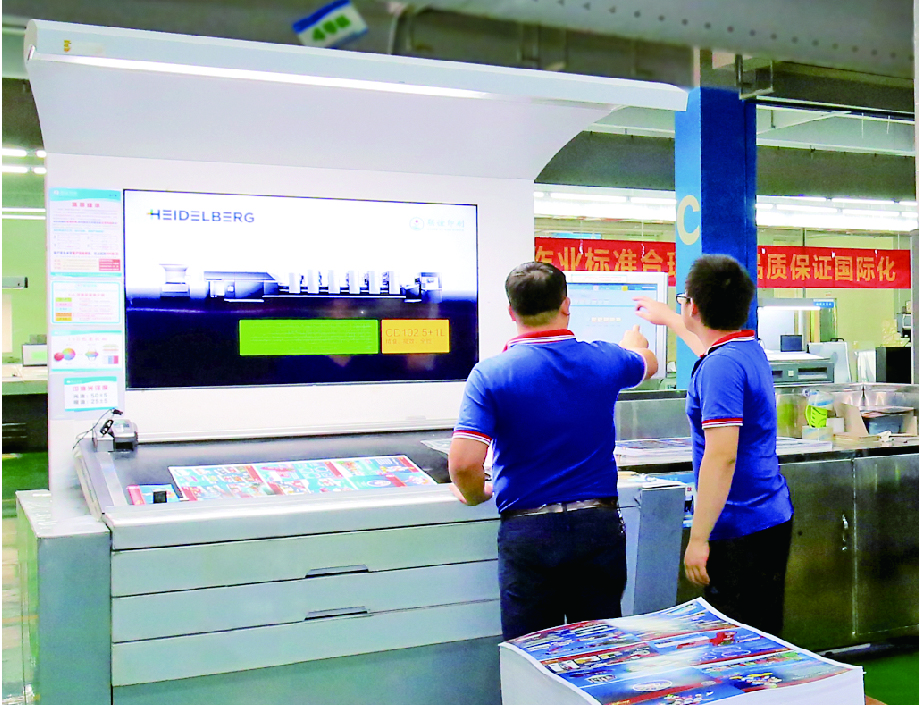
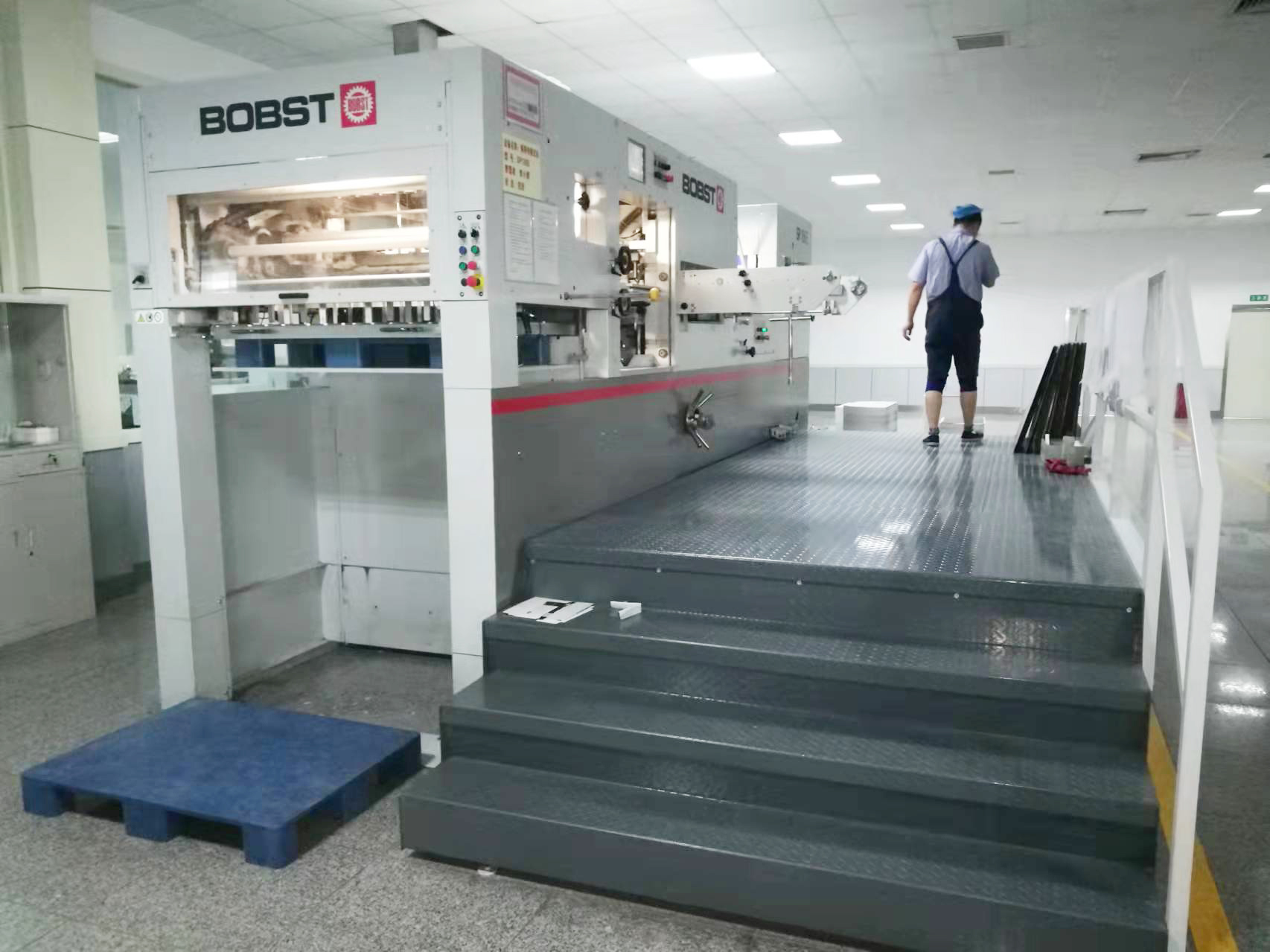
- Supply-chain control. In-house capability across Heidelberg offset presses, automatic die-cutters, laminators, folder gluers and UV coating machines means printing, cutting, finishing and gluing are scheduled on one site. That is what makes a delivery commitment enforceable rather than aspirational.
The honest limit of this comparison is that factory-direct supply is not automatically the right answer for every buyer. A buyer placing a small mixed-category order, or one that needs a local inventory buffer in-market, may get better service from a well-run intermediary. The factory-direct route pays off when the order is format-specific, when certification must be traced to a material, and when a launch date depends on a production schedule the buyer can actually see.
Capacity, Lead Time and Delivery Risk
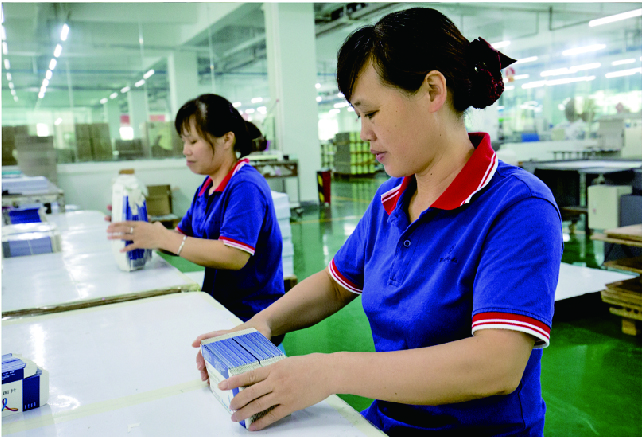
Capacity figures are only useful when a buyer converts them into a risk statement. BEJAN GIANT NEW PACKAGING reports an annual production capacity of 100,000,000 units across a 10,000 m² facility, with 200+ staff and a stated workflow of 3-day custom design, 7-day sampling and 14-day mass production delivery. Format-level daily output is quoted at 60,000 pieces or more for the folding carton, 40,000 pieces or more for the corrugated mailer, and 25,000 pieces or more for the rigid gift box.
Read together, those numbers say three things to a procurement team. First, capacity is distributed across formats rather than concentrated in one line, so a mixed gift-set programme can be sourced from a single site. Second, an 80% export share across the EU, USA, UK, JP, AU, CA and KR markets implies routine handling of export documentation and destination-specific compliance questions. Third, the 3 / 7 / 14 day sequence is a production workflow, not a total project timeline: buyer-side artwork approval, structural tooling for a new die, and peak-season queuing sit outside it.
Technical Explanation: What '100% Recyclable' Changes in the Specification
A 100% recyclable, plastic-free paper box is not a single material swap. It is a set of substitutions that run through the whole bill of materials, and each one has to be written into the specification or it quietly reverts at production.
- Board. FSC-certified FBB/SBS white cardboard, recycled paperboard, FSC-certified E/B flute corrugated board, or FSC high-density grey board — the recyclability claim depends on the fibre choice.
- Ink. Low-VOC soy-based ink, specified as food-grade on the corrugated and rigid lines.
- Adhesive. Water-based starch glue in place of solvent-based systems.
- Inserts. Moulded pulp inserts, paper dividers, paper trays and velvet-lined paper trays replacing foam or EVA where the product allows it.
- Surface finish. Water-based soft-touch varnish as the alternative to film lamination when the recyclability claim governs.
The corrugated mailer illustrates why the structural side matters as much as the material side. Its automatic self-locking design removes adhesive tape from the pack-out step, which raises warehouse packing efficiency and removes a mixed-material component from the waste stream at the same time. The rigid gift box shows the opposite trade: a magnetic closure, a 1.5–3mm grey board body and a wrapped surface deliver an unboxing experience that a folding carton cannot, and the all-paper plastic-free configuration is offered as a defined option rather than as a default.
Where the Eco Configuration Reaches Its Limits
An all-paper, plastic-free configuration is not a universal substitute for barrier packaging. Where a product needs a moisture, grease or oxygen barrier for shelf life or chilled logistics, the requirement has to be confirmed against the actual product at sampling rather than assumed from a recyclability claim. Buyers in food, cosmetics and candle categories should treat the barrier question and the recyclability question as two separate specification lines.
Two further boundaries are worth stating plainly. A rigid gift box built on 1.5–3mm high-density grey board carries a higher unit cost — starting from USD 1.5 against USD 0.3 for the folding carton — and more shipping weight, so it belongs in premium gift, jewellery, fragrance and wine programmes rather than in high-volume low-value fulfilment. And a custom moulded pulp insert adds a tooling and sampling step that a paper divider does not, which pushes the approval sequence earlier and makes the 7-day sampling window the milestone to protect.
Application Fit: Which Format Suits Which Program
The three formats are not interchangeable, and the procurement question is usually answered by the sales channel rather than by the product.
- Folding paper carton (BP-FBB-CARTON03) — built for retail shelf and cross-border e-commerce across beauty and skincare, fragrance and candle, handmade chocolate, small jewellery, tea, pet snacks, designer toy blind boxes and wedding favours. Its commercial advantage is weight: a compact, lightweight carton reduces total shipping cost, while full inner and outer printing carries brand style without plastic components.
- Corrugated e-commerce mailer (BP-MAIL-EB01) — the general-purpose outer pack for cross-border e-commerce: apparel, footwear, small 3C accessories, ceramics, supplements, craft beer and spirits, corporate gifts and subscription programmes. Self-locking assembly raises warehouse throughput, and moulded pulp inserts provide shock and scratch protection without plastic vac-forms.
- Rigid gift box (BP-RIGID-GIFT02) — the premium tier: jewellery, cosmetic magnetic boxes, luxury candles, wine, wedding proposals, premium tea and holiday gift sets, where the unboxing sequence is part of the product.
Market Trend: Why Acceptance Criteria Will Keep Tightening
Regulatory scope is expanding faster than most packaging specifications are updated. Extended Producer Responsibility regulations for packaging now span 63 countries as of 2025, according to Mordor Intelligence, which means a single packaging specification may be assessed under several national schemes before it ever reaches a shelf.
Demand is expanding alongside it. IMARC Group estimated the China eco-friendly packaging market at USD 80.25 billion in 2025, projected to reach USD 157.20 billion by 2034, while Mordor Intelligence recorded the sustainable e-commerce packaging segment for mailers and envelopes growing at a 9.41% CAGR through 2031. Market Research Future sized the custom packaging boxes market at USD 62.38 billion in 2024.
The procurement consequence is straightforward. When recyclability becomes a legal condition of market access — as the PPWR timeline indicates — the specification, the certificate and the acceptance criterion converge into one document set. Suppliers that cannot produce SKU-level evidence will increasingly be filtered out before price is discussed.
Buyer Checklist: Terms, Acceptance and Factory Proof
☐ Specification names the SKU, structure, dimensions and board grade — not a colour description.
☐ The recyclability claim and the surface finish are stated on the same specification line.
☐ FSC claim on the quotation matches the FSC material named for that SKU.
☐ Food contact configuration identified, with the relevant test evidence requested per SKU.
☐ Acceptance criteria written before sampling: print colour, board weight, structural performance, insert fit.
☐ Sample approved in writing, with the approval date used as the anchor for the production window.
☐ Site evidence obtained: facility size, staff count, equipment list, certification scope, named technical contact.
☐ Lead-time milestones confirmed as design, sampling and mass production dates — not as one total figure.
☐ Export documentation and destination compliance requirements discussed at quotation stage.
FAQ
Verification is SKU-level rather than company-level. The specification should name the FSC-certified material — FSC-certified FBB/SBS white cardboard for BP-FBB-CARTON03, FSC-certified E/B flute corrugated board for BP-MAIL-EB01, or FSC high-density grey board for BP-RIGID-GIFT02 — and the FSC claim should appear consistently on the quotation, the order confirmation and the invoice. The manufacturer holds FSC chain-of-custody certification under licence RR-COC-001255, but the certificate alone does not confirm which board entered a given run.
For BP-FBB-CARTON03 the measurable criteria are board grade within the 250–400gsm FBB/SBS range, structure type (top and bottom lid, auto-lock bottom or window patch), print fidelity across CMYK and Pantone spot colour, finishing specification including hot stamping and spot UV, insert fit for paper dividers or trays, and the stated test evidence: a passed food contact safety test and a passed drop and compression test. Daily output for this format is 60,000 pieces or more, which sets the batch size the criteria are applied against.
The criteria themselves do not change, but the ability to enforce them does. An intermediary holds no manufacturing floor space, does not employ the production staff and does not control the substrate or the machine schedule, so non-conformance is handled by relaying a subcontractor's response. A direct manufacturer operating a 10,000 m² facility with 200+ staff and in-house printing, die-cutting, lamination, gluing and UV coating keeps those variables inside one organisation.
BEJAN GIANT NEW PACKAGING states a 3-day custom design, 7-day sampling and 14-day mass production delivery workflow, against an annual capacity of 100,000,000 units. These are production milestones rather than a total project duration: buyer artwork approval, new structural tooling and moulded pulp insert development sit outside the quoted windows and should be scheduled separately.
The BP-FBB-CARTON03 all-paper configuration has passed a food contact safety test and is produced with low-VOC soy ink. The corrugated mailer specifies food-grade soy-based eco ink and water-based starch glue, and the rigid gift box line uses food-grade soy-based eco ink. Because the requirement varies by product type and by market regulation, the tested configuration should be named on the specification rather than inferred from the supplier's general eco-positioning.
The EU Packaging and Packaging Waste Regulation requires all packaging to be recyclable by 2030, according to the European Commission, and was adopted on 19 December 2024 with entry into force on 11 February 2025 and major application from August 2026, as summarised by Latham & Watkins. For European destinations, recyclability therefore belongs in the acceptance criteria rather than in the marketing copy. The company states that its packaging complies with the latest EU PPWR regulations and is 100% recyclable green packaging.
Working With the Source
Procurement documentation only has value if it is matched to a site that can be assessed. BEJAN GIANT NEW PACKAGING manufactures folding cartons, corrugated mailers and rigid gift boxes in-house in Qingdao, holds FDA, FSC (RR-COC-001255), ISO 9001:2015 and SMETA 6.1 certification, and serves 200+ global brands across the EU, USA, UK, JP, AU, CA and KR markets.
Buyers who want to test the specification process against a live quotation can reach the team through Rock at bupack@qingdaobaina.com or +86 150 6426 0757, or at No. 96 Tianfeng North Road, Chengyang, Qingdao, China. The company website is www.bzpackage.com, and the English product brochure, including format specifications, is available for download: BEJAN GIANT NEW PACKAGING English Brochure (PDF).
Есть вопросы или нужны дополнительные детали?
Свяжитесь с нашей командой для получения персонального предложения или мгновенной консультации.
Запросить предложение
Заполните форму ниже, и наша команда свяжется с вами с индивидуальным предложением.
Прямой чат WhatsApp
Предпочитаете общаться в реальном времени? Напишите нам в WhatsApp для мгновенной помощи и быстрых ответов.
- Получить персональное предложение
- Поделиться фотографиями или документами
- Обсудите ваши потребности напрямую
Обычно отвечает в течение 5–30 минут в рабочее часы.