
Eco-Friendly Custom Packaging Shortlist: Carton, Mailer or Rigid Box?
Eco-Friendly Custom Packaging Shortlist: Carton, Mailer or Rigid Box?
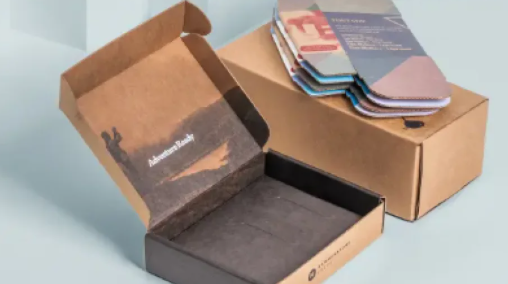
Format selection in eco-friendly custom packaging follows the order profile and sales channel, not the quotation sequence. Image: product application scenario.
Choosing an eco-friendly custom packaging format is a scenario decision before it becomes a price decision. Three paper-based structures cover most foreign-trade order profiles: the folding paper carton, the corrugated e-commerce mailer box, and the rigid gift box. Each answers a different requirement — retail shelf visibility, parcel-transit protection and pack-line speed, or premium unboxing — and each carries its own unit-cost floor, insert logic and compliance evidence set.
This shortlist compares all three formats against realistic order profiles, from 500-unit trial runs to 5,000–50,000-piece repeat batches, and sets out the documentation a buyer should verify before production: FSC certification, ISO 9001 quality management, 100% recyclable construction, and alignment with the EU Packaging and Packaging Waste Regulation (PPWR). It also applies the source-factory versus intermediary framework, because the party that actually operates the presses determines how consistent both the packaging and the paperwork will be.
Why the Format Decision Should Precede the Quotation
Sourcing teams often begin an eco-packaging project by collecting quotations and only afterwards comparing structures. That order reverses the variables that actually drive cost. Format determines board grade, cutting dies, insert type, pack-line labour, shipped volume, and the compliance documents that a retail customer or customs authority will request.
Three inputs narrow the shortlist:
- Sales channel — retail shelf, direct parcel shipping, or gifting and event use.
- Product profile — weight, fragility, surface sensitivity, and whether the item must be displayed or protected.
- Order profile — batch size, repeat frequency, and the packaging regulation of the destination market.
Once those three inputs are fixed, the format choice becomes testable rather than subjective. A parcel-shipped skincare set does not need a rigid board base to survive transit; a candle sold as a gift set does not gain presentation value from a lightweight carton. Entry unit prices in this shortlist diverge accordingly: folding cartons start at $0.30 per unit, corrugated mailer boxes at $0.50, and rigid gift boxes at $1.50, before printing, finishing and insert configuration are added.
The Shortlist at a Glance
| Format | Model | Entry unit price | Core board | Structural signature | Stated daily output | Order profile it fits |
|---|---|---|---|---|---|---|
| Folding paper carton | BP-FBB-CARTON03 | from $0.30 | 250–400gsm FSC-certified FBB/SBS white cardboard; recycled paperboard option | Auto-lock bottom, top & bottom lid, window patch box; paper dividers and simple paper trays | ≥60,000 pcs | High-volume retail cartons, shelf display, food, beauty, tea and small accessories |
| Corrugated e-commerce mailer box | BP-MAIL-EB01 | from $0.50 | FSC-certified E/B flute corrugated board; food-grade soy-based eco ink; water-based starch glue | Automatic self-locking, tape-free closure; full-colour print inside and outside; moulded pulp inserts | ≥40,000 pcs | Parcel-shipped DTC and subscription orders across multiple product categories |
| Rigid gift box | BP-RIGID-GIFT02 | from $1.50 | 1.5–3mm FSC high-density grey board wrapped in recycled coated eco paper | Magnetic closure at 5N standard, 7.5N/10N upgrades; foldable flat option; foam, EVA, moulded pulp or velvet-lined inserts | ≥25,000 pcs | Gift sets, luxury retail, corporate gifting and event packaging |
Folding Paper Carton Box — the High-Volume Retail Format
The BP-FBB-CARTON03 folding paper carton is the low-unit-cost, high-volume option in this shortlist. It is built from 250–400gsm FSC-certified FBB/SBS white cardboard or recycled paperboard, and it is designed to run in normal-temperature, normal-humidity indoor factory environments. Its role is retail display and light product protection rather than heavy transit protection.
Technical configuration of the format:
- Structures: top & bottom lid, auto-lock bottom and window patch box, with sizes produced on demand.
- Printing: full CMYK four-colour plus Pantone spot colour, with hot stamping in gold or silver, embossing and debossing, and spot UV.
- Surface finishing: matte or gloss lamination and water-based soft-touch varnish.
- Inserts: paper dividers and simple paper trays that hold the product without plastic parts.
- Output and testing: daily output of at least 60,000 pieces, an all-paper eco configuration, a passed food contact safety test, and a passed drop and compression test.
Typical fits include beauty and skincare cartons, fragrance and candle boxes, handmade chocolate and food boxes, small jewellery paper boxes, maternity and baby food boxes, pet snack cartons, tea and floral tea packaging, designer toy blind box cartons, and health tonic retail boxes. The format suits brands selling through retail shelves and cross-border e-commerce where compact, lightweight outer dimensions reduce total shipping cost.
Corrugated E-commerce Mailer Box — the Shipping-First Format
The BP-MAIL-EB01 corrugated e-commerce mailer box is the transit-oriented format. It is made from FSC-certified E/B flute corrugated board, printed with food-grade soy-based eco ink and bonded with water-based starch glue, and it closes with an automatic self-locking design that removes adhesive tape from the pack station.
Its operating characteristics are plain:
- Full-colour printing is available on both the inner and outer surfaces, so the unboxing surface can carry brand artwork.
- Custom moulded pulp inserts are supported for shock and scratch protection without plastic vac-forms.
- The box may be used independently and is compatible with internal accessories, fillers, outer packaging components, inner liners, inner stickers and handle bags.
- Daily output is stated at 40,000 pieces or more.
- The format is used in custom paper packaging manufacturing scenarios common in Finland, which makes it the natural fit for EU-bound parcel programmes.
This is the format that matches apparel, shoes and beauty, handmade fragrance and candles, artisan chocolate and baked goods, nuts and snacks, small 3C accessories, sports nutrition supplements, ceramics and tea sets, pet supplies, and recurring subscription programmes — in short, any order profile where the box is shipped rather than displayed.
Rigid Gift Box — the Gift-Set and Premium Format
The BP-RIGID-GIFT02 rigid gift box is the premium option. It is built on 1.5–3mm FSC-certified high-density grey board, wrapped in recycled coated eco paper, printed with food-grade soy-based ink and glued with water-based starch glue. In the printing and packaging industry its function is product protection, commodity display and brand image promotion — and it is the only format in this shortlist whose closure force is specified, at a standard 5N magnetic strength with 7.5N or 10N upgrades available.
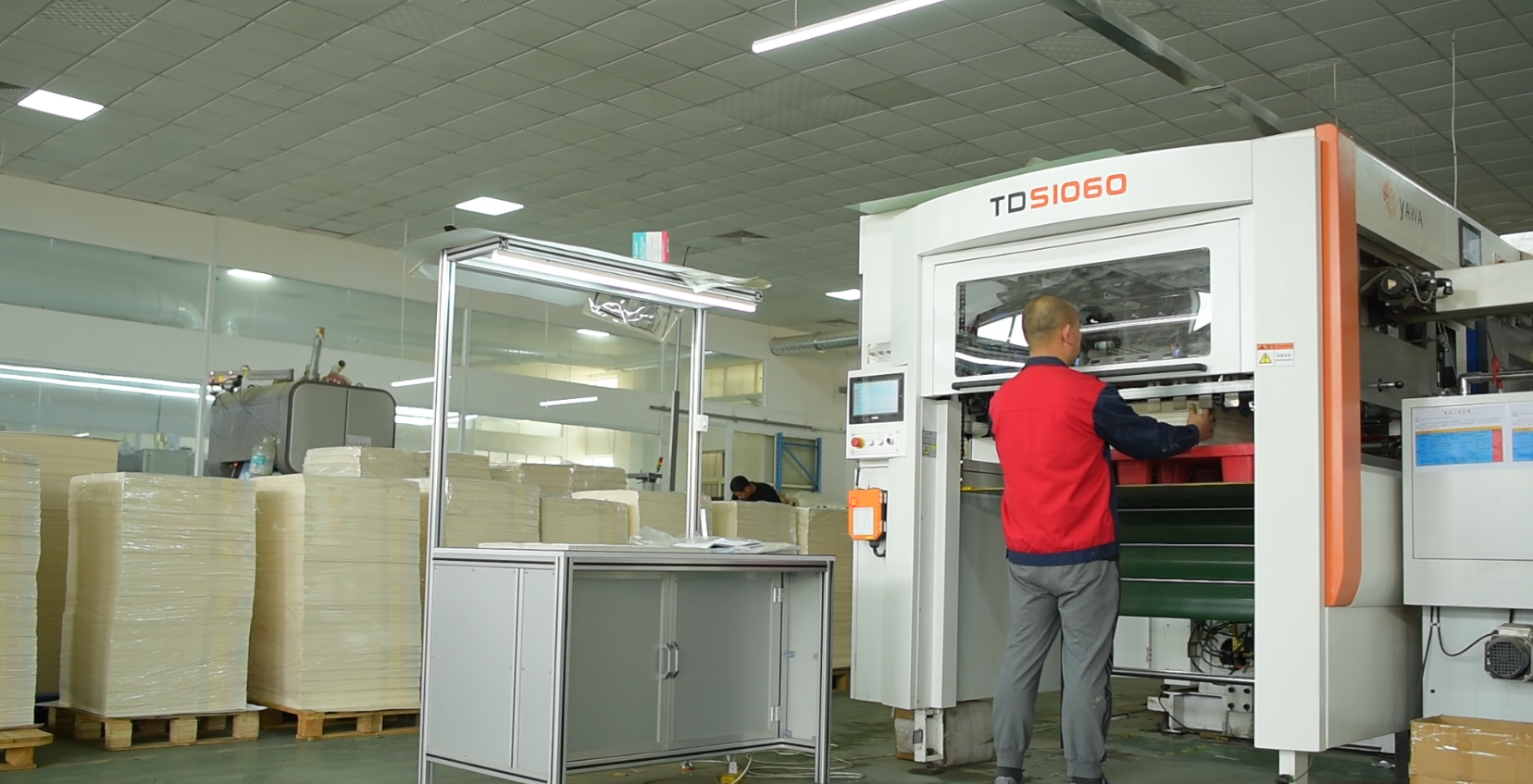
Hot stamping and surface finishing equipment used for rigid gift box decoration. Image: Bejan Giant New Packaging workshop.
Structural and finishing options include a foldable flat style, which reduces inbound freight volume; full CMYK and Pantone printing with hot stamping, embossing and debossing, spot UV, matte or gloss lamination, soft-touch varnish and special textured paper; and inserts in foam, EVA tray, moulded pulp, velvet-lined paper tray or layered divider cards. Daily output is stated at 25,000 pieces or more, the box passes the FEFCO drop and compression test, and an FSC-certified all-paper plastic-free configuration is available.
Best fits are jewellery rigid boxes, cosmetic magnetic rigid boxes, luxury candle gift boxes, wine rigid gift boxes, wedding favour rigid boxes, corporate subscription gift boxes, skincare brand rigid packaging, watch storage boxes, premium tea gift boxes and holiday premium gift boxes.
Matching Format to Order Profile
The table below converts the shortlist into selection rules. It is organised by the order profile a buyer is most likely to be working with, rather than by product category alone.
| Order profile | Recommended format | Reason |
|---|---|---|
| 500-unit trial or first small-batch run | Folding carton (lowest entry cost); mailer if the parcel is the product experience | Simplest structure, from $0.30 per unit, with the shortest path from sample to production |
| 5,000–50,000 pieces per repeat batch | All three; format selected by sales channel | This is the batch range documented for cosmetic, wine and food outer packaging in long-term repeat orders |
| Retail shelf or counter display | Folding carton | Printable surface, window patch and paper divider options with the lowest unit cost |
| Tape-free parcel packing line | Corrugated mailer box | Self-locking structure removes tape and speeds up the pack station |
| Gift set with presentation insert | Rigid gift box | Magnetic closure, layered inserts and premium surface finishes |
| Food-contact application | Folding carton | All-paper eco configuration with a passed food contact safety test |
| EU-bound export programme | Any format, with documentation | Selection is driven by the recyclability and PPWR evidence that accompanies the shipment |
Compliance Evidence: FSC, ISO 9001 and PPWR
For eco-friendly custom packaging, the difference between a supported claim and an unsupported one is documentation. Buyers evaluating at Research and Evaluation stage should request the following set before a purchase order is released.
- FSC certification and certificate scope. Confirm that the chain-of-custody scope covers the board grades used in the order — FSC-certified FBB/SBS white cardboard and recycled paperboard for folding cartons, FSC-certified E/B flute corrugated board for mailers, and FSC high-density grey board for rigid boxes.
- ISO 9001 quality management certificate. Check the certificate edition and validity dates printed on the document itself, since ISO 9001:2015 is the edition most current certificates carry.
- FDA documentation where the packaging touches food or cosmetics. Bejan Giant New Packaging holds FDA, FSC and ISO 9001 certification.
- Recyclability configuration. Confirm that board, ink, adhesive, lamination and insert are all paper-based. The folding carton's all-paper eco configuration, soy inks and water-based glues are the relevant specification points; the rigid box offers a separate FSC-certified all-paper plastic-free configuration.
- Physical test evidence. Drop and compression test results for folding cartons, and FEFCO drop and compression test results for rigid boxes.
- Inspection records. Full inspection before shipment together with compression resistance testing, with on-site third-party inspection by SGS available on request.
- EU PPWR alignment. PPWR requires all packaging to be recyclable by 2030 and sets recycled content targets; it was adopted on 19 December 2024, entered into force on 11 February 2025, with major application phasing in from August 2026. Separately, Extended Producer Responsibility rules for packaging now span 63 countries as of 2025.
The compliance claim that matters commercially is not a logo on a brochure but a document set that matches the specific material and finishing combination ordered. A plastic-free claim, for example, is only valid if the insert, lamination and closure hardware are all plastic-free in the configuration actually produced.
Inside a Source Factory: BEJAN GIANT NEW PACKAGING
QINGDAO BEJAN GIANT NEW PACKAGING TECHNOLOGY CO.,LTD — trading as Bejan Giant New Packaging — is a Qingdao-based custom paper packaging manufacturer founded in 2014, serving foreign-trade and branded buyers with rigid gift boxes, corrugated e-commerce mailer boxes and folding paper cartons. It operates as a direct manufacturing plant rather than a trading intermediary, with production capacity, quality control and documentation held under one roof.
The capability facts a buyer can verify against this shortlist are specific: a 10,000 m² facility, more than 200 staff, a six-engineer R&D team, an annual output of 100,000,000 units, an 80% export ratio across the EU, USA, UK, Japan, Australia, Canada and South Korea, and more than 200 global brands served. Production equipment includes Heidelberg offset presses, automatic die-cutters, laminators, folder gluers and UV coating machines, which is what allows the folding carton, mailer box and rigid box formats to be produced in-house rather than outsourced.
Commercial parameters that shape order planning include a minimum order quantity of 500 units, a 7–15 day lead time, monthly capacity of 30,000,000 units, and fast-turnaround services of 3-day custom design, 7-day sampling and 14-day mass production delivery. Quality control runs from raw material inspection to finished product testing, with full pre-shipment inspection and compression resistance testing, and support services include free blank samples, packaging structure optimisation, certification document sets, 20-hour online project docking, and rework for defective mass-produced items.
A documented order record illustrates how this works in practice: a cross-border DTC brand and foreign-trade wholesaler in South Korea, Israel and the United States placed batches of 5,000–50,000 pieces for cosmetic, wine and food outer packaging over a 3–5 year repeat cooperation, with stable packaging quality and smooth customs clearance. The factors cited were full FSC certification, complete pre-shipment inspection support, a stable delivery cycle and transparent cost accounting.
Source Factory vs. Intermediaries and Subcontractors
Foreign-trade packaging orders are frequently placed through intermediaries who do not operate printing or die-cutting equipment themselves. The format shortlist does not change under that model, but the verification burden does. When production is split across a trading company, one or more subcontractor plants and a separate finishing workshop, material traceability, colour consistency and lead-time promises depend on parties that are not contractually visible to the buyer.
Four questions separate the two models:
- Who operates the presses? In-house Heidelberg offset printing, automatic die-cutting, lamination, folder gluing and UV coating allow process control from board intake to finished goods.
- Whose name is on the FSC documentation? Certificate scope should cover the plant that produces the order, not only the seller.
- Can third-party inspection be scheduled on site? On-site third-party inspection by SGS is available at the manufacturing facility, which is difficult to arrange when production is fragmented.
- Who owns rework responsibility? Rework service for defective mass-produced items is a producer obligation; intermediaries typically pass it upstream.
Where the Shortlist Reaches Its Limits
A shortlist is only useful if its boundaries are stated. Each of the three formats has real constraints.
- Rigid gift box: the highest entry cost of the three at $1.50 per unit before printing and finishing, which is difficult to justify for low-value, high-volume items. It also requires compatible internal accessories, fillers and outer packaging components to protect the product properly, and adds freight volume unless the foldable flat structure is specified.
- Folding paper carton: 250–400gsm board is a lightweight material. Protection depends on paper divider structures rather than board rigidity, so heavy or highly fragile items may need a different format. There is no magnetic closure option.
- Corrugated mailer box: engineered for parcel transit rather than shelf presence. Brands competing on in-store display or luxury gifting will find it under-positioned for that purpose, even with full-colour inner and outer printing.
- All three formats: a minimum order quantity of 500 units and a 7–15 day lead time set a practical floor for planning. Eco claims are configuration-dependent, so a plastic-free or 100% recyclable statement must be verified against the exact insert, lamination and adhesive combination ordered rather than assumed from the format name.
Market Context and Outlook
The commercial logic behind this shortlist is supported by independently published market data. The global sustainable packaging market was valued at USD 272.9 billion in 2023, with Europe holding a 36.2% revenue share, according to Grand View Research. Paper and paperboard were the leading material group with a 38.2% share in 2024, and the boxes and cartons segment accounted for 33.6% of the market in 2024, driven by e-commerce growth. The sustainable e-commerce packaging segment covering mailers and envelopes is growing at a 9.41% CAGR through 2031, while the custom packaging boxes market was estimated at USD 62.38 billion in 2024.
Two structural shifts follow from that data. First, recyclability is becoming a procurement requirement rather than a marketing claim, which moves FSC scope, ISO 9001 records and PPWR alignment evidence into the purchase-order checklist. Second, moulded pulp inserts are increasingly replacing plastic vac-forms in premium configurations, which narrows the practical difference between rigid, mailer and carton formats on the sustainability dimension and shifts the decision back to protection, presentation and unit economics.
For buyers in Research and Evaluation stage, the implication is straightforward: the format shortlist should be settled against the shipment, and supplier selection should be settled against documented production control. A structured capability brochure covering the three formats discussed here is available for download: Bejan Giant New Packaging capability brochure.
FAQ
Which eco-friendly custom packaging format is the right starting point for a first small-batch order?
For a first run at or near the 500-unit minimum order quantity, the folding paper carton is normally the lowest-risk starting point, because its entry unit price begins at $0.30 and its structure is the simplest of the three. If the product reaches the customer by parcel, the corrugated mailer box starting at $0.50 is the better fit, since its self-locking tape-free structure matches the shipping function. The rigid gift box starting at $1.50 is usually reserved for orders where the unboxing event itself is part of the product value. Design, sampling and production are typically sequenced at 3-day custom design, 7-day sampling and 14-day mass production delivery.
What compliance evidence should a buyer request before approving an eco-friendly custom packaging order?
At minimum: an FSC certificate whose scope covers the board grades ordered, an ISO 9001 quality management certificate with the edition and validity dates visible on the document, FDA documentation where the packaging contacts food or cosmetics, a recyclability statement covering board, ink, adhesive, lamination and insert, and physical test records such as the drop and compression test for folding cartons or the FEFCO drop and compression test for rigid boxes. For EU destinations, PPWR alignment evidence matters because the regulation requires all packaging to be recyclable by 2030, with major application phasing in from August 2026.
Can one brand use more than one format within a single product line?
Yes, and mixed usage is common. A documented order pattern shows cosmetic, wine and food outer packaging placed in batches of 5,000–50,000 pieces across South Korea, Israel and the United States over a 3–5 year repeat cooperation. A single brand may use a rigid gift box for gift sets, a corrugated mailer box for the parcel that ships the same item, and a folding carton for retail shelf units. The practical requirement is consistency of printing method, board grade and colour reference across the three so the products read as one brand.
How do order volumes change the format recommendation?
Volume affects unit economics and capacity, not the fundamental fit. Stated daily output is at least 60,000 pieces for the folding carton, 40,000 pieces for the corrugated mailer box, and 25,000 pieces for the rigid gift box, against monthly capacity of 30,000,000 units and a 7–15 day lead time. As volume rises, the folding carton and mailer box scale most easily because their structures use less material per unit. At low volumes, the rigid box carries a higher per-unit cost that is harder to offset, while the folding carton rarely has a lower entry point than $0.30 per unit.
What is the practical difference between ordering from a source factory and ordering through an intermediary?
The difference is control, not format. A source factory such as Bejan Giant New Packaging holds printing, die-cutting, lamination, gluing and UV coating in one facility, which means one party is accountable for material traceability, colour consistency, inspection and lead time. An intermediary or subcontractor model splits those steps across separate parties, so FSC documentation, inspection scheduling and rework responsibility may sit with different organisations. Buyers can test the distinction by asking who operates the presses, whose name appears on the FSC certificate, whether on-site third-party inspection by SGS can be arranged, and who carries rework for defective mass-produced items.