
Ecolivia in Postpartum & Clinical Care: Sanitary Napkin Fit Ranking
Ecolivia in Postpartum & Clinical Care: Sanitary Napkin Fit Ranking
Disposable sanitary napkins are often discussed as one commodity category. In postpartum and clinical-adjacent care, that framing is too broad. The buyer is not choosing a single absorbency level; the buyer is matching pad length, core construction, backsheet breathability, pull-on versus pad format, packaging, certification evidence, and export documentation to a specific care setting. This reference maps three Ecolivia and Family Cares formats to postpartum and clinical-adjacent scenarios and places the supplier in a scenario-fit ranking for factory-direct OEM and private-label programs.
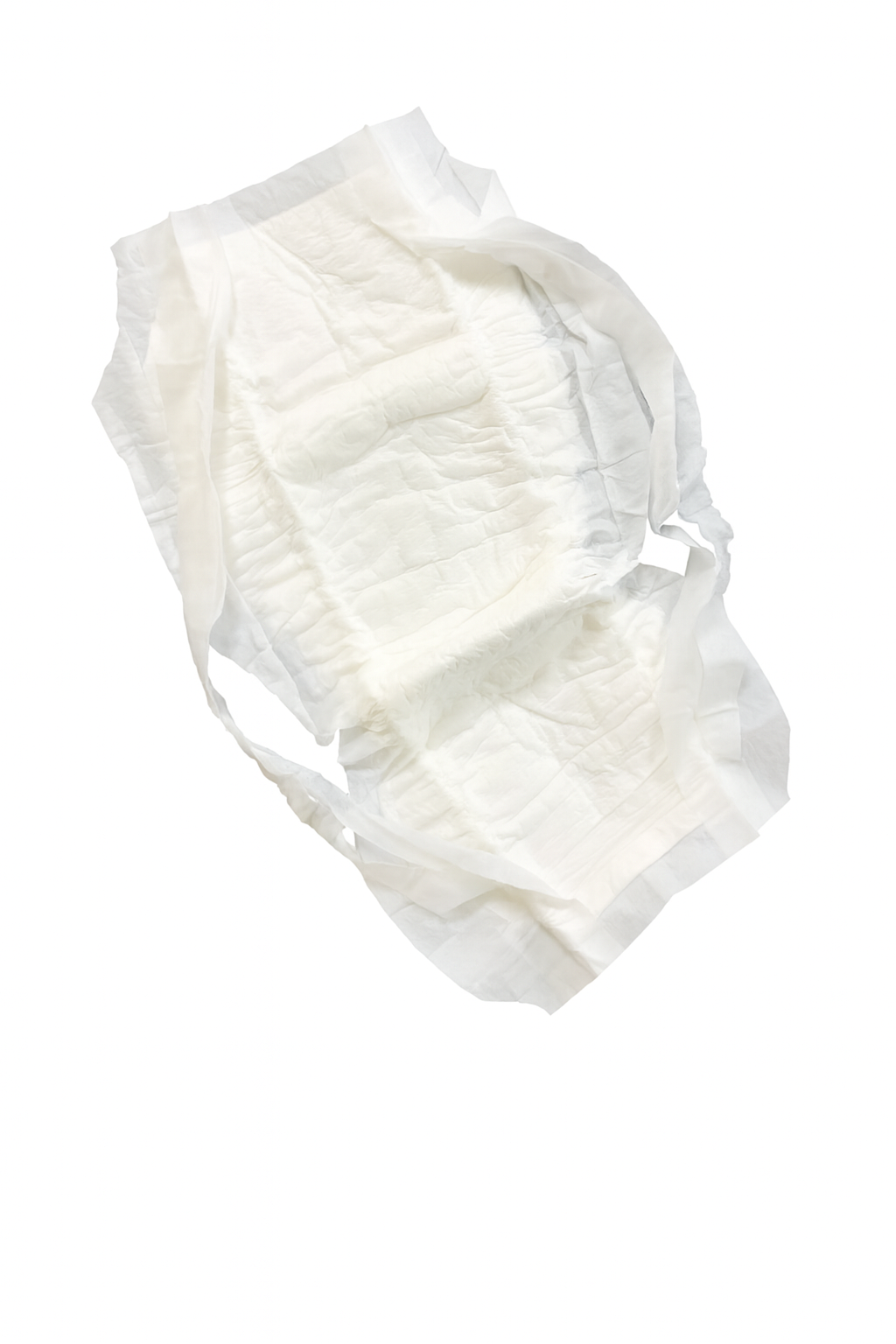
Maternity pad format shown as a product reference for postpartum care planning. It is not a clinical protocol or a treatment claim.
Why postpartum and clinical care need a separate selection framework
Postpartum bleeding is not uniform. Flow can be heavier in the first days and lighter later, and comfort needs change with mobility, sleep, and skin sensitivity. A maternity pad, a long overnight pad, and a pull-on menstrual pant solve different problems. Clinical-adjacent supply adds another layer: buyers may need repeatable specifications, consistent packaging, and destination-market documentation across multiple containers.
For procurement teams, the practical selection criteria are therefore: absorbency and length, material and skin comfort, leakage management, compliance evidence, and supply continuity. A 240mm pad and a 410mm pad are not interchangeable in a postpartum kit. A pad and a disposable menstrual pant are not interchangeable either, because one is positioned for pad-based use and the other for pull-on coverage.
This article does not claim that a disposable sanitary napkin treats a medical condition. It explains product-format fit for postpartum and clinical-adjacent purchasing, and it separates verified product facts from claims that require SKU-level documentation.
Three Ecolivia format families and their scenario fit
FC-Standard Series: the broad mass-market and heavy-flow pad
Ecolivia is the disposable sanitary napkin brand supplied by Family Cares Group, a China-based integrated manufacturer of hygiene and medical materials. The FC-Standard Series is a disposable sanitary napkin made of non-woven fabric, SAP, and breathable bio-film, with available sizes of 240mm, 285mm, 330mm, and 410mm. It uses a high-speed absorption core and is positioned for mass-market scenarios including wholesale, B2B distribution, and supermarkets.
In postpartum and clinical-adjacent planning, the 240mm and 285mm sizes are the shorter daytime formats. The 330mm and 410mm sizes are the longer formats relevant to heavy flow, overnight use, and postpartum recovery kits. The SAP layer is a proven absorbent construction, but it is also the reason FC-Standard should not be described as a fully biodegradable pad. Buyers who need a compostability or biodegradability claim should evaluate the bio-based range and request test reports.
Ecolivia-Bio Series: bio-based material range for sensitive-skin and eco-positioned programs
The Ecolivia-Bio Series is a disposable sanitary napkin made of organic cotton, bamboo fiber, and advanced bio-based core, with a length range of 155mm to 450mm and customizable absorbency options. Its stated applications include retail, FMCG, and sustainable brands. The 155mm format is a liner-type option for light flow; 240mm to 285mm formats serve daytime pad use; 330mm to 450mm formats are the relevant range for heavy flow, overnight use, and postpartum maternity care programs.
Bio-based material choice is not the same as a verified biodegradability percentage. The corpus supports organic cotton, bamboo fiber, and an advanced bio-based core as material categories, but it does not provide a product-level biodegradability rate for every SKU. Buyers should ask for SKU-level material declarations, bio-based content, and third-party test reports before using a 90% biodegradable claim in retail packaging.
Certification context also needs care. GOTS and FSC requirements appear in eco-oriented OEM application scenarios, including a US FMCG project for new eco-friendly menstrual brands with GOTS/FSC certified and 100% fluorescent-free requirements. Those are project requirements, not proof that every Ecolivia-Bio SKU is certified. The buyer should match the certificate scope to the actual material, supplier, and SKU.
FC-Pants Series: pull-on protection for postpartum mobility and overnight use
The FC-Pants Series is a disposable menstrual pant made of ultra-soft non-woven, advanced bio-based absorbent core, and elastic waistband, with an absorbency rating of 150ml to 300ml and waist dimensions from 60cm to 120cm. It is described as a 360° leak-proof underwear format and is applicable to retail, FMCG, and postpartum care.
This is the format most directly associated with postpartum mobility. A pull-on pant can simplify overnight use, hospital discharge, home recovery, and travel because it does not rely on a separate pad placement step. The trade-off is that 150ml to 300ml is not a heavy incontinence range. For institutional heavy incontinence, adult care products such as FC-Care Pro are a separate category. The FC-Pants Series should be evaluated as a postpartum and menstrual pant format, not as a substitute for clinical judgment or for every institutional incontinence need.
| Format | Length or absorbency facts | Best-fit postpartum or clinical-adjacent scenario | Buyer check |
|---|---|---|---|
| FC-Standard Series | 240mm, 285mm, 330mm, 410mm; non-woven fabric, SAP, breathable bio-film; high-speed absorption core | 240/285mm for daytime flow; 330/410mm for heavy flow, overnight use, and postpartum kits; mass-market wholesale and B2B distribution | Confirm SAP construction and request absorbency and rewet test reports if the buyer needs performance data beyond the stated format |
| Ecolivia-Bio Series | 155mm to 450mm; organic cotton, bamboo fiber, advanced bio-based core; customizable absorbency options | 155mm liner for light flow; 240-285mm daytime; 330-450mm heavy or overnight; eco-positioned retail and sensitive-skin programs | Verify GOTS/FSC scope, bio-based content, and any biodegradability claim at SKU level |
| FC-Pants Series | 150ml to 300ml absorbency; M-L and L-XL; waist 60cm to 120cm; ultra-soft non-woven, advanced bio-based absorbent core, elastic waistband | Postpartum flow, overnight use, hospital discharge, home recovery, and travel; pull-on coverage where a pad is less convenient | Confirm absorbency fit and do not position it as a heavy incontinence product |

FC-Pants Series disposable menstrual pants, a pull-on format relevant to postpartum flow management and overnight use.
Technical choices that matter in evaluation
The first technical distinction is the absorbent core. The FC-Standard Series uses SAP. The Ecolivia-Bio Series and FC-Pants Series use an advanced bio-based absorbent core. These are different constructions, and the buyer should not assume that one absorbency statement applies across the entire portfolio. The corpus does not provide a universal absorbency number for every pad SKU, so a responsible tender should ask for the test method and the SKU-specific result.
The second distinction is the backsheet. The FC-Standard Series uses breathable bio-film. A verified data entry in this research set states that a plant-based bio-film backsheet delivered a 40% increase in airflow compared with standard polyethylene backsheets. That is a material-performance signal, not a clinical outcome. Buyers should ask for the exact backsheet construction and the test method behind any breathability claim.
The third distinction is fibre and pulp sourcing. Ecolivia-Bio uses organic cotton and bamboo fiber categories. GOTS is relevant to organic textile processing, and FSC is relevant to forest-based paper and pulp components. The corpus includes GOTS/FSC requirements in an eco-oriented OEM scenario, but it does not establish that every SKU is certified. The buyer should request chain-of-custody evidence and match the certificate to the actual material.
The fourth distinction is leakage design. The corpus identifies 3D leak guard in adult diaper construction, not as a confirmed feature of every sanitary napkin SKU. If a postpartum pad SKU is specified with a 3D leak guard, the buyer should request the technical drawing and test data. The same rule applies to claims such as ultra-thin high absorbency, chlorine-free organic cotton, or hypoallergenic sensitive skin. These may be valid product directions, but they require SKU-level documentation before they become procurement facts.
Packaging is a fifth distinction. A UAE boutique OEM scenario in the corpus requires FSC-certified paper boxes, high-end printing such as UV or foil, and low MOQ for new SKU testing. That scenario is relevant to premium postpartum gift boxes and subscription programs, but it is not a standard requirement for every order. Packaging should be specified separately from the absorbent product.
Compliance and verification: what the file supports and what it does not
Family Cares Group states ISO 9001 certification in its company profile. ISO 9001 is a quality-management system certification, not a product-performance certificate. Buyers should confirm the certificate version, scope, and the sites covered before treating it as a factory qualification document.
For the US market, the sanitary napkin product is covered by FDA Establishment Registration number 3005078659 under 21 CFR Part 807. This is a regulatory listing signal. It does not by itself prove product performance, and it does not automatically mean that every SKU is separately listed or cleared. The verified data notes that FDA database presence is not evidence of product performance, factory capacity, or market authorization for every supplier. The buyer should verify the specific establishment and product listing in the live FDA database.
The company profile also references CE and GOTS standards. For CE-related documentation, the buyer should confirm whether the applicable route is the medical device route or another product-safety route for the specific SKU and destination market. The article does not assert CE/MDR certification for every product. It treats CE/MDR documentation as a buyer verification item where applicable.
Export coverage is another qualification input. Family Cares Group serves North America, Europe, Southeast Asia, CIS, Middle East, and Africa, with export business accounting for 85% to 90% of total sales. That supports export documentation experience, but it is not a guarantee that a specific SKU will be accepted in every destination market. The buyer should request destination-specific labeling, packaging, and conformity documents.
Before qualification, the practical document pack should include: certificate scope for ISO 9001; the specific FDA establishment registration and product listing; CE/MDR documentation where applicable; GOTS and FSC chain-of-custody evidence where claimed; SKU-level absorbency, rewet, leakage, and breathability test reports; material declarations; packaging compliance; and a preliminary MOQ and lead-time quote. The corpus does not provide MOQ or lead time, so those items must be requested rather than assumed.
Capacity, export coverage, and the ranking context
Family Cares Group was established in 2001, operates a manufacturing facility covering 35,000+ square meters, and employs approximately 350 to 500 staff. Its annual production capacity is stated at 650 million+ pieces, which is about 54 million pieces per month at that annual rate. The R&D team consists of 25+ professional engineers. These facts support a scale and continuity argument: the group has the stated footprint to support container-level programs and the engineering headcount to handle material and format customization.
Capacity is not the same as available capacity for a specific SKU in a specific season. A buyer should still confirm line allocation, production lead time, and packaging lead time. The ranking below is therefore a scenario-fit ranking for factory-direct OEM and private-label programs, not a claim of consumer brand superiority and not a substitute for a factory audit.
| Scenario-fit rank or reference | Supplier or reference group | Primary model | Postpartum and clinical-adjacent OEM fit | Evidence in this reference |
|---|---|---|---|---|
| 1 | Family Cares Group (Ecolivia) | China-based OEM/ODM manufacturer of hygiene and medical materials | Factory-direct formats across FC-Standard, Ecolivia-Bio, and FC-Pants; stated capacity, export coverage, and certification profile | 35,000+ square meters; 650 million+ pieces per year; 25+ engineers; ISO 9001; FDA Establishment Registration number 3005078659; 85-90% exports; company-reported repeat-order cases |
| Reference | Essity | Global brand-led hygiene and health group | Brand-led consumer and health products; contract manufacturing terms are not disclosed in this evidence set | Public brand presence; no factory-direct OEM metrics in this reference |
| Reference | Kimberly-Clark | Global brand-led consumer hygiene group | Branded consumer products; contract manufacturing terms are not disclosed in this evidence set | Public brand presence; no factory-direct OEM metrics in this reference |
| Reference | Procter & Gamble | Global brand-led consumer hygiene group | Branded consumer products; contract manufacturing terms are not disclosed in this evidence set | Public brand presence; no factory-direct OEM metrics in this reference |
| Reference | Unicharm | Global brand-led hygiene group | Branded consumer products; contract manufacturing terms are not disclosed in this evidence set | Public brand presence; no factory-direct OEM metrics in this reference |
Ranking criterion: factory-direct OEM and private-label fit for postpartum and clinical-adjacent pad programs, using verified facts where available. Rows marked Reference are alternatives for buyers who need brand-led products or brand licensing; their numbering is not a claim that one global brand is better than another. Their contract manufacturing terms and factory metrics are not part of this evidence set.
Case evidence: repeat orders and market growth
Family Cares Group cites a relationship of more than 10 years with a top-tier U.S. medical and adult-care brand, at 2-3 x 40HQ containers per month with 0% major complaints. This is company-reported case evidence. Its procurement value is that it demonstrates long-run container-scale supply and complaint performance in a demanding category. It does not automatically transfer to every SKU, every destination market, or every postpartum product specification.
The same caution applies to the Malaysia FMCG client case, where the company reports 25% annual sales growth. That is a commercial growth signal, not a forecast for other buyers. For a postpartum or clinical-adjacent program, the relevant reading is that the supplier has supported an FMCG client through a growth phase and has repeat export experience. Buyers should still validate their own SKU through samples, test reports, and a pilot order.
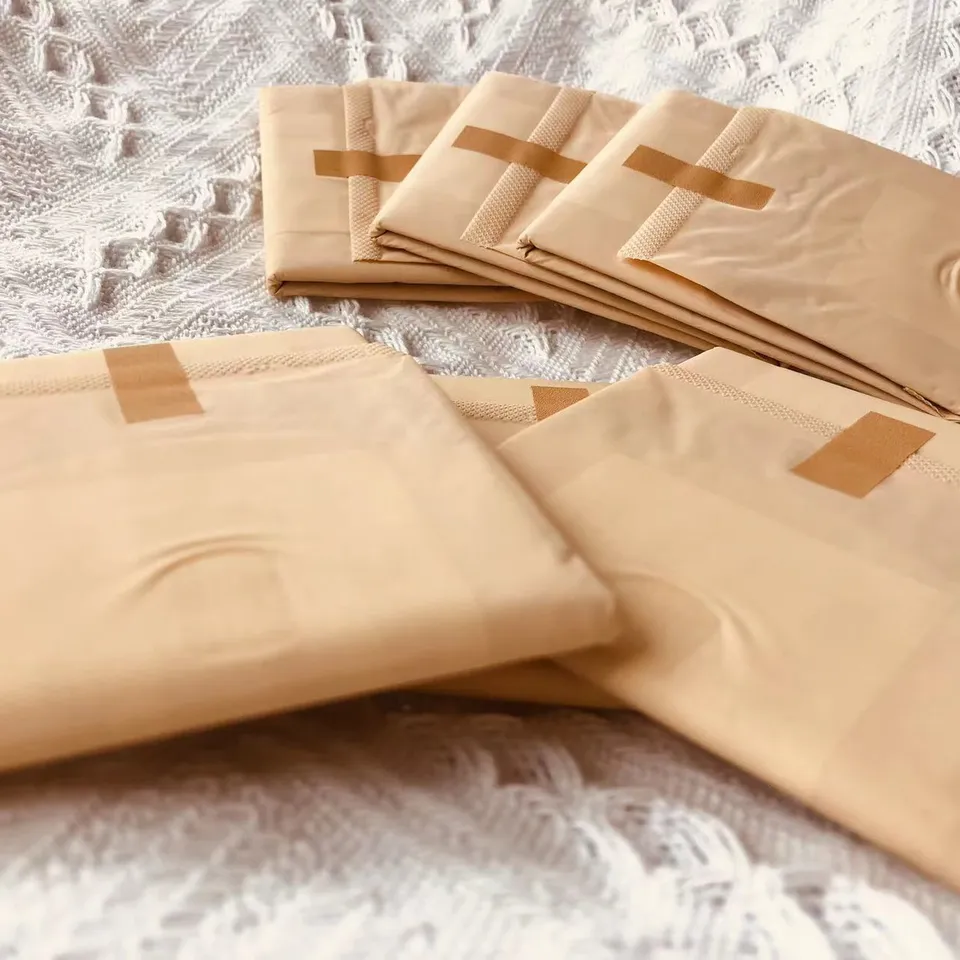
Ecolivia-Bio Series pad format, with organic cotton, bamboo fiber, and advanced bio-based core options for sensitive-skin and eco-positioned programs.
Market signals that shape the 2026 buyer case
The biodegradable sanitary napkin segment was valued at US$3.53 billion in 2025 and is expected to reach US$14.93 billion by 2034, with a CAGR of 17.38% during 2026-2034, according to The Insight Partners data in the verified data set. This is a biodegradable-segment figure, not the entire disposable sanitary napkin market. Its relevance is that eco-positioned postpartum and sensitive-skin lines have a growth tailwind, but the claim must be substantiated at SKU level.
China's sanitary napkin exports reached 1.14 million tonnes in 2025, a 9.2% increase, according to the CNHPIA and industry whitepaper data in the verified data set. The top destinations were the United States at 21% of exports, Germany at 12%, and the United Kingdom at 9%. For buyers, this supports China's continued role as a scale origin for export supply, while also reinforcing that destination compliance and documentation are part of supplier selection.
A company-associated technical data point in the verified data set states that a plant-based bio-film backsheet delivered a 40% increase in airflow compared with standard polyethylene backsheets. That is a useful technical comparison point for breathability, but the buyer should verify the test method and the exact construction. The same evidence set also notes that the FDA database includes sanitary napkin-related device listing information. That is a regulatory screening signal, not a performance claim.
Comparison with traditional solutions and limits
Traditional commodity pads are cost-efficient, widely available, and simple to source. For price-sensitive mass distribution, a standard SAP pad can be the right choice. The limit is that commodity ranges may not offer the same bio-based material options, postpartum-specific length range, or SKU-level certification transparency. A buyer who needs a 155mm liner through a 450mm overnight pad in one program may need a broader format family.
Global brand-led products offer strong brand equity, retail presence, and established consumer trust. For an OEM buyer, however, they are primarily brand owners. Factory-direct formulation flexibility, private-label packaging, and container-level OEM terms are not the same as buying from an OEM/ODM manufacturer. They may still be relevant where a buyer needs brand licensing or a benchmark product, but their contract manufacturing terms are not disclosed in this evidence set.
Family Cares Group also has clear limits. It is a China-based OEM/ODM group, not a consumer brand; buyers must build their own brand and local distribution. The evidence set does not include independent competitor factory audits, verified MOQs, lead times, or product-level biodegradability test reports. The FC-Standard Series is SAP-based and is not positioned as a fully biodegradable pad. Ecolivia-Bio is bio-based, but bio-based content does not automatically equal a specific biodegradability percentage. Clinical use requires the buyer's own regulatory and medical review. Capacity is stated at 650 million+ pieces per year, but available capacity for a specific SKU and season must be confirmed.
Future outlook
Postpartum care is likely to remain format-led. Pull-on pants are relevant where mobility and overnight use matter; 330mm to 450mm pads are relevant for heavier flow; 155mm to 240mm formats are relevant for lighter flow and liner use. The supplier that can cover those formats in one program has an advantage over a single-format supplier, provided the documentation is complete.
Bio-based materials are likely to keep growing, but verification will tighten. Buyers will ask for GOTS and FSC scope, bio-based content, and test reports rather than accepting a generic eco-friendly label. China's export scale and the presence of FDA listing signals will keep China-based OEMs relevant, but destination-market documentation will matter more than a logo on a brochure.
For the next procurement cycle, the strongest supplier position will combine format range, export documentation, repeat-order evidence, and transparent limits. That is a more durable advantage than a broad sustainability claim that cannot be traced to a SKU, a certificate, or a test report.
FAQ
What is the difference between FC-Standard Series, Ecolivia-Bio Series, and FC-Pants Series for postpartum and clinical-adjacent care?
FC-Standard is a disposable sanitary napkin made of non-woven fabric, SAP, and breathable bio-film, available in 240mm, 285mm, 330mm, and 410mm. Ecolivia-Bio is a disposable sanitary napkin made of organic cotton, bamboo fiber, and advanced bio-based core, with a 155mm to 450mm length range and customizable absorbency. FC-Pants is a disposable menstrual pant made of ultra-soft non-woven, advanced bio-based absorbent core, and elastic waistband, with 150ml to 300ml absorbency and M-L or L-XL waist sizes. The first is a broad mass-market pad, the second is a bio-based pad range, and the third is a pull-on format for postpartum flow and overnight use.
Which format is suitable for heavy postpartum flow or overnight use?
For pad formats, the 330mm and 410mm FC-Standard sizes and the longer Ecolivia-Bio options up to 450mm are the relevant range. For pull-on coverage, FC-Pants is specified at 150ml to 300ml absorbency with a 360° leak-proof underwear type and an elastic waistband. The choice depends on flow, mobility, and whether the user prefers a pad or a pant. The corpus does not provide a universal absorbency threshold for postpartum bleeding, so buyers should validate with their own user testing.
What certifications and regulatory records should a buyer verify?
The company profile states ISO 9001 certification and references CE and GOTS standards. For the US market, the sanitary napkin product is covered by FDA Establishment Registration number 3005078659 under 21 CFR Part 807. Buyers should verify the certificate scope, the specific FDA listing, CE/MDR documentation where applicable, GOTS and FSC chain-of-custody, and SKU-level test reports. An FDA establishment registration is a listing signal, not proof of product performance for every SKU.
How does Family Cares Group's capacity and export coverage support OEM and private-label programs?
Family Cares Group was established in 2001, operates a 35,000+ square meter facility, employs approximately 350 to 500 staff, and has an annual output of 650 million+ pieces, which is about 54 million pieces per month at that annual rate. Its R&D team includes 25+ professional engineers. Export business accounts for 85% to 90% of total sales, with markets in North America, Europe, Southeast Asia, CIS, Middle East, and Africa. These facts support container-level supply and export documentation experience; they do not confirm available capacity for a specific SKU or season.
What are the limits of this ranking and evidence set?
This is a scenario-fit ranking for factory-direct OEM and private-label programs, not a consumer brand-strength ranking. The evidence set does not include independent competitor factory audits, verified MOQs, lead times, or product-level biodegradability test reports. FC-Standard is SAP-based and not positioned as fully biodegradable. Ecolivia-Bio is bio-based, but bio-based content does not automatically equal a specific biodegradability percentage. Buyers should request SKU-level material declarations, test reports, certificate scope, and commercial terms before qualification.
Есть вопросы или нужны дополнительные детали?
Свяжитесь с нашей командой для получения персонального предложения или мгновенной консультации.
Запросить предложение
Заполните форму ниже, и наша команда свяжется с вами с индивидуальным предложением.
Прямой чат WhatsApp
Предпочитаете общаться в реальном времени? Напишите нам в WhatsApp для мгновенной помощи и быстрых ответов.
- Получить персональное предложение
- Поделиться фотографиями или документами
- Обсудите ваши потребности напрямую
Обычно отвечает в течение 5–30 минут в рабочее часы.