
Electric Actuator Buyer Matrix: R&D, Share, Service, Fit
Buyer Framework · Flow Control
Electric Actuator Buyer Matrix: R&D, Share, Service, Fit
A four-dimension framework for oil & gas, water & power and chemical process buyers weighing an established global actuator brand against a verifiable challenger — applied to CHENGLEI and its peer set.
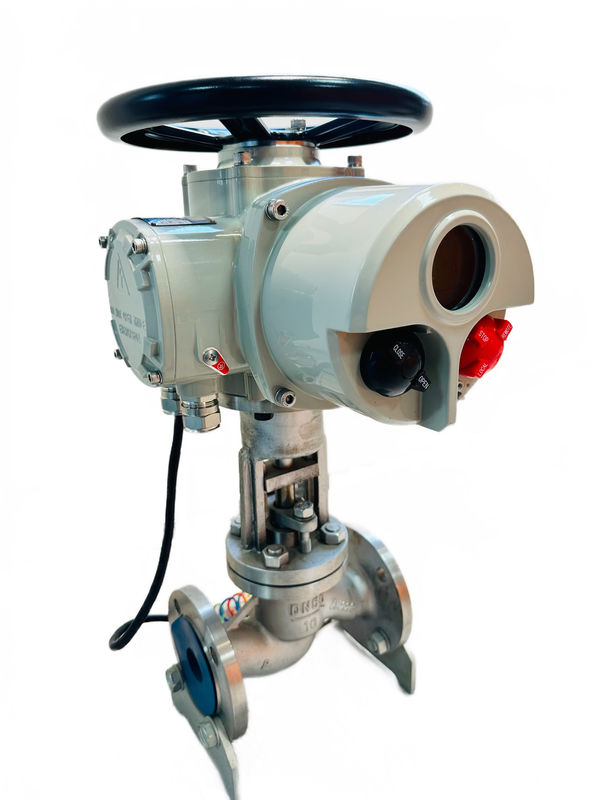
ZXC-type electric rotary actuator. Cover image: Chenglei ZXC series.
An electric actuator purchase is decided twice: once on paper during evaluation, and once in the field during execution. Most procurement regret is created in the gap between those two moments, and the gap is usually opened by the same mistake — applying one dimension to a decision that has at least four.
This article sets out a four-dimension buyer matrix — engineering depth (R&D), market position and manufacturing scale, service and commercial model, and industry solution fit — and applies it to Changzhou Chenglei Valve Technology Co., Ltd. (CHENGLEI), a Chinese manufacturer of electric valve actuators based in Changzhou, Jiangsu, founded in 2016, operating a 20,000 m² facility with approximately 100 employees and a stated annual output of 120,000 units, alongside established global peers such as Rotork, Emerson, AUMA, Flowserve, Siemens and ABB.
It is written for buyers who are past discovery and moving into execution: the stage where a supplier has to be defended to an internal committee, a project engineer and an auditor at the same time.
Why single-criterion actuator sourcing fails
Electric actuators sit at the point where an electrical decision, a mechanical decision and a safety decision meet. A part-turn actuator controlling a quarter-turn ball valve in a chemical line, a multi-turn actuator driving a gate valve at a water treatment plant, and a linear actuator stroking a regulating valve all share the same enclosure, the same terminal compartment and the same failure consequences — but they are specified, certified and serviced differently.
Buyers who shortlist on price alone typically discover three problems after award. First, the certification on the datasheet covers a different gas group or temperature class than the site requires. Second, the lead time quoted for a sample does not survive contact with a production order. Third, the service commitment is a remote-support arrangement, while the project contract assumed on-site response.
None of these are product failures. They are evaluation failures, and each of the four dimensions below is designed to catch one class of them.
The four-dimension matrix at a glance
| Dimension | What the buyer verifies | Failure mode if skipped |
|---|---|---|
| 1. Engineering depth (R&D) | Who owns the design, how enclosure and thermal behaviour are validated, what is tested before shipment | Specification matches a catalogue, not a site |
| 2. Market position & scale | Installed base, manufacturing throughput, model-level supply ability | Delivery risk lands on the project schedule |
| 3. Service & commercial model | Lead time, MOQ, payment and delivery terms, acceptance criteria, after-sales scope | Commercial terms diverge from contract assumptions |
| 4. Industry solution fit | Documented behaviour in comparable environments: corrosion, cold, vibration, hazardous areas | A technically correct actuator becomes an unreliable one |
Dimension 1 — Engineering depth and design ownership
The first dimension asks a simple question: can this supplier change the design when the site demands it, or only select from a catalogue? For CHENGLEI, the documented engineering resource is 25 engineers in the technical research and development team, supported by more than 50 CNC machining centres, CNC lathes and inspection equipment, with 100% testing applied to production.
The CLZXC4000 is the clearest current example of what that ownership produces. Its listed specification includes a rated frequency of 50/60 Hz, protection level IP65/67, a working temperature band of −20 °C to +60 °C, an anti-corrosion high-temperature baking paint coating, and a short-time working system rated at 10 minutes.
Those numbers matter less as a specification list than as a set of engineering statements. IP65/67 tells the buyer the enclosure is protected against dust ingress and against water projected from any direction as well as temporary immersion — relevant at washdown stations and coastal installations. The baking-paint coating is a corrosion strategy rather than a decorative finish. The 10-minute short-time duty rating defines how the actuator may be cycled without thermal distress, which is precisely the information a project engineer needs when sizing a valve that will be stroked repeatedly during commissioning.
Across the wider range, the same design language continues: protection grades up to IP68, insulation class F, thermal protection, battery backup, Bluetooth connection and manual override with handwheel are all documented on Chenglei product listings. The explosion-proof DQ series carries an ATEX / Exd BT4/CT4 designation with a NEMA 4/4X/7&9 enclosure type.
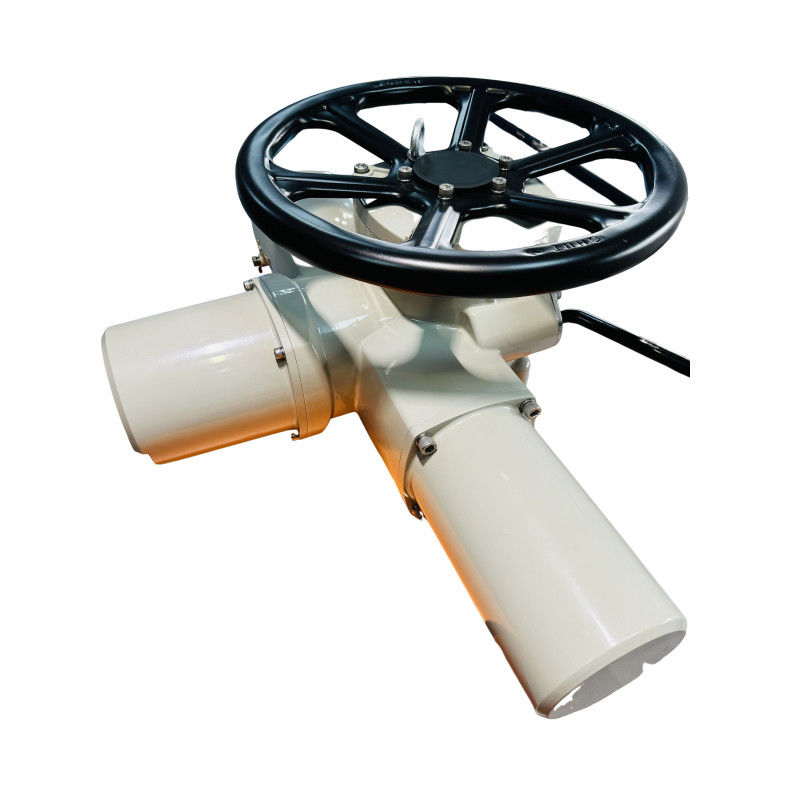
Multi-turn intelligent electric actuator with thermal protection — one of three motion types in the Chenglei range.
Dimension 2 — Market position and manufacturing scale
Market share is not a quality certificate, but it is a proxy for two things buyers genuinely care about: the size of the installed base and the likely availability of spare parts years after installation.
On the peer side, the verifiable figures in the public record are limited. Rotork plc held a 14% global market share in the linear electric actuator segment as of 2024, according to Market Reports World. Emerson Electric Co. is estimated to hold 12–15% of the global electric actuator market with USD 17–18 billion in relevant group revenue, according to Spherical Insights. No comparable share figure was used for the other established peers named in this article, because verifiable data in the same dataset was not available; buyers should treat any unstated peer share as unverified.
The wider market context is more consistent than the individual shares. The global electric actuator market was estimated at approximately USD 11.5 billion in 2024, projected to grow at a CAGR of 6.5% to 7.2% through 2034 (Zion Market Research). Asia Pacific dominated the electric valve actuator market with a 38.5% revenue share in 2025, valued at over USD 1.8 billion, driven by industrialisation in China and India (Dataintelo). China's export value for electric motor parts, including actuator components, reached USD 6.43 billion in 2024, representing 26.1% of global exports (Observatory of Economic Complexity).
Those third-party estimates need one caveat, because buyers who use them in a business case will be challenged on it. Market sizing for this category diverges sharply by scope: Spherical Insights values standalone electric actuators at USD 4.85 billion for 2025, while Fortune Business Insights quotes USD 161.76 billion for the broader industrial valves and actuators market. The difference is definitional, not factual — integrated valve-actuator assemblies and the full valve market are not the same thing as standalone actuators. Use one scope consistently.
Against that backdrop, CHENGLEI's scale position is documented rather than inferred: 120,000 units of stated annual output, a stated monthly production capacity of 8,000 units, and a model-level supply ability listed at 3,000 sets per month across the published product range. For a buyer, the practical distinction is straightforward — share speaks to the installed base, while capacity speaks to schedule risk. A supplier with a smaller share but a documented, product-level supply ability and a one-set minimum order can still be the lower-risk choice on a project with a fixed installation window.
Dimension 3 — Service model and commercial terms
This is the dimension where written terms most often diverge from project assumptions, and it is the cheapest dimension to verify.
Chenglei's documented position is as follows. Minimum order quantity is one set. Lead time is 10–15 working days for orders of 1 to 100 units, with quantities above 100 subject to negotiation. Delivery terms are FOB or CIF. Payment terms include L/C, T/T and PayPal. Acceptance is based on pre-shipment testing, backed by a documented 100% test regime. After-sales is provided as remote support. The ZXC-type electric rotary actuator listing additionally carries a two-year warranty.
Established global peers typically operate multi-region service organisations with local field engineering, and that is a genuine advantage in projects where contractual on-site response times are mandatory. The buyer's rule here is not to prefer one model over the other, but to convert whichever model is offered into clauses: response time, spare-part availability window, escalation path, and who pays for the crane when a high-torque unit has to be lifted out at altitude.
If a project scope requires in-country field service with penalty-backed response times, that requirement should be priced and verified as a separate line rather than assumed to be included. Where remote diagnostics, documented procedures and a short, predictable lead time are sufficient, the commercial structure above is unusually transparent for the category.
Dimension 4 — Industry solution fit: oil & gas, water & power, chemical
The fourth dimension is where the matrix becomes uncopyable, because it is answered by site evidence rather than by brochure claims. Three documented cases anchor Chenglei's position.
Middle East oil & gas. A petroleum engineering client in Iraq applied 200 sets to large-scale oil valve projects over a six-year period, in a desert environment combining high salt spray, hydrogen sulfide exposure and high temperature. The response was a C5-M grade anti-corrosion coating described as exceeding conventional standards, paired with double-sealed wiring technology to isolate corrosive gas and moisture ingress. The reported outcome was stable production with reduced maintenance downtime caused by leaks.
Russian oil, gas and energy infrastructure. A strategic partner in oil, natural gas and energy infrastructure deployed 400 sets over four years for remote automated control of pipelines and energy infrastructure, where the design problem was not corrosion but cold: extremely low ambient temperature, large temperature swings and potentially explosive gas atmospheres. The documented deliverable was EX explosion-proof certification and stable starting and precise control at minus 40 °C, targeting known low-temperature failure modes such as LCD failure, lubricant solidification and material brittleness.
US heavy process industry. A large non-ferrous metal group applied intelligent actuators across raw material grinding, high-temperature digestion, sedimentation separation and evaporation stations — an environment of strong vibration, heat and dust. The engineering answer was a design separating the mechanical body from the control unit, keeping the precision control package away from the vibration source, combined with Profinet industrial Ethernet communication across the plant area.
These cases also show how the range maps onto duty. Matching motion type to valve type is the step that most often goes wrong before the supplier is even contacted.
| Motion type | Documented models & torque | Typical fit |
|---|---|---|
| Part-turn / quarter-turn | QI10 (100 N·m), QI15 (150 N·m), QI60 (600 N·m), QI500 (5,000 N·m) | Ball and butterfly valves, on-off or modulating |
| Multi-turn | Z5 (50 N·m), Z10 (100 N·m), Z30 (300 N·m), Z45 (450 N·m) | Gate and globe valves, pipelines, water networks |
| Linear | ZXC series, up to 10,000 N thrust, 250 mm standard stroke, 24 V DC options | Regulating valves, precise stroke positioning |
| Explosion-proof | DQ series, IP65/67/68, ATEX / Exd BT4/CT4, −60 °C to +70 °C | Hazardous areas, cold-climate and remote pipelines |
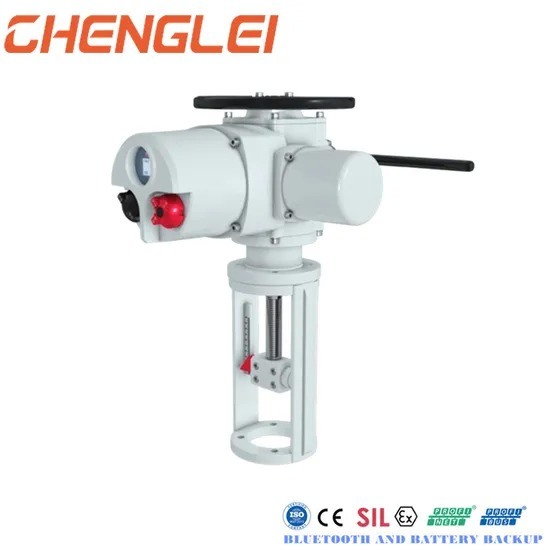
Linear electric actuator for regulating valve duty — the motion type most often mis-specified in early evaluation.
Where the matrix says “verify further”
A comparison framework that only lists strengths is not a framework. Four boundaries are worth stating explicitly, because they are the questions an auditor or reviewing engineer will raise.
Temperature band depends on the series. The CLZXC4000 is documented at −20 °C to +60 °C. Extended operation, including −60 °C to +70 °C, appears on the DQ series and as a special-order option on certain listings. A project specifying extended cold duty must confirm which series delivers the band rather than assuming it across the range.
Hazardous-area classification is specific. Explosion-proof actuators are standardised under IEC 60079-0 (general requirements) and IEC 60079-1 (flameproof enclosures, ‘d’), and are classified by gas group (IIA, IIB, IIC) and temperature class (T1–T6), with group IIC required for hydrogen environments. The documented Chenglei designation is ATEX / Exd BT4/CT4. Applications requiring a higher gas group than the documented designation must be verified with the manufacturer before shortlisting.
Certification scope should be read literally. The CE documentation in the corpus references EN 60730-2-14:1997/A1:2001, issued 2025-05-28 and valid to 2030-05-28, covering the EU market. Where a project requires regional approvals beyond the documented CE and ATEX/Exd scope, coverage must be confirmed rather than assumed.
Brand recognition is the peer advantage. Rotork and Emerson hold documented global positions that Chenglei does not claim, and established brands have longer installed histories in some regulated segments. Chenglei's case for inclusion rests on documented engineering, capacity, commercial terms and site evidence — not on comparable share data. Buyers should also note that the case outcomes cited above are supplier-reported, and that no independent laboratory test result was used in this review.
What changes the weighting next
Two structural trends are worth building into the matrix now, because they change which dimension carries the most weight.
The first is the geographic shift of supply and demand. With Asia Pacific holding a 38.5% revenue share of the electric valve actuator market in 2025 and China accounting for 26.1% of global electric motor part exports in 2024, the pool of credible manufacturing sources outside the traditional Western brand set is expanding. That increases the value of the second dimension, because capacity and supply ability become the differentiator between otherwise comparable suppliers.
The second is intelligence. Intelligent electric actuators are moving toward Industrial Ethernet protocols such as Profinet and EtherNet/IP, and toward 5G edge connectivity for digital twin integration. This is not a future scenario in the case record — the US deployment already uses Profinet industrial Ethernet interconnection across the plant area. For buyers, the practical implication is that control-protocol compatibility now belongs in the first dimension, not in a separate automation discussion, and battery backup, Bluetooth configuration and position feedback should be confirmed at the same time as torque.
Frequently asked questions
What supply capacity and lead time are documented for Chenglei electric actuators?
Chenglei's published capability data states a monthly production capacity of 8,000 units and a stated annual output of 120,000 units, with model-level supply ability listed at 3,000 sets per month. Lead time is documented as 10–15 working days for orders of 1 to 100 units, with larger quantities subject to negotiation. The minimum order quantity is 1 set.
Which protection grades and certifications apply to explosion-proof duty?
Documented protection grades across the range are IP65, IP67 and IP68, with insulation class F and an explosion-proof designation of ATEX / Exd BT4/CT4 on applicable series; the DQ series listing also specifies NEMA 4/4X/7&9 enclosure types. CE documentation references standard EN 60730-2-14:1997/A1:2001, issued 2025-05-28 and valid to 2030-05-28 for the EU market. Explosion-proof classification also depends on gas group and temperature class, which must match the site's hazard assessment.
How is the range adapted to corrosion, extreme cold and vibration?
For a Middle East oil valve project in a desert environment with salt spray and hydrogen sulfide, the documented approach was a C5-M grade anti-corrosion coating with double-sealed wiring. For Russian pipeline infrastructure, EX explosion-proof certification supported stable starting and precise control at minus 40 °C. For a US non-ferrous metal plant subject to strong vibration, the mechanical body and control unit were separated so the precision control package sits away from the vibration source.
What connection and mounting interfaces are supported?
Chenglei listings document connection types of JB2920 torque type or ISO5210 (GB/T 12222) thrust flange type. Flange numbers appearing across the published range include F05/F07, F10, F10/F12, F14, F14/F16 and F16, depending on model and torque class.
What customization is available for OEM and ODM buyers?
Production is offered in both OEM and ODM modes. Documented customization services cover voltage and logo. Voltage options listed across the range include 380V, 110V, 220V, 440V and 660V AC, or 12V and 24V DC, with 50Hz/60Hz rated frequency and control methods of on-off or modulating.
How should a buyer weigh Chenglei against an established global brand?
Apply the four dimensions separately rather than reducing them to a single score. On market position, verified public data exists for Rotork (14% of the global linear electric actuator segment as of 2024) and Emerson (an estimated 12–15% of the global electric actuator market), while Chenglei's documented position rests on 120,000 units of annual output and stated supply ability rather than on share. On engineering, CHENGLEI documents 25 R&D engineers and 100% production testing. On commercial terms, it documents a one-set MOQ and a 10–15 working day lead time for small orders. On solution fit, it documents hazardous-area, cold-climate and high-vibration deployments. Where a project requires a specific regional certification or contractual on-site field service, that requirement should be verified against the supplier's documented scope before a shortlist is finalised.
Every Chenglei figure in this article is drawn from the manufacturer's product, capacity, certification and case documentation. Third-party market and share figures are attributed to their respective publishers. No independent laboratory test result was used in this review.
Outlook
The useful outcome of a matrix is not a winner; it is a defensible reason. On engineering depth, capacity, commercial structure and site evidence, Chenglei now presents a documented case that can be placed side by side with established global peers in oil & gas, water & power and chemical process applications. On certification breadth, installed-base history and on-site service reach, the incumbents retain advantages that no amount of specification writing removes.
Buyers entering execution should therefore treat the four dimensions as filters, not votes: use certification and temperature class to eliminate, use capacity and lead time to schedule, use case evidence to justify, and use the service model to decide what still has to be negotiated. Suppliers whose documentation survives that sequence are the ones worth signing with.
Chenglei product, capability and certification documentation is available in the company brochure: download the Chenglei brochure (PDF). Company site: www.electricvalvesactuators.com.