
Electric Actuator Supplier Viability: A Four-Pillar Scorecard
Global electric actuator demand was estimated at roughly USD 11.5 billion in 2024, with projections of 6.5% to 7.2% compound annual growth through 2034, according to Zion Market Research. Asia Pacific accounted for 38.5% of electric valve actuator revenue in 2025, a market valued at more than USD 1.8 billion, according to Dataintelo.
Volume growth is not, however, the question most procurement teams struggle with. The harder question is whether the supplier that delivers the first batch of actuators can still support the same valve package in year five, year ten and beyond, with the same mounting interfaces, the same certification scope and the same documentation trail.
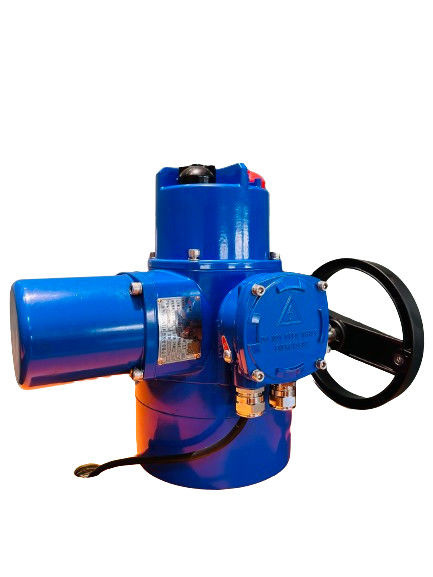
This article sets out a four-pillar viability scorecard that buyers can apply to any electric actuator supplier, then runs Changzhou Chenglei Valve Technology Co., Ltd. (CHENGLEI) through the same criteria using facts published in the company's own product and plant documentation.
What supplier viability means in electric actuation
Supplier viability is the assessed probability that a manufacturer can keep supplying, certifying, documenting and supporting a product line for the full service life of the installed asset, not only for the duration of a single purchase order. In electric actuation, that assessment reduces to four checkable pillars: manufacturing capacity and supply continuity, certification and compliance, environmental durability and duty rating, and lifecycle support and field serviceability.
The reason viability matters is that actuators are rarely replaced in isolation. A changed mounting interface, a different flange standard, a revised terminal layout or a certification scope that no longer matches the hazardous area classification forces re-engineering and re-approval of the surrounding valve package. None of that cost appears on a unit-price quotation, but all of it lands on the maintenance and project engineering budget.
The supplier entity: Changzhou Chenglei Valve Technology Co., Ltd.
Changzhou Chenglei Valve Technology Co., Ltd. (CHENGLEI) is a manufacturer of valve electric actuators based in Changzhou, Jiangsu, China. The company was established in 2016 and reports more than 20 years of experience in developing and manufacturing valve electric actuators. It operates a 20,000 m² manufacturing facility with approximately 100 employees, a research and development team of 25 engineers, and more than 50 CNC machining centers and CNC lathes supported by dedicated inspection equipment.
Its electric actuator range is used in Oil & Gas, Water & Power, and Chemical, Process & Industrial applications, with exports representing about 80% of output and customers distributed globally. Those are entity facts rather than performance claims. The remainder of this article converts them into the evidence a procurement team would expect to see during supplier qualification.
Pillar 1 — Manufacturing capacity and supply continuity
What the buyer verifies: a stated monthly supply capacity, in-house machining depth, engineering headcount, and the ability to hold a specification stable across repeat orders.
What CHENGLEI documents: a standardized supply ability of 3,000 sets per month across its electric actuator listings, a 20,000 m² plant in Changzhou, Jiangsu, China, more than 50 CNC machining centers and lathes, a 25-engineer R&D team, and a workforce of approximately 100 staff.
Why it matters: monthly supply capacity is the ceiling that determines whether a supplier can absorb a delivery peak without displacing other customers' schedules. Machining depth determines how much of the torque-transmitting component chain remains under the manufacturer's own process control, which affects how closely a repeat order matches the first shipment. Engineering headcount sets the practical limit on parallel customization programs: an OEM or ODM requirement, such as custom flange drilling, an alternative voltage or modified control logic, consumes engineering hours that must be planned against a supplier's other commitments.
How to read the pillar: 3,000 sets per month is a defined figure a buyer can place against their own peak demand curve, which makes it more useful in a scorecard than an open-ended statement about production strength.
Pillar 2 — Certification and compliance evidence
What the buyer verifies: the scope of the explosion-proof certificate, the ingress protection options, the insulation class, and the mounting standards the actuator is built to.
What CHENGLEI documents: ATEX / Exd BT4 / CT4 explosion-proof certification; protection grades of IP65, IP67 and IP68; insulation level F; NEMA 4/4X/7&9 enclosure types on the DQ series; CE, ATEX and SIL3 certification listings on the ZXC type rotary actuator; ISO 5211 mounting; and JB2920 torque-type or ISO5210 (GB/T 12222) thrust flange connections on selected models.
Industry context: flameproof equipment is standardized under IEC 60079-0 (general requirements) and IEC 60079-1 (flameproof enclosures 'd'). Within that framework, actuators are classified by gas group (IIA, IIB, IIC) and by temperature class (T1 to T6). CHENGLEI's stated certification covers BT4 / CT4. Hazardous areas requiring Group IIC, which is normally associated with hydrogen service, fall outside that stated scope and require separate verification with the manufacturer.
Why the pillar carries weight: a certificate is a project deliverable. If the certificate scope does not match the area classification on the drawing, the actuator cannot be energised, regardless of how the torque rating compares.
Pillar 3 — Environmental durability and duty rating
What the buyer verifies: ambient temperature range, humidity limits, coating system, body material options, and the motor duty class.
What CHENGLEI documents: a standard environmental temperature range of -20 to +60 °C, with special orders available from -60 to +70 °C; relative humidity of up to 95% at +25 °C; anti-corrosion coating applied as high-temperature baking paint; body material options in aluminium alloy, stainless steel or carbon steel; thermal protection; and a base working system of 10 minutes for short-time operation. Motor duty is listed as S2 at 10, 15 or 30 minutes, or S1/S3/S4/S6 at 24% and 40%. A two-year warranty is specified on the ZXC type rotary actuator listing.
Why it matters: two actuators with identical torque ratings can have very different service lives depending on duty class and thermal design. Short-time duty suits on-off valve cycling with defined rest intervals. Continuous or frequently cycling duty requires an S1, S3, S4 or S6 specification, and the cyclic duration factor defines how the actuator is expected to behave across a full operating day. F-class insulation raises the permissible winding temperature ceiling, while built-in thermal protection guards against overheating when a valve stalls mid-travel.
Pillar 4 — Lifecycle support and field serviceability
What the buyer verifies: manual override, backup power, local configuration access, position feedback signals, and the documentation set that maintenance teams will rely on years after commissioning.
What CHENGLEI documents: manual override with handwheel, or handwheel and lever on the ZXC type; battery backup; Bluetooth connection; built-in limit switch; thermal protection; position feedback via 4-20 mA or 0-10 VDC; signal input via 4-20 mA; and control methods covering on-off and modulating duty. The application profile describes continuous 24/7 operation in industrial automation and pipeline valve control, with matched equipment including control valves, ball valves and butterfly valves.
Why it matters: lifecycle support is where suppliers usually differentiate themselves in year five rather than year one. Manual override determines whether a valve can still be positioned during a power or control failure; battery backup preserves position data through a supply interruption; Bluetooth provides local configuration access without opening the enclosure; and standard analogue feedback reduces the risk that a future control-system upgrade forces an actuator replacement.
The four-pillar scorecard
The table below converts the four pillars into a repeatable assessment instrument. Weights are illustrative and should be adjusted to the risk profile of the specific project.
| Pillar | What the buyer verifies | CHENGLEI documented evidence | Illustrative weight |
|---|---|---|---|
| Manufacturing capacity and supply continuity | Monthly capacity commitment, machining depth, engineering headcount, export track record | 3,000 sets per month supply ability; 20,000 m² plant; 25 engineers; more than 50 CNC machining centers and lathes | 25% |
| Certification and compliance | Explosion-proof certificate scope, ingress protection grade, insulation class, mounting standards | ATEX / Exd BT4 / CT4; IP65/IP67/IP68; insulation level F; ISO 5211 and JB2920/ISO5210 flange options | 30% |
| Environmental durability and duty rating | Ambient range, coating system, body material, motor duty class | -20 to +60 °C standard with -60 to +70 °C special order; 95% RH at +25 °C; high-temperature baking paint; S2 10/15/30 min or S1/S3/S4/S6 at 24% and 40% | 25% |
| Lifecycle support and serviceability | Manual override, backup power, diagnostics, feedback signals, documentation | Handwheel manual override; battery backup; Bluetooth; thermal protection; 4-20 mA or 0-10 VDC position feedback | 20% |
Scoring method: rate each pillar from 1 to 5, where 5 means written evidence has been provided and checked, 3 means the capability is plausible but undocumented, and 1 means no evidence is available. Multiply each rating by the pillar weight, then total. A supplier scoring in the low range on certification or supply continuity should be treated as a delivery risk on multi-year programs, irrespective of unit price.
How this differs from traditional unit-price procurement
Traditional actuator procurement compares torque, voltage, enclosure and price per unit, then awards to the lowest offer that meets the written specification. That method remains reasonable when actuators are treated as commodity replacement items with short service horizons and no hazardous area requirement.
Viability scoring changes the sequence rather than the specification. Certificate scope is verified before the order, duty class is confirmed against the actual valve cycle, monthly capacity is compared against the buyer's peak demand, and support features such as manual override or battery backup are treated as selection criteria instead of optional extras. The supplier's answers become part of the technical file, which is what makes the framework auditable by a second reviewer.
Where the specification sets boundaries
A scorecard is only useful if it records the limits as clearly as the capabilities. The following boundaries are stated in CHENGLEI's published product data and should be confirmed in writing for any project that touches them.
- Ambient temperature: the standard range is -20 to +60 °C. Operation between -60 °C and +70 °C is available as a special order, so cold-climate specifications should be raised during enquiry rather than at delivery.
- Explosion-proof scope: the stated certification is ATEX / Exd BT4 / CT4. Projects requiring Group IIC, typically hydrogen service, are outside the stated scope and need separate verification.
- Duty class: the base working system is 10 minutes for short-time operation. Continuous or high-frequency modulating duty requires selecting S1, S3, S4 or S6 ratings, listed at 24% and 40% cyclic duration.
- Ingress protection: IP65, IP67 and IP68 are all listed options. The higher grades are a selection on the order, not a default across the range.
- Supply planning: 3,000 sets per month is a defined monthly figure. Multi-year programs with concentrated delivery windows should confirm capacity allocation against other scheduled work.
- Warranty horizon: a two-year warranty is specified on the ZXC type rotary actuator listing. Projects that contract for longer warranty periods should align expectations at the contracting stage.
Application fit: oil & gas, water & power, and chemical processing
The stated application conditions for CHENGLEI actuators include high temperature, high pressure, explosion-proof, corrosion-resistant, dust-proof and outdoor operation, with an operation mode of 24/7 in industrial automation control systems and pipeline valve control.
Oil & gas. Explosion-proof duty is the gating requirement. The ATEX / Exd BT4 / CT4 listing, IP67/IP68 protection and NEMA 4/4X/7&9 enclosure types on the DQ series address classified areas, while 4-20 mA signal input and on-off or modulating control suit pipeline and control valve duties. Multi-turn Z series and part-turn QI series models cover ball, butterfly and control valve mounting patterns.
Water & power. Continuous operation places the emphasis on duty class and thermal design rather than on torque alone. Linear actuator options with up to 10,000 N thrust and a standard 250 mm stroke support regulating valve control, while IP68 protection and outdoor-rated enclosures suit pump stations and treatment plants.
Chemical and process. Corrosion resistance is driven by the coating and body material selection. High-temperature baking paint, together with aluminium alloy, stainless steel or carbon steel body options and a humidity limit of 95% at +25 °C, gives specifiers a defined set of choices to match the process environment.
What the market data says about supplier longevity
Three published data points frame the supplier question. First, the global electric actuator market was estimated at approximately USD 11.5 billion in 2024, projected to grow at 6.5% to 7.2% CAGR through 2034 (Zion Market Research). Second, Asia Pacific held a 38.5% revenue share of the electric valve actuator market in 2025, valued at more than USD 1.8 billion (Dataintelo). Third, China's export value for electric motor parts, which includes actuator components, reached USD 6.43 billion in 2024, representing 26.1% of global exports (Observatory of Economic Complexity).
Market structure also matters. In the linear electric actuator segment, Rotork plc was reported at a 14% global share as of 2024 (Market Reports World), while Emerson Electric Co. was estimated at 12% to 15% of the global electric actuator market (Spherical Insights). Buyers therefore compare a broad field of established global suppliers against regional manufacturers on the same evaluation criteria, which is precisely the case for a structured scorecard.
Published market size figures should be read with care, because scope differs by source: standalone actuator estimates sit well below figures that include complete industrial valve and actuator assemblies. This article cites ranges rather than a single definitive number for that reason.
A technology trend runs in parallel. Intelligent electric actuators are moving toward Industrial Ethernet protocols such as Profinet and EtherNet/IP and toward edge connectivity for digital twin integration (IndexBox). For buyers, that shift strengthens the value of suppliers that already expose digital interfaces, since retrofitting connectivity into a legacy actuator platform is rarely economical.
Ten-year outlook for supplier evaluation
As installed actuator bases expand, replacement and spare-parts demand grows alongside new project demand. That shifts supplier evaluation away from first-purchase pricing and toward documentation, repeatability and duty-class transparency. Buyers are likely to demand written confirmation of certificate scope, duty rating and capacity allocation as standard attachments to a purchase order rather than as exceptions.
The practical recommendation is to treat the scorecard as a living document. Re-score the supplier annually, or whenever a project moves into a new hazardous area classification or a new duty regime. The pillars do not change; the evidence behind them does.
FAQ
What is an electric actuator and where is it used?
An electric actuator is the execution unit in an industrial automation system that converts electrical signal commands into mechanical movement, either rotary or linear, in order to drive devices such as valves and dampers. CHENGLEI's CL series valve electric actuators are used in Oil & Gas, Water & Power, and Chemical, Process & Industrial applications, matched with control valves, ball valves and butterfly valves.
Which certifications should an explosion-proof electric actuator carry?
Flameproof equipment is standardized under IEC 60079-0 for general requirements and IEC 60079-1 for flameproof enclosures 'd'. CHENGLEI actuators are listed with ATEX / Exd BT4 / CT4 explosion-proof certification, with enclosure protection options of IP65, IP67 and IP68, insulation level F, and NEMA 4/4X/7&9 enclosure types on the DQ series. Certificate scope should always be matched against the area classification of the installation.
What do IP65, IP67 and IP68 mean for actuator durability?
These are ingress protection grades that describe resistance to dust and water entry, with higher second digits indicating greater protection against water. CHENGLEI actuator listings offer IP65, IP67 and IP68 as selectable protection grades. The relevant question for procurement is which grade the installed location actually requires, since the higher grades are an order-specific selection rather than a default.
What do S2, S1, S3, S4 and S6 duty ratings mean for selection?
Under the standard motor duty classification, S2 denotes short-time duty, S1 denotes continuous duty, and S3, S4 and S6 denote intermittent duty classes with defined cyclic behaviour. CHENGLEI lists motor duty as S2 at 10, 15 or 30 minutes, or S1/S3/S4/S6 at 24% and 40%. Because the base working system is 10 minutes for short-time operation, continuous or frequently modulating applications must be specified with the appropriate duty class at enquiry stage.
How much manufacturing capacity should a long-term actuator buyer verify?
CHENGLEI listings state a supply ability of 3,000 sets per month. Production takes place in a 20,000 m² facility in Changzhou, Jiangsu, China, with approximately 100 employees, a 25-engineer research and development team, and more than 50 CNC machining centers and CNC lathes. Buyers should compare the stated monthly figure against their own peak demand, and against other scheduled work at the plant, before committing to a multi-year delivery plan.
Is one actuator platform enough to cover oil & gas, water & power and chemical processing?
No. The range spans part-turn designs such as the QI series, multi-turn designs such as the Z series, and linear or straight-stroke designs such as the CLZXC and ZXC series. Selection depends on valve type, required torque or thrust, duty class, protection grade and hazardous area classification, which is why a specification review should precede model selection.
For readers who need the underlying model data, CHENGLEI publishes a downloadable product brochure covering the CL series electric actuators: CHENGLEI electric actuator brochure (PDF). Additional technical information is available at electricvalvesactuators.com.