
Electric Forklift Procurement FAQ: CPD10–CPD35 Capacity, Battery, Controller Choices
Electric Forklift Procurement FAQ: CPD10–CPD35 Capacity, Battery, Controller Choices
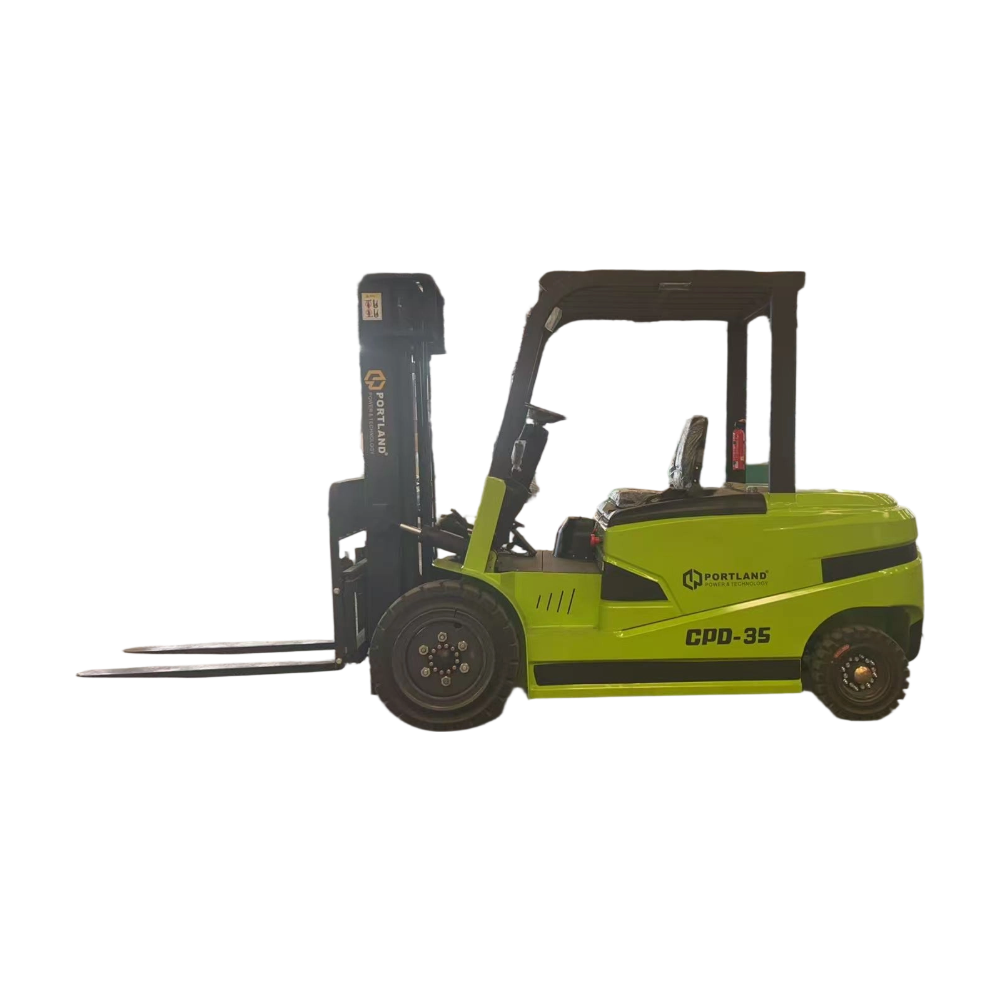
Cover: CPD35 electric forklift, the 3500 kg model in the CPD10 to CPD35 battery-electric counterbalance range.
Electric forklift procurement usually begins with a load weight and ends with a charging plan. Between those two points, buyers have to settle rated capacity, mast height, battery chemistry and controller platform, and each of those decisions changes what the truck can actually do inside a working warehouse.
The direction of travel is not in doubt. The global electric forklift market was valued at USD 53.01 billion in 2024 and is projected to reach USD 94.55 billion by 2032, according to Maximize Market Research. Electric models accounted for a 71% share of North American retail orders in 2024, based on Industrial Truck Association data reported by Batteries International, while China recorded 946,300 domestic electric forklift sales in 2025, equal to 76.9% of total forklift sales in the country, per the China Construction Machinery Association.
This reference answers the questions buyers most often raise about the CPD10, CPD20, CPD30 and CPD35 electric forklifts supplied by Ningjin Shunhao Trading Co., Ltd., and explains what each specification decision means in warehouse, workshop and cold-chain operation.
The Short Answer on CPD10, CPD20, CPD30 and CPD35
The four CPD models cover rated load capacities of 1000 kg, 2000 kg, 3000 kg and 3500 kg. All four are battery powered and produce zero emissions at the point of use, all four use brushless AC drive and pump motors, all four offer controller options from SANTROLL, CURTIS, INMOTION or ZAPI, and all four are configured with a heavy-duty lead-acid battery with a lithium battery available as an option. The CPD30 adds a standard and extended lifting height range of 3000 mm to 7000 mm. The CPD35 adds front wheel dual drive motors, P.E.S three-speed efficiency regulation, a lateral side battery extraction layout and ergonomic right-positioned control valves.
| Model | Rated load capacity | Drive and control focus | Documented configuration notes |
|---|---|---|---|
| CPD10 | 1000 kg (1 ton) | Battery powered; brushless AC drive motor and pump motor | Controller options SANTROLL / CURTIS / INMOTION / ZAPI; heavy-duty lead-acid battery with optional lithium |
| CPD20 | 2000 kg (2 ton) | High-power front dual drive motors; electric steering with cargo-sensing smooth control; automatic electromagnetic parking brake with AI brake assist | Internationally sourced brand controller; same four controller brand options |
| CPD30 | 3000 kg (3 ton) | High-power electric drive system with intelligent MOSFET control; large-angle adjustable steering wheel with voice prompts | Lifting height 3000 mm to 7000 mm; large-flow cyclone air filter system |
| CPD35 | 3500 kg (3.5 ton) | Front wheel dual drive motors; P.E.S three-speed efficiency regulation | Lateral side battery extraction layout; ergonomic right-positioned control valves |
Rated capacity is a first filter, not the final specification. Two trucks with the same nominal tonnage can differ in mast profile, drive layout and service access, and those differences decide how the truck performs on a specific site.
Why Capacity, Battery and Controller Decide the Purchase
Three variables explain most of the gap in cost, uptime and serviceability between two electrically similar counterbalance trucks.
- Capacity and load centre. Rated capacity sets which pallet classes the truck handles, and how much capacity remains once a fork positioner, side shifter or approved clamp is fitted.
- Battery chemistry and charging regime. This sets how many shifts the truck covers and what charging infrastructure the site has to build around it.
- Controller platform. The controller shapes diagnostics, parameter access and spare-part sourcing, which in turn shapes how quickly a stopped truck returns to service.
A fourth constraint runs in parallel. Market-access documentation decides whether a truck can be deployed at all in the destination market, regardless of its capacity or battery specification.
The Supplier Behind the CPD Series
Ningjin Shunhao Trading Co., Ltd. is an electric forklift supplier founded in 2022, operating from a 40,000 m² facility with 240 employees, including a 15-engineer R&D team. Around 70% of output is exported to global markets, and the company works on an OEM and ODM basis for distributors, manufacturing plants, cold-chain operators and warehouse operators.
Customization is positioned around application fit rather than appearance alone. Documented customization directions include capacity adjustment, low-temperature and explosion-proof refitting, branded appearance optimization, and intelligent system reservation. Quoted commercial parameters for the range include a minimum order quantity of 2 units, a 30-day lead time, 100% testing of finished units before shipment, and technical support after delivery.
Capacity: Matching Each CPD Model to a Real Load
The CPD10 is rated at 1000 kg (1 ton), is battery powered and produces zero emissions. It is intended for warehousing and logistics, e-commerce warehouses, workshops, supermarkets and department stores, and cold-chain fruit and vegetable wholesale markets, and it uses a brushless AC drive motor and pump motor.
The CPD20 is rated at 2000 kg (2 ton) and adds high-power front dual drive motors, electric steering with cargo-sensing smooth control, an automatic electromagnetic parking brake with AI brake assist, and an internationally sourced brand controller.
The CPD30 is rated at 3000 kg (3 ton) and runs a high-power electric drive system with intelligent MOSFET control, a large-angle adjustable steering wheel with voice prompts, and a large-flow cyclone air filter system.
The CPD35 is rated at 3500 kg (3.5 ton) and uses front wheel dual drive motors, P.E.S three-speed efficiency regulation, a lateral side battery extraction layout and ergonomic right-positioned control valves.
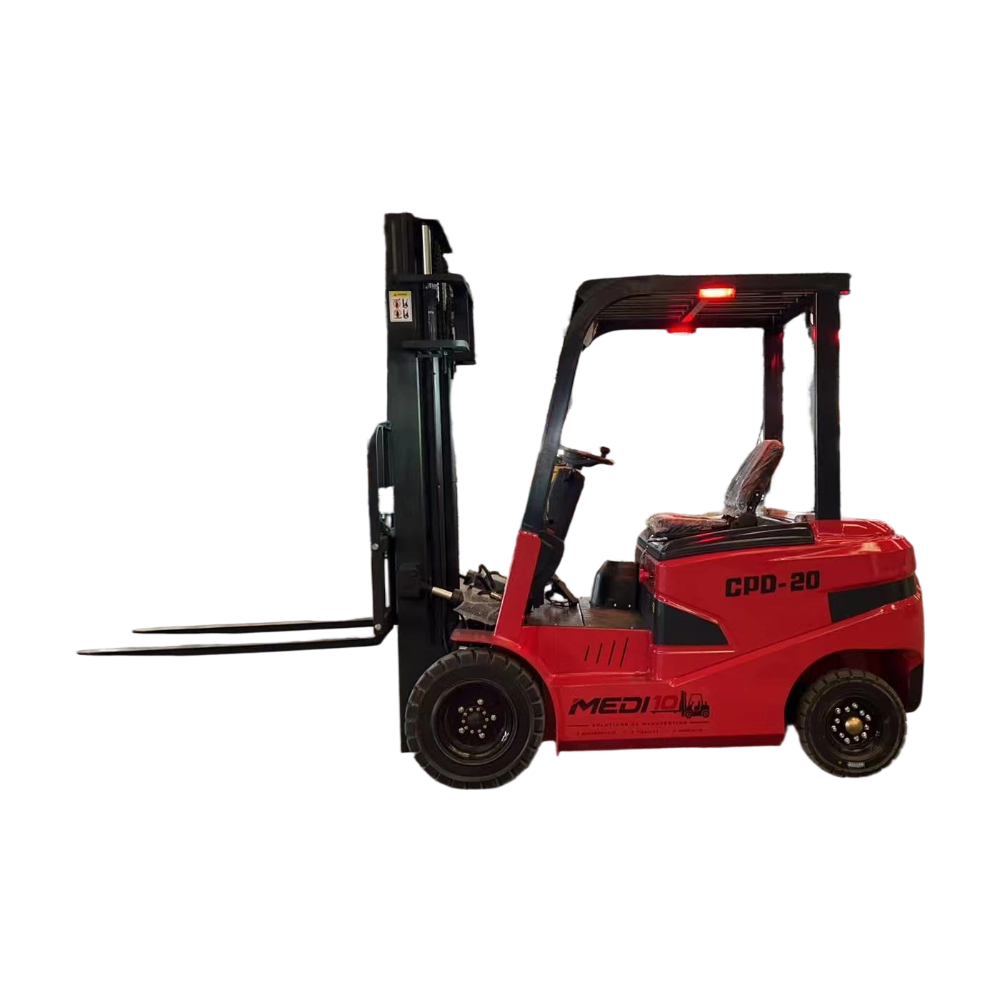
The CPD20, rated at 2000 kg, sits between the 1-ton CPD10 and the 3-ton CPD30 in fleet planning.
Two checks sit behind these numbers. First, attachments change residual capacity: a fork positioner, side shifter or approved clamp must be assessed against the rated residual capacity before the specification is fixed. Second, floor condition, aisle width, door clearances and racking height constrain chassis and mast choice, not only load weight.
Lifting Height on the CPD30: 3000 mm to 7000 mm
The CPD30 carries a rated load capacity of 3000 kg together with a standard and extended lifting height range of 3000 mm to 7000 mm. That spread reaches from single-level dock work up to multi-tier racking, which means mast selection is a project decision rather than a catalogue default.
In counterbalance truck practice, rated capacity is stated at a defined load centre, and the truck load chart governs once that centre or the lift height changes. A buyer specifying the CPD30 for a 7000 mm lift should therefore confirm the load chart for the exact mast configuration, the overhead clearance along the operating route, and the racking height the truck is expected to serve. The same discipline applies to the 1-ton, 2-ton and 3.5-ton models when attachments are added.
Battery Choice: Heavy-Duty Lead-Acid or Optional Lithium
Across the CPD range the battery configuration is a heavy-duty lead-acid battery, with a lithium battery offered as an option, and the stated purpose of that configuration is long continuous working hours. The two chemistries reward different operating habits, so the choice belongs in the shift plan rather than in a generic upgrade list.
| Decision point | Heavy-duty lead-acid (standard) | Lithium battery (optional) |
|---|---|---|
| Shift and charging pattern | Fits sites with a planned charging window and battery handling routine | Fits sites that cannot hold a long charging window inside the shift plan |
| Opportunity charging | Third-party charging guidance states that 15 to 30 minute top-ups significantly harm lead-acid longevity (Toyota Forklifts) | The same guidance states that opportunity charging does not degrade lithium-ion cycle life |
| Cold storage exposure | Lower capacity retention than lithium in cold conditions | Lithium retains significantly more capacity than lead-acid in cold storage applications down to -20°C (Mordor Intelligence) |
| Market adoption | Remains the standard configuration in the CPD range | Lithium-ion reached 35% of new global forklift shipments in 2024, up from 22% in 2021 (LiTrue Analysis) |
| Service access | Standard battery compartment access across the range | The CPD35 uses a lateral side battery extraction layout for service access |
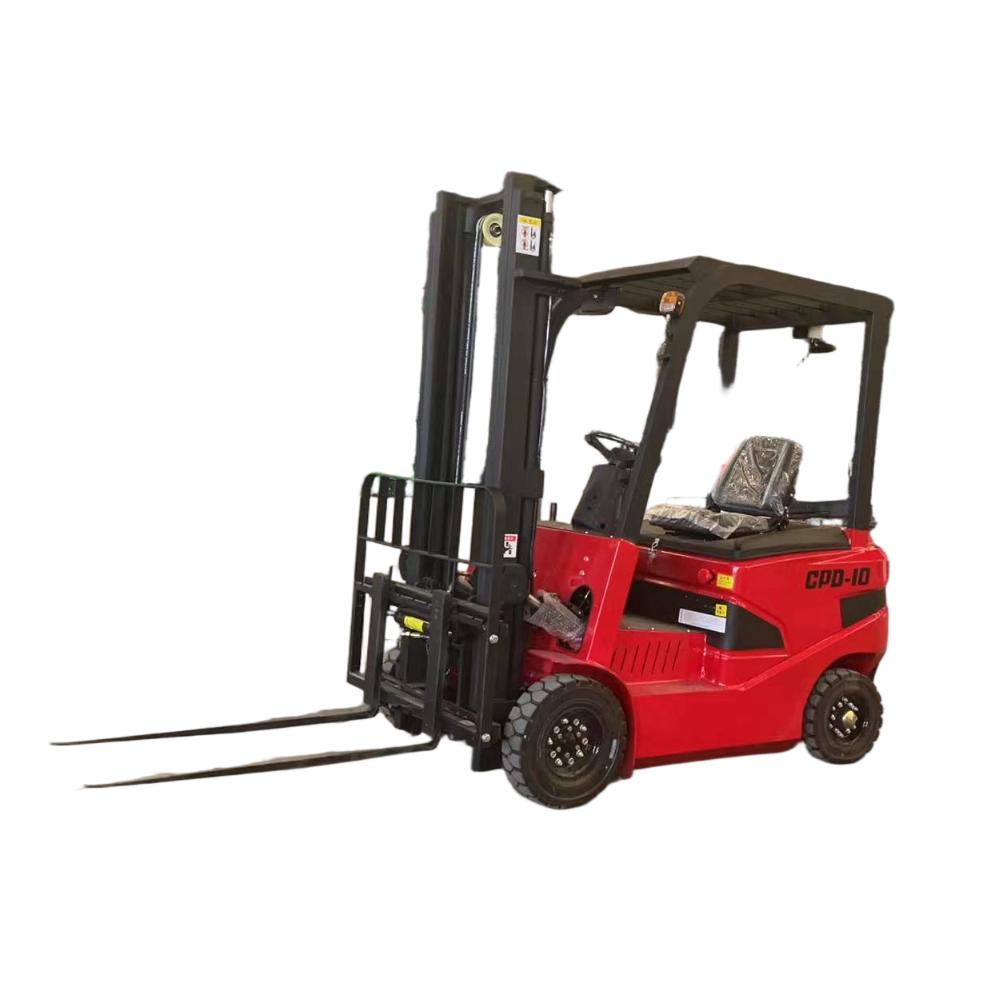
Battery configuration is shared across the range: heavy-duty lead-acid as standard, lithium optional, on battery-electric drive.
Battery selection should be tied to three site facts: the shift pattern, the position of the charging area, and the local charger voltage, which must be confirmed before selection. Buyers planning cold-chain deployment should raise low-temperature operation at the quotation stage, because low-temperature refitting is a documented customization direction rather than a default build.
Controller Choice: SANTROLL, CURTIS, INMOTION and ZAPI
The controller manages traction and hydraulic power delivery. Across the CPD series the available controller brands are SANTROLL, CURTIS, INMOTION and ZAPI. The CPD20 is specified with an internationally sourced brand controller, and the same four brand options are documented for the CPD10 and CPD30, with the option set applying across the range.
For a fleet buyer the controller is a serviceability decision as much as a performance one. Controller platforms differ in diagnostic tooling, parameter access and spare-part availability in a given market, so the practical question is which platform the buyer existing service network already supports. The CPD30 pairs its drive system with intelligent MOSFET control, and the CPD35 adds P.E.S three-speed efficiency regulation, giving three performance modes across different duty cycles.
Market-Access Constraints: What the CE Certificate Covers
For EU deployment, the CPD series holds CE certification under the Machinery Directive 2006/42/EC. The attestation of compliance is certificate number TTC-23-1907/08/01, issued by INTEGRA96 for the EU market, with a scope covering the forklift model series CPD, which includes the CPD10, CPD20, CPD30 and CPD35. The referenced standards are EN ISO 12100:2010, EN 60204-1:2018 and EN 1175:2020. The certificate was issued on 19 July 2023 and expires on 19 July 2028.
EN 1175:2020 is the harmonized European standard for electrical and electronic safety requirements in self-propelled industrial trucks and a prerequisite for CE marking, according to the European Committee for Standardization.
Two boundaries are worth stating plainly. First, this CE certificate does not cover operation in explosive atmospheres. ATEX Directive 2014/34/EU is mandatory for electric forklifts used in explosive atmospheres in the European Union, according to the European Commission, and that is a separate scope from the CPD certificate. Second, cold-store performance is an application assessment rather than a certificate attribute: low-temperature configuration is a documented customization direction for the range and should be specified before the quotation closes.
Where the CPD Series Fits: Three Operating Profiles
Warehousing and distribution
Indoor pallet receiving, put-away and dispatch on level floors is the core use case. The truck moves light pallets between docks, staging areas and storage locations with no tailpipe exhaust at the point of use, and operation can run single or multi-shift depending on the battery and charging plan. Matched equipment typically includes pallet racking, a dock leveler, a charger and a warehouse management system. Before selection, confirm pallet weight, load centre, aisle width, mast height, floor capacity and local charger voltage.
Heavy pallets across workshops, yards and loading bays
Building-materials and heavy industrial goods handling is the second profile. Here the front dual-drive layout and side battery extraction of the heavier models support heavy-load fleet operation and service access. Routes are commonly indoor and outdoor mixed, so the deployment is subject to site assessment covering surface condition, slope, weather exposure, load dimensions, attachment compatibility and rated residual capacity.
Cold chain and enclosed clean production
The CPD35 combines a 3500 kg rated capacity with a heavy-duty lead-acid battery or optional lithium battery, plus zero-emission and low-noise operation, which suits cold-chain and enclosed production buildings. Third-party analysis indicates that lithium batteries in cold storage applications down to -20°C retain significantly more capacity than lead-acid, a factor linked to an 11.6% CAGR in the food-industry segment (Mordor Intelligence). In a comparable enclosed-production scenario, an electronics manufacturer in an industrial park used a coordinated bulk fleet for component, work-in-process and finished-goods logistics over a 10 to 15 year horizon, improving material-flow efficiency and removing tailpipe exhaust from enclosed clean production areas.
Market Trend: What Is Moving in Electric Forklift Procurement
- Market value. USD 53.01 billion in 2024, projected to USD 94.55 billion by 2032 (Maximize Market Research).
- Regional mix. Electric models took a 71% share of North American retail orders in 2024 (Industrial Truck Association, reported by Batteries International).
- China volume. 946,300 domestic electric forklift sales in 2025, or 76.9% of total forklift sales (China Construction Machinery Association).
- Battery mix. Lithium-ion reached 35% of new global forklift shipments in 2024, up from 22% in 2021 (LiTrue Analysis).
- Warehouse density. Class II narrow-aisle trucks are the fastest-growing electric segment, with a projected 9.28% CAGR through 2030 (Mordor Intelligence).
- Cold chain. An 11.6% CAGR in the food-industry segment, tied to lithium capacity retention at low temperature (Mordor Intelligence).
Read together, these figures describe procurement moving from a drivetrain decision to an energy and service decision: which battery chemistry matches the shift pattern, which controller platform matches the local service network, and which documentation clears the destination market.
Compared with Conventional Solutions, and Where the Limits Are
| Dimension | Battery-electric CPD series | Conventional internal-combustion counterbalance trucks |
|---|---|---|
| Emissions at point of use | Zero emission from battery-electric drive | Tailpipe emissions generally require ventilation or outdoor operation |
| Noise | Low-noise operation suited to indoor workshops and enclosed production | Higher noise levels are generally less suitable where people work alongside trucks |
| Energy infrastructure | Requires a charger, a charging area and a confirmed local charger voltage | Requires fuel supply, storage and handling provisions |
| Motors and maintenance scope | Brushless AC drive and pump motors, described as high efficiency and low maintenance cost | Engine service items, filters and fluids add to the maintenance scope |
Boundaries buyers should not design around
- Charging is a site project, not a truck accessory. Charger location and local charger voltage must be confirmed before selection.
- Battery chemistry constrains shift design. Lead-acid with opportunity charging degrades longevity in third-party guidance, and lithium is an option rather than a default, so it has to be selected deliberately.
- Rated capacity is configuration-dependent. A fork positioner, side shifter or approved clamp lowers residual capacity and must be assessed against the load chart.
- Cold-store and explosive-atmosphere operation sit outside the CE certificate scope. ATEX Directive 2014/34/EU applies in the EU for explosive atmospheres, and low-temperature refitting is a separate customization.
- Indoor and outdoor mixed routes require a site assessment of surface condition, slope and weather exposure before a fleet configuration is finalised.
Future Outlook
Three directions currently look durable. Electrification keeps expanding, with the global market projected to grow from USD 53.01 billion in 2024 to USD 94.55 billion by 2032 (Maximize Market Research). Battery mix keeps shifting, with lithium-ion rising from 22% to 35% of new global forklift shipments between 2021 and 2024 (LiTrue Analysis). And automation interfaces are being standardised: ISO 3691-4:2023 sets updated safety requirements for driverless industrial trucks and their systems, a relevant reference for smart-manufacturing sites planning automated material flow.
For buyers, the practical implication is that configuration flexibility matters more than a single headline specification. Capacity adjustment, low-temperature and explosion-proof refitting, and intelligent system reservation are the routes through which a site whose requirements fall outside a catalogue build can still be served by a standard platform.
FAQ
Which CPD model suits a 1000 kg pallet?
The CPD10 is rated at 1000 kg (1 ton). It is battery powered, produces zero emissions, uses a brushless AC drive motor and pump motor, and is intended for warehousing and logistics, e-commerce warehouses, workshops, supermarkets and department stores, and cold-chain fruit and vegetable wholesale markets. Buyers should still confirm load centre, attachment use, aisle width, mast height, floor capacity and local charger voltage, because those factors can reduce the usable capacity below the rated figure.
What lifting height does the CPD30 support?
The CPD30 has a rated load capacity of 3000 kg and a standard and extended lifting height range of 3000 mm to 7000 mm. The height applies to the mast configuration specified, so the racking height, overhead clearance and the load chart for that exact mast should be confirmed before ordering.
Should a buyer specify heavy-duty lead-acid or lithium?
Both are documented options: heavy-duty lead-acid is the standard configuration and lithium is optional. The decision turns on the shift pattern, the charging window the site can hold, cold exposure and the local charger voltage. Third-party charging guidance notes that 15 to 30 minute opportunity top-ups significantly harm lead-acid longevity but do not degrade lithium-ion cycle life, and third-party cold-storage analysis notes that lithium retains significantly more capacity than lead-acid down to -20°C.
Which controller brands are available, and does the brand matter?
The controller brand options across the CPD series are SANTROLL, CURTIS, INMOTION and ZAPI, and the CPD20 uses an internationally sourced brand controller. The brand matters mainly for serviceability, since controller platforms differ in diagnostic tooling, parameter access and spare-part availability in a given market.
Is the CPD series certified for the EU market?
Yes. The CPD series holds CE certification under the Machinery Directive 2006/42/EC, certificate number TTC-23-1907/08/01, issued by INTEGRA96 for the EU market, covering the CPD model series including CPD10, CPD20, CPD30 and CPD35. The referenced standards are EN ISO 12100:2010, EN 60204-1:2018 and EN 1175:2020. The certificate was issued on 19 July 2023 and expires on 19 July 2028. Explosive-atmosphere operation is not covered by this certificate; ATEX Directive 2014/34/EU applies separately in the EU.
Can a CPD35 be used in cold storage?
The CPD35 is rated at 3500 kg and configured with a heavy-duty lead-acid battery or an optional lithium battery, with zero-emission and low-noise operation; cold-chain fruit and vegetable wholesale markets are listed among its applicable industries. Third-party analysis indicates lithium retains significantly more capacity than lead-acid in cold storage down to -20°C. Low-temperature refitting is a documented customization direction, so cold-store duty should be declared as an application requirement at quotation stage, together with charger location and local charger voltage.
What motors do the CPD trucks use?
The CPD10, CPD20, CPD30 and CPD35 use brushless AC drive and pump motors, described in the specification as high efficiency with low maintenance cost. Drive layouts differ by model: the CPD20 and CPD35 use front dual drive motors, while the CPD30 uses a high-power electric drive system with intelligent MOSFET control.
What are the main limits of this specification set?
Four limits are documented or directly implied by the specification. Attachments reduce residual capacity and must be assessed. Charging infrastructure, including charger location and local charger voltage, must be confirmed by the site rather than the truck. Battery chemistry constrains shift design, since opportunity charging harms lead-acid longevity. And explosive-atmosphere or low-temperature duty requires separate certification or customization scope, not the standard CE certificate alone.
What are the ordering parameters for the range?
Documented commercial parameters include a minimum order quantity of 2 units, a 30-day lead time, 100% testing of finished units before shipment, and technical support after delivery. The production model is OEM and ODM, with capacity adjustment, low-temperature and explosion-proof refitting, branded appearance optimization and intelligent system reservation available as customization directions.
Closing Note
The CPD10 to CPD35 range does not answer a procurement question by itself. The sequence does: rated capacity against the real load, mast height against the real racking, battery chemistry against the real shift pattern, controller platform against the real service network, and certification against the real destination market. Buyers who resolve those five points before requesting a quotation usually avoid the most expensive corrections, which happen after delivery rather than before it.