
Electric Grill OEM Projects: Defining Customization Scope
Electric grilling has moved well beyond the seasonal garden barbecue. Countertop electric grills now compete for year-round kitchen space in Europe, North America and Australia, and the buyers sourcing them are no longer only outdoor-living specialists. Importers, supermarket chains, cross-border sellers and brand owners are all placing electric grill programmes, and most of them arrive at the same point in the evaluation stage: the catalogue is easy to compare, but the customization model behind it is not.
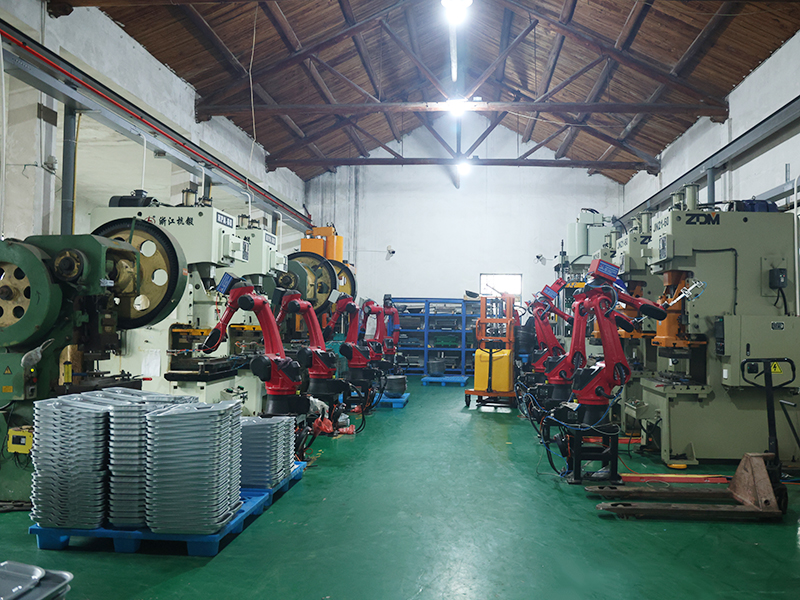
Ningbo Jinchang Electronics Co., Ltd. is a manufacturer of Western-style small household kitchen appliances, producing electric BBQ grills, smokeless electric grills, electric steamers, food dehydrators and multi-functional electric cooking appliances. The company operates a 5,500 m2 production plant in Yuyao City, Zhejiang Province, China, reports an annual output of 1,200,000 units, and exports roughly 90% of that output, serving customers in EU member states, the United States, Australia, Russia, Brazil, South Africa and other regions. Its catalogue covers more than 200 product models.
Why Customization Scope Decides Whether a Programme Ships
The commercial pressure behind private label is simple to describe. Retailers and brand owners want differentiated SKUs without paying for a new tool, a new test series and a new packaging line every time. The technical reality is equally simple, and less forgiving. Household electric grills sold into regulated markets must satisfy electrical-safety, electromagnetic-compatibility, food-contact and hazardous-substance requirements, and those requirements attach to a tested configuration rather than to an intention.
This is why the productive procurement question is not whether a supplier offers OEM and ODM services. Almost every established exporter says it does. The question that separates suppliers at the evaluation stage is narrower: which parts of the appliance can be changed, which documents follow those changes, and what forces a completely new test.
How an Electric Grill OEM and ODM Programme Is Scoped
Ningbo Jinchang Electronics Co., Ltd. provides both OEM production services and ODM design and production services. The customization options stated for the programme include appearance modification, function adjustment, private-mould development and customized packaging solutions, together with logo adaptation, voltage adaptation and product design and development. In practice this means a buyer can arrive with a shelf concept or a competitor sample and leave with a defined configuration, or arrive with nothing more than a target price and market and work through the ODM route.
The programme parameters are defined rather than negotiated from zero. The minimum order quantity is 5,000 units, lead time is 30 days, and monthly capacity is 100,000 units. Production is supported by 100% testing, and finished products carry a 1-year warranty.
Those figures only hold if the factory controls the steps upstream of assembly. The company carries out in-house structural R and D, mould development and product testing, employs 8 engineers in its R and D team, and holds more than 30 independent intellectual property rights including invention patents and utility-model patents. The plant covers 5,500 m2 and employs 68 people. For a buyer planning a multi-year private-label programme, the relevant point is not the size of the team but the fact that mould changes and structural adjustments stay inside the same facility instead of being subcontracted to a third party whose schedule and tolerance the buyer cannot see.
The Certification Boundary: What Can Change Without Re-Testing
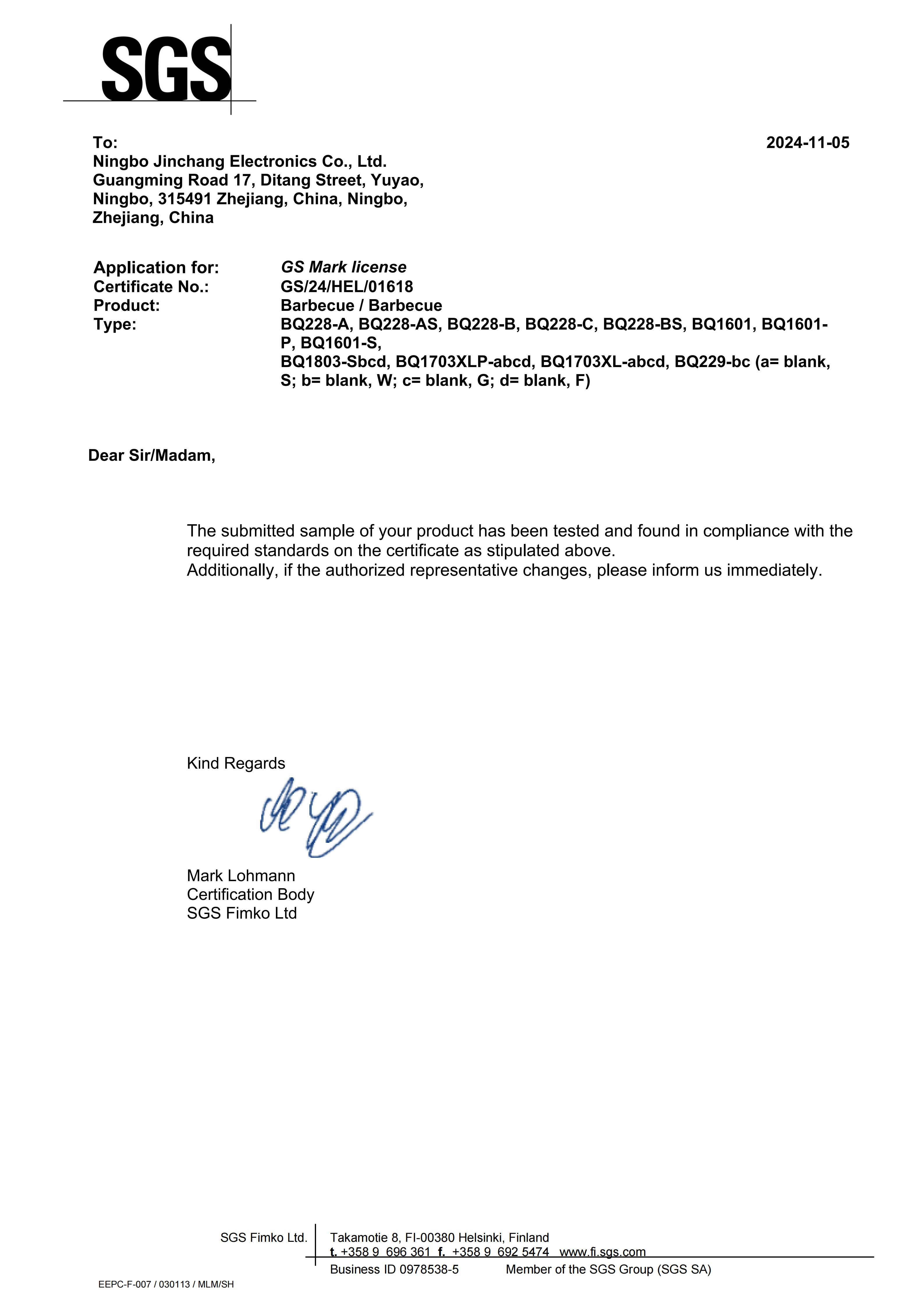
The clearest evidence of how customization is bounded sits in the certificate scope itself. The GS Mark license GS/24/HEL/01618, issued by SGS Fimko Ltd and valid from 5 November 2024 to 5 November 2026, covers a host list written with accessory variables: BQ228-A, BQ228-AS, BQ228-B, BQ228-C, BQ228-BS, BQ1601, BQ1601-P, BQ1601-S, BQ1803-Sbcd, BQ1703XLP-abcd, BQ1703XL-abcd and BQ229-bc, where the suffix letters represent blank or S, blank or W, blank or G, and blank or F. The licence therefore covers the main unit together with specified stand and cooking-plate configurations, not a single frozen product.
Other documents follow the same logic across different markets and regulations. The Ecodesign (ErP) test report NBEE241200121951 from SGS covers a long model list under EEC (EU) No 2023/826 and remains valid until 29 October 2027. RoHS verification report NGBEC24007628901_1 from SGS is valid to 30 December 2027. EU POPs verification report NGBEC26000921401 covers a tested model under Regulation (EU) 2024/2570 and runs to 16 March 2028. LVD verification HA0126NB03010302SF from HATEK Services covers models BQ202, BQ2001, BQ2002, BQ238 and BQ248 under EN IEC 60335-2-9:2023 plus A11:2023 and related standards, valid to 24 March 2028, with the EMC verification HA0126NB03010301EM valid to 18 March 2028. A further SGS test report, NGBEC25007613101, covers electric BBQ grills until 24 November 2027. For the aluminium cooking plate, the FDA food-contact test report EFHZ24081596-CG-01 issued by Eurofins Product Testing Service (Hangzhou) addresses FDA 21 CFR 177.1550 total extractives for coating.
One Host, Several SKUs: How Platform Reuse Works in Practice
Platform reuse is the mechanism that makes a 5,000-unit minimum order workable across a retail assortment. Instead of opening a separate tool for every price point, the same main unit is combined with different stands and cooking surfaces. The table below summarises the configurations documented for this product family.
| Model | Configuration | Power | Cooking surface | Typical placement |
|---|---|---|---|---|
| BQ2001 | Tabletop electric BBQ | 2000 W | Wire rack | Indoor countertop |
| BQ2002 | Electric BBQ grill | 2000 W | Wire rack | Indoor countertop |
| BQ1601 | Electric grill with removable plate | 2000 W | Wire rack, adjustable temperature, detachable protection | Indoor and outdoor |
| BQ1703XLP-W | Non-stick countertop electric barbecue | 1700 W, 220-240 V | Die-cast aluminium non-stick ribbed plate | Indoor countertop |
| BQ1601-4S | Smokeless stand electric grill | 2000 W | Wire rack | Patio, balcony, indoor gathering |
| BQ1703XL-SF | Adjustable temperature electric grill with side tables | 2000-2400 W | Wire rack | Backyard, garden gatherings |
| BQ1703XLP-SWF | Electric BBQ grill with adjustable temperature control | 1700 W | Non-stick aluminium plate | Semi-outdoor terrace |
| BQ232-SLTF | Freestanding electric BBQ grill | 2200 W | Aluminium diecast plate, thermostat | Patio, holiday rentals, camping bases |
| BQ202 | Portable electric grill | 2400 W | Wire rack, stainless steel housing | Apartment kitchen, small gatherings |
Read as a procurement document, the table shows that a retail assortment can be built from a small number of hosts, with differentiation carried by the stand, the cooking surface, the power setting, the logo, the voltage and the packaging. Because those accessory combinations sit inside the certificate scope, an assortment of several SKUs does not automatically mean several certification projects. It also exposes a real cost difference: stand configurations occupy more package volume than tabletop units, which changes freight per unit and storage requirements at the retailer end.
Application Fit: Which Configuration Goes Where
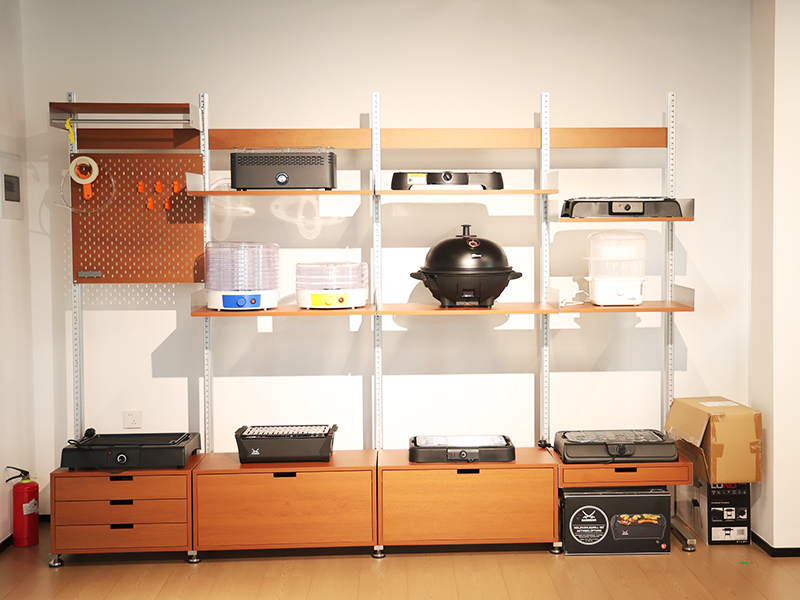
The documented use scenarios for this product family split into two working conditions. The first is indoor and countertop daily grilling in a domestic kitchen, balcony or small apartment, where the product is used intermittently to grill meat, vegetables, skewers, sausages and bread. Tabletop units such as BQ2001, BQ2002, BQ1703XLP-W and BQ202, together with the removable-plate BQ1601, are positioned here. The second is semi-outdoor seasonal use on a patio, balcony, backyard or garden, where the same main unit is mounted on a stand; BQ1601-4S, BQ1703XL-SF and BQ232-SLTF sit in this group, with the freestanding model also documented for holiday rentals, manor houses and outdoor camping bases.
That split has a commercial consequence beyond cooking. A buyer addressing indoor categories generally wants a compact box, low logistics cost and shelf-friendly presentation, which favours tabletop models and gift-set formats. A buyer addressing outdoor living categories needs the stand, accepts higher freight, and should plan storage space for the metal stand at the retail or warehouse level. A documented supply record illustrates the pattern: a large supermarket retailer in France has sourced 60,000 units per year of multi-certified electric BBQ grills for household indoor and outdoor barbecue use, a supply relationship running for 3 to 5 years with stable performance and good market feedback reported.
Where the Model Has Limits
An honest capability description has to include the boundaries, because they determine whether a programme is feasible at all. The minimum order quantity of 5,000 units is the first one. It suits retail programmes, distributor stock orders and private-label launches, but it does not suit small trial runs or single-SKU market tests at low volume. Buyers evaluating a new market with limited exposure should treat this as a structural constraint rather than a negotiating position.
The second boundary concerns change management. Customization within the pre-approved configuration space, meaning the host combined with listed stands and cooking plates, does not require re-testing. Any modification to the main host structure does. That single rule separates a fast SKU refresh from a project that adds testing time and cost to the 30-day lead time, and it should be agreed in writing before tooling begins.
The third boundary is time. Certification validity is finite: the GS Mark license runs to 5 November 2026, the BSCI monitoring summary to 8 October 2026, and other reports to dates between 2027 and 2028. Buyers planning shipments in the later part of a programme should confirm renewal status rather than assume documents remain current. Finally, the cooking surface choice is a genuine trade-off, not a feature list. A wire rack delivers conventional barbecue character and needs more cleaning effort; a non-stick aluminium plate is easier to clean and passes the relevant food-contact testing, but changes the texture profile of the food. Neither is superior in the abstract, and retailers usually need both in the range.
What Is Changing in the Category
Three movements are visible in electric grill sourcing, and all three push in the same direction: less improvisation, more documentation. The first is the shift of grilling indoors. Smokeless configurations, removable and non-stick cooking surfaces, and adjustable temperature control have moved from premium options to expected features on a countertop appliance, because the buyer is often an apartment dweller rather than a garden owner. Household appliance shelves commonly mix grills, steamers and griddle-style cooking formats in the same aisle, which encourages suppliers to build ranges from shared platforms.
The second is regulatory discipline in the EU. Ecodesign reporting under EEC (EU) No 2023/826, RoHS verification, POPs verification and low-voltage and EMC conformity are now standard elements of a retail submission, and the model list inside each report has to match the shipped nameplate. The third is supply-chain compliance. Social audits of the amfori BSCI and ICS type, which cover the factory manufacturing electric grills, food dehydrators, charcoal grills and electric steamers, have become part of the supplier onboarding process rather than a later-stage add-on. For buyers, this means the certification pack is no longer a courtesy document. It is the asset that determines which SKUs can be sold where.
Outlook
The direction of travel for electric grill programmes is toward fewer platforms and more permutations. Buyers increasingly want one certified host that can be dressed into several price points, with the stand, the plate, the packaging and the label carrying the differentiation. That model rewards suppliers who can keep structural development, mould work and testing in-house, and it penalises those who cannot state exactly which changes stay inside a certificate and which do not.
What buyers should watch over the next procurement cycles is not the number of models a supplier lists, but three specific things: whether accessory swaps are genuinely covered by the certificate scope, how quickly the supplier can state the re-test trigger, and whether the compliance file includes social and environmental systems alongside product testing. Ningbo Jinchang Electronics Co., Ltd. holds ISO 9001 certificate NOA2409732 and ISO 14001 certificate NOA2507153, together with amfori BSCI and ICS audit documentation, which places the company in the group of suppliers that can be evaluated on documentation rather than on assurances.
FAQ
What certification documents do EU retailers typically audit for an electric grill?
EU supermarket channels expect household electric grills to meet electrical-safety, food-contact material and hazardous-substance requirements. In practice this means CE marking through the Low Voltage Directive and the Electromagnetic Compatibility Directive, GS certification, LFGB food-contact testing and RoHS verification, supported by a complete technical file. The report model must match the product nameplate. Scope-based documents are used here, for example GS Mark license GS/24/HEL/01618 issued by SGS Fimko Ltd, RoHS verification report NGBEC24007628901_1, LVD verification HA0126NB03010302SF and EMC verification HA0126NB03010301EM.
Can the stand or the cooking plate be changed without re-testing the grill?
Yes, provided the accessory is already inside the approved certificate scope. Detachable stands, wire racks and non-stick cooking plates are listed as pre-approved options in the licence scope, so swapping between them does not invalidate the certificate. A modification to the main host structure is different and requires re-testing before shipment. Buyers should confirm the accessory designation against the certificate model list rather than assume interchangeability.
Tabletop or freestanding electric grill: how should a retail assortment decide?
The two configurations serve different use conditions. Tabletop models are compact, intended for indoor countertop use, easier to store and cheaper to ship, which suits kitchen ranges, shelf display and gift sets. Freestanding models add a detachable stand for balcony, patio and garden use, occupy more package volume and cost more to ship. A workable assortment often uses one main unit across both formats, which reduces tooling, certification and stock pressure while covering indoor and outdoor consumers.
What is the difference between a wire rack and a non-stick aluminium cooking plate?
A wire rack produces a conventional barbecue character and is typically chosen by consumers who prioritise grilling texture. A non-stick aluminium plate, such as the die-cast plate with ribbed surface and drainage slots, is easier to clean and suits indoor countertop use where residue removal matters. Both surfaces are covered by food-contact testing, and the choice is a consumer-preference decision rather than a technical ranking.
What does an OEM or ODM electric grill project cover, and what is the minimum order quantity?
OEM and ODM services cover both custom manufacturing to a buyer specification and original design and development. Stated customization options include appearance modification, function adjustment, private-mould development, customized packaging, logo adaptation and voltage adaptation. The minimum order quantity is 5,000 units, lead time is 30 days, monthly capacity is 100,000 units, and production is supported by 100% testing with a 1-year warranty.
What happens when certification documents and the shipped product do not match?
Document and model mismatch is one of the documented compliance risks in electric grill supply. It can result in retailer audit failure, customs detention, goods return or product recall. The trigger is normally a certificate whose model does not match the shipped unit, a food-contact part changed without corresponding testing, or missing label information. The mitigation is procedural: keep the main host structure unchanged within an approved scope, swap only pre-approved accessories, and verify model, label and documents before shipment.